
Tuesday, December 15, 2020
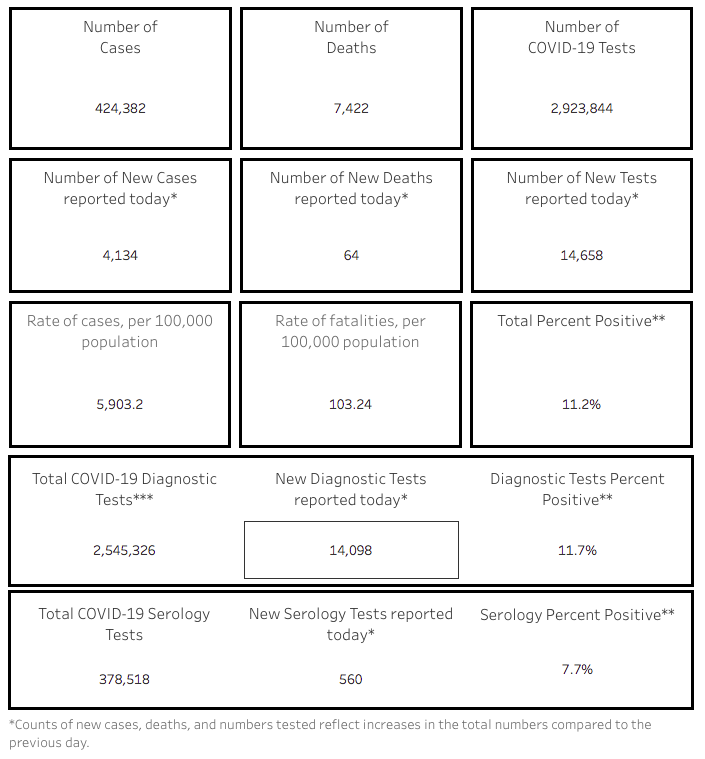
With more than 4,100 new cases reported today, the number of Arizona’s confirmed novel coronavirus cases topped 424,000 as of Tuesday, Dec. 15, according to the Arizona Department of Health Services.

Pima County, which reported 798 new cases today, has seen 54,246 of the state’s 424,382 confirmed cases.
With 64 new deaths reported today, a total of 7,422 Arizonans had died after contracting COVID-19, including 817 deaths in Pima County, according to the Dec. 15 report.
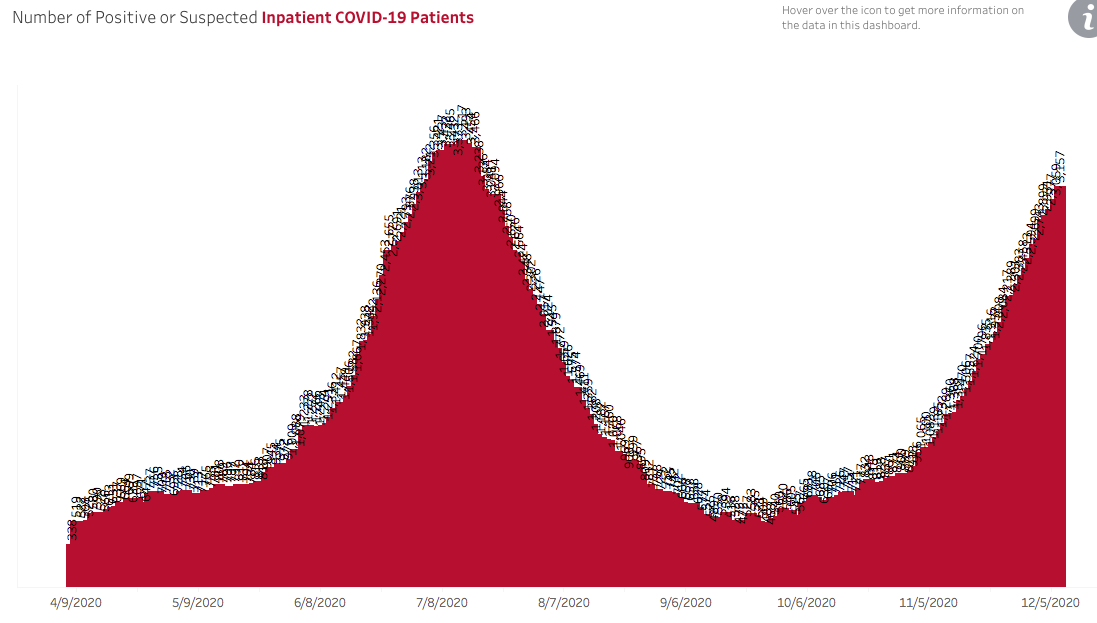
The number of hospitalized COVID cases statewide continues to soar upward as the virus has begun to spread more rapidly, putting stress on Arizona’s hospitals and surpassing July peaks. ADHS reported that as of Dec. 14, 3,702 COVID patients were hospitalized in the state, setting a new record. The previous peak of 3,517 hospitalized COVID patients was set on July 13; that number hit a subsequent low of 468 on Sept. 27.
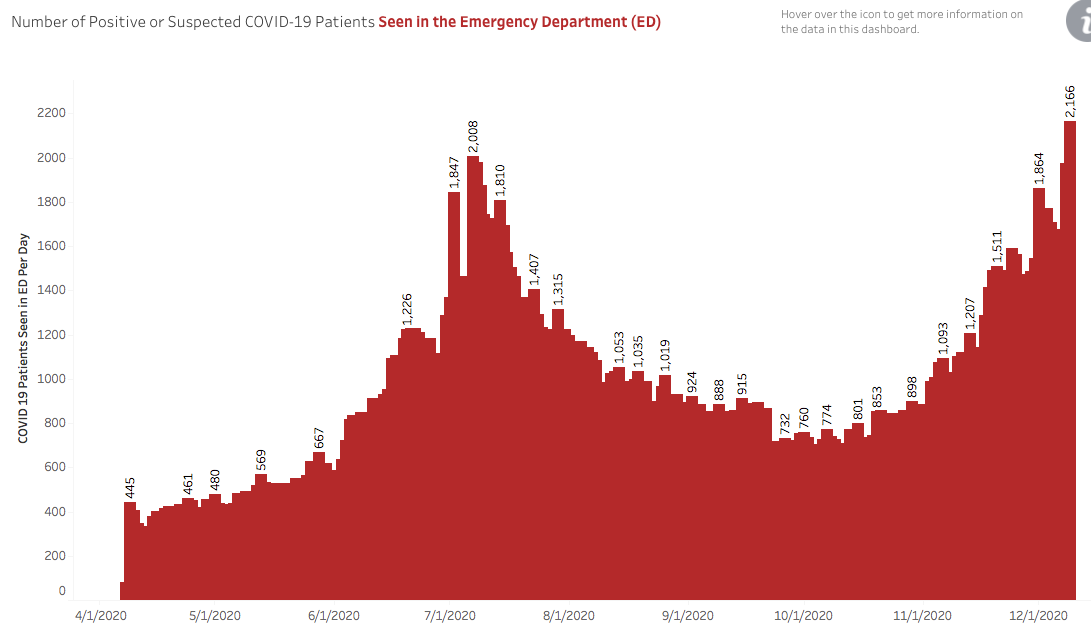
A total of 1,579 people visited emergency rooms on Dec. 14 with COVID symptoms. That number, which hit a new record of 2,166 last week, had previously peaked at 2,008 on July 7; it hit a subsequent low of 653 on Sept. 28.
A total of 863 COVID-19 patients were in intensive care unit beds on Dec. 14. The number of COVID patients in ICUs peaked at 970 on July 13 and hit a subsequent low of 114 on Sept. 22.
Vaccine is on its way
Pima County is expected to receive 11,000 doses of Pfizer's COVID-19 Pfizer on Thursday that will go to healthcare workers and long-term care facility residents and staff, the Pima County Health Department announced at a news conference yesterday.
The vaccine prioritization plan includes three phases with the most high-risk individuals receiving the vaccine first, said Dr. Theresa Cullen, director of the Pima County Health Department.
Phase one of vaccine implementation is divided into three groups: 1A, 1B and 1C. Group 1A will begin receiving vaccines this week.
Group 1B, which includes teachers, law enforcement and other essential service workers, are expected to receive vaccines by March, Cullen said.
Group 1C includes adults older than 65 and those with high-risk medical conditions, which contains nearly 70% of the population and is expected to receive vaccinations by “late spring, early summer,” according to Cullen.
The Pfizer vaccine is given in two doses 21 days apart. The health department said if the second dose is not received on its scheduled time, the first dose will still be valid and the recipient is still fully protected.
Hospitals are reaching capacity; health officials urge people to avoid in-person socializing over holidays
The Pima County Health Department discussed the critical nature of COVID-19 throughout the county at a press conference on Friday, Dec. 10, after it issued a joint letter signed by 26 representatives from the health department, hospitals and fire districts warning residents of disastrous consequences if the spread of the virus continues at its current rate.
Hospitals across the county have less than 2% of their ICU beds available. At the start of the weekend, they had only seven open ICU beds, Pima County Health Director Dr. Theresa Cullen shared at the press conference.
Monday, December 14, 2020

Pima County is expected to receive 11,000 doses of Pfizer's COVID-19 Pfizer on Thursday that will go to healthcare workers and long-term care facility residents and staff, the Pima County Health Department announced at a news conference this morning.
The vaccine prioritization plan includes three phases with the most high-risk individuals receiving the vaccine first, said Dr. Theresa Cullen, director of the Pima County Health Department.
Phase one of vaccine implementation is divided into three groups: 1A, 1B and 1C. Group 1A will begin receiving vaccines this week.
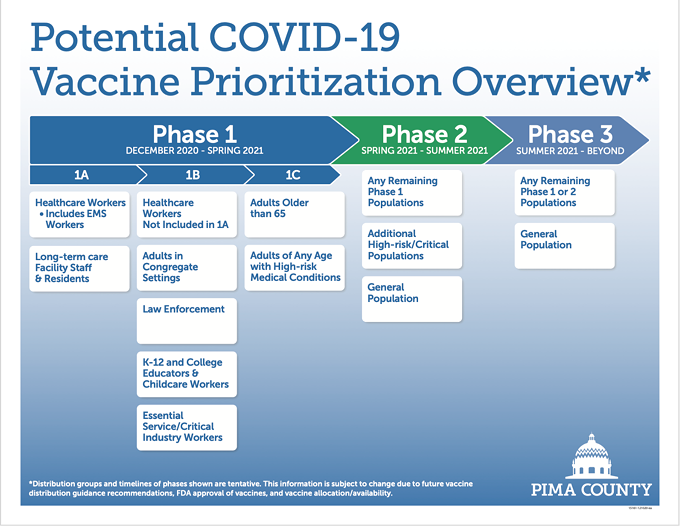
Group 1B, which includes teachers, law enforcement and other essential service workers, are expected to receive vaccines by March, Cullen said.
Group 1C includes adults older than 65 and those with high-risk medical conditions, which contains nearly 70% of the population and is expected to receive vaccinations by “late spring, early summer,” according to Cullen.
The Pfizer vaccine is given in two doses 21 days apart. The health department said if the second dose is not received on its scheduled time, the first dose will still be valid and the recipient is still fully protected.
According to Cullen, the state is holding back the second dose for now but has ensured that those who receive the first dose will receive their second one. However, she said this could cause “a longer time period before we complete immunization of healthcare workers.”
Tucson Medical Center and Banner University Medical Center will serve as “points of distribution,” or PODs, where the first group of healthcare workers will receive the vaccine in drive-thru sites starting Thursday, Dec. 17.

Some might say that they knew immediately, when, in Kevin Sumlin’s first game as Arizona football coach, his Wildcats played like dookie. Sloppy and listless, unable to take advantage of late-game opportunities, and having to deal with a suddenly mercurial quarterback who quite obviously had seen his own picture on the cover of Sports Illustrated, the Wildcats lost to a barely average visiting BYU team. (BYU would go on to lose home games that season to Utah State and—gulp!—Northern Illinois.)
The loss to BYU was bad enough—putting the Cats in a hole from which they would struggle to emerge the rest of the season—but what troubled some was Sumlin’s reaction to it. Or, more correctly, his lack thereof. Sumlin shrugged like a monk learning dinner would be crackers with no salt.
The next week, Houston smacked Arizona around like it was a bad kid at a Catholic boarding school. Again with the shrug. Suddenly, the season that had had eternally optimistic Wildcat fans engaging in serious debates of 8-4 vs. 9-3, looked bleak.
Arizona, bolstered by a huge upset of powerful Oregon, eventually got back to .500, standing at 5-5 with two games left. But through it all, Shruglin stayed the same. Was he sullen or just pensive? Did he not like to talk or did he have nothing worthwhile to say? Fans hungry for a winner tend to feel that there’s a very fine line between keeping an even keel and not giving a crap.
The Cats took a 40-point whuppin’ from Washington State, but the season was still salvageable. All they had to do was beat visiting ASU in the regular-season finale and all would be good. That win would mean that they had beaten ASU, that they would go to a bowl game, and, most importantly, that they had beaten ASU.
Arizona went into the fourth quarter that day with a whopping 19-point lead and then it all fell apart. Aided by a couple bad turnovers in the wrong part of the field, ASU stormed back to win, 41-40. That’s when I knew. The turnovers were bad (and so was the missed field goal attempt at the gun that would have given the Cats the win), but it was painfully obvious that, in that fourth quarter that determined the fate of the season, Sumlin had been out-coached. Not by ASU Coach Herm Edwards; Sumlin had out-coached himself.
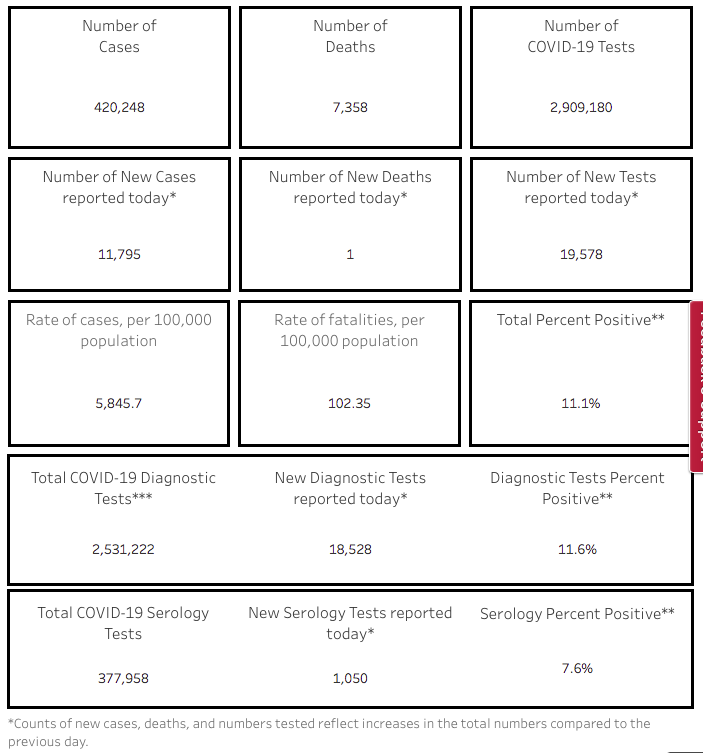
With nearly 12,000 new cases reported today, the number of Arizona’s confirmed novel coronavirus cases topped 420,000 as of Monday, Dec. 14, according to the Arizona Department of Health Services.

Pima County, which reported 1,801 new cases today, has seen 53,448 of the state’s 420,248 confirmed cases.
A total of 7,358 Arizonans had died after contracting COVID-19, including 800 deaths in Pima County, according to the Dec. 14 report.
The number of hospitalized COVID cases statewide continues to soar upward as the virus has begun to spread more rapidly, putting stress on Arizona’s hospitals and surpassing July peaks. ADHS reported that as of Dec. 13, 3,677 COVID patients were hospitalized in the state, setting a new record. The previous peak of 3,517 hospitalized COVID patients was set on July 13; that number hit a subsequent low of 468 on Sept. 27.
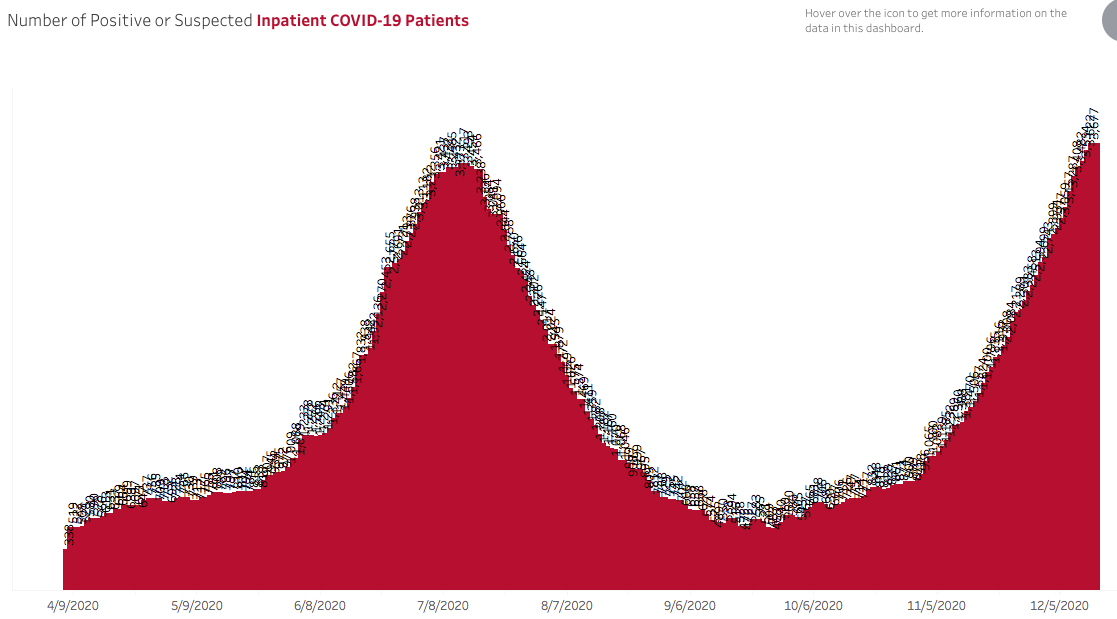
A total of 1,799 people visited emergency rooms on Dec. 13 with COVID symptoms. That number, which hit a new record of 2,166 last week, had previously peaked at 2,008 on July 7; it hit a subsequent low of 653 on Sept. 28.
A total of 829 COVID-19 patients were in intensive care unit beds on Dec. 13. The number of COVID patients in ICUs peaked at 970 on July 13 and hit a subsequent low of 114 on Sept. 22.
Hospitals are reaching capacity; health officials urge people to avoid socializing over holidays
The Pima County Health Department discussed the critical nature of COVID-19 throughout the county at a press conference on Friday, Dec. 10, after it issued a joint letter signed by 26 representatives from the health department, hospitals and fire districts warning residents of disastrous consequences if the spread of the virus continues at its current rate.
Hospitals across the county have less than 2% of their ICU beds available. At the start of the weekend, they had only seven open ICU beds, Pima County Health Director Dr. Theresa Cullen shared at the press conference.
Pima County Chief Medical Officer Dr. Francisco Garcia said the county’s experiencing “very significant” numbers of deaths similar to those seen in the July surge in cases. In terms of hospitalizations, numbers have far surpassed levels seen in the summer peak.
Saturday, December 12, 2020

TUSD Board member Adelita Grijalva, who just won a seat on the Pima County Board of Supervisors last month, announced tonight that she has tested positive for COVID-19.
Grijalva revealed in a press release that she had tested positive on Wednesday, Dec. 9, and is now isolating in Tucson.
Grijalva said she was asymptomatic and learned of her diagnosis via regular testing. She is unaware of when and where she contracted the virus.
Grijalva is the daughter of Congressman Raul Grijalva, who tested positive for the coronavirus in August.
County officials have warned that the coronavirus is widespread in the area and healthcare workers and public health experts are asking people to stay home as much as possible and mask up when they leave their homes when they cannot maintain physical distance from others.
The Arizona Department of Health Services reported 8,076 new cases of COVID-19 today, taking the total number of cases in Arizona since March to 402,589. The state set a new record yesterday as 3,534 people were hospitalized with COVID symptoms. The previous record, 3,517 COVID patients, was set on July 13.
Friday, December 11, 2020
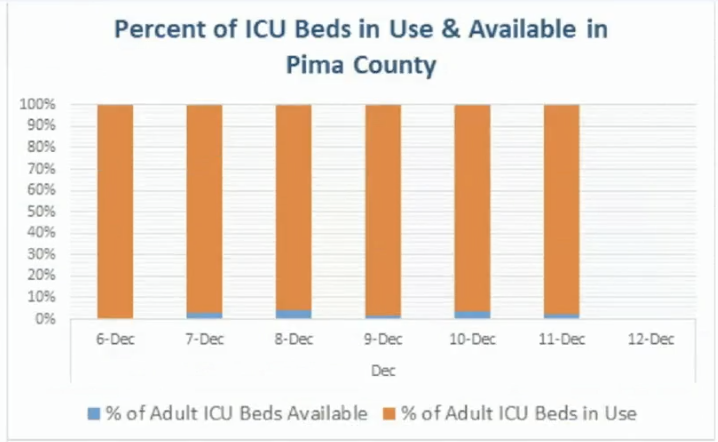
The Pima County Health Department discussed the critical nature of COVID-19 throughout the county at a press conference today after it issued a joint letter signed by 26 representatives from the health department, hospitals and fire districts warning residents of disastrous consequences if the spread of the virus continues at its current rate.
Hospitals across the county have less than 2% of their ICU beds available. Today, they had only seven open ICU beds, Pima County Health Director Dr. Theresa Cullen shared at the press conference.
Pima County Chief Medical Officer Dr. Francisco Garcia said the county’s experiencing “very significant” numbers of deaths similar to those seen in the July surge in cases. In terms of hospitalizations, numbers have far surpassed levels seen in the summer peak.
Judy Rich, the president and CEO of Tucson Medical Center, said on the outside, the hospital shows serene Christmas lights and often barren parking lots. The parked cars are diminishing as visitors aren’t allowed to visit their sick loved ones, and behind the glowing lights, the hospital’s staff is fighting an unprecedented number of cases while facing high levels of burnout.“The staff are tired, and they are giving everything that they have. It is imperative that we take this seriously. This is a serious disaster that is invisible to many,” Rich said. “But when it hits you, when it becomes personal, you'll understand it differently. I would just ask you to project to that and take the steps that you need to to stay safe and help our community get through this.”
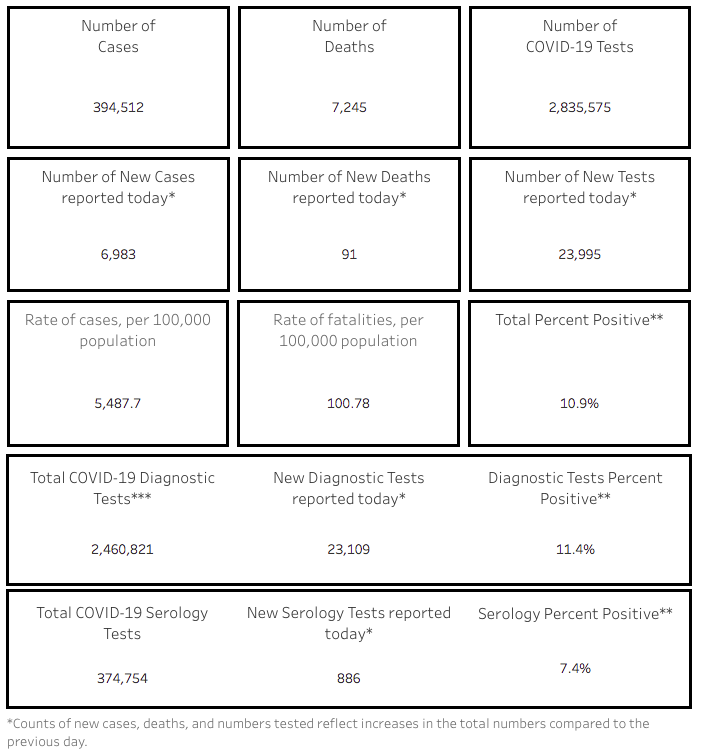
With more than nearly 7,000 new cases reported today, the number of Arizona’s confirmed novel coronavirus cases topped 394,000 as of Friday, Dec. 11, according to the Arizona Department of Health Services.

Pima County, which reported 866 new cases today, has seen 49,637 of the state’s 394,512 confirmed cases.
With 91 new deaths reported today, a total of 7,245 Arizonans had died after contracting COVID-19, including 776 deaths in Pima County, according to the Dec. 11 report.
The number of hospitalized COVID cases statewide continues to soar upward as the virus has begun to spread more rapidly, putting stress on Arizona’s hospitals and closing in on numbers not seen since July peaks. ADHS reported that as of Dec. 10, 3,482 COVID patients were hospitalized in the state, the highest that number has been since July 14. That’s close to the peak of 3,517 hospitalized COVID patients on July 13; that number hit a subsequent low of 468 on Sept. 27.
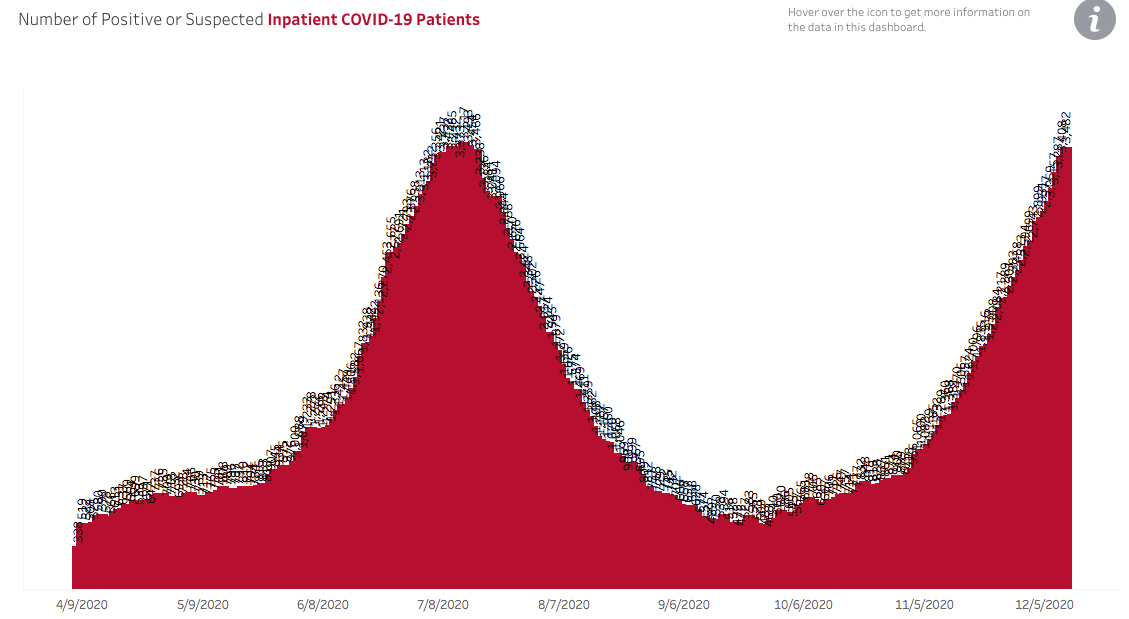
A total of 2,120 people visited emergency rooms on Dec. 10 with COVID symptoms. That number, which hit a new record yesterday, had previously peaked at 2,008 on July 7; it hit a subsequent low of 653 on Sept. 28.
A total of 809 COVID-19 patients were in intensive care unit beds on Dec. 10, the highest that number has been since July 26. The number of COVID patients in ICUs peaked at 970 on July 13 and hit a subsequent low of 114 on Sept. 22.
Pima County has seen a dramatic rise in cases in recent weeks, according to an Dec. 4 report from the Pima County Health Department. (Numbers in this report are subject to revision.) For the week ending Nov. 7, 2,119 cases were reported; for the week ending Nov. 14, 2,578 cases were reported; and for the week ending Nov. 21, 3,313 cases were reported, setting a new record for a weekly count.
“In the last week, we've had the most cases we've reported in a week,” Dr. Theresa Cullen, the director of the Pima County Health Department. “We've had the most cases we've ever reported in a day. And as you can see, this number is significantly more than what we had in the summer when we were worried. That's why we need to worry more and more.”
Thursday, December 10, 2020
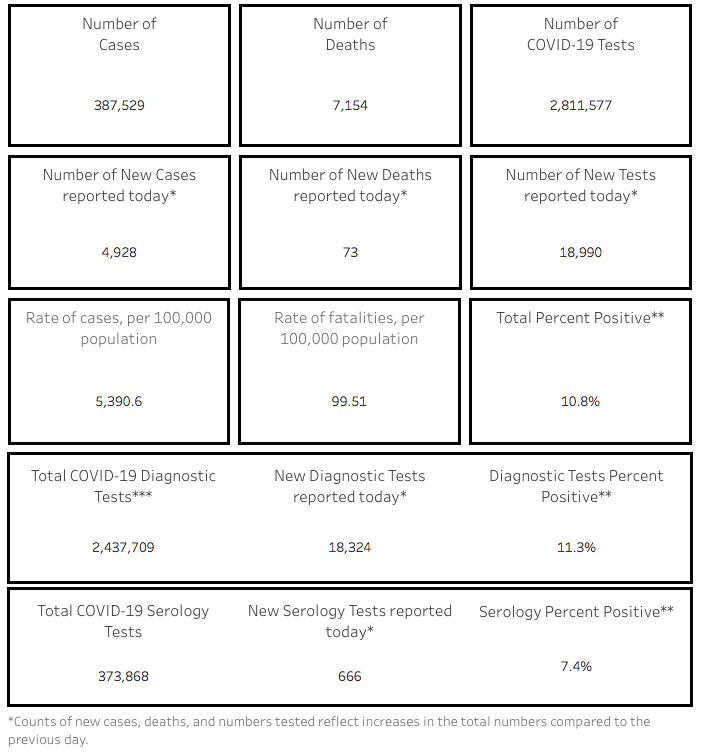
With more than 4,400 new cases reported today, the number of Arizona’s confirmed novel coronavirus cases topped 387,000 as of Thursday, Dec. 10, according to the Arizona Department of Health Services.

With 73 new deaths reported today, a total of 7,154 Arizonans had died after contracting COVID-19, including 62 deaths in Pima County, according to the Dec. 10 report.
The number of hospitalized COVID cases statewide continues to soar upward as the virus has begun to spread more rapidly, putting stress on Arizona’s hospitals and closing in on numbers not seen since July peaks. ADHS reported that as of Dec. 9, 3,408 COVID patients were hospitalized in the state, the highest that number has been since July 16. That’s close to the peak of 3,517 hospitalized COVID patients on July 13; that number hit a subsequent low of 468 on Sept. 27.
A total of 2,166 people visited emergency rooms on Dec. 9 with COVID symptoms. That is a new record for that number, which previously peaked at 2,008 on July 7; it hit a subsequent low of 653 on Sept. 28.
A total of 799 COVID-19 patients were in intensive care unit beds on Dec. 9, the highest that number has been since July 28. The number of COVID patients in ICUs peaked at 970 on July 13 and hit a subsequent low of 114 on Sept. 22.
Pima County has seen a dramatic rise in cases in recent weeks, according to an Dec. 4 report from the Pima County Health Department. (Numbers in this report are subject to revision.) For the week ending Nov. 7, 2,119 cases were reported; for the week ending Nov. 14, 2,578 cases were reported; and for the week ending Nov. 21, 3,313 cases were reported, setting a new record for a weekly count.
Tuesday, December 8, 2020
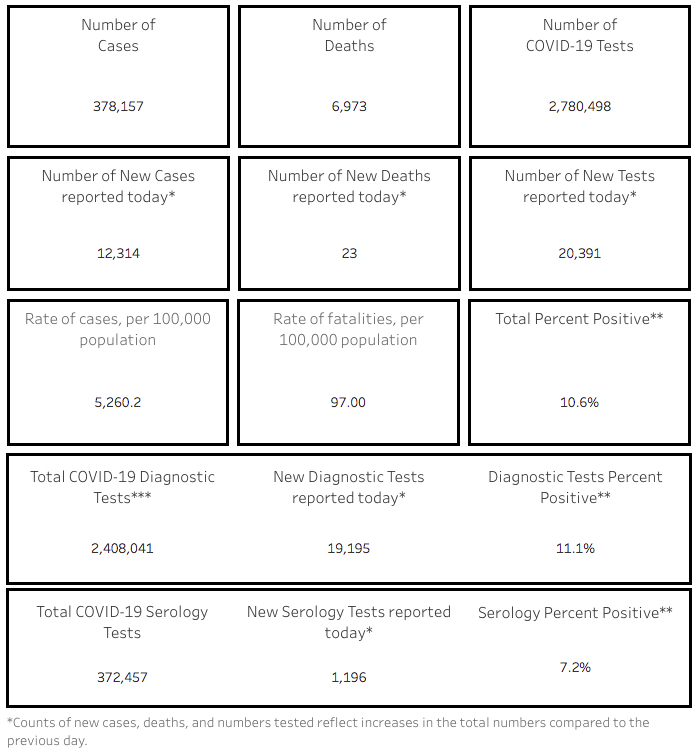
With more than 12,000 new cases reported today, the number of Arizona’s confirmed novel coronavirus cases topped 378,000 as of Tuesday, Dec. 8, according to the Arizona Department of Health Services.

Pima County, which reported 957 new cases today, has seen 46,849 of the state’s 378,157 confirmed cases.
With 23 new deaths reported today, a total of 6,973 Arizonans had died after contracting COVID-19, including 730 deaths in Pima County, according to the Dec. 8 report.
The number of hospitalized COVID cases statewide continues to soar upward as the virus has begun to spread more rapidly, putting stress on Arizona’s hospitals and closing in on numbers not seen since July peaks. ADHS reported that as of Dec. 7, 3,157 COVID patients were hospitalized in the state, the highest that number has been since July 17. That number peaked with 3,517 hospitalized COVID patients on July 13; it hit a subsequent low of 468 on Sept. 27.
A total of 1,550 people visited emergency rooms on Dec. 7 with COVID symptoms. That number peaked at 2,008 on July 7; it hit a subsequent low of 653 on Sept. 28.
A total of 744 COVID-19 patients were in intensive care unit beds on Dec. 7, the highest that number has been since July 29. The number of COVID patients in ICUs peaked at 970 on July 13 and hit a subsequent low of 114 on Sept. 22.
Judy Rich, president and CEO of Tucson Medical Center, warned the Tucson City Council last week that local hospitals are near or at capacity.
“I believe stricter measures, like the ones we used earlier this year, are the only path to avert the impending crisis,” Rich told the council. “I recognize that the City might not have the legal authority to mandate such actions, but it should be the position of the City to advocate to state leadership that it is required to prevent unnecessary loss of life and illness.”
Pima County has seen a dramatic rise in cases in recent weeks, according to an Dec. 4 report from the Pima County Health Department. (Numbers in this report are subject to revision.) For the week ending Nov. 7, 2,119 cases were reported; for the week ending Nov. 14, 2,578 cases were reported; and for the week ending Nov. 21, 3,313 cases were reported.
WASHINGTON – The Trump administration said Monday it will abide by court order – for now – to start accepting new Deferred Action for Childhood Arrivals applications, a move that could affect an estimated 682,000 undocumented immigrants.
The Department of Homeland Security is already looking to appeal the Friday court ruling, but advocates for immigrants were celebrating the decision that they called critical to the lives of DACA recipients, including thousands in Arizona.
“A lot of young people are going to be able to get deferred action so they won’t be eligible for deportation if they follow the rules, they’re going to get work permits and the ability to work and contribute to their household,” said Jose Patiño, a DACA recipient and education director at Aliento, an immigrant advocacy group in Phoenix.
The decision could affect 1.3 million people in the U.S., according to the Migration Policy Institute, which said about 682,000 have yet to apply for DACA protection. In Arizona, the ruling has the potential to almost double the number of DACA recipients, from the current 24,140 to an estimated 47,000 in the state who could be eligible.
The Obama-era policy defers deportation for immigrants who were brought to this country illegally as children and have known no other home, allowing them to get driver’s licenses, work permits and Social Security numbers. It lets them “feel like they’re part of the country,” Patiño said Monday.
Then-candidate Donald Trump targeted the program, which was enacted as a policy change and not by law, as presidential overreach and promised to do away with it if elected. On Sept. 5, 2017, then-Attorney General Jeff Session did just that, announcing plans to “wind down” DACA over a six-month period, during which the administration invited Congress to enact DACA as law.
Congress did not, but the proposal to end DACA was challenged almost immediately in court. It ultimately landed in the Supreme Court, which ruled that the administration had not followed the proper procedures to rescind the program.