

Monday, December 7, 2020
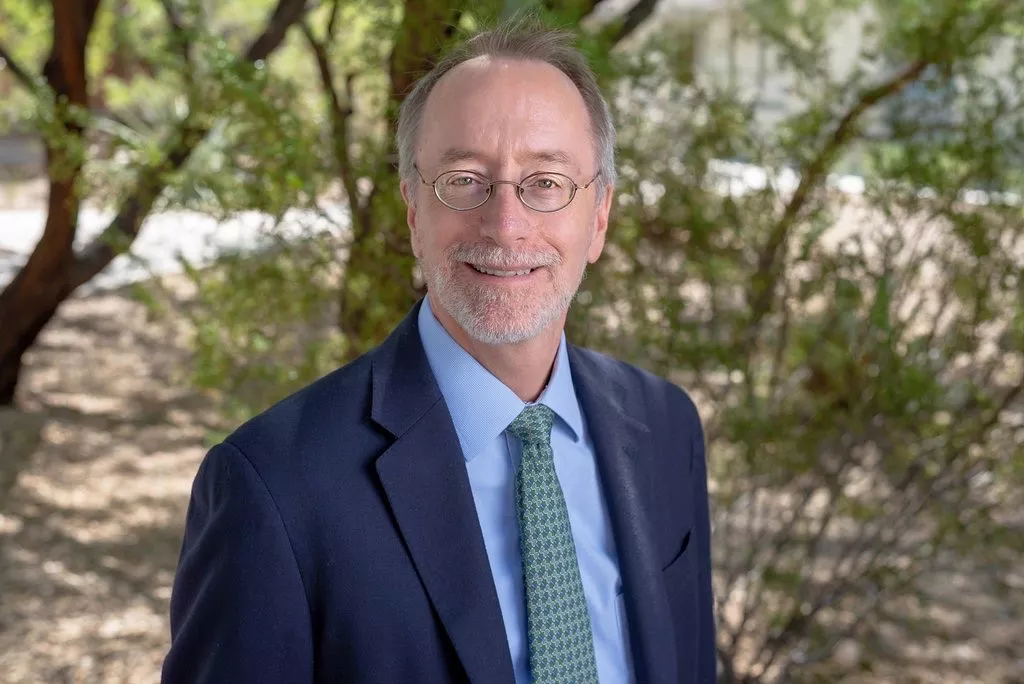
The future of Arizona’s economy is one of uncertainty, UA economist George Hammond made clear at a virtual economic outlook event Friday. Throughout the coronavirus pandemic, the state has fared better in unemployment numbers compared to the rest of the nation, but it has still withstood a heavy loss, according to Hammond, the director of the Economic and Business Research Center at the University of Arizona’s Eller College of Management.
Arizona lost 294,600 jobs from February to April but has replaced 66% of them, according to Hammond. Nationwide, nearly 55% of jobs lost during this time have been replaced. “That's job growth at a pretty rapid pace for the state of Arizona. On average, that translates into almost 14,000 jobs per month,” Hammond said. “If we can sustain that pace, in 2021, we will actually be back to pre-pandemic employment levels by about the middle of the year.” In order to reach pre-pandemic levels, Arizona would have to add 100,700 jobs—an average of 13,900 per month.
“That's a pretty tall order. Adding jobs at a monthly rate of 14,000 is more than double the average monthly job growth rate during the four years before the Great Recession,” Hammond said. “Before the Great Recession . . . we would add, on average, about 6,000 jobs per month. It's not clear that we can sustain that pace.”
The total unemployment rate in Arizona has shown volatility from month to month, with the seasonally adjusted rate decreasing from 10.7% in July to 5.9% in August, then rising to 6.5% in September and 8.0% in October. However, Hammond said this may change when the state receives more precise data in 2021.
“[The unemployment rate] zig-zagged around, with big drops, and then a couple of months of pretty significant increases and then some more drops. The state rate is has looked really weird, and there's a lot of speculation about what might be driving that,” Hammond said. “Probably the best advice is don't put too much weight or spend too much time trying to explain these monthly zigzags...they'll likely be revised away once we get the revised data in March of next year.”
As University of Arizona students finish the fall semester remotely, they’ll return to more stringent guidelines to prevent the spread of coronavirus in the spring semester.
The university will require weekly COVID-19 testing for all students attending in-person classes on its main campus or living in dorms, UA President Robert Robbins said in a press conference this morning.
Any students visiting campus will be required to complete a COVID-19 diagnostic test within the prior week. If students aren’t noted as having completed a test in UA’s system, they will be denied access to the university’s Wi-Fi network.
“We think this is an incentive for people to comply with our mandatory testing,” Robbins said. “We think it’s really going to be important, and we’re changing our approach because we’re going to be able to expand our testing capability.”
Robbins announced a testing blitz to coincide with dorm move-in dates from Jan. 6-12, similar to the one it conducted before fall break. Residents are required to test negatively before moving into their dorm rooms.
While the tests conducted during the testing blitz will still be in the form of antigen nasal swabs, the university has developed a new saline gargle test for its regular weekly testing.
New saline gargle test
Developed by the head of the university’s Department of Ecology and Evolutionary Biology Michael Worobey, the saline gargle test detects present coronavirus material and amplifies it to a traceable amount.
Those receiving the test swish and gargle 5 milliliters of saltwater three times, and spit the solution into a tube to be tested for the presence of COVID-19.
Instead of the oftentimes unpleasant nasal swab that reaches the pharynx, or deep into the back of the nasal cavity, the swish test is “much more tolerable,” according to Worobey.
Friday, December 4, 2020
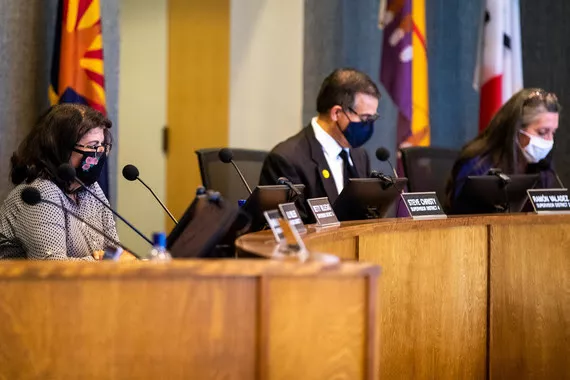
The Pima County Board of Supervisors approved six measures to combat the spread of coronavirus at an emergency special meeting today.
The board approved the following motions:
A revised mask mandate with a civil penalty for noncompliance; businesses now required to mandate masks for all customers.
Upon their second violation of noncompliance to safety protocols, businesses will be reprimanded by means of having their license revoked or operations suspended.
Event organizers planning gatherings of more than 50 persons are required to give the county a minimum $1,000 deposit per each event (with the deposit rising depending on the number of people expected in attendance). The money will be returned if there is sufficient compliance to safety protocol.
The county’s voluntary curfew will remain in place as it examines Tucson’s curfew enforcement.
A revised public health advisory with recommendations for the public to avoid contracting COVID-19.
A motion to review Pima County’s vaccination strategy draft
The decisions come as within the first three days of December, Pima County saw 2,023 COVID-19 infections, surpassing the county’s total infection count for March, April and May combined, according to a memorandum from County Administrator Chuck Huckelberry. Today, the county reported 816 cases.
Hospitals are facing record numbers of COVID-19 patients and on Dec. 3, only one ICU bed was available to the public, the memo says.
On all the motions except approving a vaccination strategy, the board voted 3-2 with GOP Supervisors Ally Miller and Steve Christy opposing. Only Miller opposed the vote to review the vaccination strategy.
Mask wearing to be enforced
The board previously adopted a mask mandate in June with no penalties for noncompliance. Now, those who refuse to wear masks in public areas will be subject to a civil penalty of $50 per infraction. These penalties will be enforced by law enforcement agencies, but it has yet to be determined the manner in which they will do so.
Businesses are also now required to mandate masks for all those who enter their premises. Before, the county’s resolution said businesses “may refuse” those not wearing masks, but now, they must.
Stricter enforcement for businesses who defy guidelines
Businesses that are reported as not following the imposed safety guidelines will face a civil infraction that carries a penalty of $500 and may lose their license or operating permits upon their second reported offense.
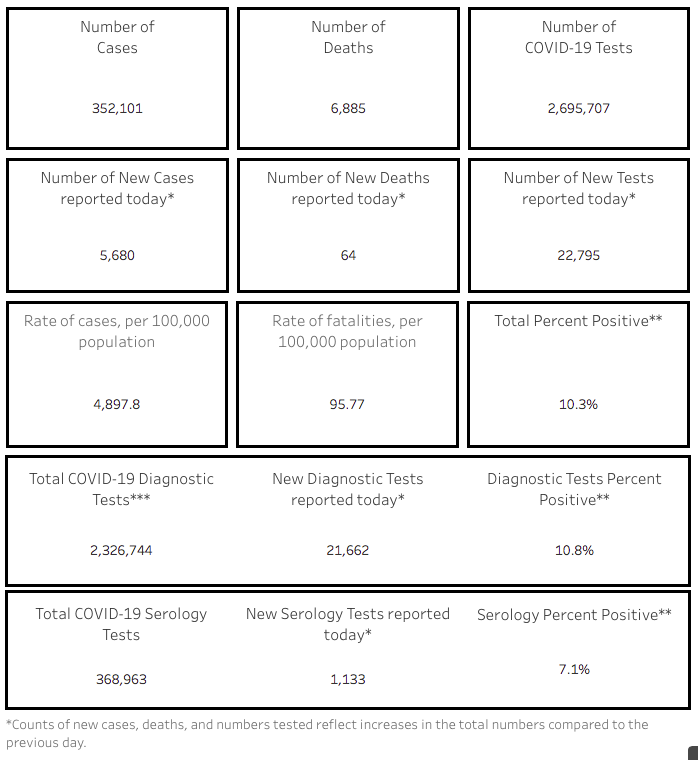
With more than 5,600 new cases reported today, the number of Arizona’s confirmed novel coronavirus cases topped 352,000 as of Friday, Dec. 4, according to the Arizona Department of Health Services.

Pima County, which reported 816 new cases today, has seen 42,698 of the state’s 352,101 confirmed cases.
With 64 new deaths reported yesterday, a total of 6,885 Arizonans had died after contracting COVID-19, including 722 deaths in Pima County, according to the Dec. 4 report.
The number of hospitalized COVID cases statewide continues to soar upward as the virus has begun to spread more rapidly, putting stress on Arizona’s hospitals. ADHS reported that as of Dec. 3, 2,899 COVID patients were hospitalized in the state, the highest that number has been since July 22. That number peaked with 3,517 hospitalized COVID patients on July 13; it hit a subsequent low of 468 on Sept. 27.
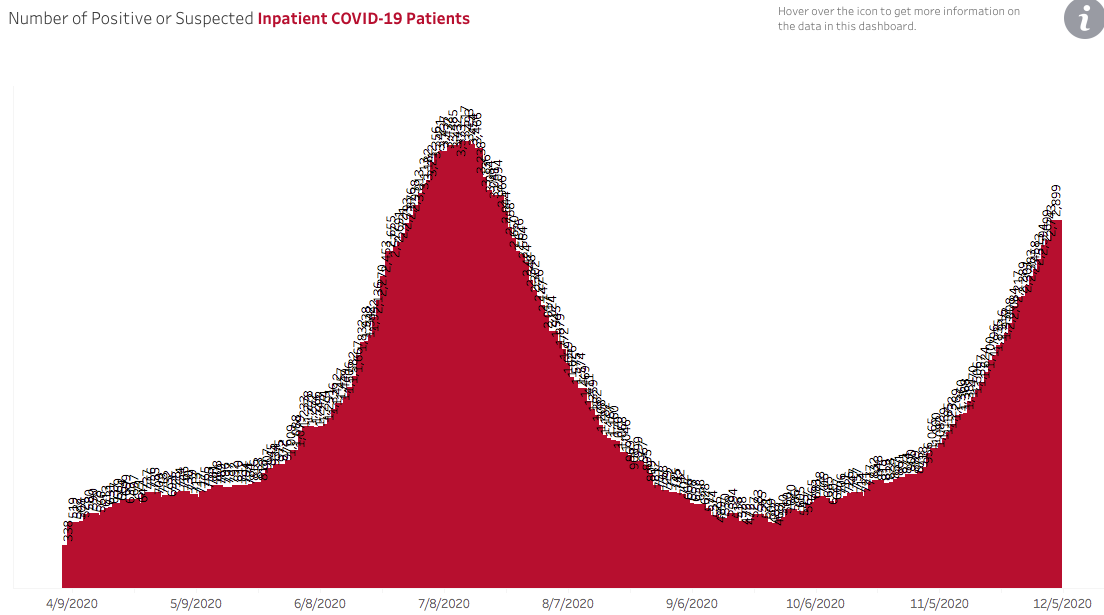
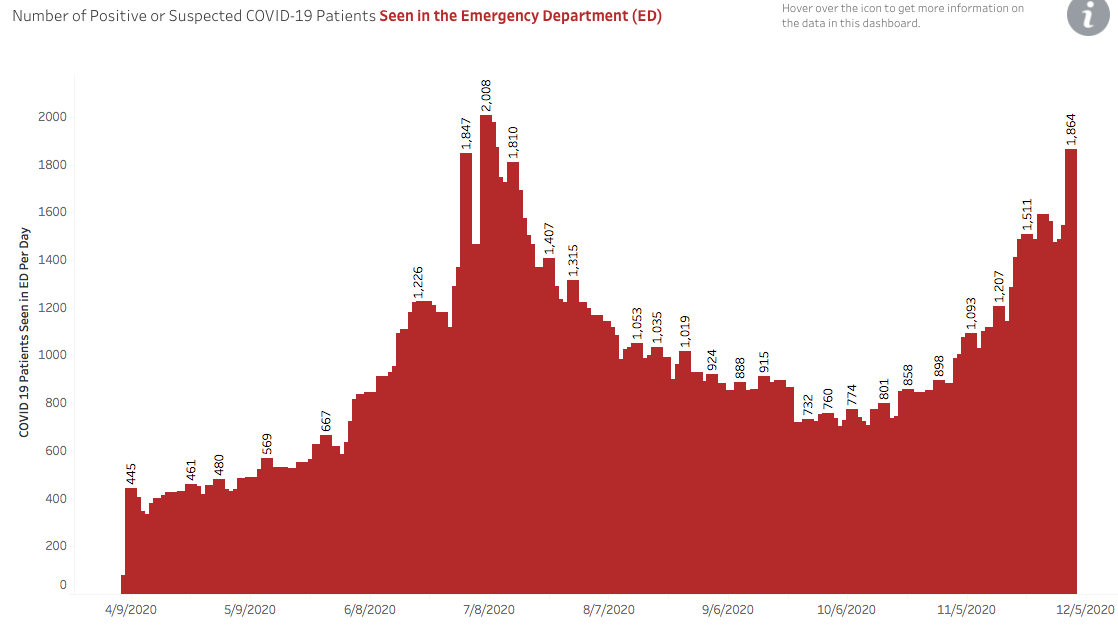
A total of 1,7743 people visited emergency rooms on Dec. 3 with COVID symptoms. That number peaked at 2,008 on July 7; it hit a subsequent low of 653 on Sept. 28.
A total of 666 COVID-19 patients were in intensive care unit beds on Dec. 3, the highest that number has been since Aug. 1. The number of COVID patients in ICUs peaked at 970 on July 13 and hit a subsequent low of 114 on Sept. 22.
Judy Rich, president and CEO of Tucson Medical Center, told the Tucson City Council this week that local hospitals are near or at capacity.
Thursday, December 3, 2020

Tucson Mayor Regina Romero delivered a State of the City address last night providing a message of hope in the face of an unprecedented pandemic while discussing key issues such as climate change, public safety and housing.
After she was sworn into the mayor’s office in December 2019, one of Romero’s first priorities was to create quality core services and work Tucsonan’s needs into the city’s budget.
Then, the coronavirus pandemic hit.
“With priorities set and goals in hand, we began to take action. Shortly after, our city, our state, and our nation was confronted with the worst health crisis our world has seen in recent history,” Romero said. “Despite the challenges that COVID-19 has presented, we banded together as one city, one community, and made immeasurable sacrifices to protect the health of our loved ones and fellow Tucsonans.”
As of Tuesday, Pima County has reported 695 coronavirus deaths and 40,803 cases.
“Each and every one of those lives is much more than just a statistic,” the mayor said. “They were parents, grandparents, sons and daughters, aunts and uncles, friends and neighbors. They were our fellow Tucsonans. The best way we can honor their memory is through maintaining our resolve by continuing to follow public health guidelines.”
Romero said despite a lack of guidance, Tucson was “several steps ahead” of the state and federal government, saving millions in its budget for COVID-19 testing.
But as coronavirus cases reach levels higher than Arizona saw in its summer surge in cases, the mayor pushed a message of hope.
“All of us have sacrificed so much to protect the health of our most vulnerable Tucsonans...Although it is difficult to see, the collective sacrifices of all of us have saved lives,” she said. “I understand how exhausted and fatigued you are with this pandemic, I am too, but we need to stay the course. Brighter days are ahead, there is light at the end of the tunnel.”
Romero lauds Tucson’s economic relief measures during the pandemic
Romero acknowledged the devastating toll the virus has taken on the economy but said the city council’s allocation of $55 million in relief funds through the federal CARES Act money has ensured “those with the greatest need received timely help.”
Wednesday, December 2, 2020
Gov. Doug Ducey revealed a batch of new COVID-19 safety measures at a press conference today as coronavirus cases rise to higher levels than Arizona saw in its summer surge.
Many healthcare workers and experts have called for increased statewide mitigation, but the measures Ducey introduced today fail to completely meet their demands.
More than 155 Arizona physicians, health professionals and educators called upon the governor to instate a statewide mask mandate and prohibit indoor gatherings at venues where crowds of people can gather indoors in an appeal letter today.
Eight leaders from the state’s hospital systems wrote a letter to Arizona Department of Health Services Director Dr. Cara Christ Tuesday pleading for statewide COVID-19 mitigation policies such as a ban on indoor dining and establishing a curfew.
On Monday, experts from the COVID-19 modeling team at the University of Arizona called for a shelter-in-place order and mask mandate to slow the spread of the virus.
Instead, Ducey issued executive orders allowing restaurants to utilize public right-of-ways to expand outdoor dining while giving them $1.2 million to do so and requiring public events with over 50 attendees to enforce mitigation strategies.
The governor also implemented an executive order to ensure when a COVID-19 vaccine arrives, it will be free of charge to those who take it.
Ducey also announced an additional $60 million in funding to increase hospital staffing—an addition to the $25 million in funds for staffing announced Nov. 18, which Ducey said brought 300 additional health care workers into the state.
Ducey said the new influx of funds will provide funding for 500 nurses through January.
“It will ensure our hospitals can care for those who need it and that the existing staff in our hospitals are properly compensated for their dedication and commitment,” Ducey said.
Arizona faces alarming COVID-19 numbers; Ducey criticizes Tucson’s curfew
At the press conference, Christ shared Arizona has reported 340,979 COVID-19 cases and 6,739 coronavirus deaths to date. Key metrics such as case counts, percent positivity and ICU and inpatient hospital bed usage are all trending upward.
Last week, the state had a coronavirus percent positivity of 15%, and Christ said this number is expected to increase this week.
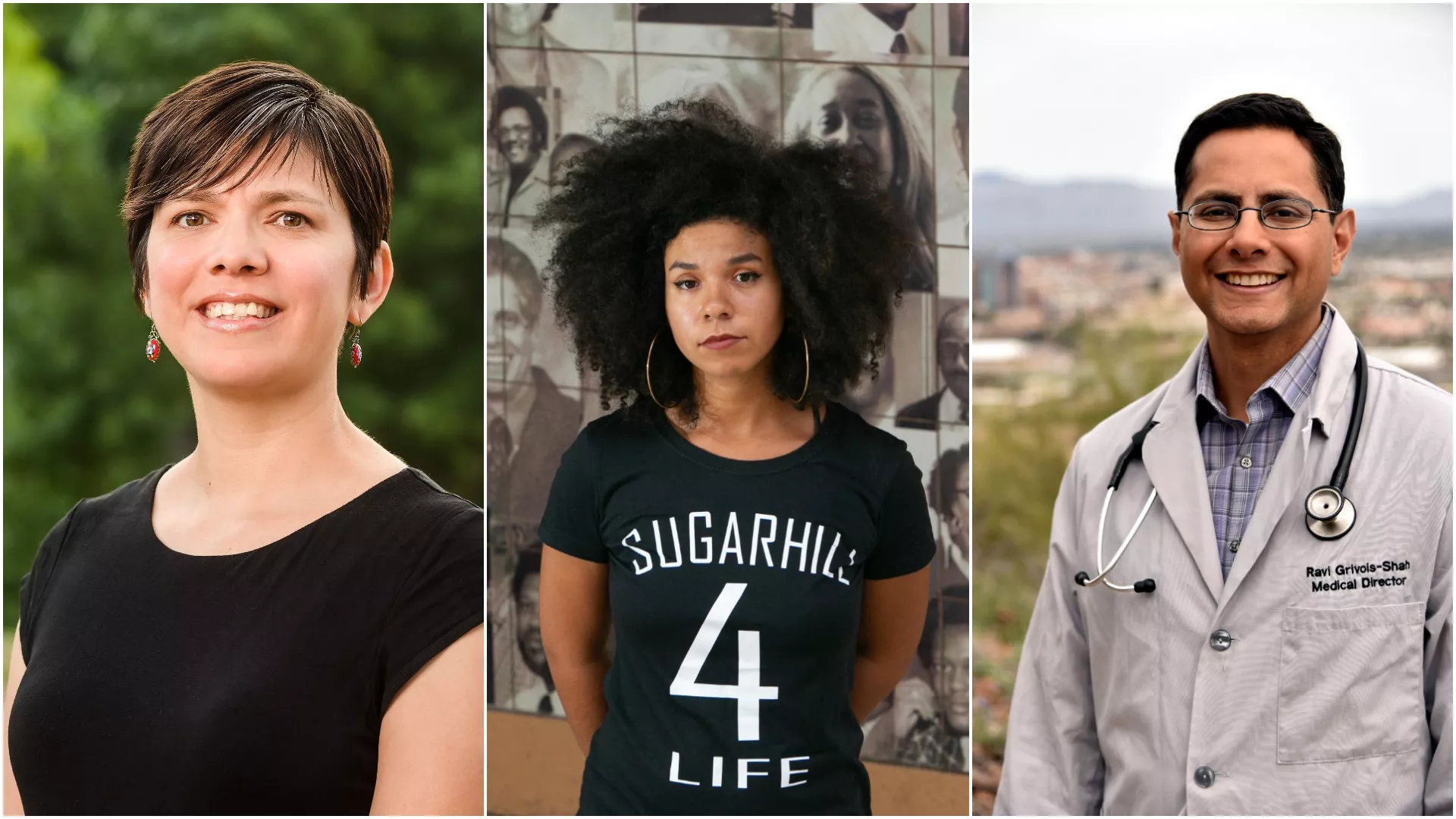
Pima County’s voters elected three new board members to Tucson’s largest school district this November, bringing a variety of new faces and experiences to the school board.
Of the three new board members elected to Tucson Unified School District’s Governing Board, Natalie Luna Rose was elected with 24% of the vote, Sadie Shaw with 18% of the vote and Ravi Grivois-Shah with 17%.
All three new board members have children in the district and will be joining current TUSD parents and board members Adelita Grijalva and Leila Counts, whose terms expire December 31, 2022.
All the incoming board members agree with Superintendent Gabriel Trujillo’s decision to delay implementing a hybrid learning plan throughout the district until January as COVID-19 spreads substantially throughout the county.
Luna Rose, the communications and outreach manager for the Arizona Center for Disability Law, is considering the possibility of the entire school year being remote as metrics tracking the spread of coronavirus reach alarming levels.
“Frankly, judging by the numbers right now, I don't think we're going back Jan. 4, and I'd be really surprised if we're even going to be going back at all,” Luna Rose said. “I saw news reports that they're going to try to start rolling out the vaccine very soon, probably after the first of the year, but even then, that's going to take months for it to even reach Tucson and how are they going to distribute that?”
Shaw, an artist, was pleased with the superintendent's decision due to concerns for students and staff members, but she doesn’t agree with the hybrid model the TUSD school board approved on Oct. 6, which has been put on hold until January.
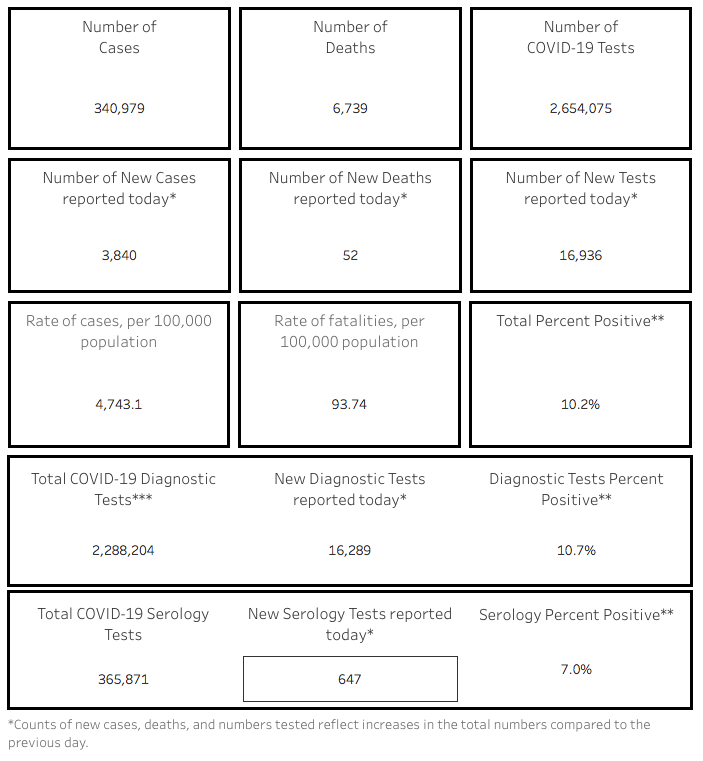
With more than 3,800 new cases reported today, the number of Arizona’s confirmed novel coronavirus cases closed in on 341,000 as of Wednesday, Dec. 2, according to the Arizona Department of Health Services.

Pima County, which reported 994 new cases today, has seen 41,313 of the state’s 340,979 confirmed cases.
With 52 new deaths reported yesterday, a total of 6,739 Arizonans have died after contracting COVID-19, including 697 deaths in Pima County, according to the Dec. 2 report.
The number of hospitalized COVID cases statewide continues to climb upward as the virus has begun to spread more rapidly, putting stress on Arizona’s hospitals. ADHS reported that as of Dec. 1, 2,699 COVID patients were hospitalized in the state, the highest that number has been since July 24 That number peaked with 3,517 hospitalized COVID patients on July 13; it hit a subsequent low of 468 on Sept. 27.
A total of 1,864 people visited emergency rooms on Dec. 1 with COVID symptoms, the highest that number has been since July 9. That number peaked at 2,008 on July 7; it hit a subsequent low of 653 on Sept. 28.
A total of 642 COVID-19 patients were in intensive care unit beds on Dec. 1, the highest that number has been since Aug. 1. The number of COVID patients in ICUs peaked at 970 on July 13 and hit a subsequent low of 114 on Sept. 22.
Judy Rich, president and CEO of Tucson Medical Center, told the Tucson City Council last night that local hospitals are near or at capacity.
“I believe stricter measures, like the ones we used earlier this year, are the only path to avert the impending crisis,” Rich told the council. “I recognize that the City might not have the legal authority to mandate such actions, but it should be the position of the City to advocate to state leadership that it is required to prevent unnecessary loss of life and illness.”
On a week-by-week basis in Pima County, the number of positive COVID tests peaked the week ending July 4 with 2,452 cases, according to an Nov. 25 report from the Pima County Health Department. (Numbers in this report are subject to revision.)
Pima County is seeing a dramatic rise in cases in recent weeks. For the week ending Oct. 31, 1,348 cases were reported; for the week ending Nov. 7, 2,119 cases were reported; and for the week ending Nov. 14, 2,578 cases were reported; for the week ending Nov. 21, 3,313 cases were reported.
COVID-related deaths in Pima County are down from a peak of 54 in the week ending July 4 but are on the rise. There were three deaths in the week ending Oct 10, one in week ending Oct. 17, six in the week ending Oct. 24; 10 in the week ending Oct. 31 and five in the week ending Nov. 7.
Hospitalization admission peaked the week ending July 18 with 221 COVID patients admitted to Pima County hospitals, but those numbers have been on the rise in recent weeks. In the week ending Oct. 31, 66 people were admitted; in the week ending Nov. 7, 90 people were admitted; in the week ending Nov. 14, 127 people were admitted; and in the week ending Nov. 21, 139 people were admitted.
Tucson City Council enacts 10 p.m. to 5 a.m. curfew
The Tucson City council voted to enact a citywide curfew from 10 p.m. to 5 a.m. daily that will go into effect Friday, Dec. 4 until Dec. 23.
The council voted 6-0, amending Tucson Mayor Regina Romero’s initial proclamation to set an 8 p.m. to 5 a.m. curfew that would have begun tonight.
On Nov. 23, the Pima County Health Department announced a voluntary overnight curfew from 10 p.m. to 5 a.m. every day until Dec. 31—but it’s not enforceable.
As part of the amended curfew agreement among the city’s council members, if Pima County changes their voluntary curfew time, Tucson’s curfew time will follow suit.
The proposed curfew would prohibit everyone from being in public places with the following exceptions:
Emergency response personnel
Traveling to and from work
Attending religious services
Caring for a family member
Seeking medical care
Fleeing dangerous circumstances
Traveling to perform or receive essential functions
Homeless persons
City Attorney Mike Rankin specified traveling to essential businesses such as grocery, home goods and hardware stores is allowed. Travel to restaurants for consumption off-premises is also allowed by means of take out, delivery, curbside and drive-thru food orders.
“The curfew does not order the closure of any business at any particular time, instead, what it does is it regulates when people can be in public places, which includes traveling on the public streets,” Rankin said at the council’s meeting. “It does not, as presented, prevent people from traveling to or from any essential activity or essential functions, even during the curfew hours.”
Offenders of the curfew will be subject to a civil infraction that holds a fine of up to $300.
Get tested: Pima County opening new sites alongside existing spots for free COVID testing
Pima County offers a number of testing centers around town.
You’ll have a nasal swab test at the Kino Event Center (2805 E. Ajo Way) the Udall Center (7200 E. Tanque Verde Road) and downtown (88 E. Broadway).
The center at the northside Ellie Towne Flowing Wells Community Center, 1660 W. Ruthrauff Road, involves a saliva test designed by ASU.
In addition, the Pima County Health Department, Pima Community College and Arizona State University have partnered to create new drive-thru COVID-19 testing sites at three Pima Community College locations. At the drive-thru sites, COVID-19 testing will be offered through spit samples instead of nasal canal swabs. Each site will conduct testing from 9 a.m. to noon, and registration is required in advance. Only patients 5 years or older can be tested.
Schedule an appointment at pima.gov/covid19testing.
The University of Arizona’s antibody testing has been opened to all Arizonans as the state attempts to get a handle on how many people have been exposed to COVID-19 but were asymptomatic or otherwise did not get a test while they were ill. To sign up for testing, visit https://covid19antibodytesting.arizona.edu/home.
—with additional reporting from Austin Counts, Jeff Gardner, Nicole Ludden and Mike Truelsen
Tuesday, December 1, 2020
The Tucson City council voted to instate a citywide curfew from 10 p.m. to 5 a.m. daily that will go into effect Friday, Dec. 4 until Dec. 23.
The council voted 6-0, amending Tucson Mayor Regina Romero’s initial proclamation to set an 8 p.m. to 5 a.m. curfew that would have begun tonight.
On Nov. 23, the Pima County Health Department announced a voluntary overnight curfew from 10 p.m. to 5 a.m. every day until Dec. 31—but it’s not enforceable.
As part of the amended curfew agreement among the city’s council members, if Pima County changes their voluntary curfew time—whether voluntary or mandatory—Tucson’s curfew time will follow suit.
The proposed curfew would prohibit everyone from being in public places with the following exceptions:
- Emergency response personnel
- Attending religious services
- Caring for a family member
- Seeking medical care
- Fleeing dangerous circumstances
- Traveling to perform or receive essential functions
- Homeless persons
City Attorney Mike Rankin specified traveling to essential businesses such as grocery, home goods and hardware stores is allowed. Travel to restaurants for consumption off-premises is also allowed by means of take out, delivery, curbside and drive-thru food orders.
“The curfew does not order the closure of any business at any particular time, instead, what it does is it regulates when people can be in public places, which includes traveling on the public streets,” Rankin said at the council’s meeting. “It does not, as presented, prevent people from traveling to or from any essential activity or essential functions, even during the curfew hours.”Offenders of the curfew will be subject to a civil infraction that holds a fine of up to $300.
The council also voted 6-0 to approve a $6 million financial aid package comprised of federal CARES Act funds to be distributed throughout Tucson as follows:
- $3 million for small businesses
- $2 million for workers and families
- $375,000 for arts and culture organizations
- $375,000 for entertainment venues
- $250,000 for child care
To help those who might be impacted by the curfew passed tonight, my colleagues and I also approved additional relief...
Posted by Mayor Regina Romero on Tuesday, December 1, 2020
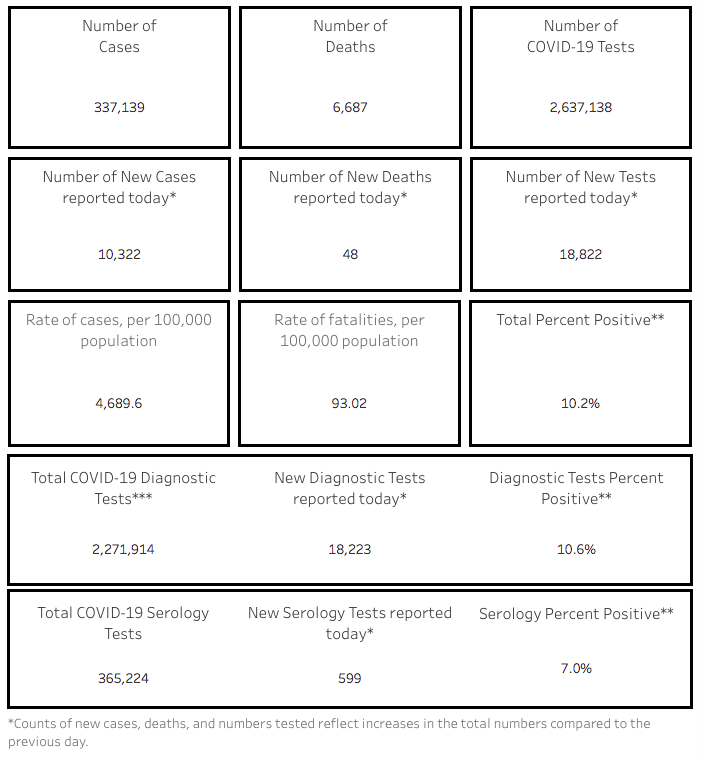
With more than more than 10,000 new cases reported today, the number of Arizona’s confirmed novel coronavirus cases topped 337,000 as of Tuesday, Dec. 1, according to the Arizona Department of Health Services.

Pima County, which reported 994 new cases today, has seen 40,803 of the state’s 337,139 confirmed cases.
ADHS Director Cara Christ said the large number of cases was a result of flow processing of tests over the holiday weekend.
“Most days, local health agencies review and classify newly reported cases (identifying them as confirmed, probable, or not a case),” Christ said in a prepared statement. “They will follow up with healthcare providers and laboratories if there are any questions about details on a case, which may take additional time over the holidays. The confirmed and probable cases identified are then reported out on our dashboard the next day as the number of new cases. With the long weekend, classification was delayed for a large portion of cases, resulting in much higher numbers than usual.”
With 48 new deaths reported yesterday, a total of 6,687 Arizonans had died after contracting COVID-19, including 695 deaths in Pima County, according to the Dec. 1 report.
The number of hospitalized COVID cases statewide continues to climb upward as the virus has begun to spread more rapidly, putting stress on Arizona’s hospitals. ADHS reported that as of Nov. 30, 2,594 COVID patients were hospitalized in the state, the highest that number has been since July 26. That number peaked with 3,517 hospitalized COVID patients on July 13; it hit a subsequent low of 468 on Sept. 27.
A total of 1,545 people visited emergency rooms on Nov. 30 with COVID symptoms. That number peaked at 2,008 on July 7; it hit a subsequent low of 653 on Sept. 28.
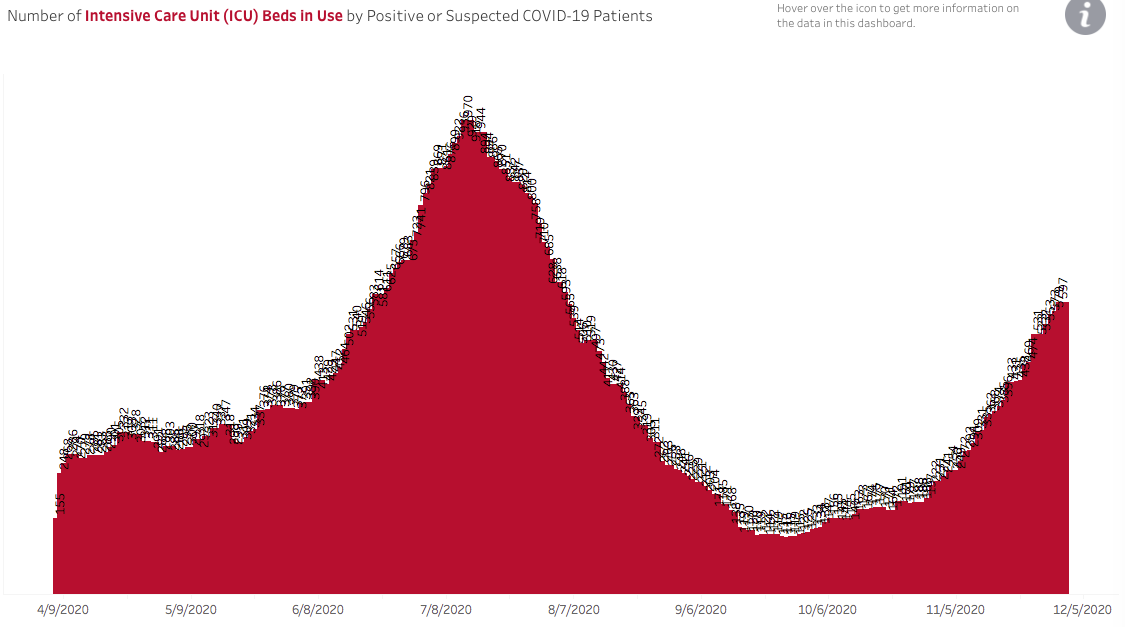
A total of 597 COVID-19 patients were in intensive care unit beds on Nov. 30, the highest that number has been since Aug. 4. The number of COVID patients in ICUs peaked at 970 on July 13 and hit a subsequent low of 114 on Sept. 22.

