

Tuesday, November 3, 2020
If you want to know who's voting out there today, follow the fascinating Twitter feed of Democratic strategist Sam Almy of Saguar Strategies, who is updating the returns and tracking the number of Democrats, Republicans and independents who are cast ballots. It's just the thing to soothe your election anxiety—or maybe increase it!Statewide update now. Pima & Coconino reporting this morning. Update includes poll voters from Maricopa.
— Sam Almy (@sfalmy) November 3, 2020
Didn't mention it earlier, but early votes have passed all of 2016 turnout at this time.
Total: 2.7M
Turnout: 63%
Party Adv: +42k GOP*
Details: https://t.co/t8b18G7DDA pic.twitter.com/2pn67vgFDo
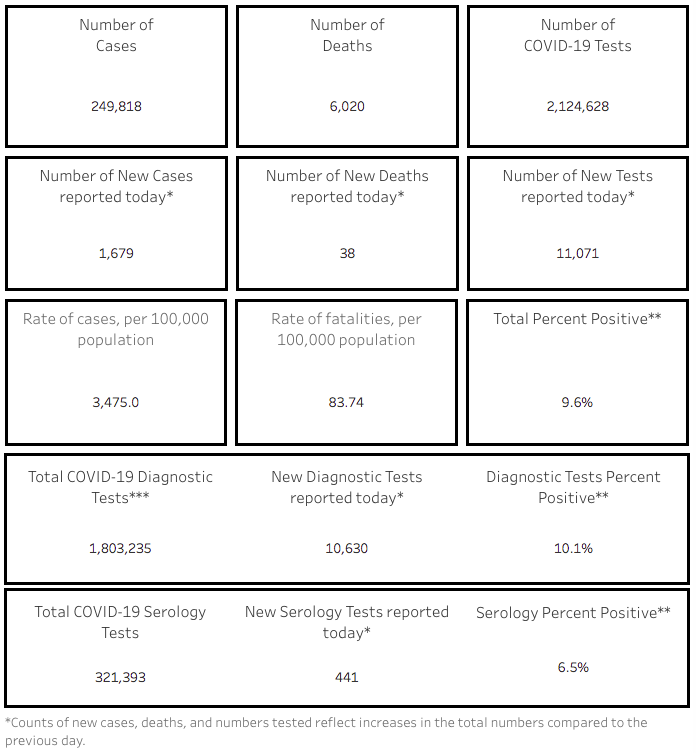
With 1,679 new cases reported today, the number of Arizona’s confirmed novel coronavirus cases closed in a quarter-million as of Tuesday, Nov. 3, according to the Arizona Department of Health Services.

Pima County had seen 29,141 of the state’s 249,818 confirmed cases.
With 38 new deaths reported yesterday, a total of 6,020 Arizonans had died after contracting COVID-19, including 646 deaths in Pima County, according to the Nov. 3 report.
Although the current rise in COVID-19 cases is alarming, Gov. Doug Ducey warned last week there’s even more to come.
“We know that there is a storm ahead of us, yet it’s not here,” Ducey said. “But those simple guidelines of wearing a mask, washing our hands, being socially distanced and using common sense have served us very well to date.”
However, the governor doesn’t plan on imposing new safety restrictions to prevent further spread of COVID-19.
“The mitigation that we’ve put out, the plan we put into effect remains in effect. I am proud that Arizona is open, that our economy is open, that our educational institutions are open and our tourist destinations are open,” Ducey said. “While at the same time, we do have mitigation steps in place that have allowed us to protect lives while protecting livelihoods, and we’re gonna continue to do that.”
The number of hospitalized COVID cases statewide has declined from July peaks but has ticked upward in recent weeks as the virus has begun to spread more rapidly. ADHS reported that as of Nov. 2, 956 COVID patients were hospitalized in the state. That number peaked with 3,517 hospitalized COVID patients on July 13; it hit a subsequent low of 468 on Sept. 27.

Election Day 2020 is finally here. Polls are open until 7 p.m. throughout Pima County.
If you need to find your polling location, you can do it here.
If you still have an early ballot, it's far too late to mail it, so drop it off at any polling location.
Election officials are asking voters to please mask up if you're going to cast a ballot in person.
Results will be available starting around 8 p.m. tonight. Check back here at TucsonWeekly.com throughout the night for the latest news and analysis.
Monday, November 2, 2020
As Tucson’s schools reopen for in-person classes, some are reporting an increasing number of COVID-19 cases among students and staff—many who are being asked to quarantine themselves if they were in contact with people who have tested positive.
As of Monday, the Amphitheater Unified School District has reported 20 active coronavirus cases resulting in 98 students and staff members quarantining, according to Communications Director Michelle Valenzuela.
Since opening in a hybrid model on Oct. 12, Amphitheater has reported 24 total cases reaching 10 different school sites. Valenzuela says four of those cases are no longer active.
Superintendent Todd Jaeger believes the cases are originating from off-campus events.
“While it's somewhat defeating and concerning that we've had the cases that we had, it's notable to me that they have all originated off of campus,” Jaeger said. “In other words, we don't have a single case yet that we know of that originated on campus.”
The superintendent said high COVID-19 case counts are usually related to one specific activity that occurred over a weekend. Such was the case, according to Jaeger, with eight Ironwood Ridge High School students who tested positive over the past week.
He asks students to practice proper safety protocol to avoid the virus as much outside of school as they do in the classrooms.
“The message for everyone there is that you can’t socially distance, you cannot properly wear masks, you cannot take appropriate precautions in just one part of your life, it has to be in all walks of your life,” Jaeger said. “In school, still, it does not take a lot of policing, the kids are generally very, very compliant. I guess I was hoping that was the case off of campus as well.”
At Holaway Elementary, both fifth-grade classrooms moved to entirely online instruction after two staff members reported positive COVID-19 tests on Oct. 28 and 31.
Jaeger said these larger quarantines will be “narrowly tailored” based on each school’s coronavirus outbreaks after consulting with the Pima County Health Department.
“We are always going to keep the safety of students at the forefront of our decision making. We're consulting specifically with public health officials, epidemiologists and the like to tell us what we should do,” he said. “It's all of those other events in our life that pose potential exposure risks as well, that we have to be vigilant of. We have to be vigilant in all of our interactions out there in public right now.”
Here are all the Amphitheater schools that have reported positive coronavirus cases since reopening:

University of Arizona junior Celeste Marquez is voting in her first election.
“I am voting because I want a leader who believes in science, who stands for women’s and minorities’ rights and someone who will make mine and others’ futures better,” said Marquez, a 21-year-old studying family studies and human development.
Sophomore Alan Cristobal Elias, who is studying law, feels an obligation to vote for the Latino community.
“Whether it be the systemic racism that affects us or our Latino brothers and sisters that get caught crossing the border, it’s our duty to vote,” Elias said.
Elias is supporting the Biden/Harris ticket and hopes a Democratic administration will do a better job of addressing police brutality and abortion rights.
Senior Mauricio Herrera, another first-time voter, intends to drop off his ballot on Election Day.
“A lot of damage has been caused by the current president and we need someone to reverse it and make sure the voices of the people are heard,” Herrera said.
These three UA students, much like their peers, have been a major target for Democratic get-out-the-vote efforts. College students are a fickle voter demographic; in 2012 only 11,361 UA students voted out of 30,113 for a turnout of 37.7%, according to a campus report by the National Study of Learning, Voting, and Engagement; in 2016, that same survey showed that only 12,105 out of 33,130 cast a ballot, or 36.5%.
This year looks different.
Aggressive get-out-the-vote strategies appear to be getting younger voters to turn out. As of Oct. 31, among Pima County’s 80,314 registered voters between the ages of 18 and 25, 31,584 had returned ballots, for a rate of greater than 39 percent.
UA President Robert C. Robbins said the Democratic platform likely ticket “resonates more with university-aged students.”
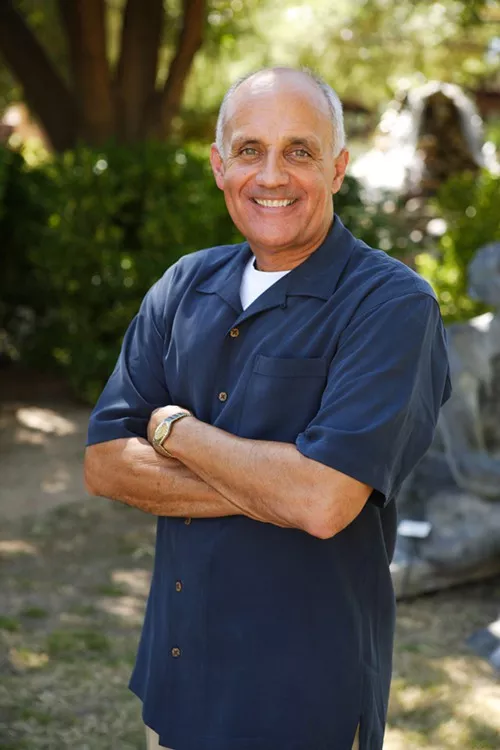
The University of Arizona is reporting elevated COVID-19 cases reflective of a state-wide uptick after large gatherings occurred over the Halloween weekend, UA President Robert C. Robbins said in a news conference Monday, Nov. 2.
From Oct. 23 through Nov. 1, UA found 79 positive coronavirus cases after administering 7,122 tests for a positivity rate of 1.1%, an increase from the 0.6% rate the university reported the previous 10-day period.
The university found seven gatherings with over 100 attendees throughout the past week. UA’s CART team, a collaboration with the UA and Tucson police departments that looks for noncompliance to COVID-19 precautions, responded to 18 incidents since Oct. 26.
“This is not just a nuisance. These people who are acting indiscriminately are placing all of us at risk,” Reentry Task Force Director Richard Carmona said.
The university allowed classes of 50 or fewer students to return to campus last week as it continues phase 2 of its reopening plan. According to Carmona, there have been no issues with classroom transmissibility.
Robbins says the university will continue in this phase until fall break on Nov. 26 if public health metrics tracking the spread of coronavirus allow. However, some of these metrics are beginning to cause concern.
“We’re concerned about the deterioration of conditions nationally,” Robbins said. “While Pima County is faring better than some other areas, we do see some signs of concern here as well.”
Carmona said Pima County’s current R0, pronounced “R naught,” which indicates how contagious a virus is, has increased to 1.71 from 0.99 last week. The transmissibility rate for the zip code surrounding the university has increased from 0.68 to 1.25 this week.
Statewide, coronavirus is spreading as fast as it did in June. Carmona went over data showing over the past 14 days, coronavirus cases in the state increased by 67%, while deaths increased by 57%.
As COVID-19 cases rise, the university is continuing its preparation for fall break, requiring all main campus students to complete a survey with their traveling plans. After completing the survey, students will be directed to a website to register for the university’s appointment-only “testing blitz” from Nov. 9-15.
If students travel outside the Tucson area over fall break, the university is asking them to complete the semester outside the area or remotely online. Those who don’t travel can complete the semester from their student residences.
Friday, October 30, 2020

This year, Pima County voters will decide a new District 1 Supervisor after Republican Ally Miller held the seat for eight years.
Now, Republican Steve Spain and Democrat Rex Scott are vying for the Pima County Board of Supervisors’ seat in District 1, a position that determines a wide range of public policy in the county.
The district, representing Marana, Casa Adobes, Oro Valley, and the Catalina Foothills, has reliably voted for Republicans in recent decades. This year’s Republican candidate, has a history as a political pundit penning right-leaning opinion pieces for the online Arizona Daily Independent.
Spain has been unabashedly critical of the current Pima County Administrator Chuck Huckelberry. In an analysis of Pima County elections results in the 2016 general election, he criticized the election of District 4 Supervisor Steve Christy, calling him “the county establishment’s token quasi-Republican rubber stamp.”
“This, naturally, secures the position and malfeasance of Chuck Huckelberry, the nearly-half-a-million-dollar-a-year puppet of Diamond, Lopez, Click, Mehl, and the other members of the cabal that has this town by its short hairs,” Spain wrote.
But the latest campaign filing reports reveal Spain’s campaign for district supervisor took $12,000 from Humberto Lopez, Jim Click and David Mehl — presumably the same “members of the cabal” Spain mentioned.
The contributions from these individuals comprised 19% of Spain’s total campaign contributions as of Oct. 17.
The Spain campaign’s 2020 pre-general report shows he received $5,000 from Jim Click, the owner of several car dealerships in Tucson and Green Valley, on Oct. 8.
The third-quarter campaign finance report shows a $5,000 contribution from David Mehl, the owner of real estate development company Cottonwood Properties, on Aug. 27. Humberto Lopez, the president of real estate development and investment company HSL Properties, Inc., contributed $2,000 on Sept. 24.
As of Friday, Spain has not responded to Tucson Weekly’s request for comment.
The only entity Spain mentioned in the quoted portion of his 2016 article whom he didn’t receive funds from is “Diamond,” which presumably refers to the late legendary land speculator Don Diamond, who died in 2019.
Rex Scott’s campaign received $1,950 from individuals associated with Diamond Ventures, the company founded by Don Diamond.
The private company’s Vice President Priscilla Storm contributed $500 on Oct. 6. On Sept. 14, Diamond Ventures’ President David Goldstein gave $1,000. The company’s principal who oversees philanthropy, Helaine Levy, gave $200 on Sept. 10, and Chief Financial Officer William Kelley gave $250 on Sept. 9.
Since the last reporting date Oct. 26, Scott’s campaign had received $128,568.82 in total contributions, and Spain’s campaign received $61,842.05.
“There is no Clean Elections option for county elections, so we have to play by the rules that are set in front of us, and that means taking money from folks who are interested in the races,” said Adam Kinsey, a consultant for the Rex Scott campaign. “That's not the problem, the hypocrisy is when you slam these people and say that those contributions will result in actions as an elected official. When you say that they are buying the county administrator, they are buying these politicians, when you make claims like that, and then you take the money yourself, that's where we're got a problem.”
The Democratic candidate in the race for district 1 posted Spain’s comments about “the cabal that has this town by its short hairs,” and the revelations from his latest campaign findings on a website listing the Republican candidate’s past statements as a political pundit.
“We know that Steve Spain is largely unknown to most voters. But we know that he also has an incredible body of work that's out there in the public sphere, because he's been blogging on this sort of alt-right blog, the Arizona Daily Independent, for years,” Kinsey said. “Rex is a career educator, and he does not want to go negative. He does not want to mud sling, he does not want to make any baseless political attacks. So he said, one thing we can do is just share what Steve Spain has put out into the world with the voters and let his words speak for themselves.”
This article has been edited to include an additional quote from political consultant Adam Kinsey as well as the Scott campaign's fundraising totals.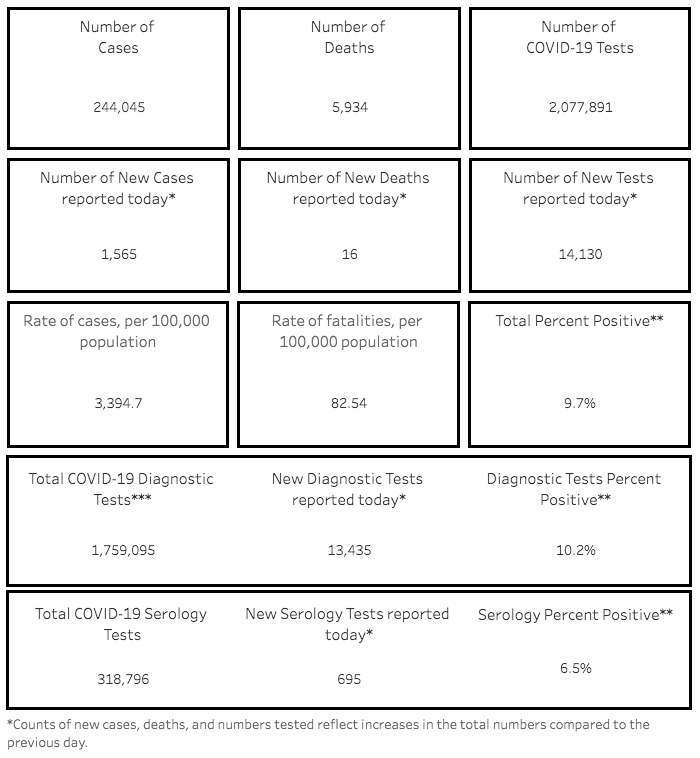
With 1,565 new cases reported today, the number of Arizona’s confirmed novel coronavirus cases topped 244,000 as of Friday, Oct. 30, according to the Arizona Department of Health Services.

Pima County had seen 28,296 of the state’s 244,045 confirmed cases.
With 16 new deaths reported yesterday, a total of 5,934 Arizonans had died after contracting COVID-19, including 639 deaths in Pima County, according to the Oct. 30 report.
The number of hospitalized COVID cases has declined from July peaks but has ticked upward in recent weeks as the virus has begun to spread more rapidly. ADHS reported that as of Oct. 29, 900 COVID patients were hospitalized in the state. That number peaked with 3,517 hospitalized COVID patients on July 13; it hit a subsequent low of 468 on Sept. 27.
A total of 898 people visited emergency rooms on Oct. 29 with COVID symptoms. That number peaked at 2,008 on July 7; it hit a subsequent low of 653 on Sept. 28.
A total of 188 COVID-19 patients were in intensive care unit beds on Oct. 29. The number of COVID patients in ICUs peaked at 970 on July 13 and hit a subsequent low of 114 on Sept. 22.
On a week-by-week basis in Pima County, the number of positive COVID tests peaked the week ending July 4 with 2,452 cases, according to an Oct. 29 report from the Pima County Health Department.
Pima County saw a big bump in cases following the return of UA students, followed by a steady decline and then a big bump upward. For the week ending Sept. 19, 1,230 cases were reported; for the week ending Sept. 26, 615 cases were reported; for the week ending Oct. 3, 533 cases were reported; for the week ending Oct. 10, 465 cases were reported; for the week ending Oct. 17, 512 cases were reported; and for the week ending Oct. 24, 829 cases were reported.
Thursday, October 29, 2020
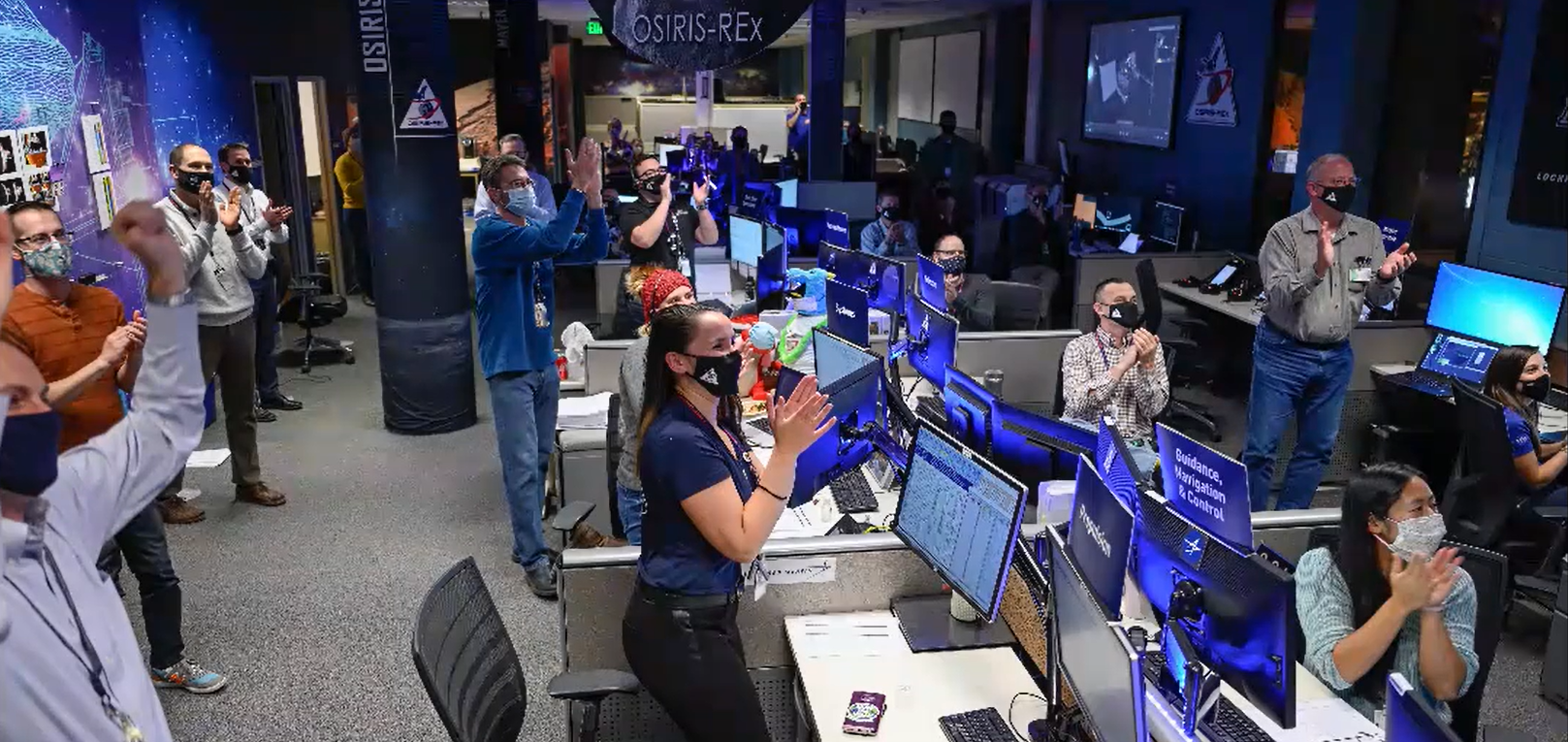
The University of Arizona-led space mission to retrieve a sample from an asteroid endured a tense day that turned out to be a blessing. On Tuesday Oct. 20, the OSIRIS-REx spacecraft touched down on the asteroid Bennu more than 200 million miles away to capture some of the rocks and dust on its surface. While the spacecraft successfully touched down and backed away, scientists soon realized the spacecraft’s sample collection compartment was overflowing with material., and some of the captured sample was slipping back into space.
“This turned out to be great news,” said OSIRIS-REx project manager Rich Burns. “But we knew we had to adapt our plans, because this definitely wasn’t something we planned for.”
Because there was an “abundant sample” and some was slipping out, the mission team quickly worked to stow away the collector head, a process that took two days, with preparations for the stowage event beginning Oct. 24. This loss of material required the team to redesign the timeline of their stowage process, which was originally slated for November.
According to the university, the process to stow the sample is unique compared to other spacecraft operations and required the team's continuous oversight and input over the two-day period. For the spacecraft to proceed with each step in the stowage sequence, the team had to assess images from the previous steps to confirm the operation was successful and the spacecraft was ready to continue. Because of the spacecraft’s distance there was roughly a 20-minute delay to receive messages and images. Ultimately, the team announced they were successful in stowing away the sample.
Agreements with NASA required the spacecraft to collect at least roughly 60 grams of material from the asteroid's surface — if that much was not collected, the team would have to try again. And although the collection compartment lost “tens of grams” worth of material, the OSIRIS-REx team estimates the spacecraft currently holds at least 400 grams worth of material. Because the images returned from the spacecraft only show a portion of the collection compartment, more than a kilogram of material may be captured, but we’ll have to wait until 2023 when the spacecraft returns to Earth to know for sure.
Data from the spacecraft also indicated that the sampling arm penetrated the asteroid’s rocky surface as deep as 48 centimeters. Dante Lauretta, OSIRIS-REx principal investigator and a professor of planetary sciences at UA, says it is likely some of the material captured is from that deep within the asteroid.
If successful, the OSIRIS-REx spacecraft will be the first American space mission to return a sample of an asteroid back to Earth. With the sample, scientists hope to better understand the formation of our solar system, and possibly even the origins of life on Earth.
Because the collected samples will be limited, Betsy Cantwell, UA’s senior vice president for research and innovation, says a major decision will be figuring out who gets to work with them. Cantwell expects a portion of the material will be investigated at UA, and some will even be stored for posterity to be examined when even more advanced scientific sensors are available in the future.
“Even though my heart breaks for the loss of sample, it turned out to be a pretty cool science experiment, and we’re learning a lot about how these particles behave in microgravity,” Lauretta said. “I'm very thankful that our team worked so hard to get this sample stowed as quickly as they did... Now, we can look forward to receiving the sample here on Earth and opening up that capsule."

Gov. Doug Ducey and Arizona Department of Health Services Director Dr. Cara Christ provided a COVID-19 update at a press conference today amid rising cases throughout the state.
On Oct. 29, the Arizona Department of Health Services reported 1,315 new COVID-19 cases throughout the state, with a percent positivity of 9.7%.
Pima County reported 105 new COVID-19 cases today and now has recorded 28,067 of Arizona’s 242,480 total positive cases.
“The recent increase in cases has resulted in an increase in the COVID-19 rates in many counties,” Christ said at the press conference. “At the Arizona Department of Health Services, we remain on high alert. We’ve worked to contain COVID-19 from all angles, and we continue to take further action in light of recent increases.”
Although Ducey acknowledged Arizona’s rising coronavirus numbers, he said in comparison to other states, “we’re not in that zone that we’re seeing in other places.”
“We do see this rising in different parts of the country, our expectation in Arizona has been that cases would continue to go up,” he said.
The governor recognized that the state’s current R naught number, which indicates how contagious a virus is, is currently at 1.16, which means coronavirus is spreading as fast as it did in June.
“Arizona did one of the best jobs in the nation when our time of challenge did come of driving it beneath one, but as we head into influenza season it becomes more challenging,” Ducey said.
Although the current rise in COVID-19 cases is alarming, Ducey said there’s even more to come.
“We know that there is a storm ahead of us, yet it’s not here,” Ducey said. “But those simple guidelines of wearing a mask, washing our hands, being socially distanced and using common sense have served us very well to date.”
However, the governor doesn’t plan on imposing new safety restrictions to prevent further spread of COVID-19.
“The mitigation that we’ve put out, the plan we put into effect remains in effect. I am proud that Arizona is open, that our economy is open, that our educational institutions are open and our tourist destinations are open,” Ducey said. “While at the same time, we do have mitigation steps in place that have allowed us to protect lives while protecting livelihoods, and we’re gonna continue to do that.”
Given the likelihood of travel and large gatherings, Christ says she anticipates seeing a spike 10-14 days after Thanksgiving that could potentially increase over the next 4-6 weeks.
In preparation for the holiday season, she said ADHS will be putting out guidance, working on mitigation strategies and making sure hospitals have enough resources, although she said the biggest barrier for hospitals is not “the beds, but could be the staffing.”
Christ urged citizens to continue mitigation tactics such as wearing a mask, maintaining social distancing and getting an influenza shot.
“We understand that this has been a difficult year, and many have grown tired of the mitigation strategies. But now is not the time to let up,” she said.
When asked about the example he’s setting for Arizonans after repeatedly attending public events sans-mask, including at a Trump rally at the Prescott Regional Airport Oct. 19 and as he spoke at today’s press conference, Ducey called upon the First Amendment.
“We’ve been consistent the entire time through the pandemic to protect people’s rights under the Constitution,” Ducey said. “There are five days left in the election cycle and we’ll continue to protect people’s rights.”

