
Thursday, October 29, 2020
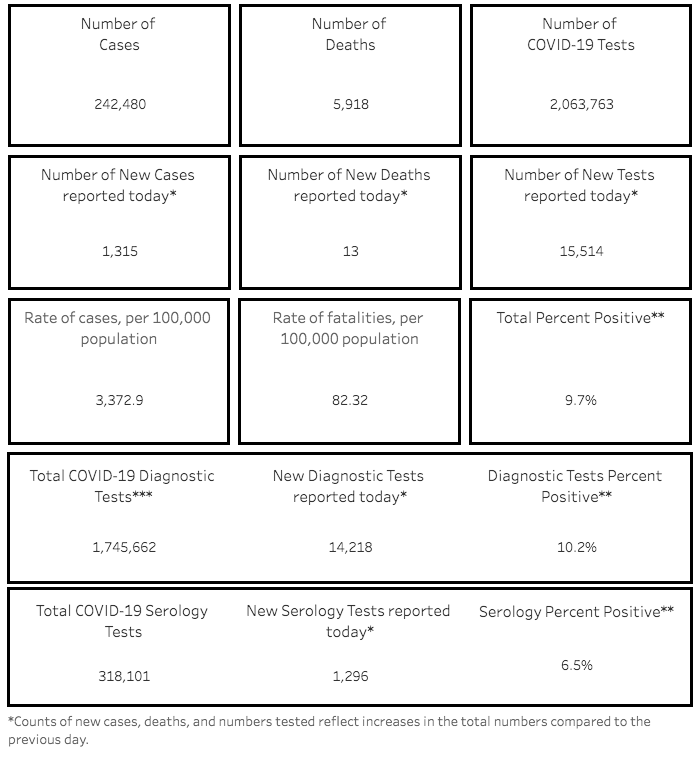
With 1,315 new cases reported today, the number of Arizona’s confirmed novel coronavirus cases topped 242,000 as of Thursday, Oct. 29, according to the Arizona Department of Health Services.

With 105 new cases reported today, Pima County had seen 28,067 of the state’s 241,116 confirmed cases.
With 14 new deaths reported yesterday, a total of 5,905 Arizonans had died after contracting COVID-19, including 638 deaths in Pima County, according to the Oct. 29 report.
The number of hospitalized COVID cases has declined from July peaks but has ticked upward in recent weeks as the virus has begun to spread more rapidly. ADHS reported that as of Oct. 28, 874 COVID patients were hospitalized in the state. That number peaked with 3,517 hospitalized COVID patients on July 13; it hit a subsequent low of 468 on Sept. 27.
A total of 857 people visited emergency rooms on Oct. 28 with COVID symptoms. That number peaked at 2,008 on July 7; it hit a subsequent low of 653 on Sept. 28.
A total of 186 COVID-19 patients were in intensive care unit beds on Oct. 27. The number of COVID patients in ICUs peaked at 970 on July 13 and hit a subsequent low of 114 on Sept. 22.
Arizona Department of Health Director Cara Christ noted on her blog last week that cases in the state were on the increase.
Christ wrote that while Arizona has not seen as big a surge as other states, “we have recently seen a shift of COVID-19 spread in the wrong direction.”
Christ noted that the statewide positivity results from tests has climbed from 3.9 percent to 5.5 percent in recent weeks.
Christ urged Arizonans to wear masks but noted the numbers across the state still indicated “moderate” spread of the coronavirus and hospitals are not reporting a surge of patients.
On a week-by-week basis in Pima County, the number of positive COVID tests peaked the week ending July 4 with 2,452 cases, according to an Oct. 21 report from the Pima County Health Department.
After a bump following the return of UA students, cases on a week-to-week basis declined but have hit a plateau. For the week ending Sept. 19, 1,221 cases were reported; for the week ending Sept. 26, 599 cases were reported; for the week ending Oct. 3, 526 cases were reported; for the week ending Oct. 10, 462 cases were reported; and for the week ending Oct. 17, 501 cases were reported.
Deaths in Pima County are down from a peak of 54 in the week ending July 4 to 10 in the week ending Sept. 5, one in the week ending Sept. 12, four in the week ending Sept. 19, four in the week ending Sept. 26 and one in the week ending Oct. 3.
Hospitalization peaked the week ending July 18 with 221 COVID patients admitted to Pima County hospitals, but it has been on the rise in recent weeks. In the week ending Sept. 12, 24 patients were admitted; in the week ending Sept. 19, 17 patients were admitted; in the week ending Sept. 26, 15 people were admitted; in the week ending Oct. 3, 20 patients were admitted; in the week ending Oct. 10, 27 people were admitted; and the week ending Oct. 17, 33 people were admitted. (Recent weeks are subject to revision.)
Get tested: Pima County offers free COVID testing, UA offering antibody testing
The Pima County Health Department has four free testing centers around town with easy-to-schedule appointments—often with same-day availability—with results in 24 to 72 hours.
You’ll have a nasal swab test at the Kino Event Center (2805 E. Ajo Way) the Udall Center (7200 E. Tanque Verde Road) and downtown (88 E. Broadway). The center at the northside Ellie Towne Flowing Wells Community Center, 1660 W. Ruthrauff Road, involves a saliva test designed by ASU.
Schedule an appointment at pima.gov/covid19testing.
The University of Arizona’s antibody testing has been opened to all Arizonans as the state attempts to get a handle on how many people have been exposed to COVID-19 but were asymptomatic or otherwise did not get a test while they were ill.
To sign up for testing, visit https://covid19antibodytesting.arizona.edu/home.
—with additional reporting from Nicole Ludden, Austin Counts, Jeff Gardner and Mike Truelsen
Wednesday, October 28, 2020
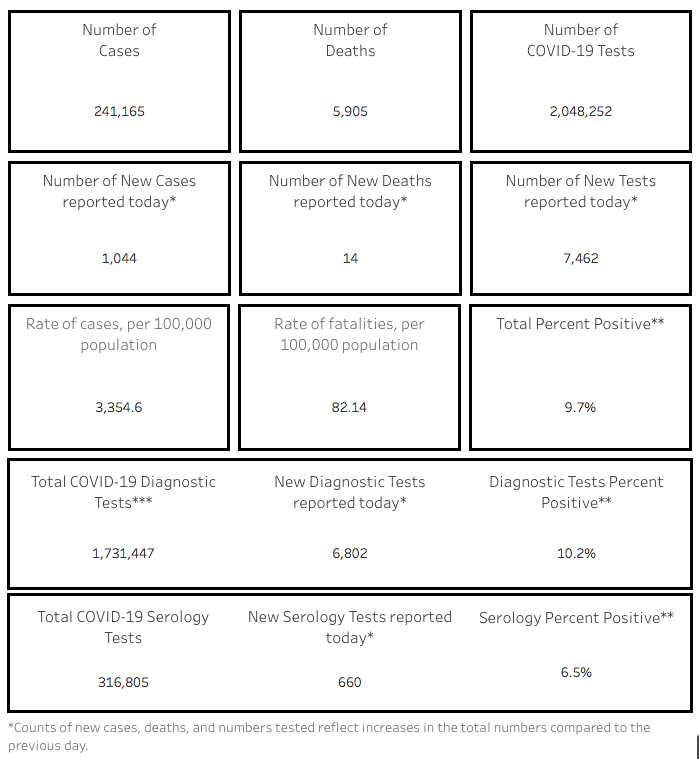
With 1,044 new cases reported today, the number of Arizona’s confirmed novel coronavirus cases topped 241,000 as of Wednesday, Oct. 28, according to the Arizona Department of Health Services.

Over the last week, the state has seen, on average, more than 1,000 new cases a day
With 259 new cases reported today, Pima County had seen 27,962 of the state’s 241,116 confirmed cases.
With 14 new deaths reported yesterday, a total of 5,905 Arizonans had died after contracting COVID-19, including 636 deaths in Pima County, according to the Oct. 28 report.
The number of hospitalized COVID cases has declined from July peaks but has ticked upward in recent weeks as the virus has begun to spread more rapidly. ADHS reported that as of Oct. 27, 871 COVID patients were hospitalized in the state. That number peaked with 3,517 hospitalized COVID patients on July 13.
A total of 857 people visited emergency rooms on Oct. 27 with COVID symptoms. That number peaked at 2,008 on July 7.
A total of 188 COVID-19 patients were in intensive care unit beds on Oct. 27. The number of COVID patients in ICUs peaked at 970 on July 13.
Arizona Department of Health Director Cara Christ noted on her blog last week that cases in the state were on the increase.
Christ wrote that while Arizona has not seen as big a surge as other states, “we have recently seen a shift of COVID-19 spread in the wrong direction.”
Christ noted that the statewide positivity results from tests has climbed from 3.9 percent to 5.5 percent in recent weeks.
Christ urged Arizonans to wear masks but noted the numbers across the state still indicated “moderate” spread of the coronavirus and hospitals are not reporting a surge of patients.
Tuesday, October 27, 2020
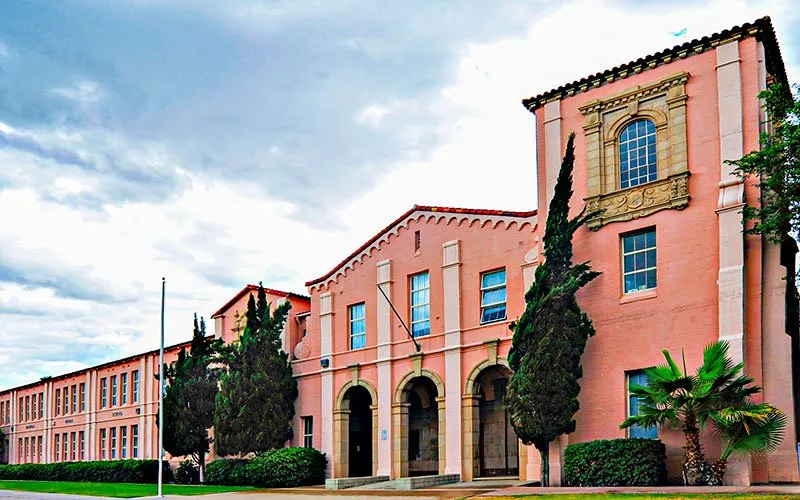
Tucson’s largest school district will allow students to return to in-person classes starting Nov. 12.
Tucson Unified School District’s governing board voted to return to school in a hybrid model in a 3-2 vote Tuesday night.
Board members Kristel Foster, Bruce Burke and Leila Counts voted to approve the reopening date, and members Adelita Grijalva and Rachael Sedgwick opposed.
The board voted to approve the hybrid learning model on Oct. 6 but delayed voting on when to implement it until Tuesday's special meeting.
Pima County Public Health Director Theresa Cullen discussed the county health department’s three specific guidelines for opening in a hybrid model: a two-week decline in COVID-19 cases, two weeks of percent positivity below 7 percent and hospital visits for COVID-19 illness below 10 percent. As of Oct. 22, Pima County had met all three benchmarks.
“We believe that as a county, it is okay for school districts to go to a hybrid learning model based on the current statistics,” Cullen said.
She noted the health department recommends the district take strict mitigation tactics including increased sanitation, social distancing and universal mask-wearing, as well as reporting COVID-19 cases to the health department and complying with isolation and quarantine guidelines.
The governing board unanimously approved a second motion to authorize “the Superintendent to initiate school closures…if such closures are recommended by the Pima County Health Department and deemed necessary to mitigate the spread of COVID-19 in Pima County.”
TUSD’s hybrid model
The TUSD board approved a new hybrid model for returning to school in-person that involves separating students into hybrid and online-only groups.
Four days a week, in-person students learn at their physical school sites for the first half of the day and work remotely from home the rest of the day. On Wednesdays, every student attends class remotely.
Remote students work asynchronously in the mornings and attend online teacher-led instruction in the afternoon. While teachers are instructing remote students the second half of the day, students in the hybrid system work asynchronously.
Asynchronous work involves working on class projects and assignments, social-emotional learning lessons with counselors, specialized services and working on digital platforms, according to a presentation from TUSD.
TUSD also came up with a contingency plan if the percentage of students who wish to attend classes in-person is at an unsafe level. This level, which the district refers to as a “threshold,” depends on each campus, but TUSD says most are between 45-60% of students on campus.
If a threshold becomes too high, the school will have the option of splitting their in-person students into two cohorts to attend classes on different days. Cohort A would attend on Mondays and Thursdays while cohort B would attend on Tuesdays and Fridays.
The Senate voted 52-48 to confirm Judge Amy Coney Barrett’s appointment to the Supreme Court on Monday, with Sen. Martha McSally casting a vote in favor of the judge receiving a lifetime appointment on the nation’s highest court, which will now hold a 6-3 conservative majority.
The Supreme Court will hear oral arguments in the Trump administration’s lawsuit to overturn the Affordable Care Act (ACA) on Nov. 10, one week after the general election. Protect Our Care, a healthcare advocacy organization, says overturning the Obama-era healthcare law could cause 223,000 Arizonans to lose their coverage.
Many have expressed concerns about Republican-nominated Coney Barrett, who could cast a vote to dismantle the ACA.
After the Supreme Court confirmation, Protect Our Care hosted a virtual press conference Tuesday to discuss the implications of McSally’s vote to approve the judge.
“With just a week left to election day, the confirmation of Amy Coney Barrett to the U.S. Supreme Court makes the situation even more dire. It has been literally shocking to watch the GOP, including Arizona’s Martha McSally, help rush through her nomination,” state Rep. Kelli Butler said at the conference. “With the entire Affordable Care Act set to be heard by the Supreme Court right after the election, we can expect her presence on the court is likely to be devastating to the ACA and for all its protections for your healthcare.”Today I had the honor of casting a historic vote to confirm Judge Amy Coney Barrett to the Supreme Court. She is a brilliant, fair jurist who will bring a stellar judicial temperament to the bench. I look forward to seeing her take her seat on our nation's highest court. pic.twitter.com/y3UKtpMhuv
— Martha McSally (@SenMcSallyAZ) October 27, 2020
Under the ACA, health insurance companies cannot deny coverage based on pre-existing conditions. Butler says if it were overturned, this would put nearly 2.8 million Arizonans with pre-existing conditions at risk, and that despite claims otherwise, there’s not a solid replacement plan to protect pre-existing conditions.
“Republicans like Martha McSally...have tried to basically fool you into thinking they want to protect people with pre-existing conditions,” Butler said. “It’s easy for them to say they want to protect people with pre-existing conditions, but their actions tell the real story, because there is only one set of laws that guarantees people with pre-existing conditions can get insurance coverage for the care they need, and that’s the Affordable Care Act.”
Alicia DeWitt, a Tucsonan survivor of the rare illness Cushing's Disease, shared how a lack of access to healthcare has been detrimental to her livelihood.
At 20 years old, she began developing “concerning medical symptoms,” but without health insurance, she couldn’t afford to see a specialist. Ten years later, doctors diagnosed DeWitt with a brain tumor and she had her pituitary and adrenal glands removed.
This week, doctors found a regrowth of her tumor tissue.
“I can’t help but think back on that if I had been a 20-year-old today and I had been on my parent’s insurance...I would’ve gotten an MRI, I would’ve been diagnosed with a brain tumor and I’d be living a happy and healthy life and I wouldn’t be permanently disabled from something that I shouldn’t be,” DeWitt said.

Today, the Tucson Gem & Mineral Society announced that the 2021 Tucson Gem and Mineral Show is canceled. While the overall Gem, Mineral & Fossil Showcase season that takes over Tucson from February to March is home to numerous showcases and exhibits, the Tucson Gem & Mineral Society's Gem and Mineral Show is the largest and the show that launched it all.
"COVID-19-related risks clearly make it impossible for TGMS to put on anything more than a shadow of our accustomed vibrant event," representatives of the Tucson Gem & Mineral Society announced in a prepared statement. "Restrictive COVID-19 travel policies mean many of our major domestic, and most of our international museum exhibitors and friends either won't or can't travel here. This effectively eliminates both our exhibits and educational programs."
However, the society has announced that they intend to use this time to plan for a "blockbuster" 2022 show.
"Most importantly, TGMS does not want to be responsible for a single COVID-19 fatality or serious illness. Our show is run by volunteers and many of us are in high-risk demographics...as are many of our participants and attendees," the statement continued. "Consulting closely with the Pima County Health Department, the Mayor and City Manager’s offices and the good folks who run the [Tucson Convention Center], it is clear that applying the mandated COVID-19 protocols to reduce risk would mean drastically restricted attendance and curtailment of many of our programs."
In 2018, the total Tucson Gem, Mineral & Fossil Showcase brought an estimated economic impact of $120 million to the City of Tucson.
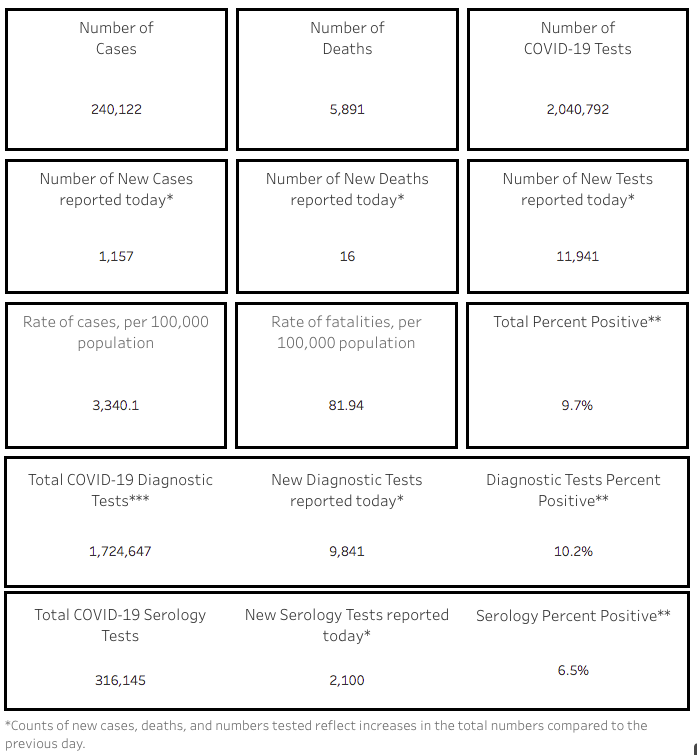
With 1,157 new cases reported today, the number of Arizona’s confirmed novel coronavirus cases topped 240,000 as of Tuesday, Oct. 27, according to the Arizona Department of Health Services.

Over the last week, the state has seen, on average, more than 1,000 new cases a day.
Pima County had seen 27,703 of the state’s 240,122 confirmed cases.
With 16 new deaths reported yesterday, a total of 5,891 Arizonans had died after contracting COVID-19, including 636 deaths in Pima County, according to the Oct. 27 report.
The number of hospitalized COVID cases has declined from July peaks but has ticked upward in recent weeks as the virus has begun to spread more rapidly. ADHS reported that as of Oct. 26, 861 COVID patients were hospitalized in the state. That number peaked with 3,517 hospitalized COVID patients on July 13.
A total of 784 people visited emergency rooms on Oct. 26 with COVID symptoms. That number peaked at 2,008 on July 7.
A total of 187 COVID-19 patients were in intensive care unit beds on Oct. 26. The number of COVID patients in ICUs peaked at 970 on July 13.
Although President Donald Trump said the “big spike” in Arizona cases was now “gone” during last week’s final presidential debate, Arizona Department of Health Director Cara Christ noted on her blog last week that cases in the state were on the increase.
Christ wrote that while Arizona has not seen as big a surge as other states, “we have recently seen a shift of COVID-19 spread in the wrong direction.”
Monday, October 26, 2020
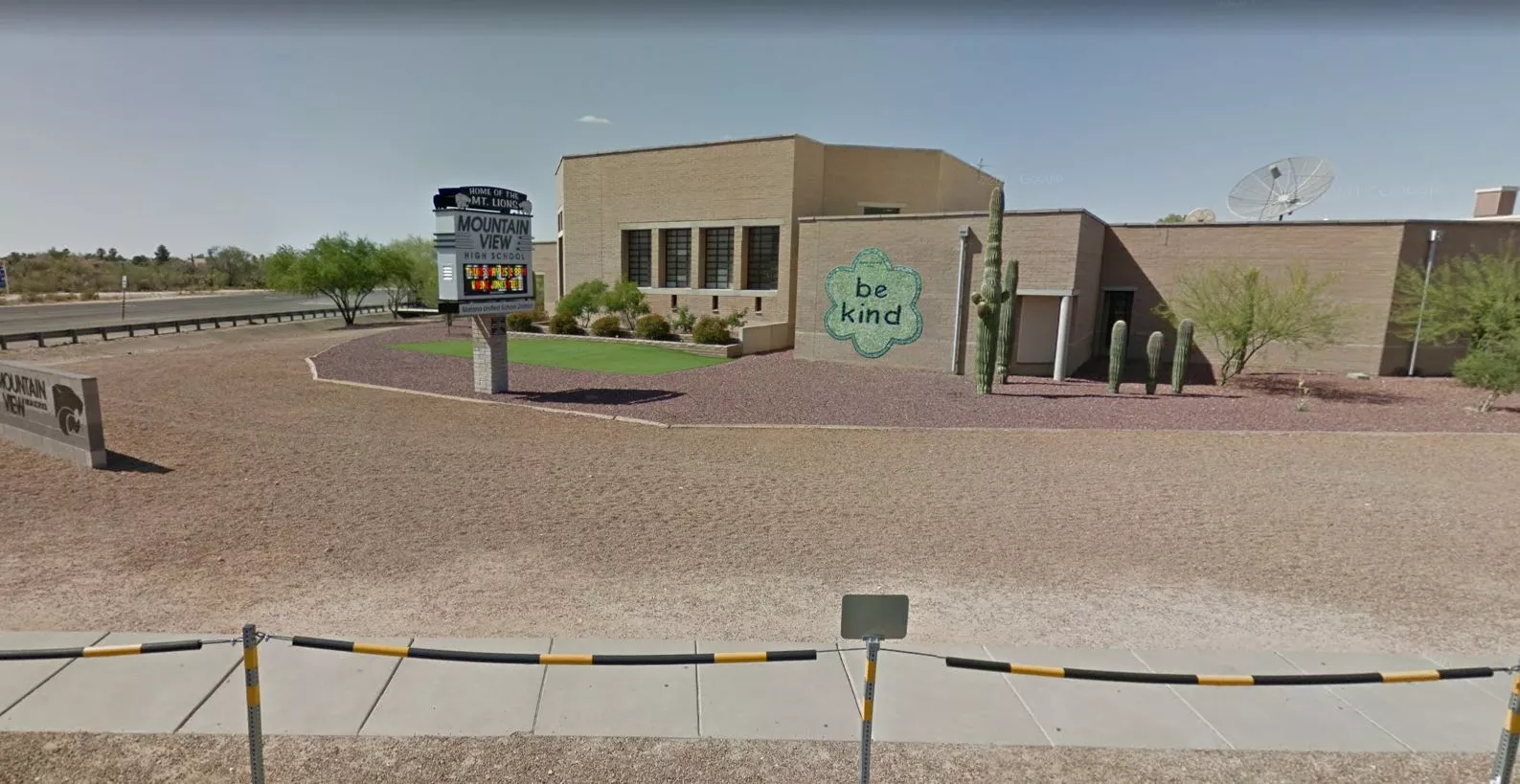
As local school districts allow students to return to campus in hybrid learning models, they’re reporting positive COVID-19 cases among students and staff, resulting in some students and staff members being asked to quarantine themselves if they were in contact with people who have tested positive.
As of Monday, Marana Unified School District has reported five positive COVID-19 cases with 24 students and staff in quarantine since they reopened in a hybrid model Oct. 19, according to Alli Benjamin, the district’s public relations and community engagement director.
At Mountain View High School, four students tested positive for coronavirus, causing 23 students and employees who were potentially exposed to quarantine. One case was confirmed yesterday, and the other three on Oct. 22, 23 and 24, according to Benjamin.
One student was reported as testing positive at Marana Middle School on Oct. 21, but no potential contacts were established, according to Benjamin.
As of Friday, the Amphitheater Unified School District has reported five positive coronavirus cases resulting in 35 students and staff members quarantining, according to Communications Director Michelle Valenzuela.
Amphitheater reopened in a hybrid model on Oct. 12, and its latest positive COVID-19 case was reported at Walker Elementary School on Friday. One student tested positive, causing two employees to quarantine.
On Oct. 20, one student at La Cima Middle School reported a positive coronavirus test. Although no close contacts to the person were discovered inside the school, three La Clima students who were with the student over the weekend were asked to quarantine themselves.
One student at Canyon del Oro High School reported a positive test Oct. 19, causing 13 students who may have been in contact with the person to self-quarantine.
The week prior, 13 students and one staff member at Ironwood Ridge High School had to quarantine after a student reported a positive test on Oct. 16.
At Mesa Verde Elementary, one staff member reported a positive case on Oct. 14, but no other employees or students were identified as close contacts to require quarantining.
The 10,100 Amphitheater students who opted for hybrid classes attend two days a week and spend the other three learning remotely. About 1,400 students chose to continue attending school completely online.

With 801 new cases reported today, the number of Arizona’s confirmed novel coronavirus cases closed in on 239,000 as of Monday, Oct. 26, according to the Arizona Department of Health Services.

Pima County had seen 27,575 of the state’s 238,964 confirmed cases.
With one new death reported yesterday, a total of 5,875 Arizonans had died after contracting COVID-19, including 636 deaths in Pima County, according to the Oct. 26 report.
The number of hospitalized COVID cases has declined from July peaks but has ticked upward in recent weeks. ADHS reported that as of Oct. 25, 837 COVID patients were hospitalized in the state. That number peaked with 3,517 hospitalized COVID patients on July 13.
A total of 770 people visited emergency rooms on Oct. 25 with COVID symptoms. That number peaked at 2,008 on July 7.
A total of 179 COVID-19 patients were in intensive care unit beds on Oct. 25. The number of COVID patients in ICUs peaked at 970 on July 13.
Although President Donald Trump said the “big spike” in Arizona cases was now “gone” during last week’s final presidential debate, Arizona Department of Health Director Cara Christ noted on her blog last week that cases in the state were on the increase.
Christ wrote that while Arizona has not seen as big a surge as other states, “we have recently seen a shift of COVID-19 spread in the wrong direction.”
Christ noted that the statewide positivity results from tests has climbed from 3.9 percent to 5.5 percent in recent weeks.
Saturday, October 24, 2020
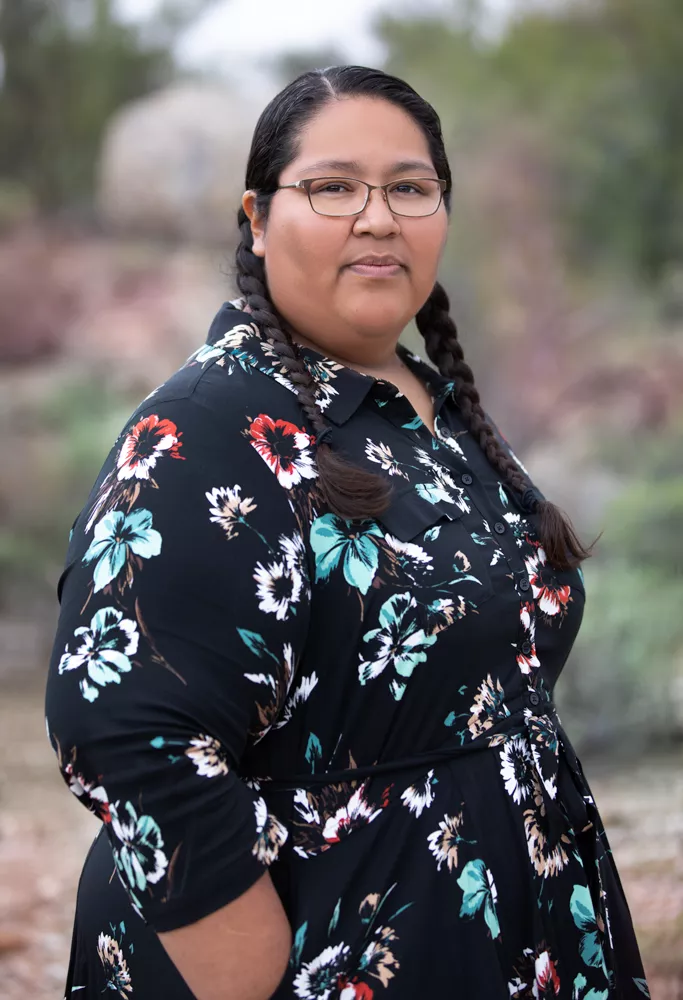
The candidates for Pima County Recorder certainly have different approaches to the office, but one candidate recently criticized the other after third-quarter campaign finance reports were released.
Republican candidate for county recorder Benny White posted a photo of Democratic candidate Gabriella Cázares-Kelly’s cash operating expenses that show she paid herself with campaign funds. The post has since been deleted.
“My opponent pays herself from her campaign account,” the post read. “The saddest part of this in my mind is that she is taking $5 and $10 donations from people who are reported as being unemployed and then taking their money for her own benefit. We just see things differently.”
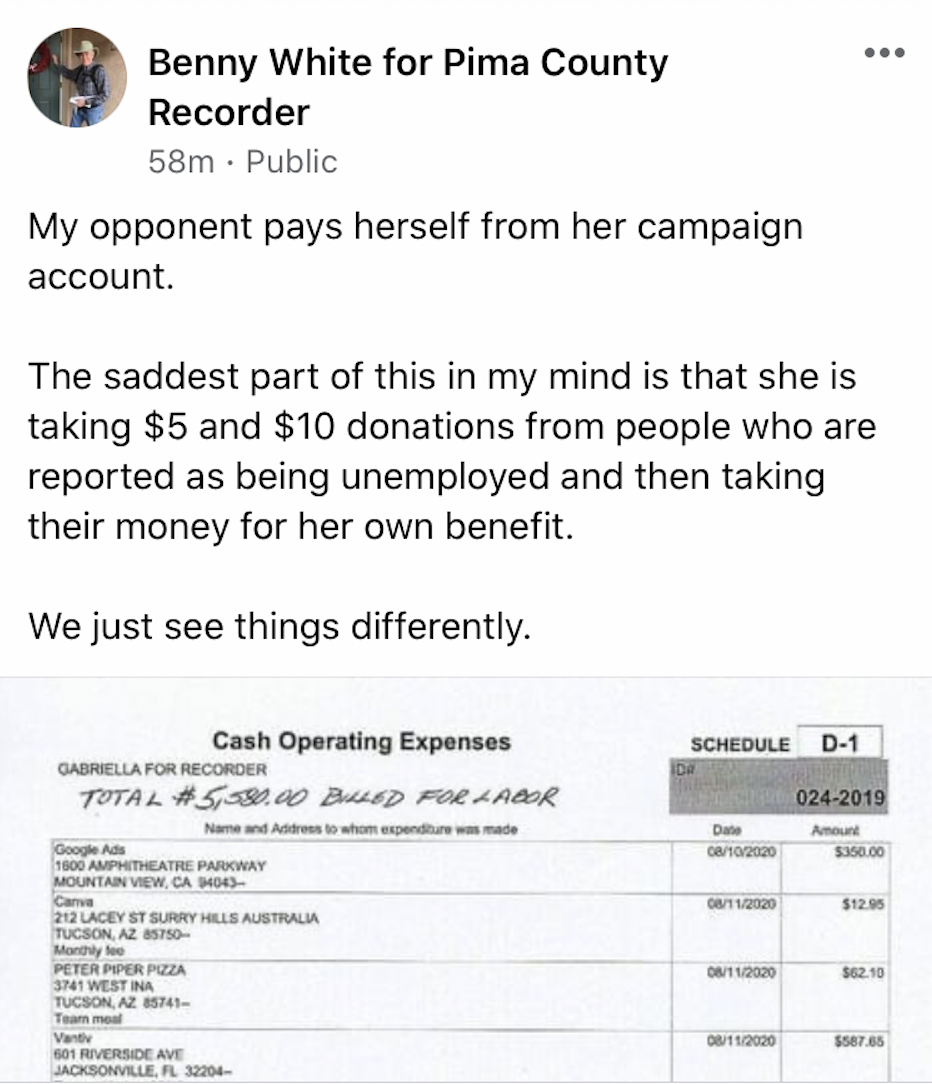
Cázares-Kelly was quick to respond by acknowledging her opponent’s criticism in her own Facebook post and says she pays herself a $1,290 biweekly salary to support herself while she runs for county recorder.
“I do not come from a rich family. I am not independently wealthy, I am not yet retired, and my household cannot survive off of only one income,” she wrote in a Facebook post. “My reality is that I am a working-class candidate bringing my unique perspective and experiences into this leadership role.”
Cázares-Kelly says she paid herself $4,580 in campaign funds from Aug. 19-Sept. 18. One reported expense in the finance report shows a payment of $1,000 on Sept. 2, but her campaign says it was never received, and a later disbursement on Sept. 18 was used in its place.
Her paychecks were set at $1,000 for the first two weeks, and subsequent payments were set at $1,290 a week.
“There is no express prohibition in Arizona on candidates drawing salaries from campaign monies,” Sophia Solis, a spokesperson for the Arizona Secretary of State’s office, wrote in an email.
“Arizona law defines permissible ‘operating expenses’ as ‘staff salaries … and similar items necessary to keep the campaign in operation,’ which could include candidate salaries,” Solis wrote. “While Arizona law applies to local and state candidate campaign finance activities, to the extent that authority from the Federal Election Commission on this issue is persuasive, the FEC permits candidates to draw a limited salary from campaign monies, provided that the salaries do not exceed the lesser of the amount they earned the year prior to running for office, or the minimum salary paid for the office the candidate seeks to hold.”
According to Cázares-Kelly, her salary last year was $54,000 annually. According to Arizona Revised Statutes, the county recorder has a starting salary of $67,800.
“I just found it curious. I've never seen anyone take campaign funds for their personal salary,” county recorder candidate White said. “I don't have any comments on her postings because I've not read them.”
After White made the post on Wednesday, Cázares-Kelly says her campaign has exceeded its fundraising goal.
Within 24 hours of White’s post, Cázares-Kelly says her campaign raised $18,541—the biggest fundraising day of her entire campaign. As of today, the campaign has raised $21,391 online, according to Cázares-Kelly.
“People were very motivated and inspired by the posts that we shared about some of the barriers that I've had being a working-class candidate, and they wanted to show that by donating more money,” Cázares-Kelly said.
Tags: Pima County Recorder , Pima County , Campaign spending , Image
Friday, October 23, 2020
With 975 new cases reported today, the number of Arizona’s confirmed novel coronavirus cases closed in on 235,000 as of Friday, Oct. 23, according to the Arizona Department of Health Services.

In a worrisome trend, the number of cases statewide has climbed by nearly 4,000 in just the last four days.
Pima County had seen 27,297 of the state’s 235,882 confirmed cases.
With six new deaths reported yesterday, a total of 5,865 Arizonans had died after contracting COVID-19, including 635 deaths in Pima County, according to the Oct. 23 report.
The number of hospitalized COVID cases has declined from July peaks but has ticked upward in recent weeks. ADHS reported that as of Oct. 22, 815 COVID patients were hospitalized in the state. That number peaked with 3,517 hospitalized COVID patients on July 13.
A total of 815 people visited emergency rooms on Oct. 22 with COVID symptoms. That number peaked at 2,008 on July 7.
A total of 172 COVID-19 patients were in intensive care unit beds on Oct. 21. The number of COVID patients in ICUs peaked at 970 on July 13.
Arizona Department of Health Director Cara Christ noted on her blog yesterday that cases were on the increase.
Christ wrote that while Arizona has not seen as big a surge as other states, “we have recently seen a shift of COVID-19 spread in the wrong direction.”
Christ noted that the statewide positivity results from tests has climbed from 3.9 percent to 5.5 percent in recent weeks.
Christ urged Arizonans to wear masks but noted the numbers across the state still indicated “moderate” spread of the coronavirus and hospitals are not reporting a surge of patients.