

Tuesday, October 6, 2020
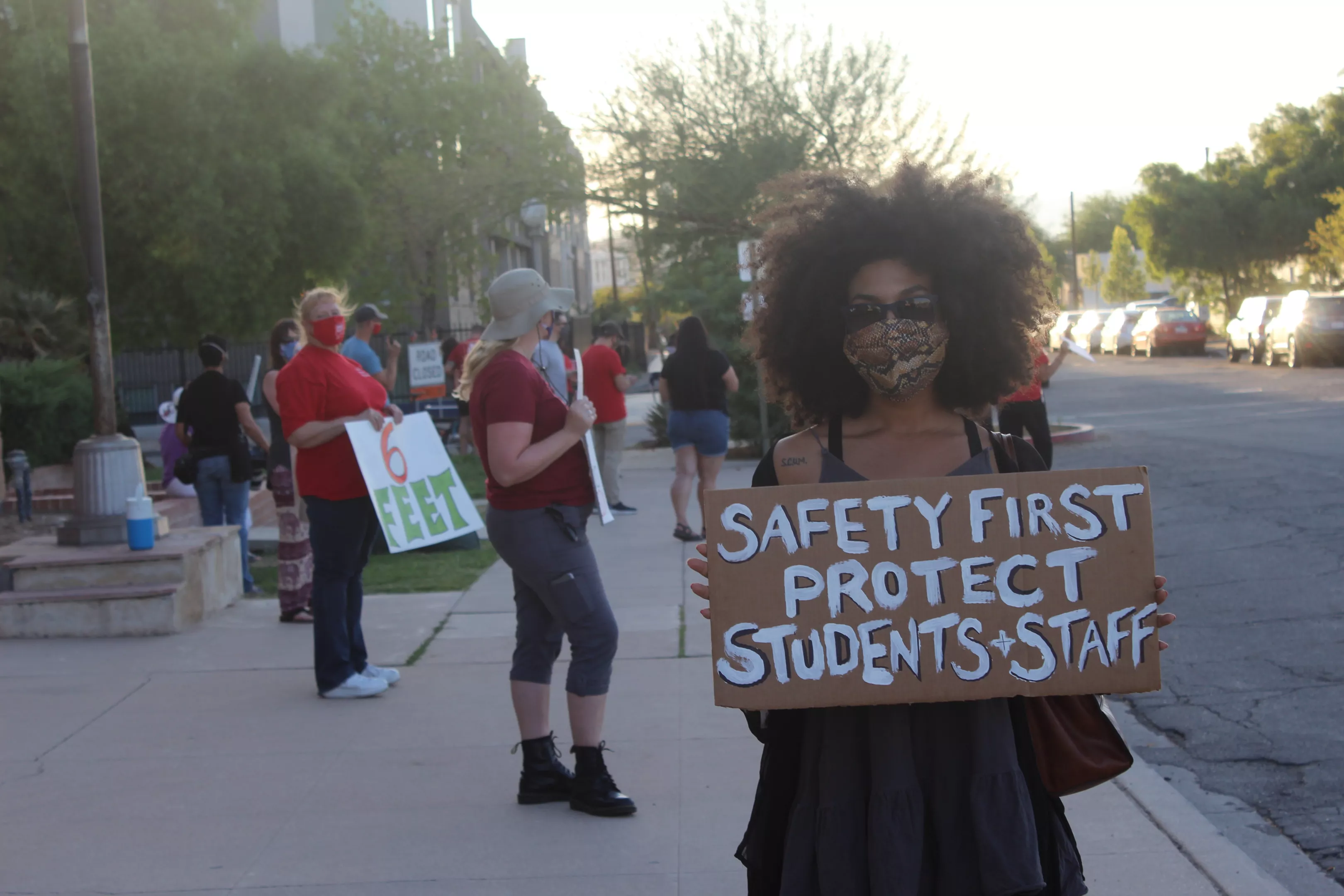
After school hours on Monday, Oct. 6, dozens of members of the Tucson Unified School District gathered in front of the district headquarters to protest planned school reopenings.
In a meeting last month, the school board voted to move forward with a hybrid learning model beginning Monday, Oct. 19. However several teachers and staff are demanding in-person classes to be delayed until classroom gatherings are safe, citing Pima County Health Department’s recommendation that there should be no groups more than 10.
The TUSD Board is scheduled to meet tonight to determine the next step in reopening schools. The district's plan, as it stands now, is to have students attend schools two days a week in separate groups and work independently at home or elsewhere on the other three days.
“This is a public expression of our sentiment: We simply don’t want to reopen until it’s safe,” said Marea Jenness, a science teacher at Tucson High. “I don’t think the masks cut it. In my opinion, we should wait until there’s a vaccine.”
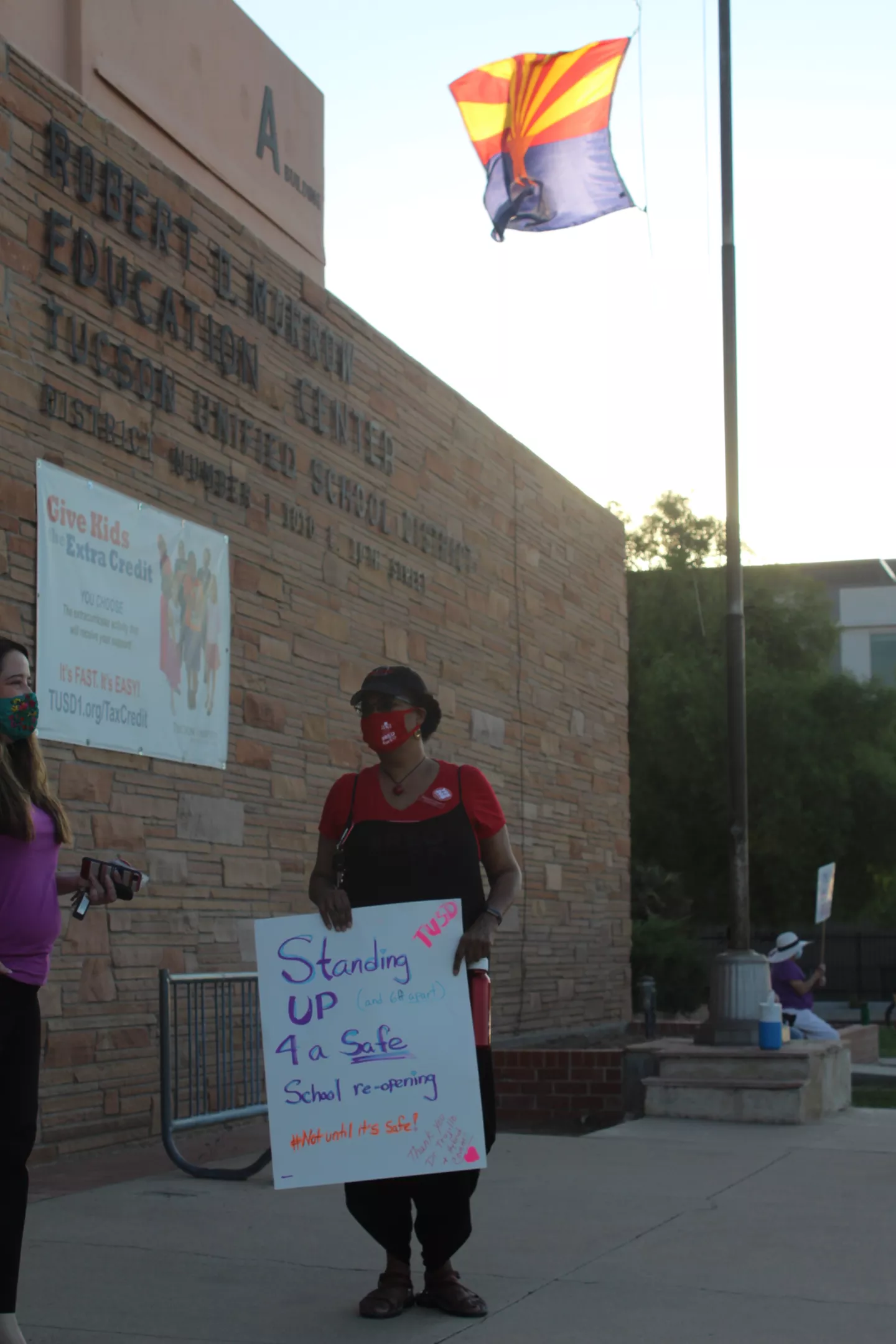
While PCHD's COVID-19 Progress Report indicates the majority of local health criteria are making progress or have been met, the demonstrators argue social distancing and telecommuting remain vital to stop the virus’ spread.
Demonstrators displayed a quote from one Pueblo High School student: “I miss my friends and remote learning is hard! But I don’t want to risk infecting my family. I couldn’t live with the guilt.”
Jenness, who has a preexisting lung condition, says she received a letter from the school district acknowledging her condition, but stating she should prepare for schools to reopen regardless.
“We are talking about human lives, not just a number,” Jenness said. “It’s mostly a case of the right hand not knowing what the left hand is doing, which can happen in a large district like ours… We’re talking about potential funerals for teachers and students.”
Senator @KyrstenSinema knows that Arizonans need an independent voice representing them in the Senate. pic.twitter.com/quSlnyMAj5
— Captain Mark Kelly (@CaptMarkKelly) October 3, 2020
Tonight is the first big showdown between appointed U.S. Sen.
Martha McSally and her Democratic opponent, Mark Kelly, the former NASA
astronaut who is leading in the polls.
McSally and Kelly will meet at 7 p.m. for a 90-minute debate
that’s being moderated by Phoenix NPR station KJZZ’s Steve Goldstein, Ted
Simons of Arizona PBS, Lorraine Rivera of Arizona Public Media and Yvone
Wingett Sanchez of the Arizona Republic.
You can watch the debate in Tucson on PBS 6.
Ahead of the debate, Kelly rolled out new TV ad from Sen. Kyrsten
Sinema, the Democrat who defeated McSally in 2018. (McSally was later appointed
to a U.S. Senate seat by Gov. Doug Ducey to finish the term of the late John
McCain.)
Sinema charges that “McSally will say anything
to get elected” and adds that the Republican incumbent hitting Kelly with the same
kind of “false attacks” that she tried against Sinema two years ago.
“But Martha’s worst lies
are the ones about her own record,” Sinema concludes. “She voted to eliminate protections for pre-existing health
conditions. An Arizona senator
should be an independent voice that puts everyday people first.
That’s why I support Mark.”
Polling shows Sinema is considerably more popular that
McSally in the state. At the start of 2020, McSally was ranked among the most
unpopular senators in the country, with 37 percent of those surveyed approving
of the job she’s doing and 40 percent disapproving, giving her a with a net
approval of -3. Sinema, by contrast, had an approval rating of 44 percent and a
disapproval rating oof 30 percent, giving her a net approval rating of +14.
Piggybacking on the theme that McSally can’t be trusted, the
Arizona Democratic Party rolled out a new website, MisleadingMcSally.com, linking
to various news outlets and fact-checking sites that have called out McSally
for false or dishonest statements.
Among the areas that the site explores: McSally’s record on
preexisting conditions, which she herself admitted was a major vulnerability in
her unsuccessful 2018 campaign for Senate. Democrats link back to articles by
PolitiFact and the Washington Post fact checker that recount McSally’s previous
votes for eliminating protections for people with preexisting conditions by
repealing the Affordable Care Act to counter McSally’s vow that she will “always”
protect people with preexisting conditions. It also reminds readers that
McSally has not opposed the Trump administration’s effort to persuade the U.S.
Supreme Court to dismantle the entire Affordable Care Act.
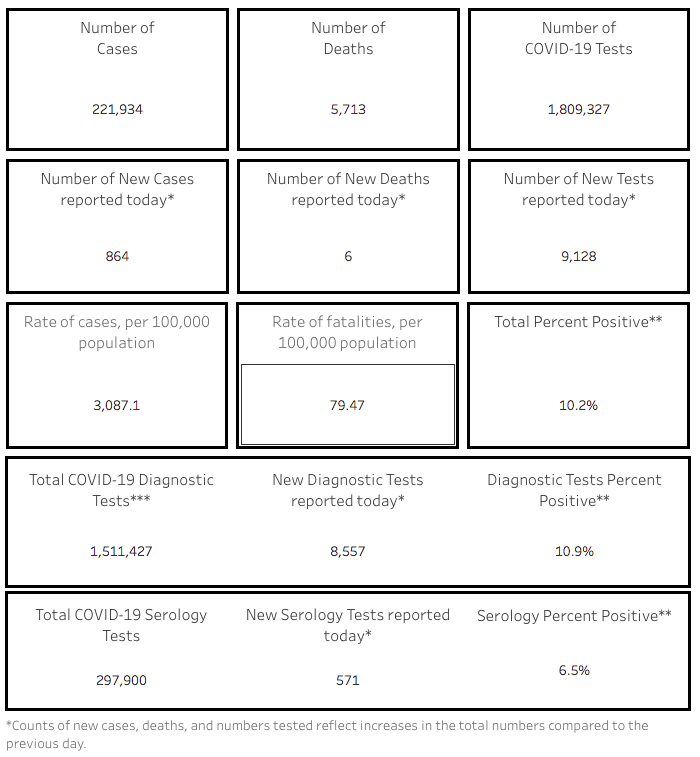

Pima County had seen 26,052 of the state’s 221,934 confirmed cases.
With six new deaths today, a total of 5,713 Arizonans had died after contracting COVID-19, including 628 deaths in Pima County, according to the Oct. 6 report.
The number of hospitalized COVID cases continues to decline from July peaks. ADHS reported that as of Oct. 5, 665 COVID patients were hospitalized in the state, a jump of 98 from yesterday. The number of hospitalized COVID patients peaked at 3,517 on July 13.
A total of 644 people visited emergency rooms on Oct. 5 with COVID symptoms. That number peaked at 2,008 on July 7.
A total of 138 COVID-19 patients were in intensive care unit beds on Oct. 5. The number of COVID patients in ICUs peaked at 970 on July 13.
On a week-by-week basis in Pima County, the number of positive COVID tests peaked the week ending July 4 with 2,453 cases, according to a Sept. 29 report from the Pima County Health Department. With the return of UA students, local numbers ticked upward in September but have began to decline again. For the week ending Sept. 5, a total of 859 cases were reported; for the week ending Sept. 12, 1,102 cases were reported; for the week ending Sept. 19, 1,203 cases were reported; and for the week ending Sept. 26, 470 cases were reported. (Recent weeks are subject to revision.)
Deaths in Pima County are down from a peak of 55 in the week ending July 4 to 13 in the week ending Aug. 22, 10 in the week ending Aug. 29, zero in the week ending Sept. 5, two in the week ending Sept. 12 and two in the week ending Sept. 19. (Recent weeks are subject to revision.)
Hospitalization peaked the week ending July 18 with 234 COVID patients admitted to Pima County hospitals. In the week ending Aug. 29, 37 COVID patients were admitted to Pima County hospitals; in the week ending Sept. 5, 25 patients were admitted to Pima County hospitals; in the week ending Sept. 12, 19 patients were admitted; in the week ending Sept. 19, 14 patients were admitted; and in the week ending Sept. 26, five people were admitted. (Recent weeks are subject to revision.)
Campus cases in decline but UA officials stress need to stay vigilant
This week, the University of Arizona will remain in phase one of their staged plan for reopening but anticipates moving into phase two of the plan next week, UA President Dr. Robert C. Robbins said in a news conference yesterday.
Phase one allows students to attend essential in-person classes only, but the university plans to add in-person instruction for classes of 30 or fewer students the week of Oct. 12.
According to Robbins, about 2,500 additional students will have the option to attend in-person classes, and the new opportunity only applies to those who signed up for in-person classes during the registration period at the beginning of the school year.
Phase 2 was originally set to begin on Aug. 31, but the high numbers of positive coronavirus cases delayed the step toward having more in-person classes on campus.
Monday, October 5, 2020
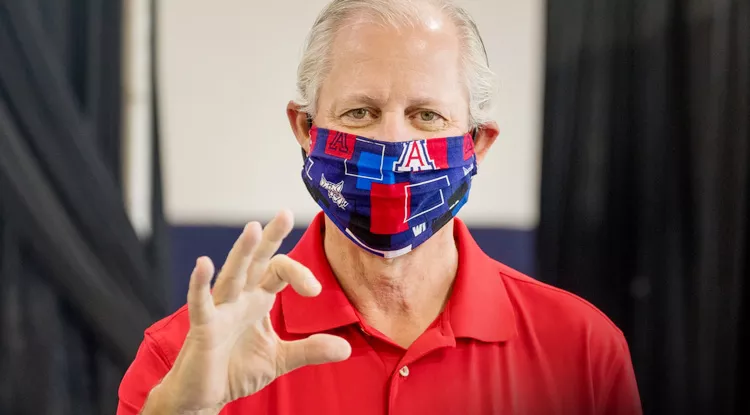
This week, the University of Arizona will remain in phase one of their staged plan for reopening but anticipates moving into phase two of the plan next week, UA President Dr. Robert C. Robbins said in a news conference this morning.
Phase one allows students to attend essential in-person classes only, but the university plans to add in-person instruction for classes of 30 or fewer students the week of Oct. 12.
According to Robbins, about 2,500 additional students will have the option to attend in-person classes, and the new opportunity only applies to those who signed up for in-person classes during the registration period at the beginning of the school year.
Phase 2 was originally set to begin on Aug. 31, but the high numbers of positive coronavirus cases delayed the step toward having more in-person classes on campus.
Since Aug. 24, about 6,200 UA students have attended essential in-person courses.
Robbins said the university has no recorded cases of COVID-19 transmission within a classroom or laboratory setting, but they will only move into phase two if public health metrics continue a positive trend.
“This strategic reintroduction of more students to a university campus is a part of layered mitigation,” Pima County Health Department Director Dr. Theresa Cullen said at the press conference. “If the numbers go up, we will not support more introduction of students on campus. Our hope is in this next 7-10 days, we will see those numbers stabilize.”
Over the 10-day window from Sept. 23-Oct. 2, the university reported 181 positive coronavirus tests for a positivity rate of 2.3%. This is an improvement from the previous 10-day period, which saw a COVID-19 positivity rate of 7.9%.
As of Friday evening, the university had 68 dorm students in isolation housing and 450 beds available.
Robbins partly credits the decrease in cases to the university’s voluntary 14-day self-quarantine program in which students were asked to stay home and avoid unnecessary trips, which ended Sept. 29. However, he warns the quarantine period may be restored if the number of coronavirus cases rises.
“If noncompliance remains a significant issue or if we see an increase in cases, it may need to be reinstated and we’re not going to be able to progress to this stage two that we’re thinking about doing next week,” Robbins said.
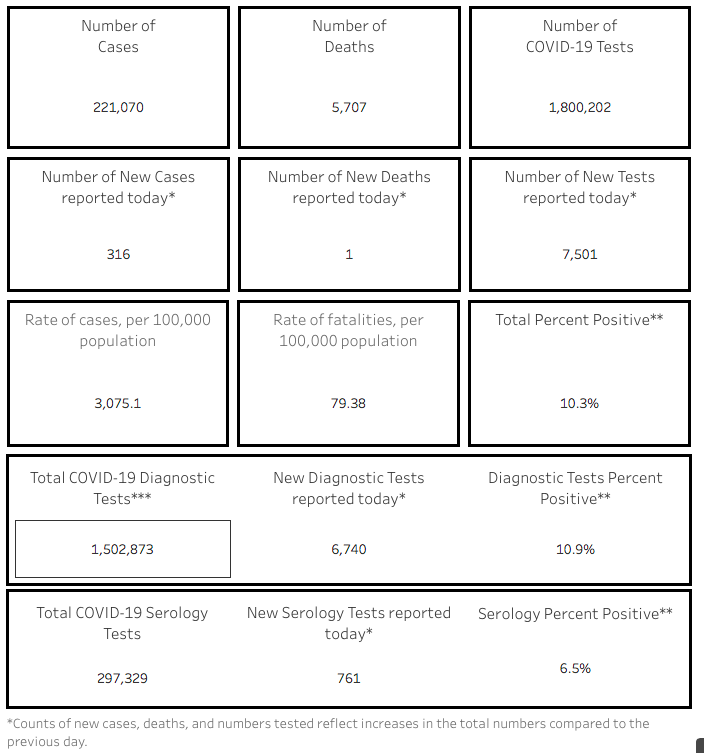
With 316 new cases reported today, the number of Arizona’s confirmed novel coronavirus cases topped 221,000 as of Monday, Oct. 5, according to the Arizona Department of Health Services.

Pima County had seen 25,980 of the state’s 221,070 confirmed cases.
With 1 new death today, a total of 5,707 Arizonans had died after contracting COVID-19, including 627 deaths in Pima County, according to the Oct. 5 report.
The number of hospitalized COVID cases continues to decline from July peaks. ADHS reported that as of Oct. 4, 567 COVID patients were hospitalized in the state. The number of hospitalized COVID patients peaked at 3,517 on July 13.
A total of 706 people visited emergency rooms on Oct. 4 with COVID symptoms. That number peaked at 2,008 on July 7.
A total of 134 COVID-19 patients were in intensive care unit beds on Oct. 4. The number of COVID patients in ICUs peaked at 970 on July 13.
On a week-by-week basis in Pima County, the number of positive COVID tests peaked the week ending July 4 with 2,453 cases, according to a Sept. 29 report from the Pima County Health Department. While a vocal minority continues to insist that masks do no good, the spread of the virus began to decline within weeks of Pima County’s mask mandate, as more people began wearing them in public, although the level of new cases has creeped back up in recent weeks with the return of UA students. For the week ending Sept. 5, a total of 859 cases were reported; for the week ending Sept. 12, 1,102 cases were reported; for the week ending Sept. 19, 1,203 cases were reported; and for the week ending Sept. 26, 470 cases were reported. (Recent weeks are subject to revision.)
Deaths in Pima County are down from a peak of 55 in the week ending July 4 to 13 in the week ending Aug. 22, 10 in the week ending Aug. 29, zero in the week ending Sept. 5, two in the week ending Sept. 12 and two in the week ending Sept. 19. (Recent weeks are subject to revision.)
Hospitalization peaked the week ending July 18 with 234 COVID patients admitted to Pima County hospitals. In the week ending Aug. 29, 37 COVID patients were admitted to Pima County hospitals; in the week ending Sept. 5, 25 patients were admitted to Pima County hospitals; in the week ending Sept. 12, 19 patients were admitted; in the week ending Sept. 19, 14 patients were admitted; and in the week ending Sept. 26, five people were admitted. (Numbers are subject to revision.)
Trump remains in hospital
President Donald Trump remained hospitalized on Monday after being taken by helicopter to Walter Reed National Military Medical Center on Friday, Oct. 2.
Trump’s coronavirus diagnosis has forced him off the campaign trail, including the cancelation of a planned trip to Tucson today.
Democratic presidential nominee Joe Biden plans to be in Arizona, where he has been leading in polls, later this week.
Friday, October 2, 2020
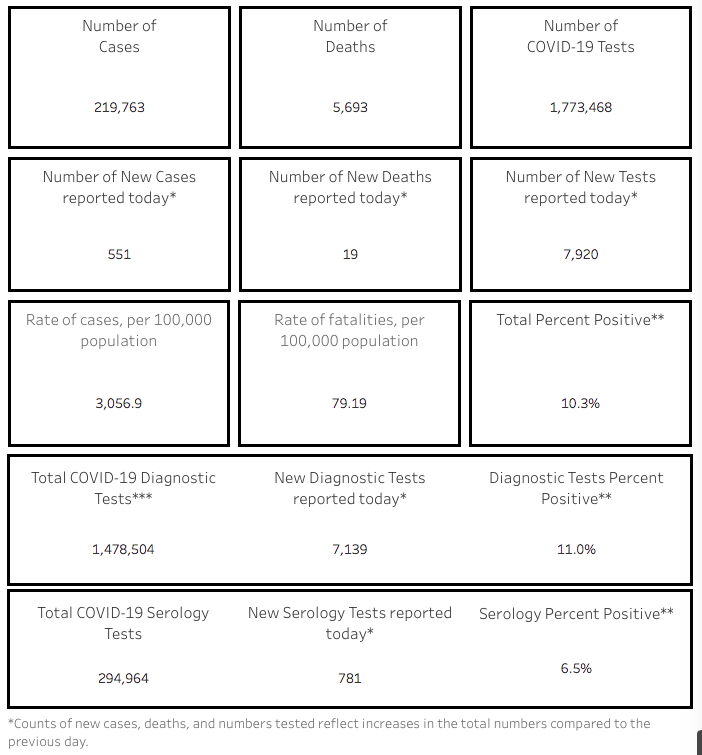
Pima County had seen 25,784 of the state’s 219,793 confirmed cases.

With 19 new deaths today, a total of 5,693 Arizonans had died after contracting COVID-19, including 627 deaths in Pima County, according to the Oct. 2 report.
The number of hospitalized COVID cases continues to decline from July peaks. ADHS reported that as of Oct. 1, 586 COVID patients were hospitalized in the state. The number of hospitalized COVID patients peaked at 3,517 on July 13.
A total of 760 people visited emergency rooms on Oct. 1 with COVID symptoms. That number peaked at 2,008 on July 7.
A total of 125 COVID-19 patients were in intensive care unit beds on Oct. 1. The number of COVID patients in ICUs peaked at 970 on July 13.
On a week-by-week basis in Pima County, the number of positive COVID tests peaked the week ending July 4 with 2,453 cases, according to a Sept. 29 report from the Pima County Health Department. While a vocal minority continues to insist that masks do no good, the spread of the virus began to decline within weeks of Pima County’s mask mandate, as more people began wearing them in public, although the level of new cases has creeped back up in recent weeks with the return of UA students. For the week ending Aug. 29, 569 new cases were reported; for the week ending Sept. 5, a total of 859 cases were reported; for the week ending Sept. 12, 1,102 cases were reported; for the week ending Sept. 19, 1,203 cases were reported; and for the week ending Sept. 26, 470 cases were reported. (Recent weeks are subject to revision.)
Deaths in Pima County are down from a peak of 55 in the week ending July 4 to 19 for the week ending Aug. 15, 13 in the week ending Aug. 22, 10 in the week ending Aug. 29, zero in the week ending Sept. 5, two in the week ending Sept. 12 and two in the week ending Sept. 19. (Recent weeks are subject to revision.)
Hospitalization peaked the week ending July 18 with 234 COVID patients admitted to Pima County hospitals. In the week ending Aug. 29, 37 COVID patients were admitted to Pima County hospitals; in the week ending Sept. 5, 25 patients were admitted to Pima County hospitals; in the week ending Sept. 12, 19 patients were admitted; in the week ending Sept. 19, 14 patients were admitted; and in the week ending Sept. 26, five people were admitted. (Numbers are subject to revision.)
Trump tests positive for coronavirus
President Donald Trump announced via Twitter last night that he and First Lady Melania Trump had both tested positive for COVID-19.
“Tonight, @FLOTUS and I tested positive for COVID-19,” Trump said. “We will begin our quarantine and recovery process immediately. We will get through this TOGETHER!”
White House officials said the President and First Lady were suffering mild symptoms.
The diagnosis may require Trump, who has frequently downplayed the risk of catching the virus and who has dismissed the idea of wearing masks to limit COVID’s spread, to self-quarantine with less than five weeks left in the presidential campaign. A planned visit to Tucson and Flagstaff next week is expected to be canceled as a result.
Democratic presidential nominee Joe Biden said he and his wife Jill Biden wished the president a “swift recovery” via Twitter.
“Jill and I send our thoughts to President Trump and First Lady Melania Trump for a swift recovery,” Biden tweeted. “We will continue to pray for the health and safety of the president and his family.”
Final Arizona counties hit benchmarks indicated moderate spread of the virus
As of yesterday, all Arizona counties have reached the status of “moderate spread” of the coronavirus, meaning most businesses can reopen with restrictions.
Wednesday, September 30, 2020
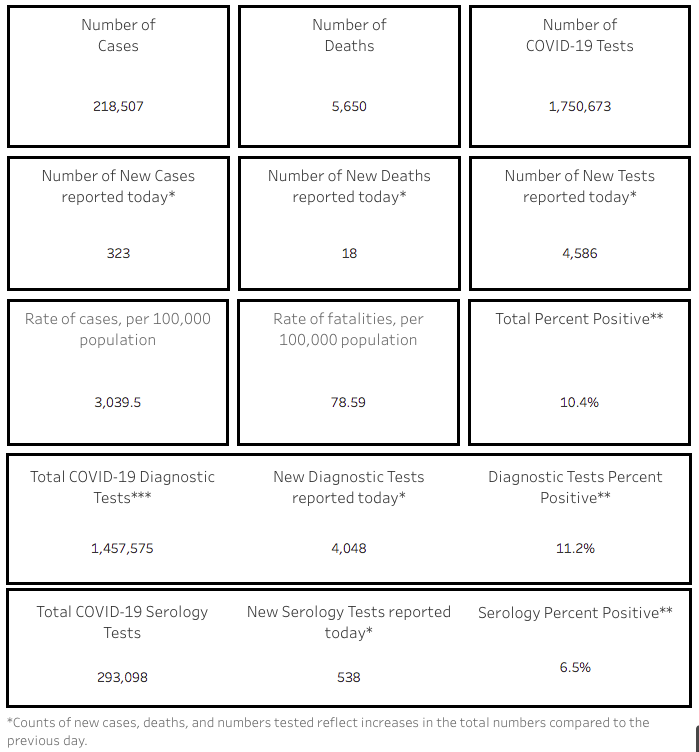
With 323 new cases reported today, the number of Arizona’s confirmed novel coronaviru s cases reached 218,507 as of Wednesday, Sept. 30, according to the Arizona Department of Health Services.

Pima County had seen 25,628 confirmed cases.
With 18 new deaths today, a total of 5,650 Arizonans had died after contracting COVID-19, including 620 deaths in Pima County, according to the Sept. 29 report.
The number of hospitalized COVID cases continues to decline from July peaks. ADHS reported that as of Sept. 29, 560 COVID patients were hospitalized in the state. The number of hospitalized COVID patients peaked at 3,517 on July 13.
A total of 725 people visited emergency rooms on Sept. 29 with COVID symptoms. That number peaked at 2,008 on July 7.
A total of 115 COVID-19 patients were in intensive care unit beds on Sept. 28. The number of COVID patients in ICUs peaked at 970 on July 13.
On a week-by-week basis in Pima County, the number of positive COVID tests peaked the week ending July 4 with 2,453 cases, according to a Sept. 25 report from the Pima County Health Department. While a vocal minority continues to insist that masks do no good, the spread of the virus began to decline within weeks of Pima County’s mask mandate, as more people began wearing them in public, although the level of new cases has creeped back up in recent weeks with the return of UA students. For the week ending Aug. 29, 569 new cases were reported; for the week ending Sept. 5, a total of 861 cases were reported; for the week ending Sept. 12, 1,103 cases were reported; for the week ending Sept. 19, 1,203 cases were reported. (Recent weeks are subject to revision.)
Deaths in Pima County are down from a peak of 55 in the week ending July 4 to 19 for the week ending Aug. 15, 13 in the week ending Aug. 22, 10 in the week ending Aug. 29, zero in the week ending Sept. 5, and two in the week ending Sept. 12. (Recent weeks are subject to revision.)
Hospitalization peaked the week ending July 18 with 234 COVID patients admitted to Pima County hospitals. In the week ending Aug. 29, 37 COVID patients were admitted to Pima County hospitals; in the week ending Sept. 5, 25 patients were admitted to Pima County hospitals; in the week ending Sept. 12, 19 patients were admitted; and in the week ending Sept. 19, 14 patients were admitted. (Numbers are subject to revision.)
Get a Flu Shot
Tuesday, September 29, 2020

Jeff Jeans once described himself as a “hardcore conservative Republican.”
But after he moved to Arizona and lost his job, he lost the health insurance that came with it. A year later, Jeans lost his voice and was diagnosed with stage 4 throat cancer.
Without the ability to pay for medical expenses on his own, Jeans received health care coverage through the Affordable Care Act, the Obama-era health care reform law enacted in March 2010.
After receiving coverage for medical expenses he couldn’t afford on his own, Jeans is now a staunch advocate for the law he once adamantly opposed.
A day before tonight’s first debate between President Donald Trump and Democratic challenger Joe Biden, Jeans shared his story at a virtual press conference hosted by Arizona Democrats discussing the Affordable Care Act and Trump’s opposition to the health care law. He shared the same testimony as a guest speaker at the Democratic National Convention in August.
“I made a pact with God when I was in my hospital bed that if I lived through this, I was going to share my story,” Jeans said. “Thanks to the Affordable Care Act, I’m alive today.”
Jeans shared the story resulting in his political conversion, while state Rep. Kelli Butler of District 28 and Amanda Aguirre, president and CEO of the Regional Center for Border Health, shared their opinions on the importance of voting to secure the safety of the Affordable Care Act as the president tries to dismantle it.
In June, the Trump administration asked the Supreme Court to overturn the Affordable Care Act. On Nov. 10, one week after the general election, the Supreme Court will hear oral arguments for the case seeking to overturn the ACA.
Monday, September 28, 2020

Although the number of positive coronavirus cases on campus is trending downward, the University of Arizona will again delay phase 2 of its reentry plan and remain open only for in-person instruction of essential courses through the week of Oct. 5, UA President Dr. Robert C. Robbins said in a news conference this morning.
According to the university’s data, on Friday, Sept. 25, UA had a COVID-19 positivity rate of 3.4 percent, with 36 new positive cases out of 1,051 new tests.
This is a significant improvement from a week prior, on Friday, Sept. 18, which saw a 6.4 percent positivity rate and evidence of off-campus gatherings lacking safety precautions against COVID-19.
“We certainly like to see it down under 5 percent, so well done everyone,” Robbins said. “I’m pleased to report that our outreach and enforcement initiatives are having a very positive effect on compliance with public health guidelines.”
The university had 252 students in isolation housing as of Friday evening, with 348 isolation beds available and 43 dorm students isolating off-campus.
According to Robbins, around 5,200 students are attending in-person classes with strict guidelines in place for social distancing, use of protective gear and frequent sanitation. He says cases are not being transmitted in the classroom, but rather, “in off-campus large gatherings.”
The university has a staged plan for reopening but still remains in phase one of the plan, which allows students to attend essential in-person classes only.
Robbins recognized some students’ and faculty’s desire to slowly integrate to more in-person learning, noting it may help improve mental health amid isolating conditions. However, he said the university is not yet ready to move into the next stage of reopening the university.
Robbins says the university is seeing fewer off-campus gatherings and calls regarding public health violations—an important step in quelling the transmission of the virus.
The university responded to 13 properties for violations throughout Thursday, Friday and Saturday nights, which Robbins said is four fewer than the week prior.
The previous week, the university issued three university-related red tags, 10 citations and 13 code of conduct referrals to the dean of students. Last weekend, 10 red tags, 19 citations and 25 code of conduct violations were issued.
“This is not a time to become complacent, however,” Robbins warned. “I continue to see groups of students around University Boulevard and elsewhere without face coverings. I beg you, please listen and follow the guidelines.”
Robbins also announced the university’s voluntary 14-day self-quarantine program, in which students were asked to stay home and avoid unnecessary trips, will end tomorrow, Sept. 29.
“We believe there has been a significant positive impact. If case numbers begin to rise again, there may be a need to reinstate this self-imposed quarantine, but if the cases skyrocket again, then working with the county health department, more legal quarantine issues may need to be enacted,” Robbins said.
All asymptomatic students, faculty and staff have access to COVID-19 testing through the university’s “test all test smart” program, while symptomatic individuals can be tested at a campus health center.
According to the university’s Reentry Task Force Director, Dr. Richard Carmona, the number of tests administered by day has decreased toward the end of September. In the future, this could lead to calls for mandatory coronavirus testing on campus.
“As students start to see that as they test positive, they may be quarantined, they’re less likely to want to be tested. So it maybe we have to consider mandatory testing for students who come on campus,” Carmona said.
According to Robbins, the university has the capacity to administer nearly 10,000 tests a week.
“My hope would be that the technology evolves quickly and by the coming months, by January when we all come, that we have the capability of testing at least all the students who come to classes in person,” Robbins said.
While satisfied with a seemingly increased compliance to public health guidelines throughout the university, Robbins still stresses the importance of maintaining public health safety protocols even as the campus’s COVID-19 positivity rate slows.
“I encourage all of you, students, faculty, staff and other members of our southern Arizona community, to continue to follow to rules so we can protect one and another and move forward,” Robbins said. “We cannot control the virus on our own.”
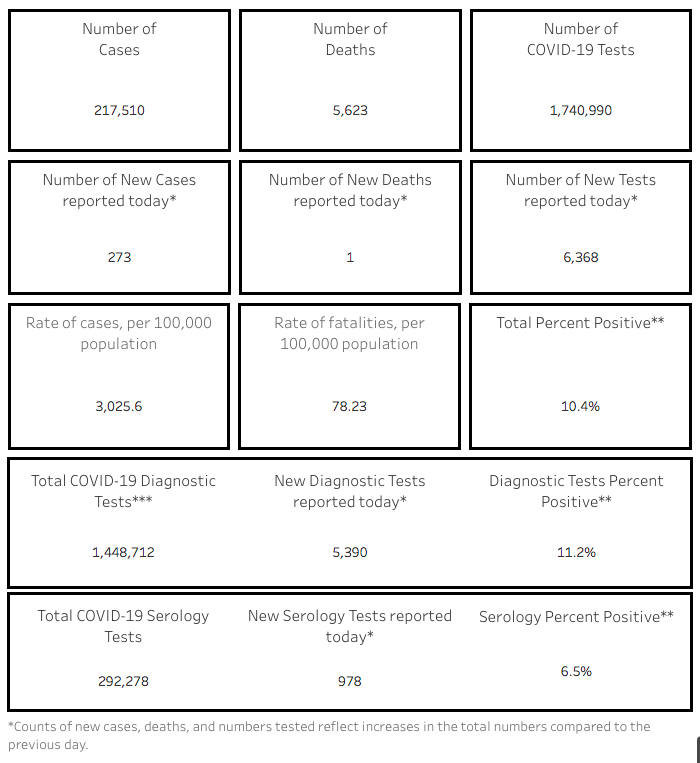
With 273 new cases reported today, the number of Arizona’s confirmed novel coronavirus cases topped 217,000 as of Monday, Sept. 28, according to the Arizona Department of Health Services.
Pima County had seen 25,445 of the state’s 217,510 confirmed cases.
With one new deaths today, a total of 5,623 Arizonans had died after contracting COVID-19, including 622 deaths in Pima County, according to the Sept. 28 report.
The number of hospitalized COVID cases continues to decline from July peaks, ADHS reported that as of Sept. 27, 468 COVID patients were hospitalized in the state, the lowest that number has been since April 8, when 338 people were hospitalized with COVID symptoms. The number of hospitalized COVID patients peaked at 3,517 on July 13.
A total of 684 people visited emergency rooms on Sept. 27 with COVID symptoms. That number peaked at 2,008 on July 7.
A total of 115 COVID-19 patients were in intensive care unit beds on Sept. 27. The number of COVID patients in ICUs peaked at 970 on July 13.
On a week-by-week basis in Pima County, the number of positive COVID tests peaked the week ending July 4 with 2,453 cases, according to a Sept. 25 report from the Pima County Health Department. While a vocal minority continues to insist that masks do no good, the spread of the virus began to decline within weeks of Pima County’s mask mandate, as more people began wearing them in public, although the level of new cases has more than doubled in recent weeks with the return of UA students. For the week ending Aug. 29, 569 new cases were reported; for the week ending Sept. 5, a total of 861 cases were reported; for the week ending Sept. 12, 1,103 cases were reported; for the week ending Sept. 19, 1,203 cases were reported. (Recent weeks are subject to revision.)
Deaths in Pima County are down from a peak of 55 in the week ending July 4 to 19 for the week ending Aug. 15, 13 in the week ending Aug. 22, 10 in the week ending Aug. 29, zero in the week ending Sept. 5, and two in the week ending Sept. 12. (Recent weeks are subject to revision.)

