

Friday, September 4, 2020

This week, University of Arizona President Dr. Robert Robbins and Campus Reentry Task Force Director Dr. Richard Carmona announced they will partner with the Tucson Police Department to crack down on COVID-19 safety violations that occur off-campus.
The UA began its fall semester on Aug. 24 and has seen new COVID-19 cases pop up since students returned to Tucson. Although many classes are operating remotely, university officials believe off-campus student gatherings and social activity have been the driving cause of these new cases.
In a press conference earlier this week, Robbins said all the safety precautions and systems put in place by the university to prevent transmission of the disease on campus requires students, staff and faculty to follow the rules. But what students do in their free time off-campus is by nature unregulated and prime for safety violations—until now.
The university’s new Campus Area Response Team (CART) is a joint effort between the university and TPD focused on responding to reports of student social gatherings that “violate city ordinances and undermine health and safety guidelines,” according to a press release.
In partnership with the city and county, the police will be responding to residential complaints in neighborhoods surrounding the university. Businesses in the University Boulevard/Fourth Avenue corridor have been asked to reinforce public health directives at this time.
“We encourage everyone: Please do not have large gatherings,” Robbins said at the press conference. “We know that is ripe for transmission of this deadly virus.”
Tags: University of Arizona , Robert Robbins , Richard Carmona , Tucson Police Department , COVID-19 , Safety Precautions , Image
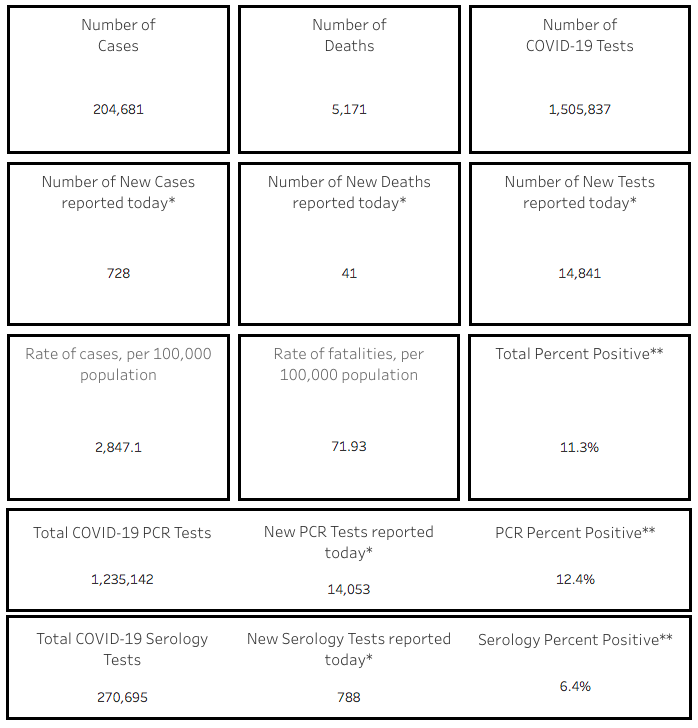
With 728 new cases today, the number of Arizona’s confirmed novel coronavirus cases topped 204,000 as of Friday, Sept. 4, according to the Arizona Department of Health Services.

Pima County had seen 21,574 of the state’s 204,681 confirmed cases.
A total of 5,171 Arizonans had died after contracting COVID-19, including 593 deaths in Pima County, according to the Sept. 3 report.
The number of hospitalized COVID cases continues to decline from July peaks. ADHS reported that as of Sept. 3, 742 COVID patients were hospitalized in the state. That number peaked at 3,517 on July 13.
A total of 814 people visited emergency rooms on Sept. 3 with COVID symptoms, the lowest that number has been since June 4, when 725 COVID patients visited ERs. That number peaked at 2,008 on July 7.
A total of 236 COVID-19 patients were in intensive care unit beds on Sept. 3, the lowest that number has been since April 8, when 155 people were in ICU. The number of COVID patients in ICUs peaked at 970 on July 13.
In Pima County, the week-by-week counting of cases peaked the week ending July 4 with 2,398 cases, according to an Aug. 26 report from the Pima County Health Department. Those numbers have dropped with Pima County requiring the wearing of masks in public but they have bumped upward recent weeks, with 804 cases in the week ending Aug. 8 and 930 cases in the week ending Aug. 15. (Not all recent cases may have been reported.)
Deaths in Pima County are down from a peak of 54 in the week ending July 4 to 35 for the week ending Aug. 8 and 15 for the week ending Aug. 15.
Hospitalization peaked the week ending July 18 with 247 COVID patients admitted to Pima County hospitals. For the week ending Aug. 15, 63 COVID patients were admitted to Pima County hospitals.
UA antibody testing open to all
The FDA gave approval to the University of Arizona’s antibody test. As a result, the testing has now been opened to all Arizonans as the state attempts to get handle on how many people have been exposed to COVID-19 but were asymptomatic or otherwise did not get a test while they were ill.
To sign up for testing, visit https://covid19antibodytesting.arizona.edu/home.
Benchmarks met to allow schools to begin hybrid learning
Pima County yesterday reached benchmarks indicating that it has moved from “substantial” spread of the coronavirus to “moderate” spread, meaning local school districts can now consider hybrid learning that would allow some students to return to the classroom while others continue distance learning.
Pima County has had less than 100 cases per 100,000 individuals for two consecutive weeks; two straight weeks with the percentage of positive tests below 7 percent; and two consecutive weeks with the total of people visiting hospitals with COVID-like symptoms at less than 10 percent of the total number of people seeking medical attention.
Local school district boards will have to consider the new numbers before making decisions as to how to proceed following the Labor Day holiday.
Get Help From City of Tucson While You Can
Time is running out to get aid from the City of Tucson if you’ve experience a COVID-related hardship.
Thursday, September 3, 2020
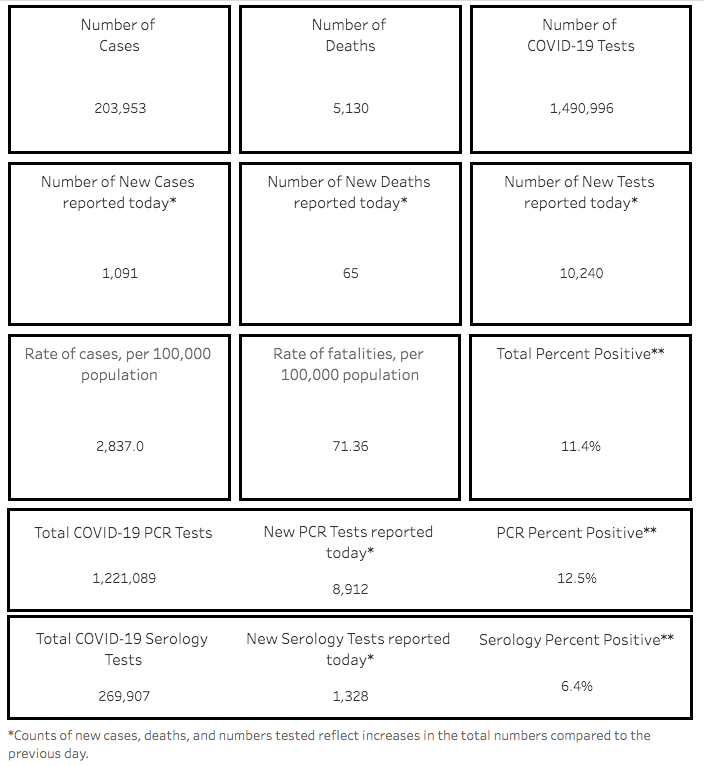
With more than 1,000 new cases today, the number of Arizona’s confirmed novel coronavirus cases closed in on 204,000 as of Thursday, Sept. 3, according to the Arizona Department of Health Services.
Pima County had seen 21,443 of the state’s 203,953 confirmed cases.
A total of 5,130 Arizonans had died after contracting COVID-19, including 590 deaths in Pima County, according to the Sept. 3 report.
The number of hospitalized COVID cases continues to decline from July peaks. ADHS reported that as of Sept. 2, 745 COVID patients were hospitalized in the state. That number peaked at 3,517 on July 13.
A total of 924 people visited ERs on Sept. 1 with COVID symptoms. That number has seen some uptick this week but remains far below the peak of 2,008 on July 7.
A total of 241 COVID-19 patients were in intensive care unit beds on Sept. 2, the lowest that number has been since April 8, when 155 people were in ICU. The number of COVID patients in ICUs peaked at 970 on July 13.
In Pima County, the week-by-week counting of cases peaked the week ending July 4 with 2,398 cases, according to an Aug. 26 report from the Pima County Health Department. Those numbers have dropped with Pima County requiring the wearing of masks in public but they have bumped upward recent weeks, with 804 cases in the week ending Aug. 8 and 930 cases in the week ending Aug. 15. (Not all recent cases may have been reported.)
Deaths in Pima County are down from a peak of 54 in the week ending July 4 to 35 for the week ending Aug. 8 and 15 for the week ending Aug. 15.
Hospitalization peaked the week ending July 18 with 247 COVID patients admitted to Pima County hospitals. For the week ending Aug. 15, 63 COVID patients were admitted to Pima County hospitals.
Benchmarks met to allow schools to begin hybrid learning
Pima County today reached benchmarks indicating that it has moved from “substantial” spread of the coronavirus to “moderate” spread, meaning local school districts can now consider hybrid learning that would allow some students to return to the classroom while others continue distance learning.
Pima County has had less than 100 cases per 100,000 individuals for two consecutive weeks; two straight weeks with the percentage of positive tests below 7 percent; and two consecutive weeks with the total of people visiting hospitals with COVID-like symptoms at less than 10 percent of the total number of people seeking medical attention.
Local school district boards will have to consider the new numbers before making decisions as to how to proceed following the Labor Day holiday.
Get Help From City of Tucson While You Can
Time is running out to get aid from the City of Tucson if you’ve experience a COVID-related hardship.
Wednesday, September 2, 2020
That's way outside the survey's =/- 3.5 percent margin of error.
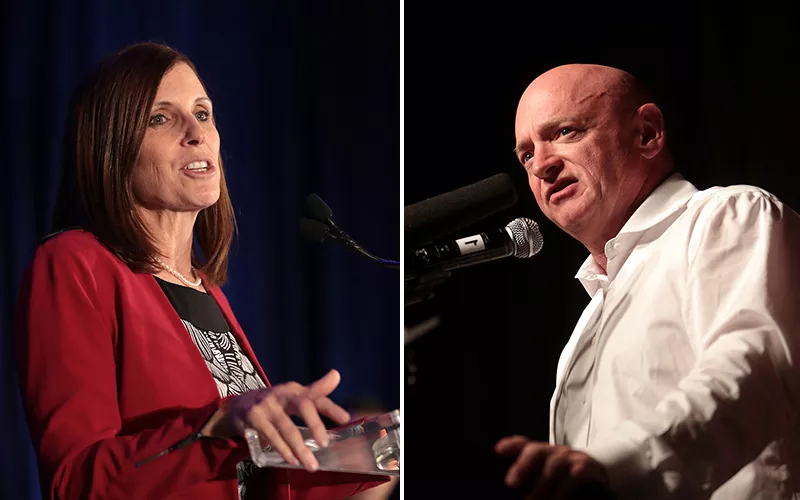
The survey shows 56 percent of those polled prefer Kelly, while just 39 are supporting McSally, a Republican who lost a 2018 Senate race to Democrat Kyrsten Sinema but was later appointed to the Senate seat previously held by the late John McCain by Gov. Doug. Because she was appointed, McSally must face voters again this year (and whoever wins in November will have to defend the seat in 2022).
With only one recent exception, McSally has consistently trailed Kelly in polling, as a roundup at FiveThirtyEight.com shows. The polling average Real Clear Politics now puts Kelly ahead by an average of 11.3 percentage points. McSally has decried the poor numbers as "fake polls."
The Fox News poll also showed Democrat Joe Biden leading President Donald Trump in Arizona. Biden had the support of 49 percent of likely voters, while Trump had the support of 40 percent.
The national GDP dropped by more than 30 percent at the beginning of the outbreak in the United States and since then, national unemployment has risen to 10.2 percent. However, Marana has reported strong revenue numbers and received additional funds from the federal CARES Act.
During the Sept. 1 council meeting, Marana Finance Director Yiannis Kalaitzidis said Marana’s hotel occupancy rate fell by about 10 percent and hotel revenues fell by about 11 percent in July compared to last year. The number of issued housing permits remains strong in Marana, with 855 single-family housing permits issued in fiscal year 2020 compared to 802 in 2019.
In April through June, restaurant and bar revenues dropped by about 20 percent, while retail revenues increased by six percent. When the COVID-19 pandemic hit, Marana officials anticipated a sharp drop in sales tax revenues. But revenues only took a minor dip in April and May, and came back even stronger than projections from before COVID-19 in June and July.
“However, it is still too early to determine what’s going to happen as our future really does depend very much on the federal relief funds, how effective they’re going to be and if we find a solution for the virus,” Kalaitzidis said.
The Town of Marana passed a reduced budget for fiscal year 2020-21 in anticipation of the negative financial impact of the Coronavirus. The town government slimmed their budget by deferring capital projects, delaying or freezing new hires and restricting budget capacity in certain departments.
Kalaitzidis recommends the council stay with this current budget and monitor new revenue numbers closely in order to anticipate future changes.
Tuesday, September 1, 2020
ProPublica is a nonprofit newsroom that investigates abuses of power. Sign up to receive our biggest stories as soon as they’re published.
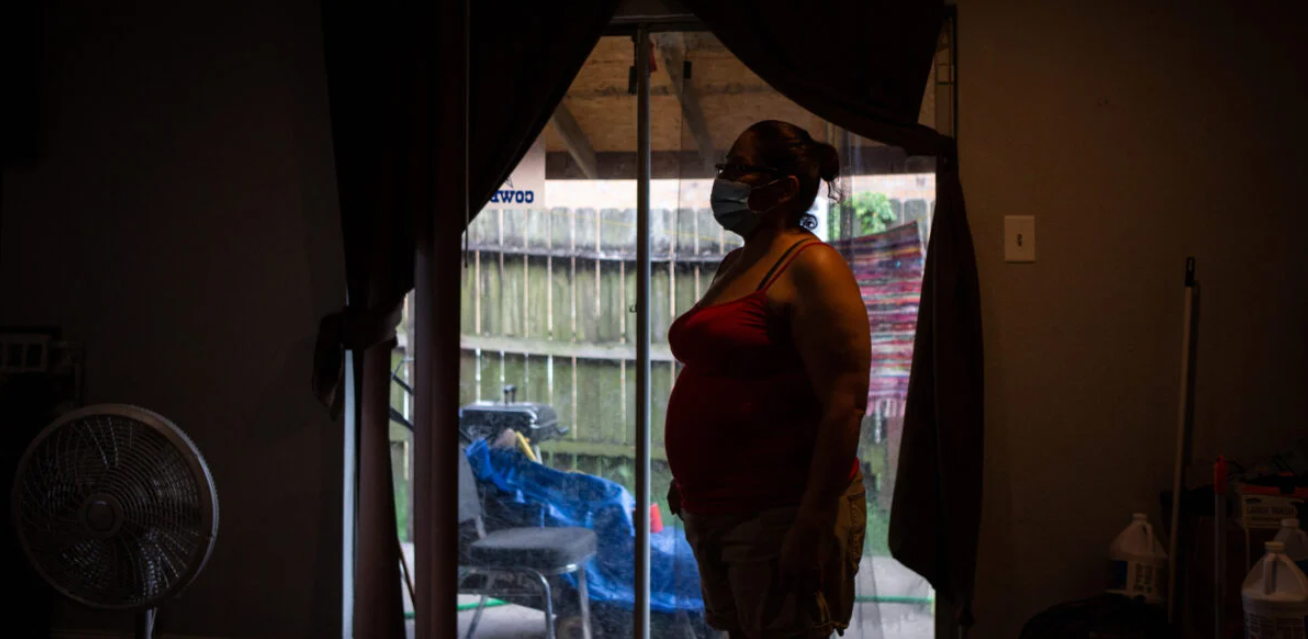
HOUSTON — On an afternoon in mid-June, Analleli Solis was walking home from her brother’s house just down the street when she noticed someone she didn’t know retreating from the front door of her modest brick home.
Solis approached the woman, who handed her an envelope.
Inside was a lawsuit from Oportun Inc., a personal loan company Solis had turned to for years when she and her husband didn’t have enough cash to cover rent, fix their cars or take a vacation.
Now, the company was suing Solis to recoup some of that money, demanding $4,196.23 including fees and interest.
Solis’ shock quickly gave way to anger. Three months earlier, after she missed a few of her $130 bimonthly payments, she said she called Oportun to tell the company she had lost her jobs as a hotel housekeeper and fast food worker because of the coronavirus pandemic and needed some relief.
The 43-year-old mother of three expected the company would understand.
ProPublica is a nonprofit newsroom that investigates abuses of power. Sign up to receive our biggest stories as soon as they’re published.
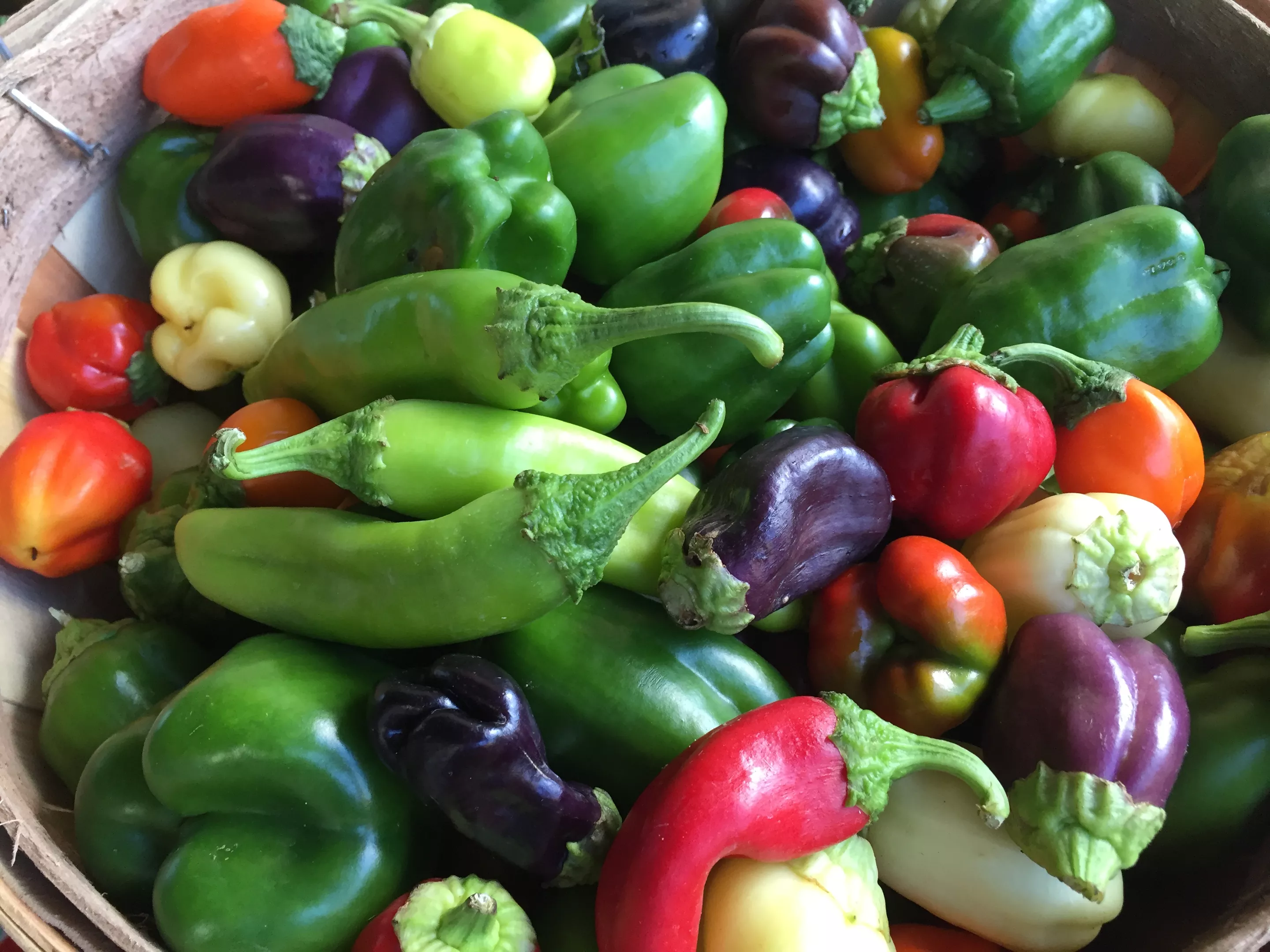
Millions of Americans who are struggling to put food on the table may discover a new item in government-funded relief packages of fresh fruits and vegetables, dairy and meat: a letter signed by President Donald Trump.
The message, printed on White House letterhead in both English and Spanish, touts the administration’s response to the coronavirus, including aid provided through the Farmers to Families Food Box Program, a U.S. Department of Agriculture initiative to buy fresh food and ship it to needy families.
The letter is reminiscent of Trump’s effort to put his signature on stimulus checks and send a signed letter to millions of recipients. It’s the latest example of the president blurring his official duties with his reelection campaign, most prominently by hosting Trump’s acceptance speech for the Republican nomination last week on the White House lawn.
Democratic lawmakers have gone so far as to say the USDA letter violates the federal Hatch Act. The law prohibits government officials from using their positions or taxpayer resources to engage in electioneering. Though the president himself is exempt, the ban applies to White House staff and agencies such as the USDA.
“Using a federal relief program to distribute a self-promoting letter from the President to American families just three months before the presidential election is inappropriate and a violation of federal law,” argued 49 House Democrats led by Marcia Fudge of Ohio in an August 14 letter to Agriculture Secretary Sonny Perdue, requesting information about the purpose and process behind Trump’s letter. “A public health crisis is not an opportunity for the administration to promote its own political interests. Likewise, a federal food assistance program should not be used as a tool for the President to exploit taxpayer dollars for his re-election campaign.”

PHOENIX – The small office building, nestled just off the road near a medical office and appliance store, looks more like a house where a quiet family might live. The only signs of activity are the cars in the small parking lot out front.
Most passersby likely have no idea what goes on behind the dark purple door; an intercom doorbell ensures that only those who belong are allowed in. There are no signs outside, only inside, such as “You Matter” and “Happy Thoughts.”
Bulletin boards are brightened by slips of neon-colored paper with phone numbers to Planned Parenthood and shelters for homeless youth. There are nearly 10 work spaces, each with a computer, a landline and a chair.
On a Friday night early last spring, Madison Marks, 20, sits in one of the chairs waiting for the phone to ring. The part-time Starbucks barista, who’s dressed in black and rocks blonde streaks through her short brown hair, picks up when a 15-year-old calls to share the troubles that led her to seek help from a stranger.
Marks stops her at one point and asks the requisite question: “On a scale of one to 10, one being you’re OK and 10 being you’d kill yourself right now, how are you feeling?”
For decades, researchers have looked to human genetics for linkages to mental illness, such as depression, bipolar disorder, and schizophrenia. Patterns of inheritance are murky, but it is clear that “stuff runs in families,” says Dr. Douglas Gray, a psychiatrist and researcher at the University of Utah School of Medicine.
His 2018 study – published in the journal of Molecular Psychiatry – went a step further. It examined four specific gene variants that appear to raise the risk of suicide.
Four percent “of genes in the genome have current evidence associated with suicide risk,” according to the study, which identified the variants as APH1B, AGBL2, SP110 and SUCLA2. Their presence is “noticeably associated with suicide risk.”
“We need to tell people who’ve had a suicide that their family’s at risk,” said Gray, who studies suicide to better understand risk factors and develop prevention programs. This genetic component may account for as much as “45 to 50% of the risk,” he said.
Genetic screenings or simply reviewing family histories could be one method of increasing both awareness and prevention, Gray said.
The study was rooted in the work of another researcher at the University of Utah in 1980: Paul H. Wender. His team of American and Danish researchers in Denmark compared adopted children and their adoptive parents to biological parents and their children.
“They looked at a group of children who were adopted at birth and then grew up and completed suicide,” Gray said. “It turned out that almost all of the risk of suicide was from the biological relatives and not the relatives that raised the child. So your suicide risk doesn’t come from the parents that adopt you, it comes from the parents you never met.”

WASHINGTON – American Airlines’ announcement that it could let go up to 19,000 workers on Oct. 1 has left the airline’s roughly 10,000 employees in Arizona worried, but hopeful the state can avoid the worst of the cuts.
The airline has not specified which regions of the country will see the cuts – which American executives said would not be needed if the federal government passes a new round of relief funding.
That has one local union “blasting out all over Facebook” to get members to press their representatives for a deal.
“I think some think that a second stimulus will come,” said Pat Rezler, assistant general chairman of the International Association of Machinists and Aerospace Workers, 141st District. “But some are hesitant on believing that.
“People are worried,” Rezler added.
It is unclear how many jobs, if any, American will cut at the airline’s hub in Phoenix Sky Harbor International Airport. An airline spokesperson said a regional breakdown of the job cuts is not yet available.
In a letter to employees last week, American Chairman and CEO Doug Parker and President Robert Isom announced plans to either furlough or permanently lay off 19,000 U.S. employees on Oct. 1 if Congress fails to pass a new round of stimulus to support the airline industry.

