

Wednesday, August 12, 2020
Stay up to date with WNYC and ProPublica’s investigations into the president’s business practices.
This story is co-published with WNYC.
President Donald Trump’s recent musings about staging his Republican National Convention speech at the White House drew criticism from government ethics watchdogs and even one Republican senator, John Thune of South Dakota.
The suggestion wasn’t an isolated blending of official presidential duties and the campaign. It was part of a yearslong pattern of disregarding such boundaries in the Trump White House. There is a law, called the Hatch Act, that prohibits most government officials from engaging in politicking in the course of their official work.
The law does not apply to the president or vice president. While other presidents took campaign advantage of the trappings of the office, something that came to be known as the “Rose Garden strategy,” they typically refrained from explicit electoral appeals or attacks on their opponents at official presidential events. Federal election law and measures governing appropriations prohibit using taxpayer dollars for electioneering.

This story is co-published with WNYC.
President Donald Trump’s recent musings about staging his Republican National Convention speech at the White House drew criticism from government ethics watchdogs and even one Republican senator, John Thune of South Dakota.
The suggestion wasn’t an isolated blending of official presidential duties and the campaign. It was part of a yearslong pattern of disregarding such boundaries in the Trump White House. There is a law, called the Hatch Act, that prohibits most government officials from engaging in politicking in the course of their official work.
The law does not apply to the president or vice president. While other presidents took campaign advantage of the trappings of the office, something that came to be known as the “Rose Garden strategy,” they typically refrained from explicit electoral appeals or attacks on their opponents at official presidential events. Federal election law and measures governing appropriations prohibit using taxpayer dollars for electioneering.
ProPublica is a nonprofit newsroom that investigates abuses of power. Click here to read their biggest stories as soon as they’re published.
On Tuesday, former Vice President Joe Biden selected Sen. Kamala Harris, D-Calif., as his vice presidential running mate. We’ve collected some of the best stories on Harris to get you up to speed on the candidate.
The 2020 Campaign Trail
“How Kamala Harris Went From ‘Female Obama’ to Fifth Place,” Politico, November 2019
Drawing on interviews with people inside and outside her campaign, Christopher Cadelago charted Harris’ parabolic bid for president, from its initial momentum to its floundering final month. He connects her past races, particularly her 2010 bid for California attorney general against Republican Steve Cooley, to help explain her present. Cadelago followed up in December for a look at how Harris’ campaign eventually unraveled, both financially and with clashing advisers.
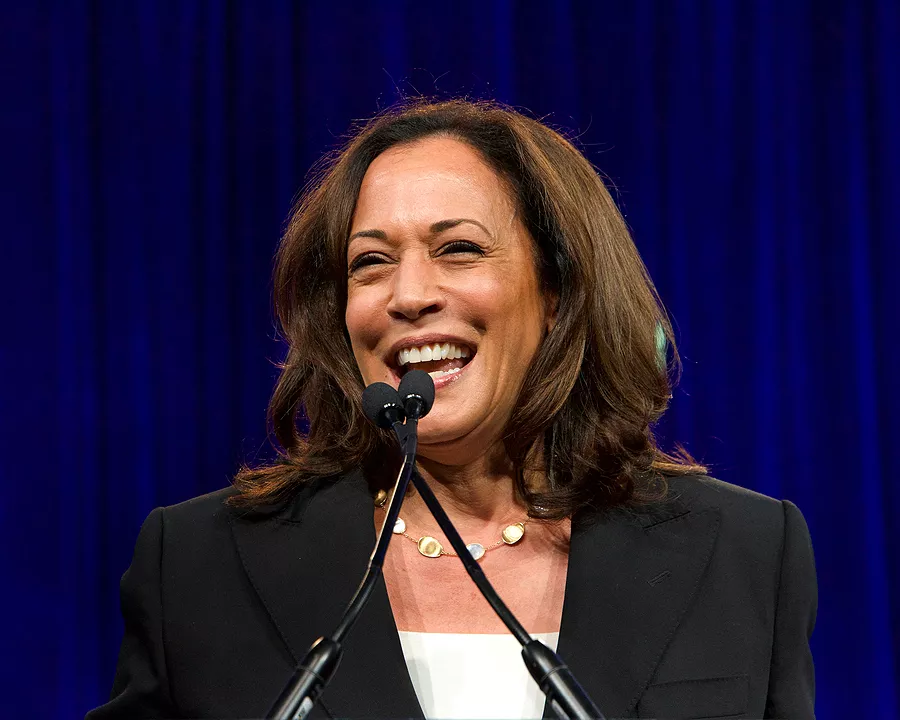
On Tuesday, former Vice President Joe Biden selected Sen. Kamala Harris, D-Calif., as his vice presidential running mate. We’ve collected some of the best stories on Harris to get you up to speed on the candidate.
The 2020 Campaign Trail
“How Kamala Harris Went From ‘Female Obama’ to Fifth Place,” Politico, November 2019
Drawing on interviews with people inside and outside her campaign, Christopher Cadelago charted Harris’ parabolic bid for president, from its initial momentum to its floundering final month. He connects her past races, particularly her 2010 bid for California attorney general against Republican Steve Cooley, to help explain her present. Cadelago followed up in December for a look at how Harris’ campaign eventually unraveled, both financially and with clashing advisers.
PHOENIX – For any teen, getting a driver’s license is a rite of passage – a small taste of freedom in their adolescent lives.
But for Black teens in America the little bit of freedom that comes with car keys also comes with “the talk”: The time when Black parents sit their children down and explain to them what to do if stopped by a police officer.
It’s been happening for generations. Sometimes the talk comes earlier in life. Sometimes it’s in response to a headline-grabbing death of a Black person who had been stopped by police.
In the wake of recent deaths of Black people at the hands of police – George Floyd in Minneapolis, Dion Johnson and Muhammad Muhaymin Jr. in Phoenix and Breonna Taylor in Louisville, the latest in a history of such killings – Cronkite News asked Black leaders in Arizona to talk about the time they had the talk.
Tempe Mayor Corey Woods remembers details of “the talk” with his dad nearly three decades later. For Flagstaff Mayor Coral Evans, it brought memories of being talked to by her mother – then having the talk with her own daughter.
Arizona State University football coach Herm Edwards said the talk with his father was not one specific event but what he called a series of small life lessons. That was the case for Arizona Rep. Geraldine Peten, D-Gila Bend, who knows that those are lessons and talks that will continue for generations to come.
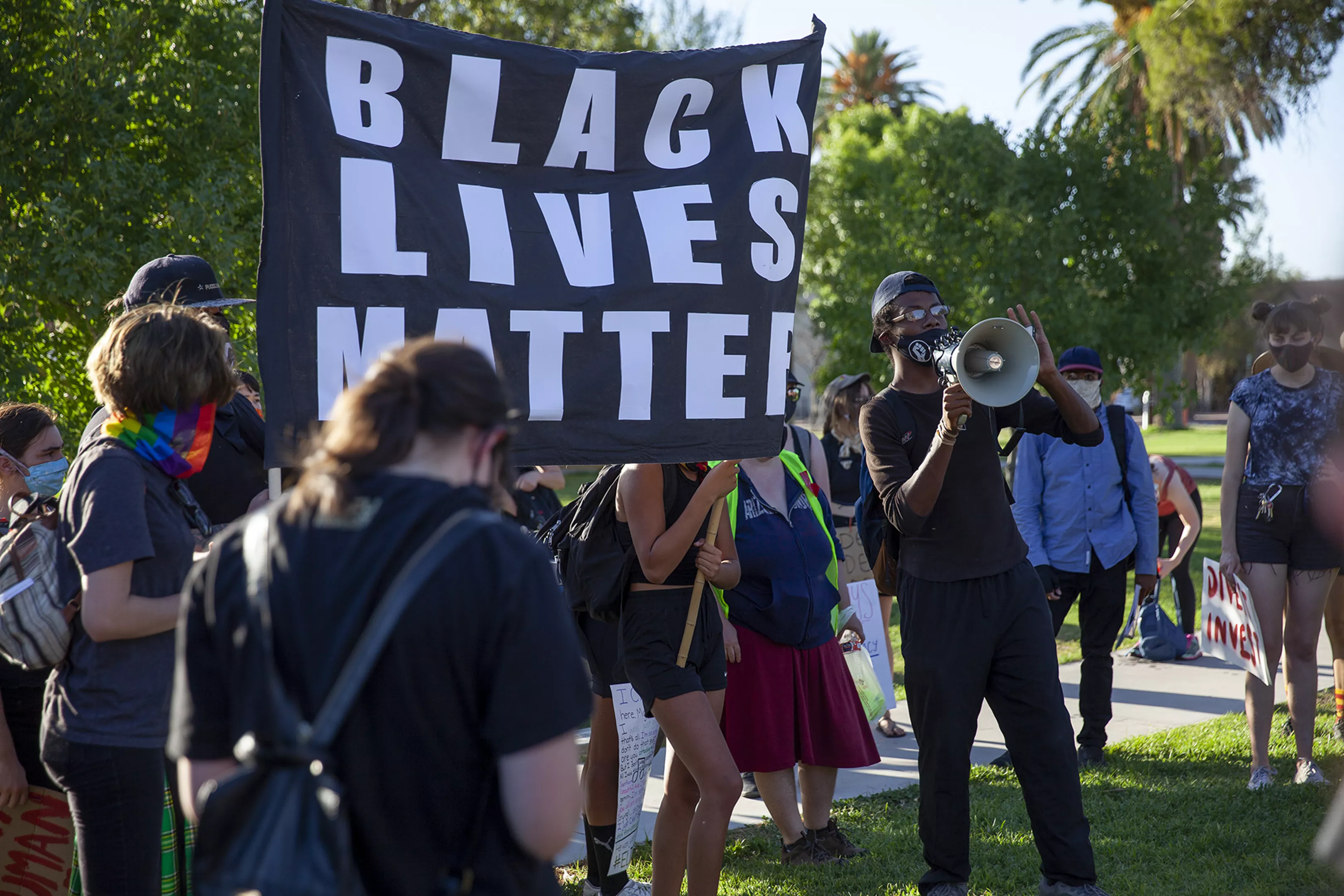
But for Black teens in America the little bit of freedom that comes with car keys also comes with “the talk”: The time when Black parents sit their children down and explain to them what to do if stopped by a police officer.
It’s been happening for generations. Sometimes the talk comes earlier in life. Sometimes it’s in response to a headline-grabbing death of a Black person who had been stopped by police.
In the wake of recent deaths of Black people at the hands of police – George Floyd in Minneapolis, Dion Johnson and Muhammad Muhaymin Jr. in Phoenix and Breonna Taylor in Louisville, the latest in a history of such killings – Cronkite News asked Black leaders in Arizona to talk about the time they had the talk.
Tempe Mayor Corey Woods remembers details of “the talk” with his dad nearly three decades later. For Flagstaff Mayor Coral Evans, it brought memories of being talked to by her mother – then having the talk with her own daughter.
Arizona State University football coach Herm Edwards said the talk with his father was not one specific event but what he called a series of small life lessons. That was the case for Arizona Rep. Geraldine Peten, D-Gila Bend, who knows that those are lessons and talks that will continue for generations to come.
PHOENIX – As social distancing and isolation continue throughout the COVID-19 pandemic, many states across the country are reporting an increase in reported drug overdoses and suicides, including Arizona.
The Arizona Department of Health Services has observed an increase in deaths due to suicide and drug overdose during the COVID-19 epidemic, according to Dr. Cara Christ, the department’s director.
“We are seeing an increase in drug overdose and in suicides, not just here in Arizona but nationally. Could some of that be associated to the isolation and loneliness? That was one of the things that we were worried about,” she said during a July 16 news conference.
Arizona health officials declined requests for further comment on the subject. While publicly available data reveals that in Arizona there had been 48,120 suspected opioid overdoses between June 15, 2017, and Aug. 7, 2020, the health department does not share data that isolates the number of suicides since the start of the pandemic.
Nationally, there had been a 17.59% increase in drug overdoses from March 19 to May 19, as reported by the Overdose Detection Mapping Application Program.
Health officials in other states, such as Illinois and Washington, are voicing similar concerns, as the number of incidents continues to grow.

The Arizona Department of Health Services has observed an increase in deaths due to suicide and drug overdose during the COVID-19 epidemic, according to Dr. Cara Christ, the department’s director.
“We are seeing an increase in drug overdose and in suicides, not just here in Arizona but nationally. Could some of that be associated to the isolation and loneliness? That was one of the things that we were worried about,” she said during a July 16 news conference.
Arizona health officials declined requests for further comment on the subject. While publicly available data reveals that in Arizona there had been 48,120 suspected opioid overdoses between June 15, 2017, and Aug. 7, 2020, the health department does not share data that isolates the number of suicides since the start of the pandemic.
Nationally, there had been a 17.59% increase in drug overdoses from March 19 to May 19, as reported by the Overdose Detection Mapping Application Program.
Health officials in other states, such as Illinois and Washington, are voicing similar concerns, as the number of incidents continues to grow.
LA PEÑITA, PANAMA – Salman Khan is 9,000 miles from his home country of Pakistan. He crossed one of the most dangerous jungles in the world. He sits in a squalid camp overseen by the Panamanian border patrol, unsure of what his future holds. But to Khan, Panama represents a path to freedom.
“I want to live a free life,” said Khan, who is gay and left Pakistan because he was persecuted. “So I leave. I fly.”
Two-thirds of the more than 22,000 migrants who in 2019 crossed the dangerous Darién Gap – a 60-mile wide, dense jungle along the border of Colombia and Panama – are from Haiti and Cuba.
But surprisingly, migrants from far-flung places in Asia account for the next-largest group to brave the Darién. Most hope to eventually land in the U.S and Canada. During the crossing, they encounter wild animals, venomous snakes, challenging terrain and human predators.
According to Panama’s National Migration Service, Asians made up 21% of the 87,191 migrants detained by SENAFRONT, Panama’s border patrol, during an eight-year period.
“We have started to see an increase in migrants from African countries and Asia,” SENAFRONT Director General Oriel Ortega Benitez said. “From 2014 until now, migration flows have been massive.”
The third, fourth and fifth-largest populations of migrants came from Nepal, India and Bangladesh, respectively, from 2010-2018.

“I want to live a free life,” said Khan, who is gay and left Pakistan because he was persecuted. “So I leave. I fly.”
Two-thirds of the more than 22,000 migrants who in 2019 crossed the dangerous Darién Gap – a 60-mile wide, dense jungle along the border of Colombia and Panama – are from Haiti and Cuba.
But surprisingly, migrants from far-flung places in Asia account for the next-largest group to brave the Darién. Most hope to eventually land in the U.S and Canada. During the crossing, they encounter wild animals, venomous snakes, challenging terrain and human predators.
According to Panama’s National Migration Service, Asians made up 21% of the 87,191 migrants detained by SENAFRONT, Panama’s border patrol, during an eight-year period.
“We have started to see an increase in migrants from African countries and Asia,” SENAFRONT Director General Oriel Ortega Benitez said. “From 2014 until now, migration flows have been massive.”
The third, fourth and fifth-largest populations of migrants came from Nepal, India and Bangladesh, respectively, from 2010-2018.
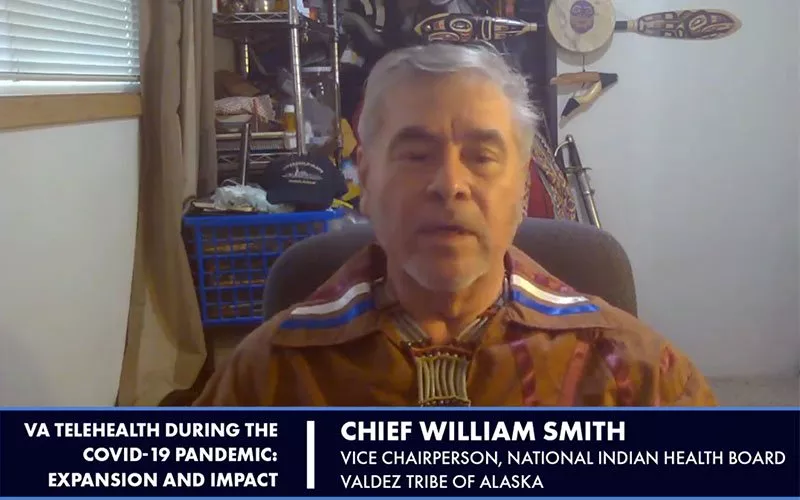
In this screenshot, William Smith, of the Valdez Native Tribe in Alaska, testifies before the U.S. House subcommittees on health and technology modernization about the need for more telehealth to help fight COVID-19. Smith has been working to draw attention to the lack of infrastructure in Indian Country during the pandemic. (Photo courtesy of the National Indian Health Board)
PHOENIX – Before COVID-19, Joshuaa Allison-Burbank spent his days traversing the Navajo Nation, stopping at homes, libraries and schools to provide speech therapy and reading support for children with developmental disabilities.
Now he sits at a computer in Waterflow, New Mexico, grappling with how to keep helping kids whose families may have no internet or laptops or iPhones – or, if they do, are coping with far more than a telehealth appointment that may or may not go off as planned.

Juaquin Hamilton-YoungBird, historical ambassador for the Sac and Fox Nation and emcee for the Quarantine Dance Specials Facebook group, performs at a powwow on March 20, 2020. (Photo courtesy of Juaquin Hamilton-YoungBird)
Native communities throughout the country have cancelled the traditional gatherings indefinitely as a result. But Tiny Rosales, a member of the Ojibwe tribe, has found a way to “to keep the people dancing.”
In March, Rosales created a space on Facebook allowing families, schools and businesses to host virtual Native dance competitions from afar.
Four months later, “Quarantine Dance Specials 2020” has more than 71,000 members and hundreds of video submissions from Indigenous dancers in Canada and the United States.
“Some (Native) people are having a hard time right now” as the pandemic continues to spur cancellations and limit gatherings, Rosales said.
“These specials are not a powwow … but it does feel good to be able to get dressed and put our outfits on and dance.”
WASHINGTON – The number of people on Arizona’s Medicaid rolls topped 2 million this summer, after a five-month surge in enrollment that coincided with COVID-19’s hit to the state’s health and its economy.
Almost 1.88 million people were covered by the Arizona Health Care Cost Containment System – the state’s Medicaid program – on March 1, the month coronavirus-related shutdowns started to take effect. By July 1, the number had topped 2 million and by Aug. 1 enrollment stood at 2,041,990, an increase of 8.7%.
The surge follows skyrocketing unemployment in the state, as COVID-19 shutdowns have shuttered industries. Arizona’s unemployment rate in June was estimated at 10% by the Bureau of Labor Statistics, down sharply from a high of 13.4% in April but still more than twice the 4.5% in February.
For many, like Tempe resident Cindy Andrews, the loss of a job has led to a loss of health insurance.
Andrews lost her job as a physical therapist in March and bought COBRA coverage, which lets workers continue on their health plan for a limited time at a hefty price. When she learned she had cancer, it helped pay for her surgery and radiation, but she dropped it soon thereafter because of the cost.
For Andrews, it has been a stressful experience.

Almost 1.88 million people were covered by the Arizona Health Care Cost Containment System – the state’s Medicaid program – on March 1, the month coronavirus-related shutdowns started to take effect. By July 1, the number had topped 2 million and by Aug. 1 enrollment stood at 2,041,990, an increase of 8.7%.
The surge follows skyrocketing unemployment in the state, as COVID-19 shutdowns have shuttered industries. Arizona’s unemployment rate in June was estimated at 10% by the Bureau of Labor Statistics, down sharply from a high of 13.4% in April but still more than twice the 4.5% in February.
For many, like Tempe resident Cindy Andrews, the loss of a job has led to a loss of health insurance.
Andrews lost her job as a physical therapist in March and bought COBRA coverage, which lets workers continue on their health plan for a limited time at a hefty price. When she learned she had cancer, it helped pay for her surgery and radiation, but she dropped it soon thereafter because of the cost.
For Andrews, it has been a stressful experience.
ProPublica is a nonprofit newsroom that investigates abuses of power. Click here to read their biggest stories as soon as they’re published.
This article is co-published with The Texas Tribune, a nonprofit, nonpartisan local newsroom that informs and engages with Texans.
Since March, the Trump administration has pushed thousands of migrant children back to their home countries without legal screenings or protection, citing the risk that they could be carrying COVID-19 into the United States.
But by the time the children are boarded on planes home, they’ve already been tested for the virus — and proven not to have it.
Court documents, and information given by Immigration and Customs Enforcement to congressional staff last week, reveal that the Trump administration has agreed to test every child in its custody before sending them back to their home countries under the expulsion policy.
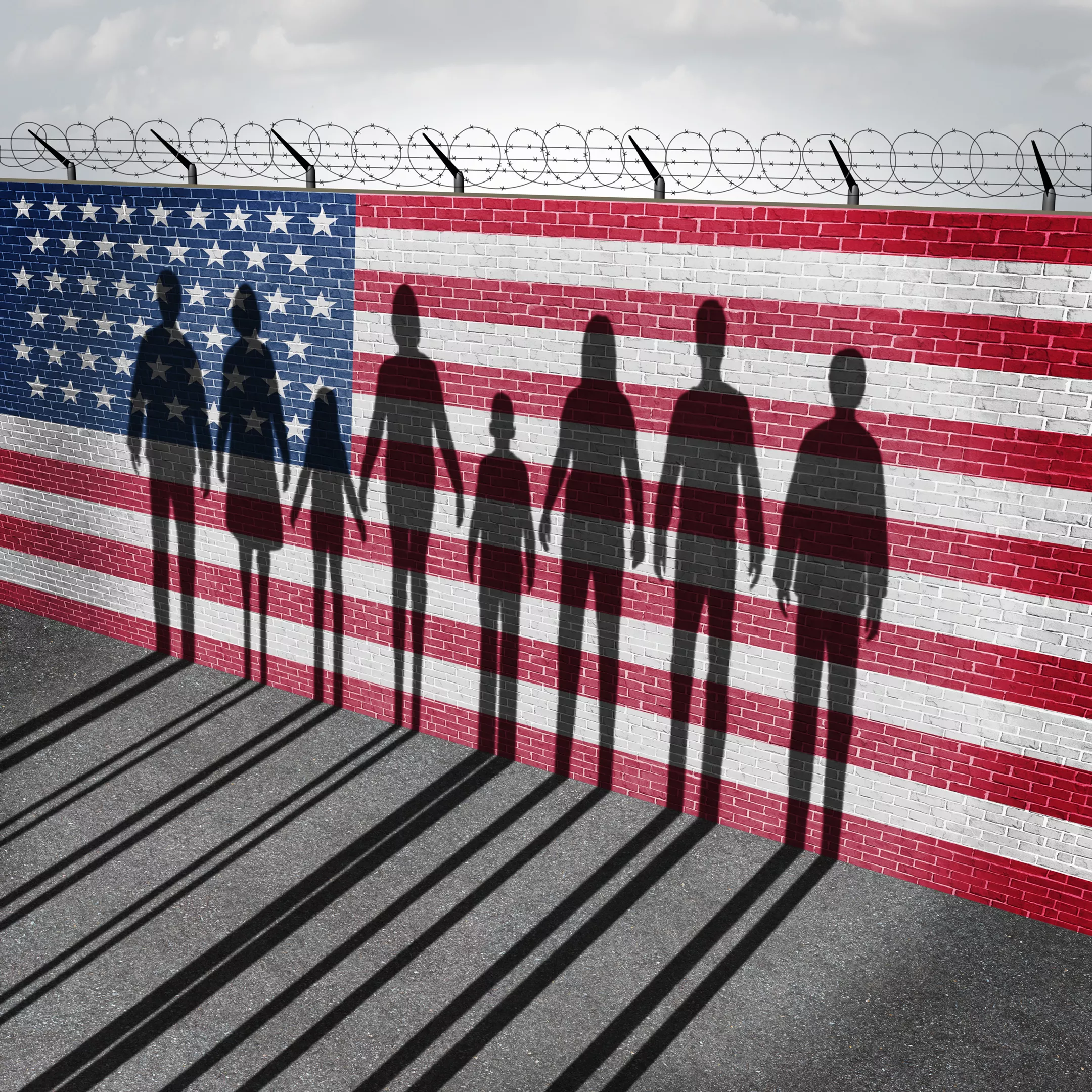
This article is co-published with The Texas Tribune, a nonprofit, nonpartisan local newsroom that informs and engages with Texans.
Since March, the Trump administration has pushed thousands of migrant children back to their home countries without legal screenings or protection, citing the risk that they could be carrying COVID-19 into the United States.
But by the time the children are boarded on planes home, they’ve already been tested for the virus — and proven not to have it.
Court documents, and information given by Immigration and Customs Enforcement to congressional staff last week, reveal that the Trump administration has agreed to test every child in its custody before sending them back to their home countries under the expulsion policy.
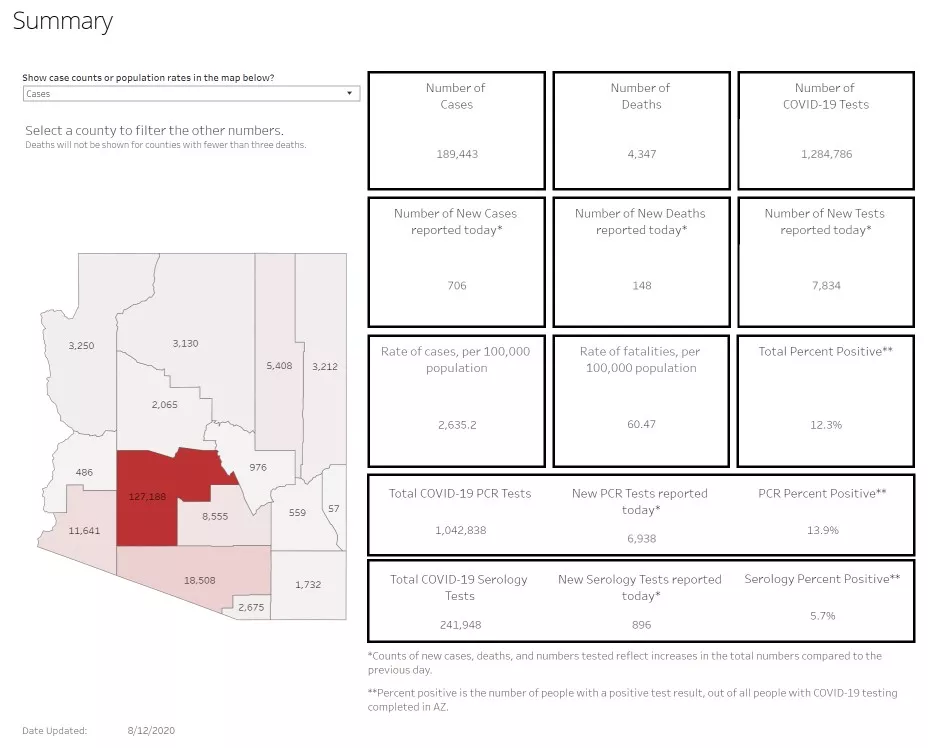
The number of Arizona’s confirmed novel coronavirus cases topped 189,000 as of Wednesday, Aug. 12, according to the Arizona Department of Health Services.
Pima County had seen 18,508 of the state’s 189,443 confirmed cases.
A total of 4,347 Arizonans had died after contracting COVID-19, according to the Aug. 12 report.
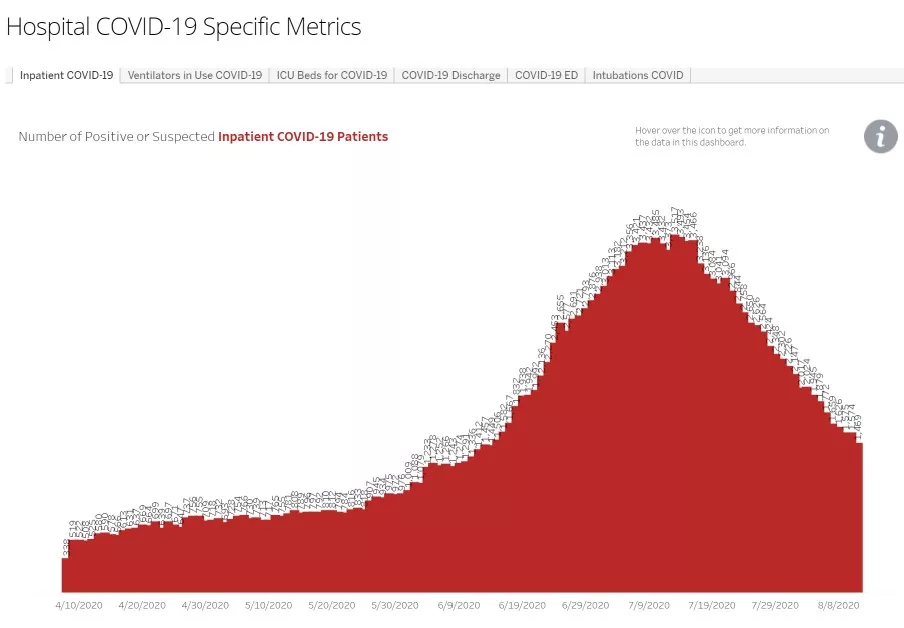
The number of hospitalized COVID cases continues to decline. ADHS reported that as of Aug. 11, 1,469 COVID patients were hospitalized in the state, down from a peak of 3,517 on July 13.
A total of 927 people visited ERs on Aug. 10 with COVID symptoms. That number peaked at 2,008 on July 7.
A total of 519 COVID-19 patients were in ICU beds on Aug. 10. The number in ICUs peaked at 970 on July 13.
Pima County sees downward trend in cases following mask mandate
Following the passage of an ordinance on June 19 requiring people to wear masks when out in public, Pima County has seen a dramatic drop in the number of new positive COVID-19 tests.
The number of cases dropped from a high of 2,368 new cases in the week ending July 4 to just 865 in the week ending Aug. 1, according to a Pima County Health Department report.
Fewer people are dying as well. Deaths related to COVID-19 peaked the week of July 4 with 51 people. The week ending Aug. 1, Pima County saw just 20 deaths.
Pima County had seen 18,508 of the state’s 189,443 confirmed cases.
A total of 4,347 Arizonans had died after contracting COVID-19, according to the Aug. 12 report.
The number of hospitalized COVID cases continues to decline. ADHS reported that as of Aug. 11, 1,469 COVID patients were hospitalized in the state, down from a peak of 3,517 on July 13.
A total of 927 people visited ERs on Aug. 10 with COVID symptoms. That number peaked at 2,008 on July 7.
A total of 519 COVID-19 patients were in ICU beds on Aug. 10. The number in ICUs peaked at 970 on July 13.
Pima County sees downward trend in cases following mask mandate
Following the passage of an ordinance on June 19 requiring people to wear masks when out in public, Pima County has seen a dramatic drop in the number of new positive COVID-19 tests.
The number of cases dropped from a high of 2,368 new cases in the week ending July 4 to just 865 in the week ending Aug. 1, according to a Pima County Health Department report.
Fewer people are dying as well. Deaths related to COVID-19 peaked the week of July 4 with 51 people. The week ending Aug. 1, Pima County saw just 20 deaths.

