

Tuesday, August 4, 2020

Her win tonight sets up the marquee race in Arizona: McSally vs. Democrat Mark Kelly, the retired NASA astronaut who is leading McSally in the polls.
Arizona officially became a battleground state in 2018, when McSally lost her 2018 Senate bid to Democrat Kyrsten Sinema. (Gov. Doug Ducey later appointed McSally to complete the late Sen. John McCain’s term.) Both McSally and Kelly have already spent north of $20 million on their campaigns and McSally still has $11 million to spend, while Kelly has $21 million. On top of that, independent campaign committees are expected to spend tens of millions more before the race is settled in November.
In Congressional District 1, Rep. Tom O’Halleran had 56 percent of the vote and was holding off a primary challenge from former Flagstaff City Council member Eva Putzova in the Democratic primary.
O’Halleran will face the winner of the GOP primary. In the early returns, farmer and attorney Tiffany Shedd had captured 58 percent of the vote against Oro Valley attorney Nolan Reidhead.
In Congressional District 2, Rep. Ann Kirkpatrick has captured 78 percent of the vote against primary challenger Peter Quill, a lawyer making his first bid for office in Southern Arizona.
Kirkpatrick will face the winner of the GOP primary. In the early returns, Brandon Martin, who came in second in the GOP primary in 2018, is leading this year with 57 percent of the vote. In second place with 23 percent of the vote is Noran Eric Rudan, who owns a local pest control company. In third is Joseph Morgan, a government employee who works at Pima Community College, with 20 percent of the vote.
This post has been updated throughout the evening.
This article is co-published with The Texas Tribune, a nonprofit, nonpartisan local newsroom that informs and engages with Texans.
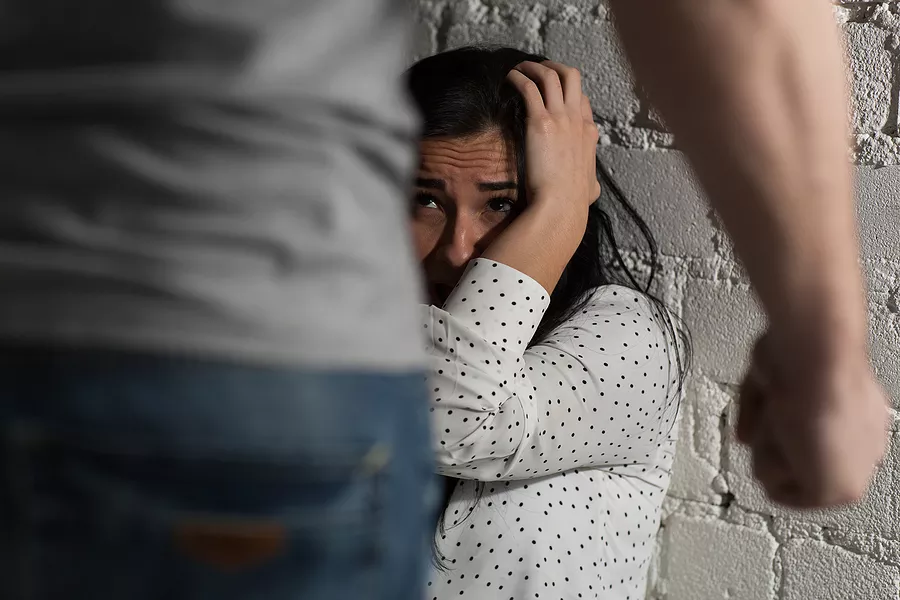
A teenage girl carrying her baby arrived at the U.S. border this summer and begged for help. She told federal agents that she feared returning to Guatemala. The man who raped her she said had threatened to make her “disappear.”
Then, advocates say, the child briefly vanished — into the custody of the U.S. government, which held her and her baby for days in a hotel with almost no outside contact before federal officers summarily expelled them from the country.
Similar actions have played out along the border for months under an emergency health order the Trump administration issued in March. Citing the threat of COVID-19, it granted federal agents sweeping powers to almost immediately return anyone at the border, including infants as young as 8 months. Children are typically entitled to special protections under the law, including the right to have their asylum claims adjudicated by a judge.
Many experts agree Latino, Indigenous and Hispanic youth are misidentified and poorly counted in county, state and national statistics due to inconsistencies in definitions, categories or even having the option to self-identify at all.
“We’re basically invisible,” said Marcia Rincon-Gallardo, director and founder of Noxtin and executive director of the Alianza for Youth Justice. Both organizations focus on the disproportionate impact of the juvenile justice system on Latino youth, families and communities.
Hispanic youth are disproportionately represented in the justice system, according to existing statistics from the Office of Juvenile Justice and Delinquency Prevention. Hispanic youth are detained at nearly twice the rate of white youth and are committed to court-ordered placement 30% more often than white youth.
In certain states, the disparity is significantly worse than the national average.
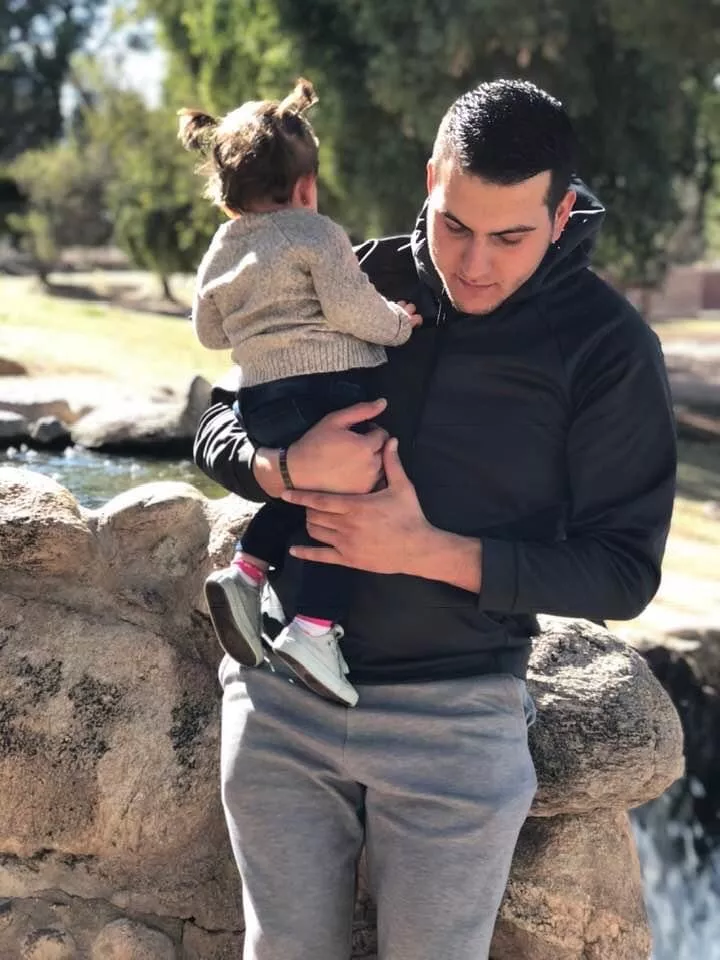
The family of Carlos Adrián Ingram-López filed a notice of claim with the City of Tucson today seeking $10 million for his death. Ingram-López died on April 21, 2020, after Tucson police detained him at his grandmother’s house. He was 27 years old.
That night, his grandmother called 911 at 1 a.m. asking for help because her grandson was “drunk, yelling and running naked.” Body camera footage shows three officers arrived at the home and screamed at Ingram-López to “get on the fucking ground.” Ingram-López ran to the garage, where officers handcuffed him behind his back and laid him face-down on the floor.
The audio captures Ingram-López screaming in distress, saying repeatedly “no,” “please” and “I’m sorry.” The officers repeatedly told Ingram-López to “relax” as they restrained him, while he was heard breathing heavily, moaning and calling out for his nana (grandmother) asking for water.
Ingram-López asked the officers repeatedly for water and they ignored his requests. At one point, he told the officers he couldn’t breathe.
Tags: Carlos Adrian Ingram-Lopez , Tucson Police Department , City of Tucson , Notice of Claim , Image

On July 30, Pinal County Sheriff Mark Lamb announced a new police program that will allow citizens the opportunity to become deputized after four hours of training.
According to the PCSO, the program "offers a training course designed to show residents the reality of Police Work." Participants will learn the basics of “constitutional law, search and seizure, basic firearm safety, home safety and the use of deadly force” in four hours.
The program will require a minimal background check and may be offered to former felons.
"As Sheriff of Pinal County, I am given the authority to deputize civilians to assist in law enforcement. While we hope such an action is never required, we want to make sure those willing to step into the role are trained and ready,” Lamb said.
PCSO states that "while our deputies do everything they can to be available at a moment’s notice, in a hypothetical major emergency situation or time of wide-spread unrest, they may need assistance suppressing lawlessness and defending the county."
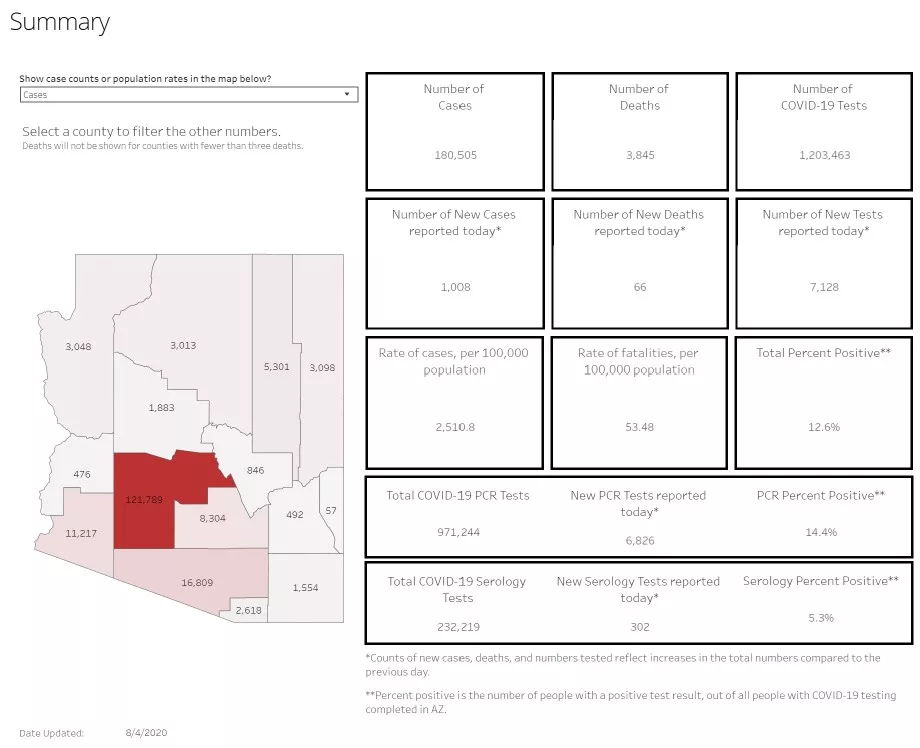
Pima County had seen 16,809 of the state’s 180,505 confirmed cases.
A total of 3,845 Arizonans had died after contracting COVID-19, according to the Aug. 4 report.
Arizona hospitals remain under pressure although the number of patients has declined from a peak earlier this month. ADHS reported that as of Aug. 3, 2,024 COVID patients were hospitalized in the state, down from a peak of 3,517 on July 13. Yesterday was the lowest number of hospital patients since June, at only 2,017.
A total of 1,111 people visited ERs on Aug. 3 with COVID symptoms. The number of ER visits next lowest dip was on June 29, when 1,077 people with COVID symptoms visited ERs. That number peaked at 2,008 on July 7.
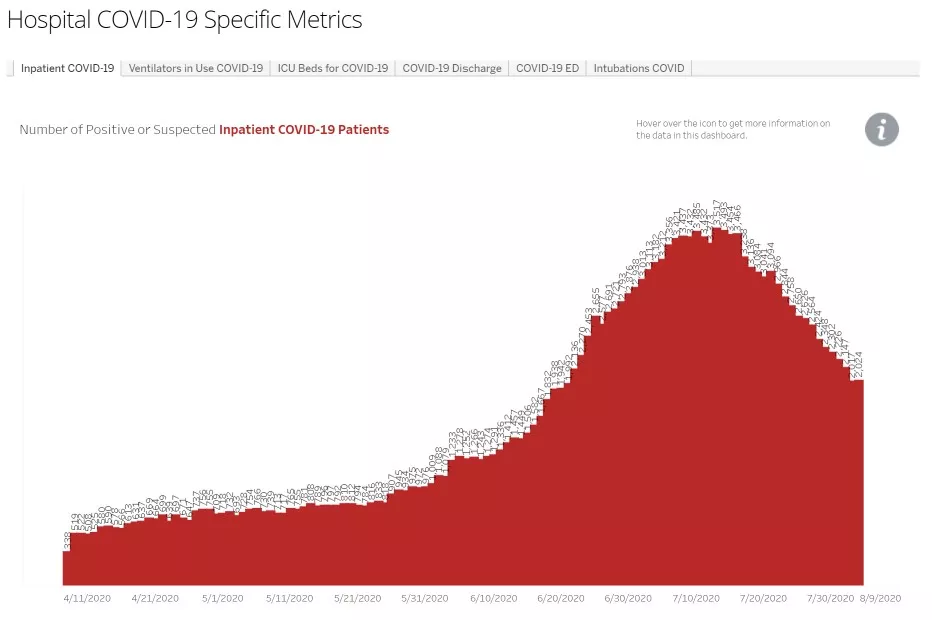
A total of 638 COVID-19 patients were in ICU beds on Aug. 2, a slight increase from yesterday’s 628. The number in ICUs peaked at 970 on July 13.
It’s Election Day
Arizona voters will decide a variety of primaries at the town, county, state, and federal level today, all the way from Oro Valley Town Council to the U.S. Senate.

Polls are open until 7 p.m.
You can find your precinct polling place here.
If you have an early ballot, you can turn it in at any polling station. This year, to help combat the spread of COVID-19, there will be drive-up ballot collection at all polling places, according to Pima County Elections Director Brad Nelson. Every 15 minutes, someone will come out from the polling place to collect early ballots.
Polls are open until 7 p.m.
You can find your precinct polling place here.
If you have an early ballot, you can turn it in any any polling station. This year, to help combat the spread of COVID-19, there will be drive-up ballot collection at all polling places, according to Pima County Elections Director Brad Nelson. Every 15 minutes, someone will come out from the polling place to collect early ballots.
The first results are expected to be released sometime around 8 p.m. Nelson says the county will continue to tabulate all votes cast today throughout the evening, with updates posted online as appropriate.
The early ballots that are turned in today along with any that arrive in the mail and still need to be verified through a signature check will be processed through the Recorder's Office and counted in the next few days.
Check back here tonight for results as they come in.
Monday, August 3, 2020

Federal defenders and prosecutors in Portland, Oregon, have teamed up to try to end a court practice of releasing arrested protesters only after they have agreed not to attend protests — a restriction that legal experts called a clear violation of the constitutional right to free assembly.
There are early signs that the effort is working. After the joint request, a federal magistrate judge released two protesters without including restrictions on their attendance at protests or other mass events — or imposing a blanket curfew on them during evening hours. The same magistrate, Jolie A. Russo, had signed some of the release orders since July 23 that included protest bans.
A New York grand jury on Thursday indicted two former leaders of the Mexican federal police force, including one who oversaw the anti-narcotics units that were specially vetted by the U.S. Drug Enforcement Administration and were linked to two brazen massacres in Mexico that left dozens, possibly hundreds, of people dead and missing.
The indictments marked a stunning fall from grace for Ramón Pequeño García and Luis Cárdenas Palomino, who had been celebrated by U.S. national security and diplomatic officials as trusted partners in the fight against Mexican drug cartels.
On Thursday, a federal grand jury found that instead of combating the cartels, there was evidence that the men had been collaborating with and accepting millions in bribes from them. Cárdenas Palomino had served as the director of regional operations for the federal police force between 2006 and 2012. During that time, Pequeño was head of the federal police anti-narcotics division, which controlled the DEA’s Sensitive Investigative Units.
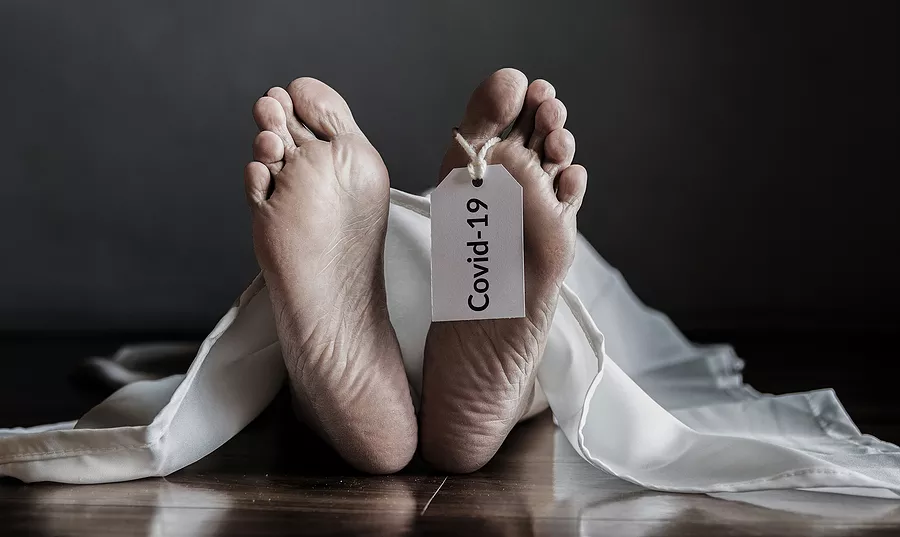
When police discovered the woman, she’d been dead at home for at least 12 hours, alone except for her 4-year-old daughter. The early reports said only that she was 42, a mammogram technician at a hospital southwest of Atlanta and almost certainly a victim of COVID-19. Had her identity been withheld to protect her family’s privacy? Her employer’s reputation? Anesthesiologist Claire Rezba, scrolling through the news on her phone, was dismayed. “I felt like her sacrifice was really great and her child’s sacrifice was really great, and she was just this anonymous woman, you know? It seemed very trivializing.” For days, Rezba would click through Google, searching for a name, until in late March, the news stories finally supplied one: Diedre Wilkes. And almost without realizing it, Rezba began to keep count.
The next name on her list was world-famous, at least in medical circles: James Goodrich, a pediatric neurosurgeon in New York City and a pioneer in the separation of twins conjoined at the head. One of his best-known successes happened in 2016, when he led a team of 40 people in a 27-hour procedure to divide the skulls and detach the brains of 13-month-old brothers. Rezba, who’d participated in two conjoined-twins cases during her residency, had been riveted by that saga. Goodrich’s death on March 30 was a gut-punch; “it just felt personal.” Clearly, the coronavirus was coming for health care professionals, from the legends like Goodrich to the ones like Wilkes who toiled out of the spotlight and, Rezba knew, would die there.

