Wednesday, April 21, 2021
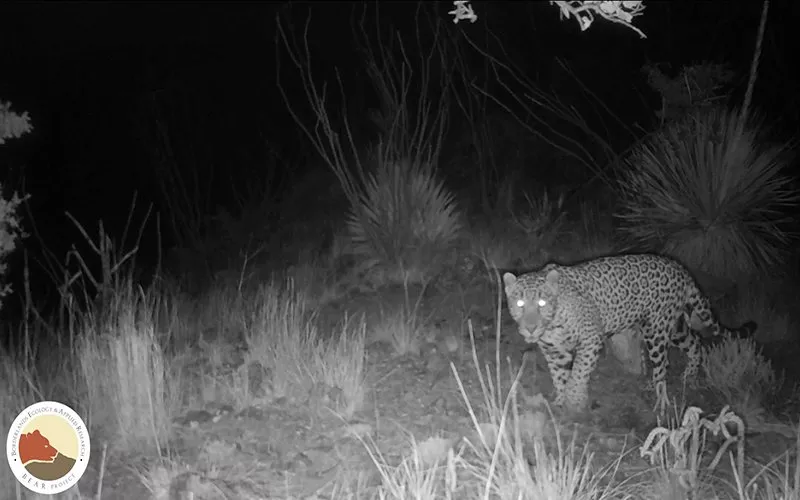
TUCSON – Although jaguars are widely assumed to live exclusively in Mexico, Central and South America, they once prowled Arizona, New Mexico and Texas before colonizers and poachers in the 19th century drove most of these beautifully spotted big cats out of the U.S.
So when Ganesh Marin was studying ecosystems along the border U.S.-Mexico this year, the University of Arizona Ph.D. student wasn’t expecting to see a young jaguar sauntering in his video feed in mid-March.
The far-ranging jaguar has been on the endangered species list for nearly 20 years because of deforestation, ranching, farming and poaching, and experts estimate only 15,000 are left in the wild globally. But there now is a glimmer of hope that Panthera onca – the largest cat in the Americas and a creature venerated in many Indigenous cultures – might one day return to its range in the U.S. Southwest.
“The goal of my research was not originally to find any jaguars,” Marin told Cronkite News. “I was working with my graduate adviser to observe the ecosystems that lived along the border and see how the diversity of those systems changed.”
Marin’s observations were meant to identify the ecosystem’s key players, and the young jaguar, despite being an unexpected variable, showed a potentially much bigger picture.
Tuesday, April 20, 2021
Monday, April 19, 2021
Sunday, April 18, 2021
Saturday, April 17, 2021
Friday, April 16, 2021
Thursday, April 15, 2021

Wednesday, April 14, 2021

Tuesday, April 13, 2021