

Wednesday, March 3, 2021

Tucson Mayor Regina Romero is calling for "an immediate pause" to Reid Park Zoo's planned expansion that would take over the South Pond and Barnum Hill area.
The controversial zoo expansion was to begin this month. But Romero said the community outcry after the plans were unveiled has led her to believe more time is needed to reach a compromise.
"It has become clear to me that resolution to this issue is not on the horizon," Romero said in a release Wednesday.
When the zoo announced that its plans would include taking over the pond, opposition was fierce. Many residents were upset that the pond, trees and open area just west of the zoo would be gone.
But the plan has supporters as well. Romero said she "also heard from community members, who value the educational and recreational opportunities that our Zoo provides to our community."
Tuesday, March 2, 2021
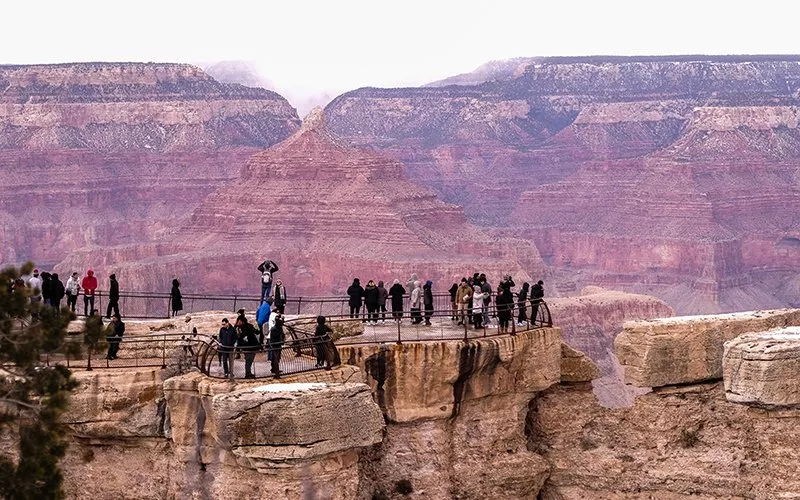
WASHINGTON – The House voted to permanently ban new mining claims on more than 1 million acres around Grand Canyon National Park, with supporters calling protection of the landmark canyon a “moral issue.”
The bill would make permanent a current mining moratorium that is scheduled to run through 2032. Supporters said a permanent ban is needed because the Grand Canyon is too valuable to risk possible damage from future mining.
“Protecting our environment is not a matter of choice or political preference,” said Rep. Raul Grijalva, D-Tucson, in a statement from his office. “It’s the only path forward for our country and our way of life.”
Grijalva, the lead sponsor of the canyon bill, said earlier this month that “the Grand Canyon should be the least controversial” place on the planet to consider protecting from mining.
Wednesday, February 24, 2021
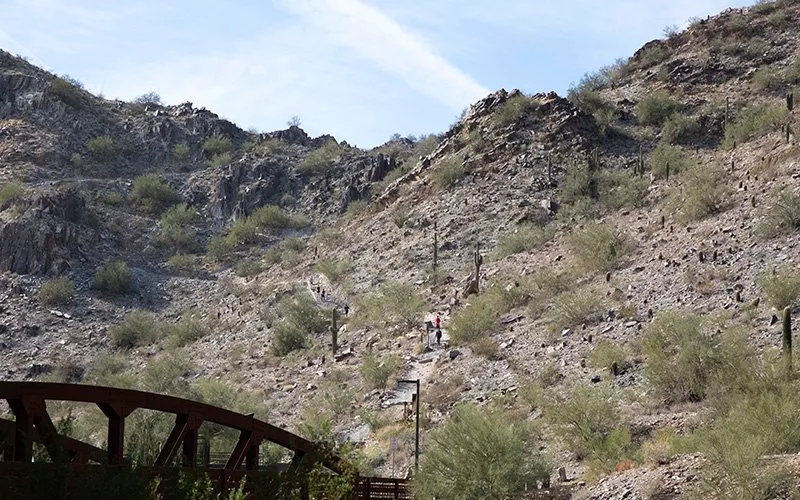
PHOENIX – Nearly a year of isolation and widespread closures has harmed the mental and physical health of many Americans. But Arizona state parks saw record visitation over parts of 2020 – a positive sign to experts urging people to get moving and get outside as COVID-19 continues to spread.
Doctors have long touted the benefits of physical activity for overall well-being, but studies have determined that simply being outdoors also can have benefits.
Research shows that spending time outdoors can reduce stress and help alleviate anxiety and depression. One 2019 report found the stress hormone cortisol dropped significantly by spending just 21 to 30 minutes in nature, even in urban areas. A 2015 study found a 90-minute walk in nature could decrease activity in the part of the brain associated with depression.
Sandy Slater, an associate professor at Concordia University in Wisconsin, has long researched the connection between parks and green spaces and public health.
Last year, Slater co-authored a report exploring the health effects of shelter-in-place orders and closures of schools, recreational facilities and parks.
“When you have access to parks and green space, it just gives you a place to be able to maintain physical activity,” Slater said. “You also have that added benefit of there being that positive association between improved mental outcomes and being in those spaces.”
Friday, February 12, 2021
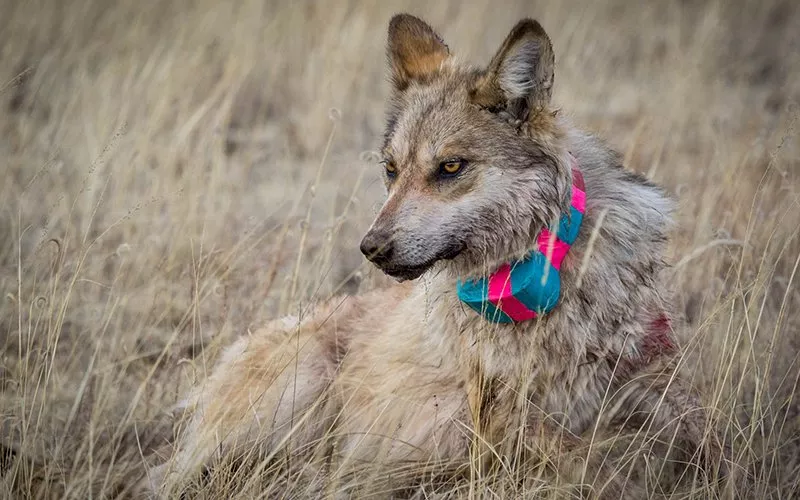
PHOENIX – A U.S.-Mexico partnership could aid the long-term recovery of the endangered Mexican wolf, a subspecies of the North American gray wolf, and its eventual removal from the U.S. endangered species list, according to a new study.
In a peer-reviewed study published Jan. 21, researchers from several universities in Mexico, the University of Arizona and wildlife officials found that a suitable habitat exists in the southwestern U.S. and the Occidental and Oriental ranges of the Sierra Madre in northern Mexico where Mexican wolves can be restored to their “historical ecological role” in the wild.
The Mexican wolf population – formerly known as the Mexican gray wolf and found in parts of Arizona, New Mexico and northern Mexico – was nearly exterminated from the wild in the early 1970s, and Arizona wildlife officials agree that recovery of this “keystone species” requires coordination.
In 1998, the first four Mexican wolves were reintroduced into the Arizona wild through a cooperative effort with the U.S. Fish and Wildlife Service, the New Mexico Game and Fish Department and the U.S. Forest Service. Today, Arizona has nearly 20 times that number of wolves living in the wild, and dozens more roam across the state line in New Mexico.
“Let’s look at the overall program, not just the U.S. program, not just the Arizona program,” said Jim deVos, assistant director for wildlife management at the Arizona Game & Fish Department. “Let’s look at the true recovery of the Mexican wolf and reestablish it as a component of biodiversity.”
To determine suitable habitat, the study combined data from multiple algorithms to calculate potential risk-factors, prey populations and environmental variables, which the scientists and wildlife officials called an improvement on simpler earlier attempts.
Tuesday, January 19, 2021
PHOENIX – May Tiwamangkala remembers mornings at Perryville Prison west of Phoenix, when the Wildland Fire Crew members began chanting and stomping their feet on concrete to let the rest of the prison know it was 5 a.m.
On their training runs, she recalls, one veteran on the all-women crew would shout, “Who are we?”
“Fire crew!”
Her next shout: “Be phenomenal!”
“Or be forgotten!”
The Perryville crew is one of 12 17-person crews of incarcerated firefighters in Arizona, and the only crew of all women. But once crew members leave prison, they often face difficulty getting hired as firefighters, typically because they lack documentation of their work or can’t get the required certification as emergency medical technicians because of their criminal records.
Friday, January 8, 2021
GREELEY, Colorado – Record-breaking wildfires in 2020 turned huge swaths of Western forests into barren, sooty scars. Those forests store winter snowpack that millions of people downstream rely on for drinking and irrigation water. But with such large and wide-reaching fires, the science on the short-term and long-term effects to the region’s water supplies isn’t well understood.
To understand, and possibly predict, what happens after a river’s headwaters goes up in flames, researchers are descending on fresh burn scars across the West to gather data in the hopes of lessening some of the impacts on drinking water systems.
On a sunny winter morning, a team of researchers led by Colorado State University hydrologist Stephanie Kampf roamed through the steep drainage of Tunnel Creek, a tributary to the Poudre River west of Fort Collins. Much of the area burned last summer and fall during the Cameron Peak Fire.
Monday, December 28, 2020
PHOENIX – A team of researchers at Petrified Forest National Park east of Holbrook have discovered fossilized remains of a new species of prehistoric reptile. The 220-million-year old burrowing reptile is a drepanosaur, an ancient reptile that had a claw on its tail and a birdlike beak.
Researchers, who named the species Skybalonyx skapter, announced the discovery Oct. 8.
Originally, drepanosaurs were thought to have lived in the trees that grew lush in prehistoric Arizona, but Bill Parker, a paleontologist with Petrified Forest National Park, said Skybalonyx skapter suggests something else.
“The new one, we think, is actually what they call fossorial, so it actually dug in the ground and burrowed,” Parker said. Researchers suspect the claw on the tail, as well as elongated claws on the reptile’s second fingers, helped it dig for bugs to eat.
Skybalonyx was discovered by a group of summer interns from Arizona State University, Virginia Tech, the University of Washington and other colleges who teamed with park researchers to scour an area of the park known as Thunderstorm Ridge.
WASHINGTON – For four years, the Trump administration took steps to boost uranium mining for what it called national security reasons, a move environmentalists saw as an attempt to open the door to mining near the Grand Canyon.
President-elect Joe Biden may be ready to shut that door for good.
“I can’t believe I have to say this, but we can’t let Donald Trump open up the Grand Canyon for uranium mining,” Biden tweeted in August, after a Trump administration task force on nuclear fuel proposed relaxing restrictions on mining on federal lands.
In a statement posted at the same time, Biden called the Grand Canyon an “irreplaceable jewel” and blasted the Trump administration’s mining plan, saying he would focus instead on developing clean energy. While Biden did not lay out a specific mining plan, his statement was still enough for Kevin Dahl.
“I’m thrilled that the new administration has taken that stand even before inauguration. It’s a well-considered policy,” said Dahl, the Arizona senior project manager for the National Parks Conservation Association.
Mining supporters disagree, saying that “well-considered policy” is actually short-sighted and ill-informed.
“Mining on this land can be done responsibly and would bring hundreds of good-paying jobs to my district,” said Rep. Paul Gosar, R-Prescott. “As I have said on many occasions, this withdrawal is not about protecting the Grand Canyon, but crippling the domestic uranium mining industry.”
The withdrawal Gosar referred to was then-Interior Secretary Ken Salazar’s decision in 2012 to impose a 20-year moratorium on new mines on just over 1 million federal acres around Grand Canyon National Park. The moratorium was aimed at protecting the Grand Canyon watershed from “adverse effects of … mineral exploration and development.”
Dahl said the moratorium has allowed scientists to study the risks and impacts mining could have on the environment, and has led to interesting discoveries about the watershed.
Monday, December 21, 2020
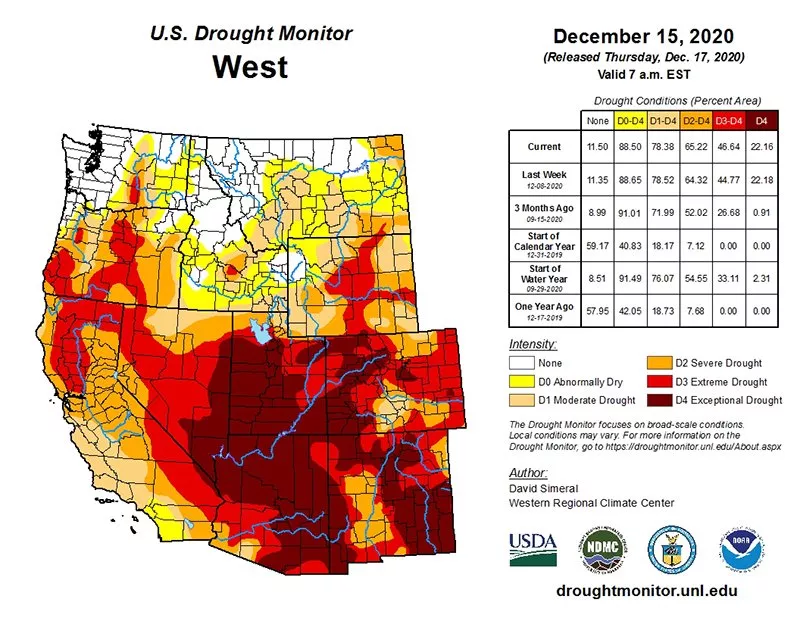
All signs are pointing to a dry start to 2021 across much of the Colorado River watershed, which provides water to about 40 million people in the Western U.S.
A lack of precipitation from April to October made this spring, summer and fall one of the region’s driest six-month periods on record. And with a dry start to winter, river forecasters feel more pessimistic about the chances for a drought recovery in the early part of 2021.
“We’re starting off water year 2021 with widespread much below-average soil moisture conditions and snow water equivalent conditions,” said Cody Moser, a hydrologist with the Utah-based Colorado Basin River Forecast Center.
Some weather stations in Colorado, Utah, Arizona and Nevada have recorded their driest years on record, Moser said. There doesn’t seem to be much relief in sight. Short-term and long-term weather forecasts all point to above-average temperatures and below-average precipitation for the foreseeable future.
Exceptional drought conditions have expanded across 65% of the Colorado River watershed. Low soil moisture heading into winter will also play a role in how snowpack accumulates this season, and how much water will flow into streams and reservoirs during spring runoff, adding pressure to large-scale water users like municipalities and farmers.
Most major rivers in the basin are projected to flow well below normal levels next year due to extremely low soil moisture conditions, though Moser said there’s significant uncertainty about water supply forecasts so early in the season.
But given the dry conditions heading into winter, an average snowpack won’t be enough to provide significant relief, Moser said.
“It does seem like we’re going to need a really good snow year in order to make up some ground for the dry conditions entering the season,” Moser said.
Soil moisture is an important indicator because it can influence how much snow melts into streams, rivers and reservoirs.
A recent forecast from the Bureau of Reclamation, the federal agency that operates Western water infrastructure, showed the Colorado River’s largest reservoirs are likely to drop next year if demands stay the same.
Without a high snowpack this winter, the agency forecasts the Colorado River system’s biggest reservoirs will be reduced to a combined 44% of their total capacity by fall 2021.
This story is part of a project covering the Colorado River, produced by KUNC and supported through a Walton Family Foundation grant.
Thursday, December 17, 2020
MOAB, Utah – Climate change and increased demand for water across the Southwest are shrinking the Colorado River’s second-biggest reservoir, Lake Powell. Although water managers worry about scarcity issues, two local river guides are documenting the changes that come as the enormous reservoir hits historic lows.
For the past three years, Mike DeHoff and Pete Lefebvre have carefully photographed and mapped Cataract Canyon on their guided raft trips on the river. For more than four decades, the lower portion of the beloved canyon has been submerged, but now that the lake’s water levels are plummeting, things in Cataract are rapidly changing.
“There are rapids down there that are not on any published river map right now,” DeHoff said. “They’re coming back at a rate that publication can’t keep up with.”
The pair photographed these returning rapids year-to-year, illustrating in real-time what it looks like as Lake Powell’s water levels shift. Lefebvre said he was inspired by “Chasing Ice,” a 2012 film that documented shrinking glaciers from a sustained rise in global temperatures.
“I remember watching that movie and thinking, ‘I need to be doing this in Cataract,’” Lefebvre said. “If I have a picture of Dark Canyon and the mouth of Clearwater (Canyon) and these places where the rapids used to be, maybe I can start documenting that change.”
It wasn’t long before their hunt for new rapids sent them digging into the past. DeHoff has spent hours poring over old river maps, guidebooks, and historic photos in search of clues.

