
Thursday, July 16, 2020
“I’ve got a message for Tom Steyer,” Brnovich said Tuesday night at the Republican watch party in Scottsdale. “When you mess with the Brno, you’re going to get the burn, but you’re never going to get my O.”
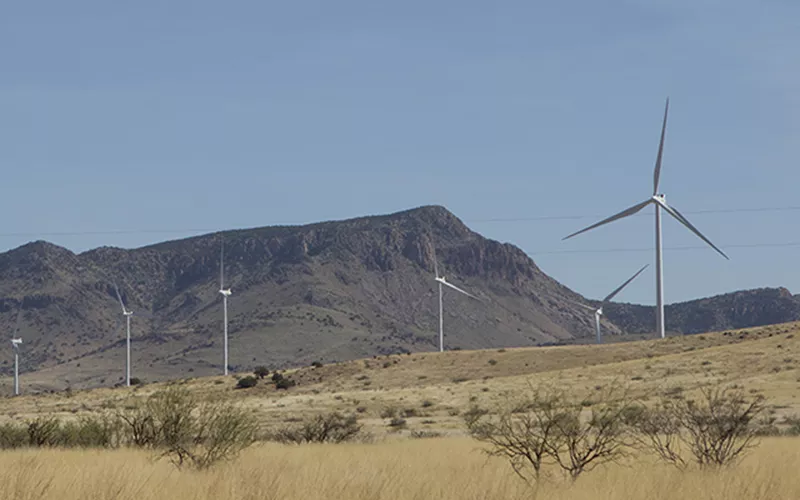
Brnovich told partygoers to go outside to dunk a Steyer mannequin in the dunk tank that was set up. It was a moment that marked the end of a long election struggle over Proposition 127, which would have required Arizona’s 16 regulated utilities to get 50 percent of their energy from renewable sources by 2030. The current standard of 15 percent by 2025 was set by the Arizona Corporation Commission.
Through his environmental advocacy nonprofit NextGen Climate Action, Steyer, a hedge fund manager, funneled millions of dollars to finance campaigns behind Prop. 127 and Nevada’s Question 6. Both ballot initiatives set the same goal and timeframe.
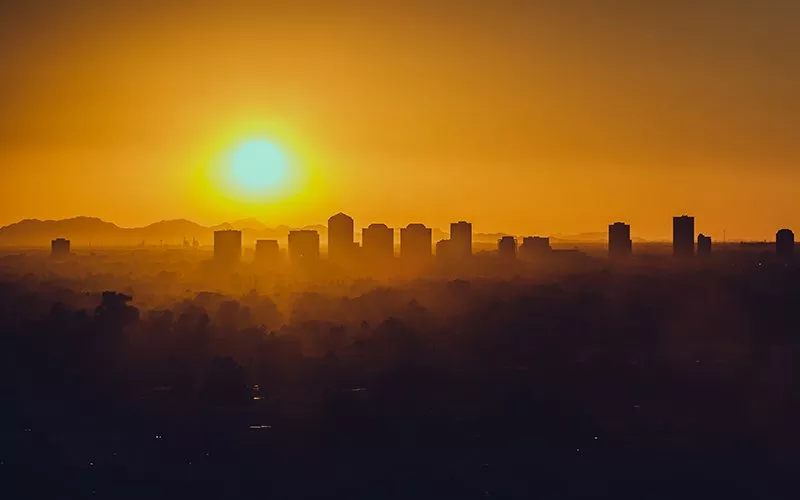
Communities that are predominantly Hispanic and Black, like Lindo Park-Roesley Park, are part of the focus in a new plan outlined June 30 by Democrats in Congress. Their 547-page climate change action plan focuses on reducing greenhouse gas emissions – but it also recommends environmental justice as a critical way to address climate change.
The plan comes after the U.S. House Select Committee on the Climate Crisis spent 17 months consulting with “hundreds of stakeholders and scientists,” gathering written input, and holding “hearings to develop a robust set of legislative policy recommendations for ambitious climate action,” according to its executive summary.
In a statement, Rep. Raúl Grijalva, D-Tucson, said the plan is one step toward significant change, but there’s still much more to do.
“Addressing climate change can’t be done with just one bill because the problem is caused by so many connected policy failures,” Grijalva said. “The public rightly demands that Congress stop paying lip service to climate policy and start saving lives by making fundamental reforms.”
Tucson is the fourth-fastest warming city in America, according to Climate Central, while Phoenix is the third-fastest.
As Politico reported, the Democrats’ plan recommends reaching net-zero emissions on public lands and waters by 2040, a strategy outlined in a bill Grijalva introduced in December 2019.
Monday, July 13, 2020
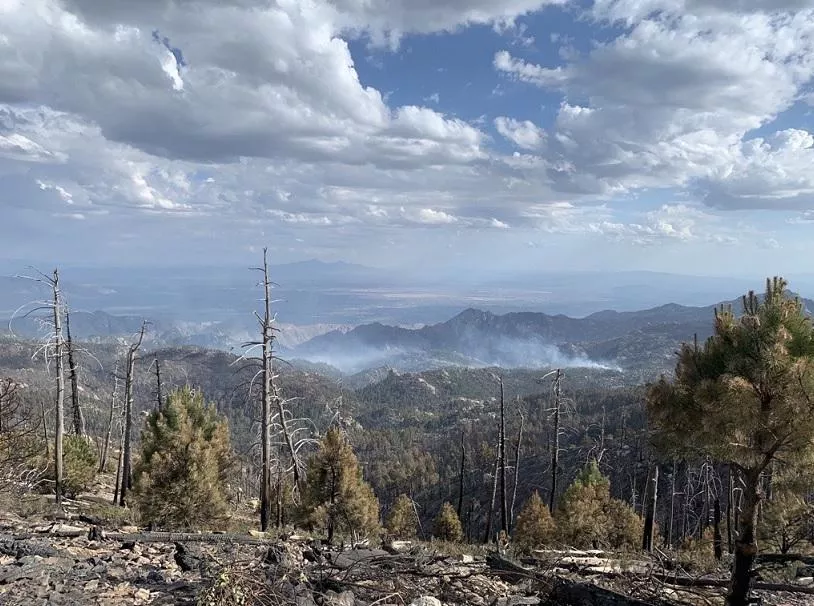
The fire burned across the Santa Catalina Mountains for more than a month, after being ignited by a lightning strike on June 5. High temperatures and strong gusts hampered containment procedures for multiple weeks. However, fire crews gradually got a hold of the blaze as the monsoon neared. On Saturday, July 11, the southern slopes of the fire received approximately .25 inches of rain, which helped further contain the diminishing blaze.
As of Monday, July 13, 239 fire personnel still remained on the task, down from nearly 1,000 personnel three weeks prior. Much of the work now involves repairing and maintaining fire lines as clean-up begins. According to the Southwest Area Incident Management Team, fire crews recently completed chipping operations at the Mount Lemmon SkyCenter and Mount Bigelow, and felled hazard trees in Spencer Campground.
Their next objective is to identify and assess hazard trees that may require removal due to the high winds received over the fire area. Chipping, backhaul, and suppression rehabilitation will continue in the Summerhaven area, as well as other portions of the fire.
Speaking of Summerhaven, fire crews report that no structures have been lost in Summerhaven. The Catalina Highway up Mount Lemmon is slowly reopening, with only business owners and residents of the mountain communities allowed to return as Monday, July 13.
The fire continues to smolder in the bottom of Willow Canyon below Catalina Highway. Over the coming week, isolated showers and thunderstorms are possible, which may help put the finishing touches on the Bighorn Fire.
Monday, June 29, 2020
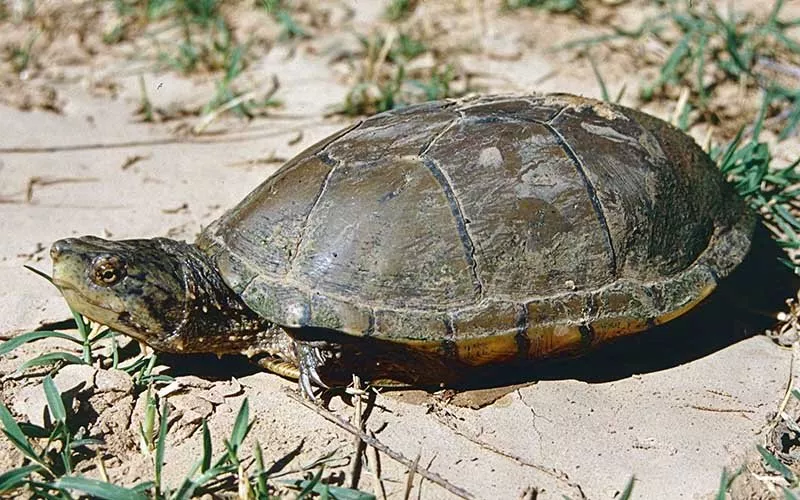
The U.S. Fish and Wildlife Service on Tuesday designated an area in the Organ Pipe Cactus National Monument, in the turtle’s historic territory in the Rio Sonoyta watershed, as protected.
But that habitat bumps right against the U.S.-Mexico border, where one expert said construction crews “are pulling huge amounts of water out of the aquifer” to work on the border wall.
Critics worry that the pumping will eventually affect the Quitobaquito springs and pond, which the turtles have depended on for what experts think could be thousands of years. The pond sits around 100 yards from the site of the planned border wall.
“They are pulling huge amounts of water out of the aquifer to mix concrete and to spray on the roads to keep dust down, and it’s only a matter of time before the flow that reaches the surface of the spring there fails,” said Randy Serraglio, southwest conservation advocate for the Center for Biological Diversity.
“When that happens, then that’s it. The aquatic habitat dries up and the turtle will die,” Serraglio said.
The border wall is just one issue the turtle faces in the middle of the desert, where Serraglio said over-pumping, water diversion and 20 years of drought conditions also pose threats.
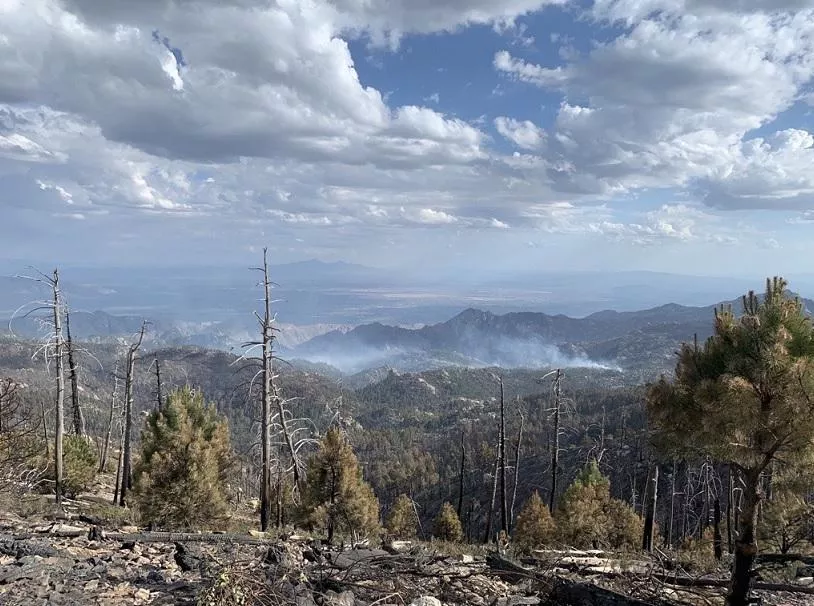
It will be another hot, windy day on the flanks of the Catalina Mountains, where the Bighorn Fire has burned 107,000 acres over the past three weeks. The blaze, which began from a lightning strike on June 5, is currently 45 percent contained with more than 1,000 fire personnel on the job.
Since its start, weather and geography have added to the fire's spread throughout the Pusch Ridge and Mount Lemmon areas. As it's moved north and east, the Bighorn Fire has threatened the communities of Catalina Foothills, Oracle and Summerhaven. Most recently, the fire neared the Redington area east of Mount Lemmon.
"Today, our firefighters are out there trying to look at opportunities to come around the south side to limit the fire spread coming south,” said Incident Commander Aaron Thompson. “I know that's a concern from the community and public. That's our goal and objective for the day, but we're going to be faced with some extreme winds today. The weather service is providing us that this may be one of the windiest days in the Tucson area in several years."
Fire crews have also moved in to monitor Sabino Canyon, but there are no active fires and Thompson says the area is “looking really good” and no fire has moved south of the Sabino area. The eastern edge of the fire remains the most active, with winds fanning the flames across the open areas.
"Yesterday, firefighters were extremely challenged with the winds," Thompson said. “That limited our aircraft. We were able to still fly, but the effectiveness of some of that fire retardant and water was limited."
Summerhaven has survived as a “green island” surrounded by burnt areas, Thompson said. No structures have been lost in the community thus far, and the incident management team is reporting their fire breaks are holding strong.
Fire crews remind the public that drones are prohibited over the fire area, as firefighting aircraft are busy and must be grounded in drones' presence. According to the National Forest Service, on June 8, a drone was observed over the Bighorn Fire’s southern perimeter, which "forced the aircraft suppression effort to be halted, endangering the lives of on the ground firefighters and the air crews at a critical time during the height of the burning period." This was the second such incident in three days.
Friday, June 26, 2020

Part 2: The San Pedro
The first time Sandy Bahr saw the San Pedro River, she thought someone had gotten the name wrong.
“I thought, ‘Well, that’s not a river,’” said Bahr, who came to Arizona from Michigan about 30 years ago. “That’s like more of a little creek.”
It didn’t take long for Bahr to realize the importance this desert stream holds for the state.
“For me, personally, it represents just how precious water is in a dry place like Arizona, and just how much life it supports,” she said.
Now, in her capacity as director of the Sierra Club’s Grand Canyon Chapter, she’s fighting to save it. The Sierra Club announced March 30 it is joining the Center for Biological Diversity and other conservation groups in two lawsuits to protect the river, which flows 140 miles north from Mexico before emptying into the Gila River near Winkelman.
Wednesday, June 24, 2020
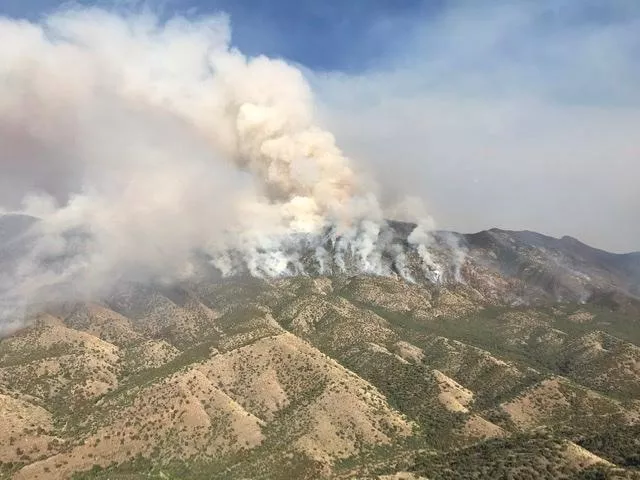
The 75,000-acre Bighorn Fire is now burning on several fronts throughout the Catalina Mountains after being fanned by gusty weather and has even stretched across the Pinal County line to the north. The June weather is reaching near 110 degrees during the day, and causing poor humidity recovery at night, resulting in “critical fire conditions,” according to the national Incident Information System. The fire is currently 33 percent contained, with 876 fire personnel on the job.
The fire is burning across the northern, southern, and eastern flanks of the Catalinas, which is expected to lead to smoky conditions today. This smoke is anticipated to worsen due to higher winds over the coming days.
During a morning meeting, Tim Reid, deputy incident commander on the Bighorn Fire, assessed the multiple areas of burning: Reid says the southern fire in Sabino Canyon and Catalina Foothills areas is fairly secure and that fire teams are "fairly optimistic, but there's still a threat." The burning across Pusch Ridge near Oro Valley is also in good shape, as the fire is entering sparser fuels as it comes off the mountain flanks.
Reid said fire crews are focusing on the fire burning north near Oracle, using bulldozers and burn lines to keep the Oracle Ridge area in check and braced for additional winds.
They are also taking steps to protect Mount Lemmon's Sumerhaven.
"The area where we're really focusing on is the Summerhaven area,” Reid said. “The basic strategy and tactics are lining and firing underneath the values at risk, and connecting them to the Mount Lemmon highway, and then bringing fire down the highway so that the values at risk are protected from a southwest push."
According to the National Forest Service, Catalina and Oro Valley have the greatest risk of smoke, especially in the morning.
"We're feeling pretty good about where we're at,” Reid said. “If we have a successful day today, the stage will be set for success with the wind test that's coming up."
Fire crews remind the public that drones are prohibited over the fire area, as firefighting aircraft are busy and must be grounded in drones' presence. According to NFS, on June 8, a drone was observed over the Bighorn Fire’s southern perimeter, which "forced the aircraft suppression effort to be halted, endangering the lives of on the ground firefighters and the aircrews at a critical time during the height of the burning period."
This was the second such incident in three days.
Thursday, June 4, 2020

“It will be a little bit of wait and see as to how things work out,” Town Manager Jamsheed Mehta told the town council at its June 2 meeting. “We are dealing with small children here who may or may not understand how to—what the protocols are—and based on the best observations that we can make we will try to adjust things so that we can keep kids safe and everything can run smoothly according to plan.”
Marana operates splash pads at Heritage River Park, 12280 N. Heritage Park Drive, and Crossroads at Silverbell District Park, 7458 N. Silverbell Road. There is also a public pool at Ora Mae Harn District Park, 12350 N. Lon Adams Road.
Friday, May 22, 2020
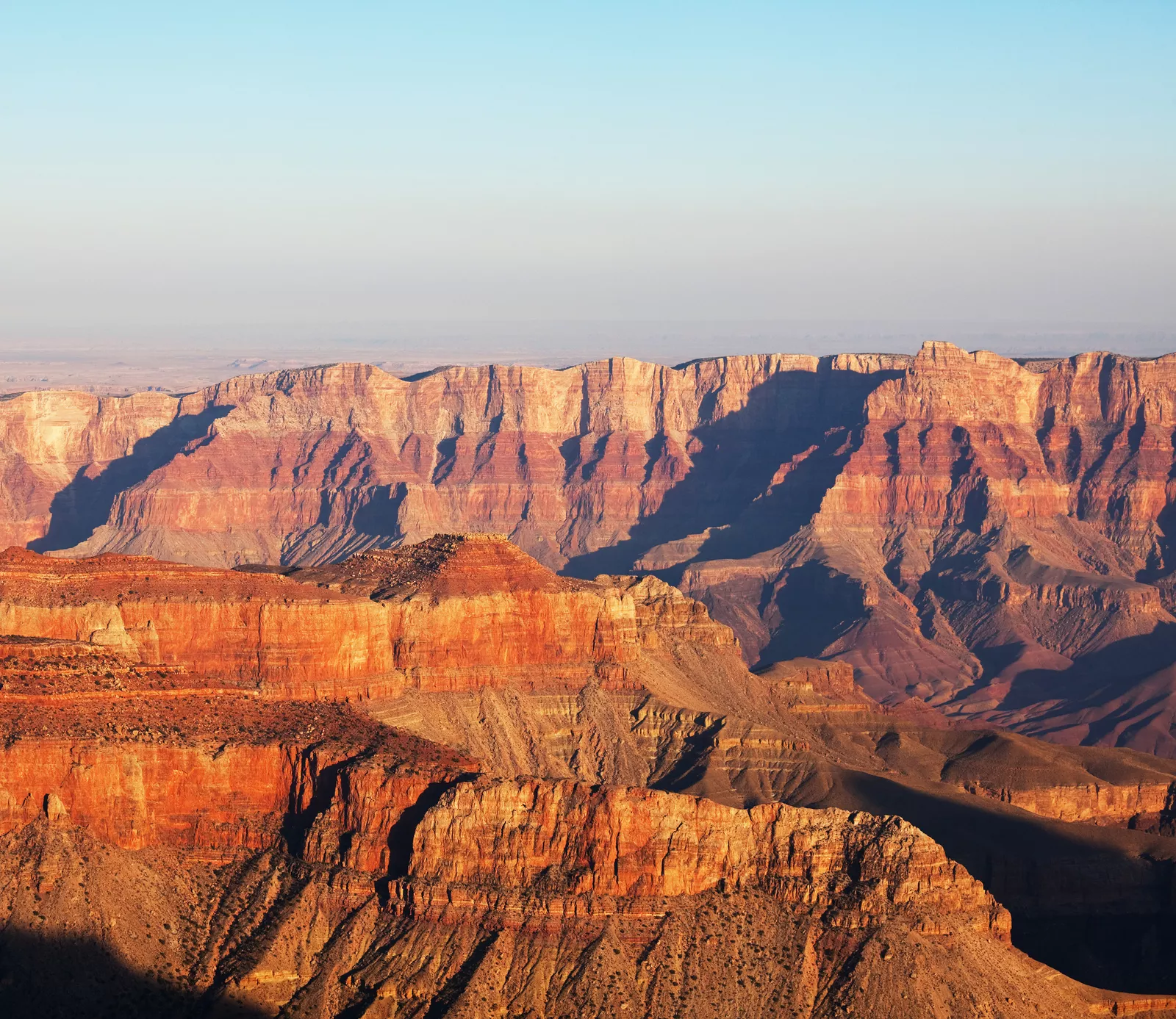
PHOENIX – The Grand Canyon will reopen on a limited basis for Memorial Day weekend, a move critics call “premature” during the COVID-19 pandemic and “tone-deaf” in the face of startling infection rates in the neighboring Navajo Nation.
The opening, from Friday to Monday, is just the second at the park, which was completely closed to visitors on April 1 to stem the spread of the virus. The park also opened for four days last weekend on a limited basis.
Entry will be allowed to the South Rim from 4 a.m. to 10 a.m., with visitors who are in the park by then allowed to stay until sunset. Food service, bike rentals and a limited number of trails will be available, while residential areas, sit-down restaurants, visitor centers, museums, shuttle buses and some roads will remain closed.
The park said in a statement that it will follow state and federal guidelines for health safety, encouraging social distancing by limiting groups to 10, with park rangers ready to step in if needed.
“We’re encouraging people to recreate responsibly and to read up on any national park that they are going to, to find out what is open and closed,” said Lily Daniels, a spokeswoman for the park.
But critics said there is no reason to rush the reopening of the park.
Thursday, May 21, 2020
The Water Main, a project from American Public Media, wanted to know how Americans think, feel and worry about their water. Among its findings is that knowledge of water issues isn’t the biggest predictor of whether someone takes the effort to act. Personal connections to particular rivers, lakes and oceans led to more concrete conservation measures.
“The big surprise is that knowledge, how much we know, and action aren’t as tightly correlated as we might think they are,” said Amy Skoczlas Cole, managing editor of the Water Main. “It wasn’t actually the people who knew the most about water who were doing the most, it was the people who felt the most connected to water who were taking the most action.”
Half of the 1,005 people surveyed reported feeling a strong personal connection to a river, lake, ocean or other body of water.
More people older than 65 felt this way than those younger than 45, the survey found.