
Wednesday, January 19, 2022
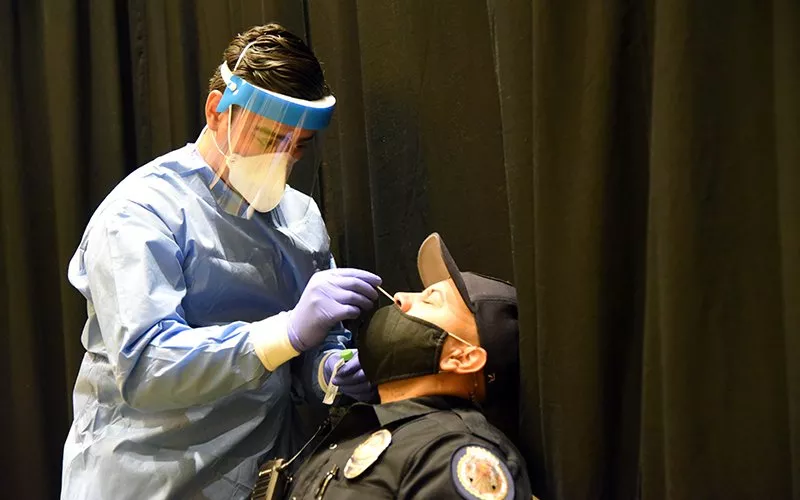
The Pima County Board of Supervisors passed a plan to increase COVID testing availability during their meeting on Tuesday, Jan. 18.
The Board unanimously voted to increase PCR testing in Pima County with an additional 1,000 tests per day through Paradigm Laboratories.
“I am concerned with our PCR testing site at the airport,” Supervisor Sharon Bronson said. “We are seeing that we’ve got some issues at TAA (Tucson Airport Authority) with staff coming down with COVID and we’ve got people in line who have COVID. So I would think as part of the implementation of the new testing we need to find other sites than the airport.”
Cases continue to rise in Pima County due to the Omicron variant. The Arizona Department of Health Services reported 3,136 new cases in Pima County on Jan. 11. This is the highest number of cases reported in one day since the pandemic began.
Supervisor Adelita Grijalva said she had noticed that testing appointments through the county website were being scheduled two days out. She raised concerns this would make it more difficult for children to get back into school under the new test-to-stay policy.
Bronson added that constituents reported testing sites had a two-hour waiting period, even with appointments.
Low testing availability has also impacted the local healthcare system.
“People, because they can't find a testing site, are going to ERs to ask to get COVID tested and that is incredibly disruptive for the healthcare system,” Supervisor Matt Heinz said.
The additional PCR tests will be offered at the Kino Event Center across the street from the Abrams Public Heath Building, where the county had set up a testing site in 2020. That site later transitioned to a vaccination center.

Inconvenient rules can be changed ... We speculate that the speculation will continue ... And that mean ol' Howie is asking questions again.
After a choppy opening week and the long weekend, the Arizona Legislature got into full swing yesterday, and already COVID-19 is a problem.
As committees cranked through bills (including a contentious first vote on once again banning Critical Race Theory in schools), leadership had to sub out lawmakers to fill the committees, at least in part because of the virus. It’s going to be a long year of musical chairs as House and Senate leadership attempt to keep committees full, despite the raging pandemic.
Republicans need every single lawmaker present to pass legislation on party lines in either chamber, but as the Republic’s Mary Jo Pitzl notes, if lawmakers want to do their jobs and vote on bills, they’ll have to come into the building.
That wasn’t the case last year, and the new rule provides no meaningful advantage to lawmakers or the public — it is, like many decisions at the capitol, pure politics. (FWIW, it was also pure politics when the Democrats initially opposed remote voting on a limited basis at the onset of the pandemic so Republicans could muster the votes necessary to pass a budget.)
Tuesday, January 18, 2022

We're salty about desalination ... Welcome back to Arizona 2020 ... Is six mentions a lot or a little?
Gov. Doug Ducey unveiled a $14.3 billion budget proposal on Friday that spreads money across so many priorities that it’s bound to start a lot of little fights at the Capitol.
But for his last hurrah, the budget is pretty blah.
Rather than a single focus or grand vision, it’s packed with a smattering of smaller appropriations for pet projects and tax cuts, and big windfalls for the decidedly necessary but boring, likely bipartisan topic of infrastructure.
The budget was crafted on two major premises that may or may not end up being true: The courts will stop the implementation of Prop. 208, the Invest in Education Act, and Ducey’s historic tax cut package from last year will stand despite the threat of a referendum. (Another possible wrench in budgeting: The feds are threatening to revoke $163 million of their anti-COVID-19 money back after Ducey used it to help move kids into schools with COVID-19-friendly policies.)
But the state is so flush with cash that it’s getting hard to spend it all. In fact, there’s so much money that the largest single new discretionary expense in Ducey’s budget proposal is simply squirreling away another $425 million in the state’s rainy day fund, bringing the state’s emergency savings to $1.4 billion.
But the Ducey administration billed the budget as education, border and water-centric, so let’s focus on those three areas today.
On the education front, the biggest investment isn’t the $100 million “civics summer camp” program that Ducey touted as the crown jewel of his State of the State speech last week (which, by the way, will be paid for with federal pandemic money), but rather the $300 million in state spending on the much less sexy but more necessary areas of school upgrades and new buildings. His budget also offers another round of bonuses for schools that are already succeeding, and smaller bonuses for schools that need improvement.
Monday, January 17, 2022
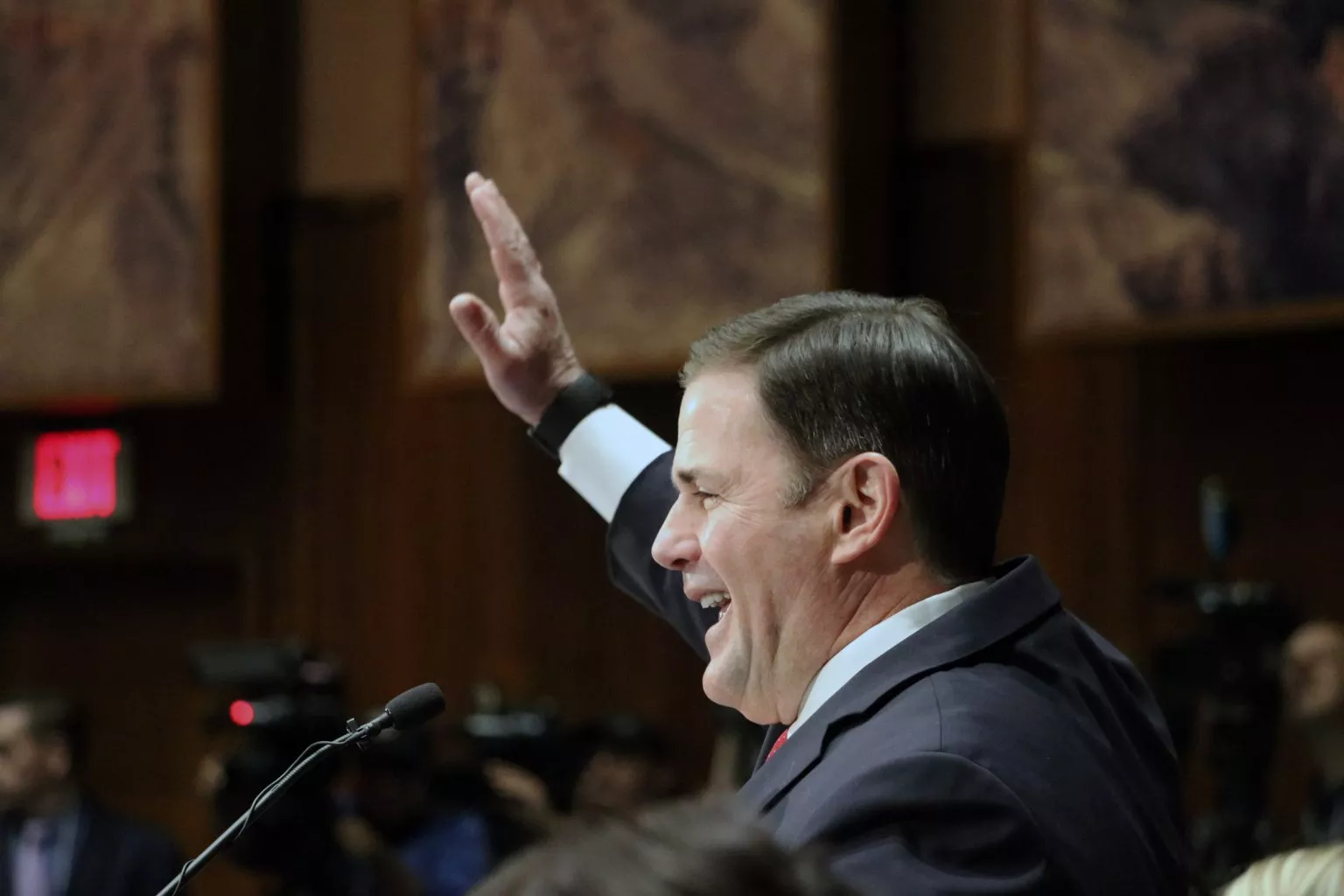
Gov. Doug Ducey’s final budget proposal calls for $14.25 billion in spending for the 2023 fiscal year that includes nearly $1.4 billion in new spending, the bulk of which will be one-time spending on K-12 education, water infrastructure, beefing up the state’s rainy day fund and expanding Interstate 10.
About $364 million of that new spending will be ongoing, with nearly a third going toward new tax cuts.
Following up on last year’s historic tax cut, which aims to eventually reduce individual income tax rates to a flat 2.5%, the governor is budgeting money for two tax relief packages. One is a 5% earned income tax credit for low-income working families with children. The Ducey administration said the program is intended to provide tax relief to Arizonans while recognizing the value of work.
The governor’s office said 577,000 Arizonans would be eligible, and that the average recipient would get $128 per year. Families with three or more children would be eligible for as much as $325, according to estimates from the governor’s office, depending on their income level. The earned income tax relief program is expected to cost about $74 million next year.
The second proposal is an undefined corporate tax cut. Ducey penciled in $58 million in his budget, but has no explicit proposal. The administration said there are several lawmakers who have their own proposals, so Ducey will negotiate with the legislature to determine what kind of tax cut they pass. Ducey’s office noted that Arizona has the 10th highest industrial property tax rate in the U.S., indicating that the tax cut could be in that area.
Ducey’s plan assumes that last year’s billion-dollar income tax cut, which is on hold after Democrats collected enough signatures to refer it to the November ballot for a citizen referendum, will ultimately go into effect. Republican lawmakers are discussing plans to repeal the tax cuts and replace them with a similar law in order to negate the referendum and keep the proposal off the ballot.
Friday, January 14, 2022
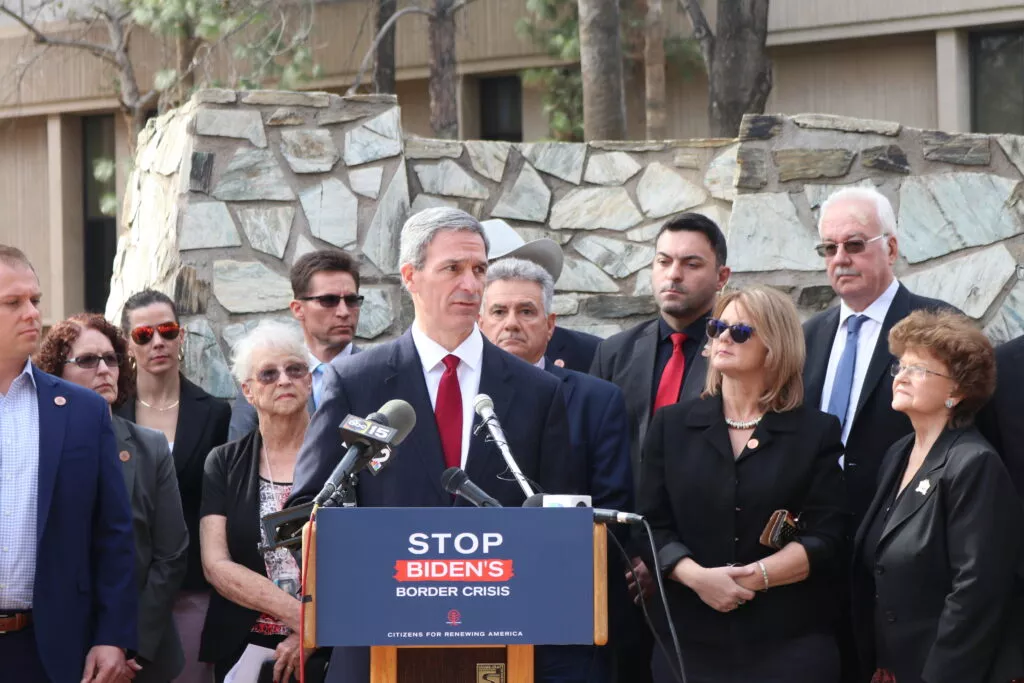
A nativist former top Trump White House official on Wednesday exhorted Gov. Doug Ducey to use Arizona’s National Guard to turn immigrants back at the border.
Ken Cuccinelli, a top United States Citizenship and Immigration Services official in Donald Trump’s administration, said Ducey has the constitutional ability to direct national guardsmen to remove those crossing the southern border. Cuccinelli pointed to the “self defense clause” of the Constitution that prohibits states from engaging in war unless they’re facing immediate danger or active invasion. He said the recent influx of immigrants qualifies as such.
“Thumbprint them, give them food and water and send them back,” he said.
Cuccinelli spoke at the Arizona Capitol Wednesday, flanked by several Republican state legislators.
With the U.S. seeing a record-breaking number of encounters at its southern border that is straining Border Patrol agents and the country’s capacity to process migrants, Republican leaders in Arizona and nationally have insisted there is an “open border” and that the influx of migrants — many seeking asylum — are foreign invaders who need to be repelled.
 Free image via Pixabay

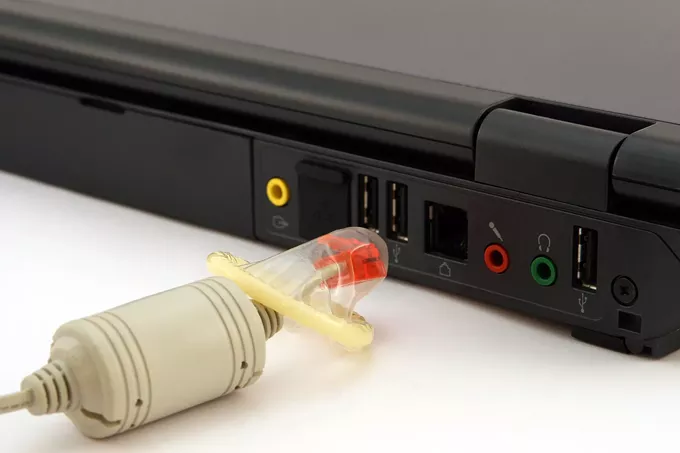
A Republican lawmaker wants to bar the sale of any computer, smartphone or tablet in Arizona if it doesn’t include a filter that would block children from accessing “harmful content,” and would hold them criminally liable if they fail to do so.
The legislation from Rep. Michelle Udall, R-Mesa, also would allow parents to sue anyone who helps their child bypass the internet filter.
The measure appears to be the brainchild of an anti-LGBT and anti-porn activist known for his wild stunts.
House Bill 2115 shares almost identical language to the “Save Our Children Act” created by Chris Sevier, a man who has drafted model anti-pornography legislation around the country, including in Arizona.
Most notably in 2019, Rep. Gail Griffin, R-Hereford, put forward a bill by Sevier that would have charged Arizona residents $20 to access pornographic material and used the money to fund construction of a border wall along the state’s southern border with Mexico. Griffin later said she would no longer pursue the bill after it drew national attention.
Udall’s bill is similar in how it seeks to limit computer access to “material that is harmful to minors” on any device that can access mobile networks, wired networks or the internet, according to the bill.
The bill also gives parents the right to sue the manufacturer if their child accesses “harmful material,” and anyone who removes a filter would face a class 6 felony and a $50,000 fine. Companies that don’t comply also can face criminal liability under the bill’s language.
Thursday, January 13, 2022
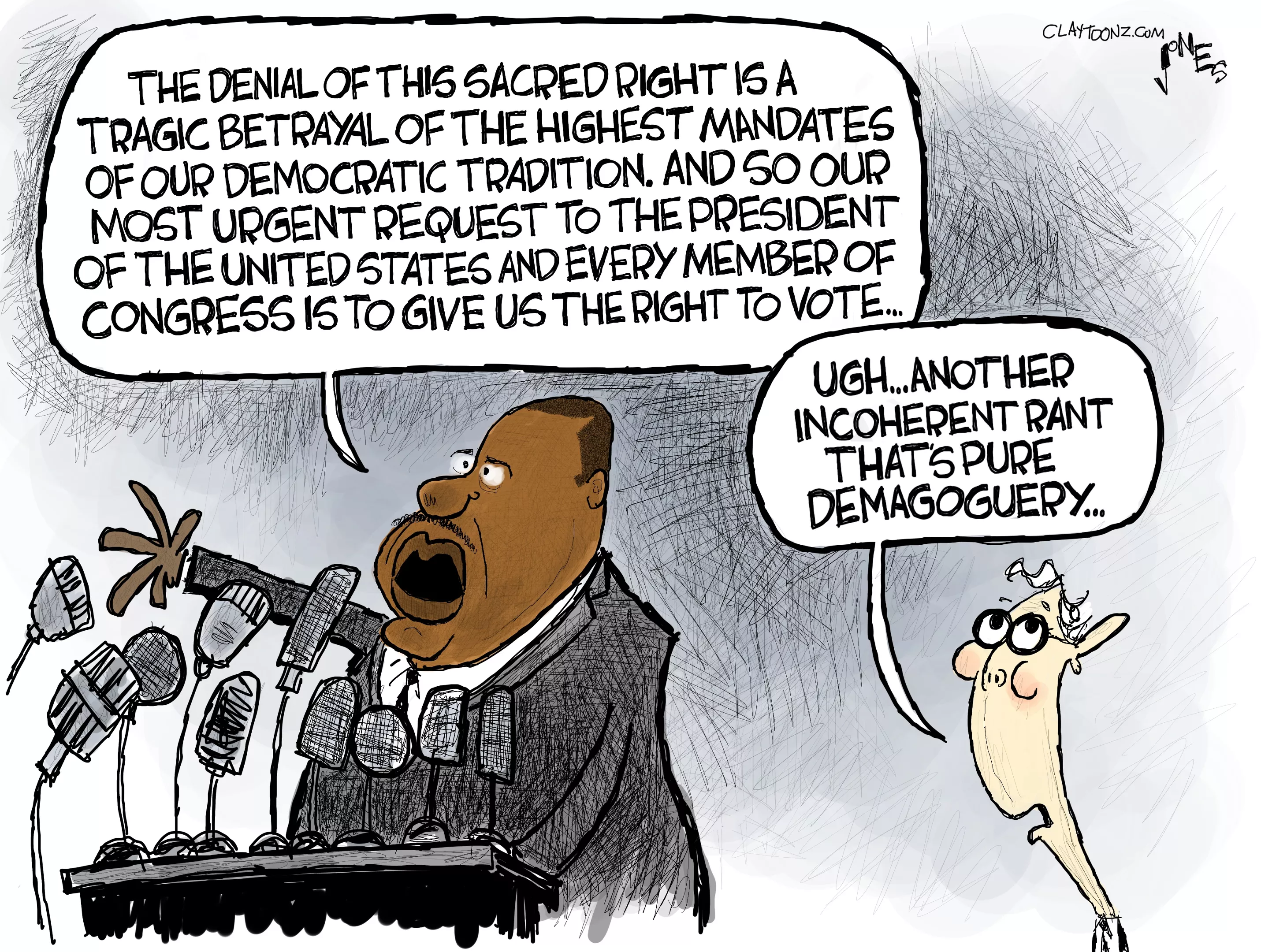

That’s not how the law works, senator … It’s like we’re time traveling … And wow, those fines add up fast.
Programming note: We have a guest column coming to your inboxes on Friday, but the Daily Agenda won’t publish on Monday for Martin Luther King Jr. Day. We’ll be back with the Daily Agenda at 6 a.m. Tuesday.
When candidate Donald Trump planned his first major rally following his campaign launch (in which he described Mexicans crossing the border as criminals, drug dealers and rapists), he turned to Arizona, where he found a loving crowd that ate up his 90 minutes of anti-immigrant, anti-establishment, anti-media meandering.
So it’s no wonder that as he seeks to launch a comeback and a possible 2024 campaign, Trump is returning to Arizona this weekend.
He’ll continue to spread his Big Lie surrounded by his hand-picked GOP frontrunners for the top two state offices; three-quarters of Arizona’s Republican congressional delegation; the leader of the Arizona Republican Party; Mike Lindell, the pillow salesman who helped spread Arizona election conspiracies and helped fund the audit to prove them; Ron Watkins, the guy who is most likely Q of QAnon fame, and other prominent QAnon celebrities. (Arizona’s most famous QAnoner, Jake Angeli, will, regrettably, not be able to attend.)
Wednesday, January 12, 2022
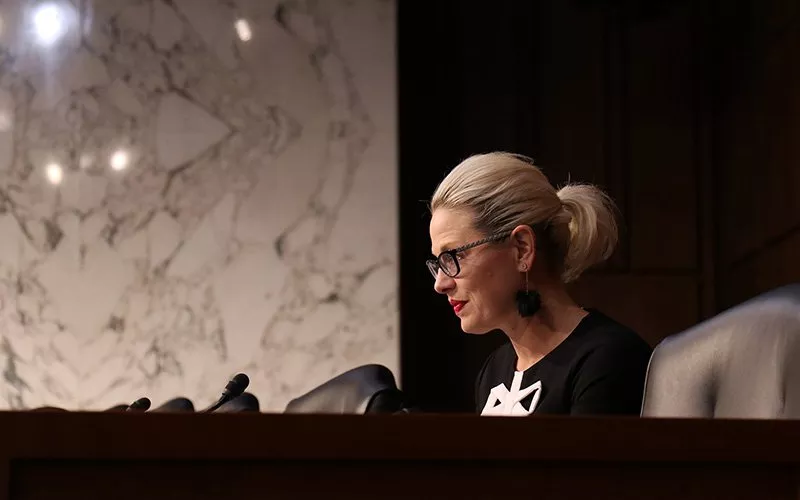
On the morning of Oct. 3, Sen. Kyrsten Sinema gave her students in an advanced fundraising class at Arizona State University a break. She stepped out of the classroom to go move her car to another location near the downtown Phoenix campus, but instead found a group of four activists waiting to talk to her.
As the four organizers recorded the confrontation on their phone, Sinema didn’t stop to listen to the activists, some of whom had shown up to her Phoenix office months earlier to ask to meet with her. Sinema ignored them and, instead of going to move her car as planned, she made her way to a nearby bathroom.
The move was intentional and calculated: Sinema told ASU police she intentionally went into the bathroom because she believed that recording someone inside a bathroom is a crime, Sgt. Katie Fuchtman wrote in a police report the Arizona Mirror obtained under the state’s public records law. The senator’s comments in it have not been reported on before now.
One of the activists, whose identity police couldn’t confirm, is an organizer with Living United for Change Arizona, a community organization that has mobilized working class and majority-Latino neighborhoods to vote. She told Sinema her name is Blanca in the video she filmed at the entrance of the bathroom. The video went viral. Some condemned the LUCHA organizers for recording the Democratic U.S. senator inside the bathroom. Others claimed Blanca should be deported.
After the incident, Sinema told police officers that she believed the activists had committed a crime by breaking a state law that bars surreptitious filming — the law she said prompted her to seek refuge in the bathroom. That law applies in cases where the victim is filmed while “urinating, defecating, dressing, undressing, nude” or engaged in a sexual act.
After an investigation, ASU police said they disagreed with Sinema. The agency announced on Oct. 20 that it recommended Maricopa County Attorney’s Office prosecutors charge four people with misdemeanors, but not for the felony of recording a person in a bathroom that Sinema told officers the activists committed and should be “held accountable” for.
But prosecutors returned the investigation back to police and requested more information on the case. ASU police are still investigating the case, ASU PD spokesman Adam Wolfe said on Jan. 11.
Three months after the incident, Sinema still believes the activists committed a crime, her office told the Mirror in an email.
If police or prosecutors were to agree with Sinema, Blanca, who has no immigration status, could face deportation.
The Mirror knows Blanca’s identity, but is not disclosing her full name because she fears for her safety.
An arrest or charge could result in end DACA privileges
Standing at the bathroom entrance, Blanca spoke to Sinema. Blanca talked about being brought to the country when she was 3. How her grandparents were deported in 2010 during the Senate Bill 1070 years in Arizona. How she was unable to attend her grandfather’s funeral because she can’t leave the country and be allowed back in. Why a pathway to citizenship was crucial to include in the Build Back Better proposal.
“There’s millions of undocumented people just like me who share the same story. Or even worse things that happen to them because of SB1070 and because of anti-immigrant legislation, and this is the opportunity to pass it right now and we need you to.
“We need to hold you accountable to what you told us you were going to pass when we knocked on doors for you. It’s not right,” Blanca said.
Blanca has temporary deferral from deportation and a two-year work permit through the Deferred Action for Childhood Arrivals program. Those with DACA, also known as dreamers, are a low priority for deportation. But that protection could end with an arrest for a crime, even if the case is later dismissed.
“One of the ways to quickly lose DACA is to get arrested for any crime,” said Ruben Reyes, an immigration attorney. “Even without a conviction, simply the arrest record… may complicate the renewal case for DACA. That would open you up to removal by the government.”
Reyes explained that those who benefit from DACA, an Obama-era program implemented in 2012, are subject to the discretion of federal immigration officials.
“When you apply for DACA, you can have a misdemeanor on your record and still get DACA, but there is discretion that the government is going to use in deciding on whether or not you deserve it,” he said. “So, if that misdemeanor happened a long time ago… it’d be easy to argue they made the mistake, they’ve learned their lesson, and they’ve been productive members of society since then. It’s very different when they are actively engaging in conduct that leads to their arrest.”
Reyes said dreamers who engage in activism face significant risks because their future in the United States is in the hands of federal immigration agencies.
For over a decade, dreamers and other undocumented immigrants have “come out of the shadows” that their parents felt safer in and stepped into the public sphere, meeting with lawmakers in Phoenix and Washington, D.C, and, sometimes, protesting and engaging in civil disobedience to push elected leaders to reform immigration laws and provide them and their families permanence in the country.
Sinema spokesman John LaBombard said his boss told law enforcement she doesn’t want the activists to face “immigration-related consequences.”
“She expressed to law enforcement that she hopes no students would face immigration-related consequences as a result of this activity,” LaBombard said in an email.
The police report doesn’t say whether Sinema feared the activists would face immigration consequences, though Fuchtman did write that Sinema said she didn’t want the activists to have “their lives ruined.” However, she also told officers they need to be “held accountable” for their alleged crimes.
“Sinema cares about the students and does not want their lives ruined for a horrible mistake they made but agrees she wants them held accountable,” Fuchtman wrote in the report.
LaBombard didn’t respond to a question on what Sinema considers accountability in the context of a law enforcement investigation where she believes a felony was committed.
Reyes, the immigration attorney, said he isn’t convinced by Sinema’s position.
“I think she wants to be tough on crime, but also soft on immigrants — and to some extent, she’s not really convincing anyone,” he said. “In this particular issue, this is I think a consequence of making promises you didn’t keep to people who are desperate for a solution.”
Last year, a coalition of community groups in Arizona came together to push Sinema to commit to passing landmark immigration and election reform legislation by ending the Senate filibuster rule. The groups have felt ignored by their senator.
LUCHA is part of that coalition. The night before activists confronted Sinema outside the ASU classroom, LUCHA also protested outside a Phoenix fundraiser Sinema was hosting.
Alejandra Gomez and Tomas Robles, co-directors of LUCHA, said in an October statement following the backlash on the viral video that Sinema’s constituents have been “been ignored, dismissed, and antagonized.”
ASU police initially sought multiple felony charges
Police initially sought charges against three of the activists who entered the bathroom, with five counts for the felony for unlawful recording, which could result in over two years in prison, according to the police report.
ASU police also looked into charging the activists with four misdemeanor charges including criminal trespassing, harassment by communication, disorderly conduct and interference with the use of educational property. Those misdemeanors each carry sentences of up to four to six months in jail.
Besides Sinema, police identified four other victims, all women students in Sinema’s class who were in the bathroom at the time the confrontation happened. One told police she didn’t want to be part of what was happening, but felt forced to be a part of the incident. Another one told police she believed the activists were harassing Sinema, and she was shocked they did so inside a bathroom. Another student told police she felt violated for being filmed in the bathroom and that the video was posted online.
Sinema told police she felt intimidated and was scared for her class, according to the police report. She was escorted to her vehicle once the class ended.
ASU police let activist into the building where Sinema was teaching
Sinema’s class was taught on a Sunday morning on the second floor of the University Center at the downtown Phoenix campus. But the university building was not open to all students and those associated with the university that day: Only those students taking Sinema’s class could use their ASU ID cards to access the building. Some of the activists were ASU students; they tried scanning their cards to open the building, but failed, according to the police report.
ASU police used card scan logs to identify two of the activists as Arianna Reyes and Alexis Delgado Garcia.
Reyes used her ASU ID card to get into the neighboring Walter Cronkite School of Journalism and Mass Communication building, and asked a patrol officer to let her into the University Center. She told him she had left her laptop in the lobby. He opened the doors of the University Center for her, and returned to his post at the Cronkite building, according to the police report.
In the police report, officers said it’s unclear how one of the activists got into the University Center building. But she let Delgado Garcia and Blanca into the building. They met Reyes in the lobby, according to the police report.
The police found that the activists were in the building for less than 20 minutes.
Later that afternoon, ASU police saw several people who they believed were the activists involved in the morning incident walking near the downtown campus. They detained two women, including ASU student Sophia Marjanovic. She had stood in front of Sinema’s stall during the morning protest.
Marjanovic told Sinema she was a victim of human trafficking. On social media, Marjanovic said she identifies as a Native woman and “fell into human trafficking due to not having worker protections in the gig economy.” That’s why she wanted to tell Sinema to pass the Build Back Better Act, which – among many reforms on climate change, health care, education and housing – would strengthen the rights of workers trying to organize a union.
According to the report, ASU police detective Rustin Standage recommended MCAO charge three people – Marjanovic, Reyes and Delgado – with two misdemeanors for disorderly conduct and interference or disruption of an education institution. Each offense is considered a class 1 misdemeanor and could carry a sentence of about six months in jail.
It is unclear who the fourth person ASU police referred for charges was. Wolfe, the ASU police spokesman, did not clarify that discrepancy.
SUPPORT NEWS YOU TRUST.
Arizona Mirror is part of States Newsroom, a network of news bureaus supported by grants and a coalition of donors as a 501c(3) public charity. Arizona Mirror maintains editorial independence. Contact Editor Jim Small for questions: [email protected]. Follow Arizona Mirror on Facebook and Twitter.