

Wednesday, August 19, 2020
The speakers will deliver their addresses virtually to the convention, which has been forced mostly online because of concerns over COVID-19 – a pandemic that has hit the Navajo Nation particularly hard.
Nez, a member of Arizona’s Democratic delegation, talked to Cronkite News reporter Tyler Manion in a video call Tuesday about the honor of being a keynote speaker at the convention.
“It is an opportunity also to remind the U.S. citizens throughout this country that tribal nations have contributed greatly to the freedoms of this country and have also contributed on a daily basis to make this nation the most powerful country in the world,” Nez said.

But that’s where Urquiza found herself Monday night, telling a national audience that her dad’s “only pre-existing condition was trusting Donald Trump, and for that, he paid with his life.”
Urquiza is one of two Arizonans bringing their personal struggles with health care under the Trump administration to the convention. Sedona resident Jeff Jeans, once a staunch opponent of the Affordable Care Act, is scheduled to speak Tuesday about how Obamacare saved his life after he was diagnosed with Stage-4 throat cancer.
“I sat in the hospital bed and cried because the things that I thought were important in my perceptions of the health care system and politics were so wrong,” Jeans said Monday, reflecting on his cancer treatment in 2012.
The speeches come at a convention where Democrats are highlighting what they call Trump’s failures in handling the COVID-19 pandemic that as of Monday had killed 169,350 in the U.S. and 4,506 in Arizona. Almost 5.4 million Americans, and 194,005 Arizonans, had tested positive for the disease.
The coronavirus is just one of the health care issues in the Democratic platform, which also calls for an expansion of Medicaid and a reversal of GOP efforts to undo Obamacare.
Urquiza, a former Maryvale resident, said she did not set out to become an advocate after the death of her father, Mark, but she has embraced the role.
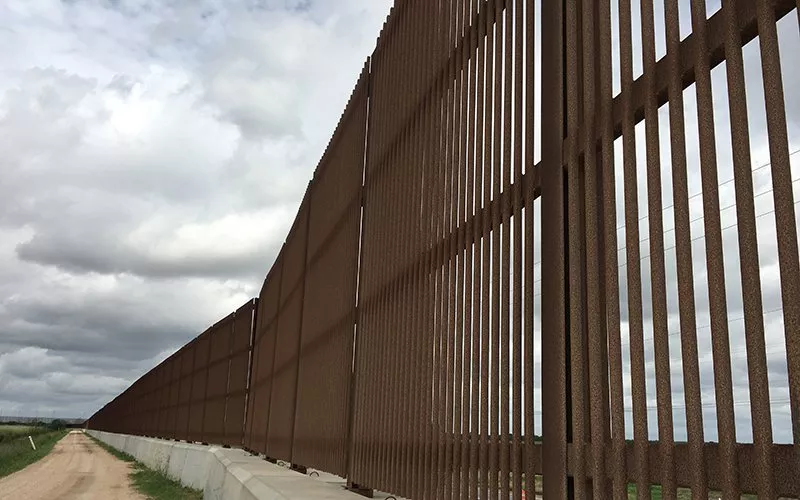
The visit came the same day that delegates to the Democratic National Convention were expected to formally nominate Vice President Joe Biden to challenge Trump this fall. Democrats quickly derided the president’s Yuma stop as little more than an “inaccurate and desperate” campaign stunt.
Democrats at the convention this week also adopted a campaign platform that pledges to undo much of the last four years of the Trump administration’s immigration policies. The platform’s immigration plank calls for more protection for DACA recipients, removal of some travel bans, expansion of asylum programs – and an end to border wall construction.
But Trump doubled down Tuesday, saying contractors could have 300 miles of border wall completed within the next week or two.
“Those are anti-climb plates at the top,” Trump said as he pointed to the top of the wall. “You see these guys climbing up with drugs on their back. They say, ‘Let’s take a pass on that.'”
But Santa Cruz County Sheriff Tony Estrada, in a conference call sponsored by Arizona Democrats before Trump’s visit, said a border wall is not a “silver bullet” for stopping drug trafficking, as most drugs come through ports of entry.
“We’re throwing money at something that’s not going to solve the problem,” Estrada said.
Tags: coronavirus , mypillow , political , cartoon , claytoonz , Image
Tuesday, August 18, 2020
“We have about 10 years of Latino activism resistance that has been going on … and we have created this environment in Arizona,” that has primed the state for a fight, said Rep. Ruben Gallego, D-Phoenix.
Gallego’s comments came during a virtual meeting of Hispanic state lawmakers that also named Texas, Wisconsin, Michigan, Florida and Pennsylvania as battlegrounds. The panel, organized by the National Hispanic Caucus of State Legislators, came on the first day of the Democratic National Convention.
The Facebook Live event discussed strategies for mobilizing Latino voters in battleground states.
A request for comment from the Arizona Republican Party was not immediately returned Monday, but at least one political analyst agreed with Democrats that “Arizona is unequivocally a battleground state this year.”
Mike Noble, chief of research and managing partner at OH Predictive Insights, said the election outcome in Arizona will be a “coin flip” in November.
“I not only think that Arizona will be incredibly close,” but it could be a tipping point state that ultimately decides who sits in the White House,” Noble said.
He said former Vice President Joe Biden, the presumptive Democratic presidential nominee, holds a slight edge in traditionally red-state Arizona. A Real Clear Politics roundup of polls on Aug. 12 gave Biden 47% of the vote in Arizona, compared to 45% for President Donald Trump.
Tags: maga , trump , ballot , voting , mail-in , absentee , elections , claytoonz , political , cartoon , Image
Monday, August 17, 2020
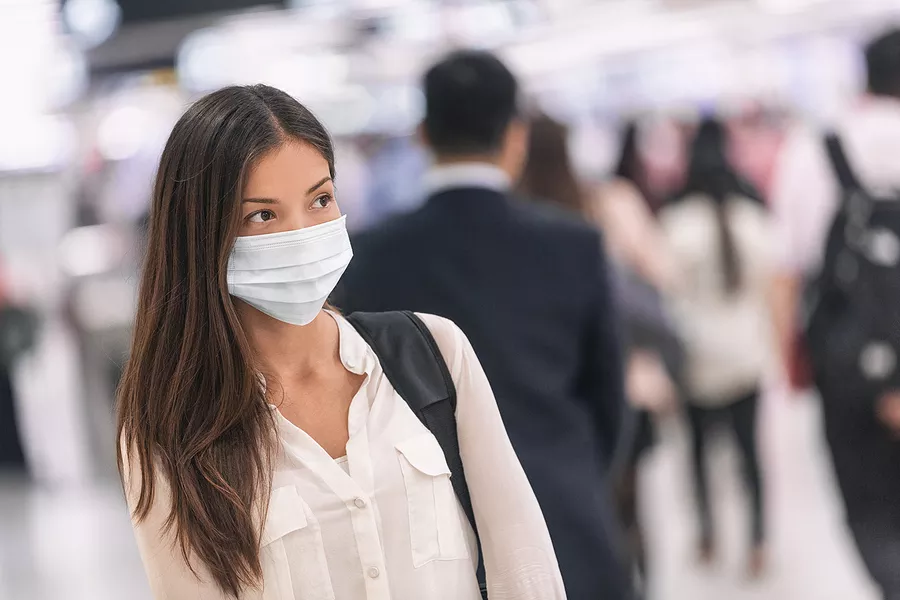
The Trump administration is predicting years of dramatically reduced international demand for U.S. visas, and planning for drastic budget cuts to visa services worldwide as a result, according to an internal memo seen by ProPublica.
The projections made by the U.S. State Department in a memo signed by Secretary of State Mike Pompeo on Monday contrast with the rosier outlook expressed repeatedly by President Donald Trump. As recently as Aug. 5, Trump predicted that the coronavirus “will go away” and that a vaccine will be available before the end of the year. But internally, the memo shows, the government is planning for the pandemic to drastically reduce international travel to the U.S. through at least 2022.
The memo projects steep reductions, in particular, to non-immigrant visas. Trump has issued restrictions on some categories of non-immigrant visas, citing the economic impacts of the pandemic, but the majority of non-immigrant visas processed by the State Department are temporary visas for business travel and tourism.
Tags: death , guns , children , remember , claytoonz , political , cartoon , Image
Friday, August 14, 2020
Tags: kamala , harris , skin , color , racism , white , black , elections , vp , nominee , political , cartoon , claytoonz , Image
Thursday, August 13, 2020
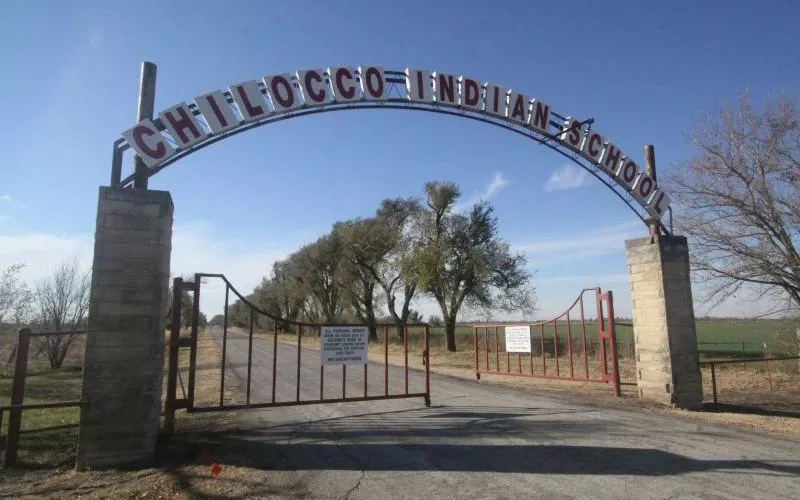
By the time he was 21, Carr had been incarcerated in three different institutions. He died in a Kansas state prison where he was held for stealing $30 worth of food, said his niece, K. Tsianina Lomawaima, a professor and Indigenous studies scholar at Arizona State University.
It was the height of the Great Depression and, according to Lomawaima, Carr said he committed the crime because he couldn’t get a job and was hungry.
The school-to-prison pipeline – a trend of school discipline pushing children into prison – is recognized to have started developing at the end of the 20th century, experts say. But Carr’s story is an example of this phenomenon from decades earlier, when the U.S. government sanctioned, and sometimes operated and financed, hundreds of boarding schools for Native American children that relied on military and carceral practices to forcibly assimilate them into Western culture.
Modern juvenile incarceration disproportionately affects Native American youth, and experts on U.S. Indian policy trace the disparity back to the U.S.’s Native American assimilation policies of the 19th and 20th centuries – which included boarding schools. Not only were boarding schools often little better than prisons, they intentionally broke up Native American families and triggered trauma that has compounded over generations, leading to many of the disparities Native Americans face today, according to a report by the National Congress of American Indians.
However, Lomawaima said the history of boarding schools is nuanced.

