

Friday, June 26, 2020

PHOENIX – Arizona lawmakers split on party lines Thursday as the House passed a Democrat-backed police reform bill on the one-month anniversary of George Floyd’s death at the hands of Minneapolis police.
The George Floyd Justice in Policing Act would ban chokeholds like the one that killed Floyd, restrict police officers’ qualified legal immunity, require body cameras and more.
The 236-181 vote included support from every House Democrat and just three Republicans – none from Arizona – who broke with their party and voted for the measure.
The vote capped a day of debate during which Democrats repeatedly invoked the memory of victims of police brutality, like Floyd and others, while Republicans charged that the 140-page bill undercuts the ability of police to protect the community.
“Congress heard the cries of the protesters and those who took to the streets demanding reform,” Rep. Grijalva, D-Tucson, said in a statement after the vote. “This legislation reaffirms that Black and Brown lives matter and is a step forward toward ensuring that sentiment is reflected in our local police departments.”
No, President Trump, Testing Is Not Causing Case Counts to Rise. The Virus Is Just Spreading Faster.
ProPublica is a nonprofit newsroom that investigates abuses of power. Click here to read their biggest stories as soon as they’re published.
President Donald Trump and Vice President Mike Pence have repeatedly attributed the increase in the coronavirus case count in the United States to an increase in testing.
“We’re doing so much testing, so much more than any other country,” Trump said in an interview with CBN News on Monday. “And to be honest with you, when you do more testing, you find more cases. And then they report our cases are through the roof.”
“I would just encourage you all, as we talk about these things, to make sure and continue to explain to your citizens the magnitude of increase in testing,” Pence said on a call with the nation’s governors last week, according to audio obtained by The New York Times. “And that in most of the cases where we are seeing some marginal rise in number, that’s more a result of the extraordinary work you’re doing.”

President Donald Trump and Vice President Mike Pence have repeatedly attributed the increase in the coronavirus case count in the United States to an increase in testing.
“We’re doing so much testing, so much more than any other country,” Trump said in an interview with CBN News on Monday. “And to be honest with you, when you do more testing, you find more cases. And then they report our cases are through the roof.”
“I would just encourage you all, as we talk about these things, to make sure and continue to explain to your citizens the magnitude of increase in testing,” Pence said on a call with the nation’s governors last week, according to audio obtained by The New York Times. “And that in most of the cases where we are seeing some marginal rise in number, that’s more a result of the extraordinary work you’re doing.”
ProPublica is a nonprofit newsroom that investigates abuses of power. Click here to read their biggest stories as soon as they’re published.
A company created by a former Pentagon official who describes himself as a White House volunteer for Vice President Mike Pence won a $2.4 million dollar contract in May — its first federal award — to supply the Bureau of Prisons with surgical gowns.
Mathew J. Konkler, who worked in the Department of Defense during the George W. Bush administration, formed BlackPoint Distribution Company LLC in August 2019 in Indiana, state records show, but had won no federal work until May 26. The Bureau of Prisons chose the company with limited competition for a contract to supply surgical gowns to its facilities.
It is at least the second contract awarded to a company formed by an individual who had worked in or volunteered for the Trump administration; a company formed by Zach Fuentes, a former White House deputy chief of staff, won a $3 million contract just days after forming to supply face masks to the Indian Health Service. The masks did not meet FDA standards for use in health care settings, and an IHS spokesman said this week that the agency is trying to return the masks to Fuentes. Members of Congress called for investigations into the contract, and the Government Accountability Office now plans to review the deal “in the coming few months, as staff become available,” spokesman Charles Young said last week.
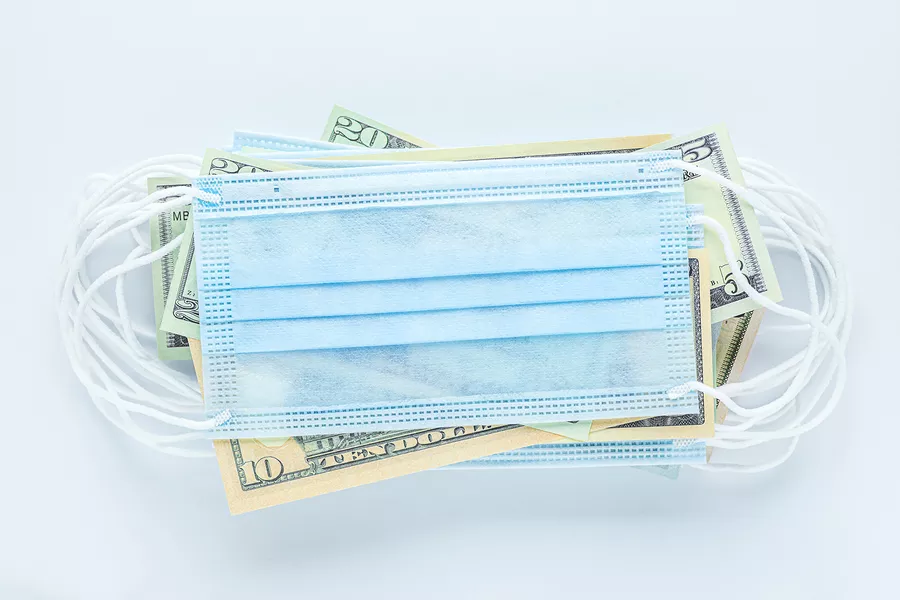
A company created by a former Pentagon official who describes himself as a White House volunteer for Vice President Mike Pence won a $2.4 million dollar contract in May — its first federal award — to supply the Bureau of Prisons with surgical gowns.
Mathew J. Konkler, who worked in the Department of Defense during the George W. Bush administration, formed BlackPoint Distribution Company LLC in August 2019 in Indiana, state records show, but had won no federal work until May 26. The Bureau of Prisons chose the company with limited competition for a contract to supply surgical gowns to its facilities.
It is at least the second contract awarded to a company formed by an individual who had worked in or volunteered for the Trump administration; a company formed by Zach Fuentes, a former White House deputy chief of staff, won a $3 million contract just days after forming to supply face masks to the Indian Health Service. The masks did not meet FDA standards for use in health care settings, and an IHS spokesman said this week that the agency is trying to return the masks to Fuentes. Members of Congress called for investigations into the contract, and the Government Accountability Office now plans to review the deal “in the coming few months, as staff become available,” spokesman Charles Young said last week.
Thursday, June 25, 2020
ProPublica is a nonprofit newsroom that investigates abuses of power. Click here to read their biggest stories as soon as they’re published.
The nation’s largest debt collectors should suspend seizing wages “immediately,” two prominent senators demanded in letters sent Wednesday.
The letters came in response to a ProPublica story this month that focused on how the most prolific filers of debt collection lawsuits, Capital One and large debt buying companies, continue to garnish paychecks amid the COVID-19 pandemic. While most courts shut down to new hearings in March, wage seizure orders obtained before then were allowed to continue in most places. That left some essential workers and others desperately searching for relief amid the economic downturn.
“Filing collection lawsuits and garnishing the wages of consumers already struggling to pay for basic necessities will only exacerbate the economic and public health crisis,” Sens. Elizabeth Warren, D-Mass., and Sherrod Brown, D-Ohio, wrote.
Brown and Warren sit on the Senate Banking Committee, which oversees financial services companies. Brown is the ranking member.

The nation’s largest debt collectors should suspend seizing wages “immediately,” two prominent senators demanded in letters sent Wednesday.
The letters came in response to a ProPublica story this month that focused on how the most prolific filers of debt collection lawsuits, Capital One and large debt buying companies, continue to garnish paychecks amid the COVID-19 pandemic. While most courts shut down to new hearings in March, wage seizure orders obtained before then were allowed to continue in most places. That left some essential workers and others desperately searching for relief amid the economic downturn.
“Filing collection lawsuits and garnishing the wages of consumers already struggling to pay for basic necessities will only exacerbate the economic and public health crisis,” Sens. Elizabeth Warren, D-Mass., and Sherrod Brown, D-Ohio, wrote.
Brown and Warren sit on the Senate Banking Committee, which oversees financial services companies. Brown is the ranking member.
Wednesday, June 24, 2020
Annabella Piunti/Cronkite News
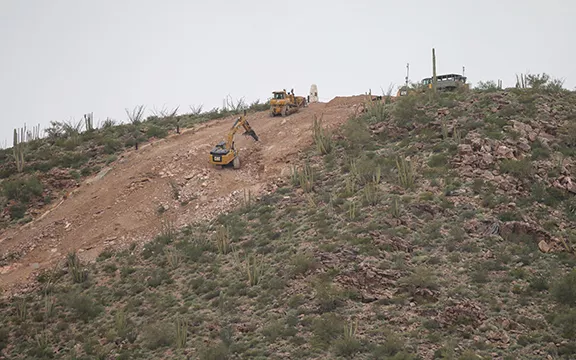
Earthmoving equipment clears a path up Monument Hill in Organ Pipe Cactus National Monument, just west of Lukeville. Advocates and Tohono O’odham Nation officials are concerned about damage to the environment, lands sacred to indigenous people and potential impact on migrating animals.
PHOENIX – As President Donald Trump was hailing the pace of border wall construction Tuesday, Tohono O’odham Nation Chairman Ned Norris Jr. was bemoaning it as a project that continues “to destroy … sacred sites.”
“We have an obligation, we have a duty, we have a responsibility, to protect those sites of our ancestors, sacred sites of our ancestors, and do what we can do to protect those areas,” Norris said.
He was one of five tribal leaders, along with San Carlos Apache Chairman Terry Rambler, who took part in a National Congress of American Indians virtual forum Tuesday on threats to tribal lands from federal government action.
The forum, “Protecting Tribal Lands and Sacred Places: Current Threats across Indian Country,” ranged from complaints of physical destruction of tribal sites to efforts to block tribal checkpoints aimed at stopping the spread of COVID-19.
For Norris, it is the wall going through his reservation which straddles the U.S.-Mexico border and through the Organ Pipe Cactus National Monument where the Tohono O’odham say there are burial and archeological sites.
For Rambler, the threat is the Resolution Copper Mine planned for an area known as Oak Flat. The site was part of a land swap engineered by members of Arizona’s congressional delegation in 2014, that gave the mining company 2,400 acres of copper-rich federal land in exchange for 5,000 privately held acres in southeastern Arizona.
PHOENIX – President Donald Trump signed an executive order Monday suspending H-1B, L-1, J and other temporary work visas until the end of the year, while also extending the hold on green cards for new immigrants.
The suspension is in addition to an earlier order signed April 22, which put a 60-day restriction on the flow of immigrants into the United States to soften the economic downfall caused by the COVID-19 pandemic.
The order goes into effect Wednesday, potentially affecting thousands of immigrants, among them tech workers and foreign au pairs, who hold H-1B and J-1 visas, respectively.
“We estimate that this would prevent the entry of 167,000 temporary workers and their family members in July through December,” said Julia Gelatt, a senior policy analyst at the Migration Policy Institute, a nonpartisan think tank. “And would block an additional 158,000 people who would have otherwise come to the United States on green cards from abroad.”
According to a senior Trump administration official who discussed the order in a teleconference, the order will free up about 525,000 U.S. jobs, making way for American citizens to have the first shot at applying.
The suspension is in addition to an earlier order signed April 22, which put a 60-day restriction on the flow of immigrants into the United States to soften the economic downfall caused by the COVID-19 pandemic.
The order goes into effect Wednesday, potentially affecting thousands of immigrants, among them tech workers and foreign au pairs, who hold H-1B and J-1 visas, respectively.
“We estimate that this would prevent the entry of 167,000 temporary workers and their family members in July through December,” said Julia Gelatt, a senior policy analyst at the Migration Policy Institute, a nonpartisan think tank. “And would block an additional 158,000 people who would have otherwise come to the United States on green cards from abroad.”
According to a senior Trump administration official who discussed the order in a teleconference, the order will free up about 525,000 U.S. jobs, making way for American citizens to have the first shot at applying.
ProPublica is a nonprofit newsroom that investigates abuses of power. Click here to read their biggest stories as soon as they’re published.
This story was co-published with WNYC.
Donald Trump is famous — and infamous — for his use of Twitter and Facebook. But particularly since the pandemic forced him to largely swear off his favorite mass, in-person rallies, his campaign has been amping up the use of another form of alternative media: YouTube and podcasts.
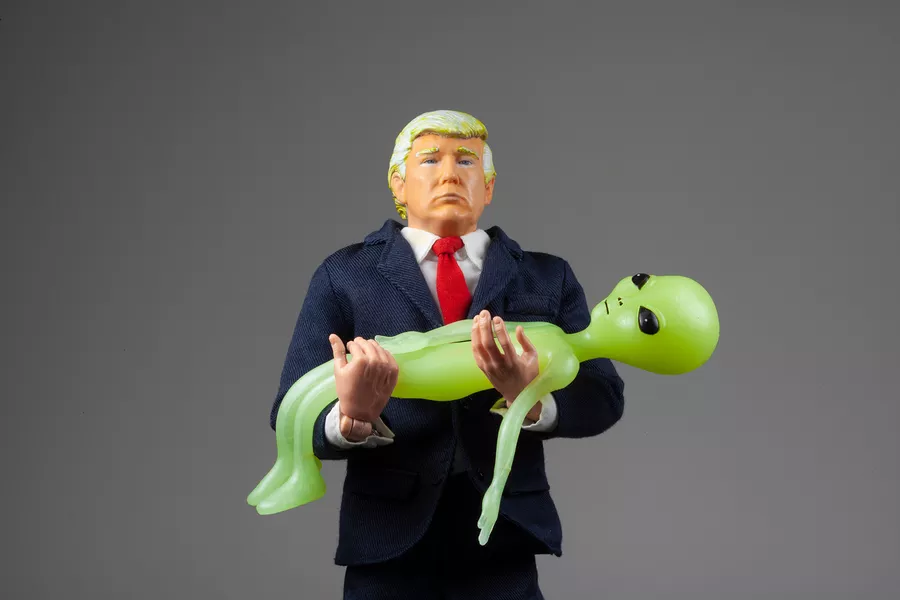
The president’s most recent sit-down interview? As it happens, it occurred last week on “Triggered,” a YouTube program hosted by his namesake son. In a conversation in the White House’s map room, Trump Jr. quizzed his dad about everything from who his favorite child is to whether aliens exist — to a Fox News report that Osama bin Laden wanted to assassinate President Barack Obama so that Joe Biden would ascend to the presidency.
This was no ordinary campaign video, nor was it a random question, this week’s episode of “Trump, Inc.” makes clear. “Triggered” followed the exchange about bin Laden with a campaign ad that repeated the same point, showing how closely the program’s conversations are tied in with campaign talking points. “Trump, Inc.” explores the Trump campaign’s universe of podcasts and YouTube shows, which has expanded since the coronavirus began locking down huge swaths of the country. (The campaign did not respond to requests for comment.)
This story was co-published with WNYC.
Donald Trump is famous — and infamous — for his use of Twitter and Facebook. But particularly since the pandemic forced him to largely swear off his favorite mass, in-person rallies, his campaign has been amping up the use of another form of alternative media: YouTube and podcasts.
The president’s most recent sit-down interview? As it happens, it occurred last week on “Triggered,” a YouTube program hosted by his namesake son. In a conversation in the White House’s map room, Trump Jr. quizzed his dad about everything from who his favorite child is to whether aliens exist — to a Fox News report that Osama bin Laden wanted to assassinate President Barack Obama so that Joe Biden would ascend to the presidency.
This was no ordinary campaign video, nor was it a random question, this week’s episode of “Trump, Inc.” makes clear. “Triggered” followed the exchange about bin Laden with a campaign ad that repeated the same point, showing how closely the program’s conversations are tied in with campaign talking points. “Trump, Inc.” explores the Trump campaign’s universe of podcasts and YouTube shows, which has expanded since the coronavirus began locking down huge swaths of the country. (The campaign did not respond to requests for comment.)
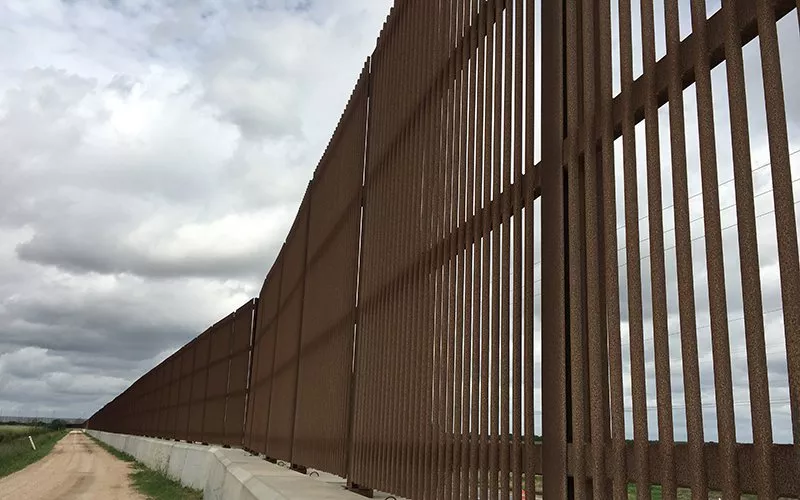
PHOENIX – President Donald Trump toured a newly finished section of border wall Tuesday in Yuma, crediting it not only for a reduction in border crossings and drugs but claiming it has helped prevent “a coronavirus catastrophe” on the southern border.
Trump, trailing a number of Republican elected officials, was in Arizona to mark the completion of the first 200 miles of the border wall that was a centerpiece of his 2016 campaign, and followed the Yuma event with a campaign-like speech in Phoenix.
“During the past two months, we’ve seen the lowest number of illegal border crossings in many years,” Trump said in Yuma. “Illegal immigration is down 84 percent from this time last year. Illegal crossings from Central America are down 97 percent.”
But Democrats were quick to criticize the visits on a day when Arizona set another record for new COVID-19 cases, adding 3,591 new cases and 42 deaths in one day.
Rep. Ruben Gallego, D-Phoenix, said that instead of his “little pep rally,” Trump should be spending his time on the coronavirus and the health and economic problems it has caused.
For more Claytoonz click here.

Tags: white , jesus , religion , christianity , whitewashing , racism , maga , claytoonz , political , cartoon , Image
Tuesday, June 23, 2020
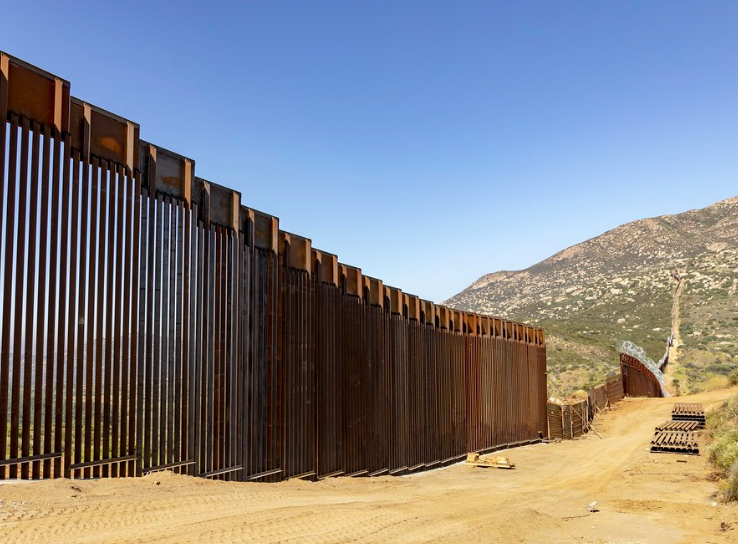
PHOENIX – President Donald Trump is set to visit Yuma Tuesday to celebrate the completion of 216 miles of border wall, well shy of the 450 miles he has pledged to have built by the end of this year.
But experts note that the pace of construction has picked up in recent years and that, with elections looming this fall, the administration has a powerful incentive to keep pressing ahead.
“The Trump administration is spending money on the wall at an unprecedented level,” said Jessica Bolter, an associate policy analyst at the Migration Policy Institute.
A report Friday by Customs and Border Protection said that since Trump took office in 2017, $15 billion has been budgeted for about 738 miles of wall along the southwest border.
Supporters of the wall say it’s money well spent.
“This is the most important issue facing our nation. Our border must be secured,” Rep. Paul Gosar, R-Prescott, said in a statement Monday. “Yuma is on the front lines of this defense and I am proud to have supported additional border security.”
Critics of the wall see it differently, calling the project wasteful and environmentally harmful. Democrats have scheduled a news conference in advance of Trump’s visit to say he should be focusing on the economy and the coronavirus instead.
But experts note that the pace of construction has picked up in recent years and that, with elections looming this fall, the administration has a powerful incentive to keep pressing ahead.
“The Trump administration is spending money on the wall at an unprecedented level,” said Jessica Bolter, an associate policy analyst at the Migration Policy Institute.
A report Friday by Customs and Border Protection said that since Trump took office in 2017, $15 billion has been budgeted for about 738 miles of wall along the southwest border.
Supporters of the wall say it’s money well spent.
“This is the most important issue facing our nation. Our border must be secured,” Rep. Paul Gosar, R-Prescott, said in a statement Monday. “Yuma is on the front lines of this defense and I am proud to have supported additional border security.”
Critics of the wall see it differently, calling the project wasteful and environmentally harmful. Democrats have scheduled a news conference in advance of Trump’s visit to say he should be focusing on the economy and the coronavirus instead.

