

Wednesday, June 3, 2020
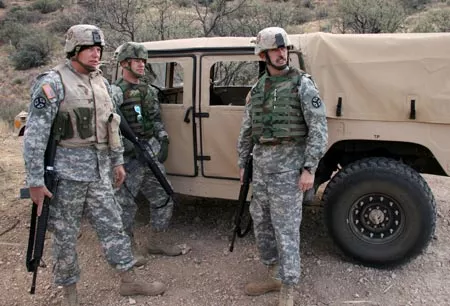
Trump’s comments came in a Rose Garden speech Monday afternoon, as the nation entered its second week of clashes between police and demonstrators across the nation protesting over the death of George Floyd at the hands of Minneapolis police on May 25.
The protesters have been met with a strong police presence in most cities, National Guard troops in some and, when they turned violent, curfews in many cities – and the entire state of Arizona. But Trump said that’s not enough.
“Mayors and governors must establish an overwhelming law enforcement presence until the violence has been quelled,” Trump said Monday. “If a city or a state refuses to take the actions that are necessary to defend the life and property of their residents, then I will deploy the United States military and quickly solve the problem for them.”
Critics have questioned whether Trump has the authority to invoke the Insurrection Act to send federal troops into U.S. cities without the approval of state and local officials. More importantly, they question whether it’s the right thing to do.
“While we must protect small businesses and the safety of all citizens, the president’s threat to invoke the Insurrection Act is not what our country needs now,” said Rep. Tom O’Halleran, D-Sedona. “Americans have the right to peacefully assemble.”
Hundreds gathered in downtown Phoenix in what has now become a familiar place — Phoenix police headquarters, according to local media reports.
State Rep. Reginald Bolding, speaking of the family of Dion Johnson, who was killed in a Memorial Day encounter with an Arizona state trooper, said law enforcement needs training, accountability and transparency to move forward from Johnson’s death. He died the same day as George Floyd, whose death after Minnesota police officers knelt on his back and neck ignited protests in Arizona and around the country.
Johnson’s last minutes aren’t known because Department of Public Safety troopers don’t yet wear body cams. But in Minnesota, video from onlookers, many of them pleading with police to stop, captured the 8 minutes and 46 seconds of pressure placed on Floyd’s back and neck on May 25.
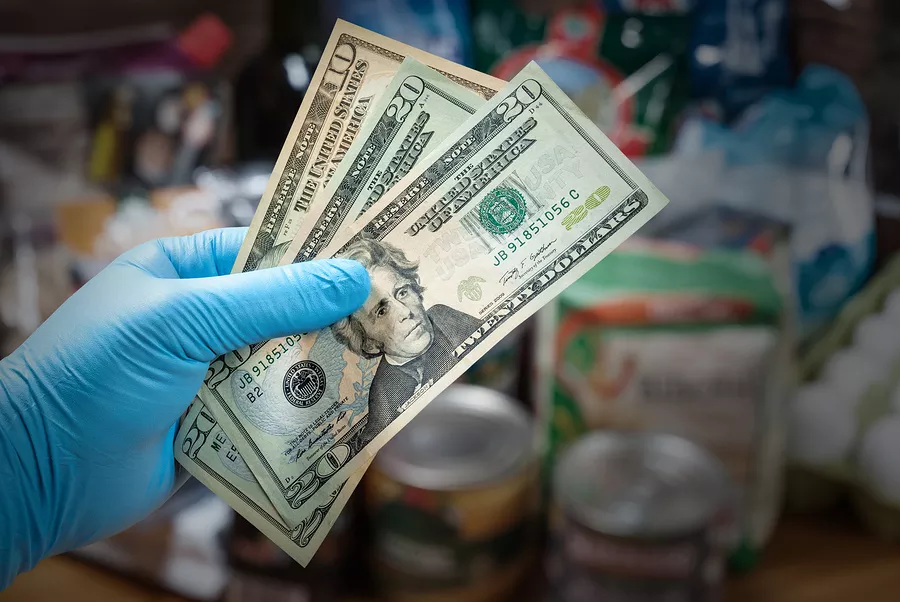
Companies receiving taxpayer dollars as part of President Donald Trump’s signature food aid program hired a longtime lobbyist to push back on criticism that the government is relying on unqualified contractors, such as an event planner.
“We’re working to take the stories of the impact this is having on farmers, processors, distributors and end users and making sure some positive aspects of the program, from both the economic and social standpoints, are out there too,” said the lobbyist and industry consultant, Dale Apley, who reached out to ProPublica on behalf of the contractors. “It’s not all just certain stories about certain companies that maybe shouldn’t have been awarded contracts.”
The Farmers to Families Food Box Program is supposed to deliver fresh fruit, vegetables, meat and dairy to food banks and other nonprofits. But, as ProPublica has reported, private distributors selected by the U.S. Department of Agriculture through an unusually fast bidding process have raised eyebrows because some of them lack relevant experience or even proper licenses.
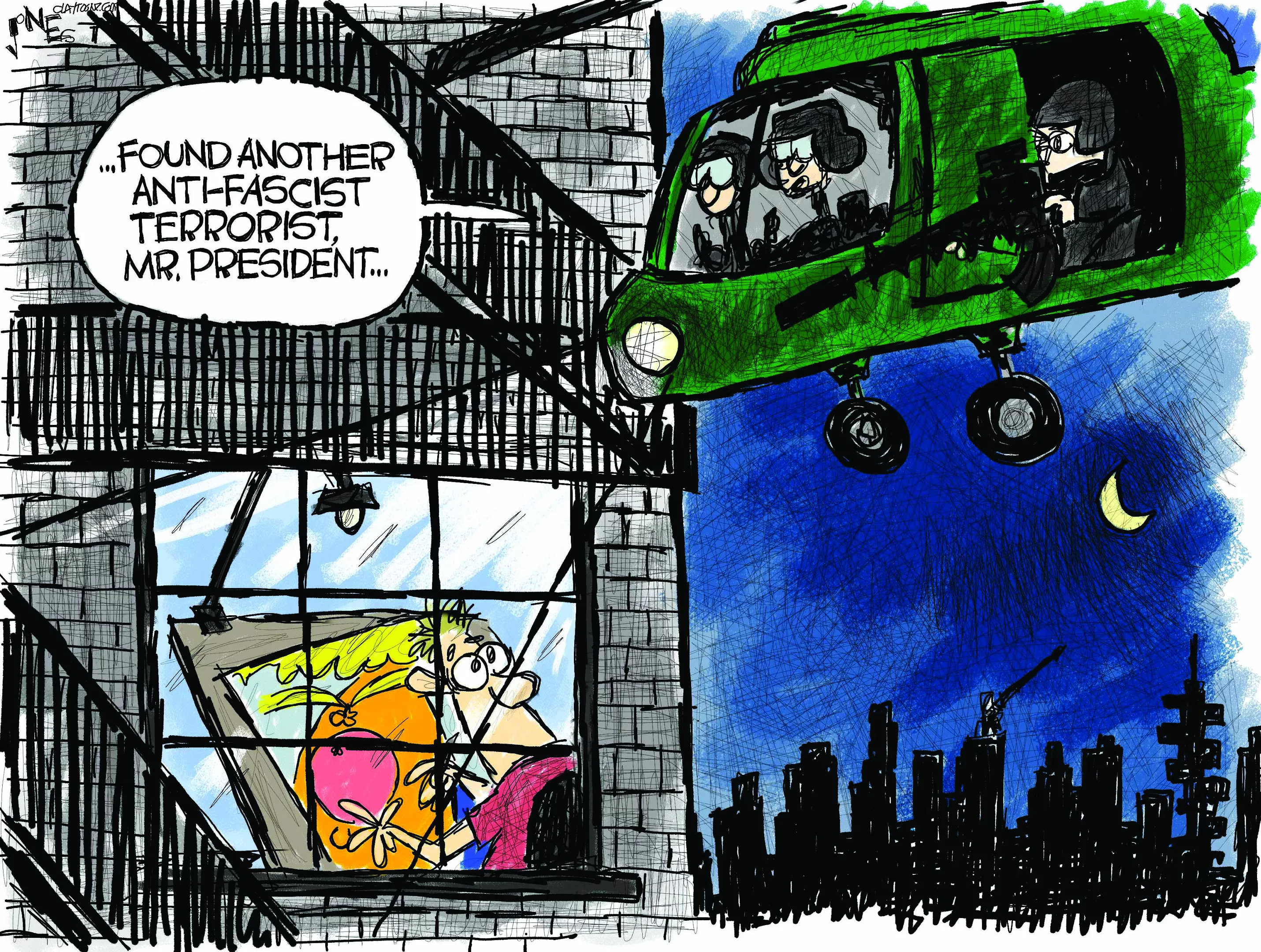
Tags: maga , artist , antifa , terrorist , political , cartoon , Image
Tuesday, June 2, 2020

Federal Reserve Chairman Jerome Powell and Treasury Secretary Steven Mnuchin have become the public faces of the $3 trillion federal coronavirus bailout. Behind the scenes, however, the Treasury’s responsibilities have fallen largely to the 42-year-old deputy secretary, Justin Muzinich.
A major beneficiary of that bailout so far: Muzinich & Co., the asset manager founded by his father where Justin served as president before joining the administration. He reported owning a stake worth at least $60 million when he entered government in 2017.
Today, Muzinich retains financial ties to the firm through an opaque transaction in which he transferred his shares in the privately held company to his father. Ethics experts say the arrangement is troubling because his father received the shares for no money up front, and it appears possible that Muzinich can simply get his stake back after leaving government.
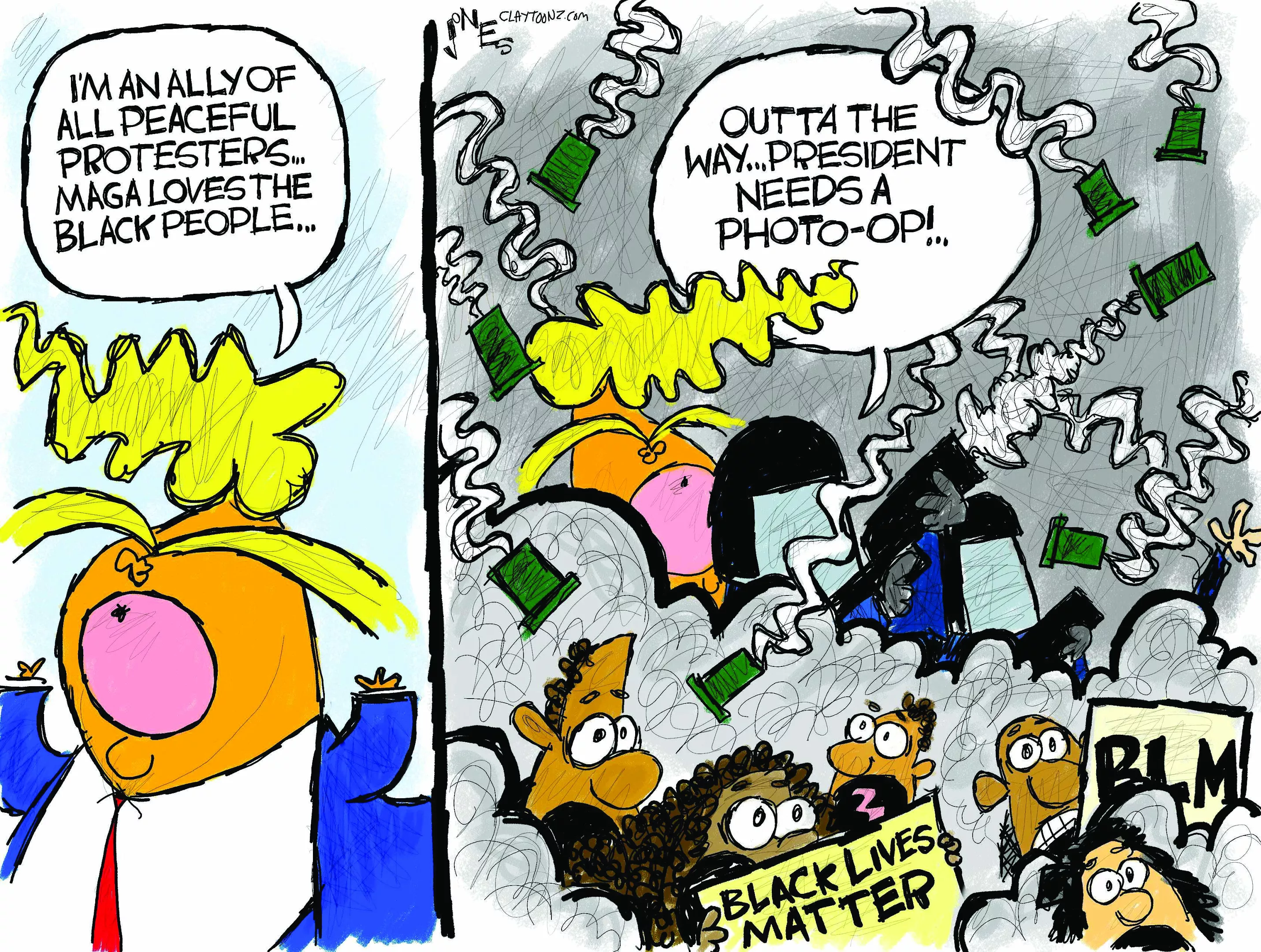
Tags: maga , political , cartoon , trump , black lives matter , floyd , protests , Image
Monday, June 1, 2020
Friday, May 29, 2020
The board’s decisions have been met with some criticism across the political spectrum, with some critics saying the county has not done enough and others saying it has gone too far, according to Pima County Administrator Chuck Huckelberry.
Democratic Supervisors Ramon Valadez, Sharon Bronson and Betty Villegas said they voted for the regulations to ensure public safety, while Republicans Steve Christy and Ally Miller say the new rules make it harder for beleaguered businesses to reopen. At the request of three GOP lawmakers, Attorney General Mark Brnovich investigated whether the county exceeded its legal authority by enacting the regulations but the AG’s Office dismissed the case on a legal technicality.
Tucson Weekly asked the candidates running for Board of Supervisors seats this year if they approved of those decisions and if they would have done anything differently. You'll find responses from candidates for District 3 here and candidates for District 5 here.
In District 2, which includes southern parts of Tucson and stretches down to Sahaurita, Supervisor Ramón Valadez is facing two challengers in the Democratic primary: former state lawmaker Matt Heinz and political activist Richard Hernandez.
Valadez said the closure of nonessential businesses within Pima County had the goal of making sure there were enough resources to deal with the impending increase in cases.
“Most people think we did the stay-at-home order to actually lower the amount of people that got the disease, and that’s part of it, but the truth is was we needed to make sure that the hospitals in our region had the capacity to handle any surge,” he said.
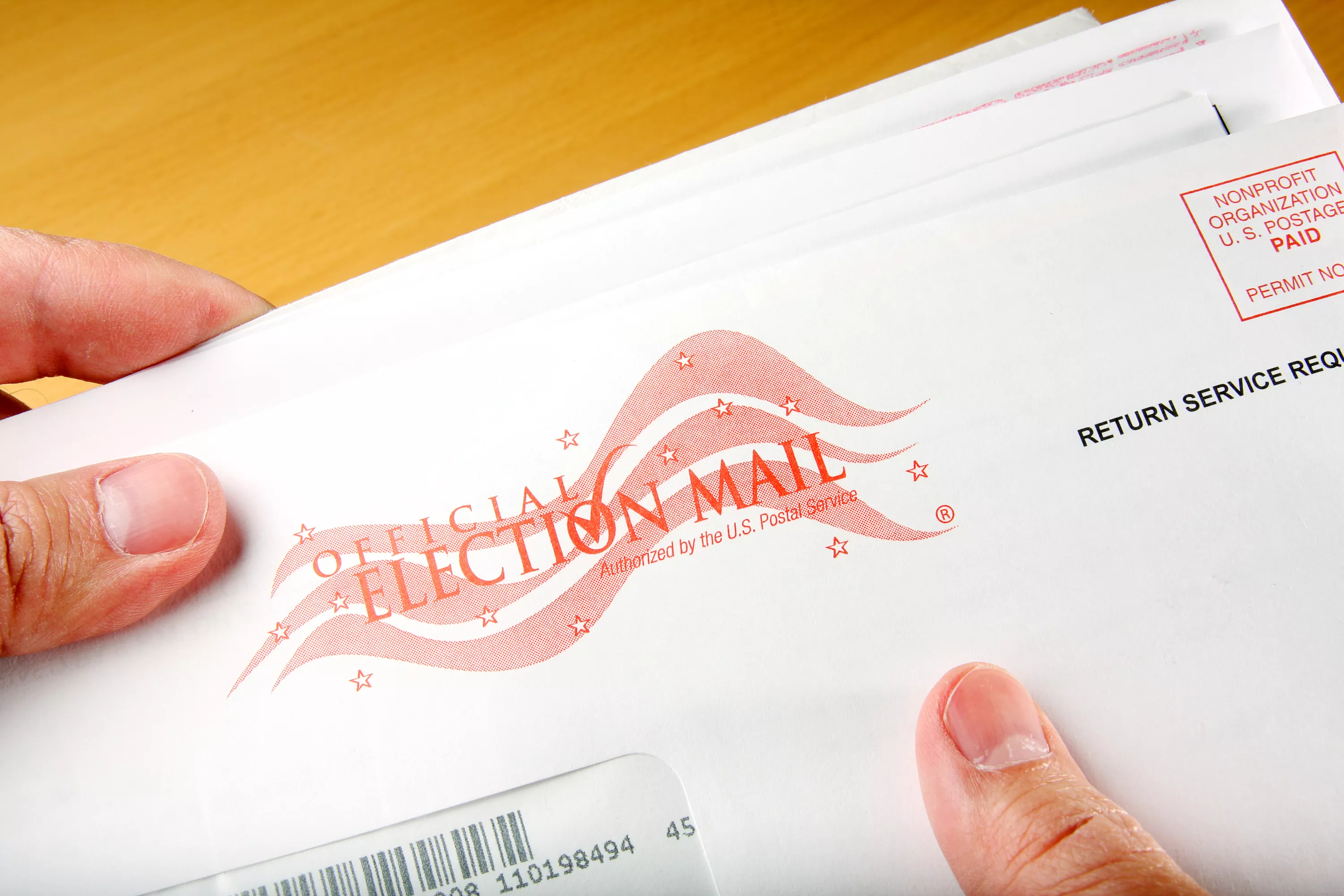
Trump’s Crusade Against Vote by Mail
In both his public appearances and on Twitter, President Donald Trump has continued to rail against mail voting, and has accused Democrats of trying to rig the election. This set off alarm bells among voting rights advocates and experts who believe the president is setting the stage to delegitimize the election if he loses. Then, this week, the president tweeted again about mail voting, and Twitter labeled his tweets with a message “Get the facts about mail-in ballots,” which linked to this fact-check page. After falsely accusing Twitter of interfering in the election and stifling free speech, Trump threatened “Big action to follow!” On Thursday, Trump signed an executive order that aims to limit the power of social media companies.
The Latest on Vote By Mail
- “Wisconsin shows that you can’t adopt vote-by-mail overnight,” Nathaniel Persily, a Stanford law professor and the head of the Healthy Elections Project, told The New York Times Magazine. “It’s not as easy as people think. The boring stuff matters — the scut work of supply chain and logistics and management is crucial.” (The New York Times Magazine)
- The Illinois legislature is debating a bill that would withhold election funds from local officials if they fail to implement the expansion of mail voting. (The Center Square)
- Texas’ lieutenant governor said expanding vote by mail was a “scam by Democrats to steal the election” and claimed seniors are more at risk of dying in a car crash than from getting coronavirus at the polls. (Texas Tribune)
- “The shortest line that I’ve seen so far is the one at your kitchen table when you have your absentee ballot and fill it out at your convenience,” said Georgia’s governor, urging voters to return their ballots on time during the state’s primary. (GBP News)
- Wisconsin will send absentee ballot applications to all registered voters for the November election. (WPR)
- Absentee ballot use has spiked in Pennsylvania, Indiana, New Mexico and DC ahead of the states’ June primaries. (Talking Points Memo)
- A West Virginia mail carrier was charged with attempted election fraud for reportedly altering absentee ballot applications. The mail carrier claims he did it as a joke. (WHSV)
Coronavirus Voting Impacts
- Unless the federal government begins holding citizenship ceremonies again, hundreds of thousands of potential voters will be ineligible come November. (The Washington Post)
- Some Atlanta polling places are offering free coronavirus tests, while another Georgia county’s only early voting location closed after a voter tested positive for COVID-19. (Fox 5, GBP News)
- A reduction in in-person voting sites is likely to negatively impact New Mexico’s Native voters. (NM In Depth)
- Furloughed county employees and volunteers are helping Pennsylvania’s York County handle thousands of absentee ballot requests. (York Dispatch)
- Voter registration, which often takes place in person, is tanking in the midst of a pandemic. (NPR)
- The proposed VoteSafe Act bill in the Senate would provide $5 billion to facilitate early and absentee voting, as well as curbside voting. (WKSU)
Tags: political , cartoon , racism , covid19 , coronavirus , Image

