

Thursday, December 2, 2021

Wednesday, December 1, 2021
Arizona officials and advocates praised U.S. Secretary of the Interior Deb Haaland for declaring “squaw” as a derogatory term and ordering that it be removed from any geographic feature on federal lands, which will rename 67 locations in Arizona.
“The removal of such language is bittersweet as it addresses an everyday indignity that Native Americans are continuously subjected to, but also highlights the deeply-rooted anti-Native sentiments that our country was founded on and for which our government is yet to atone,” Pima County Recorder Gabriella Cázares-Kelly said.
Cázares-Kelly is a citizen of the Tohono O’odham Nation and the first Native American to hold a countywide seat in Pima County.
“Deb Haaland’s move to remove a well-known racist and derogatory term that sexualizes Indigenous women from everyday government use is incredibly powerful and long overdue,” said Cázares-Kelly.
The move comes at a time when many federal leaders are finally acknowledging the Missing and Murdered Indigenous Women epidemic, Cázares-Kelly said. According to the National Institute of Justice, 84% of Indigenous women experience violence in their lifetime, compared to 71% of white women.
Haaland issued her secretarial orders on Nov. 19.
“Racist terms have no place in our vernacular or on our federal lands. Our nation’s lands and waters should be places to celebrate the outdoors and our shared cultural heritage – not to perpetuate the legacies of oppression,” Haaland said in a press release.
As part of Haaland’s order, the Board of Geographic Names – the federal body tasked with naming geographic places – will need to implement procedures that will remove the term from federal usage.
Tuesday, November 30, 2021

Monday, November 29, 2021

Wednesday, November 24, 2021

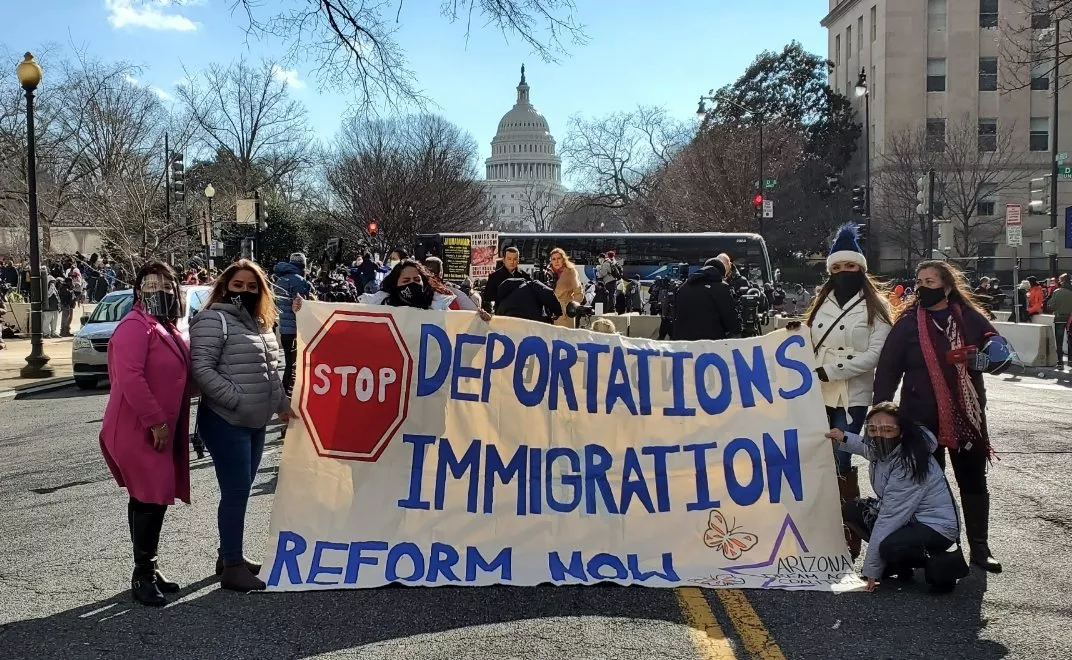
While a pathway to citizenship was nixed in the most recent version of the Build Back Better Act, a flagship legislation part of President Joe Biden’s agenda, the Congressional Hispanic Caucus and immigration advocates still welcome the protections from deportation expected to impact about 6.5 million undocumented immigrants.
Under the House version of the spending bill, Democrats included the third iteration of an immigration plan in the Build Back Better Act. A previous version of the legislation included a pathway to citizenship for certain undocumented immigrants, such as people brought to the country as children, essential workers, farmworkers and those with Temporary Protected Status. That provision was removed from the bill following a ruling by the Senate’s parliamentarian.
During a press conference on Monday, Rep. Raul Ruiz, D-Calif., who chairs the 38-member caucus, explained that legislators instead proposed a parole program that would provide temporary protections of deportation, a five-year work permit and driver’s license to eligible undocumented immigrants who pass a background check.
The driver’s license would be available in states like Arizona that currently don’t issue them to undocumented residents. The driver’s licenses will be required to meet federal requirements for identification in domestic airports, allowing immigrants to travel by air without fear of encountering federal immigration enforcement.
The version of the immigration plan in the budget legislation that passed the House applies to people living in the U.S. with no immigration status who arrived in the country before Jan. 1, 2011. They must also meet certain criteria related to criminal record, similar to the current requirements for the Deferred Action for Childhood Arrivals program, said attorney Ray Ybarra Maldonado in an explainer video posted on Facebook.
For months, immigration advocates have pushed federal lawmakers to pass citizenship for millions within the budget reconciliation process this year.

Tuesday, November 23, 2021
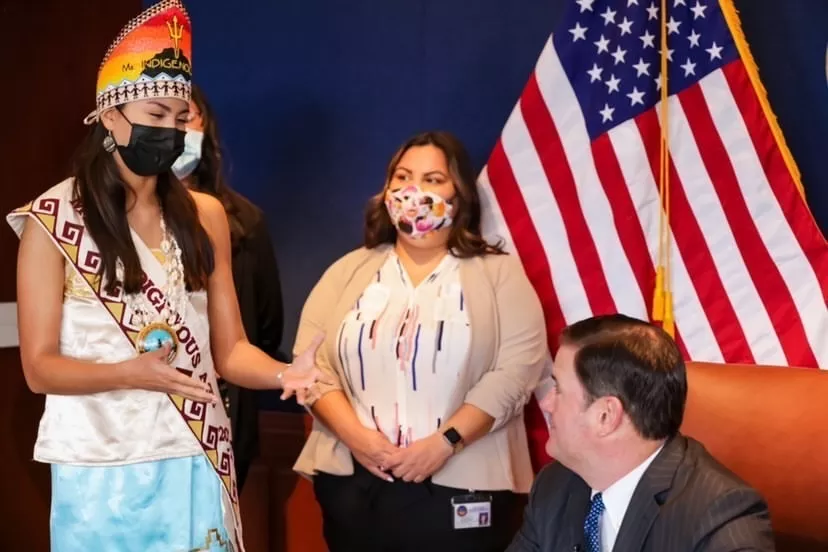
PHOENIX – Just minutes before her high school graduation in Gallup, New Mexico, three years ago, Dakotah Harvey was told to remove the eagle feather from her mortarboard or she would be escorted out of the ceremony and her diploma would be withheld.
Her grandfather had tied the feather to the cap’s tassel earlier that day, Harvey told Cronkite News. He loaned it to her after performing a Navajo prayer in celebration of her achievement.
“I didn’t have the heart to tell him I couldn’t wear it,” Harvey said.
To Navajos and many other Indigenous peoples, the feather of an eagle is an important and sacred component of many ceremonies and blessings.
In April, Arizona Gov. Doug Ducey signed legislation that public schools can’t prohibit Indigenous students from “wearing traditional tribal regalia or objects of cultural significance at a graduation ceremony.” The bill specifically includes eagle feathers or eagle plumes.
Cultural regalia includes hair buns, rug dresses, woven sashes, moccasins, beadwork and turquoise jewelry, including bracelets, belts and necklaces.
New Mexico does not have a similar law.

