Saturday, September 21, 2019
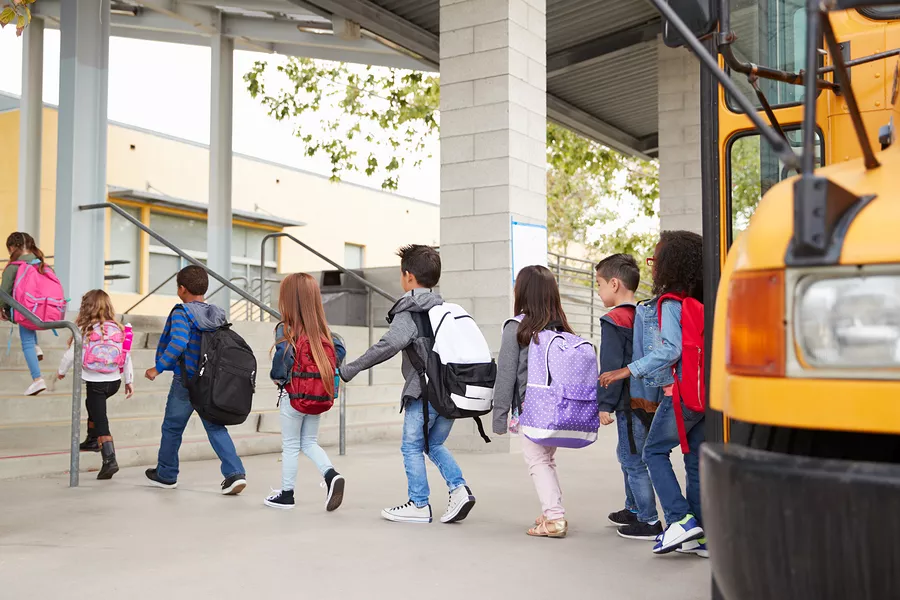
Don't get me wrong. I think TUSD needs lots more money. To raise salaries. To lower class size. To buy new books, technology and other classroom supplies. To hire nurses, librarians, counselors and people who teach art and music. To fix the schools' crumbling infrastructure. To upgrade school buses.
All that is an important part of improving the education students receive, especially in Arizona's cash-starved schools. But if I were to do one thing to improve student success at TUSD, it wouldn't be boosting the district's budget. It would be improving the standards of living of students whose families are near the bottom of our socioeconomic ladder. Improve their quality of life outside school and school success will improve on its own. Standardized test scores, classroom attentiveness and attendance will rise. Incidents requiring discipline will fall.
It's a simple idea, really. If students' lives improve before they arrive at school in the morning and after they leave in the afternoon, they will come to school more prepared to learn. They'll become better students, even in overfull, undersupplied classrooms.
Reputable educational studies in schools around the world conclude that family income correlates directly with student achievement. As incomes rise, student achievement rises as well. If we raise the overall income of families at the bottom of the socioeconomic ladder— by "overall income," I'm referring to a host of goods and services which raise people's standard of living, not just money — their children's success in school will rise as well.
It should be clear by now, I'm not talking only about TUSD. I'm talking about the way the country approaches the task of improving student success in school. Instead of focusing on "failing schools," we need to shift the conversation to the ways society fails our children during the hours they aren't in school.
But there's an obvious problem. It's not easy, or cheap, to improve the lives of people at the bottom of the socioeconomic ladder. It's a heavy lift. It costs a lot of money, the majority of which will come from the uber-wealthy. Our response to the economic inequality which has grown worse over the past half century will have to change radically. And the automatic privilege granted to whites, especially those with means, will have to be replaced by a more equitable way of dealing with economic and racial disparities.
Tags: TUSD , Education budgets , Poverty , PTSD , School desegregation , Community schools , Image
Thursday, September 19, 2019

Tags: Clay Jones , Claytoonz , comics , politics , MAGA , Trump , Canada , brownface , Justin Trudeau , Image
Wednesday, September 18, 2019

Tags: Comics , Claytoonz , Clay Jones , politics , MAGA , Lewandowski , Image
Tuesday, September 17, 2019

Tags: Claytoonz , Clay Jones , politics , Trump , swords , Iran , Saudi Arabia , Image
Monday, September 16, 2019

Tags: Comics , Claytoonz , Clay Jones , MAGA , Trump , politics , Image
Friday, September 13, 2019

Thursday, September 12, 2019

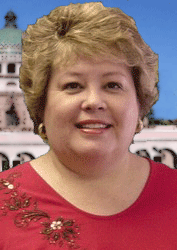
"All events in life have a beginning and an end and this is also true with my journey as your Pima County recorder," Rodriguez said in a statement. "I have decided to announce my tenure as your Pima County recorder will end at the end of my current term as I will not seek reelection in 2020."
The recorder is in charge of maintaining Pima County's records, including real-estate records and voter registration records. In Pima County, the recorder also sends out and verifies early ballots and has other election-related responsibilities.
The gig pays $76,600 in case you're interested in running for office.

I've been out of town recently, so I haven't been personally involved in any of the board meetings or other events connected with the proposed Family Life Curriculum. With that in mind, here are some thoughts and discussion topics, from a bit of a distance.
1. I strongly support the new Family Life Curriculum. The changes are long overdue. Children and young adults need medically accurate information about sex, safe sex and the scope of human sexuality. The idea that keeping students ignorant will assure that they will become happily heterosexual adults who will abstain from sex until marriage — which I guess is the ideal for most people who oppose the curriculum — is both absurd and destructive.
I can't say that I support every word and every concept in the curriculum. I'm not an expert in the field, so I don't pretend to understand all the fine points. That being said . . .
2. It is an exercise in futility to try and fine tune the language and instructions in the Family Life Curriculum. Teachers will read through the curriculum and get some in service training, then they will teach the material, each in their own way. The only portions that need to be written with precision are the curricular commandments: the Thou Shalts and Thou Shalt Nots.
If a curriculum states "Thou shalt not teach any form of birth control other than abstinence," that has an absolute, direct effect on the way teachers approach sex education in their classrooms. If it says, on the other hand, "Thou shalt teach about many forms of birth control including abstinence, while making sure to point out that abstinence is the only 100 percent effective method," that is an important directive which teachers must follow.
Likewise, if teachers are told, "Thou shalt teach a certain topic in 4th grade" and "Thou shalt not teach another topic until 7th grade," those are absolute instructions which are supposed to be followed to the letter.
Beyond the commandments, a curriculum is a series of guidelines. Take it from a teacher who spent 30-plus years kinda following the district curriculum while spreading his own special sauce on all his lessons. It's up to the individual teachers to decide exactly how they will approach the topics mapped out in the curriculum.
Tags: TUSD , Family Life Curriculum , Sex education , Superintendent Trujillo , Mexican American Studies , Image
Wednesday, September 11, 2019