

Monday, August 5, 2019


Friday, August 2, 2019
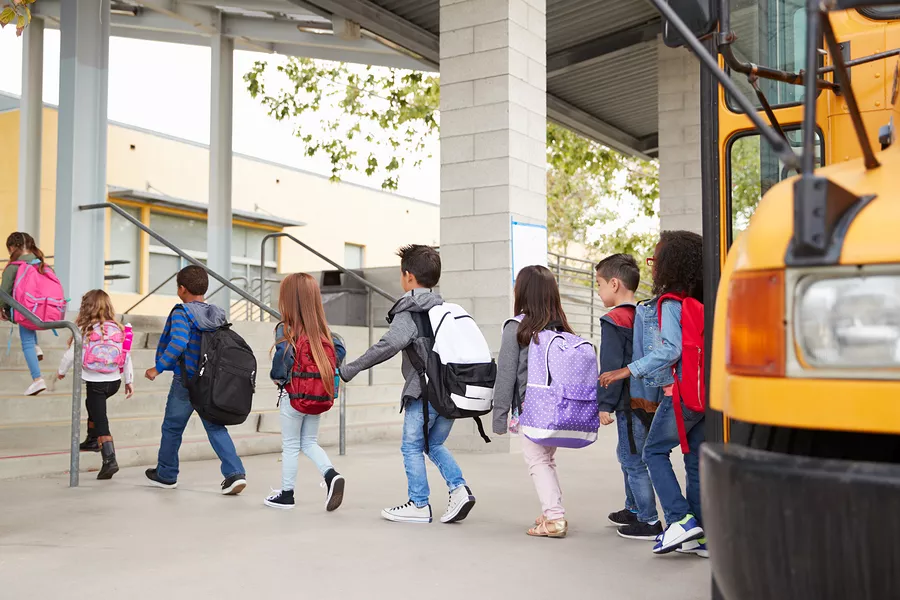
This is one of the saddest articles I've read recently. The daily stories about Trump and his minions keep me in a constant state of anger and anguish, but this is something different. It is an education story about a rare school desegregation success story which looks like it's about to come to an end.
The Jefferson County School District in Kentucky is one of the best examples of a desegregated urban school district in the country. It's actually one of the few examples. School desegregation efforts are not doing well these days, to put it mildly.
But according to a recent article, the school district has lost some of its community support for its desegregation efforts and is likely to become increasingly segregated. Worse, Kentucky's Department of Education is talking about "taking over the district." That's Conservative-speak for "Let's put blacks in black schools and whites in white schools where they belong."
Like I said, it's a sad article.
A few years ago I was part of a book group where we read and discussed recent books about education. Not surprisingly, the discussion often veered from the books we were reading to TUSD. At one point, the district's desegregation efforts became a topic of intense conversation. None of us thought the district's efforts have been a success, but we differed about the reasons for its failings.
I decided to do some research to find urban districts that have gotten desegregation right. My hope was, we could sift through the positive examples and compare them with the mixed — at best — desegregation efforts in TUSD. Maybe we could find some ideas for improving our desegreg efforts.
I took a deep dive into the internet and came up with hundreds of relevant items from newspapers, magazines and scholarly monographs discussing desegregation efforts, beginning with the 1954 Supreme Court's Brown v. Board of Education decision which made school segregation laws illegal, to the present. I created two folders on my computer desktop, one for the successes and one for the failures.
Soon, my deseg failure folder was stuffed to overflowing with examples of individual districts which made, at best, halfhearted attempts at integration and others where a short period of school integration was followed by a long slide into increasing segregation.
My success folder had a total of one example, the Jefferson County School District in Kentucky. It wasn't for lack of looking. It wasn't that I was making the perfect the enemy of reasonably good desegregation results. Other urban districts whose desegregation programs could be considered a success were nowhere to be found.
The Jefferson County school district was the subject of a long 2015 article delving into the complex history of its successful deseg efforts and the continual efforts by some people in the community to dismantle it.
One positive example is better than none, I guess. But the problem is, there is little for TUSD to learn from the Jefferson County success. There is zero chance it will be reproduced here.
The most important thing I learned from Jefferson County is, its desegregation efforts were only successful because the district has a program of mandatory busing which has continued long after most districts abandoned the practice. Requiring students to climb onto buses and travel long distances to attend faraway schools met with fierce resistance all over the country. It still leaves a bad taste in many people's mouths. Thanks to a 1974 Supreme Court ruling (Milliken v. Bradley), communities have been allowed to abandon their mandatory busing programs. The result is, schools have become increasingly segregated.
Love it or hate it, every indication is, mandatory busing is the single most effective way to desegregate schools.
Tags: Jefferson County School District , Kentucky , Louisville , TUSD , School desegregation , Milliken v. Bradley , Brown v. Board of Education , Image

Thursday, August 1, 2019

Wednesday, July 31, 2019

Tuesday, July 30, 2019

Instead of arguing about the strengths and weaknesses of the district, let's consider a different question: Who benefits when TUSD is trashed incessantly? Who wins when TUSD loses?
The short answer is, the winners are the enemies of public education. They have spent decades building a multi-billion dollar campaign to make terms like "failing schools" and "government schools" part of our vocabulary. They portray our public schools as a national disgrace, then figure out ways to move as many students as they can into charter and private schools. It began as a conservative, Republican-based effort, but an increasing number of progressives, and even people who consider themselves further to the left than garden variety progressives, have joined in.
It's not surprising to hear people on the political right singing in the anti-TUSD chorus. It's built into their anti-"Big Government,” anti-regulation DNA. If you want to shrink government to the size where it can be drowned in a bathtub as Grover Norquist, a man who never saw a tax or a government program he didn't hate, famously said, getting rid of all those nasty "government schools" makes perfect sense.
But when people on the political left join the chorus and sing, "TUSD is awful, let me count the ways," most of them don't realize that they're being played, that they’re singing a tune out of the conservative playbook. I can almost see the players on the right high-fiving each other every time someone on the left lends the anti-public school cause a helping hand.
Unfortunately, this phenomenon isn’t limited to Tucson. The anti-public school movement has been alarmingly successful at working its way into the national consciousness.
Let me go into more detail about the people who win when people trash our systems of public education.
The Demonizers, Privatizers and Profitizers
Demonize. Privatize. Profitize. Those are the three pillars of the “education reform” movement.
It begins with demonizing our system of public education. Before you can persuade parents of public school students to move their children to charter and private schools, you have to convince them their schools are so bad that anything would be better.
There's nothing new about people criticizing the ways we educate our children or suggesting ways we can improve the educational process. It's been going on as long as we have been a country. Way back in 1819, Washington Irving wrote the classic tale, The Legend of Sleepy Hollow, which featured a pompous, undereducated, incompetent schoolmaster named Ichabod Crane. The story lampoons him and the meager education provided in the one room schoolhouses of the day. Many of our greatest writers have continued Irving's tradition of depicting schools and teachers in less-than-flattering, and sometimes damning, lights. Journalists and educators regularly publish articles and essays describing the problems plaguing our schools and suggesting ways to improve them.
All with good reason. The process of educating young people will always be a flawed enterprise. Criticism and constructive suggestions for change are part of the continuing process of figuring out ways our schools can better serve our children.
But today’s “A pox on all your public schools” style of blanket demonization is a recent phenomenon. Its purpose is not to improve the schools. It is to weaken and eventually dismantle them.
If we’re looking for a moment when the demonization movement began in earnest, it would be the Reagan administration's 1983 publication, A Nation at Risk, which argues that the way we educate our children is so deficient, it threatens our nation’s survival. The pamphlet’s thesis is summed up in its most famous passage, which compares the failures of our schools to an attack by a foreign power.
“If an unfriendly foreign power had attempted to impose on America the mediocre educational performance that exists today, we might well have viewed it as an act of war. As it stands, we have allowed this to happen to ourselves. . . . We have, in effect, been committing an act of unthinking, unilateral educational disarmament.”A Nation at Risk took the country by storm. It had people asking, is public education really so bad it poses a risk to our national security?
Yes, replied the demonizers. It really is that bad.
Tags: David Safier , TUSD , Charter schools , Private schools , Education reform movement , Charter management organizations. , Image

Monday, July 29, 2019

Tags: comics , claytoonz , politics , Supreme court , Image
Friday, July 26, 2019
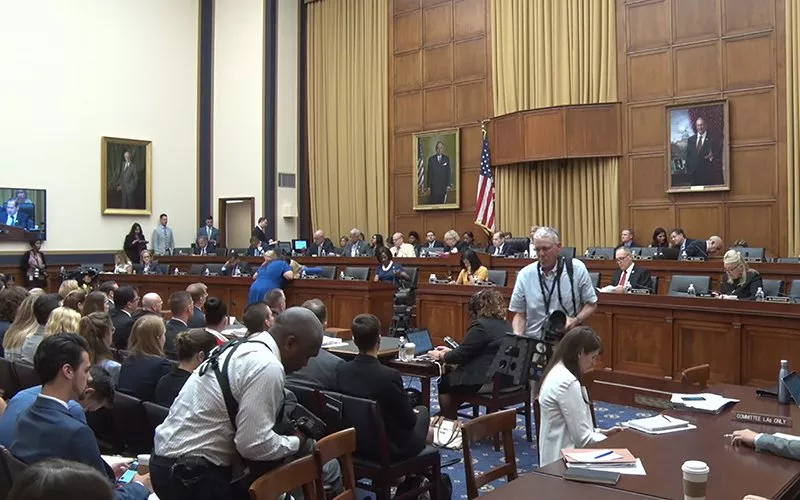
WASHINGTON – A House panel grilled administration officials Thursday over migrant family separations and conditions at border detention facilities, but the hearing produced more partisan sparks than answers.
Both sides at the House Judiciary Committee hearing said the situation at the border has reached crisis levels – but they agreed on little else.
Republicans accused Democrats of holding just another in a series of hearings aimed at political gain and not at finding solutions.
“If you wanted to solve separation, we could do more than have hearings. There isn’t anybody in this room that doesn’t want to deal with the situations that are horrific along the border,” said Rep. Andy Biggs, R-Gilbert.
But Democrats shot back that the GOP is ignoring problems created by policies of an incompetent Trump administration that “exacerbate the crisis” and “compromise safety.” They pointed to overcrowding, unsafe conditions and cases like a Honduran toddler who was reportedly forced to choose between going with her mother, who was staying in the U.S., or her father, who was being deported.
“Asking a 3-year-old child to choose between their parents, not knowing if they’ll ever see one again is unconscionable and traumatic to a child,” said Rep. David Cicilline, D-Rhode Island.
The oversight hearing called witnesses from Customs and Border Protection and the departments of Justice, Homeland Security, and Health and Human Services – all of which have a hand in custody and care of migrants and asylum seekers who are apprehended at the border.
Congress late last month approved $4.59 billion in emergency border funding, after border agencies warned they were in danger of running out of money to cope with the crisis.
Most of the witnesses said they are doing the best they can with the resources they have to handle an influx of migrants, many with children that the system is not used to handling.
The latest numbers from CBP showed that even though apprehensions at the southern border fell in June, they are still at their highest levels in more than a decade. The 104,344 people apprehended at the southern border in June brought the total for fiscal 2019 to 780,638, well above the fiscal 2018 total of 521,090 – with another three months to go in this fiscal year.
The data also show that more than 42,000 of those people were families or unaccompanied minors.
That has led to overcrowding, shortages of supplies and situations that one witness said threaten the health and safety not only of those in custody but of the workers in charge of their care as well, Diana Shaw testified.
Shaw, assistant inspector general for special reviews and evaluations at DHS, said her office felt the need to issue two “management alerts” after inspecting detention facilities. Such alerts are emergency advisories sent to agencies when auditors find problems “so serious that we deem it necessary to report on the issue before completing our standard inspection or review process.”
“The conditions we observed, which put the health and safety of both DHS personnel and detainees at risk, prompted us to publish two management alerts raising the issues to the attention of DHS leadership and requesting immediate action,” Shaw said in her testimony.
Those conditions included severe overcrowding and illness, among other issues, she said.
“When our team arrived at the El Paso Del Norte (PDT) processing center they found the facility, which has a maximum capacity of 125 detainees, had more than 750 detainees on site,” Shaw said. “The following day that number had increased to 900.
“During our May visits at PDT, we observed approximately 75 people being treated for lice and some detainees were in isolation with flu, chicken pox, and scabies,” Shaw said. That has led managers at those facilities to raise concerns about staff illness, employee morale and “conditions that were elevating anxiety and affecting employees’ personal lives,” she said.
CBP Chief Brian Hastings said his staff is being stretched thin as it tries to respond to the results of what he called a “broken immigration system.”
“While the men and women of CBP pride themselves on providing appropriate care for those in its custody, the volume of family units and UAC (unaccompanied children) poses significant challenges,” Hastings said.
The stress is being felt beyond the agencies and well beyond the border, said Rep. Ken Buck, R-Colorado, who said small communities are feeling the impact “as they are attempting to alleviate the human suffering.” Buck blamed “Washington’s failures and Democrat’s negligence” for the system that has created this crisis.
But Rep. Greg Stanton, D-Phoenix, said the GOP shares a large part of the blame.
“I’m trying to better understand how this administration and the agencies that carry out this practice believe this is acceptable,” Stanton said. “Securing the border and treating children humanely are not competing values and this administration’s family separation practice deeply concerns me.”
Tags: Cronkite , immigration , White House , Migrants , detention facilities , Image

