
Tuesday, May 14, 2019

Tags: comics , politics , cartoons , Claytoonz , vaccinations , anti-vaxxer , diseases , protection , gun control , Image
Monday, May 13, 2019

Tags: comics , politics , cartoons , Claytoonz , Trump , Jr , jail , criminals , President , Image
Friday, May 10, 2019
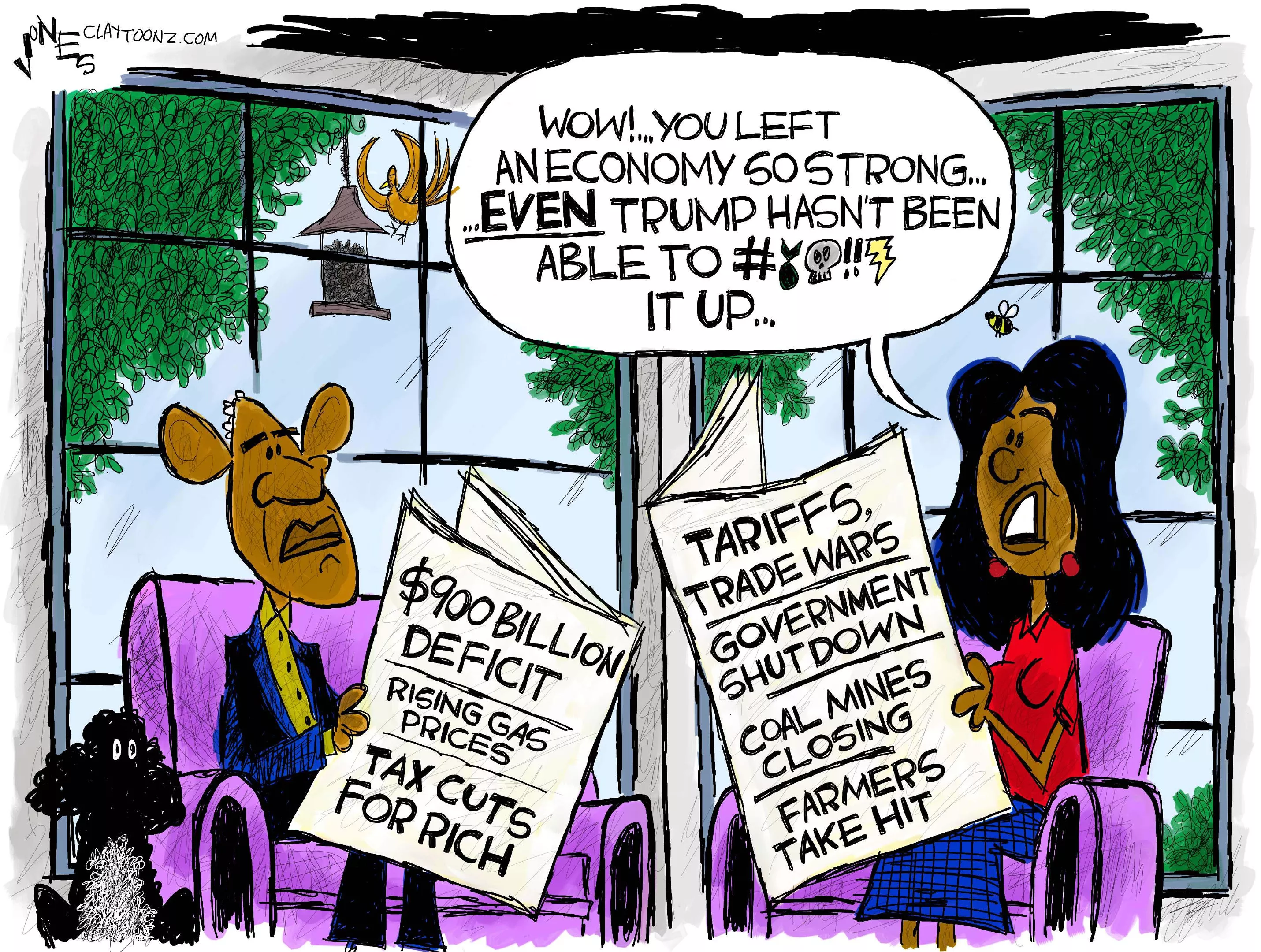
Tags: comics , politics , cartoons , Claytoonz , Obama , Trump , economy , Image
Wednesday, May 8, 2019

Tags: comics , politics , cartoons , Claytoonz , Royal Baby , Archie , Prince Harry , Trump , Image
Tuesday, May 7, 2019
Democrat Sharon Bronson joined Republicans Steve Christy and Ally Miller in voting to accept the controversial federal grant, which provides federal dollars to the Sheriff’s Department to reimburse the county for expenses related to border crime.
Two grants were on the table. One in the amount of about $1.2 million for overtime ($1.5 million), mileage ($50,000) and travel ($13,120) reimbursement. The other was $595,600 for two license plate readers ($33,600), an aircraft FLIR camera ($502,000) and aviation fuel ($60,000). The money is provided by the Department of Homeland Security.
Bronson made the motion to accept the grant with the exception of the license plate readers.
Until last September, Operation Stonegarden had been accepted by the Pima County Board of Supervisors for 12 consecutive years. In response to mounting opposition from community members, the supervisors reversed their decision and rejected it in a 3-1 vote.
The supervisors accepted the grant this year along with new conditions. The county expects to receive the maximum amount of indirect cost reimbursement from the program, which is approximately $256,919. That money will be repurposed for humanitarian aid cost reimbursement provided to local faith-based nonprofits.
The board also requires the Pima County Sheriff’s Department to provide them and the Community Law Enforcement Partnership Commission with data regarding all Sheriff’s Department activities in the Stonegarden program.
The new conditions call for an investigation of vandalization of the water stations left for migrants in Pima County by the nonprofit Humane Borders, and that Sheriff Mark Napier reaffirms in writing his previous commitments for no ICE agency presence in the county jail and no sheriff personnel to perform pretextual stops at Border Patrol checkpoints.
Critics of Stonegarden say the program promotes collaboration between local law enforcement and federal immigration agents, which targets immigrant communities within Southern Arizona.
Concerns about the federal family separation policy have drawn scrutiny to the previously noncontroversial grant, with activists arguing that Pima County should not partner with DHS because they carry out the Trump administration’s immigration policies.
At the meeting, Chairman Richard Elías, who voted against accepting Stonegarden funds, said racial profiling is an issue that affects everyone in the community, and the county has no control over what happens to people after they’re in Border Patrol custody.
Christy countered that Pima County Sheriff Mark Napier is the law enforcement expert, and if he approves of the grant, then that is what the supervisors should support.
Miller said based her experience on the border, she agrees with those who say there is drug trafficking and other criminal activity that negatively affect residents in Arivaca, Amado and other border towns.
“Do a walk along, see what’s happening on the border, because until you experience it, you have no idea,” she said at the meeting.
Supervisor Ramón Valadez said he opposed accepting the Stonegarden grant dollars but it was a difficult decision because there are bad consequences either way. But ultimately, he believes that the same conditions and concerns he had last September still exist today.
Supervisor Sharon Bronson, the swing vote in today’s meeting, has a different opinion about the current state of Stonegarden.
Bronson told Tucson Weekly that previous concerns raised by the Department of Homeland Security’s Office of the Inspector General have been resolved, and there is a public safety issue at the border that opponents of Stonegarden “seem to be denying.”
“This money is coming to this community regardless of whether or not we are accepting the grant,” Bronson said after the meeting. “If we do not accept it, then it will go to the other agencies that are accepting it and the Arizona Department of Homeland Security affirmed that at an Arizona Border County Coalition meeting.”
Pima County residents who spoke at the meeting were split on whether deputies use the extra funding to keep people safe, or whether they put people in danger through support for DHS policies.
Just last week Thomas Torres
-Maytorena, a senior from Desert View High School, was detained by Border Patrol after a sheriff’s deputy ran his plates and pulled him over. The vehicle’s registration was expired and had a mandatory insurance suspension.
Torres-Maytorena's arrest, which happened just two weeks before he is set to graduate, has heightened the issue of Stonegarden in Pima County. Community members say it is an example of how Border Patrol collaborates with local sheriff’s deputies to detain people.
Tags: Stonegarden , vote , Operation Stonegarden , grant , funding , immigration , Border Patrol , police , migrants , Pima County , Democrat , Sharon Bronson , Republican , Steve Christy , Ally Miller , Image
Monday, May 6, 2019
Friday, May 3, 2019

In some states, school districts are saying they can't afford the raises they promised teachers and may have to lay off staff and increase class sizes to compensate for the salary increases.
That makes sense, right? Teachers may be underpaid, but we have to be realistic. We just can't afford to pay them what they deserve. Right?
Increasing access to early childhood education in Pima County is receiving overwhelming support from individuals, business groups, educators and nonprofit organizations. But Pima County says it doesn't have the money to start the ball rolling.
That makes sense, right? The county would benefit in the short and the long term from having more children receive a quality early childhood education. We just can't afford it. Right?
The legislature is hammering out its 2019-20 budget. It's almost certain K-12 education will get more money than last year, which was an increase over the year before. But even with the expected increase, the education budget will be lower than pre-recession, 2008 level, and back then, our schools were near the bottom of the country in per-student spending. Most Arizonans agree we should have smaller class sizes, new textbooks and computers, and enough supplies that teachers don't have to buy things for their classrooms out of their unconscionably small paychecks. But let's be realistic, folks, the state just doesn't have enough money.
That makes sense, right? Our students would benefit from a more generous education budget, and the state would have a better educated population which would help attract businesses and build the economy. The only problem is, we just can't afford it. Right?
Wrong. Wrong. And so goddamned Wrong it makes me furious every time I hear it.
The amount of money in governments' coffers isn't a force of nature like the amount of rain that falls every year. It's created by human decisions. We may not be able to coax more rain from the sky, but we sure as hell can increase the amount of money government has to spend. All we need to do is bring in more tax dollars, and all that takes is the right number of legislators voting "Aye."
Tags: Taxes , Education budgets , Early childhood education , Teacher salaries , Image

Tags: comics , politics , cartoons , Claytoonz , Mr. 10 , 000 , lies , Trump , Image
Thursday, May 2, 2019
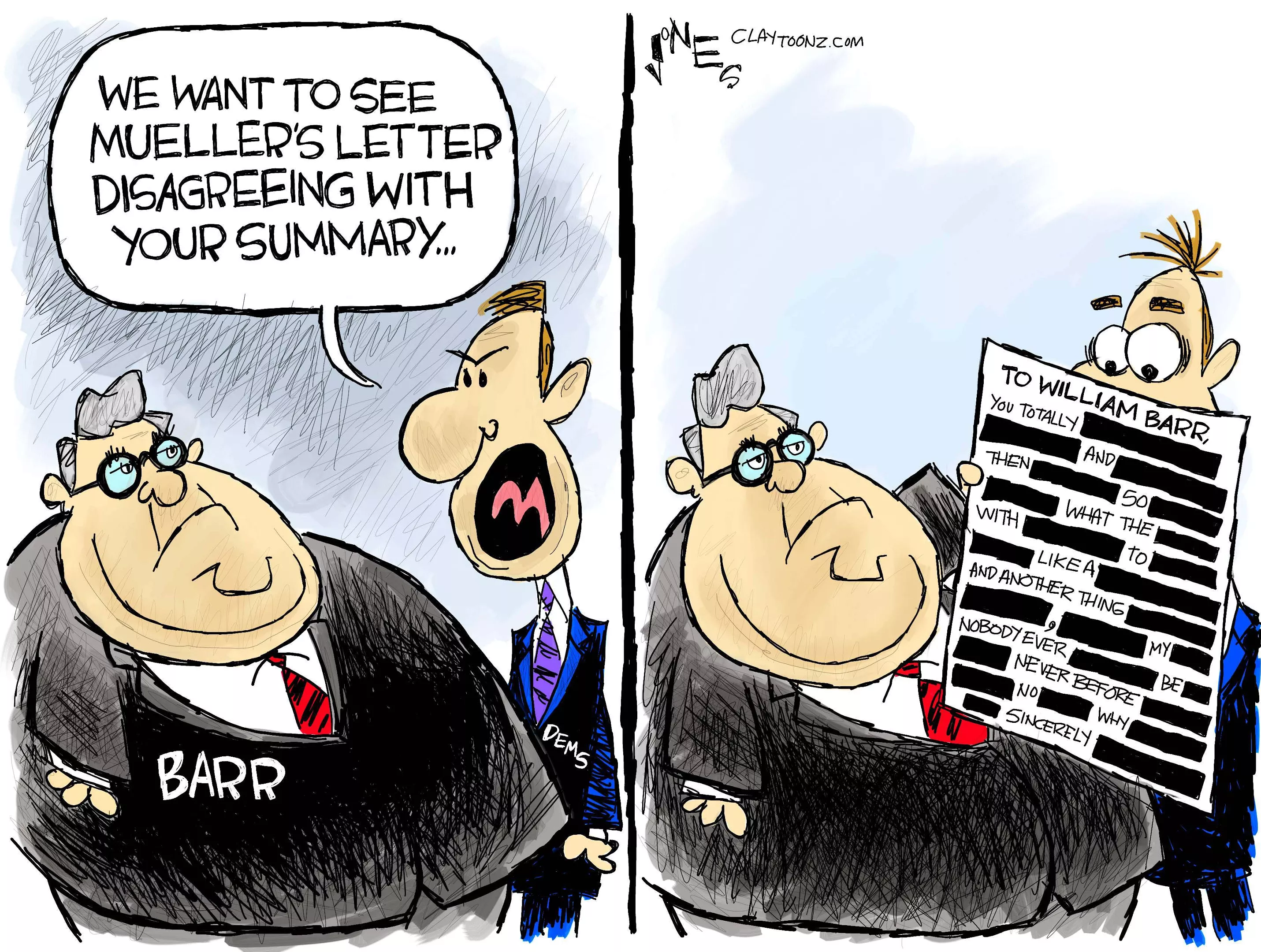
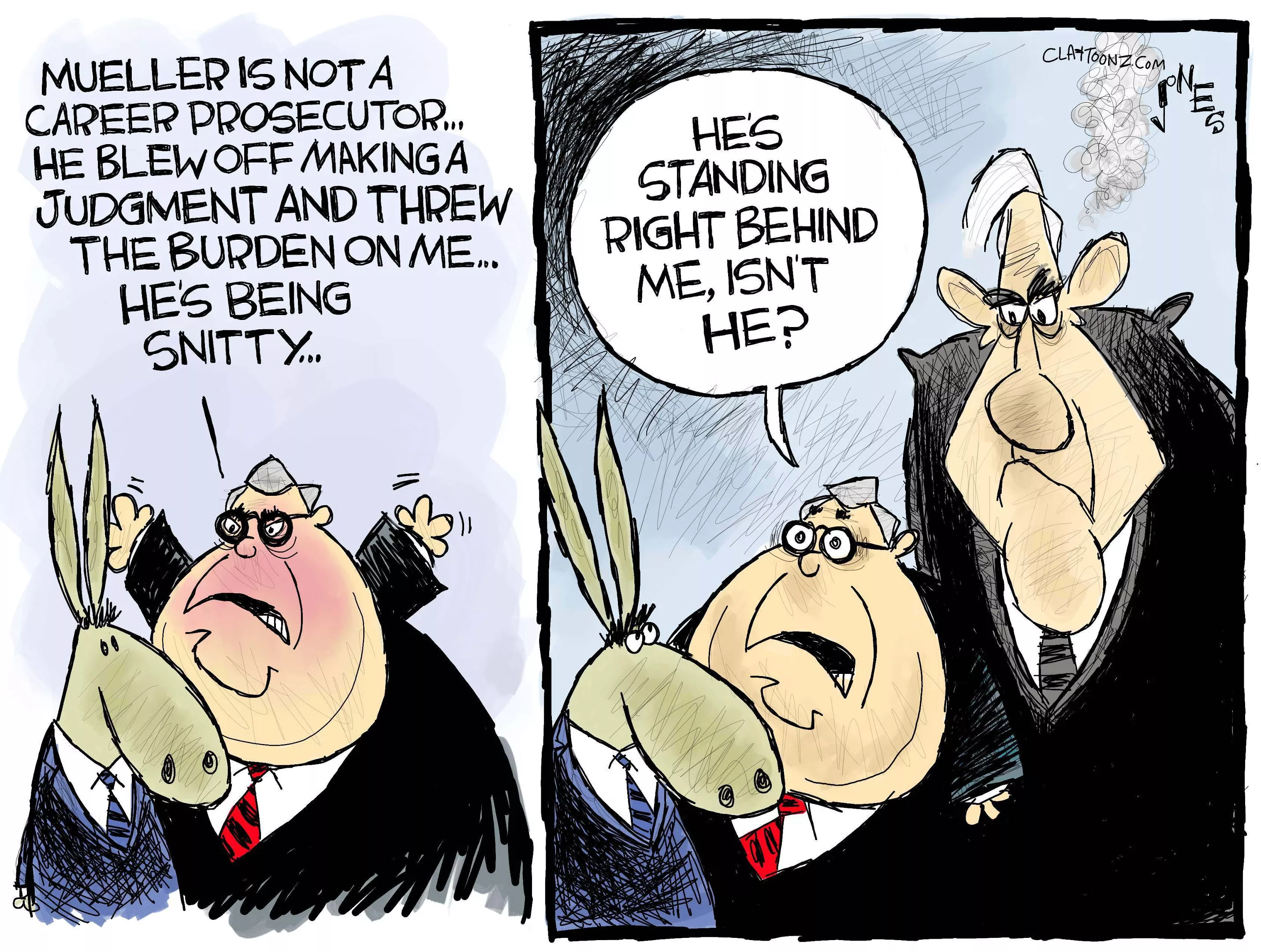
Tags: comics , politics , cartoons , Claytoonz , Barr , Mueller , letter , redactions , Image