Tuesday, April 9, 2019
Monday, April 8, 2019
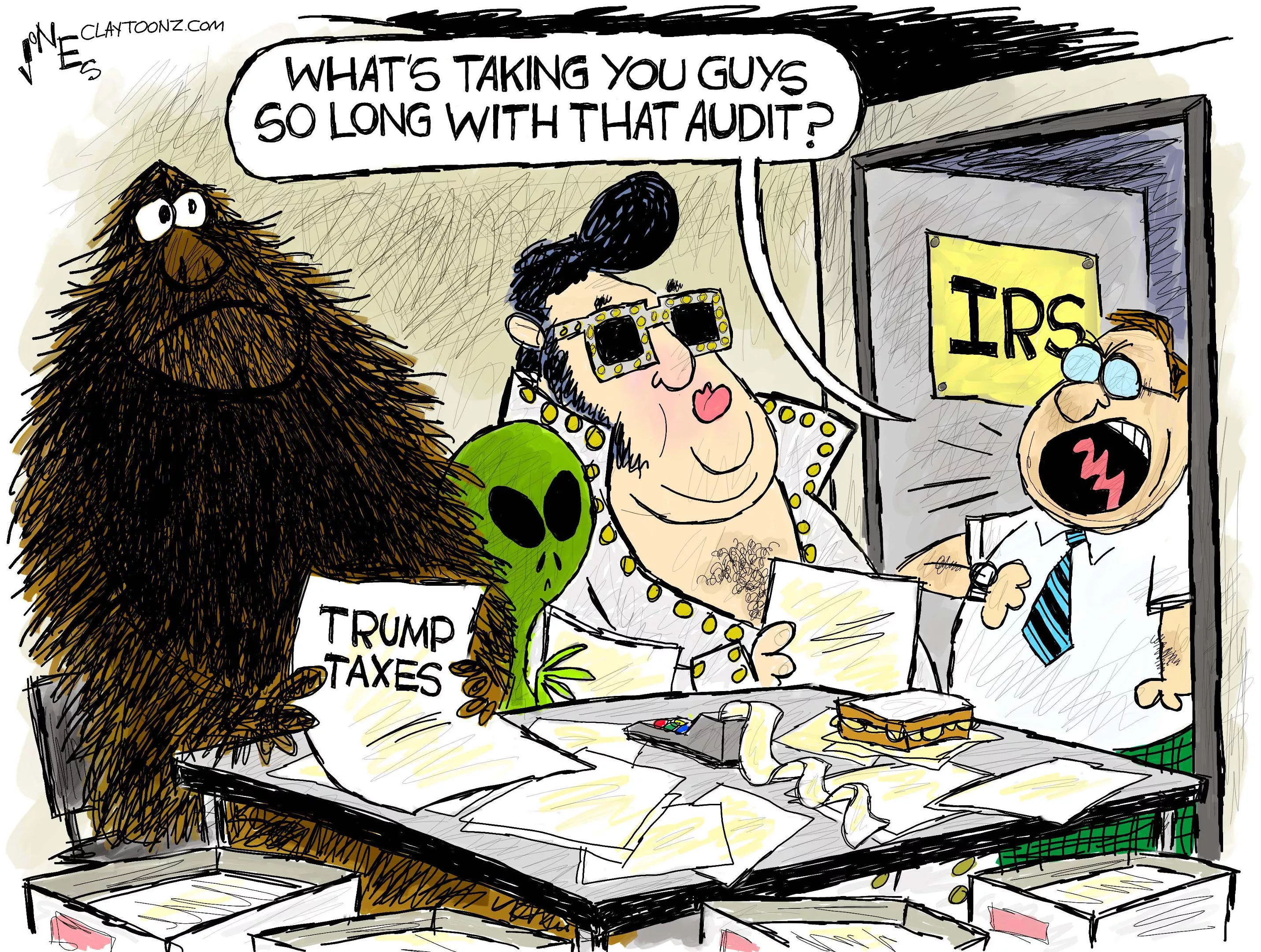
Tags: comics , politics , cartoons , Claytoonz , Trump , taxes , audit , IRS , Image
Friday, April 5, 2019
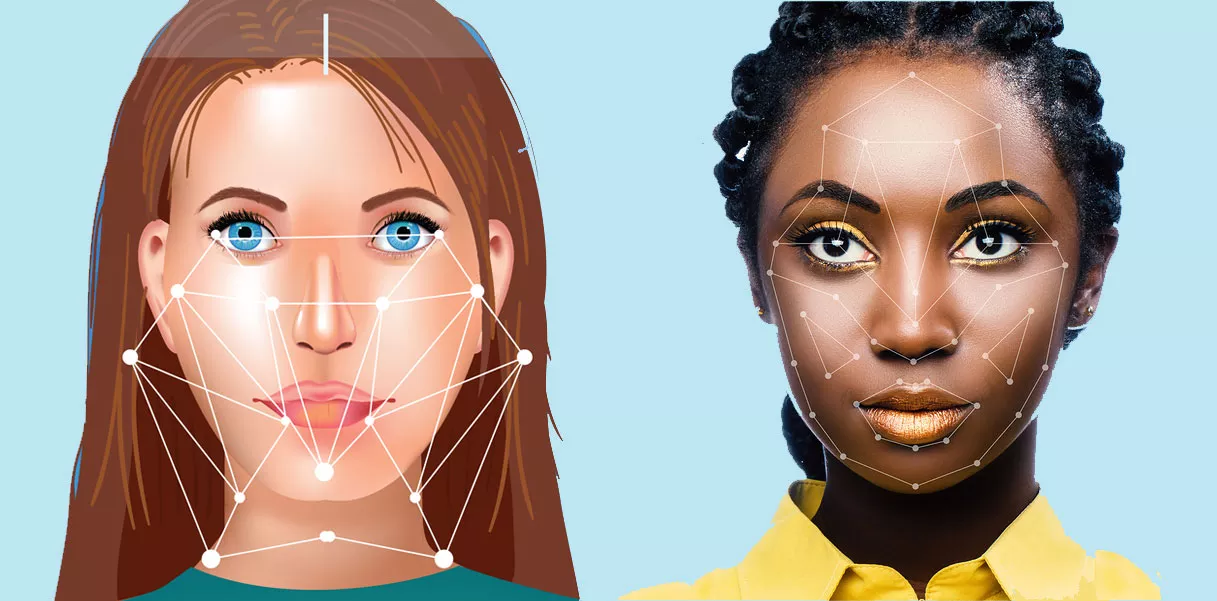
It's the early 1990s. Imagine a U.S. high-tech company has made a quantum leap in face recognition software. The product is so far ahead of the competition, it corners the market and becomes the industry standard.
In this imaginary scenario, the company is owned and staffed by African American techies.
What are the chances the weakest link in the software would be its inability to recognize dark-skinned faces? Almost zero, right?
When early incarnations of the software were tried out on the company staff, any problems with differentiating and recognizing people with dark skin would jump out at them immediately. The company would make it a priority to pinpoint and correct the problems, because who wants to create a program where they, their coworkers, their mothers, fathers, boyfriends, girlfriends, wives, husbands, sons and daughters can be mistaken for someone else? The recognition system for dark-skinned faces would be as close to flawless as the company could make it.
Of course, before bringing the product to market, the company would make sure the system worked with lighter skinned faces as well, because that's where the money is. Still, its accuracy might drop a bit because Anglos were excluded from the initial testing and tweaking process, and they weren't in the room prodding their fellow techies to work out the bugs.
But if, instead of it being an all-African American company, a quarter of the top people were Anglo, white faces would have gotten more attention from the beginning. If you add Asians and people from other ethnic groups into the mix — and women, let's not forget about women — you're likely to have as close to an equal opportunity face recognition product as any company could create.
Now let's jump back into the real world. One of the weakest links in today's face recognition software is recognizing darker faces. In a grotesque example, in 2015 when Google users asked to see images of gorillas, some African American faces were likely to be included. Google apologized and promised to fix the problem. Instead of fine-tuning the software though, Google simply blocked gorillas from its image search options to take care of that one specific problem.
An article in Thursday's Star is about Amazon's face recognition software which appears to have trouble detecting African American women's faces. As you might imagine, the problem wasn't discovered in house. It was pointed out by a female, African American researcher at MIT.
Both Google and Amazon tried to make excuses for their errors. A Google spokesperson said its software made mistakes with other people's faces as well. Amazon attacked the methodology the MIT researcher used in her recent study, though a group of Artificial Intelligence scholars defended her work. Both companies thought it was perfectly fine to downplay the problem and minimize the effort they put into finding solutions.
Problems like these arise regularly in the private and the public sector because too few members of minority groups are sitting at the table. If Silicon Valley had more African Americans in positions of power, they could throw a spotlight on racially insensitive aspects of the corporation's work, which are invisible or unimportant to others, and work to find solutions to the problems.
Here's another recent example, or two or three, from Hollywood.
Tags: Face recognition software , Google , Amazon , Ryan Coogler , Jordan Peele , Michael Abels , Image
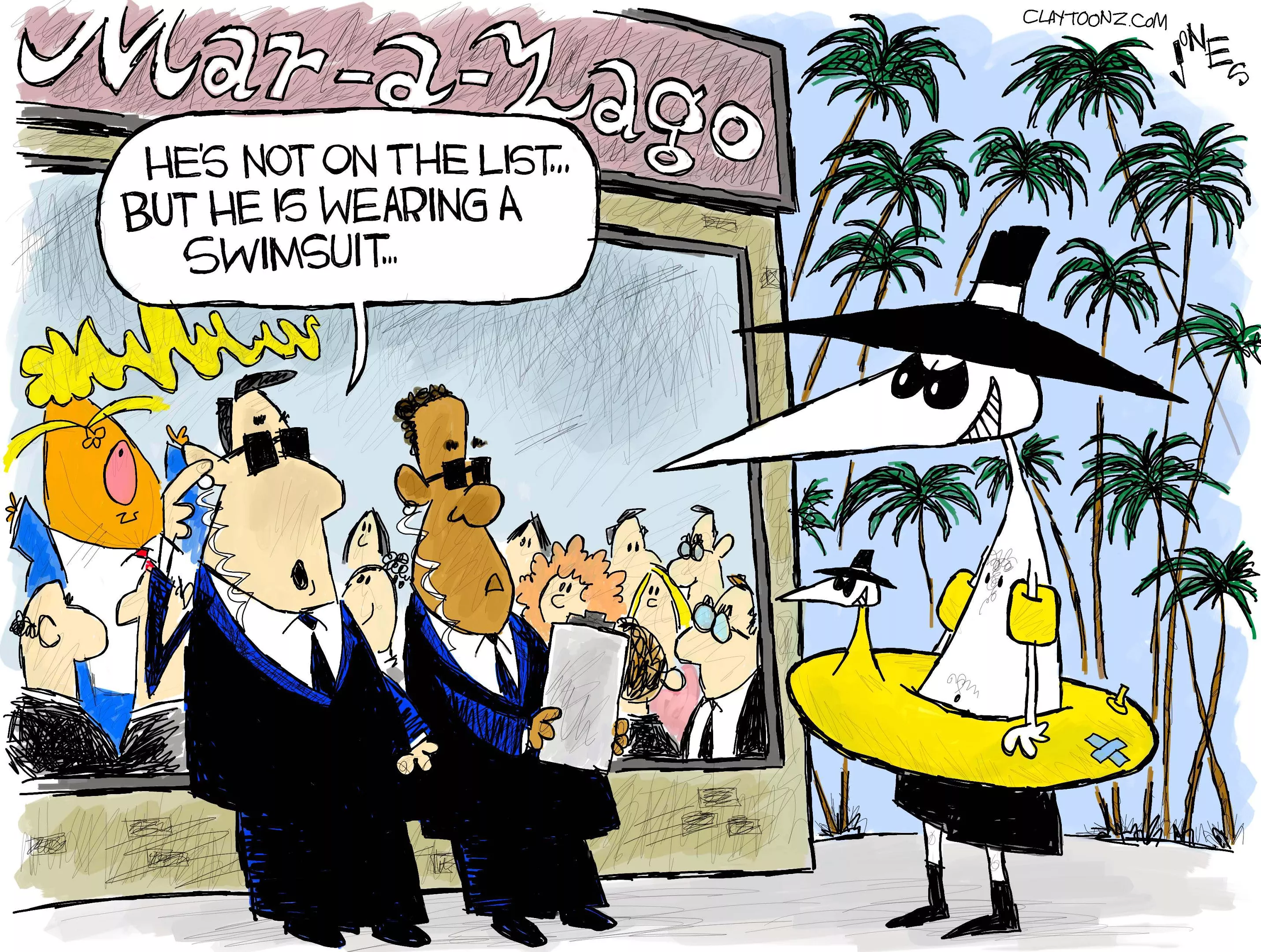
Tags: comics , politics , cartoons , Claytoonz , Mar a Lago , Spy , security clearance , Trump , Image
Wednesday, April 3, 2019

Tags: comics , politics , cartoons , Claytoonz , golf , Mar a Lago , alligators , security clearance , Trump , golf balls , president , Image
Tuesday, April 2, 2019

Remember Proposition 204 in the 2017 election, also known as Strong Start Tucson? If it passed, it would have raised local taxes to provide quality early childhood education to children in Tucson whose parents can't afford to pay for it. The proposition went down by a wide margin.
In a reasonably progressive town like Tucson which regularly elects Democratic mayors, city council members and legislators, you might expect Prop. 204 to do better than it did. The problem was, progressives were split. I was for the measure, but lots of people I usually agree with were against it. They supported the idea of expanding early childhood education to reach more children, especially children of low income parents, but they objected to the funding mechanism, the way the program was to be administrated and the fact that it stopped at the Tucson city limits. Those were valid concerns. I just thought, as a strong supporter of early childhood education, the city couldn't afford to pass up the opportunity to give a literal Strong Start to our children and our city. Both will benefit from giving young children a high quality, early start on their educations. Prop. 204 was an opportunity I feared would never come again.
Well, the idea is back in a new form. It's being called Pima County Preschool Investment Program. It's no longer limited to Tucson, it covers all of Pima county. It doesn't create any new taxes. And it will be administered through a contract with First Things First, a statewide program with funds which are earmarked to address early childhood development, education, and health concerns for children from birth to age 5, but doesn't have nearly enough funding to meet the statewide need.
A broad group of people and organizations in Pima county's public and private sectors, many of whom opposed Prop. 204, have coalesced around PCPIP. The Southern Arizona Leadership Council supports it. So does Chris Magnus, Tucson Police Chief. The list includes Children’s Action Alliance, the University of Arizona, First Things First, Metropolitan Education Commission and Center for Economic Integrity. Local school superintendents support it and school districts have agreed to participate by providing early childhood education or adding to what they're already providing if PCPIP becomes a reality. Some organizations have pledged financial support.
What's needed is a funding base. As happens so often, money is the sticking point.
Tags: Proposition 204 , Strong Start Tucson , Pima County Preschool Investment Program , First Things First , Southern Arizona Leadership Council , Pima County Board of Supervisors , Image
Monday, April 1, 2019
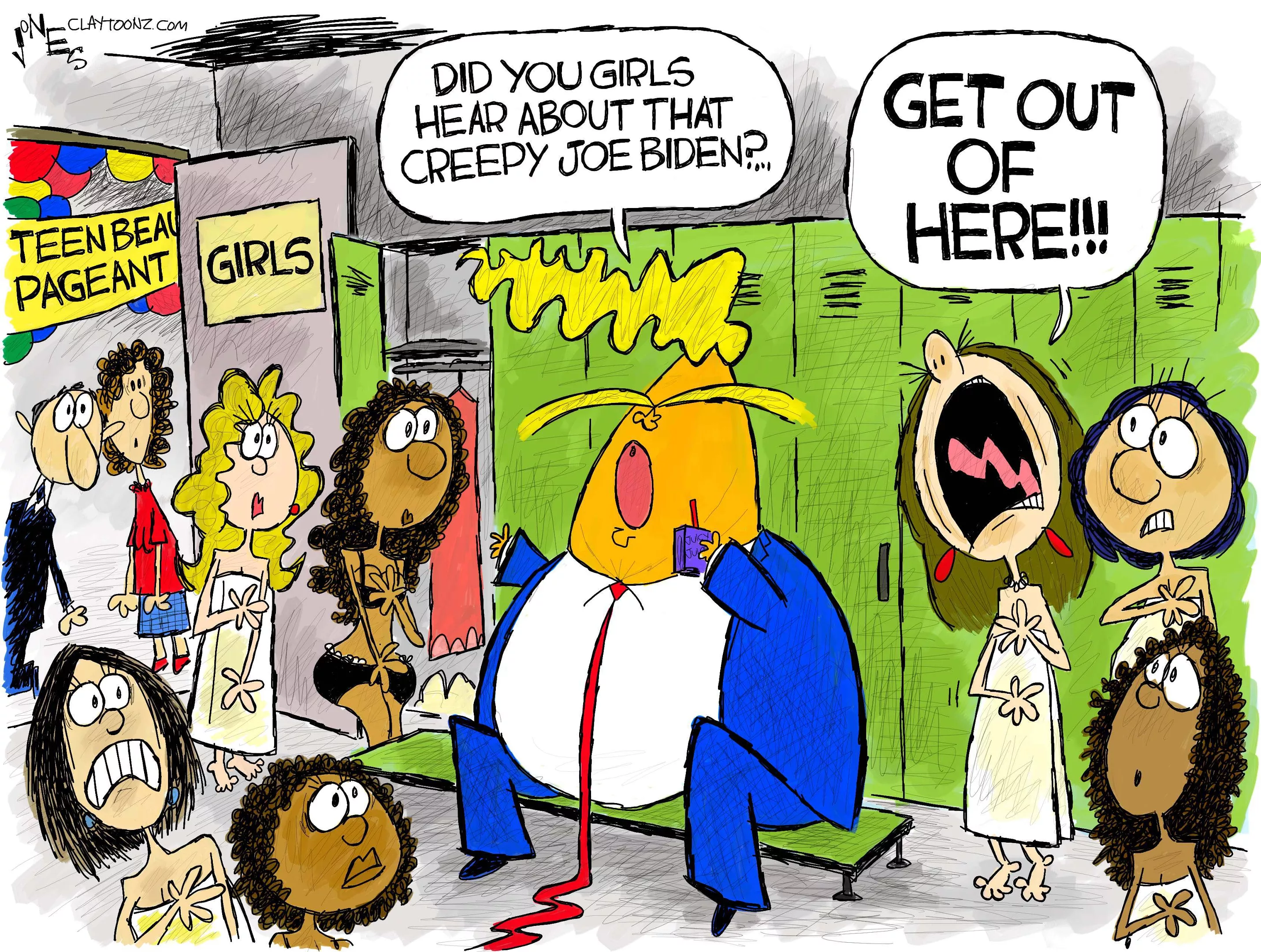
Tags: comics , politics , cartoons , Claytoonz , Trump , creep , locker room , Joe Biden , presidential election , candidates , 2020 , Image
Thursday, March 28, 2019
The Green New Deal is an aspirational list of ideas of ways we can improve the environment and lift people's standards of living.
Do we need a Green New Deal? Is it doable? Can we afford it? Democrats are asking those questions seriously while Republicans pretend the GND would mean an end to hamburgers, milkshakes and airplanes.
The best thing about the Green New Deal is people are forced to talk about climate change and the environment. The topics now have a place at the political table. The more politicians and others talk about them, the better the chances we'll do something to address them.
On another front, some Democratic presidential candidates are advocating for Medicare for All. Others are calling for a private/public partnership which guarantees health care for everyone.
What's the best way to deliver health care to the most people? How will we pay for it? Democrats are holding a vigorous debate on the topic while Republicans make another stab at killing Obamacare and claim to have a plan of their own, something which they've been talking about for years but have yet to unveil.
This is another issue which no presidential candidate can avoid talking about. Like the environment, health care has a seat at the political table. It cannot be ignored, and that's a good thing.
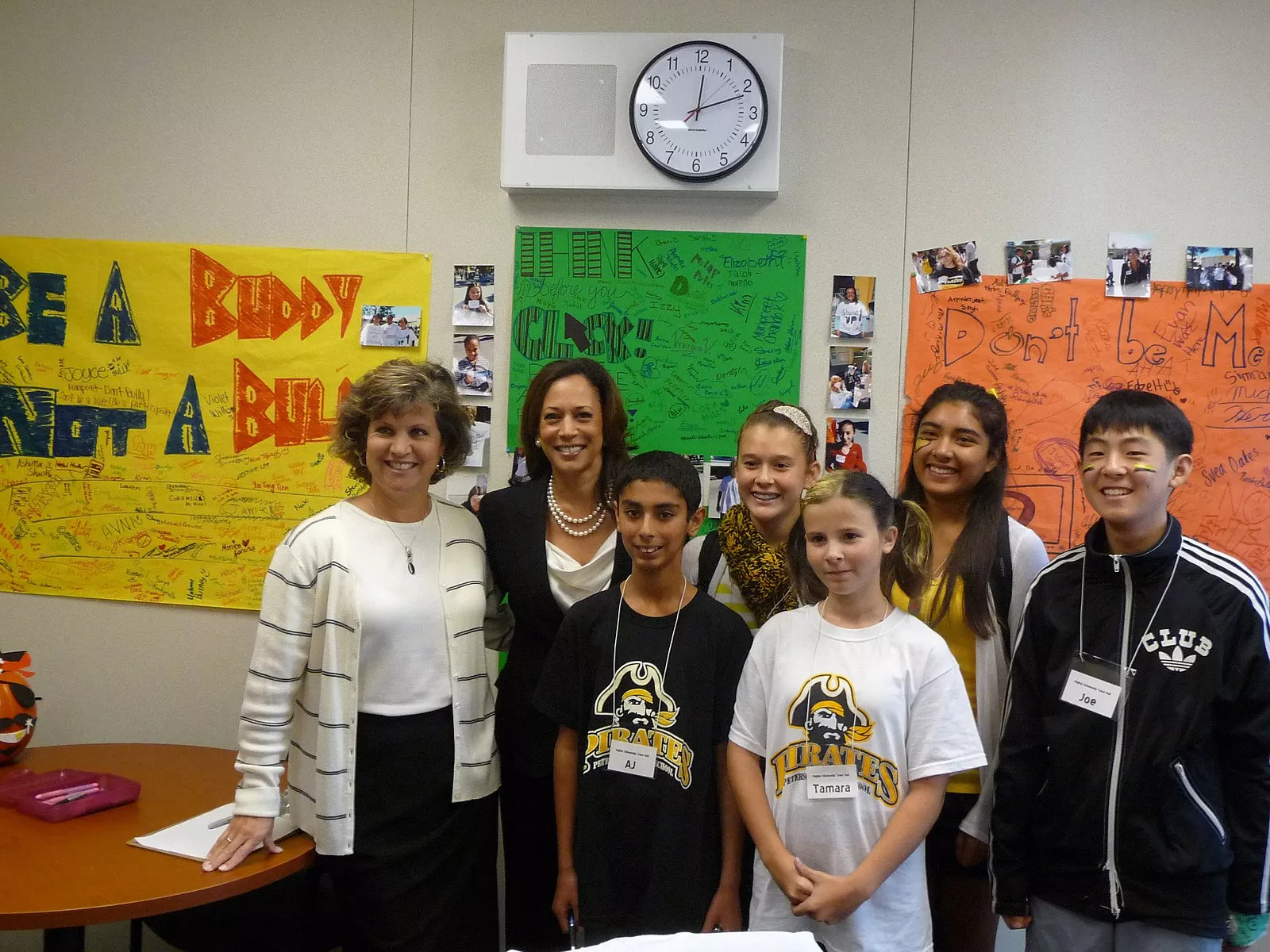
Kamala Harris, Democratic candidate for president, has pulled another chair up to the table, this one for teachers. Harris says teachers are underpaid and under-appreciated, and she wants to increase their salaries using a combination of federal and state funding.
Should we increase teacher pay? Can we afford it? What's the best way to do it? Thanks to Harris, every Democratic candidate will have to address those issues, and Republicans will have to figure out how to fight against a salary increase without sounding like they hate teachers and children. The discussion and debate will increase the possibility that teachers around the country will see a substantial pay increase sometime in the not-too-distant future.
Thank you, Kamala Harris.
Tags: Kamala Harris , Teacher salaries , Health care , Green New Deal , Presidential politics , Image

Tags: comics , politics , cartoons , Claytoonz , Betsy DeVos , Special Olympics , funding , cuts , Image
Wednesday, March 27, 2019
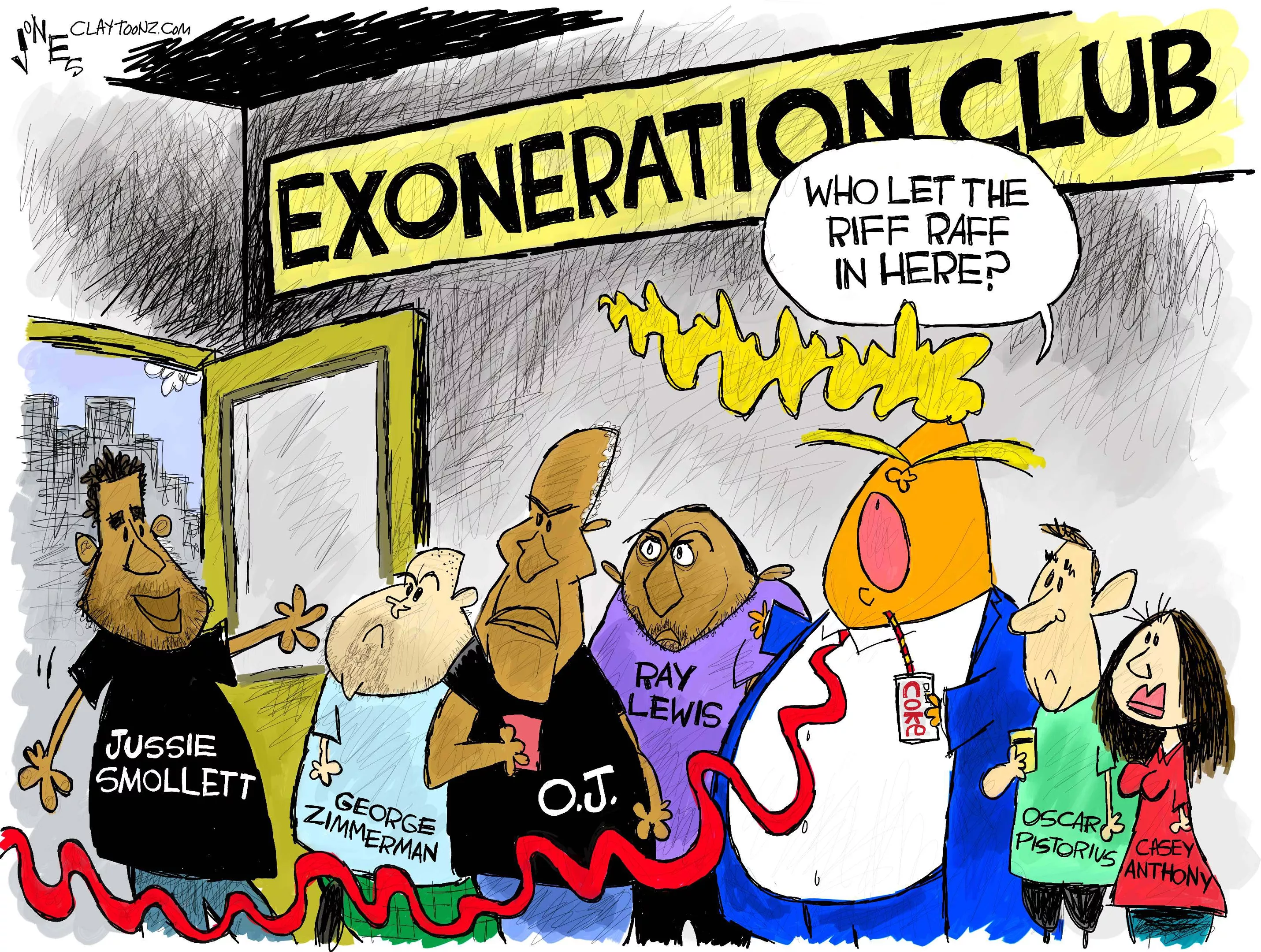
Tags: comics , politics , cartoons , Claytoonz , exoneration club , exonerated , Trump , Jussie Smollett , OJ , Diet Coke , riff raff , Image