
Thursday, February 21, 2019
Wednesday, February 20, 2019
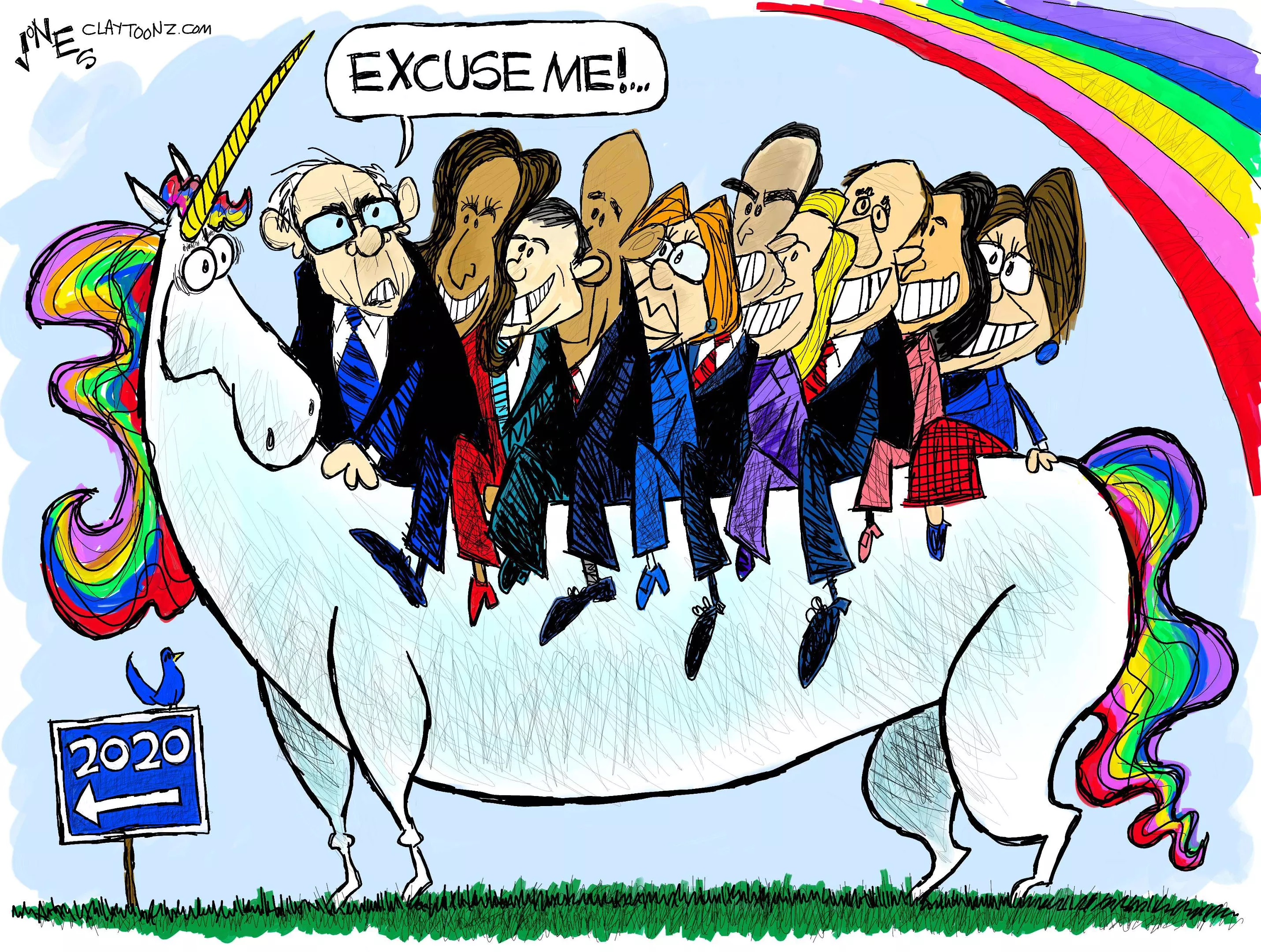
Tags: comics , politics , cartoons , Claytoonz , Bernie Sanders , 2020 , presidential campaign , presidential race , unicorn , Image
Tuesday, February 19, 2019

Here's your chance to listen to the most recent episode of Zona Politics with Jim Nintzel, featuring an interview with Yellow Sheet Report editor Hank Stephenson. We talk about Mark Kelly's entry into the U.S. Senate race as well as some of the latest bills floating around the Arizona Legislature.
Zona Politics airs at 5 p.m. Sunday afternoons on KXCI Community Radio, 91.3 FM.
Tags: news , politics , radio , podcast , Zona Politics , Jim Nintzel , Hank Stephenson , Yellow Sheet Report , Audio , Image
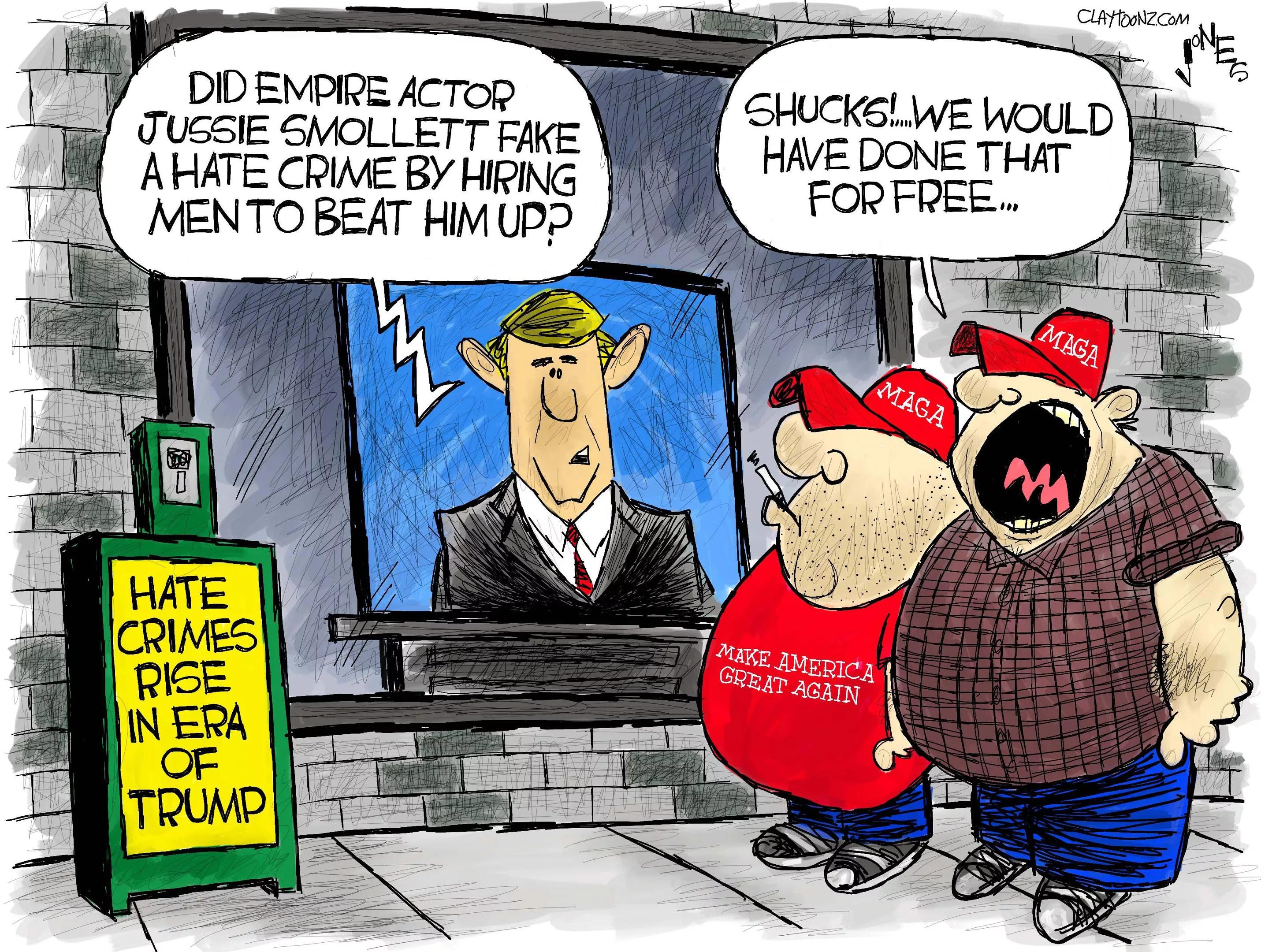
Tags: comics , politics , cartoons , Claytoonz , Jussie Smollett , Empire , hate crime , set up , Trump , MAGA , supporters , Image
Monday, February 18, 2019
But I have a question. What took them so long? The English Immersion block was just as bad when it began 12 years ago as it is today.
The history of the English Immersion rule makes more sense when it is put in context. On its face it's all about how ELL students are taught, but it's more than that. It's part of Arizona's recent history of legislative efforts to punish not only immigrants specifically, but Latinos and Latino culture in general. And that includes demonizing the Spanish language.
Arizona's English Only law, passed by voters in 2000, and the resulting English Immersion ruling were followed by the "Show me your papers" law, and that was followed by a law designed to outlaw TUSD's Mexican American Studies program. The "Show me your papers" and anti-MAS laws were struck down by the courts in whole or in part. English Immersion survived its court challenges but was finally dragged down by the weight of its own failure.
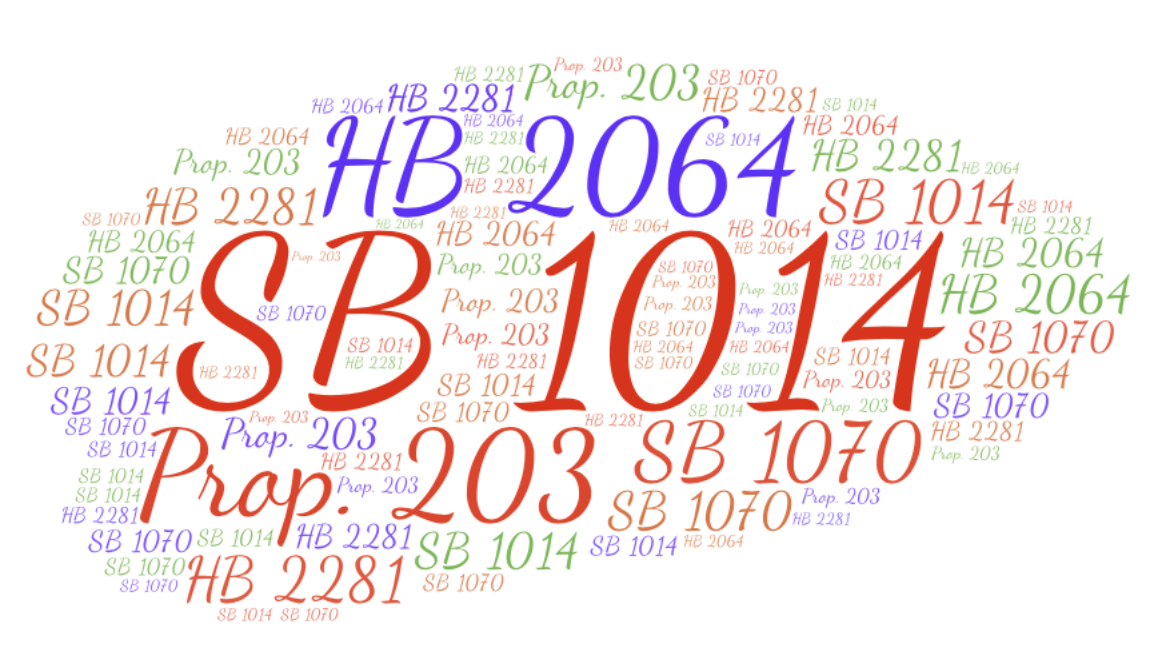
Tags: English Immersion , ELL students , SB 1014 Prop. 203 , HB 2064 , SB 1070 , HB 2281 , Image
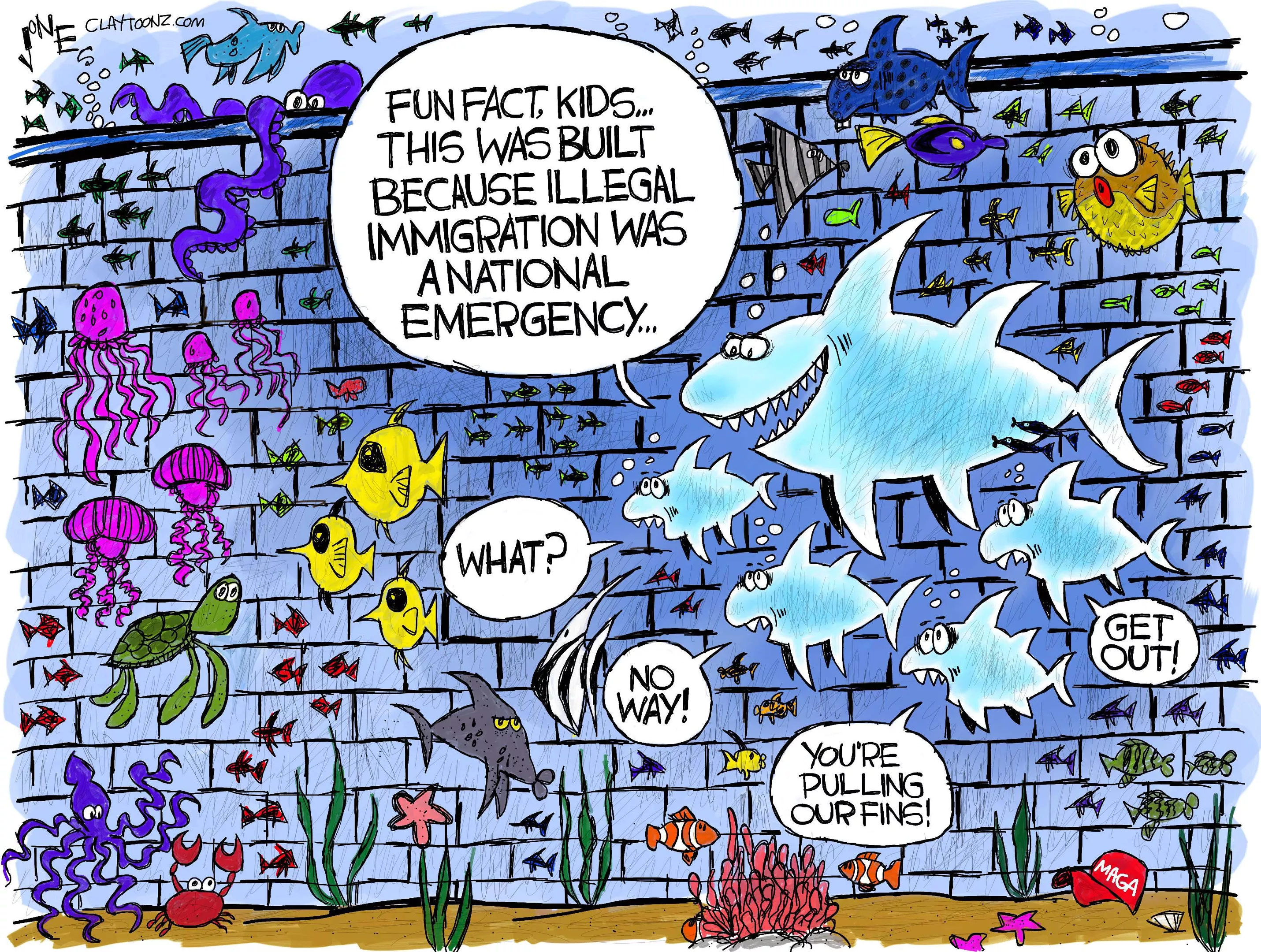
Tags: comics , politics , cartoons , Claytoonz , water , fish , under the sea , climate change , national emergency , Trump , border , wall , Image
Friday, February 15, 2019
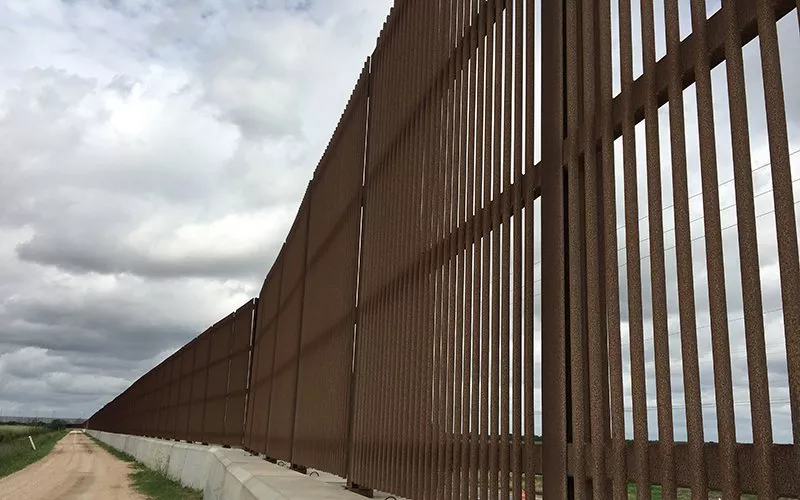
Arizona lawmakers’ reaction to President Donald Trump’s declaration of a national border security emergency on Friday split along party lines, with Democrats blasting the move as “fear-mongering” that sets “a dangerous precedent.”
Republicans praised the president for taking action they said is needed to “protect American lives.”
Trump’s declaration came just hours after Congress passed a budget bill that included $1.375 billion to fund construction of more border wall, well below the $5.7 he had been demanding. In response, he declared a state of emergency, which allows the president to shift funds between accounts.
White House officials said Friday the emergency would allow the addition of about $6.6 billion to the money Congress allocated, bringing border wall construction funding to about $8 billion this year.
In a Rose Garden announcement Friday, Trump said the declaration is needed because “we don’t control our own border.”
“I’m going to be signing a national emergency,” Trump said. “We’re talking about an invasion of our country with drugs, with human traffickers, with all types of criminals and gangs.”
The declaration is almost certain to be challenged in court – a fact Trump referenced in his speech – but he said he has the authority and is confident he will ultimately win. He said presidents over the last four decades have declared 58 national emergencies and some governors have declared border emergencies, including former Arizona Gov. Janet Napolitano.
Tags: news , politics , border wall , emergency , Trump , declaration , national emergency , reaction , Arizona , border , immigration , Mexico , Image

Republican legislators are at it again. They are trying to increase the number of students eligible for private school vouchers. That's in spite of voters saying no to voucher expansion in 2018.
It's a good time to take a close look at the world of vouchers by asking questions and answering them. Let's begin.
In 2018, the popular vote in Arizona went against voucher expansion. Was it close?
Nope. When all the Prop. 305 numbers were counted, vouchers went down by 30 points: 65 percent No to 35 percent Yes.
Wow, a 30 point spread. Isn't that surprising, especially in a red state like Arizona?
Actually, no. Vouchers were on the ballot in Utah in 2007. Utah is redder than Arizona, but the vote margin was close to the same: 63 percent to 38 percent.
OK, that's another example. How about voucher votes elsewhere?
Vouchers have gone down every time they've been put in front of voters, and never by less than 20 points. Counting our vote in 2018, vouchers are zero for seven nationwide.
Lots of states have vouchers. Does that mean all of them have been put in by their legislatures?
Yes, all state voucher programs were voted into law by state legislatures. Arizona's two voucher programs — Tuition Tax Credits (1997) and Empowerment Scholarship Accounts (2011) — were created by our legislature. So were all the revisions which increased the amount of voucher money and the number of students who qualify.
Why do people vote against vouchers?
One reason is not many students attend private schools. In Arizona, it's about 4 percent of the student population. With 1 in 25 students in private school, it's not surprising people aren't excited about sending tax dollars in that direction.
Really, that few students?
Yes, really. In 2014, the most recent year where I could find good data, about 45,000 Arizona students were enrolled in private schools out of a total of about 1.2 million students. Those numbers are approximate, of course, but they're close.
Tags: Vouchers , Tuition Tax Credits , Empowerment Scholarship Account , schools , education , Image

Tags: comics , politics , cartoons , Claytoonz , simulators , White House , Trump , Image
Thursday, February 14, 2019
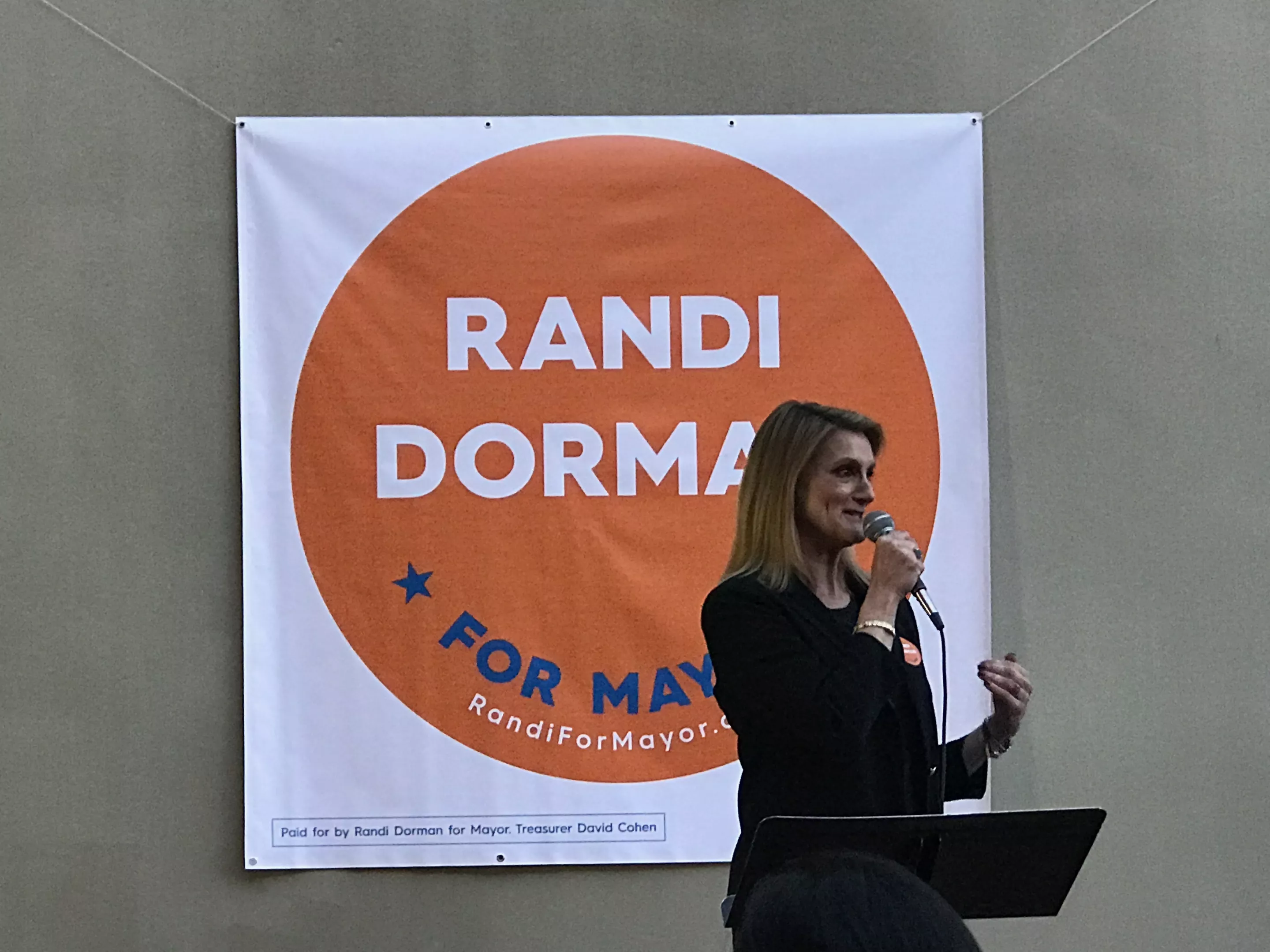
“It’s time for us to not just fix the roads but make sure they lead somewhere,” Randi Dorman told a cheering crowd on Tuesday evening.
To kickoff her campaign for mayor of Tucson, Dorman laid out her priorities for office during a casual gathering at the Connect Coworking courtyard, complete with drinks and live music.
Originally from New York, Dorman worked in advertising with international brands such as Charmin, Crest and Old Spice for 15 years before moving to downtown Tucson in 2001 with her husband, Rob Paulus, an architect and developer. Together they formed R+R Develop, a local real estate development company.
In 2005 the couple worked to convert a closed ice factory into the residential Ice House Lofts on 17th Street. Now, R+R is in the process of developing mixed-use apartments, offices and retail spaces adjacent to the Trinity Presbyterian Church on Fourth Avenue and University Boulevard.
Dorman has served as the president of the Museum of Contemporary Art in Tucson for over five years, and currently serves as the chairwoman of the Downtown Tucson Partnership. She hopes to bring her close relationship with the ongoing revitalization of downtown and knowledge of small business economics to the dais.
“We need to take the energy that we put into downtown and we need to start to bring that into the rest of the community,” she said.
Among Dorman’s interests is economic development, which includes supporting the growth of small and medium-sized businesses, making collaborations through job-training programs and creating a “robust annexation program” to bring in more state-shared revenues that are currently being given to the Phoenix area.
“Keeping our money in Tucson will enable us to pay for the things that create a better quality of life here,” she said. “And if we collaborate with the county, we can reduce redundancies in departments like Parks and Planning and Development Services and if we do that we free up money for our community.”
Dorman also had a hand in the DTP Connects program, which helped chronically homeless people living in the downtown area find housing opportunities and organizations that help with issues of poverty. She said her team was able to decrease chronic homelessness in the downtown area by 95 percent in a few months.
“In 2018 there were 300 chronically homeless in the City of Tucson, by the city’s count. There were 450 housing vouchers that went unused in 2018,” Dorman said. “We have to connect the people who are combating poverty with the great programs that already exist here as well as creating new ones to support the people really suffering in our community.”
Like other mayoral candidates, Dorman said climate change as an issue that demands attention. Her idea for an environment-friendly Tucson includes sustainable building practices.
“Urban infill, density in the core, where it belongs, and reusing old buildings are some of the greenest building practices you can do and I’m going to make them easier to do,” she said. “In addition, incentives for rainwater harvesting, solar installation, tree planting, energy-efficient home and building improvements—if we do those things we create jobs, improve the environment and improve our quality of life.”
If elected mayor, Dorman wants to start planning for long-term projects such as an expansion of the city’s public transit system and a high-speed rail to Mexico and the Arizona Sun Corridor.
“We have to make sure that we’re shovel-ready when funding opportunities arise, like they have in the past. We want to make sure that we’re going to be the first in line.”
Dorman sees the mayor’s position as the “glue that holds everything together.”
“Her greatest responsibility is to bring people together and lead with vision. She has to be the connector and the chief collaborator. And that’s what I do every single day in my normal business. Every single day I’m bringing people together, bringing ideas together, that’s what I love to do and that’s why I’ve wanted to be mayor for over a decade."
"I have spent an extraordinary amount of time sitting in city council meetings. There’s a wall of portraits of all of the men who have been mayors of Tucson in the past. All men. It is 2019 and it is time to make a change, it is time to think differently about what is possible for Tucson," Dorman said.
Ward 1 city council member Regina Romero is also in the race for the mayor’s seat, as well as former state legislator Steve Farley, advertising agency owner Ed Ackerley and a handful of fringe candidates. The primary election will take place in August.
Tags: Randi Dorman , Mayor , 2019 , Tucson , Connect Coworking , Downtown , Ice House Lofts , Trinity Project , Economic Development , Small Business , Image