Tuesday, November 2, 2021

With the first release of ballots, Democrats were way out ahead of their challengers in today's election for Tucson City Council.
In Ward 6, Councilman Steve Kozachik had captured 64% of the vote in his quest for a fourth term, while his independent challenger Val Romero had just 30%.
In Ward 3, Kevin Dahl had captured 58% of the vote, while Republican Alan Harwell had captured 28% and independent candidate Lucy LiBosha had 12%. Dahl was running for an open seat now held by Democrat Karin Uhlich, who had stepped in earlier this year after Democrat Paul Durham stepped down.
In Ward 5, Councilman Richard Fimbres had captured 71% of the vote against a write-in candidate.
Prop 206, which would establish a $15-an-hour minimum wage in Tucson along with various enforcement provisions, was headed for victory, with 60% of voters in favor of it.
Prop 410, which would increase the salaries of the Mayor and City Council, remained too close to call, separated by a narrow margin of 153 votes, with 33,893 votes in favor and 33,740 votes against. An unknown number of votes remain to be counted.
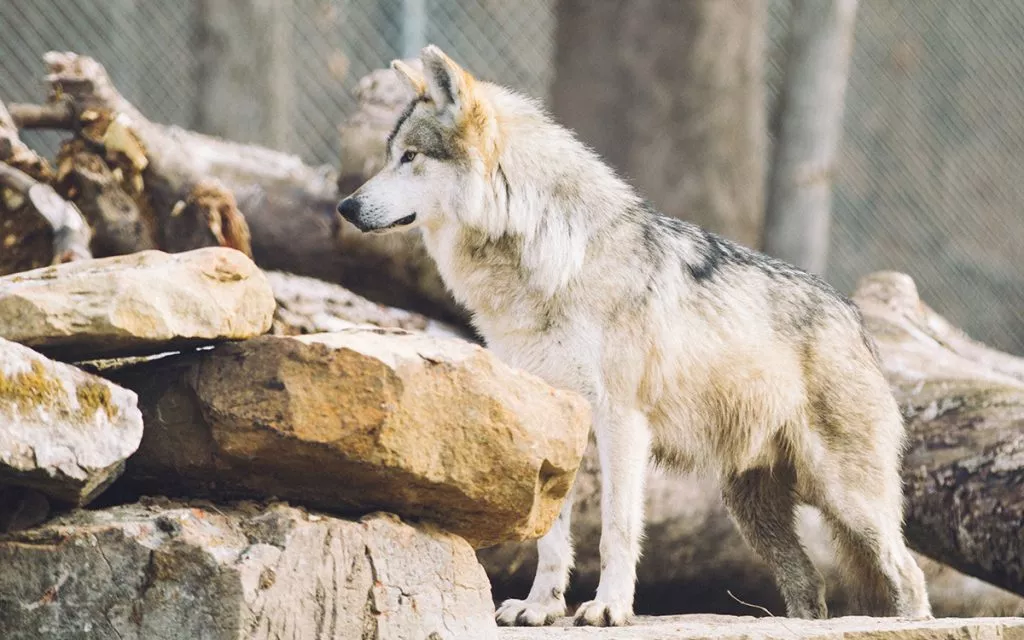
PHOENIX – A 90-day public comment process has begun on a proposal to allow more endangered Mexican wolves to be released into the wilds of Arizona and New Mexico, where, federal officials say, the animals are thriving.
“Recovering the Mexican wolf remains a top priority for the service, and we continue to make steady progress toward this goal,” Amy Lueders, the Southwest regional director for the U.S. Fish and Wildlife Service, said at a news briefing Wednesday.
At least 186 Mexican wolves live in western New Mexico and eastern Arizona, according to a 2021 study. The wolves – a rare subspecies of the gray wolf – were all but wiped out by the 1970s before being listed as endangered under the Endangered Species Act. Efforts to reintroduce them to the region began in 1998.
“The wild population of Mexican wolves in the United States saw its fifth consecutive year of growth in 2020,” Lueders said.
To keep the population growing, Fish and Wildlife wants to remove the population limit, which is set at 325. It also wants to increase the number of wolf pups that are bred in captivity and released into dens to help improve the genetic diversity of the growing population. The service also wants to temporarily restrict what is considered an allowable “take,” meaning to kill or capture a wolf threatening livestock or human lives.
Proposed changes follow a 2018 court order for the service to revise the designation of the Mexican Wolf Reintroduction Project to make sure the experimental population contributes to long-term recovery of the wolf.

Monday, November 1, 2021

COVID Testing Sites
Pima County is still offering free COVID tests at multiple locations throughout Tucson for anyone with or without symptoms and people of all ages (2 years or older for a PCR test). Tests are not free for people who need to take them for work or if you had a test administered at a Pima County site within the last 14 days:
TEP building, 88 E. Broadway Blvd
Nasal Swab (rapid antigen test), walk-up, or registration
Ellie Towne Center: 1660 W. Ruthrauff Rd
Saliva test (PCR test), appointment required
Liberty Plaza - 315 W. Irvington Road
Nasal Swab (rapid antigen test), walk-up, or appointment
Paradigm 6009 Grant - 6009 E. Grant Rd
Nasal Swab (rapid antigen test), walk-up, or appointment
Tucson International Airport - 7250 S. Tucson Blvd. Nasal Swab (rapid antigen test), appointment only.

Four of Arizona’s congressional districts would be competitive, with two as legitimate toss-up seats, under a new draft map adopted Thursday by the Arizona Independent Redistricting Commission. Republicans would have three safe seats and Democrats would have two.
And the commission’s official draft legislative map would give Republicans more safe districts, but give Democrats a chance to win control at the legislature in the right year.
After weeks of sometimes acrimonious debate, the AIRC approved its official draft maps of the congressional and legislative districts that Arizona will use for the next decade. But the maps, while a major milestone in the redistricting process, are far from final: The commission must now submit them for 30 days of public review, which includes meetings across the state, before it comes back and approves the final versions.
Under the metrics adopted by the commission to measure competitiveness, which is based on the results of nine statewide races in 2016, 2018 and 2020, two of the proposed legislative districts would be toss-up seats where either party could win in a given year.
In Legislative District 2, which covers much of the north Phoenix area between Northern Avenue and Loop 101, Democrats have an advantage of just 3.3%. The AIRC considers anything within 7% to be competitive, and anything within 4% to be highly competitive. The numbers are even closer in District 4, which runs from south Scottsdale to the Loop 101 west of Scottsdale Road, and leans toward the Democrats by just half a percentage point.
Four other districts fall under the range of competitiveness, two leaning toward each party. Republicans have 13 safe legislative districts and Democrats have 11.

Friday, October 29, 2021

Thursday, October 28, 2021
In Arizona, the climate crisis has become a real and growing threat to our lives and livelihoods. Prolonged drought is creating a ripple effect of uncertainty, massive wildfires are devastating local economies, and heat-related illnesses and deaths are on the rise as triple-digit temperatures skyrocket. This week, U.S. Senator Kyrsten Sinema has a historic chance to change the course of this crisis. The constituents in my Latino-majority district are counting on her support of the Build Back Better Act.
The choice is crystal clear. While Governor Doug Ducey and his Republican-led legislature refuse to acknowledge reality and science, it’s up to Congress and Senator Sinema to adopt a once-in-a-lifetime plan that will create jobs and invest in a clean energy economy that protects Arizona’s air, land, and water for generations to come. Refusing to act harms us all, but it especially hurts Latinos who are disproportionately affected by climate change.
The lack of equitable access to affordable cooling has increased emergency room visits among Latinos, many of whom work outdoors—and we’ve lost hundreds of lives over the last decade due to Arizona’s extreme heat. Dirty air created by fossil-fuel polluters in our state has led to record asthma cases among Latino children. And the Colorado River Basin, responsible for 36% of Arizona’s water supply and now faced with historic water cuts due to drought, encompasses a whopping one-third of the Nation’s entire Latino population.
We can no longer sit idle. Inaction will jeopardize lives and economies, and it will hurt our black, indigenous, and people of color most. If we are truly committed to moving Arizona forward, we cannot keep going down the same path of climate and social justice apathy. It’s why Senator Sinema’s support of the Build Back Better Act is crucial.
When approved, the legislation will dramatically improve lives and economies in Arizona, tackling the extreme weather that endangers our loved ones on a daily basis. It will create 100,000 jobs annually in the state for the next decade and boost household income $3,300 a year.
This matters to our Latino families and businesses because we were hardest hit by COVID-19. With an estimated 25 percent of Latino-owned businesses permanently closed over the course of 2020, our economic recovery as Latinos has been comparatively slow. The continuous impacts of climate change only make matters worse.
Latinos in Arizona are resourceful and resilient. Experience has taught us to persevere, even when faced with systemic injustice and economic inequalities; however, we are simply tired of waiting. We want clean air, safe water, and protection of our precious indigenous lands. We are ready to write a new chapter for our community and our state. Senator Sinema: it’s time to support the Build Back Better act.
Andres Cano, 29, represents Legislative District 3 in the Arizona House of Representatives. He is the top Democrat on the House Committee on Natural Resources, Energy, and Water. He is the Chair of the Arizona Legislative Latino Caucus.
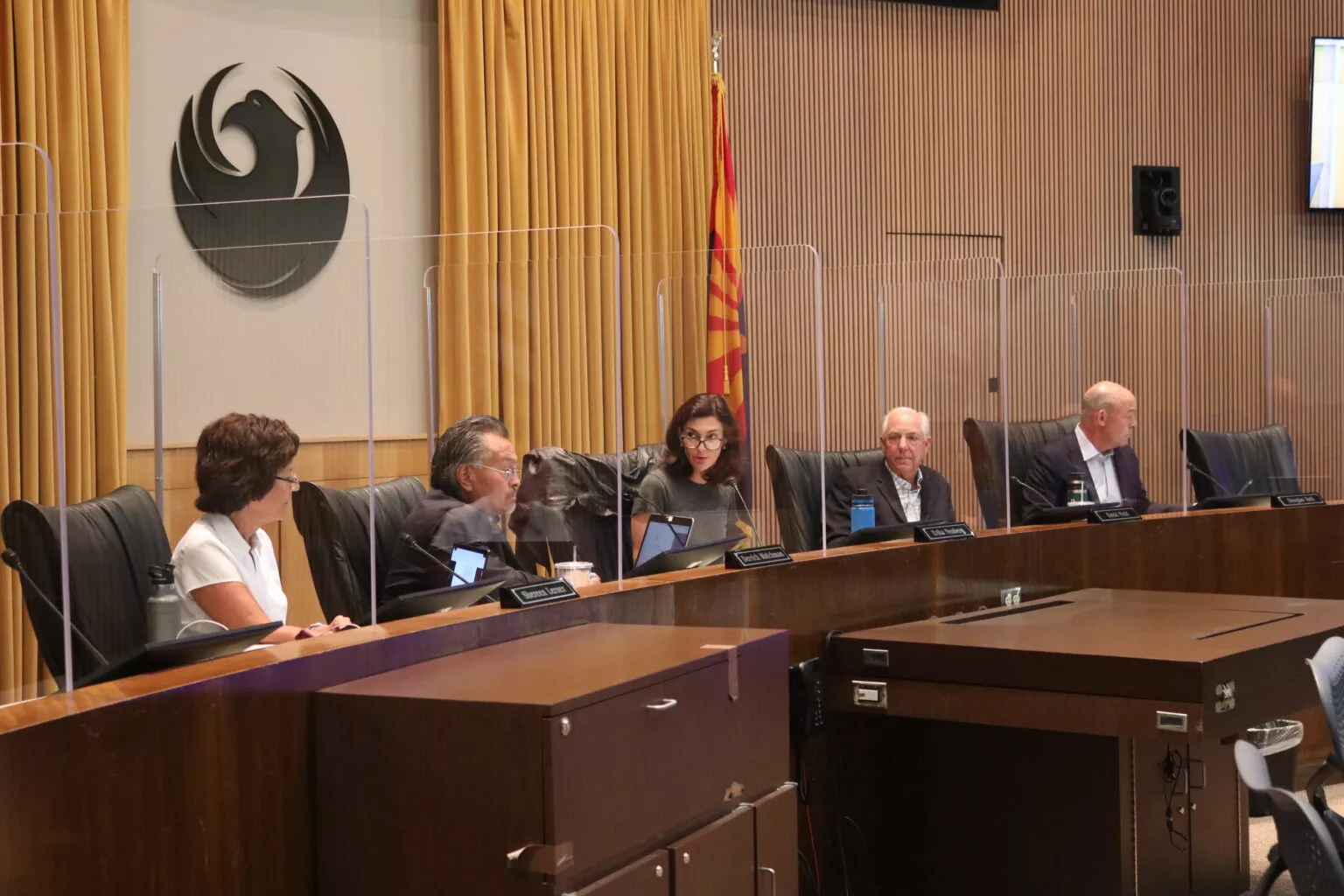
The stage is set for the final debate before the Arizona Independent Redistricting Commission approves its draft maps and submits them for public review after Democratic Commissioner Shereen Lerner suggested a handful of changes she’d like to see to a set of proposed legislative districts in southern Arizona.
Based on those changes and others proposed by Lerner’s colleagues, the AIRC will have three potential legislative maps to consider on Thursday. Independent Chairwoman Erika Neuberg said she wants the commission to approve both the congressional and legislative draft maps on Thursday, a milestone in the redistricting process that will open the maps for 30 days of public comment. After that, the commission will make additional adjustments and then approve the final districts that Arizona will use for the next decade.
At the end of their last meeting on Oct. 21, tensions flared among the commissioners over a map of seven legislative districts that the Southern Arizona Leadership Conference, a Tucson-based business advocacy group, advocated for.
The AIRC incorporated the districts supported by SALC, of which Republican Commissioner David Mehl is a founding member, into its legislative map. A majority of the commission was pleased enough with the result to suggest a final vote on the legislative draft map. However, that didn’t sit well with Lerner, who raised concerns with several of the districts. Neuberg decided to postpone the vote for a week so the commissioners, Lerner in particular, could propose changes.
On Tuesday, Lerner proposed a number of revisions that she said would improve the map while keeping Marana and Oro Valley together in the same district, which is a high priority for Mehl.
Lerner objected to the way District 17 on the SALC-supported map joined the area north of Tucson with the city’s east side, with the two regions completely separated by the Santa Catalina Mountains. She told the commission that it would take an hour with no traffic for someone to travel between the two parts of the district, and would require candidates to pass through another district to get from one end to the other.