

Wednesday, October 10, 2018
Tuesday, October 9, 2018
Note [of exasperation]: I'm beginning to think the Star has a policy: "Never write the words, 'According to an article by Craig Harris in the Republic . . .'" Harris has written a groundbreaking series of articles on charter school corruption and profiteering which has statewide relevance, but to my recollection, the Star hasn't mentioned any of them, nor has it done similar investigations on its own.
Craig Harris has a new article in The Republic that takes another look at the lack of charter school regulation and accountability. Not only does the State Board for Charter Schools conduct minimal charter school oversight, it doesn't acknowledge public complaints about charters on its website.
For the past three years, each charter school's profile on the site displayed the message: "This charter has no complaints."According to Harris, the board received 91 complaints during the 2017-18 school year. Two months into this school year, it has already received 141 complaints.
The board's motto: See no evil. Hear no evil. Post no evil.
According to Harris, the website has addressed the problem, though the board has yet to release complaints, which are public records, to the paper.
None of this is recent, or accidental. It's part of a pattern that goes back to charter school beginnings in Arizona. The state charter board has always been more a promoter of charters than a regulator. Here's some historical background.
Tags: Craig Harris , Charter schools , Charter school complaints , Lisa Graham Keegan , Image
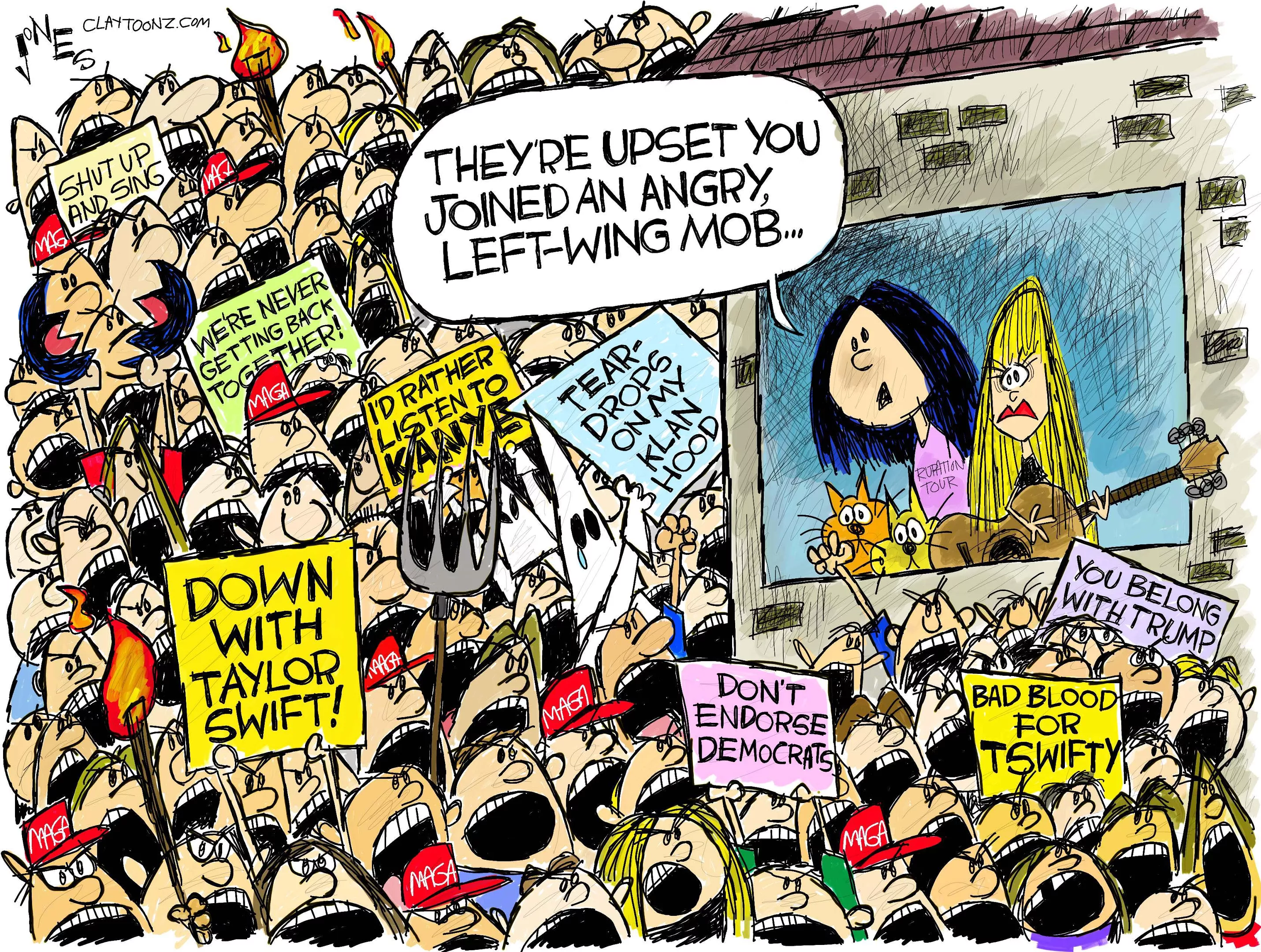
Tags: comics , cartoons , politics , Taylor Swift , angry mob , political stance , music , bad blood , Image
Monday, October 8, 2018
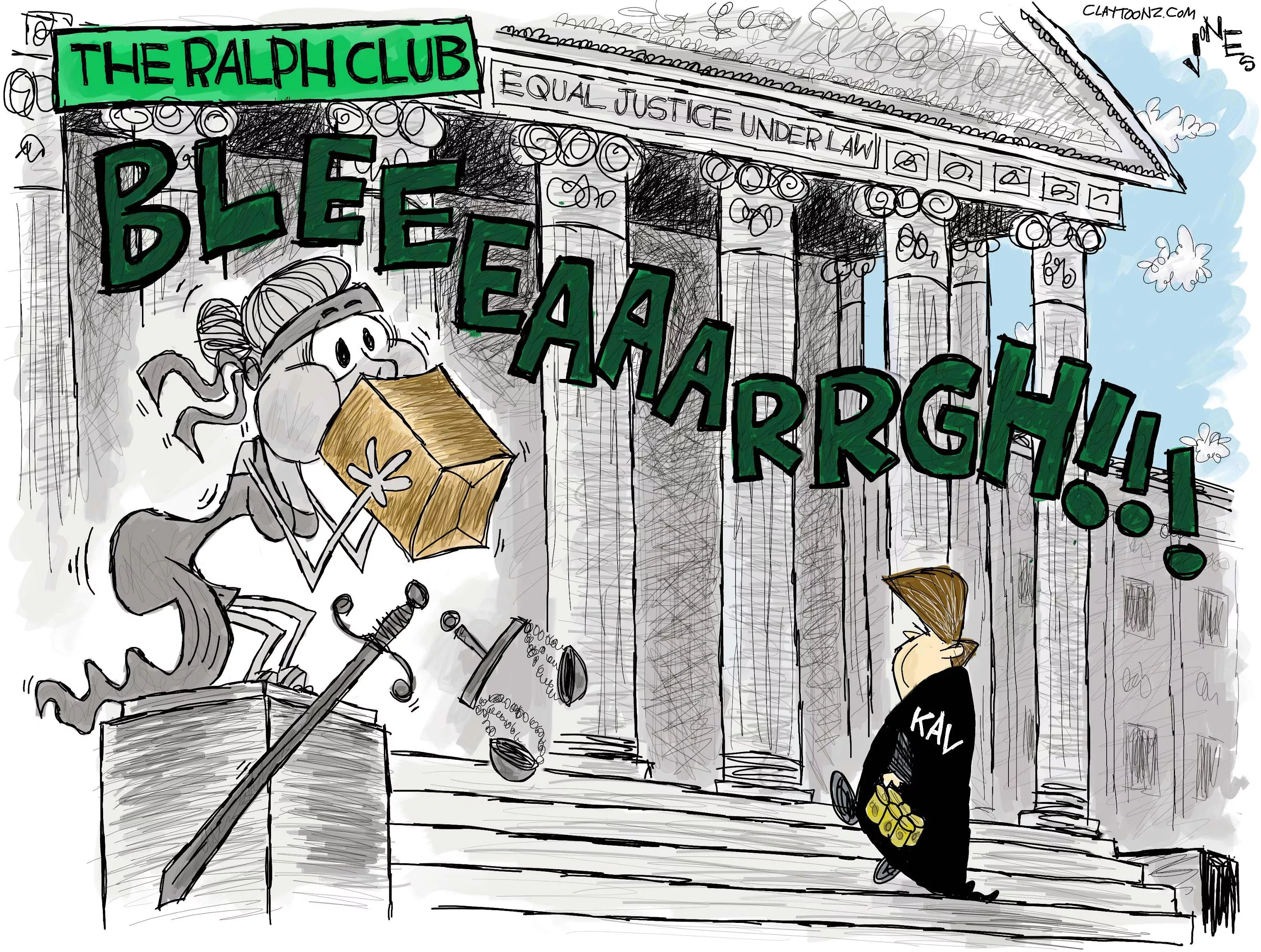
Tags: comics , cartoons , politics , political cartoon , Image
Friday, October 5, 2018
On the latest edition of Zona Politics: Arizona Daily Star reporter Hank Stephenson and Tucson Weekly Associate Editor Danyelle Khmara talk about the latest in Congressional Districts 1 and 2, the U.S. Senate, state Rep. Todd Clodfelter's recent Ashley Madison scandal, the battle over the voucher-expanding Prop 305 and more. Catch it at 6:30 p.m. Fridays and 9 a.m. Sundays on the Creative Tucson Network, Cox Channel 20 and Comcast/Xfinity Channel 74, listen at 5 p.m. Sundays on KXCI, 91.3 FM or watch online above.
Tags: Zona Politics , congressional district 2 , congressional district 1 , Lea Marquez Peterson , Ann Kirkpatrick , Martha McSally , Sinema , Tom O'Halleran , Wendy Rogers , Tucson news , Arizona news , Prop 305
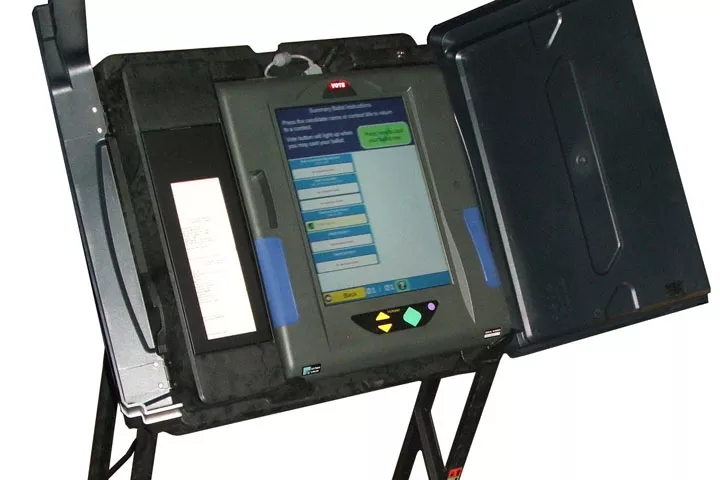
Here are two overlapping stories. First, Tucsonan John Brakey, head of AUDIT-USA and longtime election integrity watchdog, recently received a cease-and-desist order from Election Systems & Software, one of the big three election machine companies. Second, a lengthy article in this week's New York Times magazine details the very problems Brakey is concerned about: ways voting machines can malfunction or be hacked which can change election results, turning winners into losers and losers into winners.
Brakey put instruction manuals for ES&S voting machines on his AUDIT-USA website. They look like the typical, detailed user manuals we get when we buy software packages, but ES&S doesn't want them in public view. The company wrote Brakey a cease-and-desist letter demanding he take the material down. If not, the company threatens to take him to court for copyright violation.
Has Brakey violated copyright law by posting the ES&S manuals? I won't venture a lay person's opinion, though I've talked with people who say, as with many copyright cases, there's not a clear answer. But another question has a clear answer for me. Should a company whose products are used to count votes in elections be allowed to work in secret, out of public view? My answer is no. When one of the foundations of our democracy, free and fair elections, is at stake, machines and software created by a private, for-profit vendor should not collect and tally votes under cover of darkness. If bad actors can change election results at will, it's game over for our democratic system.
Brakey's reaction to the cease-and-desist letter? If a company which works so hard to guard its secrecy wants to take him to court, that's fine with him.
The New York Times magazine article is titled, The Crisis of Election Security. The shoddy programming described in the article, the gaping security holes, the ease with which the machines can be hacked and votes altered, were serious problems when the voting systems were first put into common use. Today, when we know Russian hackers have their tendrils in our election systems, the possibility that election results can be changed by a foreign power is all the more frightening.
Tags: Election integrity , John Brakey , AUDIT-USA , Election Systems & Software , Image
In Arizona, 92,000 children have young adult parents (ages 18-24), and seven out of 10 of those children are in low-income families, according to a recent policy report from the Annie E. Casey Foundation.
The Children's Action Alliance, which works to improve children's health, education and security, says the Arizona legislature has left nearly $56 million in child care funds unused and state budget cuts have lowered funding for initiatives that help young and low-income families.
The report, called "Opening Doors for Young Parent" also recommends ways that young parents can receive help in work and higher education, so they may find other ways to provide for their children.
“It’s time for candidates and elected leaders to make families a top priority,”said Dana Wolfe Naimark, President and CEO of Children's Action Alliance.
Tags: healthy families , childcare , education , Image
Tags: comics , cartoons , politics , political cartoons , investigation , interviews , Image
Thursday, October 4, 2018
Tags: comics , cartoon , political cartoon , politics , hopes for our children , families , future , Image
Wednesday, October 3, 2018
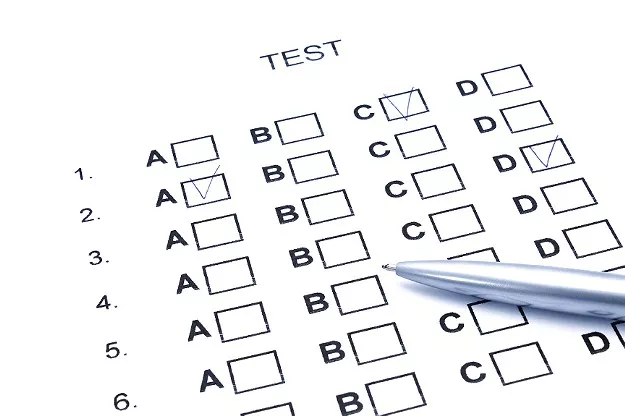
Forbes is not my go-to source for educational news and insight, but you get news and insight where you find it. In this case, it's from a 39-year-veteran high school English teacher, a fellow English teacher who outranks me by five years. I have to pay attention to what he says, right?
The headline asks, Is The Big Standardized Test A Big Standardized Flop? The answer, according to the writer, is yes, and teachers knew it when the testing craze began ramping up 20 years ago. The people who didn't catch on were leaders of the education reform/privatization movement. Now a few of them are beginning to.
The author cites the work of two conservative educational scholars, Jay Greene and Frederick Hess. Greene is head of the Department of Education Reform at the University of Arkansas (If the "education reform" in the department title and Arkansas as the location aren't clues enough to Greene's conservative educational leanings, let me add for longtime followers of the Goldwater Institute and my posts, Matthew Ladner, ex-education guy at the Goldwater Institute and current senior research fellow at the Charles Koch Institute, has been a frequent contributor to Greene's blog.) Greene says, rightly, test scores aren't valuable in and of themselves. They are supposed to be predictors of success in students' future lives. The problem is, they're not very good at it.
If increasing test scores is a good indicator of improving later life outcomes, we should see roughly the same direction and magnitude in changes of scores and later outcomes in most rigorously identified studies. We do not.And he goes further, saying test scores and VAM (Value Added Measurement) don't tell us much about the quality of the schools or the programs the students are enrolled in.
Tags: Standardized testing , Jay Greene , Frederick Hess , NAEP , Image

