Thursday, August 16, 2018
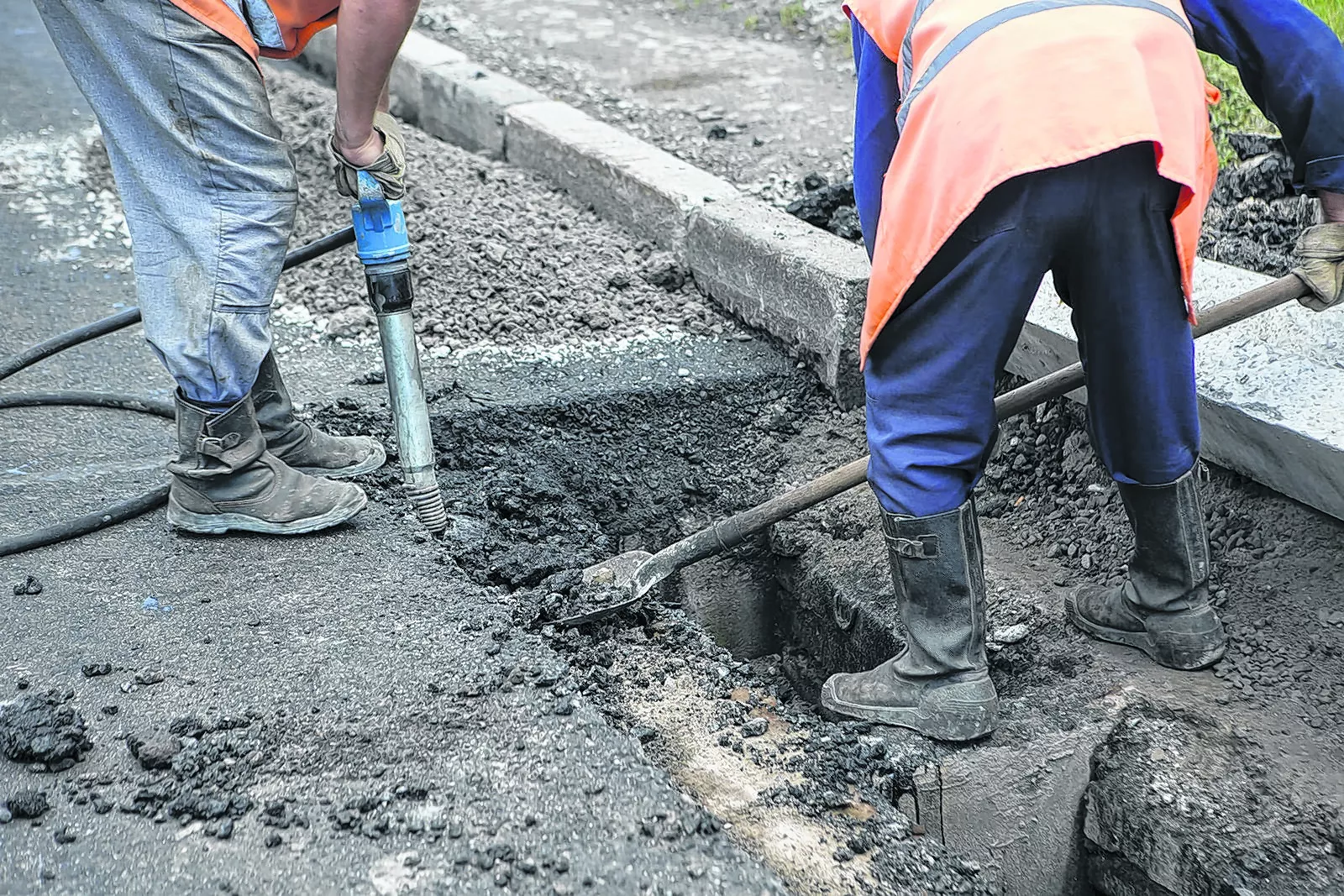
Arizona ranks second lowest on highway spending per driver, only beat by Michigan, according to a new report by financial news site 24/7 Wall Street. The state spends an annual $239 per driver on state highways.
"While the article doesn't draw a direct connection between per capita spending and the quality of state infrastructure, it does demonstrate how poorly Arizona funds its transportation infrastructure," wrote Pima County Administrator Chuck Huckelberry in a memorandum, highlighting the report.
He also wrote that the Pima County is still looking at ways to fund transportation needs and that the state gas tax would be the best source. The tax that everyone pays when they fill up their tank is meant to fund road repair. But the state has been sweeping those funds for years to cover other needs, like paying for highway patrol.
As well, Arizona's gas tax is below the national average, and the state hasn't raised it since 1991. In the interim, 44 other states have, according to The Institute on Taxation and Economic Policy, a nonpartisan nonprofit.
Huckelberry wrote that he will continue to advocate for increasing transportation spending at local, state and national levels.
Tags: news , highways , driving , Arizona , cars , potholes , funding , Image
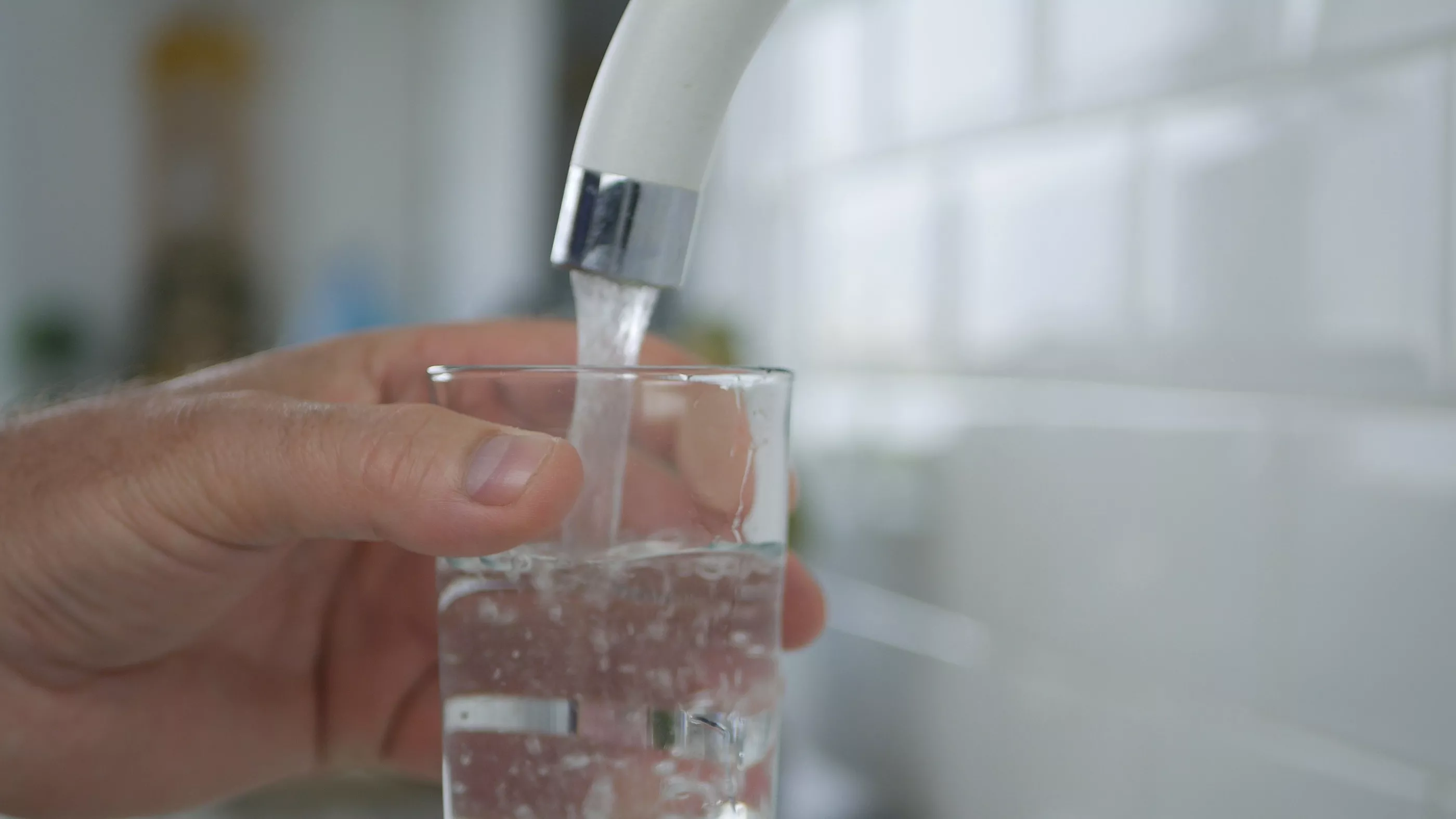
Marana residents who live in the affected residential areas have been asking the Council to treat the tap water ever since news broke last month of two types of contaminants exceeding the Environmental Protection Agency’s health advisory levels. Marana had been sending out mailers informing Marana Water users of the contaminants since December 2016.
The contaminants, PFAs and 1, 4-Dioxane are unregulated compounds that Marana Water staff found in the two separate water systems that feed Saguaro Bloom and Continental Reserve. These compounds have been found in water sources all over the country, including elsewhere in the Tucson Metro Region.
According to the EPA, the risk exposure for the dioxane health advisory level is one in one-million, over a lifetime. Adverse effects include kidney and liver damage. Marana’s levels go as high as two-and-a-half times the advisory level.
Marana Water Director John Kmiec said the EPA is due to release new standards for soil and groundwater contamination this fall, but there’s no guarantee they will meet their deadline. Arizona currently has no set guideline, but some states have set their own, which vary widely. For example, the EPA’s health advisory level for 1, 4 Dioxane is 0.35 parts per billion, but Alaska set their standard at 77 parts per billion and New Hampshire’s is 0.25.
Several town residents spoke at the meeting, expressing concern over the water and satisfaction that the Council seemed on board for treatment as soon as possible.
Saguaro Bloom resident Joyce Reid called the contamination a health hazard and said she’s “happy to hear that there may be some light at the end of the tunnel.”
Shawna Larsen, a cancer survivor, said the low odds of risk exposure are no comfort to her.
“I heard the presentation using the phrase ‘one-in-million chance,’” she said. “Well my chance is over. That already happened. So what I’d really like to be able to tell my coworkers is, ‘I live in Marana. They had a problem. They put in a treatment facility. It’s working great. They’re testing it consistently. And we’re really happy where we’re at. We’re living in our dream home.’”
Vice Mayor Jon Post was the first council member at the meeting to say he thinks the town should build the treatment plants, followed by a chorus of applause. As far as a funding source, he suggested that an additional sales tax might be an option.
“Just one-tenth of a percent for the town of Marana is $1 million a year,” he said. “It’s not even something that people that shop in Marana would even notice. But yet, it would be a revenue stream that would guarantee us quality water for our residents.”
Two water treatment centers, built around the contaminated wells, would cost about $13.5 million to build and then run for 20 years, about $1.5 million less than a previous estimate the town manager shared with Tucson Local Media.
Marana and other local jurisdictions, along with the Arizona Department of Environmental Quality, are continuing to investigate whether the contaminants came from Davis-Monthan Air Force Base or another source, but so far no definitive source has been identified.
Councilmember Roxanne Ziegler said she’s definitely in favor of treating the water but not fond of creating a tax to pay for it. She suggested holding off on capital improvement projects to divert funds to cover the treatment centers right away, and hopefully recover the funds in the future.
“I don’t want to play the blame game right now, but I’m all for fixing this and then going back and recovering what we can if indeed it was Davis Monthan or some other area,” she said.
The contamination levels in a number of the wells has dropped since the town began testing the water in late 2016, though a few have slightly increased. Kmiec said there’s no way to know if the wells that are dropping will continue that trend.
Marana Water looked at other options besides treating the water, but advised against them. One of those options is “water blending,” which happens when a contaminated system is connected with a clean system.
One such project was already in the design stages, connecting the water systems that serve Continental Reserve and the Twin Peaks area, for the benefit of optimal water usage rather than to dilute contaminants. It should be completed in the next two years. But Kmiec said Marana Water found the blending technique had a low effectiveness rate at bringing the contaminants down to and maintaining a comfortable level.
The Northwest Recharge, Recover, and Delivery System is another project in the works, to be constructed in 2023. It’s a joint pipeline project with Marana, Oro Valley and Metro Water to transport water that all three jurisdictions have stored by the Marana Airport.
Another option is looking at accessing Central Arizona Project water, but would take a considerable amount of infrastructure, treatment and precaution. Kmiec said because of these challenges, this option “quickly fell off the radar.”
Town Manager Jamsheed Mehta said the town staff will put together a proposal on how and when to build the treatment centers, which should be ready to present to council sometime in late-September to early-October.
Mayor Ed Honea said the council wants to see the treatment facilities happen as quickly as possible.
“We have to work on financing and everything else, but that is not the most important issue,” Honea said. “The most important issue is cleaning up the water, and we’ll figure out the financing down the road. It may be from three or four different sources.”
Tags: water , contamination , chemicals , Marana , wells , action , Image
Wednesday, August 15, 2018

Doug Ducey and his Republican legislative cronies had $56 million in federal money waiting to be spent to help cover the cost of child care and early childhood education for low income families. They refused to spend it.
The state didn't have to put up a penny. All it had to do was add a $56 million line item to its budget, and more low income children would have access to child care services. Ducey and the Republican legislative leaders knew the money was there, they were urged to put it in the budget by child care advocates and by Democrats in the legislature. They just decided not to do it.
When a story in the Sunday Star brought the unspent $56 million to my attention, I contacted Michelle Crow, Southern Arizona Director of the Children's Action Alliance, for more details. Next I talked to Democratic Rep. Randy Friese, who represents LD-9, my legislative district, to find out why the money didn't make it into the budget. The more I learned, the worse things got.
In March the federal government included $5.2 billion in its budget to increase the quality of child care and early childhood education across the country. Arizona's cut of the funds is $56 million, which is supposed to be added to the $125 million Arizona already receives to subsidize child care and early childhood education for children from low income families.
Right now, there's not enough money to subsidize child care for all the children who need it. As bad or worse, the amount the state allocates per child doesn't cover the child care provider's costs. The state Department of Economic Security's "Reimbursement Rates for Child Care" schedule is based on what the services should cost. The problem is, the reimbursement rates haven't changed since 2000. The state is still using an 18 year old rate schedule created at a time when the minimum wage was $5.15 an hour. Today it's $10.50.
It's actually worse than that. The DES reimbursement is only 75 percent of going rate in 2000. It's no surprise Arizona has among the lowest reimbursement rates in the country.
Tags: Child care subsidies , $56 million , Department of Economic Security , Michelle Crow , Rep. Randy Friese , Rep. Pamela Powers Hannley , Image

Tags: comic , politics , cartoon , star , Hollywood , walk of fame , removed , auction , Image
Tuesday, August 14, 2018
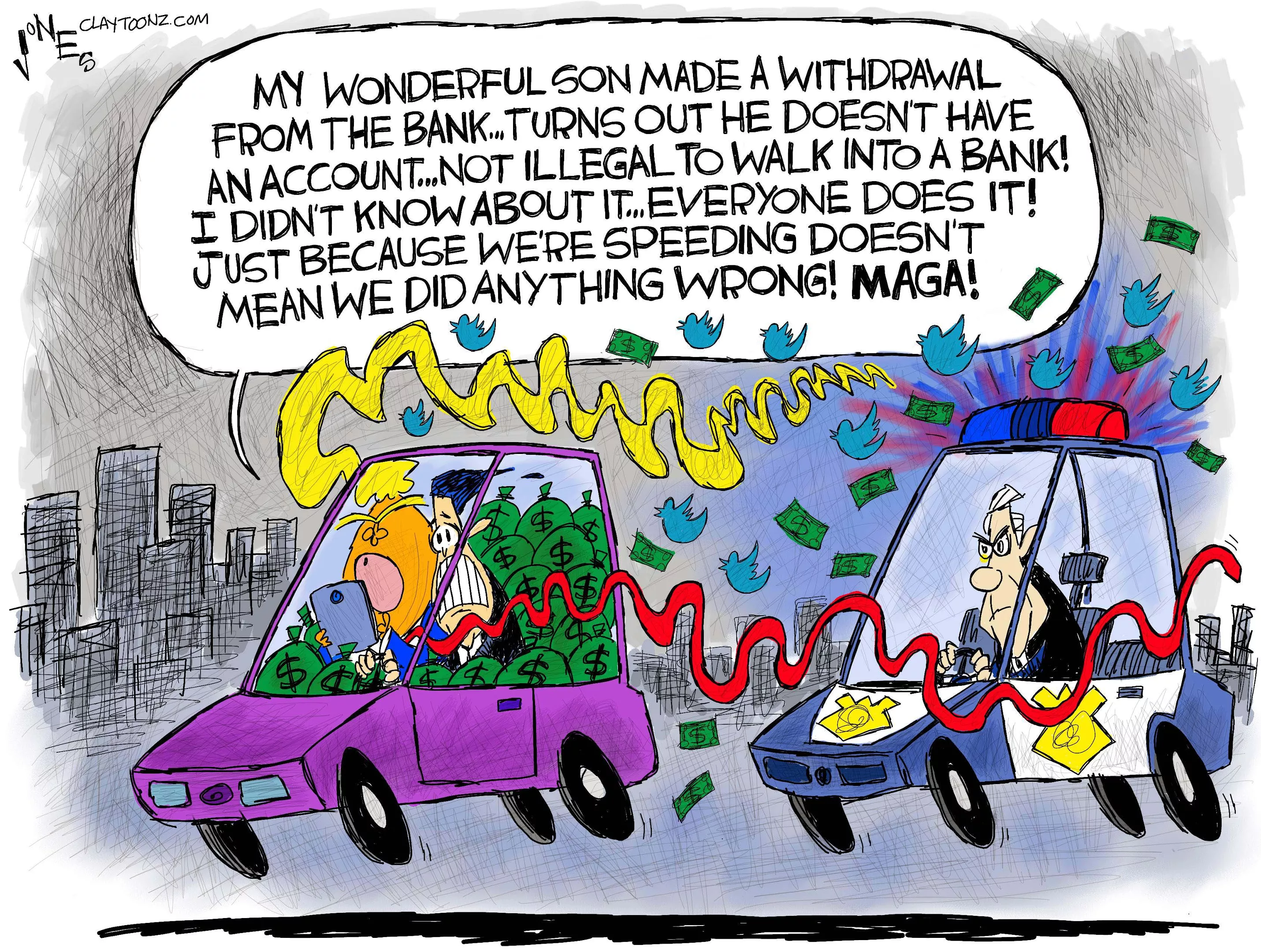
Tags: comic , cartoon , politics , Trump , car chase , money , son , Image
Monday, August 13, 2018
Are you tired of all those political robocalls and calls from earnest volunteers? Did you know, they're tired of talking to you too?
Are you tired of all those glossy, oversized postcards from candidates touting their accomplishments — and maybe running down their opponents? Did you know, they're tired of sending them to you too?
Just vote. When campaigns find out you've sent in your ballot, they'll leave you alone. No more (or almost no more) calls. No more (or almost no more) oversized postcards. You can sit back with the beverage of your choice and watch the political circus unfold before your eyes, knowing you've done your patriotic chore. Better yet, volunteer for the candidate(s) of your choice and be one of those phoners or the doorbell ringers helping to get out the vote.
Send in your ballot!
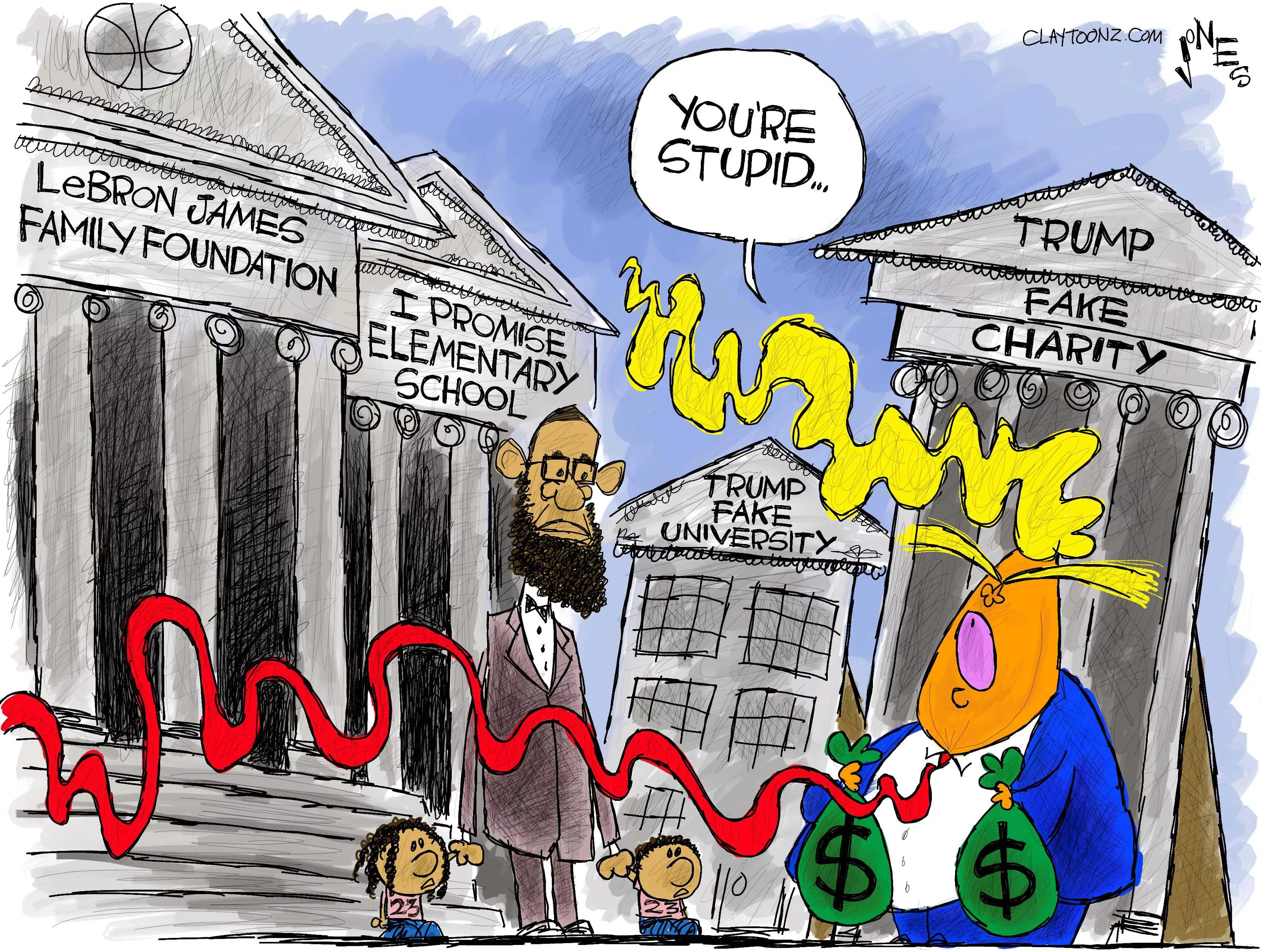
Tags: comic , politics , cartoon , LeBron , President , education , hypocrisy , Image
Friday, August 10, 2018
Thursday, a post on Blog for Arizona by Larry Bodine sent minor shockwaves through the Democratic primary race for governor. Bodine wrote a scathing review of a book David Garcia wrote titled School Choice, which will be published September 28. According to Bodine, Garcia's book is pro-school privatization and, in the words of the headline "a Blueprint to Dismantle Public Education."
Bodine's post was the first I heard of the book. I asked him if he would share his review copy with me, and he did gladly. I read the book — or to be completely honest, I read the beginning carefully, then skimmed the rest of the 196-page book attentively enough to understand its content.
Bodine's depiction of the book is, in a word, wrong.
Of the people who have had a chance to read the book and comment on it in the media, I probably have the most experience reading education books. I have amassed a significant number of postgraduate units in the field, and I've continued reading education works, ranging from blog posts to articles to books, on a daily basis. Though I have expressed my support for Garcia, I also know how to read these kinds of texts for content and possible political leanings without letting my personal opinions interfere.
What Garcia has written is a book on the history of school choice beginning in colonial days and continuing through 2017. It is meant to be an objective overview of the subject, and it succeeds in that regard. If I had never heard of David Garcia and read this book, I wouldn't know his personal opinions on the subject. Though it is written for general consumption, it would be a valuable book to assign in any college course on the history of education, from Education 101 through graduate school.
I'm not the only one to arrive at the conclusion that Bodine's post is a distortion of the contents of Garcia's book. Brahm Resnik, one of Arizona's top journalists, came to a similar conclusion. So did Maria Polletta of the Arizona Republic. I'll quote some of what they wrote at the end of the post.
Tags: David Garcia , Blog for Arizona , Larry Bodine , School Choice , MIT Press Essential Knowledge Series , Image

This survey also serves as a resource to raise awareness of the issues that the disability community faces, which are not often in the political spotlight. However, one in three Arizona residents are affected by a disability, according to Sarah Ruf, a community relations specialist for Arizona Developmental Disabilities Planning Council, which is one of the leading organizations that produced this survey.
Unfortunately, a lot of candidates did not respond to it. The organizations stated that the survey had a 26.5 percent response rate. Although, there were a few from the Tucson area that did respond. Here are a few highlights from what they said. You can read the full document here.
Ralph Atchue (D) State Senator LD-11
Atchue, who lost his 2016 race for this position against Republican Sen. Steve Smith, "definitely supports" training law enforcement to interact with individuals with disabilities.
He wrote:
"Law enforcement has got to incorporate training on interactions with individuals who cannot communicate verbally. This training must include circumstances dealing with individuals with conditions that stem from mental illnesses and stress. We have got to train law enforcement to tell the difference between situations that are life threatening and those that can be approached with concern and tact. We are seeing too many unnecessary deaths, injuries and incarcerations."
Atchue also considers the Arizonans with Disabilities Act (AzDA) - which requires local governments and businesses that provide public services to make reasonable accommodations for individuals with disabilities - "an important component of civil rights,” and does not support any attempt to delay a building's compliance with ADA standards, unless in the most "extreme conditions," which he did not provide an example of.
Neither of his political opponents responded to the survey.
Kathy Hoffman (D) State Superintendent of Public Instruction
Hoffman "definitely supports" public schools (including charter) complying with federal access laws.
She wrote:
"As a school-based speech therapist, I have extensive experience working with students with disabilities. It is critical that students have comprehensive special education services available in all public schools to make sure that they have equal access to a high quality education. Further, public schools should not be allowed to turn away students with disabilities for any reason.”
None of her political opponents responded to the survey.
Anthony Sizer (R) State Representative LD-2
Sizer, who lost his 2016 primary for State Representative in LD-14, indicated that he is "likely to support" Medicaid block grants or a per capita cap system, which would limit the amount of money for the program.
He does support additional funding for Arizona's five centers for independent living, which provide programs for individuals with disabilities. He also supports law enforcement training for interactions with the disabled community, as well as integrated employment. The rest of his survey responses indicated "not sure - need to learn more."
JP Martin (D) and Pamela Powers Hannley (D) State Representative LD-9
These two candidates are currently battling each other for a seat in the House, and responded very similarly to the questions in the survey. They both support integrated employment, ADA-compliant public buildings, funding for Arizona's CILs, prohibiting insurance companies from denying coverage based on pre-existing conditions, forbidding landlords from denying tenants based on income source and Medicaid funding for higher wages for community attendants.
Powers Hannley wrote, "Home health aides and other caregivers have important jobs. Unfortunately, they are woefully underpaid and often suffer from wage theft. Yes, they should be paid appropriately."
They both stand in opposition to Medicaid block grants, a per capita cap system, Medicaid work requirements and ADA notification procedures. Powers Hannley noted that she voted against the latter while in office.
The other two candidates, Ana Henderson and Randy Friese, did not respond to the survey.
Tags: disability , issues , legislation , primary election , ADA , atchue , hoffman , sizer , martin , powers hannley , survey , Image