

Friday, September 3, 2021

Thursday, September 2, 2021
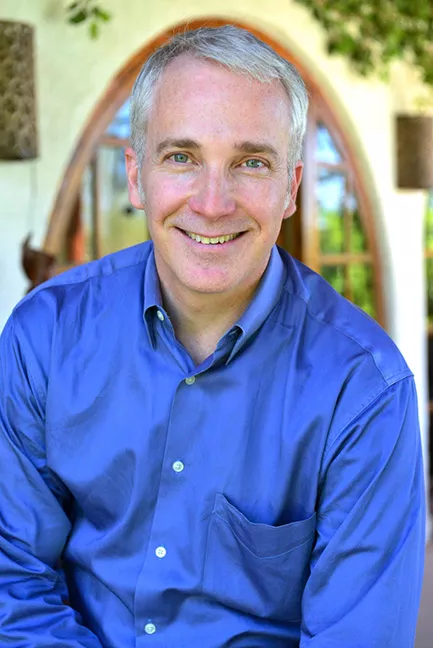
Friese, a physician who helped save the life of Gabby Giffords after she was shot through the head in January 2011, was one of three Democrats seeking to replace retiring Democrat Ann Kirkpatrick in Congressional District 2. (The district's lines are being redrawn for next year's election by Arizona's Independent Redistricting Commission.)
State Sen. Kirsten Engel and state Rep. Daniel Hernandez remain in the Democratic primary. Republican Juan Ciscomani recently announced his plan to run for the seat.
Friese's full statement:
With a heavy heart, I am announcing the end of my campaign for Congress here in Arizona’s 2nd District. When I moved to Tucson in 2008, it was with a firm commitment to serve and care for our community at our hospital. As the Delta variant surges across our region, it has become an increasing challenge to fulfill my obligations to the hospital, my patients, and the campaign amidst a run for Congress. I’ve always loved medicine and patient care, and I’ve come to the realization that I’m not ready to give that up.
I am deeply grateful to the thousands of people who have believed in me and our mission, and have stepped up to support this campaign. Understand that while this campaign is concluding, I remain fully committed to the values and issues at its heart — combating gun violence, ensuring affordable access to high quality healthcare, protecting our democracy, and, of course, ensuring that AZ-02 remains Democratic. I wholeheartedly encourage those who supported my campaign to do the same.
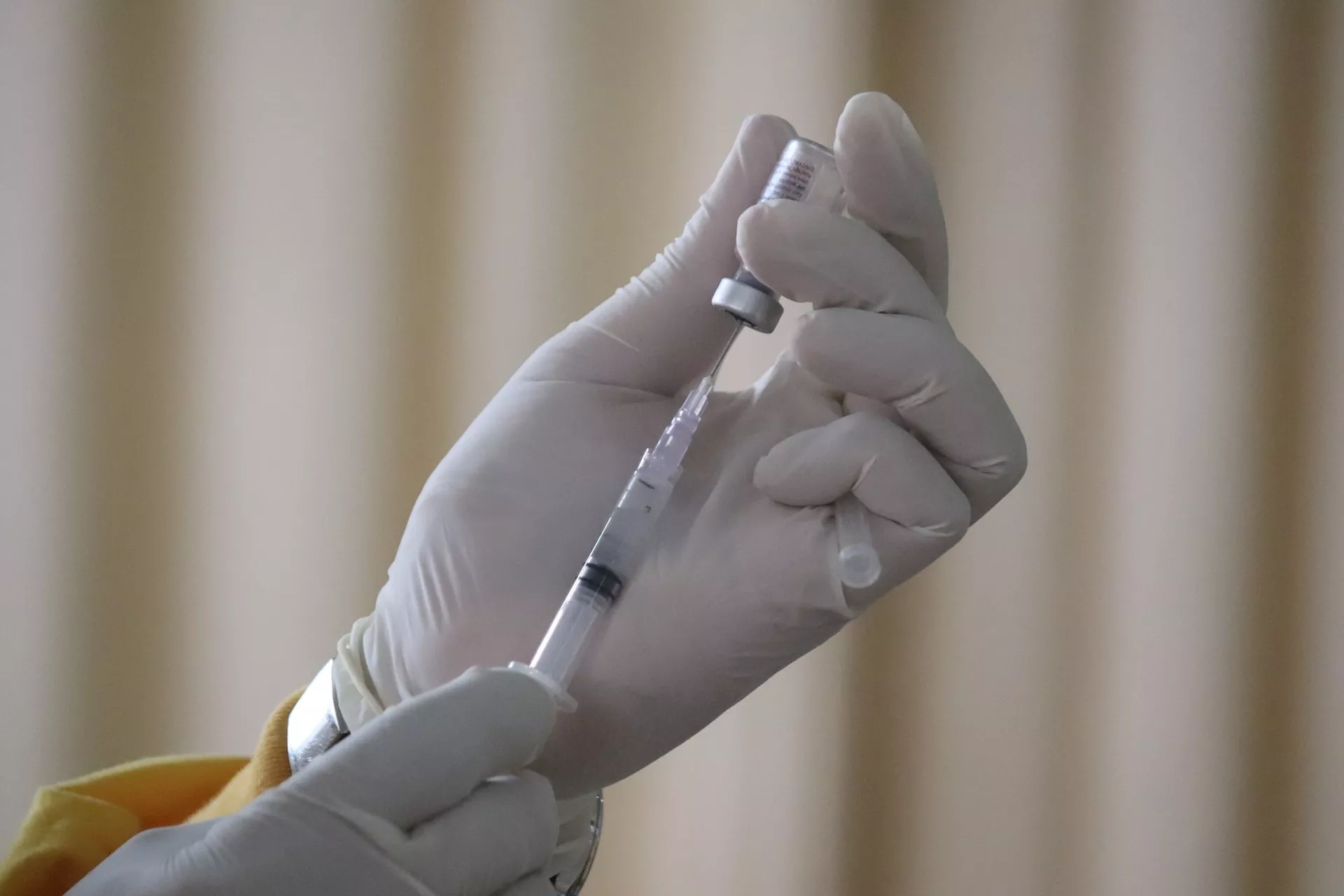
Pima County health officials warned this week that COVID cases are rising among children 11 and under—a population that remains ineligible for vaccines.
The increase comes about a month after most schools reopened for the fall semester, leading to an increase in cases by 16.5% over the last week.
Kids between 12 and 19 had COVID case growth of 11.7%, said Pima County Chief Medical Officer Dr. Francisco Garcia. The FDA authorized the Pfizer COVID vaccine to be offered to children 12 and older on May 10, expanding possible vaccination coverage in Pima County.
Garcia reported that 73.1% of vaccine-eligible populations (12 and older) have at least one dose of vaccine.
Garcia said the greatest rise in reported COVID cases came from young and middle aged adults.
“We see the greatest growth in this middle age group 20 to 44, there were 858 additional cases, representing 41% of the total cases from one week to the next,” Garcia said.
Garcia’s assessment was echoed by Banner Health Chief Clinical Officer Dr. Marjorie Bessel, who said that a majority of COVID patients at Banner Health are in the 20 to 65 age group—and 90% are unvaccinated.
Bessel asked the public to consider getting the vaccine even if they had COVID once before.
“Studies have shown that reinfection rates are 2.34 times more likely in those who remain unvaccinated, which is why vaccination is still recommended by the CDC and medical community even if you’ve had COVID,” Bessel said.
Getting the vaccine is especially important as the Delta variant takes America by storm. Bessel reported that the Delta variant accounts for 99.1% of all coronavirus circulating in the United States.
Tucson Democratic Rep. Charlene Fernandez is asking a court to dismiss a defamation case brought against her by two Republican state legislators and a GOP congressman because statements Fernandez made to the FBI about the two GOP legislators are privileged.
The case stems from a letter sent by Fernandez and other Democratic lawmakers asking the FBI to investigate Rep. Mark Finchem (R-Oro Valley), former state Rep. Anthony Kern (R-Glendale) and GOP Congressman Paul Gosar’s connections to the deadly Jan. 6 insurrection in Washington, D.C.
In February, the trio filed a lawsuit against Fernandez accusing her of defaming them by making disparaging remarks, connecting them to the violence of Jan. 6 and conspiring against them. The trio have not brought a suit against any of the 43 other Democratic legislators who also signed the letter.
The lawsuit was stalled for months because Fernandez was immune from being served while the legislature’s annual session was taking place. But when the session ended, Fernandez waived service and both sides agreed to a 60-day response period which started at the end of the session on June 30.
“Contrary to all of the rhetoric… this is not a lawsuit about alleged fraud in the 2020 election, the purported suppression of conservative viewpoints by social media companies or issues of border security,” Fernandez’s attorney, David Bodney, wrote in the motion to dismiss the lawsuit. “Rather, this lawsuit is about whether state legislators – or, indeed, any Arizonan – may petition federal authorities to investigate potential crimes of the utmost seriousness without being dragged into court to face frivolous and retaliatory defamation litigation.”
(Bodney represents the Arizona Mirror on matters relating to public records and other First Amendment issues.)
Bodney argued that the court should grant the motion to dismiss in part because the Democratic lawmakers were communicating with law enforcement entities. Arizona case law states that such communication is privileged and a person cannot be sued for making a report to law enforcement.
Wednesday, September 1, 2021
Tuesday, August 31, 2021
ProPublica is a Pulitzer Prize-winning investigative newsroom. Sign up for The Big Story newsletter to receive stories like this one in your inbox.
This story was originally published by ProPublica and the New York Times.
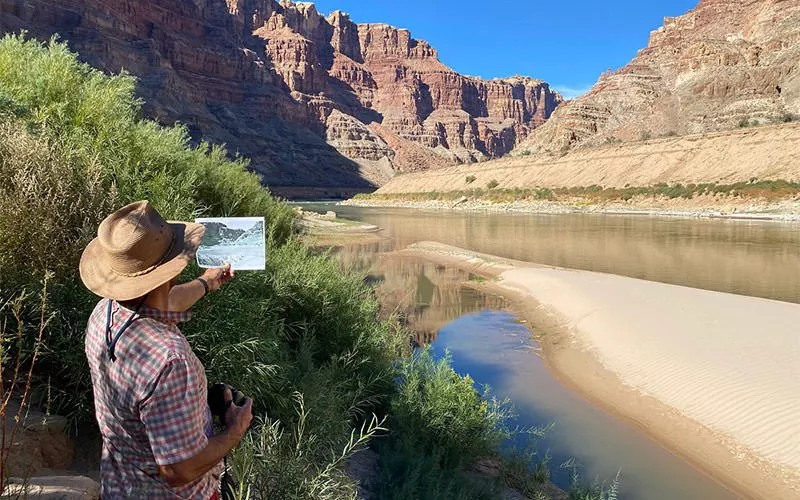
On a 110-degree day several years ago, surrounded by piles of sand and rock in the desert outside of Las Vegas, I stepped into a yellow cage large enough to fit three standing adults and was lowered 600 feet through a black hole into the ground. There, at the bottom, amid pooling water and dripping rock, was an enormous machine driving a cone-shaped drill bit into the earth. The machine was carving a cavernous, 3-mile tunnel beneath the bottom of the nation’s largest freshwater reservoir, Lake Mead.
Lake Mead, a reservoir formed by the construction of the Hoover Dam in the 1930s, is one of the most important pieces of infrastructure on the Colorado River, supplying fresh water to Nevada, California, Arizona and Mexico. The reservoir hasn’t been full since 1983. In 2000, it began a steady decline caused by epochal drought. On my visit in 2015, the lake was just about 40% full. A chalky ring on the surrounding cliffs marked where the waterline once reached, like the residue on an empty bathtub. The tunnel far below represented Nevada’s latest salvo in a simmering water war: the construction of a $1.4 billion drainage hole to ensure that if the lake ever ran dry, Las Vegas could get the very last drop.
For years, experts in the American West have predicted that, unless the steady overuse of water was brought under control, the Colorado River would no longer be able to support all of the 40 million people who depend on it. Over the past two decades, Western states took incremental steps to save water, signed agreements to share what was left and then, like Las Vegas, did what they could to protect themselves. But they believed the tipping point was still a long way off.
Like the record-breaking heat waves and the ceaseless mega-fires, the decline of the Colorado River has been faster than expected. This year, even though rainfall and snowpack high up in the Rocky Mountains were at near-normal levels, the parched soils and plants stricken by intense heat absorbed much of the water, and inflows to Lake Powell were around one-fourth of their usual amount. The Colorado’s flow has already declined by nearly 20%, on average, from its flow throughout the 1900s, and if the current rate of warming continues, the loss could well be 50% by the end of this century.
Earlier this month, federal officials declared an emergency water shortage on the Colorado River for the first time. The shortage declaration forces reductions in water deliveries to specific states, beginning with the abrupt cutoff of nearly one-fifth of Arizona’s supply from the river, and modest cuts for Nevada and Mexico, with more negotiations and cuts to follow. But it also sounded an alarm: one of the country’s most important sources of fresh water is in peril, another victim of the accelerating climate crisis.
Americans are about to face all sorts of difficult choices about how and where to live as the climate continues to heat up. States will be forced to choose which coastlines to abandon as sea levels rise, which wildfire-prone suburbs to retreat from and which small towns cannot afford new infrastructure to protect against floods or heat. What to do in the parts of the country that are losing their essential supply of water may turn out to be the first among those choices.

Monday, August 30, 2021

Friday, August 27, 2021
When the Arizona Supreme Court ruled against an income tax hike that voters approved last year, it illuminated another K-12 funding issue that could strip $600 million a year out of Arizona schools.
Funding from the legislature’s 2018 extension of an expiring sales tax is likely to count against an education spending limit that voters imposed on the state more than four decades ago. Recent increases in K-12 spending, along with a COVID-induced reduction in the spending cap, are making an urgent problem all the more dire.
Proposition 301, which voters approved in 2000, enacted a six-tenths percent sales tax increase to fund education. That tax hike was only good for 20 years, so in the face of a rapidly approaching expiration date, lawmakers and Gov. Doug Ducey approved an extension in 2018.
But they didn’t replicate a key element of Prop. 301. While lawmakers two decades ago recognized that the sales tax money would violate the constitutional spending limit and convinced voters in 2002 to exempt the recently approved ballot measure, that exemption doesn’t apply to the 2018 extension — and legislators haven’t asked voters to ensure that schools can spend the money.
Lawmakers three years ago copied language from the 2000 ballot measure declaring that money from the reauthorized sales tax hike is exempt from the spending limit, but didn’t ask voters to amend the 1980 spending cap to exempt the sales tax extension.
And the Supreme Court’s ruling last week on Proposition 208 makes clear that that won’t cut it, putting the $600 million in annual sales tax revenue in jeopardy.
The Invest in Education Act, which voters approved as Prop. 208, created a 3.5% income tax surcharge on Arizonans who earn more than $250,000 a year in order to inject an estimated $827 million a year into public schools, much of it aimed at increasing pay for teachers. To get around the spending cap, the ballot measure classified the new money as a grant and declared that the funding was “not considered local revenues” subject to the constitutional limit.

