Thursday, August 5, 2021


Wednesday, August 4, 2021
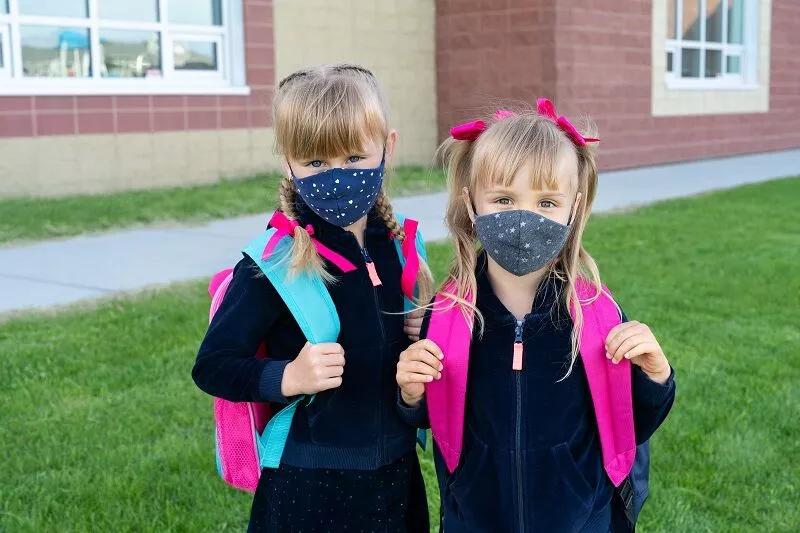
The Tucson Unified School District board voted 4-0 at an emergency meeting Wednesday morning to require everyone to wear a mask on TUSD property.
Before school begins Thursday, the board decided to mandate masks on all TUSD campuses, motivated by the outbreaks in the Vail School District and with the growing number of pediatric cases.
Vail School District began school on July 19 and officials have reported 25 COVID-19 cases from students and staff as of July 25. On Monday, the district reported 57 student cases and 12 staff cases as of Aug. 1. TUSD is almost four times the size of Vail.
Last week, Dr. Theresa Cullen, director of Pima County's Health Department, said the county received reports of 56 cases since July 19 and eight outbreaks at schools.
For weeks, health experts warned of the expected outbreaks and high transmission in schools, especially with the inability of school districts to implement masking, because state law passed in June prohibits districts from mandating masks.
Dr. Joe Gerald, an epidemiologist with the UA Zuckerman School of Public Health, who has been tracking the virus since March of 2020, alerted the public to the impending outbreaks in his weekly forecast.
”Unlike the summer of 2020 when we were headed into school re-opening with generally declining rates, the match has been lit and the kindling is aflame this time,” wrote Gerald in an email. “For good measure, we are going to throw on some wet wood (children) in the coming weeks to ensure a robust bonfire for the Labor Day Marshmallow Roast. In the absence of greater vaccination or mask mandates, it is difficult to be optimistic about what might happen when schools are running at full capacity.”
The warning came along with the exponential rise in COVID-19 cases and the prevalence of the Delta variant, which is highly transmissible. Arizona has a high rate of transmission at 175 cases per 100,000 individuals for the seven day rolling average, while Pima County has about half that rate.

Tuesday, August 3, 2021

Kozachik had more than 57 percent of the vote, while Miranda Schubert had 27 percent and Andres Portela had 15 percent in the Democratic primary.
"My staff and I work hard at building relationships," Kozachik. "That is important in our community. My team and I are grateful to the community for their support."
Portela said the result wasn't what he hoped for, "but I'm forever grateful for those who supported me."
In Ward 3, Dahl had 60 percent of the vote, while Juan Padres had 40 percent.
Dahl, who focused his campaign on responding to climate change, said he was pleased with the results.
"I think one thing it shows is that Tucson voters understand that climate change is not just an issue that will affect the environment and our water supply, but it will impact people, especially those who can least afford to respond," Dahl said.
Padres congratulated Dahl on his victory, saying his opponent "ran a solid campaign."
There's no incumbent in the Ward 3 race as Councilman Paul Durham stepped down earlier this year and Karin Uhlich, who was appointed to replace Durham, did not run for the seat.
Kozachik will face independent candidate Val Romero in the November general as he seeks a fourth term. Dahl is set to face Republican Alan Harwell Jr., who got enough write-in votes to land a spot on the general election ballot, and independent candidate Lucy LiBosha in November.
In Ward 5, Councilman Richard Fimbres faced no primary opposition and will face no opponent in the November general election.

PHOENIX – Arizona Gov. Doug Ducey, 11 other Republican governors and more than 200 GOP lawmakers on Thursday filed an amicus brief with the Supreme Court to overturn the landmark Roe v. Wade abortion ruling.
The 1973 court decision for women’s reproductive rights set a precedent for a constitutional right to access to abortion – and has been challenged ever since. The current nine-member court has a 6-3 conservative majority after the confirmation of the Trump administration’s three nominees – Brett Kavanaugh, Amy Coney Barrett and Neil Gorsuch – and the Supreme Court has agreed to hear the case, which was filed by Mississippi.
One legal expert at the Sandra Day O’Connor College of Law at ASU predicts the court will continue to chip away at Roe v. Wade without making the more controversial decision to eliminate it completely.
“Court watchers believe that the chief justice (John Roberts), in particular, is more institutionally minded and does not want the court to appear overly political,” associate professor Kaiponanea Matsumura, an expert in reproductive rights, told Cronkite News. “The question is whether any of President Trump’s appointees share the chief justice’s sense of restraint.”
Friday, July 30, 2021

Thursday, July 29, 2021

Wednesday, July 28, 2021
PHOENIX – Full-time minimum wage workers can’t afford a two-bedroom apartment in any state, according to a recent report from affordable housing advocates, and with housing costs skyrocketing in Arizona, many workers are struggling.
According to the National Low Income Housing Coalition’s annual Out of Reach report, those workers in 93% of U.S. counties can’t afford a one-bedroom, either. In Arizona, workers would need to put in 73 hours a week to afford a two-bedroom rental. Excluding weekends, that’s 14.6 hours per day. Still, that’s better than the national average of 97 hours per week, the report said.
The report defines affordability as the hourly wage a full-time worker must earn to spend no more than 30% of their income on rent. Workers would need to earn $24.90 per hour for a two-bedroom rental and $20.40 per hour for a one-bedroom. The average hourly worker earns $18.78 per hour, and the federal minimum wage is $7.25 per hour, unchanged since 2009.
In 2019, 13.5% of Arizonans were living below the federal poverty level of $25,750 (for a family of four), compared with 10.5% nationally. This year the federal poverty level is $26,500.
Even under the best of circumstances, rent is unaffordable for most low-wage workers, the report said, and addressing the long-term housing affordability crisis in this country requires increasing rental assistance to all who need it. In Phoenix, the average monthly rent for a two-bedroom apartment is $1,449 – a 12% increase over last July – according to Zumper, which analyzes active apartment listings.