
Tuesday, June 29, 2021

Monday, June 28, 2021

WASHINGTON – Despite gains in some areas, Arizona continued to rank among the worst states in the nation for education, according to the latest version of a national report that measures children’s well-being across several areas.
The 2021 Kids Count report said Arizona was 47th overall in education, down one spot from 46th a year earlier, evidence that “we’re not doing a very good job in Arizona,” experts said.
David Lujan, president and CEO of Children’s Action Alliance, said the low ranking “stems from the lack of investments we’ve seen in education, not only K-12 education but early childhood education, going back for more than 20 years now.”
“We’re seeing the ramifications of that in things like large class sizes, the lack of full-day kindergarten in every school district, and teacher shortages,” Lujan said. “Those things matter when it comes to being able to provide a quality education for students.”
The Kids Count report, prepared annually by the Annie E. Casey Foundation, measures children’s welfare in each state through dozens of data points split between four broad categories: education, economic well-being, health, and family and community.
Overall, Arizona improved slightly, going from 42nd place in last year’s report to 40th in the latest report. But the state did not crack the top half of states in any category. Arizona did best in health, where it finished 28th among states, followed by 35th for economic well-being and 46th in family and community.
And those numbers are likely to get worse in next year’s report, which will include data from the pandemic year of 2020, which did not make it into this report, experts said.
“Providing access to quality health care, child care, education and mental health services must be the focus as we come out of the coronavirus pandemic,” Lujan said.
Friday, June 25, 2021

WASHINGTON – The Navajo Nation has yet to record a single case of the Delta variant of COVID-19, but now is not the time for tribe members to let down their guard, Navajo President Jonathan Nez said Wednesday.
Nez spent much of the time during a Washington Post program on public health talking about the Navajos’ success in fighting the pandemic, falling from a national COVID-19 hotspot at one point last year to negligible case numbers today.
But while the tribe has “been very cautious … I think we need to continue to be cautious,” Nez said, in part because of the arrival of the highly contagious Delta variant.
“We have heard updates that the city of Tucson has identified a Delta variant … so we are concerned,” Nez said.
An Arizona Department of Health official said Wednesday that the Delta variant has been found in northern, central and southern Arizona.
“The Alpha variant currently is the predominant strain in Arizona, but we anticipate that there will be an increase in the Delta variant since it appears to be more transmissible than the Alpha variant,” said Steve Elliott, a health department spokesperson.
Arizona Public Health Association Executive Director Will Humble said experts “expect that the Delta variant will be dominant by mid-to-late summer in Arizona.”
“It’s going to take over,” he said. “It’s just outcompeting the other strains. The question is how long it’s going to take.”
But Humble said that despite the high transmission rates health experts have seen for the Delta variant, it will likely not spread as fast as previous variants because of the availability now of COVID-19 vaccines.

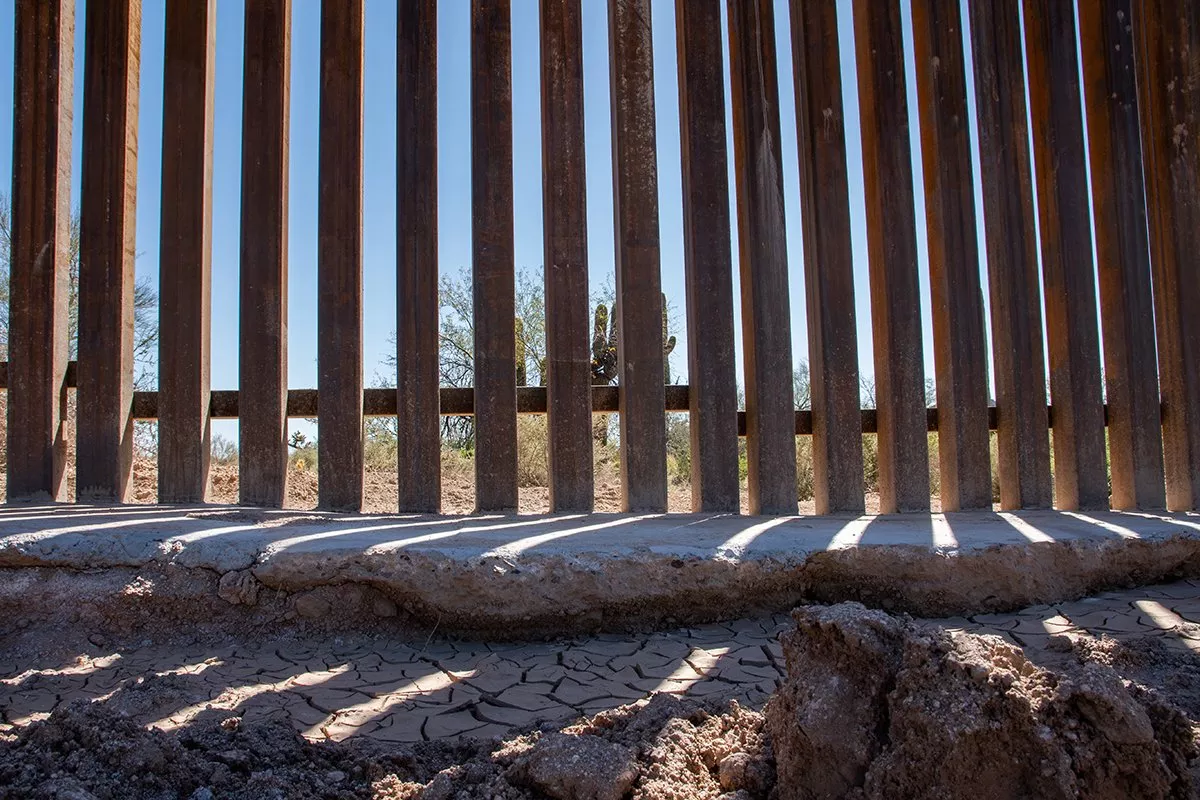
WASHINGTON – Border officials said they were “devastated” this week to find that the federal government has extended a COVID-19 ban on nonessential border crossings for another month, potentially crippling businesses there.
“The ban is a terrible and now-exaggerated response to the pandemic,” said Andy Carey, executive director of the U.S.-Mexico Border Philanthropy Project. “It’s reinstated every month for another month, and it’s been going on for nearly a year-and-a-half now, it’s time for the ban to end.”
The ban was first imposed in March 2020 on nonessential travel – essentially tourists or family visitors – between the U.S., Mexico and Canada in response to the first wave of COVID-19. It was regularly extended but was set to expire Monday.
Customs and Border Protection said that the situation has improved in both Canada and Mexico, as vaccinations have risen and infections have dropped. But it announced Wednesday that things were still too uncertain, particularly given the rise of new variants, to lift the restriction, which was extended to 11:59 p.m. July 21.
CBP did not immediately respond to a request for comment Wednesday. But border community leaders, who had been looking for the ban to end this week, were not happy.
Nogales Mayor Arturo Garino said his city has lost billions of dollars in business from the ban that “should have been lifted months ago.”

Thursday, June 24, 2021

WASHINGTON – Border officials said they were “devastated” this week to find that the federal government has extended a COVID-19 ban on nonessential border crossings for another month, potentially crippling businesses there.
“The ban is a terrible and now-exaggerated response to the pandemic,” said Andy Carey, executive director of the U.S.-Mexico Border Philanthropy Project. “It’s reinstated every month for another month, and it’s been going on for nearly a year-and-a-half now, it’s time for the ban to end.”
The ban was first imposed in March 2020 on nonessential travel – essentially tourists or family visitors – between the U.S., Mexico and Canada in response to the first wave of COVID-19. It was regularly extended but was set to expire Monday.
Customs and Border Protection said that the situation has improved in both Canada and Mexico, as vaccinations have risen and infections have dropped. But it announced Wednesday that things were still too uncertain, particularly given the rise of new variants, to lift the restriction, which was extended to 11:59 p.m. July 21.
CBP did not immediately respond to a request for comment Wednesday. But border community leaders, who had been looking for the ban to end this week, were not happy.
Nogales Mayor Arturo Garino said his city has lost billions of dollars in business from the ban that “should have been lifted months ago.”
“You know it’s going to hurt when 65% of our sales tax comes from residents in Sonora coming here and shopping,” Garino said. “That money keeps us afloat.”
Officials in Yuma and in San Ysidro, California, echoed his comments, saying border communities are suffering from a travel ban that has “outlived its purpose.”
“I represent about 800 businesses, and we would do $895 million in retail sales during a normal year,” said Jason Wells, executive director of the San Ysidro Chamber of Commerce. “We are estimating from March 2020 to March 2021 that the number is about $250 million. That’s about a 72% loss.”
WASHINGTON – Arizona advocates are breathing “a sigh of relief” this week after the Supreme Court again refused to invalidate the Affordable Care Act, a decision that should preserve the health care program for at least several years.
The ruling is the third time the court has upheld “Obamacare” and comes as the number of people signed up for health insurance under the ACA continues to grow under a special open enrollment period. That included more than 23,000 Arizonans, bringing the total number insured through the act to 178,125 as of May 31.
“The strongest case they had by far was the one that failed last week,” said Will Humble, executive director of the Arizona Public Health Association, of ACA opponents. He predicted Monday that the act is here to stay for “at least three and a half years,” given the current administration and the unlikelihood of another court challenge.
Arizona was one of 17 states that joined a Texas lawsuit to overturn the act. Calls to attorneys general in Arizona and Texas were not immediately returned Monday.
But a spokesperson for Arizona Attorney General Mark Brnovich told ABC 15 after the ruling was released Thursday that it is “even more incumbent on Congress to pass legally sound policies to fix our broken healthcare system, further fractured by the Affordable Care Act.”
But Democrats were not nearly so hesitant to react to the ruling.
“Thankfully, the Supreme Court laid down a decisive ruling that protects these provisions,” said Arizona Democratic Party Chair Raquel Terán in a statement Friday, after what she called “the Republicans’ decade-long crusade against the Affordable Care Act.”
The court ruled 7-2 Thursday that the latest challenge to the law had to fail because the plaintiffs – 18 states and two individuals – could not show that they would be harmed by the law and, thus, lacked standing to sue.

Wednesday, June 23, 2021

PHOENIX – Amid recent violence in the Middle East, Arizona Gov. Doug Ducey tweeted “Arizona stands with Israel,” joining Republican leaders across the country in a show of political support.
It also provoked outrage among those who support Palestinians, with one activist calling Ducey’s position a “violation of human rights.”
Despite the polarized viewpoints, Arizona’s aerospace and defense industry not only “stands with” Israel, but technology developed here stands watch over the country: Israel’s Iron Dome defense system was created here. In partnership with Rafael Advanced Defense Systems in Israel, Raytheon Missiles & Defense in Tucson produced the anti-missile defense system credited with blocking thousands of missiles fired by Hamas and other groups since it was first deployed in 2011.
Raytheon employs 15,000 Arizonans, according to its spokesperson, and Israeli partner Rafael formed a joint venture last year to build a version of the Iron Dome for use in the United States.
Leib Bolel, president and CEO of Arizona Israel Technology Alliance, said that when the U.S. provides military aid to Israel, it’s primarily in the form of government contracts.
Raytheon and Rafael “work very closely with the Israeli government to supply them with a number of military applications, but most notably is the Iron Dome,” Bolel told Cronkite News. The midair interception technology came “out of Rafael and Arizona, so there’s a lot of military collaboration between the two governments.”
The Iron Dome is a short-range anti-rocket system, with an intercept range of 2.5 to 43 miles, and has been relied on during the recent conflict. A shaky ceasefire remains in place, but the Associated Press reported Israel launched airstrikes on the Gaza Strip late last week.
Last month, clashes escalated between Palestinians and Israeli police when Israel tried to block some Muslims gathering at al-Aqsa Mosque in Jerusalem’s Old City at the beginning of Ramadan, the AP reported. Tensions over a plan to evict dozens of Palestinians from an east Jerusalem neighborhood also fueled confrontations.