
Friday, June 11, 2021

Thursday, June 10, 2021
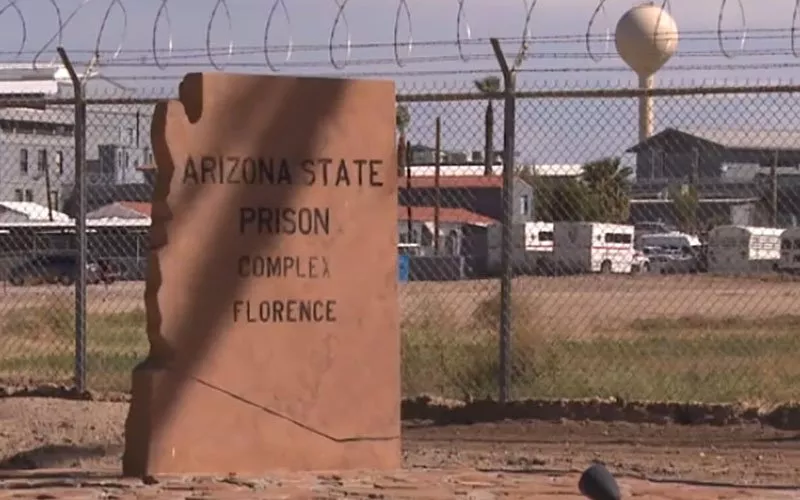
WASHINGTON – Reports that Arizona is preparing to execute death row inmates with gas similar to what was used in the Holocaust have brought responses ranging from “concerned” to “horrified,” but the most common reaction was disbelief.
“What were they thinking?” asked Robert Dunham, executive director of the Death Penalty Information Center, in response to news reports that the state purchased potassium cyanide for possible use in a refurbished gas chamber this year.
“Didn’t anybody in the Arizona Department of Corrections study the Holocaust, and if so, why didn’t they object?” he asked.
The reports come as Arizona Attorney General Mark Brnovich is urging the Arizona Supreme Court to schedule the executions of Frank Atwood and Clarence Dixon, each of whom has been in prison for more than 30 years.
Atwood was convicted in the 1984 kidnapping and murder of an 8-year-old Tucson girl and Dixon was convicted in the 1978 rape and murder of an Arizona State University student in Tempe.
Brnovich told the court that both men have exhausted their appeals and their death sentences should be carried out.
Wednesday, June 9, 2021
Tuesday, June 8, 2021
TEMPE – Candidates are lining up to become Arizona’s next governor in 2022, when Republican Doug Ducey terms out under state law.
Last week, two prominent women joined the race: Secretary of State Katie Hobbs, who has gained national prominence defending the state’s 2020 election, wants to be the Democratic candidate, and former news anchor Kari Lake, who resigned from Fox 10 in March, wants to represent the Republican Party.
They joined Republican hopefuls Kimberly Yee and Karrin Taylor Robson, and Democrat Marco Lopez.
Although Republicans are running on former President Donald Trump’s policies, Hobbs is addressing unfounded allegations of fraud in the 2020 presidential election repeatedly pushed by Trump and many state Republicans. Hobbs has denounced the so-called audit organized by Arizona state senators to review the 2020 presidential election ballots, and told CNN she thinks “this whole thing is a joke.”
“In 2020, against all odds, in the middle of a pandemic, we proved that democracy works,” Hobbs said in a video announcing her campaign. “It’s been my job and life’s work to make government work for the people of Arizona. That’s why I’m running.”
Among gubernatorial candidates, Hobbs was at the top of the power rankings by OH Predictive Insights, a market research firm in Phoenix, even before officially announcing her candidacy. The rankings are based on an online survey of 935 registered Arizona voters conducted the first week of May. Respondents were asked to rate 40 notable Arizonans, regardless of whether any of them actually intend to seek office.
In her campaign announcement, Hobbs noted her efforts to expand Medicaid for seniors and implement the Arizona Opioid Epidemic Act in 2018, which offered increased access to treatment and opioid overdose countermeasures, such as Naloxone.
As governor, Hobbs promised she would protect survivors of abuse, rebuild the post-COVID-19 economy, invest in health care and education and “ensure that your race, gender or ZIP code does not dictate your destiny.”
Monday, June 7, 2021
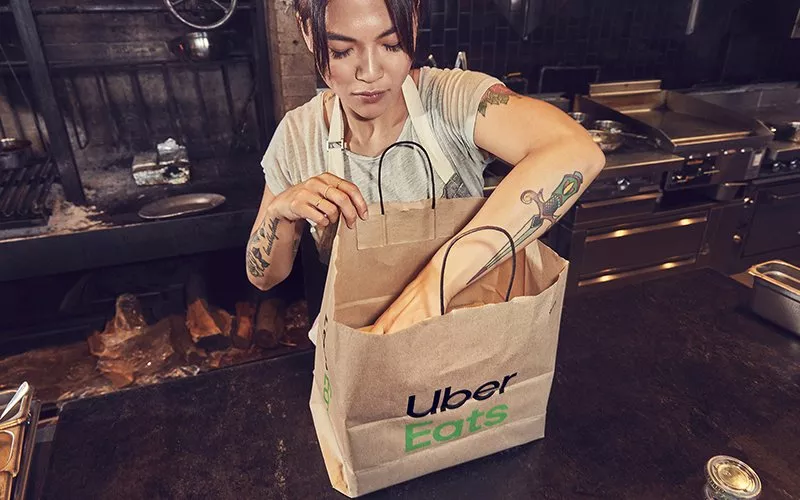
WASHINGTON – Uber Eats, Postmates and DoorDash said they will no longer waive delivery fees for customers who order from Black-owned restaurants in Arizona, to settle charges by the state that the deals violated the Arizona Civil Rights Act.
The agreement, announced Wednesday, settles a claim by the Arizona Attorney General’s Office that waiving fees just for Black-owned businesses “unlawfully discriminated against non-Black owned restaurants and their patrons.”
The companies “adamantly deny any wrongdoing” in the promotions, which were announced last summer at the height of the Black Lives Matter movement. The deals ended in December, as scheduled, but the companies said they will continue working to support Black businesses through such efforts as identifying Black-owned restaurants in a separate category on the apps.
“We’re proud to have supported Black-owned businesses and we’ll continue to make it a priority,” an Uber spokesperson said Wednesday. “We have heard loud and clear from consumers that the ability to easily identify Black-owned restaurants on Uber Eats is a feature they want and appreciate.”
The Attorney General’s Civil Rights Division notified Uber, Postmates and DoorDash in November that the promotions violated the civil rights law’s public accommodations section, which prohibits discrimination based on a person’s “race, color, religion, sex, national origin or ancestry.”
Attorney General Mark Brnovich did not respond to a request for comment Wednesday, but in a prepared statement he said his office took the action “to protect civil rights and ensure businesses offer their services and products based on equal and neutral criteria.”

Friday, June 4, 2021

Thursday, June 3, 2021
WASHINGTON – Tribal police have the authority to detain non-Natives traveling through reservation land if the officer has a reasonable belief that the suspect violated state or federal law, the Supreme Court ruled Tuesday.
The unanimous ruling overturned lower courts that said a Crow police officer should not have held a nontribal member who was found to have drugs and weapons in his truck. The Supreme Court said that the lower courts’ rulings would “make it difficult for tribes to protect themselves against ongoing threats.”
Calls seeking comment Tuesday from Arizona tribes and tribal police agencies were not immediately returned. But advocates welcomed the ruling that one said addresses “a crucial issue of law enforcement and safety in Indian Country.”
“The Supreme Court got it right, and upheld tribal authority to do the bare minimum of what any police force should be able to do to protect their homeland and the public safety of members of the community,” said Heather Whiteman Runs Him, director of the Tribal Justice Center at the University of Arizona.
The case began early on the morning of Feb. 26, 2016, when Crow Police Department Officer James Saylor noticed a truck stopped on the side of U.S. Route 212 on reservation land in southern Montana. Saylor stopped, thinking the driver might need assistance.
As Saylor approached the driver’s side of the truck, driver Joshua Cooley rolled down, then rolled back up, his window. When he rolled it down again at Saylor’s request, the officer noticed that Cooley, who “appeared to be non-native,” had “watery, bloodshot eyes.”
After he noticed two semi-automatic rifles on the front seat, Saylor asked Cooley to get out of the truck for a pat-down search and called for assistance from tribal and county officers. While waiting for them to arrive, Saylor returned to turn off the still-running truck and spotted a glass pipe and a bag containing methamphetamine, according to court documents.