

Thursday, May 27, 2021

Wednesday, May 26, 2021
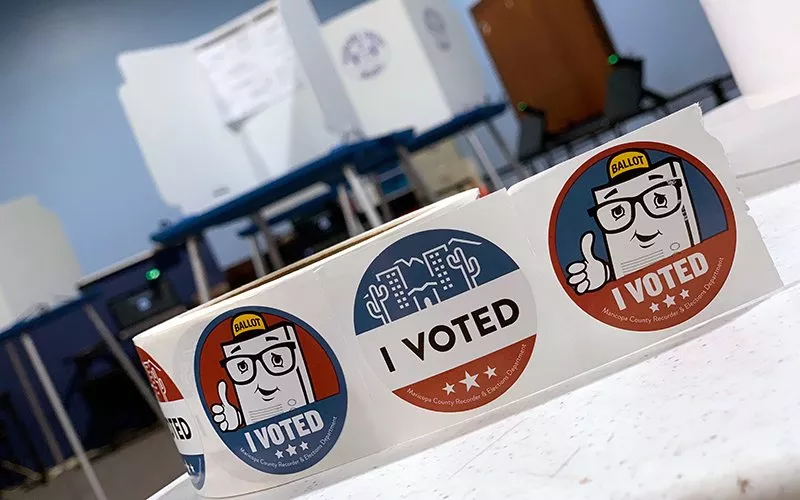
WASHINGTON – They came with studies, they came with polls, they came with statistics. And after more than two hours of a congressional hearing Monday, they walked away no closer to agreeing on how voting restrictions affect ballot access.
Democratic and Republican members of the House Administration Committee stuck largely to their talking points during a hearing on the effect that voter ID laws, proof-of-citizenship requirements and lack of language assistance have on elections.
Republicans dismissed suggestions that voter ID laws have a disproportionate impact on minority voters, pointing to the turnout in the 2020 elections as proof.
“In 2020 we saw more people cast a vote than any other presidential election in history, further dispelling the myth that voting ID requirements deter people from legally voting,” said Rep. Bryan Steil, R-Wisc.
But Democrats and some witnesses at the hearing pointed to a long list of studies that they said demonstrate, in the words of Rep. G.K. Butterfield, D-N.C., that, “Voting ID laws have been shown to disproportionately decrease minority turnout.”
The committee debate comes as the Arizona Legislature is considering several election bills that echo the national debate, with one side saying the changes protect and the other side saying they restrict voting.
The state had 23 restrictive voting bills for the 2021 legislative session, the third-most in the nation, according to a report by the Brennan Center for Justice at New York University. It also had 15 Democrat-backed voting-expansion bills, but those were quickly killed in the Legislature.

Tuesday, May 25, 2021

Monday, May 24, 2021

Here are this week's vaccination sites in Pima County.
For more information, head to the Pima County COVID-19 information site.
If you know of other sites we've missed, please send an email to [email protected].
No appointment needed
Monday, May 23 - Tuesday, May 25
- COPE Community Services, 5401 E. 5th Street, 10 a.m. – 8 p.m.
- Park Place Mall, 5870 E. Broadway Blvd., East Parking lot (east of Park Place Drive), 10 a.m. – 8 p.m.
Monday, May 24
- Palo Verde High School, 1302 S. Avenida Vega, 2 - 7 p.m.
- Shalom Fellowship, 6045 E. 30th St., 3 - 7 p.m.
Thursday, May 27
- Antigone Books, 411 N. Fourth Ave., 6 - 9 p.m.
Thursday, May 27 - Saturday, May 29
- Pima Air & Space Museum, 6000 E. Valencia Road, 9 a.m. – 5 p.m.
- Westgate Shopping Center, Southeast corner of E. Ajo Way and S. Mission Road, 10 a.m. – 8 p.m.
Saturday, May 29
- St. Margaret Mary Alacoque Roman Catholic Church, 801 N. Grande Ave., 8 a.m. - 2 p.m.
- Corpus Christi Catholic Church, 300 N. Tanque Verde Loop Road, 9 a.m. - 1 p.m.
Sunday, May 30
- San Miguel High School/St. Monica Church, 6601 San Fernando Ave., 2 - 7 p.m.
Monday, Wednesday, Friday
- El Pueblo Center, 101 W. Irvington Road, 4 – 8 p.m. - Closing May 28
Monday-Saturday
- Kino Event Center, 2805 E. Ajo Way, 9 a.m.–7 p.m.
Monday-Friday
- Tucson Convention Center, 260 S. Church Ave., 8 a.m.–4 p.m.
- Tucson Medical Center, 7200 E. Tanque Verde Road (Morris K. Udall Center), 8 a.m.–5 p.m. (open to 7 p.m. May 25, June 1)
- Tucson Mall — in former Justice store, 2nd floor between Dillards and Sears, 4500 N. Oracle Road, 11 a.m.-3 p.m.
Monday-Saturday
- State POD-University of Arizona, Indoors: Gittings, 1737 E. University Blvd., 10 a.m.–5 p.m. (closed May 29-31)
Appointment needed
Monday-Friday
- Tucson Mall, 4500 N. Oracle Road, 11 a.m. - 3 p.m., Monday through Friday
Daily
- Foothills Mall — in former Old Navy store, 7401 N. La Cholla Blvd, noon-8 p.m.
Friday, May 21, 2021

PHOENIX – Although Arizona is the site of two NCAA softball regionals this week, that might not be the case next year if the state passes a law requiring athletes to compete in interscholastic sports based on their sex at birth.
The “Save Women’s Sports Act” was introduced on Feb. 3 as House Bill 2706, and passed in a party-line vote of 31-29. The ban on transgender students participating in girl's sports was sponsored by Rep. Nancy Barto, R-Phoenix, and will be introduced to the state Senate in early May.
The NCAA Board of Governors, which is comprised of university presidents and chancellors, issued a statement on April 12 that it “firmly and unequivocally supports the opportunity for transgender student-athletes to compete in college sports” and that “when determining where championships are held, NCAA policy directs that only locations where hosts can commit to providing an environment that is safe, healthy and free of discrimination should be selected.”
Advocates for the transgender community were surprised Sunday when three states – Arkansas, Alabama and Tennessee – which already have legislation banning transgender athletes from interscholastic competition, were named by the NCAA as hosts for the postseason softball tournament which begins Thursday. Arizona State and the University of Arizona are also hosting games.
Backlash from the decision could prompt the organization to be more selective in naming sites next year.
Arizona is among dozens of states that are considering passing legislation related to the federal “Protection of Women and Girls in Sports Act,” which specifies that sex shall be recognized based solely on a person’s reproductive biology and genetics at birth. A lawsuit filed last February is at the root of the proposed legislation.

