Tuesday, May 18, 2021
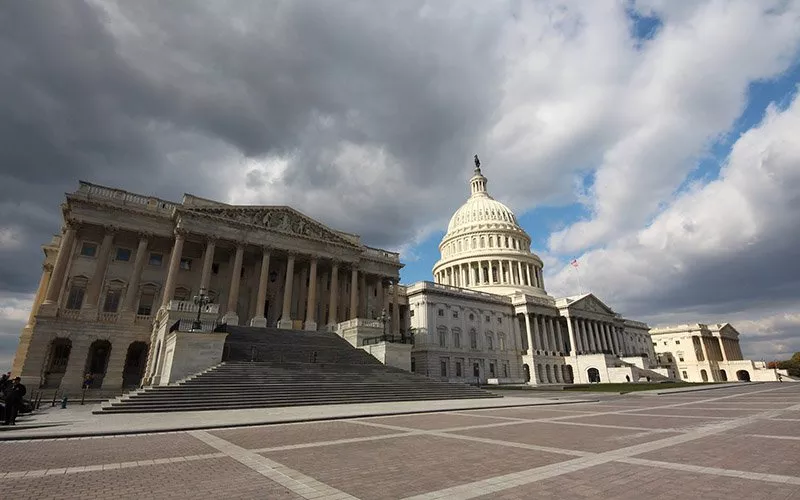
WASHINGTON — They don't have the high profiles or long tenure of other members of Congress, but Arizona lawmakers in the last Congress ranked relatively high on a recent scorecard of congressional effectiveness.
The Center for Effective Lawmaking study, by researchers at the University of Virginia and Vanderbilt University, ranked members on the amount of substantive legislation they introduced and how far it moved toward passage in the 116th Congress.
A compilation of those scores showed Arizona had the 10th-most effective House delegation and 14th-most effective senators. The report’s authors said an unusual number of freshmen and minority party members scored well, showing that “even in these politically challenging times, bipartisanship is still working and … viable.”
“Compared to previous congresses, we have a notably larger number of freshman legislators who are essentially punching above their weight class, they score above expectation,” said Alan Wiseman, a Vanderbilt professor and co-author of the study.
But in Arizona, seniority did appear to come into play: The highest-ranking House member was Rep. Raul Grijalva, D-Tucson, who is both the longest-tenured member of the delegation and who is now in his second term as chairman of the House Natural Resources Committee. He finished 14th among House Democrats and 16th overall in the chamber.
He was one of three Arizona Democrats to finish in the top 10% of House members, along with Reps. Tom O’Halleran of Sedona, who ranked 31st, and Ruben Gallego of Phoenix, who came in at 33rd.
Republicans, as a group, had a lower combined score than Democrats and Arizona was no different. Rep. Debbie Lesko, R-Peoria, was the state’s highest-ranking Republican, in 147th place overall and 26th among GOP members.
Still, Lesko, who just started her second full term in Congress, said she was surprised to be ranked so high, especially given the pace of Washington compared with her experience as a state legislator.

Monday, May 17, 2021
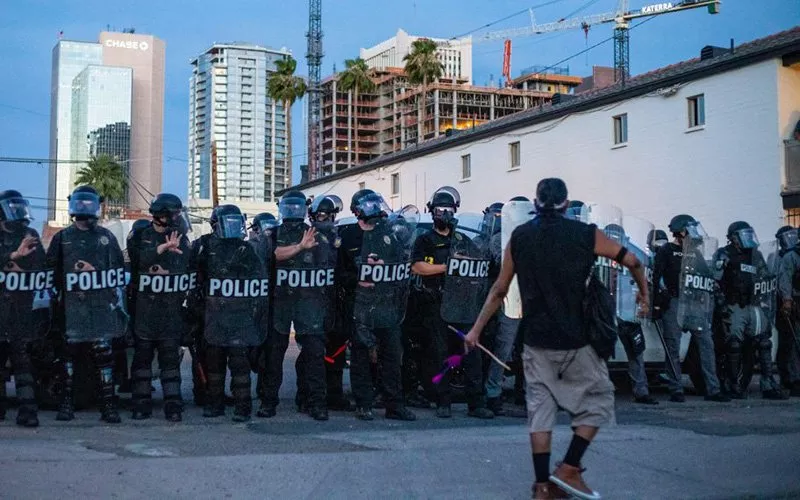
Phoenix police don’t follow Fe’La iniko on social media, but he knows they’re watching.
“They’re pretty hip to Instagram,” the racial justice activist said. “Sometimes they’ll pop up in my story views.”
Iniko, whose given name is Milton Hasley, often uses social media to share fliers on upcoming protests or speak out against police violence. So when officers surrounded his car last summer while he was leaving a demonstration against the killings of George Floyd and Dion Johnson, iniko worried he might have been targeted in advance for his views. As a handful of cop cars trained their spotlights on him, he was careful to keep his hands visible as he placed them on the steering wheel, a video he posted on Instagram shows.
“Try not to look threatening,” he remembered thinking.
Hours later, iniko was booked into jail and charged with two felonies and two misdemeanors, all of which were later dropped. He was one of hundreds of Phoenix protesters arrested during last year’s demonstrations against systemic racism and police brutality, which were met with an aggressive police presence and a number of controversial charges from prosecutors.
Police reports and court records would later reveal that police surveilled some of the protesters on their social media accounts during the summer and fall.
It was a year that would see Black Lives Matter demonstrations and civil unrest followed by anti-lockdown rallies, election protests and the fatal Jan. 6 storming of the U.S. Capitol. In the Capitol insurrection, law enforcement officials scoured social media platforms, sweeping up photos, videos and comments that have helped to identify, arrest and charge hundreds of people.
This form of online policing has gained traction as a means of addressing the looming threat of domestic terrorism. But many agencies — including the Phoenix Police Department — work under barebones guidelines when monitoring online activity.
Friday, May 14, 2021

A new poll shows bipartisan support for President Joe Biden’s infrastructure and care plan in key states, according to Data for Progress.
From the end of April to early May, Data for Progress, a think tank and political advocacy group, surveyed an average of 642 likely voters in each of 10 key states - Arizona, Colorado, Georgia, Michigan, Montana, New Hampshire, North Carolina, Pennsylvania, West Virginia and Wisconsin.
The survey measured the support for Biden’s Build Back Better agenda, including the American Rescue Plan, American Jobs Plan and American Families Plan.
The majority of likely voters in all 10 states supported the American Rescue Plan. In Arizona, 72% supported the plan, with most giving credit to the Democratic Party for passing provisions including vaccine distribution, stimulus checks and expanded child tax credit.
The poll also showed net positive support for The American Jobs Plan and American Families Plan in all 10 states, even when voters were told the plans would be paid for raising taxes on corporations and the wealthy.
“The idea that paying for these plans is unpopular is patently incorrect. In fact, those provisions actually make people more supportive of the idea,” said Sean McElwee, executive director for Data for Progress.
In Arizona, 68% of support the American Jobs Plan and a little more than half of those who self-identified as Republicans support the plan. About 80% of likely voters in Arizona supported the proposed investments in physical infrastructure, lead pipe removal and long-term care.
Fully vaccinated individuals can resume activities without wearing a mask and physical distancing in indoor or outdoor settings, in most cases, according to the Centers for Disease Control and Prevention’s updated public health guidance released Thursday.

“Today brings more encouraging news for those fully vaccinated against COVID-19 — and another reason for everyone else to get their shot,” wrote Arizona Department of Health Services Dr. Cara Christ on Thursday's blog post. “This is a very big step toward returning to our pre-pandemic way of life.”
But the Pima County’s mask mandate remains in effect, which does not differentiate between fully and non-vaccinated individuals.
The Board of Supervisors is seeking legal guidance from the County Attorney’s Office and should be reviewing the recommendation with the Health Department to advise the board of supervisors, according to Chair Sharon Bronson.
The Board of Supervisors will meet today at 3 p.m. to discuss the updated CDC guidance.
Supervisor Adelita Grijalva said she was still reviewing the new guidelines. She said she was unsure whether changes would be made without more people getting vaccinated, with a goal to reach 75% of the population to achieve herd immunity.
In Arizona, 3,098,785 COVID-19 vaccine doses have been administered, with 43.1% of Arizonans fully vaccinated. Christ notes in her blog that the CDC’s announcement comes the same day as children across the nation ages 12 to 15 may receive the Pfizer vaccine, which could potentially add more fully vaccinated individuals.
According to CDC’s updated guidance, fully vaccinated individuals can go unmasked in an indoor high-intensity exercise class, a full-capacity worship service or a crowded, outdoor event, such as a concert or sporting event. However, they are still subject to federal, state or local jurisdictions laws and regulations, including local business and workplace guidance.
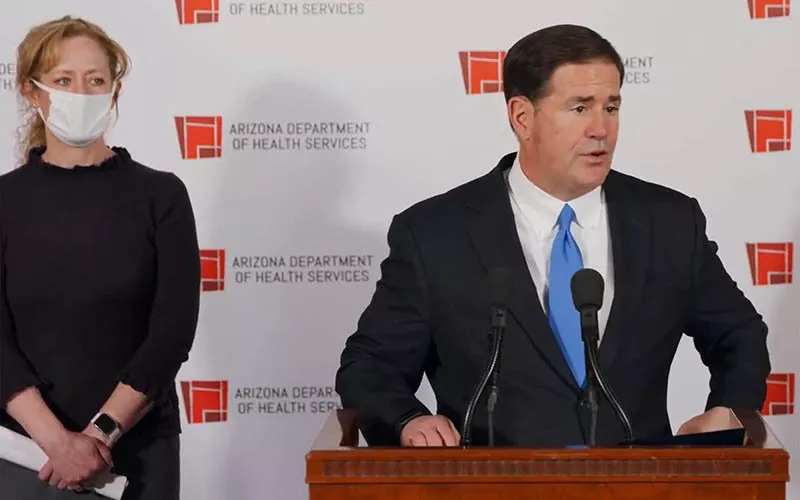
Arizona will no longer provide the weekly $300 federal supplement for unemployed workers during the pandemic, Gov. Doug Ducey said on Thursday.
With his “Arizona Back-to-Work” Plan, thousands of Arizonans on unemployment will return to receiving the maximum $240 on July 10.
Several other states announced they also would stop taking the federal pandemic unemployment benefits, including Alabama, Arkansas, Georgia, Idaho, Iowa, Mississippi, Missouri, Montana, Ohio, North Dakota, South Carolina, South Dakota, Tennessee, Utah and Wyoming.
The Pandemic Unemployment Assistance, extended in March through the American Rescue Plan, provided an additional weekly $300 to cover freelancers, part-timers and anyone who did not qualify for regular unemployment and extended the benefit for an additional 24 weeks. The program is set to end on Sept. 4.
Instead, Ducey will use $300 million in federal money to encourage Arizonans to rejoin the workforce. The plan is a one-time $2,000 bonus for full-time workers and a $1,000 bonus for those who return part-time.
People will receive the bonus after they stop filing for unemployment benefits and complete 10 weeks of work with an employer. The bonuses are on a first-come, first-serve basis.
To qualify, an individual must have already filed for unemployment benefits, meaning anyone who files after May 13 will not be eligible. Individuals must also make $25 per hour or less - about $52,000 a year - at their new job and must begin working by Sept. 6.
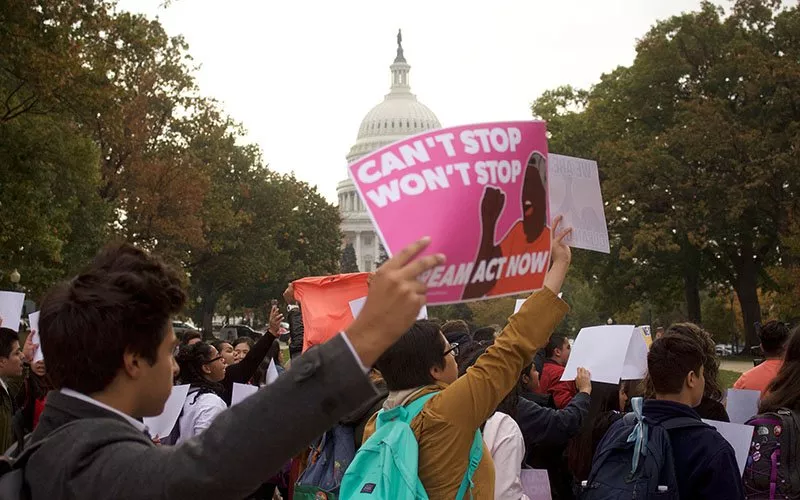
WASHINGTON – Gilbert resident Jose Patiño remembers the moment he knew he wanted to work in Congress: It was 2018 and he had just spent months in Washington lobbying to preserve the Deferred Action for Childhood Arrivals program.
“That’s where I saw how impactful it was to have people there,” Patiño said. “While I was not directly being employed, but just having those conversations, building those relationships.”
But he also knew that it was a dream that, for him, is “just not possible.”
That’s because Patiño, the director of education and external affairs for the immigration advocacy group Aliento, is an undocumented resident of the U.S. As such, he is prohibited under a little-known law – specifically section 704 of Title VII of Division E of the federal budget – from holding a federal job, which includes paid internships and jobs on Capitol Hill.
That doesn’t make sense to Rep. Ann Kirkpatrick, D-Tucson, who has tried for years to change the law.
“These students are wonderful people, they are bright, they are intelligent, they want to make a contribution to the American dream and they deserve that right,” she said.
Kirkpatrick is the lead sponsor of the American Dream Employment Act, which says simply that Dreamers like Patiño should be treated the same as U.S. citizens when it comes to a job in Congress. The bill would apply to Deferred Action for Childhood Arrival recipients as well as people here on Temporary Protected Status and those with Deferred Enforced Departure orders. A similar bill has been introduced in the Senate.