Monday, May 10, 2021
Friday, May 7, 2021
Pima County officials are hoping they get lucky enough to overcome vaccine hesitancy by setting up mobile vaccination sites at the Desert Diamond and Casino del Sol this weekend.

Pima County and the Federal Emergency Management Agency are teaming up to launch mobile vaccination units this weekend to reach vulnerable communities with high risks of COVID-19 exposure and infection.
The operation includes two mobile vaccination units, able to administer 250 vaccines per day each, along with administrative staff and federal vaccinators with 70 personnel from FEMA, Health and Human Services, the Environmental Protection Agency and Department of Labor, according to a county press release.
The units will run through June 26, operating at two concurrent locations for three days, with one day to tear down and move to the next location. The locations were selected based on census tract data and the Social Vulnerability Index of the area to identify highly vulnerable communities.
The sites will offer walk-up vaccinations of both the Moderna and Johnson & Johnson vaccine for those 18 and older on a first-come, first-served basis. Vaccinators will return to the same mobile site 28 days after their first visit to receive their second dose, following CDC guidance. Help will be available to all who need assistance with mobility, language or other accommodations.
Here are the planned mobile clinics:
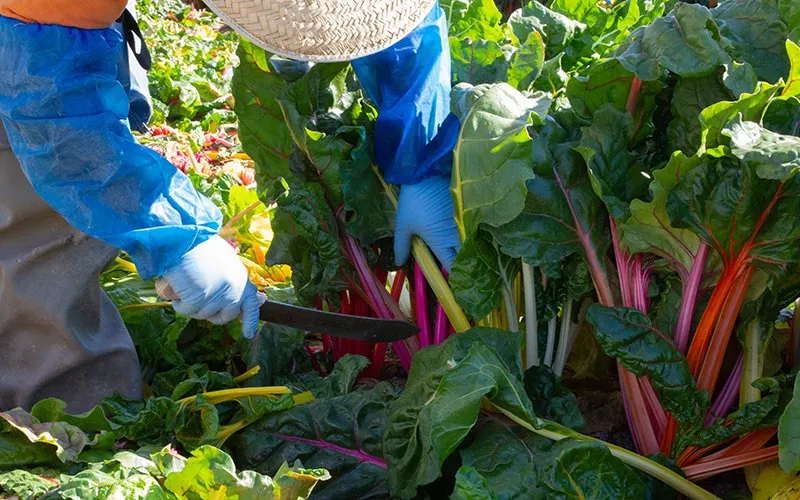
YUMA – The workers swing their machetes, chopping vegetables under the heat of a midmorning sun.
When the migrant workers take a moment to swipe the sweat from their masked faces, they can see the wall along the Mexican border, not a half-mile distant. But before long, they turn their attention back to a rainbow-colored field of Swiss chard.
It takes more time to clear a field since the COVID-19 pandemic began a year ago. Where there had been 25 workers in the field, there are now 15, to create social distance.
More buses are used to drive workers to the fields, and plexiglass guards were placed on farming equipment, according to the Yuma Chamber of Commerce. Some farms have added masks, daily temperature and blood-pressure checks and contact tracing after outbreaks.
The protocols were necessary to protect Yuma’s top industry, which depends on migrant workers – whom Gov. Doug Ducey declared essential when the pandemic began more than a year ago. Yuma is one of the nation’s major producers of vegetables, with the produce ending up in kitchens across the U.S.
Now, attention is turning to getting farmworkers vaccinated, but advocates for migrant workers say that effort trails the need.
Migrant workers – close to 9,000 temporary agricultural worker visas were issued in Arizona during 2020, mostly in Yuma – travel across the border every day from Mexico.
The Yuma Chamber of Commerce website says agriculture brings in an estimated $2.5 billion a year into the local economy.
Still, some farmworkers are nervous.
More than half a million agricultural workers had tested positive for COVID-19 in the U.S. as of March 10, according to Purdue University’s Food and Agriculture Vulnerability Index. It estimated that just under 7,200 of those cases were in Arizona, about 1,000 of which were in Yuma County.
“When our work partner sneezes, we all turn around,” Teresa De Jesús Rodríguez, a migrant worker in Yuma, said in Spanish. “Outside of work, we ask that person how they feel and make sure we always isolate the person.
Thursday, May 6, 2021

CVS pharmacies are now accepting same-day COVID-19 vaccination appointments, and at some locations no appointment is necessary.

About 190 locations in Arizona are taking walk-ins, but appointments are also available within an hour of scheduling.
“We continue to orchestrate an all-out effort to vaccinate the nation against COVID-19,” said CVS Health President and CEO Karen S. Lynch. “Thanks to the dedication and effort of our colleagues, I am proud to say we helped achieve the President’s accelerated 100-day goal of 200 million vaccines and have administered over 17 million COVID-19 vaccine doses to date. Our customers continue to give us high satisfaction scores based on their interactions with colleagues and our customer-centric digital approach for scheduling appointments.”
CVS has administered more than 17 million COVID-19 vaccine doses nationwide through the Pharmacy Partnership for Long-Term Care Program and Federal Retail Pharmacy Program as of May 5. CVS locations boast a more than 90% second-dose compliance rate.
Walgreens announced it would offer same-day appointments at locations across the country as of yesterday. Patients can schedule appointments up to 30 minutes before the desired appointment time.
While Walgreens continues to encourage appointments, a Walgreens corporate spokesperson said, walk-ins have and continue to be accepted “if a time slot is available,” across all 8,800 Walgreens stores offering vaccinations.
The announcement by CVS comes after the state announced on April 27 that it would allow no-appointment walk-ins at state PODs. Pima County offers no-appointment walk-ins at its mobile clinics and some large vaccination sites, including El Pueblo Center on Irvington Road.
WASHINGTON – Open it, and they will come.
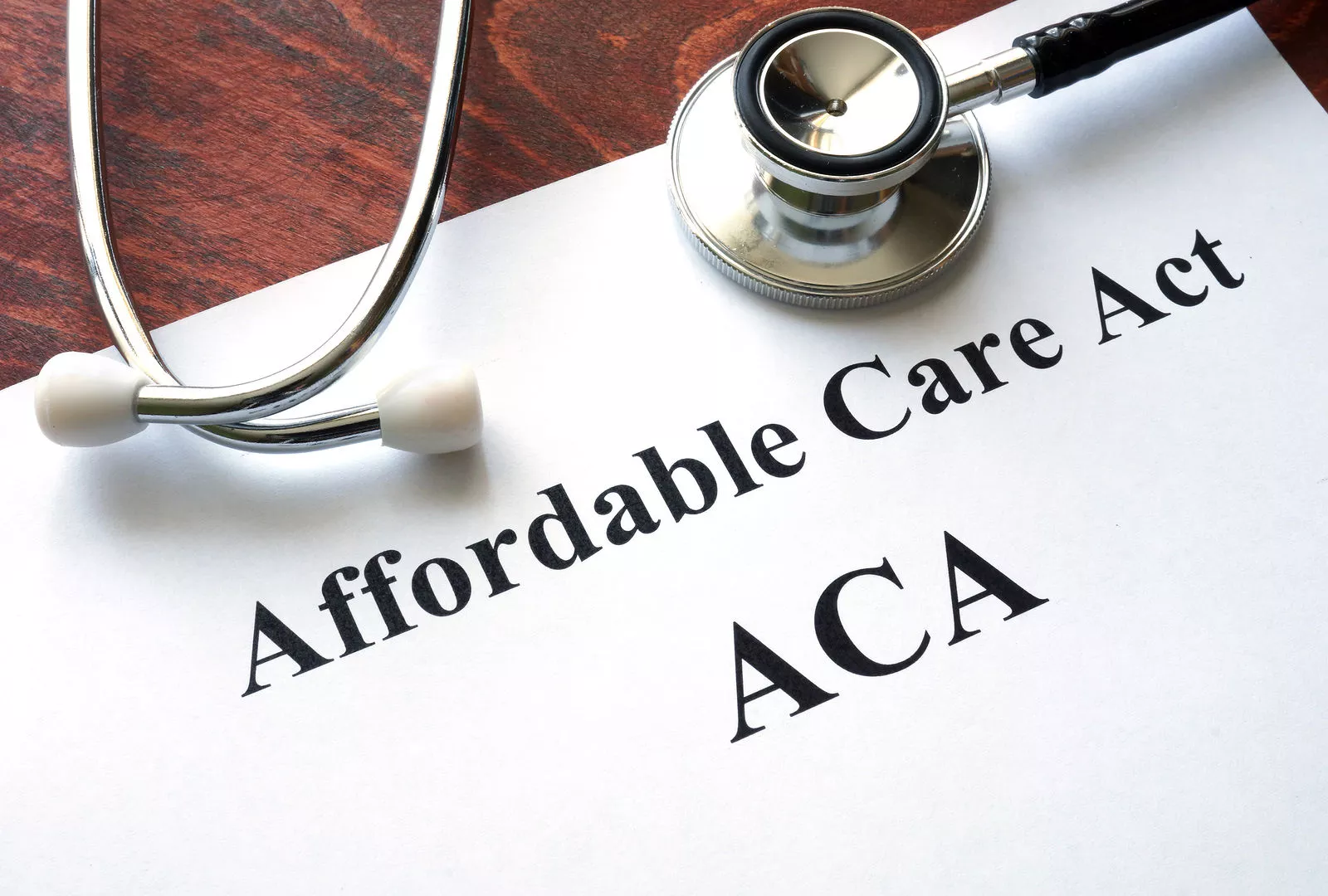
A special open enrollment period for Affordable Care Act coverage drew 528,005 new enrollees nationwide in its first six weeks, with 9,569 of those consumers in Arizona, according to a report from the Centers for Medicare and Medicaid Services.
Enrollment from Feb. 15 to March 31 was two to three times higher than the same period in previous years, although spring enrollment then was available only to those with qualifying life events like a birth or job change. But advocates were encouraged by the numbers from this spring, which they said show the underlying demand for coverage.
“I think that largely shows that people need coverage, and having a special enrollment period extended during a pandemic is exactly the kind of policies that we need,” said Sarah Coombs, director for health system transformation at the National Partnership for Women and Families.
President Joe Biden ordered a special open enrollment period just days after his inauguration in January, to counter what the White House called “four years of attempts to strip health care from millions of Americans” during the Trump administration. Biden originally called for the open enrollment to run from Feb. 15 to March 15, but that was later extended to Aug. 15 by Health and Human Services Secretary Xavier Becerra.
Since the special enrollment period started, Congress approved the administration’s $1.9 trillion American Rescue Plan, which includes funding that will lower health insurance premiums through tax credits for people who buy their insurance through the ACA’s federal marketplace. That includes consumers who enrolled in 2020, but can use the open enrollment period to see if they can get a lower premium.
Effective April 1, the American Rescue Plan provides “major improvements in access to and affordability of health coverage through the Marketplace by increasing eligibility for financial assistance to help pay for Marketplace coverage,” according to CMS. It estimates that four in five people who enroll through healthcare.gov will end up paying less than $10 a month in premiums after their tax credits are applied.
Coombs said the subsidies “will make a huge difference to people’s pockets, and in people’s decision-making in getting coverage.”
Wednesday, May 5, 2021
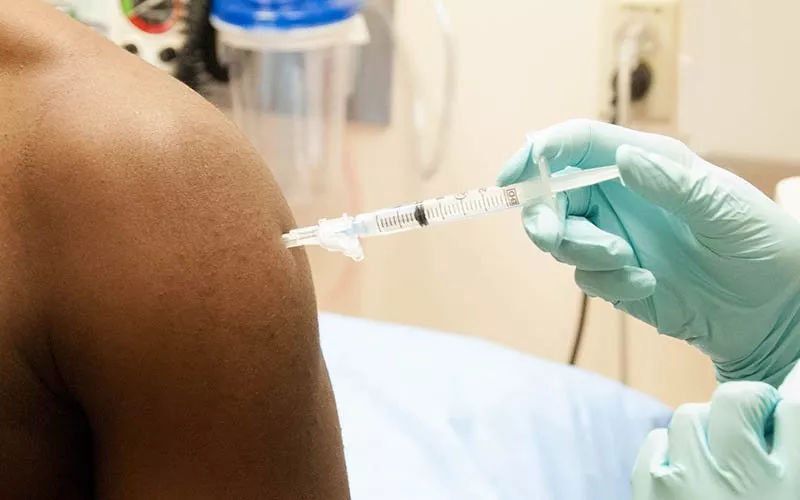
CVS pharmacies are now accepting same-day COVID-19 vaccination appointments, and at some locations no appointment is necessary.
About 190 locations in Arizona are taking walk-ins, but appointments are also available within an hour of scheduling.
“We continue to orchestrate an all-out effort to vaccinate the nation against COVID-19,” said CVS Health President and CEO Karen S. Lynch. “Thanks to the dedication and effort of our colleagues, I am proud to say we helped achieve the President’s accelerated 100-day goal of 200 million vaccines and have administered over 17 million COVID-19 vaccine doses to date. Our customers continue to give us high satisfaction scores based on their interactions with colleagues and our customer-centric digital approach for scheduling appointments.”
CVS has administered more than 17 million COVID-19 vaccine doses nationwide through the Pharmacy Partnership for Long-Term Care Program and Federal Retail Pharmacy Program as of May 5. CVS locations boast a more than 90% second-dose compliance rate.
Walgreens announced it would offer same-day appointments at locations across the country as of today. Patients can schedule appointments up to 30 minutes before the desired appointment time.
While Walgreens continues to encourage appointments, a Walgreens corporate spokesperson said, walk-ins have and continue to be accepted “if a time slot is available,” across all 8,800 Walgreens stores offering vaccinations.