
Monday, April 26, 2021
The Pima County Health Department is working to launch six mobile vaccination sites with FEMA funding.
Pima County Medical Director Dr. Francisco Garcia discussed the move on Friday, saying that the county hoped FEMA would help cover some of the costs of setting up the clinics as county officials work to vaccinate more residents.
Garcia said the county had given up on obtaining permission from the state to bring more vaccine doses to Pima County, but the county has plenty of vaccine now. The challenge is persuading those who are vaccine-hesitant to get their first shot and convincing those who had their first shot to get their second.
"Fortunately, today we have the vaccine in our hands,” Garcia said.
The “Plan B” asks for six mobile sites with funding from FEMA, according to Huckelberry’s April 20 memo. The sites will not need the permission of Gov. Doug Ducey and Arizona Health Director Cara Christ, who had put multiple roadblocks in the path of a Pima-FEMA partnership that would have delivered enough doses to vaccinate more than 200,000 residents.
County doubles down on vaccination effort
As the county continues its mobile vaccination effort to deliver shots to those vulnerable or minority communities, Garcia said the county is planning efforts to address vaccine hesitancy, especially after the pause of Johnson & Johnson.
“We cannot underestimate the impact that the J&J and the federal action to take J&J temporarily off the table has had on vaccine demand,” said Garcia. “Remember that J&J was actually, probably, the most commonly requested, that was actually kind of the only brand that was being requested when we were doing our vaccination PODs.”
With the pause, the mobile site began offering Moderna, as the Pfizer vaccine continues to face issues in mobile site implementation.
With both Pfizer and Moderna, Garcia said the challenge was the second dose, and committing the mobile clinic to return to the same location. He said the strategy continues to evolve, but they are making sure that when people vaccinated at a mobile site, “they understand that they need a second shot, and that they understand where to go for that second shot, because in some cases we will not be able to be back in exactly that same neighborhood exactly four weeks down the road in order to vaccinate.”
The county has not administered Pfizer at a mobile clinic because it requires ultra cold chain handling and it comes in multi-use vials with several doses. Garcia said Pfizer would pose the issue of “vaccine wastage.”
“You can imagine that as demand slackens, what happens when you've popped open a vial of Pfizer with 14 doses, but you only have 10 people?” asked Garcia. “We are still feeling that need to be as careful with that resource, but by the same token, not missing the opportunity to pivot. If somebody shows up not missing that opportunity to vaccinate that individual.”
He notes that not only was the Johnson & Johnson vaccine on pause last week, but other people getting vaccinated with Pfizer or Moderna were questioning the safety of the vaccines. He said they are working four times as hard for every vaccine delivered.
“We know that a lot of people are not actually truly resistant, but are just hesitant. They're waiting to see how the dust settles,” said Garcia. “We're hoping to make vaccine opportunities so ubiquitous throughout our community, whether it's on Fourth Avenue, whether it's in some of these parts, whether it's at a fixed site. We're trying to make it so damn ubiquitous, that essentially you fall into a vaccination needle without much effort. If we can decrease those barriers for those folks for whom these are obstacles. I believe that we will continue to make progress.”
County continues to require masks
Following Gov. Doug Ducey’s executive order rescinding mask mandates for K-12 schools and signing a bill that allows businesses to ignore local jurisdiction mask mandates, the health department updated its Public Health Advisory on Friday, April 23.
It made clear for schools that the Board of Supervisors Resolution 2020-96 is still in effect, which requires people over the age of 5 to wear masks. It also states that businesses should follow “state, county, and industry-specific guidance related to COVID-19 mitigation.”
“We believe that our mask mandate is legal and valid until 90 days after this legislature adjourns and because we have this short window of time to get people vaccinated, we're going to double down and do everything that we can in order to encourage people, cajole, incentivize people to be observant of that mask mandate,” said Garcia. “It really has an impact on the infection in this community.”
The health department surpassed its goal of 300,000 vaccines administered by March 31, with 621,000 vaccines administered as of April 21.
“We’re not done yet folks,” said Garcia, pointing out the plateau of COVID-19 cases daily since March 14, where the state has seen around 600 cases of COVID-19 daily.
ACIP recommends J&J in the U.S.
The CDC Advisory Committee on Immunization Practices (ACIP) voted 10-4, with one member abstaining, to recommend the use of the Johnson & Johnson vaccine in the U.S. last week.
Members moved to vote on two different interim recommendations. The first only stated the recommendation of the J&J vaccine for persons 18 and older in the U.S. under FDA’s Emergency Use Authorization, while the second added a note that women under the age of 50 should be aware of the “increased risk of Thrombosis with Thrombocytopenia Syndrome (TTS) and may choose another COVID-19 vaccine authorized for use in the U.S.”
The administration paused the vaccine last week after reports of six women developing a rare blood clot disorder after receiving the J&J vaccine.
The disorder combines blood clotting (Thrombosis), often in the brain with a low level of platelets, the blood cells that promote clotting, which is called (Thrombocytopenia Syndrome).
At the meeting, a CDC scientist confirmed nine new confirmed cases of the rare disorder, all women, bringing the total to 15, with 13 cases in women between 18 and 49 years old.
If the use of the Janssen vaccine resumed for those 18 and older, 26 to 45 cases of blood clotting disorder could be expected over the next six months, according to a model presented by CDC Scientist Dr. Sara Oliver. However, we could also expect about 800 to 3,500 fewer ICU admissions and 600 to 1,400 fewer deaths.
The majority voted for the first recommendation, but those in favor agreed with the four that voted no.
“I voted yes. I can live with this recommendation, but I think that under an emergency use authorization, where there is no inside informed consent, that it could be that ACIP recommendations might need to reflect some more nuanced concerns than under the usual procedure,” said Dr. Beth Bell, ACIP voting member and COVID-19 workgroup chair. “I am concerned that the consumers and women in this age group in particular, will not be adequately informed just by the FDA EUA vaccines and so we really are depending on the public health agencies and the partner organizations to make sure that people actually are informed and are empowered, and that they actually get a balanced perspective.”
Southern AZ COVID-19 AM Roundup for Monday, April 26: County working with FEMA on new vax sites; Walk-ins welcome at UA vax POD, other locations; Mask ordinance remains in place in Pima County; Here’s how to set up vaccine appointmentsVaccine walk-ins welcome; appointments available
You no longer need an appointment to get a shot at the UA vaccination point of distribution. The POD will now accept anyone over the age of 16 who comes in for a shot.
The pod, which offers both a drive-thru clinic on the UA Mall and a sit-down clinic in the Ina E. Gittings Building (1737 E. University Blvd.), is open from 10 a.m. to 10 p.m. daily.
If you’d rather schedule an appointment, the state is expected to open new first-dose appointments daily at podvaccine.azdhs.gov. Call 602-542-1000 or 844-542-8201 for help in English or Spanish.
Because of rising temperatures, the drive-thru clinic will close on May 3.
If you need help, call the COVID Ambassador Team hotline at 520-848-4045 between 7 a.m. and 7 p.m. daily or email [email protected].
Meanwhile, Pima County officials are shifting to indoor vaccination sites to avoid making staff and volunteers endure long days in triple-degree temperatures.
Pima County has opened a new indoor vaccine site at the Kino Event Center, where the county had earlier been doing COVID testing. That site is open 9 a.m. to 7 p.m., Monday through Saturday. Register at azdhs.gov.
The county has also opened an indoor vaccination POD at El Pueblo Center, 101 W. Irvington Road, which is open Monday, Wednesday and Friday from 9:30 a.m. to 1:30 p.m. No appointment is necessary.
The drive-through POD at Banner-South Kino Stadium, 2500 E. Ajo Way, is now offering appointments between 7:30 a.m. and 12:30 p.m. and will close permanently on May 14.
As of Sunday, April 25, 391,523 people in Pima County had received at least one shot of the virus, accounting for 37.5% of the population. A total of 299,659 people were fully vaccinated.
Register for an appointment at a Pima County POD at pima.gov/covid19vaccineregistration or by calling 520-222-0119.
Many local pharmacies are now receiving vaccine doses. To find one near you, visit the ADHS website.
Get tested: Pima County has free COVID testing
Pima County is continuing to offer a number of testing centers and pop-up testing sites around town, including the northside Ellie Towne Flowing Wells Community Center, 1660 W. Ruthrauff Road. Schedule an appointment at pima.gov/covid19testing.
The University of Arizona’s antibody testing can determine if you have had COVID and now have antibodies. To sign up for testing, visit https://covid19antibodytesting.arizona.edu/home.
Today’s numbers
With 750 new cases reported today, the total number of Arizona’s confirmed novel coronavirus cases rose past 859,000 as of Monday, April 26, according to the Arizona Department of Health Services.
Pima County, which reported 62 new cases today, has seen 114,892 of the state’s 859,487 confirmed cases.
With no new deaths reported this morning, a total of 17,268 Arizonans have died after contracting COVID-19, including 2,391 deaths in Pima County, according to the April 21 report.
A total of 611 coronavirus patients were in the hospital as of April 25. That’s roughly 12% of the number hospitalized at the peak of the winter surge, which reached 5,082 on Jan. 12. The summer peak was 3,517, which was set on July 13, 2020. The subsequent lowest number of hospitalized COVID patients was 468, set on Sept. 27, 2020.
A total of 946 people visited emergency rooms with COVID-like symptoms on April 25. That number represents 40% of the record high of 2,341 set on Tuesday, Dec. 29, 2020. That number had peaked during the summer wave at 2,008 on July 7, 2020; it hit a subsequent low of 653 on Sept. 28, 2020.
A total of 184 COVID-19 patients were in intensive care unit beds on April 25d, which roughly 15.5% of the record 1,183 ICU patients set on Jan. 11. The summer’s record number of patients in ICU beds was 970, set on July 13, 2020. The subsequent low was 114 on Sept. 22, 2020.
—with additional reporting from Austin Counts, Christina Duran, Jeff Gardner and Mike Truelsen
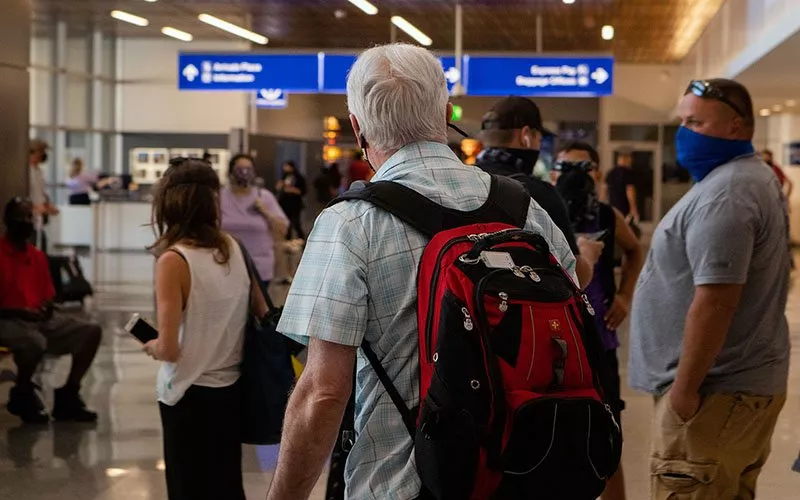
WASHINGTON – With vaccination efforts in full force, airlines and airports are on their way to bouncing back from a year in which passenger traffic fell as much as 96% because of the pandemic, officials told a Senate panel Wednesday.
And that improvement has also been seen at Phoenix Sky Harbor International Airport, where “we were very, very excited to see numbers increase to about 70%” of pre-pandemic levels, said Charlene Reynolds, assistant aviation director of the Phoenix Department of Aviation.
“Here at Sky Harbor, we are currently seeing some revival of traffic,” Reynolds said in her testimony to the Senate Commerce subcommittee. “We looked at some of the projections from the rating agencies, they believe we will return to normalcy in 2024, however, we’re very hopeful that passengers will return sooner than 2024.”
While they talked about gains, however, much of the hearing was dedicated to the question of health concerns associated with increased travel, and the need to keep enforcing COVID-19 safeguards.
“I look forward to hearing from our witnesses about how safe it is to fly, and what the future holds for air travel,” said Sen. Roger Wicker, R-Miss., who said recent guidance from the Centers for Disease Control and Prevention does not provide the clarity “needed to maintain public confidence.”
Friday, April 23, 2021
With 896 new cases reported today, the total number of Arizona’s confirmed novel coronavirus cases rose past 857,000 as of Friday, April 23, according to the Arizona Department of Health Services.

Pima County, which reported 96 new cases today, has seen 114,721 of the state’s 857,347 confirmed cases.
With 17 new deaths reported this morning, a total of 17,238 Arizonans have died after contracting COVID-19, including 2,389 deaths in Pima County, according to the April 23 report.
A total of 594 coronavirus patients were in the hospital as of April 22. That’s roughly 11.5% of the number hospitalized at the peak of the winter surge, which reached 5,082 on Jan. 12. The summer peak was 3,517, which was set on July 13, 2020. The subsequent lowest number of hospitalized COVID patients was 468, set on Sept. 27, 2020.
A total of 995 people visited emergency rooms with COVID-like symptoms on April 22. That number represents 42.5% of the record high of 2,341 set on Tuesday, Dec. 29, 2020. That number had peaked during the summer wave at 2,008 on July 7, 2020; it hit a subsequent low of 653 on Sept. 28, 2020.
Two of the leading Republican firebrands in Congress touted big fundraising hauls as a show of grassroots support for their high-profile stands against accepting the 2020 election results.
But new financial disclosures show that Sen. Josh Hawley, R-Mo., and Rep. Marjorie Taylor Greene, R-Ga., relied on an email marketing vendor that takes as much as 80 cents on the dollar. That means their headline-grabbing numbers were more the product of expensively soliciting hardcore Republicans than an organic groundswell of far-reaching support.
Hawley and Greene each reported raising more than $3 million in the first three months of the year, an unusually large sum for freshman lawmakers, according to new filings with the Federal Election Commission. That’s more than the average House member raises in an entire two-year cycle, according to data compiled by the Center for Responsive Politics. The tallies generated favorable press coverage for Hawley and Greene, and they both seized on the numbers to claim a popular mandate.
Politico called Greene’s result “eye-popping” and “staggering,” a sign that she “appears to have actually benefited from all the controversies that have consumed her first few months in office.” The House voted in February to remove Greene from her committee assignments because of her social media posts that promoted far-right conspiracy theories; racist, anti-Semitic and anti-Muslim rhetoric; and violence against Democratic leaders.
“I am humbled, overjoyed and so excited to announce what happened over the past few months as I have been the most attacked freshman member of Congress in history,” Greene said in an emailed statement on April 7. “Accumulating $3.2 million with small-dollar donations is the absolute BEST support I could possibly ask for!”
As for Hawley, who was the first senator to say he’d object to certifying the Electoral College results on Jan. 6, Politico proclaimed that his massive increase showed “how anti-establishment Republicans are parlaying controversy into small-dollar fundraising success.” Hawley’s pollster, Wes Anderson with the political consulting firm OnMessage, said in a memo distributed to supporters that the “fundraising surge” made “crystal clear that a strong majority of Missouri voters and donors stand firmly with Senator Hawley, in spite of the continued false attacks coming from the radical left.”
It wasn’t until later, when the campaigns disclosed their spending details in last week’s FEC reports, that it became clearer how they raised so much money: by paying to borrow another organization’s mailing list.
“List rental” was the No. 1 expense for both campaigns, totaling almost $600,000 for each of them. It’s common for campaigns to rent lists from outside groups or other candidates to broaden their reach. But for Hawley and Greene, the cost was unusually high, amounting to almost 20% of all the money they raised in January, February and March.
Thursday, April 22, 2021
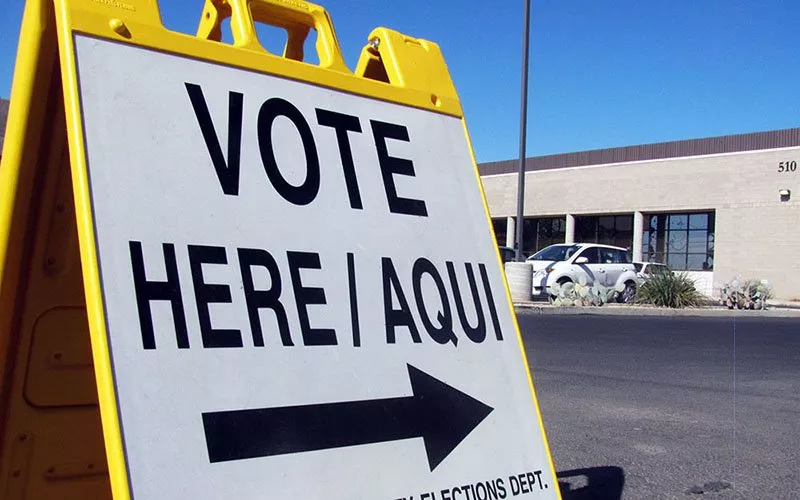
WASHINGTON — Voting rights advocates and Arizona Democrats on Wednesday denounced a bill that would remove voters from the Permanent Early Voting List, calling it an attempt to disenfranchise up to 150,000 voters, particularly those of color.
SB 1485, which passed the House Tuesday and is expected to win final approval in the Senate, would remove people who fail to vote in two consecutive election cycles from the list of those who automatically get a ballot by mail. Under current law, voters are only removed from the list if they request to be dropped or their registration is canceled.
But critics said Wednesday Arizona’s long history with mail-in voting proves the system works. SB 1485 aims to solve a problem that doesn’t exist, they said.
“There is really no valid reason to change these systems unless you’re really looking to make it harder for people to vote,” said Secretary of State Katie Hobbs. “There really is no reason to turn back the clock on our successful vote-by-mail system.”
Hobbs was speaking at a news conference called to drum up support for HR 1, a sweeping elections bill in Congress that would set federal regulations and standards for elections. But the event quickly turned toward the GOP-backed bills in the state legislature.
With 647 new cases reported today, the total number of Arizona’s confirmed novel coronavirus cases continued to climb as of Thursday, April 22, according to the Arizona Department of Health Services.

Pima County, which reported 187 new cases today, has seen 114,625 of the state’s 856,451 confirmed cases.
With 22 new deaths reported this morning, a total of 17,221 Arizonans have died after contracting COVID-19, including 2,388 deaths in Pima County, according to the April 22 report.
A total of 585 coronavirus patients were in the hospital as of April 21. That’s roughly 11.5 % of the number hospitalized at the peak of the winter surge, which reached 5,082 on Jan. 12. The summer peak was 3,517, which was set on July 13, 2020. The subsequent lowest number of hospitalized COVID patients was 468, set on Sept. 27, 2020.
A total of 1,030 people visited emergency rooms with COVID-like symptoms on April 21. That number represents 44% of the record high of 2,341 set on Tuesday, Dec. 29, 2020. That number had peaked during the summer wave at 2,008 on July 7, 2020; it hit a subsequent low of 653 on Sept. 28, 2020.
A total of 175 COVID-19 patients were in intensive care unit beds on April 21, which roughly 15% of the record 1,183 ICU patients set on Jan. 11. The summer’s record number of patients in ICU beds was 970, set on July 13, 2020. The subsequent low was 114 on Sept. 22, 2020.
State opposition sinks Pima County/FEMA joint vax center; New appointments available daily
Pima County Administrator Chuck Huckelberry told the Board of Supervisors this week that the Arizona Department of Health’s contract requirements were too demanding for both FEMA and Pima County, so Pima County officials had given up on the project.
But Huckelberry said the county could still pursue vaccine clinics in low-income and minority neighborhoods with other support from FEMA.
The state of Arizona expects new first-dose appointments to open daily this week at the University of Arizona vaccination site, so they urged those 16 and older who are interested in an appointment to regularly check podvaccine.azdhs.gov.
Meanwhile, as temperatures rise, Pima County officials are shifting to indoor vaccination sites to avoid making staff and volunteers endure long days in triple-degree temperatures.
Pima County has opened a new indoor vaccine site at the Kino Event Center, where the county had earlier been doing COVID testing. That site is open 9 a.m. to 7 p.m., Monday through Saturday. Register at azdhs.gov.
The county has also opened an indoor vaccination POD at El Pueblo Center, 101 W. Irvington Road, which is open Monday, Wednesday and Friday from 9:30 a.m. to 1:30 p.m. No appointment is necessary.
The drive-through POD at Banner-South Kino Stadium, 2500 E. Ajo Way, is now offering appointments between 7:30 a.m. and 12:30 p.m. and will close permanently on May 14.
As of Monday, April 19, 382,615 people in Pima County had received at least one shot of the virus, accounting for 36.6% of the population. A total of 282,339 people were fully vaccinated.
You can register for your vaccine appointments at a state POD by visiting pod vaccine.azdhs.gov, and those who need assistance can call 1-844-542-8201.
Register for an appointment at a Pima County POD at pima.gov/covid19vaccineregistration or by calling 520-222-0119.
Many local pharmacies are now receiving vaccine doses. To find one near you, visit the ADHS website.
Get tested: Pima County has free COVID testing
Pima County is continuing to offer a number of testing centers and pop-up testing sites around town, including the northside Ellie Towne Flowing Wells Community Center, 1660 W. Ruthrauff Road. Schedule an appointment at pima.gov/covid19testing.
The University of Arizona’s antibody testing can determine if you have had COVID and now have antibodies. To sign up for testing, visit https://covid19antibodytesting.arizona.edu/home.
—with additional reporting from Austin Counts, Christina Duran, Jeff Gardner and Mike Truelsen

Wednesday, April 21, 2021
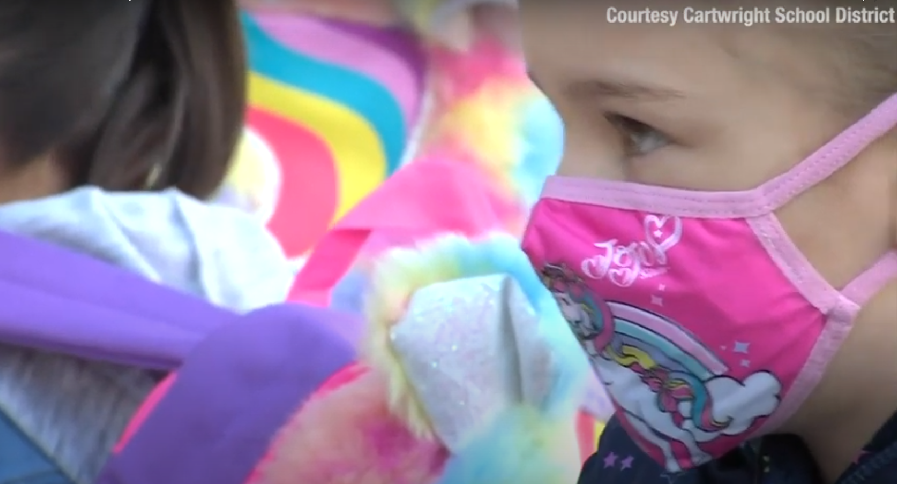
WASHINGTON – Education officials rebuffed Gov. Doug Ducey’s decision this week to lift the mask mandate for state schools, with many districts planning to ignore what they called an “irresponsible” decision in a state where COVID-19 cases continue to rise.
“As soon as the governor released it, right away our locals went and met with superintendents, met with governing boards … almost within a couple of hours, it was, ‘Of course we’re going to keep the mask mandate,'” said Marisol Garcia, vice president of the Arizona Education Association.
Arizona Schools Superintendent Kathy Hoffman was more critical, calling Ducey’s move another in “a long line of decisions that have resulted in Arizona’s embarrassing response to a virus that has claimed over 17,000 lives and impacted thousands more.”
“While vaccines hold the promise of a return to normalcy, letting up on other mitigation strategies now just increases risk of transmission at a time when we should be doing everything possible to keep students and their families safe,” Hoffman said in a statement, noting that children younger than 16 are still ineligible for COVID-19 vaccines.
The executive order, released Monday, reverses a July order that had required masks for staff and any student older than age 5 while at school, on the bus or at a school-related activity. In a statement with the order, Ducey said that COVID-19 “transmission is low among youth, and Arizona was among the first states to prioritize vaccinating teachers.”