

Friday, March 12, 2021
PHOENIX – Arizona students haven’t been properly taught about the Holocaust in recent years, according to a recent poll conducted by the Conference on Jewish Material Claims Against Germany. Among Arizona millennials surveyed in March 2020, 42% could not name a single concentration camp the Nazis built to detain and exterminate Jews and others deemed undesirable.
The same report found that only 48% of the state’s millennial respondents recognized the term Auschwitz, and only 33% knew the number of Jews who were killed from 1933 through 1945.
Such findings worry Lawrence Bell, executive director of the Arizona Jewish Historical Society, and other Jewish leaders in the state. The concern is heightened as more Holocaust survivors – who have been crucial to putting a human face on unfathomable tragedy – pass away.
“Memory of the Second World War is really starting to fade from popular consciousness,” Bell said. “A lot of people don’t think about the Second World War, they don’t think about the Holocaust. … It’s something that’s largely faded out.”
In October, the Arizona Department of Education made a rule change that requires students to receive instruction on the Holocaust at least twice during their secondary school career.
"Serving Arizonans has been my absolute honor and joy, but after much consideration, I have decided not to seek re-election in 2022. I will continue the good fight through this Congress, and when the term is up, I will hand over the baton." https://t.co/jBuB85SeHH
— Rep. Ann Kirkpatrick (@RepKirkpatrick) March 12, 2021
Fresh on the heels of the signing of the $1.9 trillion COVID relief package, Arizona Rep. Ann Kirkpatrick announced she will not seek a sixth term in 2022 in a Twitter post this morning.
The congresswoman represents Southern Arizona's District 2, which includes eastern Pima County and Cochise County.
Kirkpatrick, 70, was first elected in CD2 in 2018. She previously represented a Northern Arizona district. She left Congress in 2016 to unsuccessfully challenge the late Sen. John McCain and then relocated to Pima County to run for Congress.
She took a leave of absence last year to seek recovery for alcohol addiction.
Kirkpatrick's departure is sure to set off a scurry of potential candidates on both sides of the aisle but with redistricting on the horizon, the future boundaries of the district for the 2022 election cycle remain to be seen.
Kirkpatrick's full statement:
Every two years for the past 18 years, there has been an election in Arizona with my name on the ballot. Serving Arizonans has been my absolute honor and joy, but after much consideration, I have decided not to seek re-election in 2022. I will continue the good fight through this Congress, and when the term is up, I will hand over the baton.
For all the attention on Biden’s changes to border policy, there are plenty of factors out of the U.S.’s control — which might make migrants increasingly desperate.
The cause of the collision between an SUV and a semitruck that left 13 dead in Holtville, California, on Tuesday morning is still a horrific mystery. But federal investigators are exploring a likely explanation for why the overloaded car sped through an intersection in the rural area: a case of human smuggling turned deadly.
Surveillance footage shows the 1997 Ford Expedition and another SUV loaded with people entering the U.S. through a breach in the border fence shortly before the crash. Ten victims were Mexican nationals; the other three were women from Guatemala. While consular officers keep working to confirm victims’ names, special agents from Immigration and Customs Enforcement began piecing together how 25 adults came to be crammed into a vehicle meant for no more than eight.
It’s an all-too-familiar story, and one that has not become less common as the world fights a global pandemic and migrants south of the border wait to see the effects of immigration changes promised by the administration of President Joe Biden. Clandestine migration to the U.S. has accelerated through last fall and into the early weeks of the new administration, as poverty, crime and public health conditions across the border have grown more desperate.
“You’ve lost your source of income, whatever it is. People — especially in the informal economy, which are the ones that drive local economies, as we know — you’ve lost those sources of income. Their own relatives who could have afforded to support them are probably also broke,” says Gabriella Sanchez, a migration researcher with the Danish Institute for International Studies.
“People who might not have thought about migrating, now are like, ‘Well, at this point, I really don’t have anything else to lose. Anything I could have lost, I already lost.’”
For the last year, the U.S. has used an obscure public health law to expel anyone caught trying to cross the border rather than formally deporting them. That keeps the federal government from having to detain migrants for days (and often months or years) after their arrival on the U.S. side of the border. But it also further incentivizes evading detection by the authorities, which is where the smugglers come in.
The crash occurred about 10 miles from the U.S.-Mexico border; United Farm Workers members said the victims weren’t among the 6,000 farmworkers who commute from Mexico to tend crops in the Imperial Valley. The SUV’s passengers ranged in age from 16 to 65, packed into a vehicle manufactured to carry a passenger weight of no more than 2,000 pounds. (All but the front seats of the Ford had been removed to create space.)
An ICE spokesperson told the Los Angeles Times, which has been the authoritative news source on the incident, that Homeland Security investigations agents “responded to the scene of today’s fatal crash” and began their smuggling investigation. The surveillance footage showed a second SUV, which held 19 people, also crossing the border around the same time. It subsequently caught fire; the Holtville fire chief speculated to the Los Angeles Times that the combined weight of the passengers caused the vehicle to malfunction.
There are plenty of ways for migrants to be killed trying to come to the United States. People suffocate in locked tractor trailers, die of heat or cold in the Arizona desert, or drown off the California shore. Migrants die in crashes while being chased by the Border Patrol, a phenomenon that ProPublica and the Times investigated in 2019. Even when they’re not being pursued — as they weren’t in this case — vehicles overstuffed with people can be hard to steer and dangerous to drive, which may have been the case here.
When Sanchez first heard about the crash, she immediately recognized the hallmarks of a smuggling accident. The case “reminded me of when I lived in California, growing up,” says Sanchez. “The trucks are packed, and then immigration coming over or chasing them.”
The need to evade apprehension by border agents creates danger. That’s part of the logic of deterrence — a logic that has guided U.S. border policy for decades. If the point of border security is to make it as difficult and unappealing as possible to enter the United States, the only possible routes will be the most dangerous ones, and the people who are willing to take them will be the most desperate.
For the last few years, national attention has focused on the relatively recent phenomenon of large numbers of children and families coming to the United States, mostly from Central America and mostly to seek asylum. There’s a reason for that: The deterrence system was not built for families and children, so it didn’t have the resources to address them.
The Biden administration is simultaneously trying to expand its capacity to keep unaccompanied children in custody (before releasing them to sponsors, usually relatives, in the U.S.) and trying to slowly unwind some of the policies imposed by the administration of President Donald Trump to expel families from U.S. soil as quickly as possible.
American policymakers can sometimes speak as if the most important factor in migration is U.S. government policy — or at least how welcoming the country is perceived to be. Biden officials take every opportunity to tell would-be migrants explicitly not to come; the new administration’s critics (such as Trump immigration czar Stephen Miller) say that any loosening of immigration restrictions is encouraging a flood of new migrants. But the fact is that beyond U.S. borders, the rest of the world changes too, often in ways that make emigration seem not just appealing but necessary.
In the early months of the pandemic, it seemed that tight restrictions on international travel — including the Trump administration’s mass-expulsion policy under the public health law — had all but frozen migration. But smugglers of drugs and people quickly rebounded, modifying their tactics, taking fewer trips with bigger loads, for example, to adapt to the pandemic while meeting demand. And the demand was very much there.
In Central America, the U.N.’s World Food Program estimates that hunger quadrupled from 2018 to 2020, and that was before the region was pummelled by hurricanes at the end of last year. Interviews with emigrants reveal that many of them have simply lost hope that things will ever get better in their home countries. In Mexico, meanwhile, things have gotten worse. The country’s economy shrank by 8.5% in 2020; its national coronavirus czar was hospitalized last week with the virus, epitomizing a disastrous government response that’s contributed to 186,000 Mexican deaths in the pandemic; and homicides in the first 11 months of 2020 had already passed the record for a full year (set in 2019).
While we don’t know the whole story of migrants like the victims in Imperial County — or any other unknown victims of deadly migrations — it is possible they knew they could be killed on the journey and still felt that it was their best or only option.

Thursday, March 11, 2021
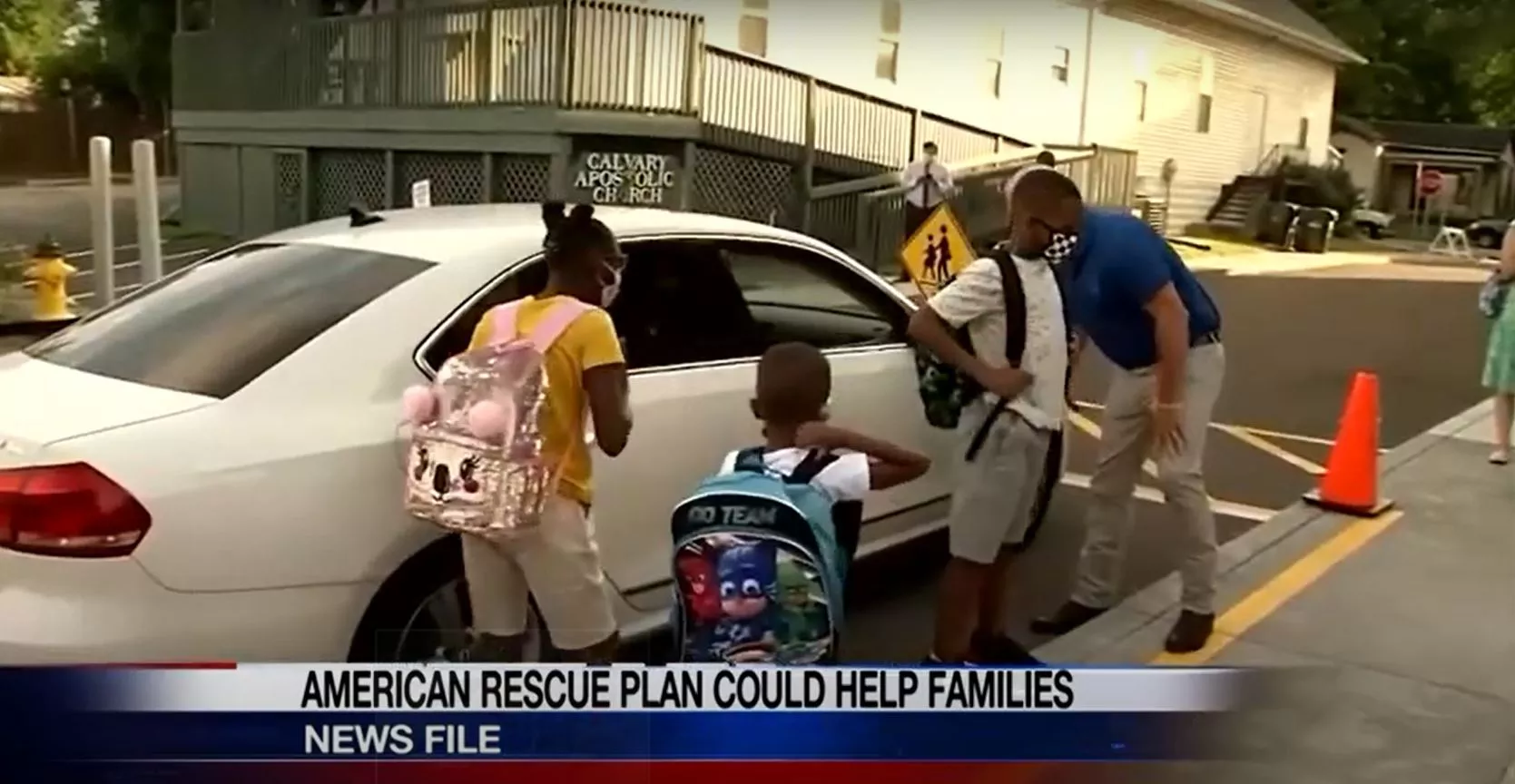
WASHINGTON – As many as 1.5 million Arizona children could benefit from an expansion of the child tax credit that would mean monthly checks to parents of up to $300 per child if approved by Congress this week.
The expansion is a little-discussed portion of the $1.9 trillion American Rescue Plan, the Biden administration’s sweeping pandemic relief bill that could win final approval from the House Wednesday.
Besides expanding the size of the benefit from the current $2,000 per child to as much as $3,600, the plan would turn what is now a tax credit into a regular monthly check, a major change that one advocate said could “really put a dent in child poverty.”
“There have been estimates that the child tax credit expansion will actually cut poverty for Black children by 52%, Hispanic children by 45% and Indigenous children by 61%,” said Alexandra Cawthorne Gaines, vice president of the Center for American Progress. “That is not insignificant.”
Supporters said the change would also benefit the economy by putting money directly into the hands of parents, who are expected to spend it on food, clothes, housing and other necessities.
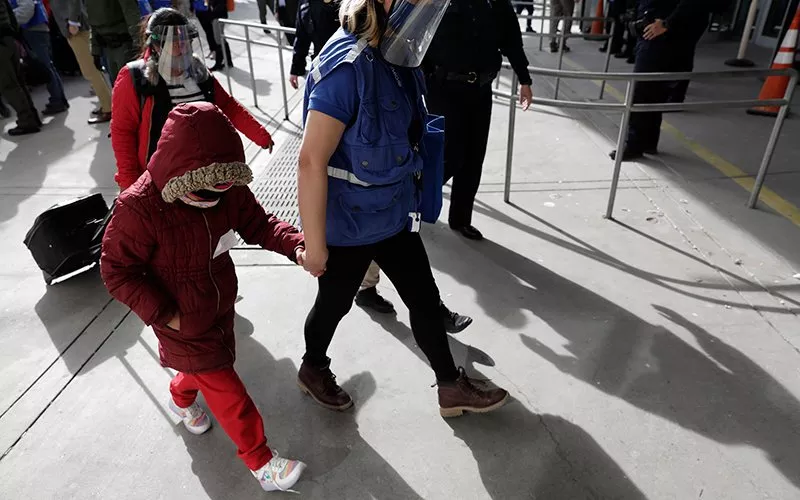
WASHINGTON – The White House had a message Wednesday for migrants who are flocking to the southern border in hopes of getting into the U.S. – “this is not an invitation, the border is not open.”
The message came as part of a multipoint plan of aid, diplomacy and policy that a Biden administration official said aims to stem migration at the source by improving conditions in Central American countries through aid programs.
It also comes as apprehensions at the southern border have jumped in recent months and the number of unaccompanied migrant minors in Customs and Border Protection custody nearly doubled in the past week, to 3,200 children.
“President Biden has made clear from Day 1 that he wants to change our immigration system,” said Roberta Jacobson, a former U.S. ambassador to Mexico who is serving as a special assistant on southern border issues.
“Doing so means truly building back better, because we can’t just undo four years of the previous administration’s actions overnight,” she said at a White House news conference.
But as the White House was outlining its plan Wednesday, Republican lawmakers from border states called for a return to the Trump administration’s get-tough immigration policies, blaming a recent border surge on Biden’s reversal of those policies.
With 1,835 new cases reported today, the total number of Arizona’s confirmed novel coronavirus cases topped 830,000 as of Thursday, March 11, according to the Arizona Department of Health Services.

Pima County, which reported 141 new cases today, has seen 110,931 of the state’s 830,465 confirmed cases.
With 60 new deaths reported today, a total of 16,464 Arizonans have died after contracting COVID-19, including 2,285 deaths in Pima County, according to the March 11 report.
A total of 879 coronavirus patients were in the hospital as of March 10 That’s roughly 17% of the number hospitalized at the peak of the winter surge, which reached 5,082 on Jan. 11. The summer peak was 3,517, which was set on July 13, 2020. The subsequent lowest number of hospitalized COVID patients was 468, set on Sept. 27, 2020.
The number of people visiting emergency rooms with COVID-like symptoms has bumped up this week, with 1,186 people visiting ERs on March 10 with COVID symptoms. Still, that number is less than half of the record high of 2,341 set on Tuesday, Dec. 29, 2020. That number had peaked during the summer wave at 2,008 on July 7, 2020; it hit a subsequent low of 653 on Sept. 28, 2020.
A total of 250 COVID-19 patients were in intensive care unit beds on March 10, which is roughly 21% of the record 1,183 ICU patients set on Jan. 11. The summer’s record number of patients in ICU beds was 970, set on July 13, 2020. The subsequent low was 114 on Sept. 22, 2020.
House of Representatives passes $1.9 trillion COVID relief package
The U.S. House of Representatives passed a $1.9 trillion COVID relief package, sending the legislation to President Joe Biden’s desk.
The legislation passed on a mostly party-line vote, with no Republicans supporting the package and just one Democrat, Maine Rep. Jared Golden, voting against it.
Southern Arizona Congressman Raul Grijalva (D-AZ03) said many Americans were still struggling a year into the pandemic.
“Our friends and loved ones have died, millions remain unemployed, our children are missing critical in-person learning opportunities, and countless small businesses have shuttered,” Grijalva said. “The American Rescue Plan recognizes these traumas and direct funds to put money in the pockets of those most impacted, safely return our children to in-person learning, and get shots in the arms of everyone in the country so that we can end the pandemic once and for all. A crisis of this magnitude warrants an equal response, and this legislation gets our families, workers, and small businesses the relief they deserve.” For details on the legislation, click here.
How to get a vaccine
To find out if you are eligible for a vaccine, visit the Arizona Department of Health website.
While supplies remain limited, Pima County is providing vaccination shots to people 65 and older as well as educators, first responders and healthcare workers. Those who qualify in Pima County’s 1B priority group of eligible vaccine recipients can register for a vaccine at www.pima.gov/covid19vaccineregistration or by calling 520-222-0119.
The county plans to expand eligibility to those 55 and older as well as frontline workers once officials estimate that 55% of the currently eligible population has been vaccinated.
A state-run vaccination site at the University of Arizona was not accepting first-dose appointments as of Thursday, March 11. As the state-run POD, or point of distribution, registrations at the UA vaccination site will go through ADHS’s website. When appointments become available, you can make them at pod vaccine.azdhs.gov, and those who need assistance can call 1-844-542-8201. More details here.
Some local pharmacies are now receiving vaccine doses. To find one near you, visit the ADHS website.
Get tested: Pima County has free COVID testing
Pima County is continuing to offer a number of testing centers around town.
You’ll have a nasal swab test at the Kino Event Center (2805 E. Ajo Way) and the Udall Center (7200 E. Tanque Verde Road).
The center at the northside Ellie Towne Flowing Wells Community Center, 1660 W. Ruthrauff Road, involves a saliva test designed by ASU.
Schedule an appointment at these or other drive-thru or pop-up sites at pima.gov/covid19testing.
The University of Arizona’s antibody testing can determine if you have had COVID and now have antibodies. To sign up for testing, visit https://covid19antibodytesting.arizona.edu/home.
—with additional reporting from Austin Counts, Christina Duran, Jeff Gardner and Mike Truelsen

WASHINGTON – The House gave final approval Wednesday to the Biden administration’s $1.9 trillion pandemic relief bill, a sweeping measure that will directly touch almost every Arizonan and will send billions in aid to the state.
Republicans assailed the American Rescue Plan Act as a wasteful, partisan measure and Wednesday’s vote reflected that, with every Republican and one Maine Democrat voting against the bill. Arizona lawmakers followed suit, splitting down party lines on the bill.
“Americans need targeted, immediate relief from COVID-19, not $1.9 trillion added to the national debt to pay for partisan wish list items and other provisions that won’t take effect until years from now,” Rep. Debbie Lesko, R-Peoria, said in a prepared statement Wednesday.
But while Lesko said the “people of Arizona and America deserve better,” supporters of the bill said it fills an urgent need.
“Our friends and loved ones have died, millions remain unemployed, our children are missing critical in-person learning opportunities and countless small businesses have shuttered,” Rep. Raul Grijalva, D-Tucson, said in a statement released by his office. “A crisis of this magnitude warrants an equal response, and this legislation gets our families, workers, and small businesses the relief they deserve.”
President Joe Biden said he will sign the bill Friday, clearing the way for $1,400 individual stimulus payments, increased jobless benefits, tax credits for children, school and health funding and support for businesses, among other measures.
Wednesday, March 10, 2021
With 830 new cases reported today, the total number of Arizona’s confirmed novel coronavirus cases topped 828,000 as of Wednesday, March 10, according to the Arizona Department of Health Services.

Pima County, which reported 148 new cases today, has seen 110,790 of the state’s 828,630 confirmed cases.
With 78 new deaths reported today, a total of 16,404 Arizonans have died after contracting COVID-19, including 2,270 deaths in Pima County, according to the March 10 report.
The number of hospitalized COVID cases statewide dipped below 900 today for the first time since October. A total of 868 coronavirus patients were in the hospital as of March 9. That’s roughly 17% of the number hospitalized at the peak of the winter surge, which reached 5,082 on Jan. 11. The summer peak was 3,517, which was set on July 13, 2020. The subsequent lowest number of hospitalized COVID patients was 468, set on Sept. 27, 2020.
The number of people visiting emergency rooms with COVID-like symptoms has bumped up this week, with 1,118 people visiting ERs on March 9 with COVID symptoms. Still, that number is less than half of the record high of 2,341 set on Tuesday, Dec. 29, 2020. That number had peaked during the summer wave at 2,008 on July 7, 2020; it hit a subsequent low of 653 on Sept. 28, 2020.
A total of 251 COVID-19 patients were in intensive care unit beds on March 9, which is roughly 21% of the record 1,183 ICU patients set on Jan. 11. The summer’s record number of patients in ICU beds was 970, set on July 13, 2020. The subsequent low was 114 on Sept. 22, 2020.

