
Thursday, February 25, 2021
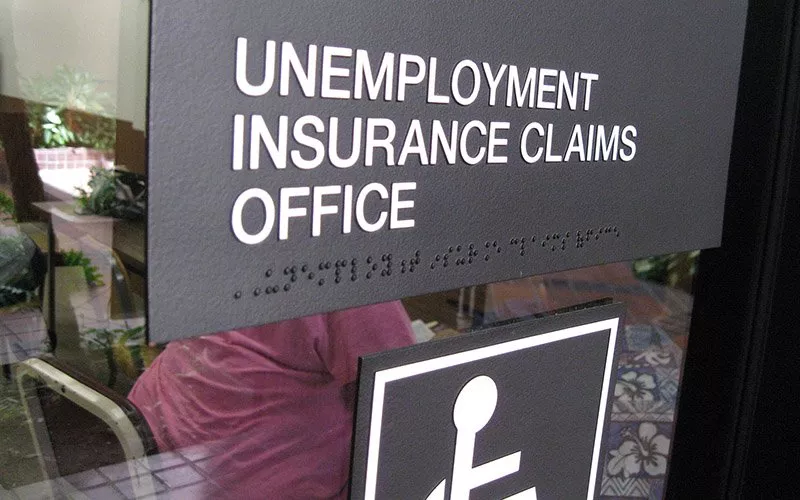
This past year the pandemic has subjected our economy to massive, unprecedented challenges in nearly every sector. We’ve heard from countless constituents who struggled after losing their jobs due to the pandemic and the associated government restrictions on businesses. Hundreds of thousands of hard-working Arizonans have been affected, and nearly one-half million people have applied for unemployment since the COVID-19 pandemic began.
Unemployment assistance benefits exist for this singular reason: to provide a temporary safety net to bridge the gap and meet the needs of Arizona’s working families who find themselves without a source of income. We fully believe it is the duty of state legislators to help hard-working Arizonans across the state as they manage the impacts of this crisis.
Arizona’s unemployment insurance benefit is currently limited to $240 – the second-lowest in the nation – providing little help for a family when expenses average $1,120 per week for basic needs like housing, food, and health care. unfortunately, Current unemployment law also punishes people for accepting part-time work by reducing their benefit after earning just $30.
That’s why we introduced bipartisan legislation, HB 2805, to provide much-needed, additional unemployment assistance to Arizonans who have been put in this terrible situation. This legislation raises the weekly unemployment benefit cap to $300, giving the people of Arizona the equivalent of one more assistance payment per month. It also allows people to earn up to $160 per week from part-time hours while looking for a new job without a reduction in their weekly benefit.
Nathaniel Sigal, a senior policy advisor to Romero, neither denied nor confirmed the rumor when asked about it.
"It would be an honor to even be considered for such an important position," Sigal said in an email. "However, Mayor Romero is focused on the job she was elected by Tucsonans to perform, and is concentrating all of her efforts on navigating Tucson through the pandemic."
Take all the talk with a healthy scoop of salt. Other sources have suggested that Romero's potential appointment is being pushed by local Democratic power brokers who would be happy to see Romero exit her spot atop city government.
Wednesday, February 24, 2021

Tuesday, February 23, 2021
After hearing the distressing story of a mother desperate to conceive children only to find out the artificial insemination treatments she received were sourced from the very doctor she entrusted to provide her sperm from an anonymous donor, Arizona Sen. Victoria Steele (D-Tucson) decided to use her position of power to help other victims.
When Kristen Finlayson took an Ancestry DNA kit in 2019, her mother, Debra Guilmette, discovered that Dr. James Blute III, who provided her fertility treatments in the ’80s, used his own sperm to inseminate her instead of using sperm from an anonymous Hispanic donor as she requested.
Finlayson went 34 years believing she was of Hispanic descent, only to find out the DNA test results showed she had no Hispanic DNA and was primarily Irish. The Ancestry site shows that Finlayson has 12 half-siblings, including children of the doctor who delivered her.

Finlayson’s DNA tests revealed that Blute is her biological father.
Steele saw the story, first reported by Lupita Murillo of KVOA News 4 Tucson, and drafted a bill that would make fertility fraud a criminal offense in Arizona as it is in California, Indiana and Texas.
Steele introduced the bill before the 2021 state legislative session began, but her bill was never assigned to a committee.
“I requested a meeting with [Senate President Karen Fann], I said I'd like to see her because I want to ask her to please reconsider, and please assign this to a committee so it can get a hearing,” Steele said. “I think that she may be thinking that this is a controversial bill, but I think that actually, I put a bill up here that everybody can get behind, and we could have a real bipartisan bill . . . I assumed that in a few days, it would be assigned to a committee because she would look at it, and in her heart of hearts, she would get that this really does make sense.”
On Jan. 20, Steele found out a bill criminalizing fertility fraud did make it to a committee to be voted on, but it was not hers.
Sen. Nancy Barto, R-Phoenix, had introduced a similar bill that would make fertility fraud a criminal offense. It was assigned to the Senate Judiciary Committee on Jan. 20.
“I was floored. I knew [Barto] would like it, but I didn't know she'd like it that much,” Steele said. “It's not against the rules, and so she has every right to take my bill and put it in and take credit for it. It doesn't matter, as long as the bill gets passed. But it does matter because that kind of highly unethical behavior makes it really difficult to have bipartisanship, and it's really difficult to get good bills to pass.”
Barto said she never knew about Steele’s bill, but that she was contacted by a constituent who had a story of fertility fraud and felt moved to draft legislation to criminalize the act.
Barto’s bill, SB 1237, proposed making “human reproductive material fraud” a class 6 felony while providing victims liquidated damages of $10,000.
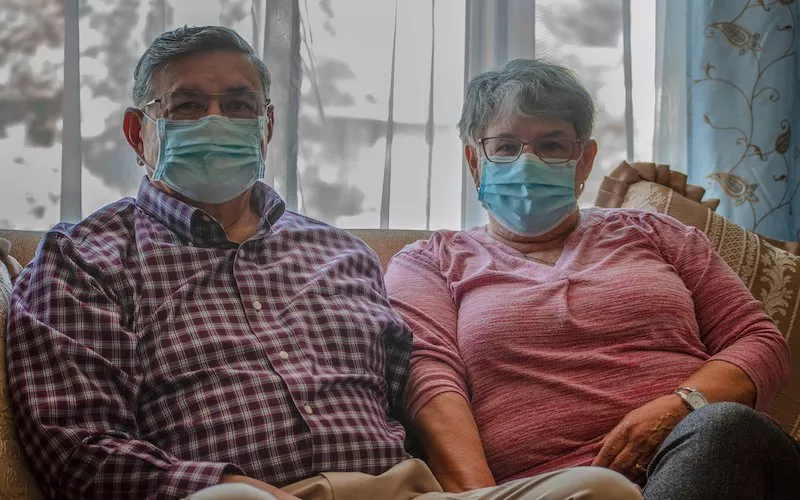
Lupe Solis’ prayers were answered when she received her second dose of COVID-19 vaccine recently at the State Farm Stadium mass vaccination site in Glendale. Now the 77-year-old is being cautious and patient, waiting to worship in person again at St. Timothy Catholic Church in Mesa.
“Prayer takes up a big part of our life,” Solis said. “We cannot participate in church activities. I will not feel safe now.”
Some churches have resumed in-person worship in Arizona, but Solis, who lives in Chandler, is still playing it safe after receiving both doses of the Pfizer vaccine.
Like so many of the nearly 1.3 million Arizonans 65 or older, Solis has adjusted to the safety precautions that have upended life since the onset of the pandemic. With COVID-19 ravaging Arizona’s senior community, many long to return to normal activities but remain apprehensive.
As of Friday, more than 11,500 Arizonans 65 or older have died from COVID-19 since the start of the pandemic, with a majority of those deaths in Maricopa County, according to the Arizona Department of Health Services. Now, in accordance with phase 1B of vaccine rollout, the state has been doing what it can to get vaccinations to the older population as quickly as possible. Seniors make up more than half of the 1,027,816 people in the state who have received at least the first dose.

Monday, February 22, 2021
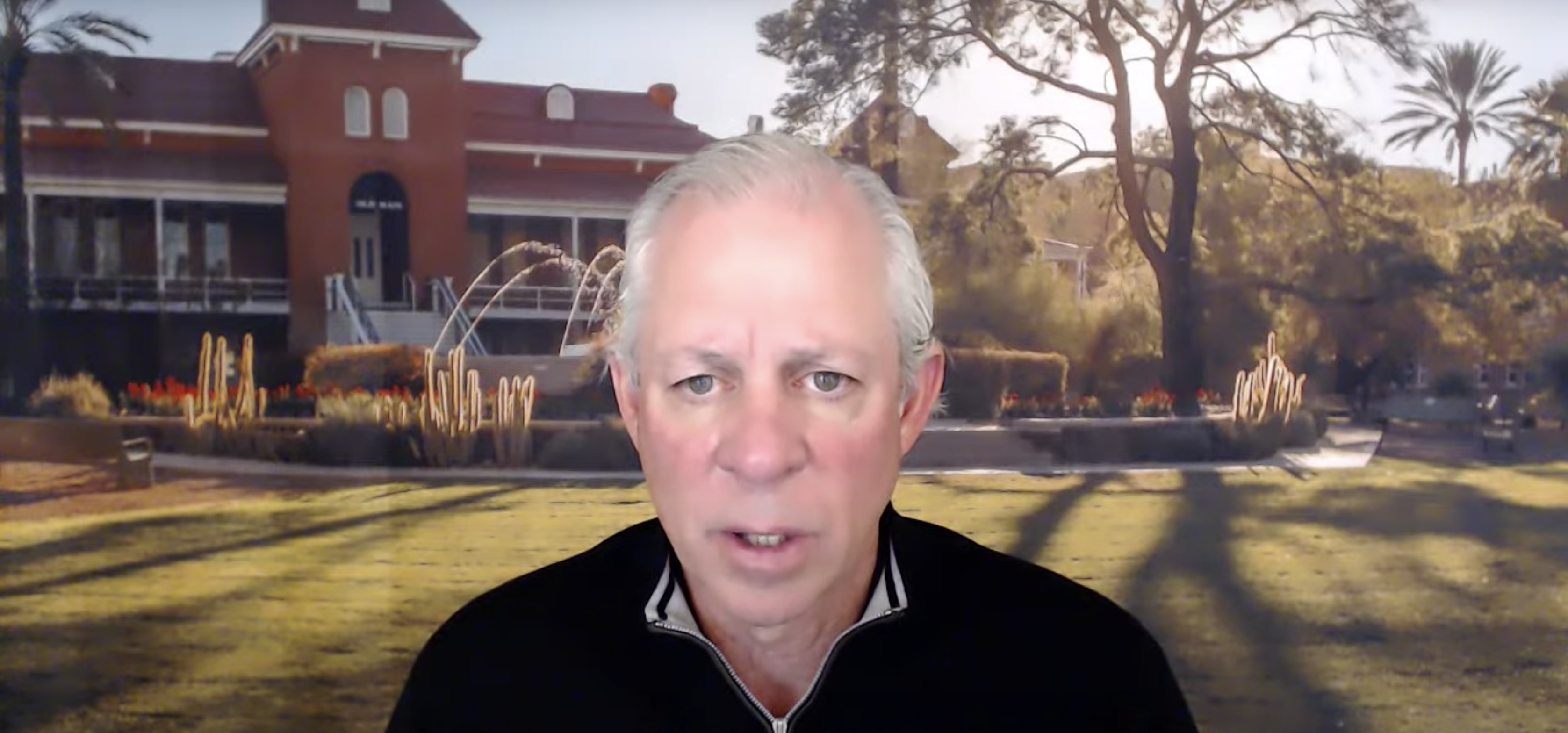
The University of Arizona moved to phase two of its reentry plan Monday with its nearly 8,000 students now able to attend in-person classes of 50 or fewer.
From Feb. 12-21, UA administered 15,047 COVID-19 tests and found 20 positive cases for a positivity rating of 0.1%, down from last week’s percent positivity of 0.3%.
The university’s goal is to keep this number below 5%, which they’ve maintained for several weeks.
“National and state and even Pima County data continues to look better. We are reassured that all of the programs that we have put in place to continue to operate our university have been working well because of the data that we have seen,” said Dr. Richard Carmona, UA's reentry task force director and former U.S. surgeon general. “But with that in mind, we still cannot be complacent. We must still work hard, tirelessly to maintain the privilege to keep our university open, to educate our students and be part of a bigger community.”
Dorm residents or students who attend classes in person are required to take one COVID-19 test a week. To enforce the testing requirement, university students won’t be able to access the school’s Wi-Fi network until they’ve verified they received a COVID-19 test.
The university is loosening some restrictions in dorms and will allow guests in common areas to use recreational amenities such as pianos and game tables, Carmona said.
UA expands hours of operation as a state-run POD
The university began operations as Pima County’s first state-run POD, or point of distribution, on Feb. 18.
Carmona announced on Monday the POD will expand its hours of operation from 10 a.m. to 10 p.m seven days a week.
“Nationwide, the number of cases in the last couple of weeks is down by 40%. The number of deaths down by 30%. But over the weekend, we as a nation reached a very bad milestone: 500,000 people have died from this disease,” University President Robert C. Robbins said. “This is still a deadly virus. So the fastest way we can get a hold of this pandemic is to get as many people vaccinated as possible.”


WASHINGTON – Arizona continues to be one of the worst states in the nation when it comes to funding higher education, still reeling from deep budget cuts that were made during the recession, according to a new national report.
The Center on Budget and Policy Priorities studied state funds from the time of the Great Recession in 2008 until 2019, right before the COVID-19 pandemic hit.
When adjusted for inflation, Arizona spending per student in the state decreased by 54.3%, the largest drop in all 50 states. Louisiana was in second place, with an inflation-adjusted drop of 37.7% in state support.
Arizona also had the second-highest percentage increase in tuition during the period, with its 78% hike trailing only Louisiana’s 96.8%. But Arizona’s increase was the largest in terms of actual dollars, rising $5,224 over 11 years to an average of $11,921 for in-state Arizona students across all public four-year colleges and universities.
David Lujan, director of the Arizona Center for Economic Progress, called the state’s budget priorities skewed.
“Arizona actually provides more funding each year to our state Department of Corrections to incarcerate people than we provide to all three of our state universities combined,” Lujan said in a conference call to release the report.