Monday, February 1, 2021

Friday, January 29, 2021


Thursday, January 28, 2021

PHOENIX – Amid moves by some states to declare racism a public health issue, experts are looking to medical schools to identify strategies to improve care for people of color and eliminate disparities related to a patient’s race or ethnicity.
Dr. David Acosta, chief diversity and inclusion officer with the Association of American Medical Colleges, said students’ training and exposure regarding racism in health will help effect needed change.
“It’s going to require certain attitudes, behavioral changes … constructing the knowledge base so that everybody – not just students of color – but everybody now becomes aware in medicine, nursing, pharmacy, whatever health profession,” Acosta said.
The deaths last year of George Floyd, Breonna Taylor, Dion Johnson and other Black people at the hands of police sparked a new racial reckoning, and governors in Michigan, Nevada, Wisconsin and other states issued executive orders declaring racism a public health crisis.
A slew of city councils and county governments passed similar resolutions, while other states established antiracism work groups or are reviewing policies and addressing institutional racism in public health, criminal justice and other areas.
In Arizona, no action has been taken by Gov. Doug Ducey or the Republican-controlled Legislature to make a formal declaration.

Wednesday, January 27, 2021
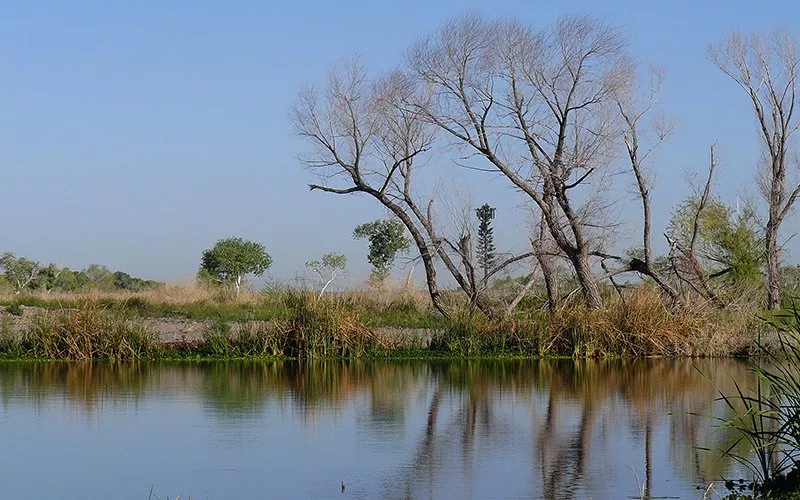
WASHINGTON – Pascua Yaqui Council members called it “a blessing.”
They were talking about $900,000 in federal funds that will be used to bring water to the tribe’s lands for irrigation, the first fruits of a successful effort last year by members of the state’s congressional delegation to win $150 million in federal funding for water projects around the state.
“Water is sacred to a lot of tribes and a lot of Arizonans. For us, it’s a blessing,” Pascua Yaqui Chairman Peter Yucupicio said at a news conference announcing the funding. “We started looking at this and we said, ‘This will help us now and in the future.'”
The money comes from an Army Corps of Engineers fund dedicated to water infrastructure projects in Arizona. Under the bill, local governments can enter into agreements with the corps for water, wastewater treatment, environmental restoration and other projects. The Army would pay 75% of the cost of the project and the local government would assume all operating costs once the work was completed.
PHOENIX – On his first day in office, President Joe Biden sent to Congress his plan to reform the U.S. immigration system. The bill includes preserving the Deferred Action for Childhood Arrivals program, or DACA, and outlines a path to permanent residence and citizenship for its recipients.
That includes Reyna Montoya, an activist in Phoenix who came to Arizona when she was 10.
“It has been a renewed hope for the immigrant community,” Montoya said. “Before, everything seemed so dark and so deemed, and we constantly were fighting.”
Montoya is the CEO and founder of Aliento, a nonprofit that helps immigrants, particularly young people in the country illegally who have DACA or want to benefit from the Obama-era program. She said she has been looking for a way to obtain U.S. citizenship since her family moved from Tijuana, Mexico, to Nogales, Arizona, in 2001.
“It’s a huge step in the right direction,” Montoya said. “This is an important day that symbolizes a new beginning.”

Tuesday, January 26, 2021
After last week’s inauguration of the first female vice president, the University of Arizona is hosting a virtual discussion about voting history and voting rights on Thursday, Jan. 28.
The discussion includes a panel of local women in the industry: Pima County Recorder Gabriella Cázares-Kelly; assistant professor of government and public policy Lisa M. Sanchez; and Heidi Osselaer, author of "Winning Their Place: Arizona Women in Politics.”
The panel discussion is presented by UA’s Special Collections in partnership with Patricia MacCorquodale, professor emerita in the Department of Gender and Women's Studies. The event is part of UA’s online exhibit "Founding Mothers: From the Ballot Box to the University.”
According to UA, the panelists will discuss how the 100th anniversary of the right to vote and 2020's historic election outcomes have impacted women. They will also talk about how people and institutions can remove barriers that prevent people from participating in democracy, and how to encourage participation among women and people of color.
The discussion takes place at 6 p.m. Thursday, Jan. 28. The event is open to the community, but registration is required. Register for the online event at the University Libraries website.