

Thursday, January 7, 2021
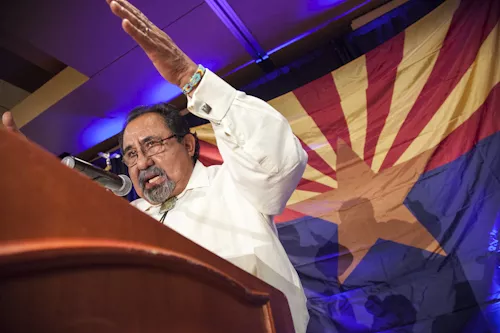
Grijalva's statement:
Four years of governing by conspiracy theories, falsehoods, and division erupted into a violent assault on lawmakers upholding their own constitutional duty to certify the results of the 2020 election yesterday. True to his words in his inaugural speech, Trump’s decision to encourage his supporters to violence turned the People’s House into American carnage.
I am supporting an immediate removal of the President by the 25th Amendment or impeachment based on his direct role in conspiring to overturn the election and inciting yesterday’s violent events. It was the opposite of presidential behavior and the most stunning example of his inability to honor his oath of office throughout his Presidency. I am cosponsoring Articles of Impeachment because Donald Trump is a clear and present national security threat. If the Cabinet is unable to take the necessary measures to remove the President, Congress must immediately move to impeach him once again, and the Senate has no choice but to remove him.
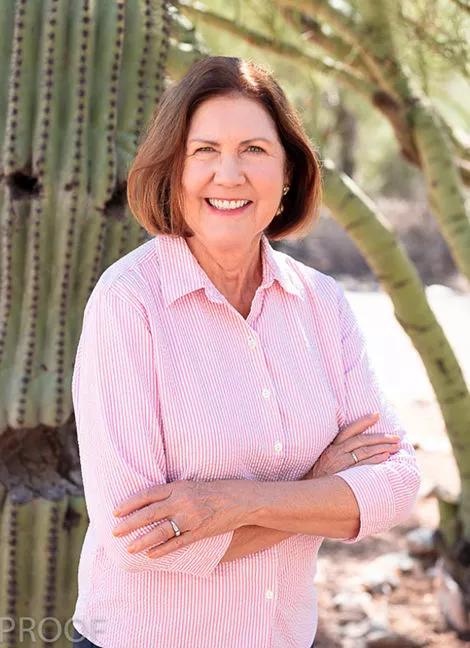
We have known for a long time that this President is unfit for office,. “What transpired yesterday at the Capitol, the seditionist uprising that we witnessed, was incited directly by the Commander-in-Chief — who has control over our nuclear arsenal. That is incredibly alarming. We must hold him accountable for his actions.
While I am still shocked and saddened by yesterday’s events, it’s become blatantly clear that President Trump should not and cannot remain in office. Whether it is invoking the 25th amendment, or beginning impeachment proceedings again, I fully support removing him from the White House. He is a threat to our democracy and to Americans at large. This president should also be disqualified from holding public office in the future.
We cannot trust President Trump to independently or smoothly complete a transition of power. Therefore, we must act swiftly to facilitate a transition ourselves, before the end of his term and as soon as possible.”
As the House of Representatives was doing a ceremonial counting of the Electoral College votes Wednesday to award the White House to President-elect Joe Biden, a crowd of rioters incited by President Donald Trump stormed the building, leading members of Congress, Capitol Hill staff and members of the media to temporarily seek shelter.
Before they were cleared by authorities, the rioters wandered around the Capitol, breaking windows, ransacking offices and making off with souvenirs.
Four people were killed in the riot, including a rioter shot by Capitol police.
After order was restored, the House and Senate completed their tabulation of the vote (after a few GOP objections to some vote tallies states, including Arizona, that were overruled) and acknowledged that Biden had defeated Trump in the 2020 election.
Most Arizona elected officials condemned the storming of the Capitol, but some Republicans had praise for the rioters.
Sen. Mark Kelly, the newly elected Democrat from Arizona, criticized the Republicans who challenged the outcome of the election as well as the rioters.
“Our democracy was tested today,” Kelly said. “First, by a baseless objection to Arizona’s electoral votes, despite the fact that Arizona’s elections were fairly administered and certified by a Republican Governor, a Democratic Secretary of State, and public servants at every level of government and representing both political parties. And then again by individuals, spurred on by the president, storming the Capitol in an unpatriotic attempt to overturn our election."
Kelly added that after elections, “we have come together to find common ground and solve our challenges, and that is the work we begin tonight. My focus will continue to be on representing Arizonans by working with Republicans and Democrats and the incoming administration to beat this virus and rebuild our economy.”
PHOENIX – Sixty-three years ago today, the New York Times ran this headline on the front page of its sports section: “Jackie Robinson quits baseball.”
It marked the end of one of the most important eras in sports history, one that saw the first African American play Major League Baseball in the modern era.
The barriers Robinson broke remain important, but a recent decline in participation by African Americans has brought disappointment. According to a study by the Arizona-based Society of Baseball Research, participation by African American players in MLB has declined steadily since 1981 and by 2016 that number plummeted to 6.7%, the lowest percentage since 1957.
In April of 1947, Robinson made his debut with the Brooklyn Dodgers as the first African American player to appear in a Major League Baseball game. Three months later, Robinson was followed by Larry Doby and several others to break the color barrier between MLB and the Negro baseball leagues.
In a racially divided country, Robinson and company saw resistance from much of the white community but continued to play the sport he loved to give other African Americans an opportunity to play on baseball’s biggest platform.
During the 1981 season, 17 years removed from the Civil Rights Act of 1964, MLB saw its highest-ever African American representation at 18.7%, according to SABR.
By this point, Jim Crow laws of the South had become “unconstitutional,” but racism was prevalent. Many African Americans still had a passion to play baseball and continued the integration of the sport from the Robinson days all the way into the mid-1990s.
But 1994 is when researchers started to notice a decline of African Americans in the sport. While some MLB fans say the recent numbers must be inaccurate because they see a decent number of “Black” players, star such as Yasiel Puig, Yoenis Cespedes and Francisco Lindor are black Latinos, not African Americans.
Theories vary as to why African Americans continue to lose interest in the sport.
Tolleson High School baseball coach Scott Richardson believes baseball is becoming increasingly less affordable, particularly for minorities.
“I think one of the factors is the lack of opportunities, unless you have money at a young age, to play youth baseball,” Richardson said. “It used to be where everybody in your town played on the local Little League teams, and it was very affordable. But then, when the club and travel “elite” teams started being formed, it started (pushing away) people of diverse cultures.
“It’s not uncommon for a kid that wants to play club baseball (to pay) $800 a season (with) monthly dues. A lot of kids in poor populations have a tough time (paying for that). With basketball, all you need is a basketball, and you go down to the park by yourself. With baseball, you can’t do that (anymore).”
In Arizona, poverty rates were higher in 2019 for Black and African Americans (20.3%) than they were for white residents (13.2), according to the U.S. Census.
Richardson believes another factor is that baseball is more of a skill sport rather than one where athleticism can cover up deficiencies in fundamentals like basketball and football.
“You can be the fastest guy, the guy with the highest vertical jump, the strongest arm, but (baseball is) still kind of a skill game,” Richardson said. “To be successful at baseball, it takes a lot of time, a lot of repetitions, and unfortunately, today in the United States, you need to have some money to get those repetitions.”
Billy Wilson, a Tolleson High School alumnus who plays in the Cleveland Indians minor league system, feels that his team and the Indians organizations as a whole is more diverse than most organizations across professional baseball.
“With the Indians, I feel like we have a very large amount (of diversity) compared to other teams of Black players,” said Wilson, who is Black. “And we’re all pretty close, so it’s kind of cool. I think that’s something Indians probably feel like we’re pretty good (about in the) organization. They look out for that kind of stuff and try to harp on having a big blend of players. The majority group is the Latin, Dominican, Venezuelan and Cuban players in the minor leagues. Everybody else is sprinkled in here and there.”
Wilson also believes financial factors are a big reason why other organizations struggle to bring in African American players.
“Just looking based on statistics, socioeconomic status (for) African Americans (is) a little different than other groups in America,” Wilson said. “Of course, you’re not going to see many African Americans play baseball, and they probably aren’t going to have the resources to be good. With baseball being such a mentally draining sport, you’re not (going to be) really good early on, (so) you’re just going to hate it more and more. (At that point), why would you want to continue to pursue it?”
Former Oakland Athletics second baseman Shooty Babitt has noticed a demographic change in baseball since his last appearance in the MLB in 1981.
“Probably in about the last 10 years that I was playing is when you start to see the decline of African Americans in baseball,” said Babitt, who is Black. “We were at an all-time high at (about) 20% when I grew up playing.”
Baseball has struggled with improving its tempo as well as making it more interesting recently. MLB has made changes to try to adjust the tempo, such as decreasing the time allowed between pitches, but changes haven’t been significant. The lack of entertainment in the game has also contributed to African American kids being reluctant to play the sport, Babitt said.
“Baseball lacks action now,” he said. “It used to be a fun game. It wasn’t so analytically driven. It wasn’t smart people that were playing. It’s a bunch of robots in the game now.”
Babitt believes it is critical for baseball to greater promote African American MLB players to increase interest among young African American athletes.
“People that look like me don’t see themselves on the baseball field anymore,” Babitt said. “So why would they want to play?”
Despite the lack of African American players, baseball continues to grow in diversity. It is becoming more of an international sport, as the percentage of white players has actually declined from 70.3% in 1989 to 63.7% in 2016, according to SABR. This is due to an increase of Latino players in the sport. The number of Latinos has more than doubled since that time, increasing from 13.2% to 27.4%. The number of Asian players is expected to increase as well, as the percentage has increased to over 2% in 2016.
Wilson believes cultural differences in Latin America are the biggest reason many MLB players emerge from that region.
“In those countries, you are raised to be a baseball player, or you’re raised to do something else,” Wilson said. “Their escape is baseball, so obviously, they get really good at it. They have whole facilities designated to just baseball training out there. You don’t even go to school, (and) you just grind in baseball. (In the U.S.), you got options. As you’re getting beat up in baseball, you can just … quit and go do something else that you’re better at, is cheaper, and all your friends are doing.”
Sandra Day O’Connor High School baseball coach Jeff Baumgartner added to the narrative of the increasing number of Latin American players in the big leagues.
“Being in the Dominican, I’ve seen those players in the grind that they go through and not having anything to fall back on,” Baumgartner said. “If they don’t make it to the (major leagues), there’s nothing really else for them to fall back on. That’s really what drives them and keeps them determined, and that’s definitely something that’s pushed the Dominican players.”
Successful African Americans players might be the answer to attracting young players to the game, Baumgartner said.
“(There’s) Jo Adell, there’s some young guys coming up that I think are going to be pretty good,” he said. “(There’s) Riley Greene with the Reds, so there’s some guys coming up that hopefully will pop in and be big-time sensations that can generate the next (African American) youth movement.”
Phoenix East Valley Little League coach Demeitris Wauqua has noticed a low number of African American baseball players on his teams as well as back when he played Little League.
Wauqua noted that many African American baseball players play football or basketball as well. When it comes to choosing one sport, he said, athletes tend to shift away from baseball because of the NCAA’s baseball scholarship system.
“Colleges (only) provide a partial scholarship for baseball,” Wauqua said. “With football, they’re able to get a full ride. Possibly (football or basketball) is an easier route for (African American) athletes.”
Phoenix Little League parent Chris Davis started playing baseball when he was 9 years old. He immediately fell in love with the sport watching Mets star outfielder Darryl Strawberry, an African American who played from 1983-1999.
Davis also believes kids grow up with a stronger interest in sports like football and basketball. His kids play baseball and when he asks them what their favorite sport is, they always list baseball last.
“People talk about (athletes like) Odell Beckham,” Davis said. “They don’t talk about (African American) players in MLB. (There’s) Adam Jones, and I can’t even think of anyone (else) off the top of my head.”
Even as a baseball player, top athletes that come to his mind are football and basketball players like the NBA’s Steph Curry and LeBron James and the NFL’s Le’Veon Bell. Davis added that many kids overall are bored by the sport’s “standing around” and slow pace. Although the issue is not getting any better, he does believe that the sport could take steps to improve interest among African Americans.
“(The sport) definitely (needs to change) its marketing,” Davis said. “If you want to bring in more (African American) players, you definitely have to cater more towards (African American youth athletes), and if you have one (African American) player that’s doing well, then market that player. Kids are not going to get hyped up to go watch (free agent pitcher) Jon Lester.”
In addition to the sport failing to market key African American stars like Andrew McCutchen, Mookie Betts and Adam Jones, Davis believes that African Americans shy away from the sport because of how expensive it is to play.
For his son to play Little League it cost him $275 before buying a glove, bat and other gear. After buying all the equipment, Davis said that it can cost close to $1,000 per season, depending on what brand is purchased. Many African American families don’t have the financial resources for their kids to play baseball as opposed to football or basketball, which are relatively cheaper to play, Davis said.
“Look at (African American) players in hockey,” he said. “I mean there’s just no interest, and that’s (where) I see baseball going.”
MLB has seen growth in general youth participation in the sport, in large part due to the league’s “PLAY BALL,” an initiative designed to spark widespread participation in all forms of baseball activities among all age groups. According to the Sports & Fitness Industry Association’s Topline Participation Report, baseball has grown 20% in participation since 2014, which is the year prior to the launch of the initiative.
No statistical evidence of such growth among African American youth in baseball has been shown, but recently promoted Chief Baseball Development Officer, Tony Reagins, has put multiple diversity-focused programs in place.
Of those programs, the one that hopes to make the biggest impact on drawing baseball interest from African Americans is Reviving Baseball in Inner Cities (RBI) because of the belief inner-city youth heavily favor football and basketball. Programs like the Washington Nationals Youth Baseball Academy are expected to be key in reviving baseball interest in inner cities.
According to an article from health.gov, more than 90 percent of participants in YBA PLAY, one of the Academy’s most popular programs, said that their baseball skills improved, that they learned new things and that they want to keep practicing and getting better. Comparable programs that give youth these types of opportunities and development can cost families up to $4,000 a year.
In 1956, Robinson’s final year in the majors, African-Americans made up 6.7 percent of major league rosters. At the start of the 2020 season, that number was 7.8 percent, according to Major League Baseball, and several teams, including the Diamondbacks didn’t have an African-American player on their Opening Day roster.
The hope by many is that changes. Soon.
Wednesday, January 6, 2021
WASHINGTON – For two months since the election, President Donald Trump has challenged the election of President-elect Joe Biden, but there is no question that in some parts of Washington it will soon be time for Trump to go.
The Trump key chains, that is. And Trump mugs. And T-shirts and posters and finger puppets and bottle openers and other souvenirs that have been staples in souvenir shops for the past four years but are now being moved to the clearance shelf.
“It sold well. I mean Trump was a hot commodity,” said Dexter Morse, who manages the Washington Welcome Center, a tourist stop and souvenir shop just blocks from the Trump International Hotel.
But that was before the election.
PAONIA, Colorado – A.J. Carrillo farms 18 acres near Hotchkiss, Colorado, in the high desert of the Western Slope about an hour southeast of Grand Junction. When he irrigates his peach orchard, water gushes from big white plastic pipes at the top of the plot and takes half a day to trickle down to the other end of his 5-acre orchard.
Carrillo is planning to convert his Deer Tree Farm from flood irrigation, which has been commonly used in the West for more than a century, to a new and much more efficient style of irrigation – microsprinklers.
Changing irrigation methods is something more and more Western Slope agricultural producers, from small to large, are doing. With help from federal funding, they’re able to apply less water to grow their crops and make their land more resilient to drought. And more important, the switch also means that fewer pollutants run off their fields into the Colorado River, keeping it cleaner all the way down to Mexico.
Salt and selenium occur naturally in the shaley soils of the Gunnison Basin, leftovers of a prehistoric inland sea. Both substances are harmful to plants, fish and humans. Flood irrigation of fields allows water to penetrate deep into the soil, where it dissolves out salt and selenium. The contaminated water then runs off into ditches that eventually empty into the Gunnison River, and from there into the Colorado. The result is that farms in the Gunnison Basin send more than 360,000 tons of salt into the Colorado River each year.
“So we have a serious ecological issue going on here,” Carrillo said.


