

Thursday, February 3, 2022

WASHINGTON – Arizona Democratic Sen. Mark Kelly has raised more than $27.5 million for his reelection bid this fall, almost twice the total raised by a half-dozen Republican challengers, according to new campaign finance reports.
But political analysts said Kelly’s “giant war chest” – the fourth-most among Senate campaigns nationwide in 2021 – does not guarantee a win in a state like Arizona during a year that is expected to be rough for Democrats.
“He could have unlimited amounts of money … but if the political environment is really bad for Democrats, as it might be, there may be no amount of money he could spend that saves himself,” said Kyle Kondik, managing editor of Sabato’s Crystal Ball at the University of Virginia Center for Politics. He calls the Arizona Senate race a toss-up.
But for now, Kelly’s in a good position. Besides a sizable fundraising lead, he does not have a Democratic primary challenger, while his would-be Republican opponents face a bruising and costly primary before they can turn their sights on Kelly.
A poll released Tuesday by OH Predictive Insights showed Kelly would get 42% of the vote to 38% for any Republican candidate, with 19% of voters undecided. The online poll of 855 registered Arizona voters was taken Jan. 11-13 and has a margin of error of plus or minus 3.4%.
Wednesday, February 2, 2022

Mayors would no longer be able to order businesses to close during a state of emergency under a GOP-backed proposal fueled by anger stemming from the early days of the COVID-19 pandemic, when Arizona cities ordered many businesses to temporarily close.
It’s the latest attempt to reduce the use of emergency powers, following the advancement last week of a bill that would curtail the governor’s emergency powers.
In March 2020, the mayors of Phoenix and Tucson used those powers to mitigate the spread of COVID-19 by closing bars and setting a curfew for restaurant dining rooms.
In a House Military Affairs and Public Safety meeting Monday afternoon, Lake Havasu City Republican Rep. Leo Biasiucci said the power was being applied unevenly and to detrimental effect.
“When the pandemic was in play, small businesses were told they couldn’t be kept open, but Walmart and Home Depot were,” he said.
Oro Valley Republican Rep. Mark Finchem called mayors who closed businesses “petty tyrants” and said it was hypocritical to be worried about superspreader events when large retailers where lots of people could congregate were kept open.
More expansive square footage likely made it easier to social distance – which the CDC and the Arizona Department of Health Services still recommend as a strategy to reduce the spread of COVID-19.
Biasiucci said customers should be allowed to choose which businesses to visit and how to protect themselves. Ultimately, he said, businesses should decide when to close their doors, not local governments.
But Republicans on the committee dismissed this concern by pointing out that the mayor’s ability to declare evacuations — which would remain in law — solves that conflict.
Roxanna Pitones, a lobbyist for the League of Arizona Cities and Towns, said that limiting mayoral power would remove critical safeguards.
“These decisions are not made lightly, but are taken with public safety in mind,” she said.
Finchem responded that fires, floods and sinkholes are immediate emergencies, but the pandemic — which he referred to simply as the need to wear a mask and stay at home — is not. If it was, he argued, every business would still be shut down.
“There’s a difference between a real emergency and one under the guise of a ‘pandemic,’” he retorted, forming physical quotation marks with his hands.
To date, more than 26,000 Arizonans have died from COVID-19 and caseloads and hospitalizations have been at all-time highs in January.
Republican Rep. Teresa Martinez said that the indefinite nature of the pandemic is what is most harmful to businesses when they’re ordered to cease operations.
“With a fire, you can see a start date — when the fire starts — and an end date,” she said.
For Rep. Marcelino Quiñonez, D-Phoenix, the bill is undermining voter voices.
“Mayors were elected by communities to make decisions and provide guidance,” he said.
The bill passed along party lines, with Republicans supporting it; the next step is for consideration by the full House of Representatives.

Rents in the Phoenix area kept climbing last year, making it one of the U.S. cities with the steepest annual increases, the Washington Post reports.
But if you rent in Phoenix, you already knew that. Still, the Post helpfully quantifies Phoenix’s annual average rent increase at an eye-popping 26%. Other lists put several Arizona cities into the top 10 for rent increases. Economists suspect these rising rents will further drive inflation, too, so this affects you even if you don’t rent.
Guess what didn’t increase by 26% last year: Most people’s salaries.
The Phoenix metro area is in the top 15 for rent increases https://t.co/cFHje0nw0W pic.twitter.com/moSJ8A9MDK
— Rebekah Sanders 🌵 (@RebekahLSanders) February 1, 2022
Cities and towns around the state know they have an affordable housing problem, and some are working to address it. In Tempe, for instance, the city started collecting money the past two years for a program that “puts the onus on the city to create affordable housing rather than relying on developers to bring affordable projects to the city,” the Republic’s Paulina Pineda reports.
Tuesday, February 1, 2022

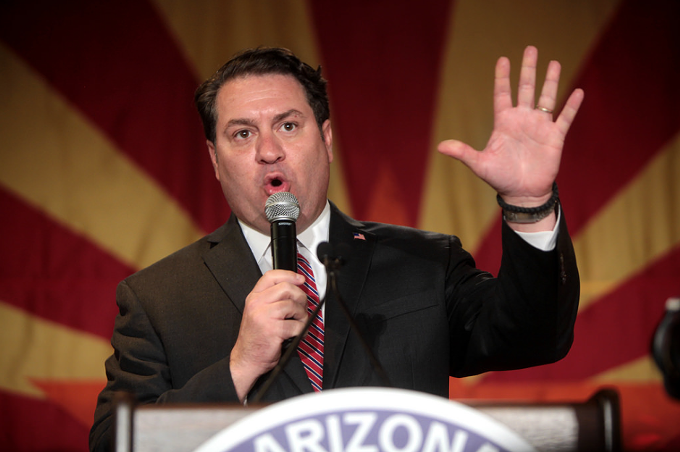
It's easy to run for office when you're already in office … We're getting the legislative band back together … And he's attempting a Hulk Hogan impression
Arizona Attorney General Mark Brnovich seems to grab daily headlines lately. We’re sure it’s just a coincidence for the AG who’s running for U.S. Senate.
On Monday, he threw himself into another federal fight against the Biden administration. This time, Brnovich requested the U.S. Department of Health and Human Services adopt a rule prohibiting the use of race and ethnicity as factors when issuing guidelines for therapies like monoclonal antibodies.
The antibodies issue sprung up recently after the Food and Drug Administration said race and ethnicity could be considered when assessing risk factors for severe COVID-19 and allocating treatment options. Other Republicans, like Marco Rubio, have put out similar press releases calling the rules “racist and un-American.”
But that wasn’t the only federal issue the state attorney general took to task in the past week. He also appeared on Fox News, his regular stomping ground, to talk about the border. He called U.S. Sen. Mark Kelly “Cartel Kelly” and said everyone is “less safe” because of the Biden administration and Kelly.
Monday, January 31, 2022
WASHINGTON —The congressional committee investigating the Jan. 6 attack on the U.S. Capitol subpoenaed on Friday 14 people from seven states who participated as fake electors following the 2020 presidential election.
Groups from Arizona, Georgia, Michigan, New Mexico, Nevada, Pennsylvania, and Wisconsin all allegedly sent in lists of so-called alternate electors to the National Archives.
The groups had met in December 2020 to sign documents assigning their respective states’ Electoral College votes to former President Donald Trump — though their states actually voted to elect Joe Biden as president.
Various Republicans then urged the Trump administration to use the slates of bogus electors as a reason to block the certification of the election during a joint session of Congress on Jan. 6, 2021.
The Select Committee to Investigate the January 6th Attack on the United States Capitol has subpoenaed the chairperson and secretary of each of the groups from the seven states.
“The Select Committee is seeking information about attempts in multiple states to overturn the results of the 2020 election, including the planning and coordination of efforts to send false slates of electors to the National Archives,” Chairman Bennie G. Thompson, a Mississippi Democrat, said in a statement.
“We believe the individuals we have subpoenaed today have information about how these so-called alternate electors met and who was behind that scheme.”
The list of individuals contains some high-ranking Republican officials, including Michigan National Committeewoman Kathy Berden, Chairman of the Nevada Republican Party Michael J. McDonald, and Georgia Republican Party Chairman David Shafer.
The other alternate elector subpoenas went to Arizona chair Nancy Cottle, Arizona secretary Loraine B. Pellegrino, Georgia secretary Shawn Still, Michigan secretary Mayra Rodriguez, New Mexico chairperson Jewll Powdrell, New Mexico secretary Deborah W. Maestas, Nevada secretary James DeGraffenreid, Pennsylvania chairperson Bill Bachenberg, Pennsylvania secretary Lisa Patton, Wisconsin chairperson Andrew Hitt and Wisconsin secretary Kelly Ruh.
Cottle and Pellegrino did not respond to requests for comment from the Arizona Mirror.
The subpoenas ask the individuals to provide before Feb. 11 various documents regarding their role in selecting the “alternate” electors and to appear for depositions before the committee at different dates in February.
The subpoenas are part of the Jan. 6 select committee’s ongoing investigation into the attack on the Capitol building that temporarily delayed the certification of the presidential election after rioters attacked and entered the building.
The panel has subpoenaed several high-ranking Trump administration officials, and the House of Representatives held former White House Chief of Staff Mark Meadows and aide Steve Bannon in contempt of Congress for refusing to cooperate with those subpoenas.
The committee has requested information from House Minority Leader Kevin McCarthy, a California Republican whose refusal to cooperate has led to discussions about whether the panel should subpoena him as well.
The select committee’s letters to the “alternate electors” said its members were not seeking information about political views or activities in the 2020 presidential campaign, but information about their “role and participation in the purported slate of electors casting votes for Donald Trump and, to the extent relevant, your role in the events of January 6, 2021.”
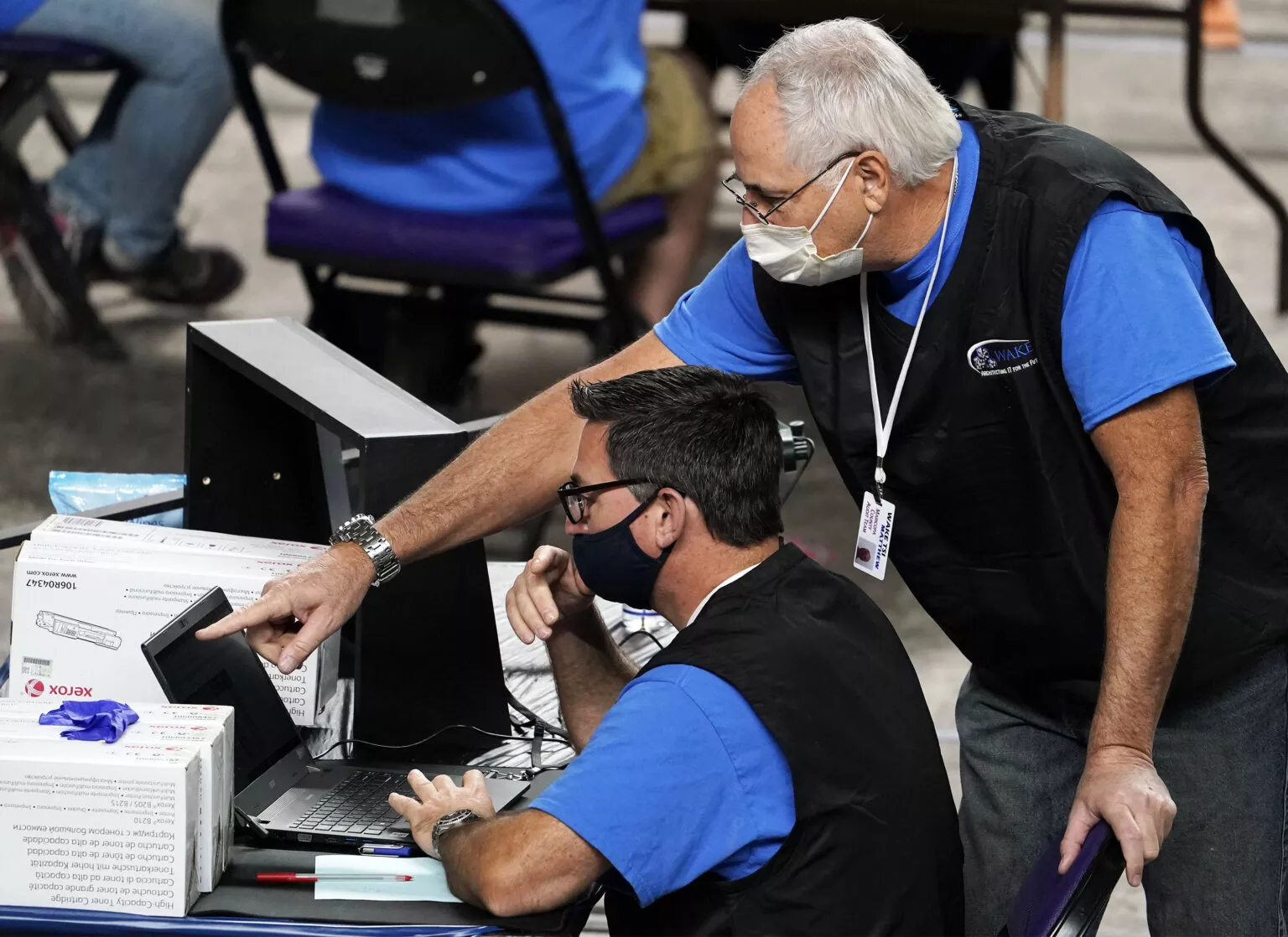
The special master who is overseeing the examination of Maricopa County’s routers as part of the so-called “audit” of the 2020 election has selected his team of experts, and the Senate has provided him with a list of questions it wants answered.
The end goal of the examination is to see whether Maricopa County’s election equipment was ever connected to the internet, as proponents of conspiracy theories about the 2020 election have insisted. The county has repeatedly denied the allegations, and audits it conducted of its election equipment confirmed as much in early 2021.
Some proponents of the false allegations that the 2020 election was rigged against former President Donald Trump have espoused wild theories that election systems in Arizona and other swing states that President Joe Biden won were hacked so that votes could be changed. Senate President Karen Fann and Senate Judiciary Committee Chairman Warren Petersen subpoenaed the routers and Splunk logs as part of their “audit,” despite a lack of evidence that the county’s ballot tabulation machines or other parts of its election system were ever connected to the internet.
Two pieces of equipment that the Senate’s “audit” team said were connected to the internet were election department web servers that are supposed to be connected, and which aren’t connected to the election management system, the county said.
John Shadegg, a former Republican congressman whom the Maricopa County Board of Supervisors and Fann chose as the special master in September, announced his three-person team on Friday.
The Jan. 6 Arizona ties keep growing … The number of bills filed by the Arizona Legislature does, too … And we're going to act like we've never committed a typo.
Two Arizonans were among a list of 14 people across seven states who were subpoenaed by the Congressional committee investigating the Jan. 6 insurrection at the U.S. Capitol for signing on to slates of fake electors saying Trump won their states instead of Biden.
Members of Congress want to talk to Republicans Nancy Cottle and Lorraine Pellegrino, which the fake slate listed as chair and secretary. Other signees included Arizona Rep. Jake Hoffman and candidates for public office Jim Lamon and Anthony Kern, as well as Arizona GOP Chair Kelli Ward and her husband.
"We believe the individuals we have subpoenaed today have information about how these so-called alternate electors met and who was behind that scheme. We encourage them to cooperate with the Select Committee's investigation to get answers about January 6th for the American people and help ensure nothing like that day ever happens again." — U.S. Rep. Bennie Thompson, chairman of the Jan. 6 committee
But don’t expect Arizona Attorney General Mark Brnovich to get involved in the fake electors issue, unlike the Michigan AG. He’s instead relying on his longtime friend, the federal government, to sort out the issue. On Mike Broomhead’s show, he said the Biden administration has told him to “pound sand” on most issues (and vice versa), so people with concerns about the fake electors should address them to the Department of Justice instead of him.
And speaking of the election that happened two calendar years ago, Cyber Ninjas owner Doug Logan finally showed up in court. The bar is so low, it’s on the floor. He’s still not turning over records, he told the judge at a deposition last week, according to the Republic’s attorney who told the Republic.
He wants a “clear” ruling that he can then appeal to a higher court, apparently something clearer than one telling him to turn over records or face $50,000 in daily fines. But the records aren’t at risk and are all backed up, he said, according to the lawyer who told the Republic. (OK, we’ll stop doing this, it’s only funny once, maybe twice, that this all is conveyed via a game of telephone because the deposition wasn’t open to the general public.)
Friday, January 28, 2022
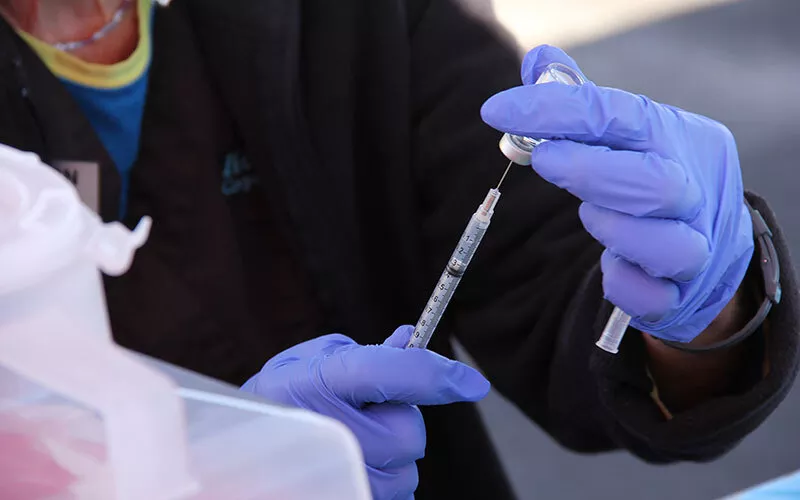
Arizonan businesses would be on the hook for half a million dollars in damages if they refuse a religious exemption from an employee who later experiences significant injury as a result of getting vaccinated under a proposal advancing in the GOP-controlled legislature.
Employers who both deny a religious exemption and require a vaccination for continued employment would open themselves up to lawsuits from employees who report adverse effects. If employees sue, they stand to gain a minimum of $500,000 — more if the court finds the damages and costs of the lawsuit are higher. By contrast, the average worker’s compensation settlement is around $20,000.
House Bill 2043, introduced by Prescott Republican Rep. Quang Nguyen, was approved by the House Judiciary Committee on Wednesday morning. From there, it’ll move to the full House of Representatives for consideration.
Donny Rodenkirk, from Nguyen’s district, told the committee that his wife’s employer denied her religious exemption request, which forced her to take a vaccine that he claimed negatively impacted her health, resulting in the sudden onset of seizures.
Nguyen’s bill does not indicate who decides whether the reported injury was the result of vaccination or how that determination is made. No medical diagnosis is required to sue an employer.
Tom Savage, a lobbyist for the League of Arizona Cities and Towns, noted that the bill isn’t clear about what constitutes a “significant injury” related to a vaccination, which could lead to costly litigation because it’s left open to interpretation. Deciding which injuries are caused by the vaccine is also muddy, given injuries could arise from a host of unrelated factors.
“We believe this bill could subject taxpayers to pay for unsubstantiated injury claims,” he said.
Serious adverse effects from the vaccine are incredibly rare. One case study of a man with sudden onset non-motor seizures after being vaccinated was unable to link the two, and posited instead that the condition may have been caused by genetic factors and might be entirely unrelated to the vaccine. An investigation of more than 19,500 recently vaccinated adults found the incidence of very serious adverse effects to be extremely low. Allergic reactions occurred in just 0.3% of participants after the first dose.
In spite of scarce evidence that the COVID-19 vaccine causes adverse effects, skepticism about its safety persists. A Census Bureau survey found that vaccine hesitancy in Arizona was around 11.1% in October of last year. In a state of more than 7 million, that’s a little over 800,000 Arizonans who have reservations about the vaccine. Among this subgroup, 58.8% didn’t trust the vaccines themselves and 50.2% cited mistrust of the government.
Mike Huckins, the chief lobbyist for the Greater Phoenix Chamber of Commerce, said approving the bill would have consequences for local businesses.
“Employees already have a remedy through the worker’s compensation fund,” he said.
HB2043 allows for damages awarded in addition to any worker’s compensation the employee may pursue — it doesn’t rule out access to it. The $500,000 in damages would be a sizable financial burden for most businesses, Huckins said. The potential harm makes no distinction between a business of two people and a business of 5,000.
Rep. Mark Finchem, R-Oro Valley, responded by asking if it was moral to hold someone’s job “hostage” until they were vaccinated against their will. Huckins said he recognized there were very personal beliefs at stake, but his organization is defending employer’s rights. Employees’ religious beliefs are already protected under state law, he noted.
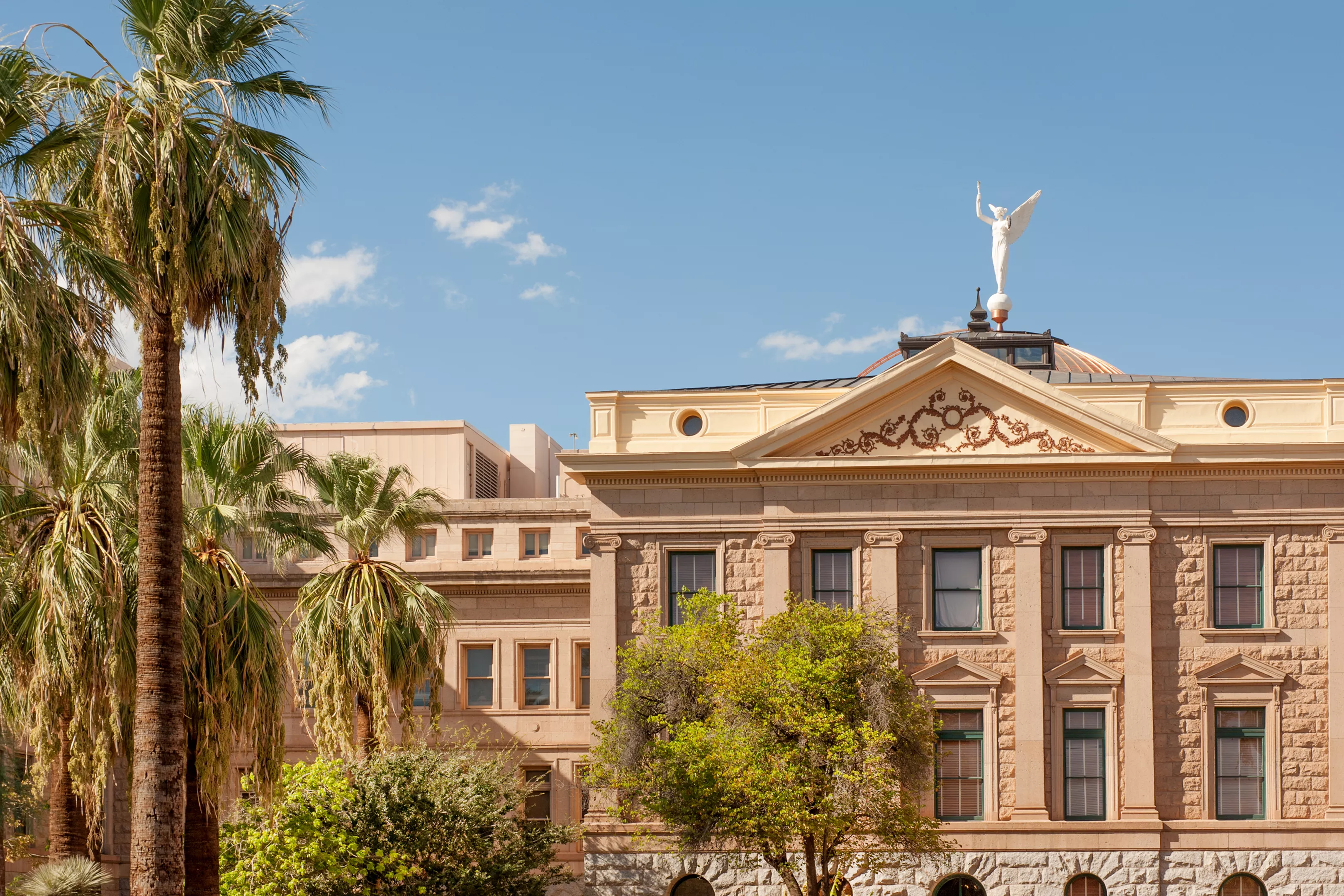
One-time Cyber Ninjas CEO Doug Logan yesterday pulled perhaps the most surprising stunt of his short-lived career as a rogue election auditor without any experience in elections or audits: He showed up for his deposition.
The last time he was summoned to testify about blowing off court orders to turn over public records, he blew it off. But this time, Logan was facing the threat of arrest this time, so maybe it’s really not that surprising that he decided to sit for a five-hour deposition with lawyers for American Oversight and the Arizona Republic.
Depositions are unfortunately not livestreamed for reporters‘ enjoyment, so we’re all just hoping it comes out soon so we can binge it over the weekend.

