

Wednesday, December 2, 2020

PHOENIX – Recreational use of marijuana will soon be legal in Arizona, thanks to Proposition 207’s easy passage, but economic and logistical hurdles remain before Arizonans will feel the effects.
The measure – approved by more than 60% of voters in unofficial results from Nov. 3 – decriminalizes recreational marijuana use and possession for those 21 or older; allows minor, nonviolent marijuana offenders to petition to have their criminal records expunged; and imposes an excise tax to support underfunded programs across the state.
Once the Arizona Secretary of State’s Office certifies the proposition, which is expected to happen in December, the use and possession of up to 1 ounce of marijuana will be legal except in public spaces. Despite the law’s passage, however, marijuana possession, distribution and use remain federal crimes.
Dispensaries and growers, which have become a familiar presence in Arizona since voters narrowly approved marijuana for medical use in 2010, will have to wait for state approval to sell marijuana for recreational uses. Application for state licenses is expected to open in January, and organizers of Proposition 207 are predicting an April 5 launch for recreational sales.
“I think there’s going to be a lot of very curious people that want to walk into the dispensary because they weren’t able to do that before,” said Raul Molina, chief operations officer at the Mint Dispensary in Tempe.
Clearing criminal records
A key element of Proposition 207 is the opportunity to expunge a criminal record, which can impede employment, nullify the right to vote and harm reputations.
Proposition 207 is the first voter measure in Arizona that offers expungement, according to Jared Keenan, a senior staff attorney at American Civil Liberties Union of Arizona. But the process may differ in each of Arizona’s 15 counties, depending on the population and whether the county attorney supported the measure.
Prosecutors can petition against moves to expunge records. The Maricopa County Attorney’s Office has not given a stance on expungement but has announced it will immediately drop all pending and unfiled charges of marijuana possession based on “the will of the voters.”
Currently, Keenan said, all marijuana convictions are felonies, which means convicts could lose their right to vote, their access to public housing and food assistance, and their eligibility for federal student loans. A criminal record also makes it harder to get a job.
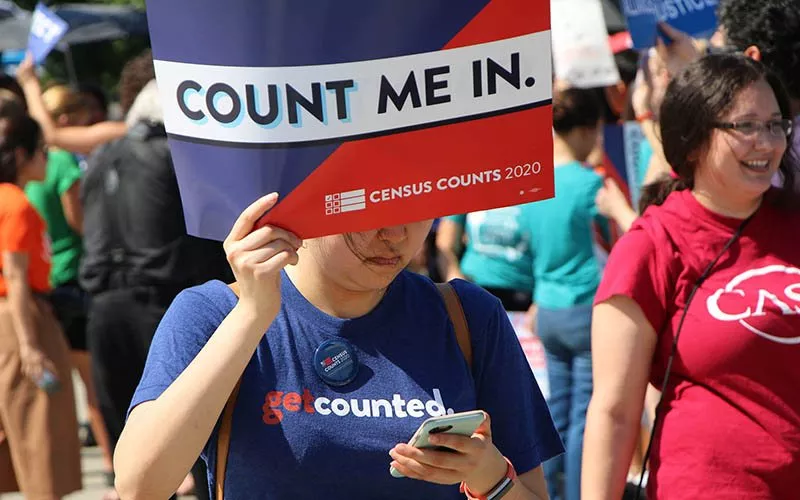
WASHINGTON – The Trump administration said it does not know how many immigrants might be excluded from the Census under a 2019 presidential order, but it still urged the Supreme Court to overturn lower courts that blocked the proposal.
That was one of the arguments raised as the court considered President Donald Trump’s order directing the Census Bureau to exclude undocumented immigrants from the census. The number in that report, which is supposed to be delivered to the president by Dec. 31, is used to determine everything from congressional representation to the allocation of trillions in federal funds over a decade.
Critics called the president’s plan a political attack on immigrants who have always been counted in the census, which requires the inclusion of every “person” living in the country on April 1, when the count is taken.
“We know that undocumented immigrants contribute in taxes, from sales taxes to property taxes,” said Karina Ruiz, executive director at the Arizona Dream Act Coalition. “It’s incredible that this administration’s not allowing us to be counted to be a part of the benefit that comes with the contributions that we make.”
But supporters of the president’s move say that including undocumented migrants in the census will “deny representation to Americans in some states and give it to illegal aliens who live in other states.”
“American citizens will be cheated out of representation, Congress cheated out of federal dollars,” if the justices do not rule in favor of Trump, said Ira Mehlman, a spokesman for the Federation for American Immigration Reform.
This is the second time in two years that the Supreme Court has heard a Census Bureau case against a tight deadline. The court last year said the bureau could not include a citizenship question on the 2020 Census because it had failed to follow proper procedures before announcing the change.
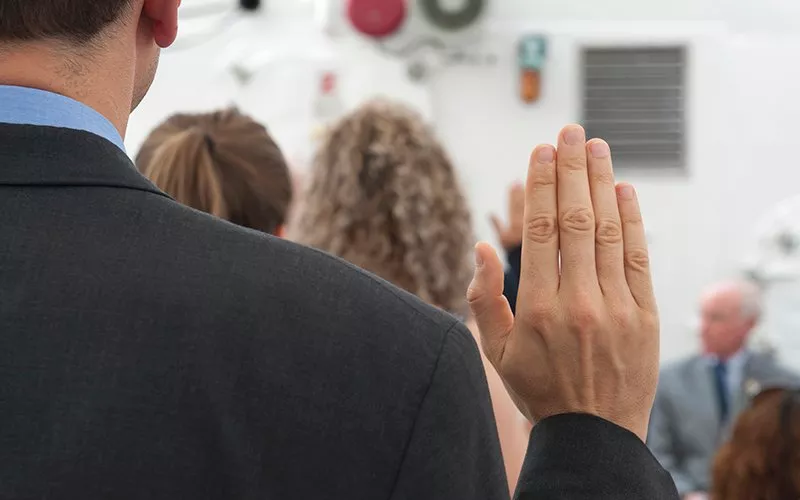
WASHINGTON – The good news for prospective citizens is that they will soon have more time to take the civics test that has long been a critical part of the citizenship process.
The bad news is that, beginning next week, the test will be twice as long. And harder. And there’s no bonus for getting a passing score early.
“It’s the position … of this administration of making life harder, not only for undocumented immigrants but also for immigrants that are currently in a legal process,” said Manuel Gutierrez, an immigration specialist at Promise Arizona. “It’s making it tough for everybody.”
But while advocates like Gutierrez see the changes as part of a larger USCIS move to discourage immigrants, the agency said the changes are just part of a decennial review of the naturalization test aimed at “updating, maintaining, and improving a test that is current and relevant.”
The test is the best known, and usually final, step in a citizenship process that can take years for some immigrants and the changes, which take effect Tuesday, have been in the works for close to 18 months.
A passing grade will still be 60% correct, but the new test doubles the number of questions from 10 to 20 and expands the pool of questions that could be included on any test from the current 100 to 128. That means would-be citizens will have more to master before sitting down to take the test – and more to potentially get wrong.
Tuesday, December 1, 2020
The Tucson City council voted to instate a citywide curfew from 10 p.m. to 5 a.m. daily that will go into effect Friday, Dec. 4 until Dec. 23.
The council voted 6-0, amending Tucson Mayor Regina Romero’s initial proclamation to set an 8 p.m. to 5 a.m. curfew that would have begun tonight.
On Nov. 23, the Pima County Health Department announced a voluntary overnight curfew from 10 p.m. to 5 a.m. every day until Dec. 31—but it’s not enforceable.
As part of the amended curfew agreement among the city’s council members, if Pima County changes their voluntary curfew time—whether voluntary or mandatory—Tucson’s curfew time will follow suit.
The proposed curfew would prohibit everyone from being in public places with the following exceptions:
- Emergency response personnel
- Attending religious services
- Caring for a family member
- Seeking medical care
- Fleeing dangerous circumstances
- Traveling to perform or receive essential functions
- Homeless persons
City Attorney Mike Rankin specified traveling to essential businesses such as grocery, home goods and hardware stores is allowed. Travel to restaurants for consumption off-premises is also allowed by means of take out, delivery, curbside and drive-thru food orders.
“The curfew does not order the closure of any business at any particular time, instead, what it does is it regulates when people can be in public places, which includes traveling on the public streets,” Rankin said at the council’s meeting. “It does not, as presented, prevent people from traveling to or from any essential activity or essential functions, even during the curfew hours.”Offenders of the curfew will be subject to a civil infraction that holds a fine of up to $300.
The council also voted 6-0 to approve a $6 million financial aid package comprised of federal CARES Act funds to be distributed throughout Tucson as follows:
- $3 million for small businesses
- $2 million for workers and families
- $375,000 for arts and culture organizations
- $375,000 for entertainment venues
- $250,000 for child care
To help those who might be impacted by the curfew passed tonight, my colleagues and I also approved additional relief...
Posted by Mayor Regina Romero on Tuesday, December 1, 2020
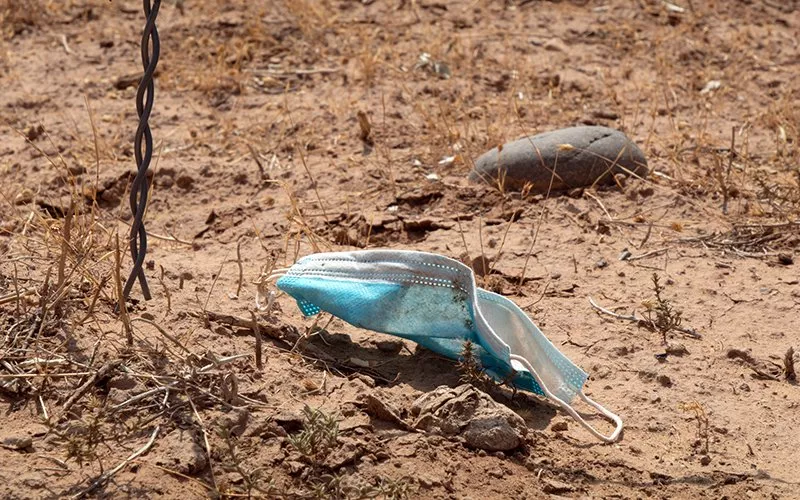
PHOENIX – The number of COVID-19 infections in Arizona’s most populous county probably is far higher than what official counts show, according to a survey that found 1 in 10 residents have likely had the novel coronavirus that causes the disease.
As health experts worry about a new spike in infections, a study by the Maricopa County Department of Public Health, in partnership with Mayo Clinic and Arizona State University, estimates that 10.7% of the county’s 4.49 million residents have antibodies for the virus.
That means about 470,000 people have potentially been infected in Maricopa County alone, officials said. That’s far more than the 197,000 cases officially reported, and it would surpass the statewide total of 337,000 positive cases.
Marcy Flanagan, executive director of the Maricopa County Department of Public Health, said the results show the need for precaution over the holidays when social events could push numbers even higher.
“Unfortunately, we really would recommend that individuals limit their social gatherings and their family gatherings for the holidays,” she said. “I would really encourage families to think about eating outside with their household family members and being creative to do Zoom check-ins for mealtime and other things with family that can’t come to town.”
The findings stem from an 11-day study conducted in September that tested 260 participants in 169 households across strategically selected areas of Maricopa County to look for the presence of coronavirus antibodies.
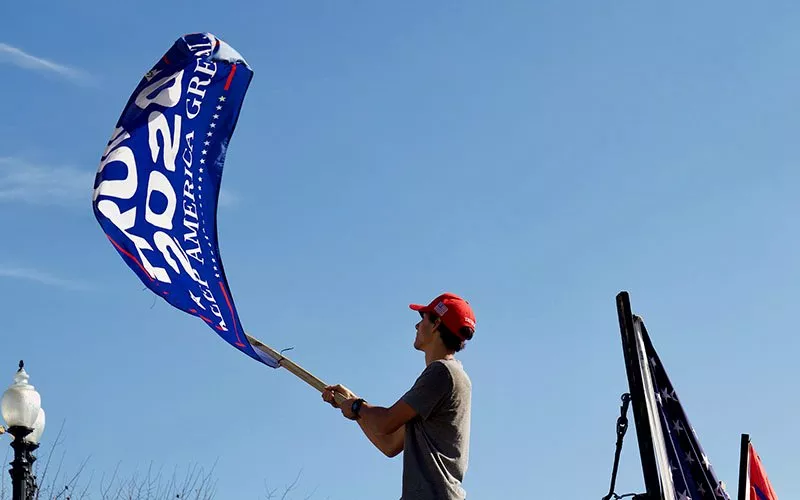
WASHINGTON – President Donald Trump’s attorneys presented hours of rehashed claims of previously rejected voting irregularities during a daylong meeting Monday that legislative leaders called an “illegitimate” exercise meant to undermine confidence in the elections.
The meeting came as state officials certified the results of the election that awarded Arizona’s 11 electoral votes to President-elect Joe Biden, who beat Trump by 10,457 votes out of more than 3.4 million cast, on his way to an overwhelming win in the Electoral College.
But Trump, who called in to the meeting organized in a Phoenix hotel ballroom by a handful of GOP lawmakers, blasted state officials, including Republican Gov. Doug Ducey, for what he called a rush to certify results of an election that he claimed had been stolen from him. Far from rushing the action, however, Monday was the last day by law that state officials could certify the results.
“We didn’t lose the event,” Trump said to the cheers of those still in the ballroom after more than seven hours of presentations. “We actually won it by a lot.”
Those statements were contradicted by a chorus of state officials, including Ducey, Secretary of State Katie Hobbs and Attorney General Mark Brnovich, who met to officially certify the election results Monday, as well as legislative leaders from both parties.
“Arizonans can stand proud that this election was conducted with accuracy, fairness and transparency in accordance with Arizona’s laws and election procedures despite numerous unfounded claims to the contrary,” Hobbs said.
When the Trump campaign announced last week that the Arizona Legislature had scheduled a hearing – along with similar hearings in Pennsylvania and Wisconsin – legislative leaders rushed to dispute the claim. Aides to Senate President Karen Fann and House Speaker Rusty Bowers, both Republicans, said flatly that the Legislature would not be holding any such hearings.
Monday, November 30, 2020
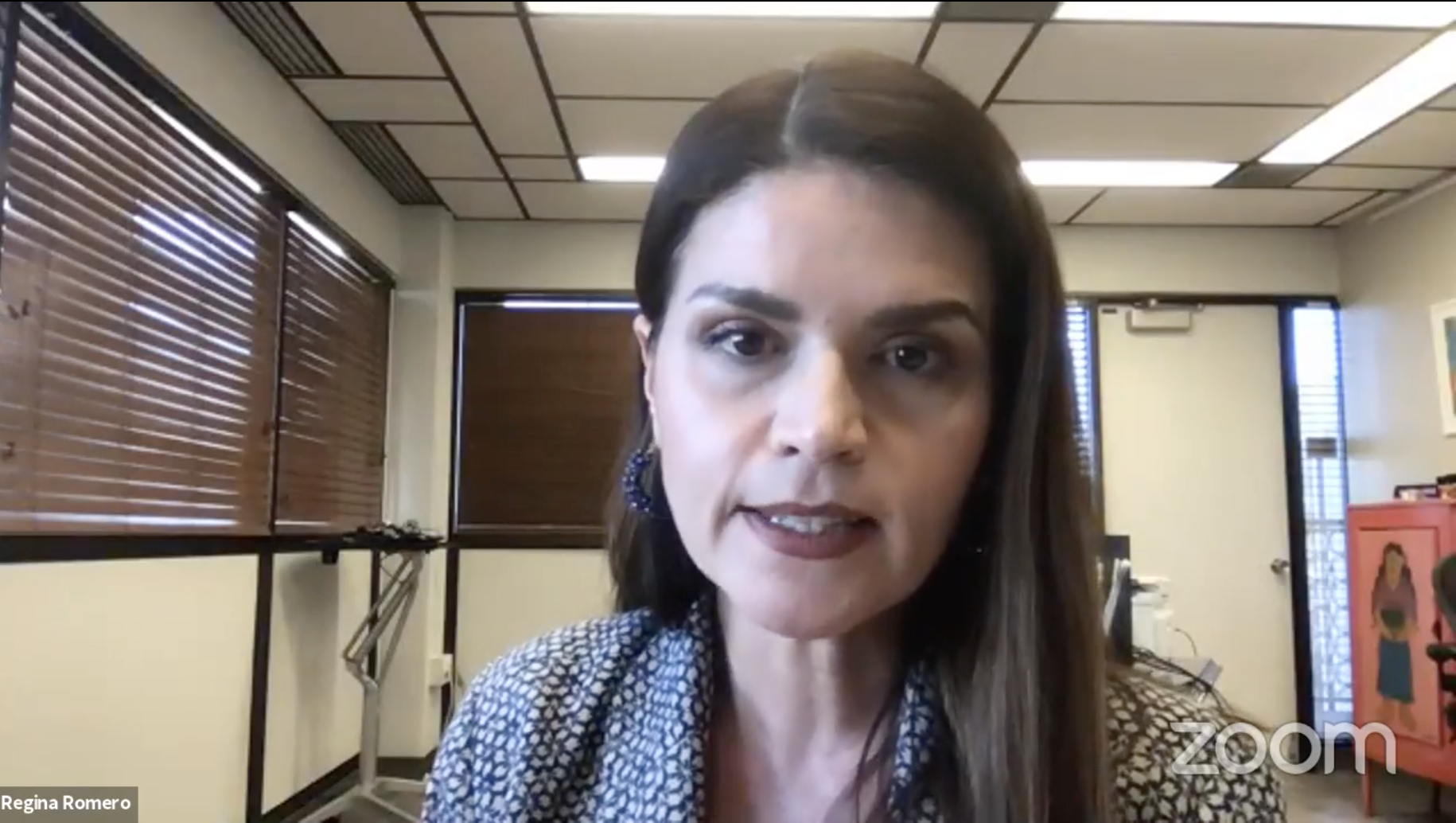
Romero says she’ll be asking the council to consider implementing a mandatory curfew from 8 p.m. to 5 a.m. that would run from Dec. 1 to Dec. 22.
After consulting w/ public health experts and local hospitals, I believe that additional steps are necessary to control...
Posted by Mayor Regina Romero on Monday, November 30, 2020
On Nov. 23, the Pima County Health Department announced a voluntary overnight curfew from 10 p.m. to 5 a.m. every day until Dec. 31—but it’s not enforceable.
At 5 p.m. Tuesday, Romero will ask the city’s council members to vote on the mandatory curfew, which if approved, would go into effect three hours later.
- Emergency response personnel
- Traveling to and from work
- Attending religious services
- Caring for a family member
- Seeking medical care
- Fleeing dangerous circumstances
- Traveling to perform or receive essential functions
- Homeless
“We are hoping that this particular measure will help our community, will help slow the surge of cases and preserve precious hospital capacity,” Romero said at the press conference. “We are also hoping that this curfew, that this step, will help prevent a stay-at-home order or a lockdown.”
How would the curfew be enforced?
City Attorney Mike Rankin said the proclamation will be presented to the council Tuesday to describe how the curfew would be enforced.
Before being subject to a citation, those violating the curfew would be notified of the new provision and given the opportunity to comply. If citations are issued, Rankin said his city attorney’s office has the ability to resolve the citations by offering diversion or “some other noncriminal proceedings.”
Rankin said violation of an emergency proclamation issued by a mayor is a misdemeanor offense, but that “the direction as part of the mayor's proclamation...would be that prosecution would include the opportunity for diversion to avoid the criminal sanction.”
If the offender denies the diversion offer, they could face criminal prosecution. Fines for misdemeanor crimes range from as high as $2,500, according to Rankin.
Is it legal to issue a mandatory local curfew?
The city attorney said the legal basis Romero has to issue a curfew is based on the mayor’s right to take action during a local emergency.
“I don't see this as a challenge to the governor's authority, or the authority that is given to him as the executive of the state. In fact, the proclamation certainly leaves room for the governor to execute all of his emergency powers,” Rankin said. “Arizona law and the charter also gives certain authority at the local level. So this isn't a challenge to state authority, but it is using the local authority that is provided under Arizona law to adopt these kinds of measures that are necessary for public health and safety.”
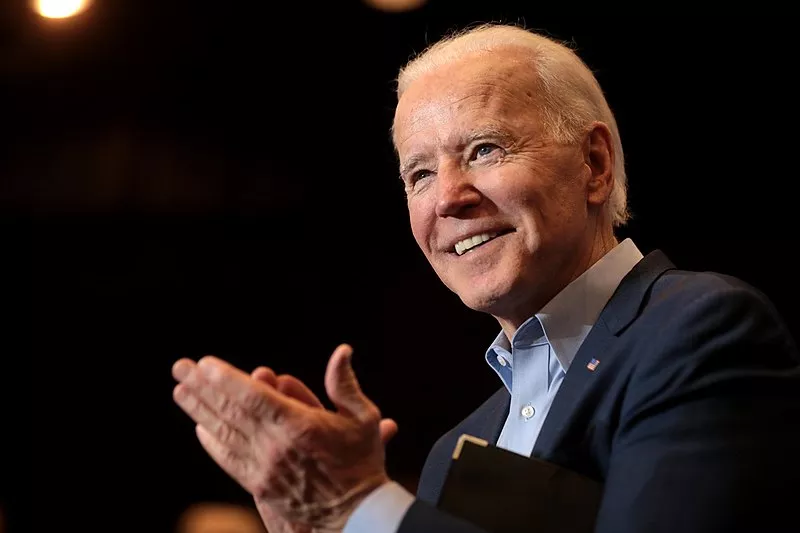
On Monday, Nov. 30, Arizona officials certified the results of the Nov. 3 presidential election, confirming Democrat Joe Biden's win over Republican incumbent Donald Trump. It was a close race in the Grand Canyon State, with Biden earning 49.36% of the vote, over Trump's 49.06%, winning by a little more than 10,000 votes. This is the first time Arizona has voted blue in a presidential election since 1996.
"Of those 3.42 million ballots cast, over 88% of them were cast early, which provides more proof that Arizona's ballot-by-mail system works," said Arizona Secretary of State Katie Hobbs. "Despite unprecedented challenges, Arizonans showed up for our democracy."
Hobbs confirmed the results during The State Canvass, alongside Governor Doug Ducey, Attorney General Brnovich, and Chief Justice Robert Brutinel.
"This election was conducted with transparency, accuracy and fairness, in accordance with Arizona's laws and elections procedures, despite numerous unfounded claims to the contrary," Hobbs said.

