Thursday, November 19, 2020
Wednesday, November 18, 2020

In the first media conference from the governor’s office in two weeks, Gov. Doug Ducey and Arizona Department of Health Services Director Dr. Cara Christ provided a COVID-19 update today as the pervasiveness of the virus grows daily.
Christ said throughout the state there’s been a “concerning increase” in coronavirus cases, percent positivity and COVID-19 patients in ICU and inpatient hospital beds.
To date, ADHS has reported 283,102 coronavirus cases. 6,365 Arizonans have died from the virus. Christ said during the week of Nov. 8, all but two counties had a coronavirus percent positivity above 10%, which indicates substantial spread of the virus.
This week, those numbers are expected to trend even higher.
According to Christ, each of Arizona’s 15 counties has a COVID-19 case rate above 100 per 100,000 people, which also indicates substantial spread of the virus.
COVID-19-like illnesses are also increasing visits to emergency rooms and hospitals, Christ said.
The public health director emplored mask wearing for all Arizonans “in every setting.”
Although he was not wearing a mask at the press conference today, Ducey reiterated the importance of mask-wearing, saying “Masks work, please wear them.”
However, he did not go as far as issuing a statewide mask mandate, reasoning “what I want to avoid is some of the division and politics that have happened around this issue.”
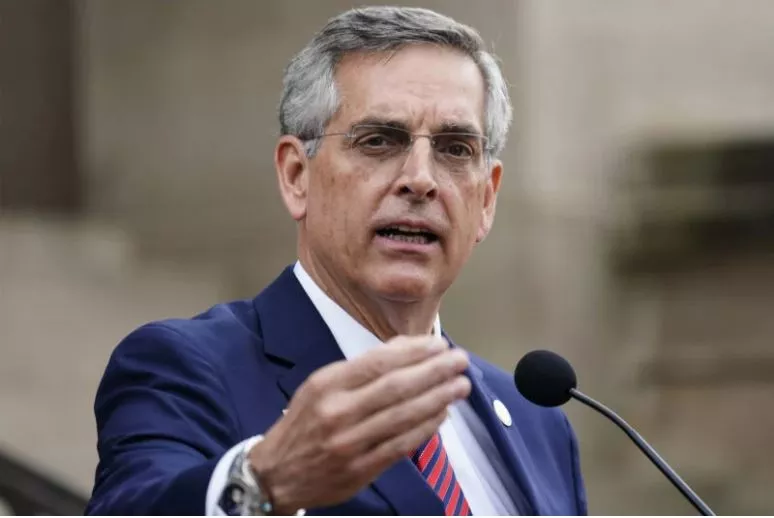
Long before Republican senators began publicly denouncing how Georgia Secretary of State Brad Raffensperger handled the voting there, he withstood pressure from the campaign of Donald Trump to endorse the president for reelection.
Raffensperger, a Republican, declined an offer in January to serve as an honorary co-chair of the Trump campaign in Georgia, according to emails reviewed by ProPublica. He later rejected GOP requests to support Trump publicly, he and his staff said in interviews. Raffensperger said he believed that, because he was overseeing the election, it would be a conflict of interest for him to take sides. Around the country, most secretaries of state remain officially neutral in elections.
The attacks on his job performance are “clear retaliation,” Raffensperger said. “They thought Georgia was a layup shot Republican win. It is not the job of the secretary of state’s office to deliver a win — it is the sole responsibility of the Georgia Republican Party to get out the vote and get its voters to the polls. That is not the job of the secretary of state’s office.”
Leading the push for Raffensperger’s endorsement was Billy Kirkland, a senior adviser to the Trump campaign who was a key manager of its Georgia operations. Kirkland burst uninvited into a meeting in Raffensperger’s office in the late spring that was supposed to be about election procedures and demanded that the secretary of state endorse Trump, according to Raffensperger and two of his staffers.
When reached by phone, Kirkland directed the request for comment to the Trump campaign, which did not respond. The White House and the Georgia Republican Party also did not respond to repeated requests for comment.
Joe Biden has been projected as the winner of the presidential election in Georgia by a margin of roughly 14,000 votes. The state is now conducting a hand recount at the Trump campaign’s request. Raffensperger’s office has said that the recount won’t swing enough votes to tip the state into Trump’s column.
As the Georgia results have become increasingly clear, Republicans have unleashed intense criticism on the secretary of state’s office, accusing it without evidence of mismanaging the election and allowing Biden to carry the state by fraudulent means. Georgia’s U.S. senators, Republicans David Perdue and Kelly Loeffler, both of whom failed to win majorities for reelection on Nov. 3 and face Democratic opponents in January runoffs, called for Raffensperger’s resignation. All of the Republicans representing Georgia in Congress also signed a letter sent to Raffensperger’s office from the personal email account of the chief of staff to U.S. Rep. Earl “Buddy” Carter, criticizing the office for a series of supposed irregularities.
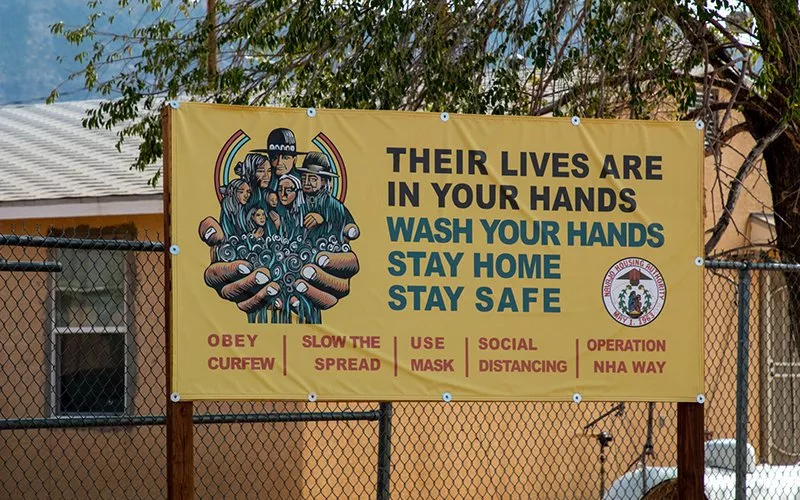
PHOENIX – Native American leaders are keeping close watch on the Supreme Court battle over whether to repeal all or parts of the Affordable Care Act, a move many say could devastate health care for American Indians and Alaska Natives.
“In our vulnerable populations, particularly in the time of COVID-19 and its disproportionate impact on Native people, this is not where we need to be spending our energy,” said Stacy Bohlen, chief executive officer of the National Indian Health Board.
The Affordable Care Act, signed by President Barack Obama on March 23, 2010, expanded the number of Americans covered by private or public health insurance.
But the law, often referred to as Obamacare, also includes a number of provisions specific to Indian Country, including permanent reauthorization of the Indian Health Care Improvement Act, which provides ongoing funding for Native health programs, primarily through the Indian Health Service.
It also expanded tribes’ authority to run their own health care programs, provided for expansion of the IHS and community health care workforce, and included behavioral health and youth suicide prevention programs.
“People talk about the Affordable Care Act like it’s all one thing,” said Sarah Somers, an attorney with the National Health Law Program who specializes in litigation to help underserved communities access good health care. “But really, there’s almost like five or six different parts of it, and if you repeal it, then all of the codified statutes go away.
Tuesday, November 17, 2020

WASHINGTON – An endangered squirrel that was driven to the brink of extinction by wildfire just three years ago in southern Arizona has seen its numbers more than triple following federal, state and local preservation efforts.
The Mount Graham red squirrel population was cut from 252 to just 33 squirrels in the wild after the Frye fire destroyed much of their habitat in 2017. But a survey released last month by state and federal agencies estimated there are now at least 109 squirrels on the mountain.
Advocates welcomed the improvement, but said the squirrel, which was put on the endangered species list in 1987, is not out of the woods yet.
“It’s a good sign that it’s heading in an upwards direction rather than stagnating or … heaven forbid, going down,” said Marit Alanen, a biologist with the U.S. Fish and Wildlife Service.
Alanen points to a long list of factors threatening the squirrel’s mountain forest habitat, including fires, both natural and man-made, insect infestations and competition from the Abert squirrel, which was introduced in the 1940s. But wildfires have been the biggest threat, reducing the number of trees available to the squirrels and leaving them exposed to predators.
“We’ve been seeing these fires that have just gotten bigger and bigger over the years and have been of higher severity,” said Alanen. She said the Peak fire in 1996, the Nuttall Gibson fire in 2004 and the Frye fire “have impacted at least 95% of the squirrel’s habitat to some degree.”
That reduction in the forest has led to a “habitat bottleneck,” with squirrels competing for fewer suitable trees, said Robin Silver, cofounder of the Center for Biological Diversity. It’s one reason the center filed suit against the Fish and Wildlife Service in September, in an effort to force an expansion of the squirrels’ critical habitat.
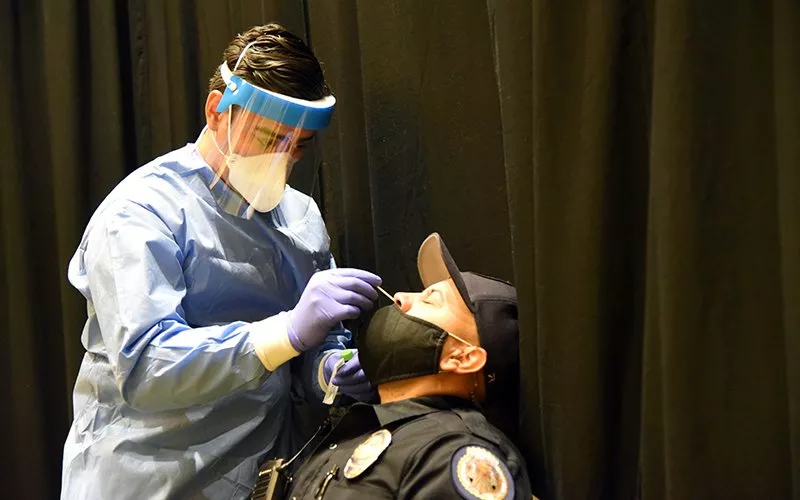
Rapid antigen testing is a mess. The federal government pushed it out without a plan, and then spent weeks denying problems with false positives.
The promise of antigen tests emerged as a miracle this summer. With repeated use, the theory went, these rapid and cheap coronavirus tests would identify highly infectious people while giving healthy Americans a green light to return to offices, schools and restaurants. The idea of on-the-spot tests with near-instant results was an appealing alternative to the slow, lab-based testing that couldn’t meet public demand.
By September, the U.S. Department of Health and Human Services had purchased more than 150 million tests for nursing homes and schools, spending more than $760 million. But it soon became clear that antigen testing — named for the viral proteins, or antigens, that the test detects — posed a new set of problems. Unlike lab-based, molecular PCR tests, which detect snippets of the virus’s genetic material, antigen tests are less sensitive because they can only detect samples with a higher viral load. The tests were prone to more false negatives and false positives. As problems emerged, officials were slow to acknowledge the evidence.
With the benefit of hindsight, experts said the Trump administration should have released antigen tests primarily to communities with outbreaks instead of expecting them to work just as well in large groups of asymptomatic people. Understanding they can produce false results, the government could have ensured that clinics had enough for repeat testing to reduce false negatives and access to more precise PCR tests to weed out false positives. Government agencies, which were aware of the tests’ limitations, could have built up trust by being more transparent about them and how to interpret results, scientists said.
Monday, November 16, 2020
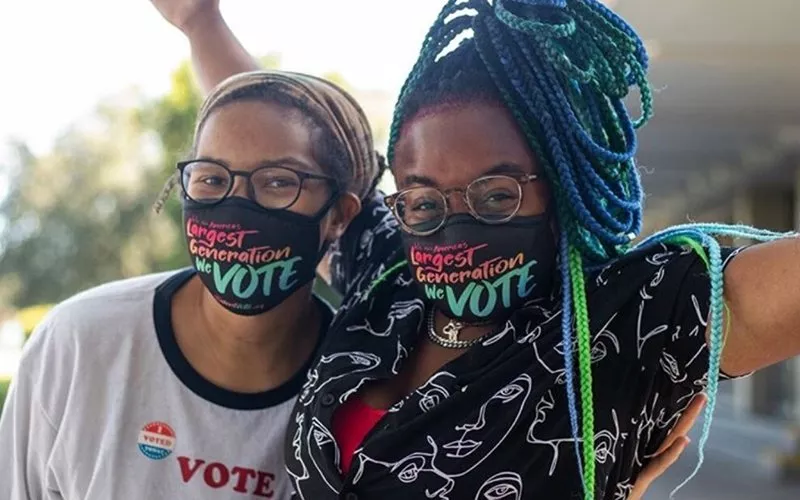
LOS ANGELES – Young people stepped up on two fronts this Election Day: volunteering to replace older poll workers who feared exposure to COVID-19 and pushing more of their peers – an age group with historically low turnout – to register and vote.
Across the Southwest, such organizations as Future Leaders of America, California Campus Vote Project and Arizona PIRG Students New Voters Project worked until the last minute to help students register to vote, answer questions and inform voters about initiatives on the ballot, including Proposition 15 in California.
For 18-year-old Yesenia Ramirez Garcia of Goleta, casting her first vote was a proud moment, as she is the first in her family to vote and the first to go to college. Identity and background affect Garcia’s political advocacy, she said, because her identity is political.
“When being queer is something that is debated, when being a person of color and your protections is something debated. It definitely impacts my background, it impacts who I’m going to pick,” Garcia said.
She is one of many youth leaders who spent the past year working to boost voter turnout among people 18 to 29. Throughout the summer, she worked with Future Leaders of America, an organization that provides engagement opportunities, education experiences and personal development for Latino youth and their families in Ventura and Santa Barbara counties. She worked the phones for Proposition 15, which would have required commercial and industrial properties, except for commercial agriculture, to be taxed based on market value rather than purchase price.