

Monday, November 16, 2020
Saturday, November 14, 2020
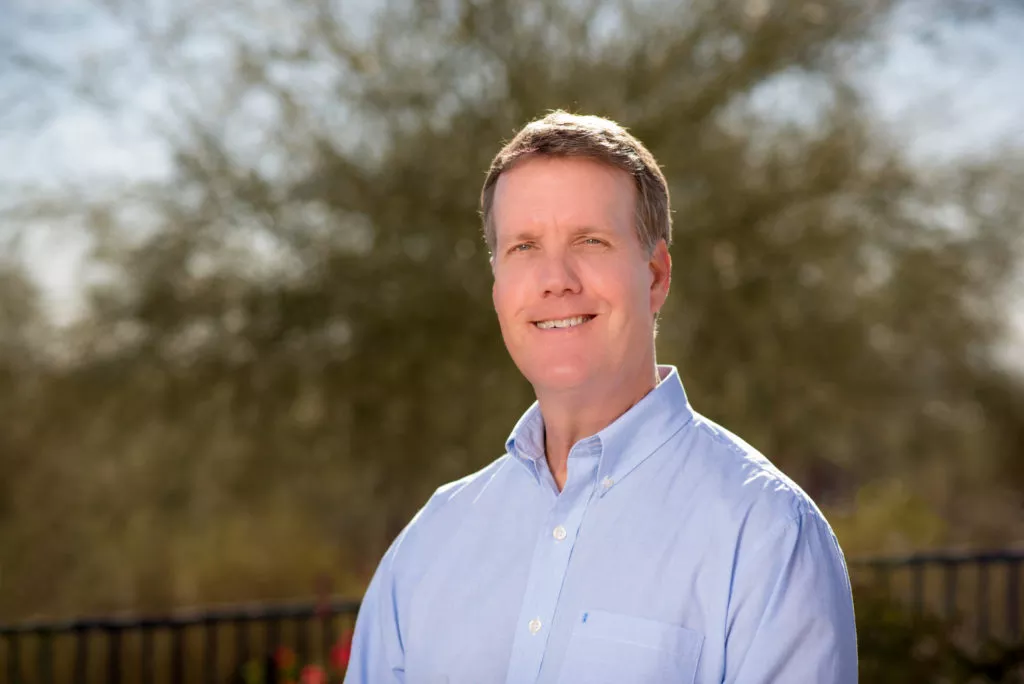
With all the votes counted in Pima County, Democrat Rex Scott has won the District 1 seat on the Pima County Board of Supervisors by a mere 730 votes.
The district, representing Marana, Casa Adobes, Oro Valley, and the Catalina Foothills, has reliably voted for Republicans in recent decades but with an open seat up for grabs, the voters supported the Democratic candidate over GOP nominee Steve Spain, who had the endorsement of retiring incumbent Republican Supervisor Ally Miller.
The Board of Supervisors is responsible for a wide range of public policy in the county. The five-member board represents each district, approves the county budget, sets health regulations such as the current mask mandate to combat the spread of the coronavirus. The board also oversees development issues such as rezoning and permitting and manages the county sewer system along with roads in unincorporated areas, among other responsibilities.
Scott began running for District 1 supervisor in September 2019, three months before current supervisor Ally Miller announced she wouldn’t seek another term.
The new District 1 supervisor has worked in public schools as both a teacher and administrator for 30 years and said he felt “a combination of honored and humbled” when he learned he won the race.
“It’s a tremendous honor to be able to represent people in a place that I know very well, and that has deep meaning for me, but I’m also very humbled because of the challenges that we're going to be taking on, especially dealing with the remainder of the pandemic and the recovery from it.”
Coronavirus recovery is Scott’s top priority when entering the office. As a supervisor, he says he’ll start by addressing “people who have suffered the most,” such as those struggling to make rent as coronavirus’ economic toll continues.
Friday, November 13, 2020
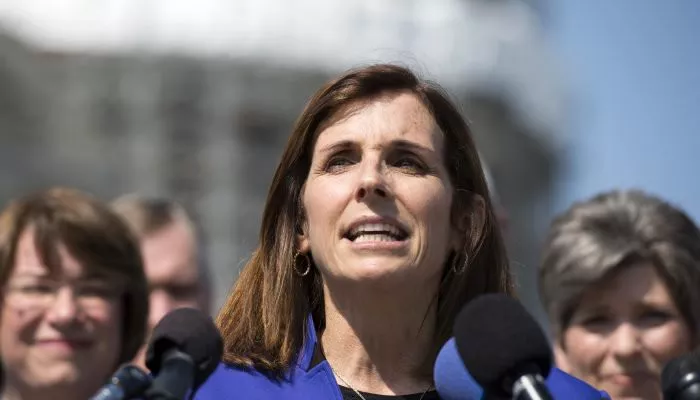
McSally congratulated her Democratic opponent Mark Kelly on winning an election that turned out to be one of the most expensive in the nation. According to the Associated Press, Kelly won 51.2% of the vote (1,714,466), beating McSally by more than 75,000 votes.
"With nearly all the votes counted, I called Mark Kelly this morning to congratulate him on winning this race. I also offered support in his transition to ensure Arizonans are best served during this time. I wish him all the best," McSally said.
With her defeat, this is McSally's second senate loss to a Democrat in only two years, after losing in the 2018 election to Kyrsten Sinema. McSally was subsequently appointed to fill out the late Sen. John McCain's senate seat.
This will be the first time Arizona has had two Democrat senators since the 1950s.
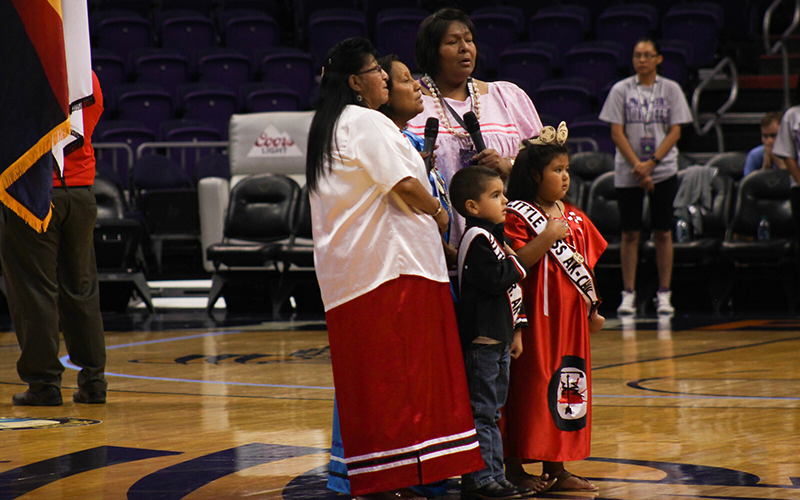
PHOENIX – After a one-year absence because of the COVID-19 pandemic, the Native American Basketball Invitational will return in July, showcasing indigenous basketball players from across the U.S., Canada and New Zealand at venues around the Valley.
The championship games will take place at the newly renovated downtown arena of the Phoenix Suns and Mercury.
The decision to cancel the 2020 tournament crushed organizers.
“We cried. We had tears when we had to cancel because we know how important the event is to the kids,” said GinaMarie Scarpa, founder and president of the NABI Foundation, which formed in 2002 to organize the event. “And then, of course, news stories started coming out about the cancellation and how devastating it was to our tribal youth across the country.”
It is another blow to a community that has been disproportionately impacted by the coronavirus. The Center for Disease Control and Prevention reports that Native Americans are 5.3 times more likely than the white community to be hospitalized due to COVID-19.
The NABI is considered the premier basketball tournament for indigenous youth, and was the first to become certified by the NCAA (2007), according to the organization’s website.
While basketball brings the athletes – boys and girls ages 14 to 19 – together for the tournament, the NABI Foundation’s ultimate goal is to teach athletes the importance of education and provide opportunities through scholarships and educational seminars. The program has provided more than $250,000 in scholarships.
During the invitational, NABI hosts a college and career fair. College scouts are on hand, and a training camp is offered. High school teams that participate can bring one freshman player for a free training camp and an educational youth seminar with guest speakers, who are often tournament alumni.
“We expanded our educational seminar to a full-blown educational youth summit,” Scarpa said. “We had 36 presentations in 2019. We had great speakers. So they really come to learn and we use basketball as a tool.”
While there is hope that the pandemic will be under control by July, the NABI is planning ahead in case it is still a threat. A Native American youth summit will be held online and organizers will strictly follow protocols recommended by the CDC and the state of Arizona.
“The NABI Foundation will continue to monitor the situation and amend the program according to imposed safety guidelines closer to the program dates. A full schedule of events will be released mid-June,” said Lynette Lewis, Director of Basketball Operations & Program Development, in the statement released by the NABI when the return of the event was announced.
One of the organization’s board members will play an important role in preparations.
“We have a wonderful kind of diverse board of directors, and one of our board of directors just happens to be one of the owners of a PPE (personal protective equipment) company,” Scarpa said. “So, he’s committed to providing everything we need for all the gyms, all the kids. I really think we will bring it back to normal.”
“I think if we do allow a big sporting event, it might be limited seating … masks are going to be mandatory, there will be sanitizing stations. We are going to do everything possible to keep our kids safe.”
While the tournament didn’t happen last summer, organizers were still at work. One avenue for raising funds at the tournament is the sale of merchandise during the event, and there are now plans to make items available beyond tournament week.
“Usually we’re like, ‘Nope, you have to buy it this week and then it’s done.’” Scarpa said. “And so, we are now in talks with another big sporting company who wants to take the NABI line nationally and online.
“Not only will it be sold at NABI during NABI week, but it will be sold all year round. We’ll have designers (and) have access to the graphic designers in their marketing department – all that fun stuff that goes with it – and also producing our own native theme for the uniforms for the teams.”
The NABI Foundation and tournament were started in 2002 by Mark West, the former Suns center and current team vice-president for player programs; Scarpa, who is the former executive director of the charitable foundation of another former Suns player, A.C. Green; and the late Scott Podleski, the former ticket director of the Arizona Rattlers who passed away from cancer in 2010.
Their enthusiasm for the project has carried on, and drives organizers still.
“I think it’s just the passion, and it’s my staff that shares that passion,” Scarpa said. “They love it. They love working with the kids. They love to see the outcome.”
Now with the NABI tournament set to return in 2021, Scarpa is hoping the event will continue to serve its purpose for years to come, providing educational opportunities for young Native American athletes as well as indigenous hoopers from Canada and beyond.
“It’s really the backbone portion of it, to load them up with opportunities,” Scarpa said. “The goal is (when they) leave NABI and NABI week, they’re really thinking seriously about a higher educational plan for their lives.”
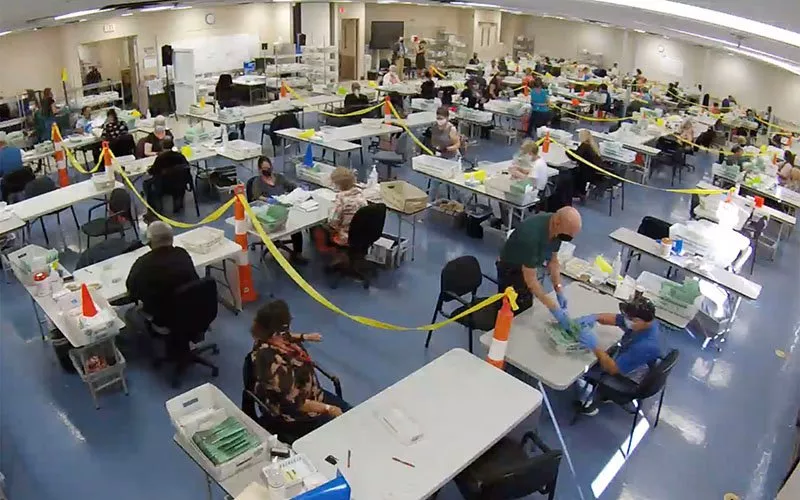
WASHINGTON – Trump campaign lawyers dropped claims of voter fraud Thursday, telling a Maricopa County Superior Court judge instead that they were in court to point out “good faith errors” by election officials that could have affected the vote count.
“We are not alleging fraud in this lawsuit,” said Kory Langhofer, an attorney for the Trump campaign, in response to pointed questioning from Superior Court Judge Daniel Kiley. “We are not alleging that anyone is stealing the election.”
That is contrary to what Trump supporters have been saying during several days of protests in which they gathered outside the State Capitol and the Maricopa County Tabulation and Election Center around the rallying cry “Stop the Steal.”
The hearing comes as the latest returns from state elections officials show President Donald Trump trailing President-elect Joe Biden by 11,034 votes in Arizona with just 16,040 still to be counted – 6,715 in Maricopa County.
That gap was noted by lawyers for state and county officials, who said the Trump campaign was arguing over fewer than 200 ballots out of more than 3.4 million cast. They accused the campaign of simply trying to “undermine the integrity and credibility of the election.”
Thursday, November 12, 2020
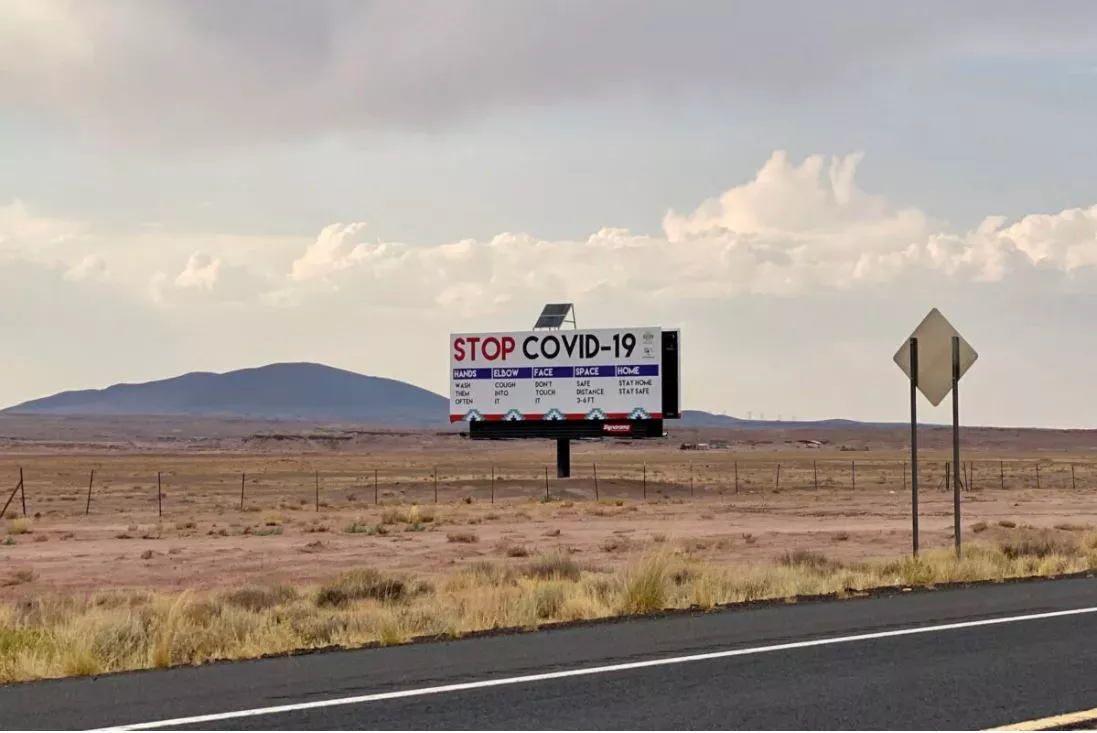
As the first coronavirus vaccine takes a major stride toward approval, state governments’ distribution plans show many are not ready to deliver the shots.
The challenge is especially steep in rural areas, many of which are contending with a surge of infections, meaning that access to the first batch of COVID-19 vaccines may be limited by geography.
Pfizer announced Monday that its vaccine demonstrated more than 90% effectiveness and no serious bad reactions in early trial results — an impressive outcome that will pave the way for the company to seek an emergency authorization once it collects more safety data for another week or two. But establishing that the vaccine is safe and effective is just the first step.
The Pfizer vaccine is unusually difficult to ship and store: It is administered in two doses given 28 days apart, has to be stored at temperatures of about minus 100 degrees Fahrenheit and will be delivered in dry ice-packed boxes holding 1,000 to 5,000 doses. These cartons can stay cold enough to keep the doses viable for up to 10 days, according to details provided by the company. The ice can be replenished up to three times. Once opened, the packages can keep the vaccine for five days but can’t be opened more than twice a day. The vaccine can also survive in a refrigerator for five days but can’t be refrozen if unused.
Health officials haven’t figured out how to get the ultracold doses to critical populations living far from cities, according to a ProPublica review of distribution plans obtained through open records laws in every state. Needing to use 1,000 doses within a few days may be fine for large hospital systems or mass vaccination centers. But it could rule out sending the vaccine to providers who don’t treat that many people, even doctors’ offices in cities. It’s especially challenging in smaller towns, rural areas and Native communities on reservations that are likely to struggle to administer that many doses quickly or to maintain them at ultracold temperatures.
Wednesday, November 11, 2020

WASHINGTON – A Navajo Nation probe of a controversial, Navajo-owned hemp operation has turned into a federal investigation into reports of marijuana production, interstate drug trafficking and violations of labor and child labor laws.
The FBI said Monday it had executed search warrants “in the area of Shiprock” in an operation that included nine federal agencies as well as state, tribal and local agencies from at least three states. It released few other details.
But the Navajo Nation Department of Justice said the search warrants targeted “suspected illegal marijuana farming” at the Navajo Gold hemp farming operation run by Dineh Benally, former president of the nation’s San Juan River Farm Board.
“Dineh Benally and his investors sought to take advantage of what they believed to be a jurisdictional gap on the Navajo Nation that would allow them to operate outside the law,” Navajo Nation President Jonathan Nez said in a statement Tuesday.
“They did not count on the diligence or effectiveness of the Navajo Nation Department of Justice to be able to enforce our own laws through our own courts,” Nez’s statement said.
As the nation’s highest court heard oral arguments in the Trump administration-led lawsuit to dismantle the Affordable Care Act (ACA), proponents of the Obama-era health care reform law are spreading awareness about what repealing the act could mean for a country overwhelmed by the coronavirus pandemic.
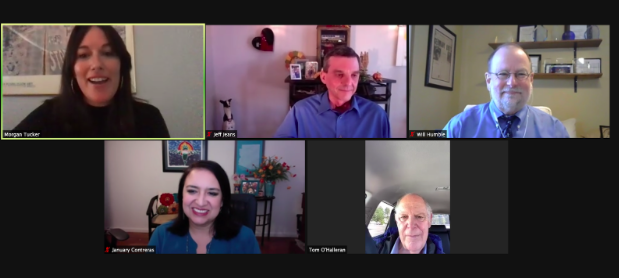
Protect Our Care Arizona, a healthcare advocacy organization, held a virtual press conference yesterday to discuss what it means if the Supreme Court overturns the ACA, which the group says would put 2.8 million Arizonans with pre-existing conditions at risk of losing their healthcare coverage.
The ACA currently prevents health insurance companies from refusing coverage based on pre-existing conditions. If it were repealed, many of the unknown, long-term side effects of COVID-19 could be used by private insurance providers to deny care.
The argument against the ACA, made by the Republican Attorneys General of 18 states—including Arizona’s Mark Brnovich—is that the entire act should be thrown out because its individual mandate that most U.S. citizens have health insurance is unconstitutional.
The healthcare bill has been upheld by the Supreme Court twice before, but now—a week after the presidential election—it’s facing a majority of 6-3 Republican-appointed justices.
Will Humble, the executive director for the Arizona Public Health Association, said at the Protect Our Care press conference that he’s worried about the ACA’s fate, and pointed to the Supreme Court’s minority opinion when the act went to trial in 2012 and four dissenting justices agreed it's illegal in its entirety.
“There are things that we need to think through and prepare for in advance so that if the court does end up striking down the Affordable Care Act, we're prepared as a community to have an alternative plan that handles many of the aspects, if not all the aspects that the Affordable Care Act took care of,” Humble said. “A lot of that's going to depend on the nuances of what the court actually decides in the event that that the ACA is stricken in its entirety, which, by the way, I wouldn't be surprised to see.”

