

Tuesday, November 3, 2020
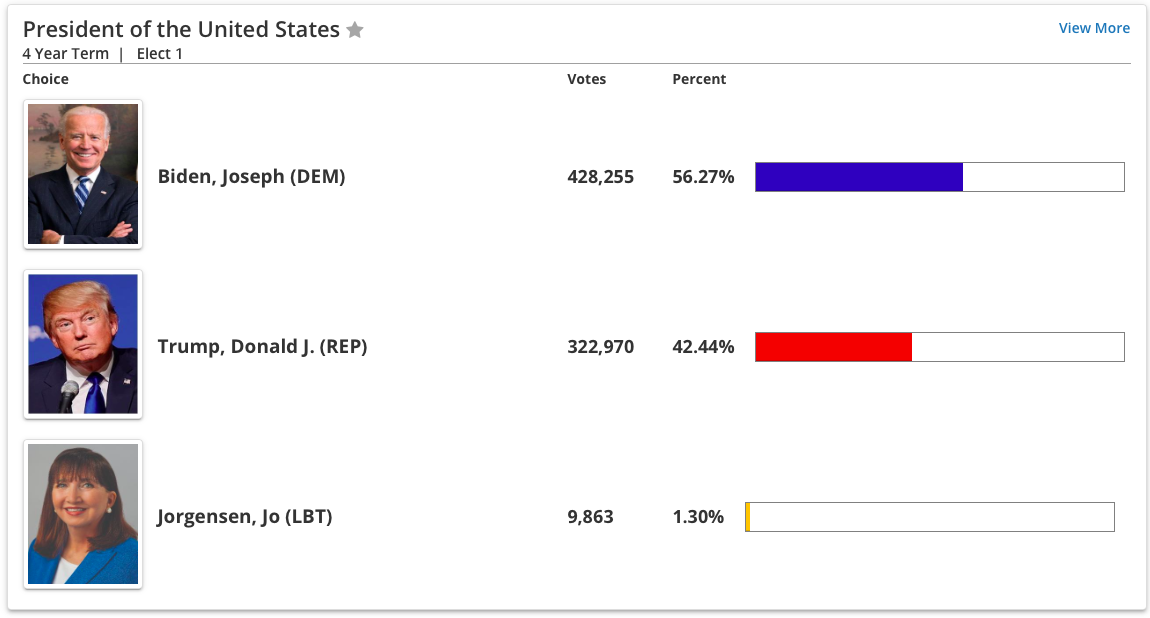
With the tallies from early ballots released, Arizona is living up to its designation as a battleground state.
In the presidential race, Democratic challenger Joe Biden is out with an early lead over Republican incumbent Donald Trump. Among early voters, Biden has captured 57 percent of the vote, while Trump has 41 percent.
In the U.S. Senate race, Democrat Mark Kelly has a larger lead over Republican Martha McSally. Kelly, who had led in most polls leading up to had captured 58 percent of the vote among early ballots. If Kelly prevails, McSally will have lost two U.S. Senate races in two years, handing the Democratic Party both of Arizona’s Senate seats for the first time
In Southern Arizona’s congressional races, the incumbent Democrats are out ahead.
In Congressional District 1, which includes Oro Valley and Marana as well as Flagstaff, Northern Arizona Native American reservations and most of rural Eastern Arizona, U.S. Rep. Tom O’Halleran had captured 56 percent of the vote against Republican challenger Tiffany Shedd.
In Congressional District 2, which includes central and eastern Tucson, the Catalina Foothills and Cochise County, U.S. Rep. Ann Kirkpatrick had captured 63 percent of the vote against Republican challenger Brandon Martin.
In Congressional District 3, U.S. Rep. Raul Grijalva was cruising to victory with 71 percent of the early vote against GOP challenger Daniel Wood.
If you want to know who's voting out there today, follow the fascinating Twitter feed of Democratic strategist Sam Almy of Saguar Strategies, who is updating the returns and tracking the number of Democrats, Republicans and independents who are cast ballots. It's just the thing to soothe your election anxiety—or maybe increase it!Statewide update now. Pima & Coconino reporting this morning. Update includes poll voters from Maricopa.
— Sam Almy (@sfalmy) November 3, 2020
Didn't mention it earlier, but early votes have passed all of 2016 turnout at this time.
Total: 2.7M
Turnout: 63%
Party Adv: +42k GOP*
Details: https://t.co/t8b18G7DDA pic.twitter.com/2pn67vgFDo
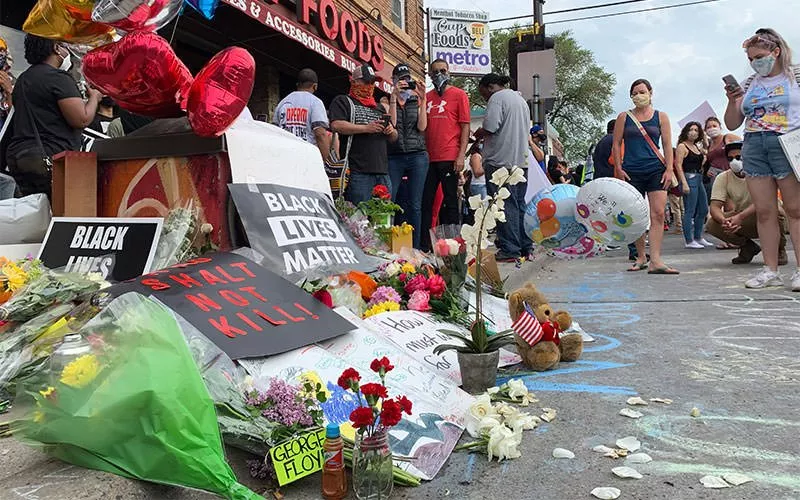
PHOENIX – In the wake of George Floyd’s death last May and subsequent demands for social justice for Black Americans, corporations are pledging to improve hiring practices, institute antiracism training and provide more advancement opportunities for people of color.
Others have taken a different approach – vowing to specifically address health disparities that leave Black people more likely than whites to die from heart disease, stroke, cancer, asthma, diabetes and, now, COVID-19.
Pharmaceutical giants Bristol Myers Squibb and Novartis, along with FitBit and Bank of America, are among those promising to act to address disparities in health care, even as some local and state leaders declare racism itself to be a public health issue.
“All those commitments are good and they’re needed. It’s sad that it took a revolutionary act in the murder of George Floyd to bring about some of this attention,” said Steven Humerickhouse, executive director of The Forum on Workplace Inclusion, a diversity and inclusion resource hub at the University of St. Thomas in Minneapolis.
“The health disparities, that diversity and inclusion stuff in health care, literally becomes a life and death situation.”
The coronavirus pandemic has renewed attention on how diseases disproportionately affect people of color. Federal statistics show Black Americans have the highest COVID-19 death rates; they are more than twice as likely as whites to die from the disease and almost five times more likely to be hospitalized.
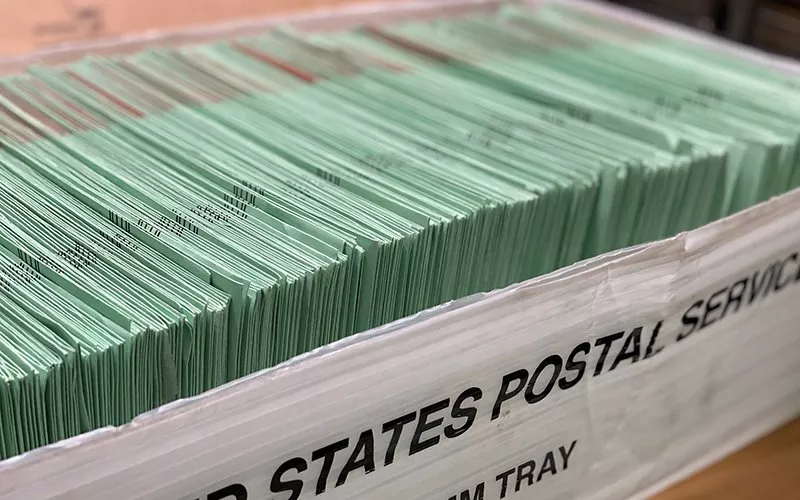
WASHINGTON – Tuesday is Election Day, but county election officials are asking voters to think more in terms of election week.
Recorders say they do not expect problems – in fact, they believe Arizona is in better shape than most states – but are trying to tamp down expectations in light of what could be record-breaking turnout for a highly emotional campaign.
“So many people don’t realize that election night is never the final count,” said Yavapai County Recorder Leslie Hoffman, who asks people to be patient so elections officials can get it right.
She may get her wish if a recent survey is any indication.
The Tyson Group survey for Secure Democracy found that 80% of Arizona voters, including majorities of both Democrats and Republicans, preferred accuracy over speed in election results. It also found that 69% did not expect the count to be finished on election night and 64% said a delay in announcing results would be understandable.
“This survey makes it clear that elections officials and policymakers should feel empowered and obligated to count every vote, and that media outlets should report accordingly,” said Sarah Walker, director of state and federal affairs for Secure Democracy.
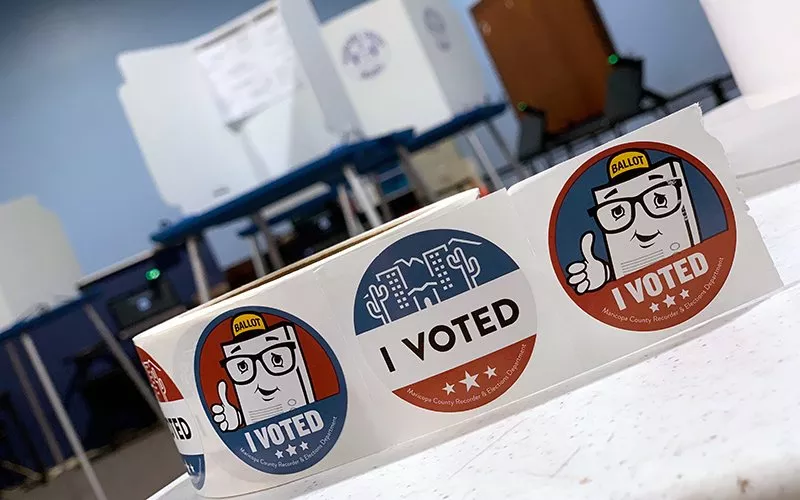
Election Day 2020 is finally here. Polls are open until 7 p.m. throughout Pima County.
If you need to find your polling location, you can do it here.
If you still have an early ballot, it's far too late to mail it, so drop it off at any polling location.
Election officials are asking voters to please mask up if you're going to cast a ballot in person.
Results will be available starting around 8 p.m. tonight. Check back here at TucsonWeekly.com throughout the night for the latest news and analysis.
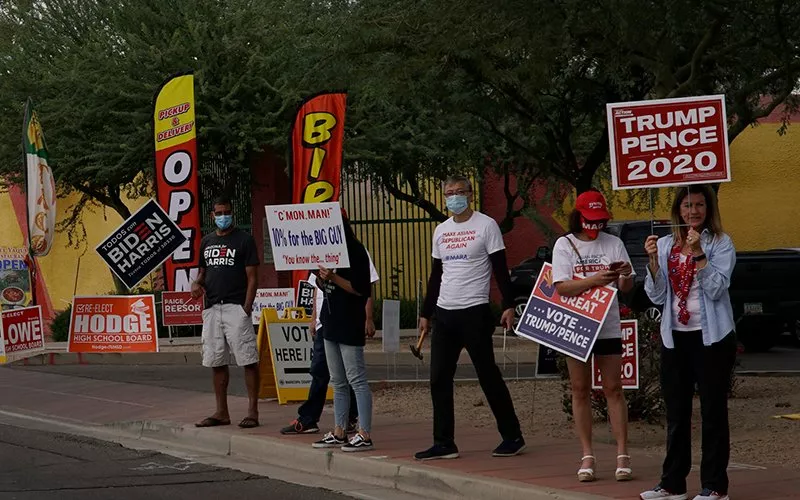
WASHINGTON – Election officials anticipate longer-than-usual lines at polling places Tuesday, but said early in-person voting in the state has been going “very, very well” so far.
“We have been working on this for the whole year. And we have had other elections during this pandemic, so I think we’re ready,” said Erika Flores, deputy director of communications for Maricopa County Elections Department.
Flores said the county has “backups to our backup plans and have all of these procedures in place so that we can feel ready for Election Day.”
An Election Day that is overshadowed by the COVID-19 pandemic, marked by allegations of potential voter fraud leveled by no less than the president and tainted by fears of voter intimidation or post-election violence.
All the products of what Flores said “has been a very exciting election.”
Monday, November 2, 2020
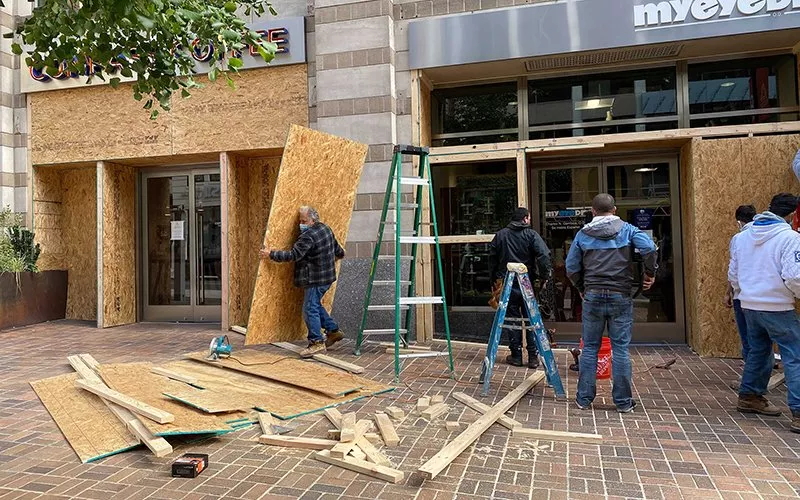
WASHINGTON – National and local law enforcement agencies are preparing to respond in case civil disturbances break out after Tuesday’s elections, which experts fear may have a “different venue for challenging election results, namely in the streets.”
And that may be true whichever side wins.
Seth Jones, director of the Transnational Threats Project at the Center for Strategic and International Studies, sees the possibility of “radicalized white supremacist militias and other related individuals” rioting in the event of a win by Democratic presidential nominee Joe Biden. But he can just as easily see “street-level violence for political purposes” if President Donald Trump wins re-election.
Local, state and federal police agencies did not address the possibility of violence next week, saying only that they will be ready to ensure the safety and well-being of residents and protect protesters’ rights to “peaceful assembly.”
That was echoed Thursday by Gov. Doug Ducey, who said he does not expect unrest but that the state will be ready if it comes.
University of Arizona junior Celeste Marquez is voting in her first election.
“I am voting because I want a leader who believes in science, who stands for women’s and minorities’ rights and someone who will make mine and others’ futures better,” said Marquez, a 21-year-old studying family studies and human development.
Sophomore Alan Cristobal Elias, who is studying law, feels an obligation to vote for the Latino community.
“Whether it be the systemic racism that affects us or our Latino brothers and sisters that get caught crossing the border, it’s our duty to vote,” Elias said.
Elias is supporting the Biden/Harris ticket and hopes a Democratic administration will do a better job of addressing police brutality and abortion rights.
Senior Mauricio Herrera, another first-time voter, intends to drop off his ballot on Election Day.
“A lot of damage has been caused by the current president and we need someone to reverse it and make sure the voices of the people are heard,” Herrera said.
These three UA students, much like their peers, have been a major target for Democratic get-out-the-vote efforts. College students are a fickle voter demographic; in 2012 only 11,361 UA students voted out of 30,113 for a turnout of 37.7%, according to a campus report by the National Study of Learning, Voting, and Engagement; in 2016, that same survey showed that only 12,105 out of 33,130 cast a ballot, or 36.5%.
This year looks different.
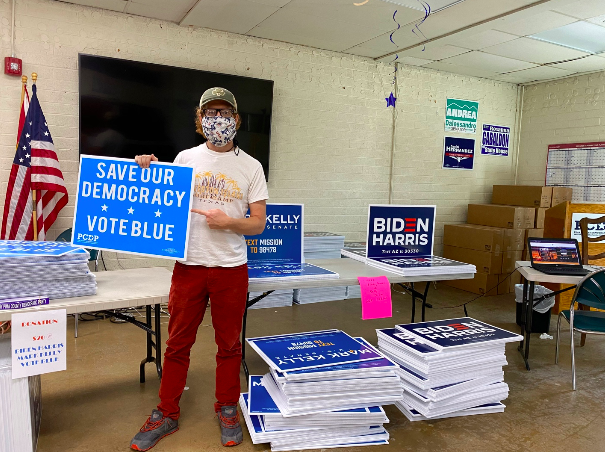
Aggressive get-out-the-vote strategies appear to be getting younger voters to turn out. As of Oct. 31, among Pima County’s 80,314 registered voters between the ages of 18 and 25, 31,584 had returned ballots, for a rate of greater than 39 percent.
UA President Robert C. Robbins said the Democratic platform likely ticket “resonates more with university-aged students.”

