Wednesday, October 7, 2020

Tuesday, October 6, 2020
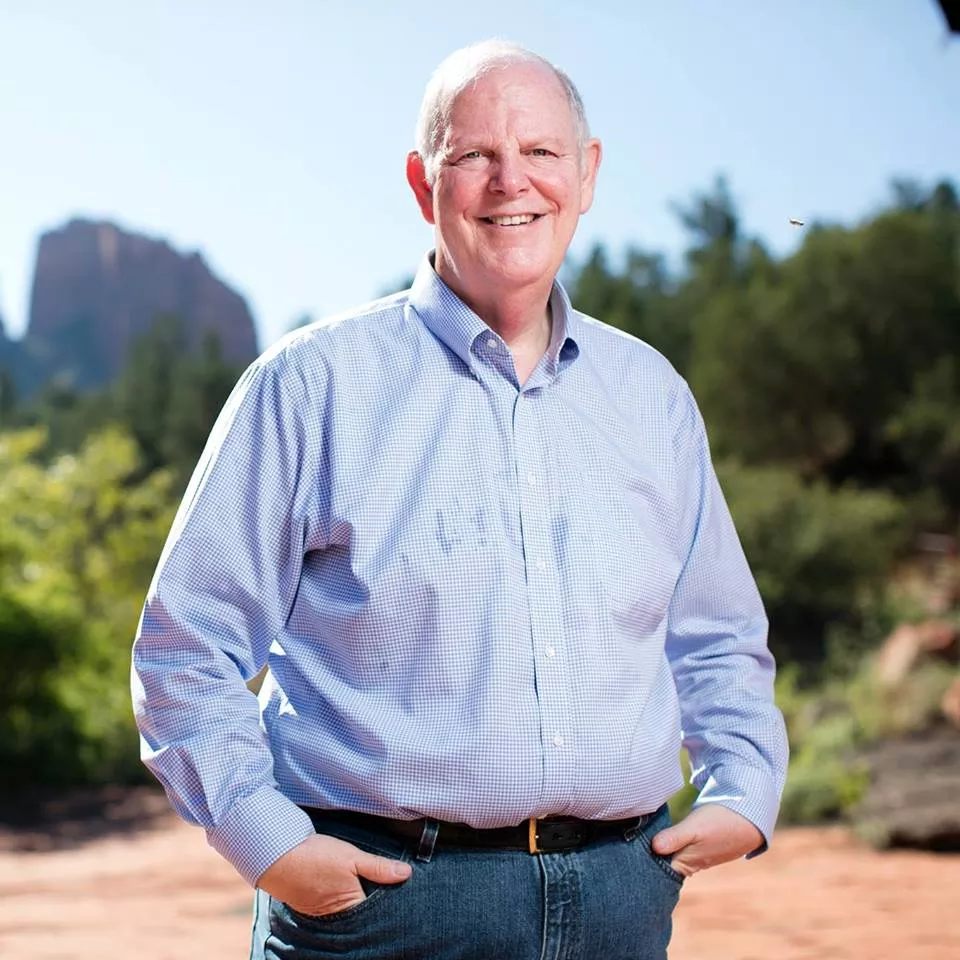
The healthcare advocacy organization Protect Our Care took a “virtual bus stop” in Arizona on Tuesday to advocate for protecting the Affordable Care Act and to bring awareness to Republican-led efforts to dismantle it.
The group usually tours the nation on a physical bus, but this year, they’re hosting virtual meetings with elected leaders and health care advocates throughout 16 states to discuss present dangers to Americans’ access to healthcare and how this is complicated by the coronavirus pandemic.
Democratic Rep. Tom O’Halleran kicked off the presentation of live speakers. He told a story about one of the first bills he tried to pass in Congress that addressed the coverage gap in Medicare drug plans. When he went to present his bill, the chairman of the rules committee set four large piles of paper on the front desk — the four healthcare plans the committee had already written since 2012.
Now, O’Halleran supports the Obama-era healthcare plan and believes “people really count on the ACA,” and that getting rid of it without a clear replacement could mean further digression in healthcare and put 300,000 Arizonans with pre-existing conditions at risk.
“These are costly issues that involve life or death situations for many people,” O’Halleran said. “This is not about moving America forward, but moving America backward. If you’re going to go after [the ACA], have a better plan, or at least have a plan. And they don’t have any of that.”

After a pause for the pandemic, debt buyers are back in the courts, suing debtors by the thousands.
Earlier this year, the pandemic swept across the country, killing 100,000 Americans by the spring, shuttering businesses and schools, and forcing people into their homes. It was a great time to be a debt collector.
In August, Encore Capital, the largest debt buyer in the country, announced that it had doubled its previous record for earnings in a quarter. It primarily had the CARES Act to thank: The bill delivered hundreds of billions of dollars worth of stimulus checks and bulked-up unemployment benefits to Americans, while easing pressures on them by halting foreclosures, evictions and student loan payments. There was no ban on collections of old credit card bills, Encore’s specialty.
At the same time, the pandemic compelled households to cut spending. Finding themselves with enough money to settle old debts, people responded to collectors’ calls and letters. Debt-buying executives couldn’t help marveling at their good fortune. All this created “a perfect storm from a cash perspective,” the CEO of Portfolio Recovery Associates, Encore’s main competitor, told Wall Street analysts.
After its record second quarter, analysts expect Encore to blow past $200 million in profit this year and reward stockholders with 40% earnings growth compared with last year. Portfolio Recovery is set for similar growth. The share prices of both have soared off their early April lows.Tags: business , foreclosure , covid , Image
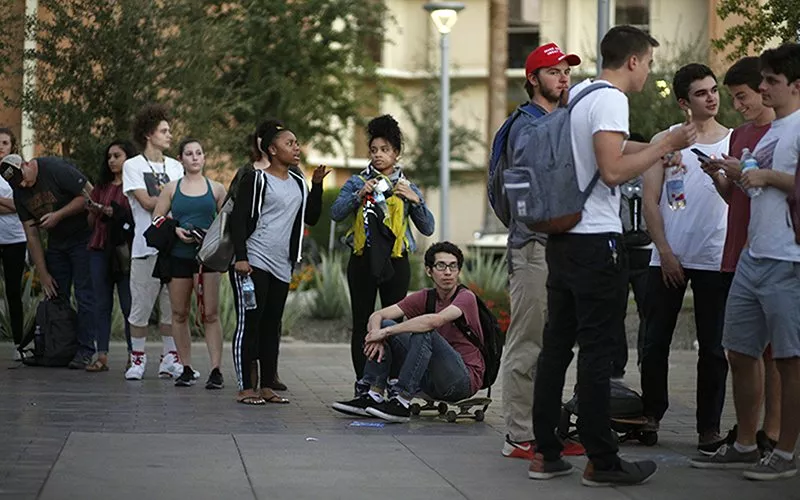
PHOENIX – Activists who believe young voters in Arizona have the power to swing the state are working to mobilize this often inconsistent and underrepresented group by engaging with them across all platforms – including Bumble and Tinder.
Roughly 35% of eligible Arizonans did not vote in 2016, spurring advocacy groups on both sides to galvanize young voters in the Black and Latino communities, who account for about one-third of the state’s population of 7.3 million.
“The focus on younger demographics – all across the country, but (especially) in Arizona – have certainly been sort of a unicorn,” said Garrett Archer, a former data analyst with the Secretary of State’s Office who now works for KNXV-TV (ABC15). “In many ways, Democrats need increased turnout in this group in order to have any chances in Arizona.”
In particular, the state has magnetized progressives determined to turn Arizona away from its more recent Republican leanings. Arizona’s purple turnout in the 2018 midterm election, which resulted in the state’s first elected Democratic senator since 1988, showed the potential for a Democratic presidential win for the first time in Arizona since Bill Clinton in 1996. Progressive and conservative voting groups are moving to harness inconsistent voters – those who are historically unpredictable in whether they turn out at the polls – but often vote blue if they do, according to studies and politics experts.
Senator @KyrstenSinema knows that Arizonans need an independent voice representing them in the Senate. pic.twitter.com/quSlnyMAj5
— Captain Mark Kelly (@CaptMarkKelly) October 3, 2020
Tonight is the first big showdown between appointed U.S. Sen.
Martha McSally and her Democratic opponent, Mark Kelly, the former NASA
astronaut who is leading in the polls.
McSally and Kelly will meet at 7 p.m. for a 90-minute debate
that’s being moderated by Phoenix NPR station KJZZ’s Steve Goldstein, Ted
Simons of Arizona PBS, Lorraine Rivera of Arizona Public Media and Yvone
Wingett Sanchez of the Arizona Republic.
You can watch the debate in Tucson on PBS 6.
Ahead of the debate, Kelly rolled out new TV ad from Sen. Kyrsten
Sinema, the Democrat who defeated McSally in 2018. (McSally was later appointed
to a U.S. Senate seat by Gov. Doug Ducey to finish the term of the late John
McCain.)
Sinema charges that “McSally will say anything
to get elected” and adds that the Republican incumbent hitting Kelly with the same
kind of “false attacks” that she tried against Sinema two years ago.
“But Martha’s worst lies
are the ones about her own record,” Sinema concludes. “She voted to eliminate protections for pre-existing health
conditions. An Arizona senator
should be an independent voice that puts everyday people first.
That’s why I support Mark.”
Polling shows Sinema is considerably more popular that
McSally in the state. At the start of 2020, McSally was ranked among the most
unpopular senators in the country, with 37 percent of those surveyed approving
of the job she’s doing and 40 percent disapproving, giving her a with a net
approval of -3. Sinema, by contrast, had an approval rating of 44 percent and a
disapproval rating oof 30 percent, giving her a net approval rating of +14.
Piggybacking on the theme that McSally can’t be trusted, the
Arizona Democratic Party rolled out a new website, MisleadingMcSally.com, linking
to various news outlets and fact-checking sites that have called out McSally
for false or dishonest statements.
Among the areas that the site explores: McSally’s record on
preexisting conditions, which she herself admitted was a major vulnerability in
her unsuccessful 2018 campaign for Senate. Democrats link back to articles by
PolitiFact and the Washington Post fact checker that recount McSally’s previous
votes for eliminating protections for people with preexisting conditions by
repealing the Affordable Care Act to counter McSally’s vow that she will “always”
protect people with preexisting conditions. It also reminds readers that
McSally has not opposed the Trump administration’s effort to persuade the U.S.
Supreme Court to dismantle the entire Affordable Care Act.
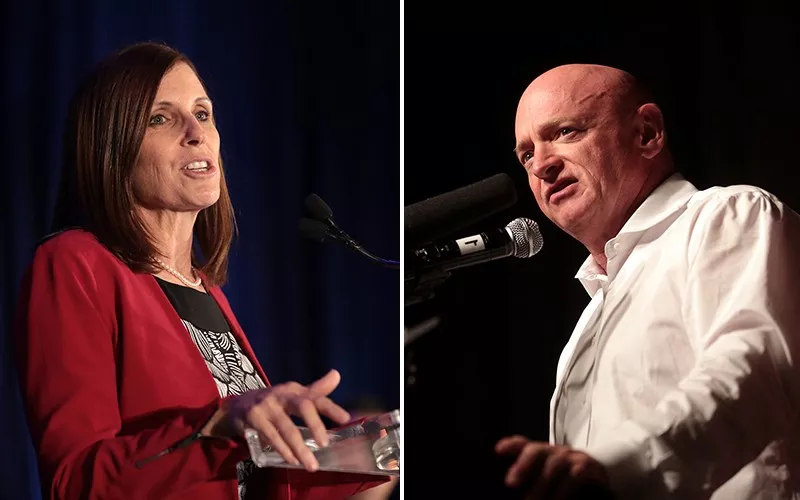
WASHINGTON – Sen. Martha McSally, R-Arizona, bought $110,350 worth of ads on Spanish-language TV stations this week and last – just a quarter of what her Democratic challenger has spent over the past two months.
McSally’s buys on Univision and Telemundo stations in Arizona are her first Spanish-language broadcast ads in this campaign, according to reports filed with the Federal Communications Commission.
They come in the final weeks of the campaign as McSally struggles to hold on to her seat against Democrat Mark Kelly, who has been consistently ahead in polls. The two are scheduled to face off Tuesday in their only debate of the campaign.
With Kelly scheduled to spend about $100,000 a week on Spanish-language ads for the rest of the campaign, some analysts question whether McSally’s effort will be enough.
“It’s a little late, frankly, because the Hispanic vote is the largest minority group population as a voter segment,” said Mike Noble, chief of research at OH Predictive Insights.
Monday, October 5, 2020
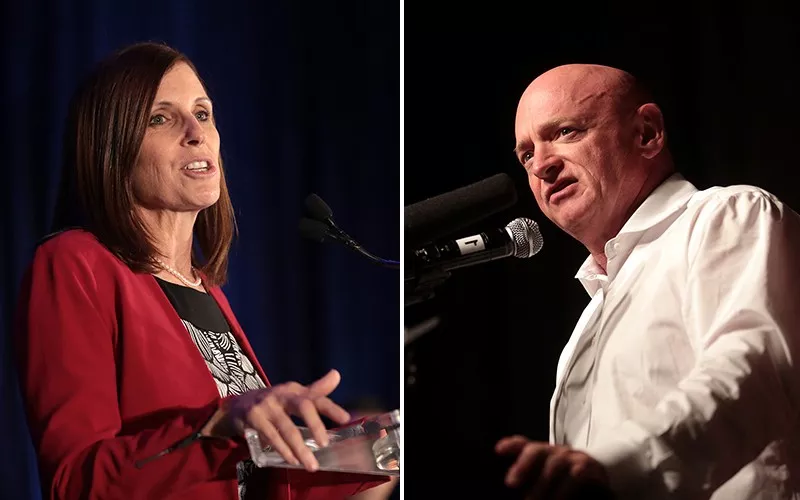
Senate candidates Martha McSally and Mark Kelly laid out their visions of public land management for Arizona on Friday in two separate online forums hosted by the Arizona Trail Association.
The online forums took place ahead of their only scheduled debate on Tuesday and today’s voter registration deadline.
Climate change starkly contrasted the candidates, McSally continued her rhetoric of qualifying the scientific consensus that human emissions are its primary driver by saying “there’s a human element to it.” This is consistent with language she used in her 2018 campaign from an interview with the Arizona Republic.
Kelly mentioned climate several times throughout his forum citing it as a threat to the state’s outdoor recreation industry and drought, which aggravated this summer’s Bighorn Fire.
Tags: mcsally , kelly , election , wildfire , climate change , environment , Image
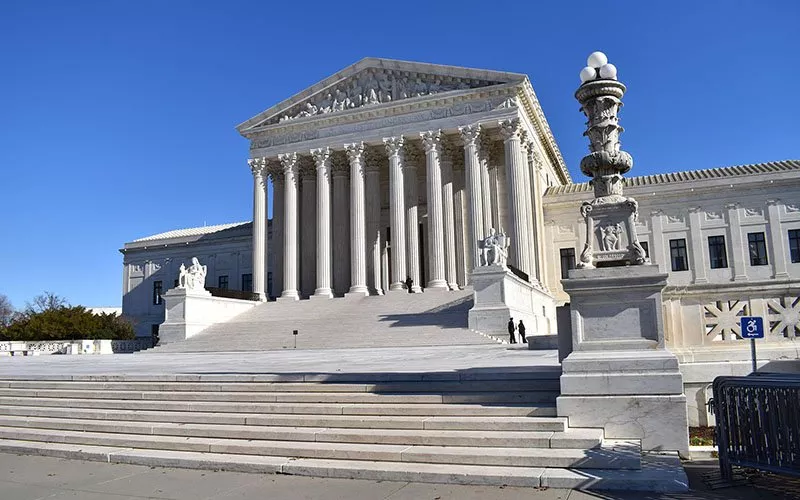
WASHINGTON – The Supreme Court on Friday said it would hear Arizona’s defense of two election laws, on ballot-collecting and out-of-precinct voting, that were struck down by a lower court earlier this year as racially discriminatory.
The controversial voting restrictions are still in effect, as the lower court’s ruling was put on hold for a potential Supreme Court appeal. And they will likely remain so until after next month’s election: Experts say the Supreme Court is not likely to even hear the cases until December, the first open date on its calendar.
The two cases – Brnovich v. Democratic National Committee and Arizona Republican Party v. Democratic National Committee – are being watched nationally because many states have similar laws that would be affected by the court’s ruling.