Monday, September 28, 2020
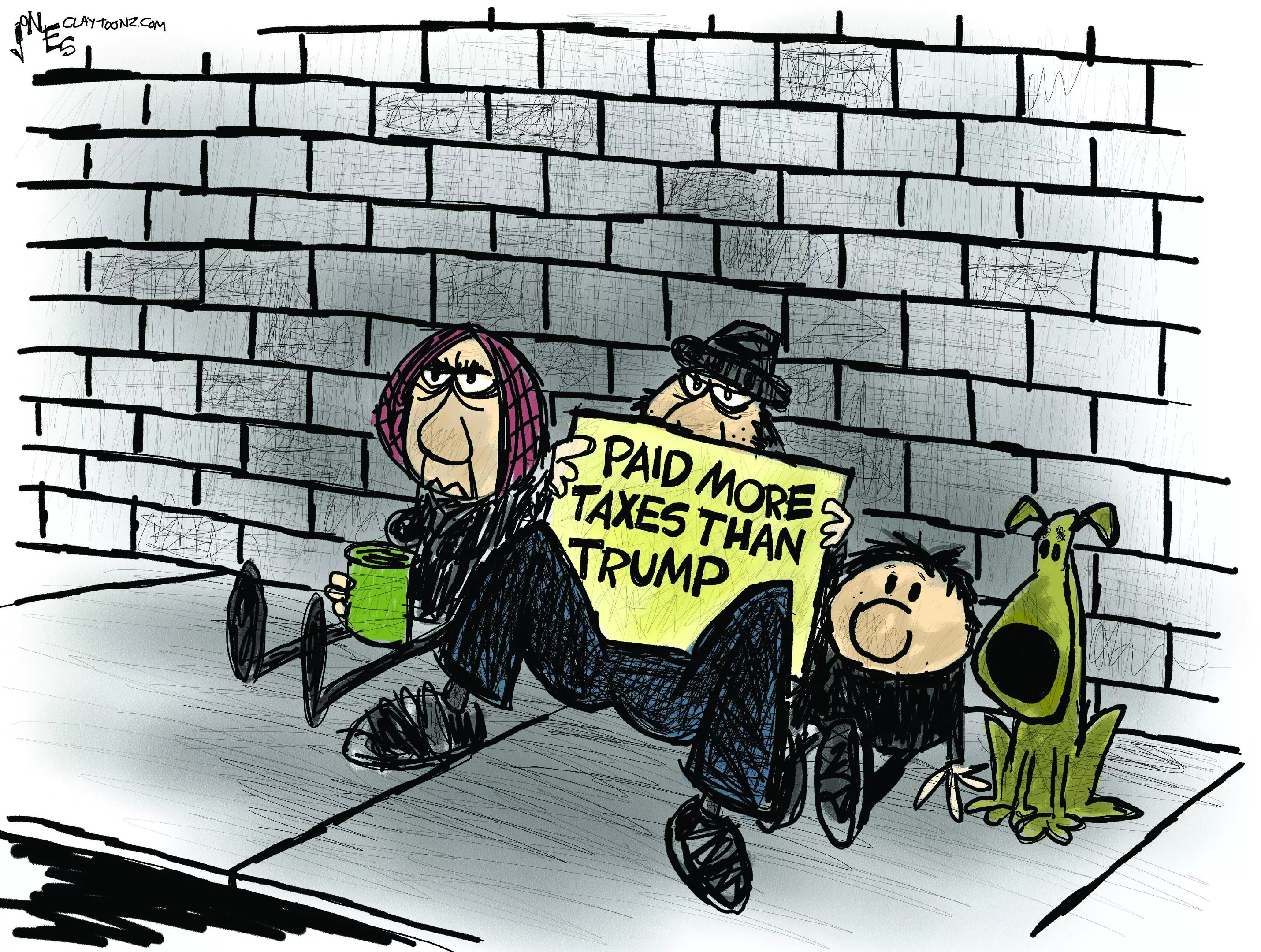
WASHINGTON – Native American advocates and victim’s families have worked for years to draw attention to Indian Country’s epidemic of missing and murdered Indigenous women.
The federal government finally passed legislation that could help do something about it.
The House gave final approval this week to two bills, Savanna’s Act and the Not Invisible Act, that would essentially force a review of the problem and create a federal plan of action. The bills are awaiting the president’s signature.
“We’re not celebrating necessarily, but we also recognize that for Congress to take action is a pretty big deal in terms of acknowledging that there’s an issue, first and foremost,” said Elizabeth Carr, an adviser at the National Indigenous Women’s Resource Center. “And then, secondly, taking some actions to address some of the issues that contribute to the crisis.”
Murder was the third most common cause of death for young Native women in 2017, according to the Centers for Disease Control and Prevention. Four out of five Native women experience violence in their lifetimes, according to the National Institute of Justice. And an Urban Indian Health Institute report on missing and murdered indigenous women in urban areas found Tucson had the fourth-highest number of cases among cities studied and Arizona was third among states.
“Survivors and families of countless missing and murdered” have been “doing the best they can to address the missing and murdered crisis throughout Indian Country,” said Navajo Nation Council Delegate Amber Kanazbah Crotty, a vocal leader on the issue.
In 2018 testimony to the Senate Indian Affairs Committee, Crotty highlighted the jurisdictional complexity of tracking such cases in and around Indian Country, where the FBI, state and tribal jurisdictions create a patchwork that often slows down missing persons investigations.
Savanna’s Act and the Not Invisible Act will improve coordination between agencies, force an official review of the problem and create an overarching plan to combat the ongoing crisis of murdered, missing and trafficked Native Americans – something that hasn’t happened before. Most importantly, advocates say, the bills bring Native Americans who have been combating the crisis on the ground into the process.
Tribal and survivor input was missing from President Donald Trump’s creation last year of a task force on missing and murdered Native Americans, dubbed Operation Lady Justice, advocates said. That task force only includes federal officials, though some of them are tribal members.
“A real solution to this crisis will never be found without the explicit inclusion of survivors, which is what is so special about this bill,” said Rep. Deb Haaland, D-N.M., who introduced the Not Invisible Act.
Haaland introduced her bill to complement Savanna’s Act, which focuses on collecting data on missing and murdered Native Americans, especially women, which has been a major hurdle in search efforts. The Not Invisible Act aims to improve coordination across the agencies that deal with violence involving Native Americans.
“They complement each other,” said Terrelene Massey, executive director of the Southwest Women’s Law Center in Albuquerque, N.M. The bills “are needed, they are tangible and … they are action-oriented in addressing the problems that we see out in Indian Country.”
Savanna’s Act requires the Justice Department to report statistics on missing and murdered Native Americans, train tribal law enforcement to use the national missing persons database and develop law enforcement protocols on dealing with missing Native Americans.
Named for Savanna LaFontaine-Greywind, a North Dakota member of the Spirit Lake Tribe who was murdered in 2017 while pregnant, the bill provides some grant funding to agencies who help develop these protocols and complete annual reports on missing and murdered Native Americans.
The Not Invisible Act will create a position in the Bureau of Indian Affairs to coordinate federal efforts to combat violence against Native Americans and form a joint commission between the departments of Justice and the Interior. It requires the commission to include tribal representatives, health experts and victims’ families.
Advocates like Carr would rather see funding in Savanna’s Act go to victim services, violence prevention and increased visibility for the problem, but concede that some funding is better than none. And neither bill addresses shortfalls that Crotty outlined in her testimony, which spelled out how much funding would be needed to update tribal data collection systems, correct the overall shortage of tribal officers and provide services to affected families.
Despite that, advocates overwhelmingly welcomed the bills.
“It’s bringing more resources, more authority … making some of the major players do work to address the issues,” Massey said. “It’s bringing in that accountability.”
Carr called the bills a “pat on the back,” but said advocates will continue to push for more.
“It’s just a baby step, but for us a baby step is better than no step at all,” she said.
Tags: native american , Image
Friday, September 25, 2020
WASHINGTON – The number of Arizonans without health insurance jumped to more than 800,000 last year, the third consecutive year of increases for the state, according to the latest data from the Census Bureau.
The number of uninsured also rose nationwide, but not as sharply as in Arizona. Nationally, the share of people without insurance rose from 8.9% in 2018 to 9.2% last year, the bureau said, while Arizona went from 10.6% to 11.3% in the same period.
And health experts in Arizona note that the latest numbers do not reflect the onset of the COVID-19 pandemic earlier this year, which likely makes for an even gloomier picture this year.
“Probably anything you look at that’s estimated, as far as our uninsured rate, is an undercount of where things are right now,” said Dr. Dan Derksen, associate vice president of health sciences at the University of Arizona.
Analysts attribute the rise to a number of factors, not the least of which is uncertainty about the availability of coverage under the Affordable Care Act after years of attack by the Trump administration.
Allen Gjersvig, director of outreach and enrollment services for Arizona Alliance for Community Health Centers, points to what he calls an “awareness and education problem” that has left some uninsured unaware that they might still qualify for affordable coverage under the ACA, or Obamacare.
Gjersvig said “the vast majority” of the 809,000 uninsured people in Arizona could qualify for a tax credit that covers most of their monthly premiums, which could end up being less than $100 per month out of pocket. Some could even qualify for the tax credit and a reduction in deductibles and co-pay that Gjersvig said could cut out-of-pocket expenses to “less than $1 per month.”
“Based on Kaiser Family Foundation for 2018 data, we estimate that 323,000 or more Arizonans are eligible for no-cost coverage (AHCCCS) or low-cost coverage from the health insurance marketplace,” Gjersvig said.
The number of uninsured has crept up steadily for the past three years, after sharp drops after 2014 when the state expanded eligibility for coverage under the Arizona Health Care Cost Containment System, the state’s Medicaid system.
Currently, families earning up to 138% of the federal poverty level can qualify for Medicaid coverage in Arizona. The federal poverty threshold varies according to family size, but in 2019 it was set at $25,926 for a family of two parents and two children under 18 – so a family of four making about $35,000 would meet the 138% threshold.
Derksen said another factor behind the loss in insurance is the fact that U.S. health care remains “needlessly” complicated, with information so “fragmented” between different places that it requires navigators to help people understand the system.
That is not the case in other developed countries, which deliver health care at a much lower cost per capita, Derksen said. He pointed to an article in the Journal of the American Medical Association that said wasteful spending on fraud, abuse and administrative costs contribute to almost $1 trillion of the $4 trillion that is spent annually on health care in the U.S.
One resource Gjersvig recommends to people looking for insurance coverage is the Cover Arizona Coalition through Vitalyst, a coalition of resources throughout the state that helps people navigate the healthcare marketplace in Arizona.
He also touted two national grants that he said have helped his organization work with more than 180 locations across the state to have certified application counselors help consumers navigate the health insurance marketplace.
Arizona’s 11.3% uninsured rate last year tied with North Carolina for ninth-worst in the nation. Texas had the highest rate of uninsured residents, at 18.4%, while Massachusetts was lowest, with a 3% rate.
With a pandemic raging and an election nearing, health care remains one of the top priorities for many Americans, Derksen said. He encouraged voters to consider all health care options this fall.
“It doesn’t have to be a binary choice of Medicare-for-all vs. the private sector,” Derksen said. “Those aren’t the only two choices.”
Open enrollment for coverage through the federally facilitated ACA Marketplace starts Nov 1 and runs through Dec. 15.
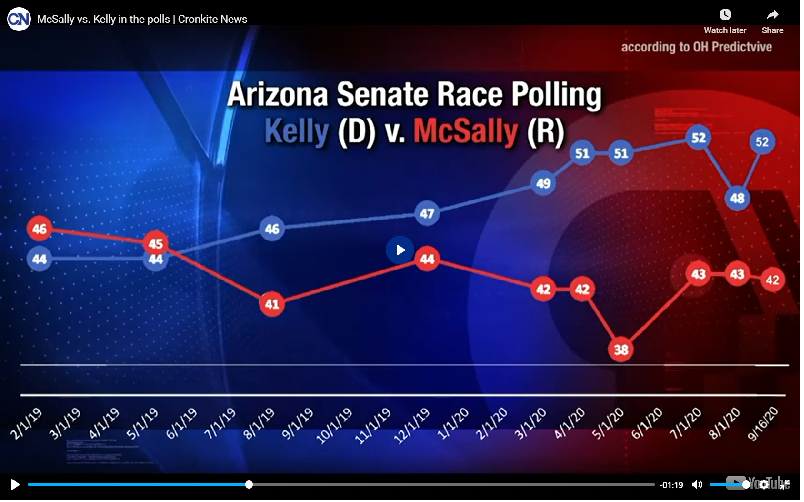
PHOENIX – Recent polling data in the Arizona Senate race suggests Democrat Mark Kelly has a large lead over incumbent Republican Sen. Martha McSally. However, the gap might not be as big as some polls show.
A recent poll from Fox News has Kelly 17 points up in the Arizona Senate race. The poll, conducted at the end of August, surveyed 772 likely voters and found a 56-39 split in favor of Kelly.
However, data from OH Predictive Insights, a Phoenix-based polling firm, suggests the gap is much smaller. Data analyst Jacob Joss said that, while Kelly is undoubtedly ahead, the race is actually closer to single digits.
“I wasn’t necessarily surprised that it was a large gap,” Joss said of the Fox poll. “I was surprised that it was a 17-point gap.”
OH Predictive Insight’s latest poll shows Kelly with a 10-point margin. Its data did show a wider gap in the summer. However, the race narrowed to as small as 5 percentage points in August.
The Fox poll claims to have a margin of error of plus or minus 3 percentage points while the OH Predictive Insights survey of 600 likely voters from Sept. 8-10 has a margin of plus or minus 4 percentage points.
“It looks like Kelly is the clear favorite right now,” Joss said. “But obviously the numbers are close enough that either party could come out on top.”
The election might be decided by voter turnout. According to data compiled by Arizona Highground, a public affairs consulting firm, Arizona will likely surpass 3 million voters for the first time in the state’s history.
The firm’s data also showed record turnout in the 2020 primary elections. This included a 30% increase from the 2018 primary among registered Democrats, compared with just a 7 percent increase among registered Republicans.
Arizona Highground President Chuck Coughlin said younger voters that often lean to the left might be driving the shift in the Arizona electorate.
“Republicans always turn out,” Coughlin said. “The sun rises in the morning. Republicans go vote. It’s who shows up around them in the cycle. And we’ve seen higher participation rates amongst nontraditional cohorts of the electorate.”
Just four years ago, Republican Sen. John McCain won re-election to this seat by nearly 13 points over Democratic challenger Ann Kirkpatrick. After McCain died in 2018, McSally was appointed to fill his seat. The election this November is to fill the final two years of McCain’s term.
If Kelly wins, it would mark the first time in nearly 70 years that Arizona had two Democratic senators in office concurrently. And because the election is filling a vacant seat, Kelly could be sworn in as early as Nov. 30, when Arizona election results are certified, according to Arizona law.
This could allow the winner of the race to cast a crucial vote on a potential Supreme Court nomination by President Donald Trump. It could also be a deciding factor in who controls the Senate for the next two years.
“Whoever wins the Senate seat here, whether that be Mark Kelly or Martha McSally, is going to play a key role in determining who gets 51 seats in the Senate,” Joss said.
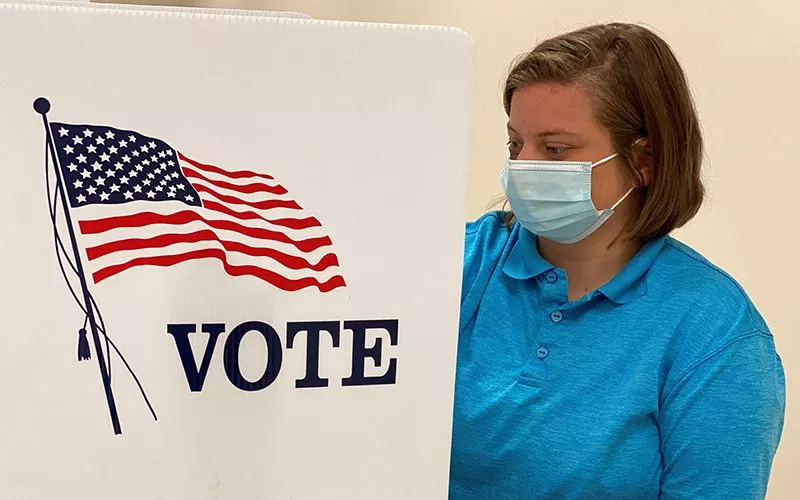
WASHINGTON – COVID-19 may be getting the headlines but it’s not the top health care issue on the minds of voters in a number of battleground states, including Arizona, according to a poll released Thursday.
The poll by the Commonwealth Fund found voters in seven of 10 battleground states said they were more likely to vote for a candidate who could protect health care for people with pre-existing conditions than one who could address the health and economic costs of the pandemic.
Thursday, September 24, 2020
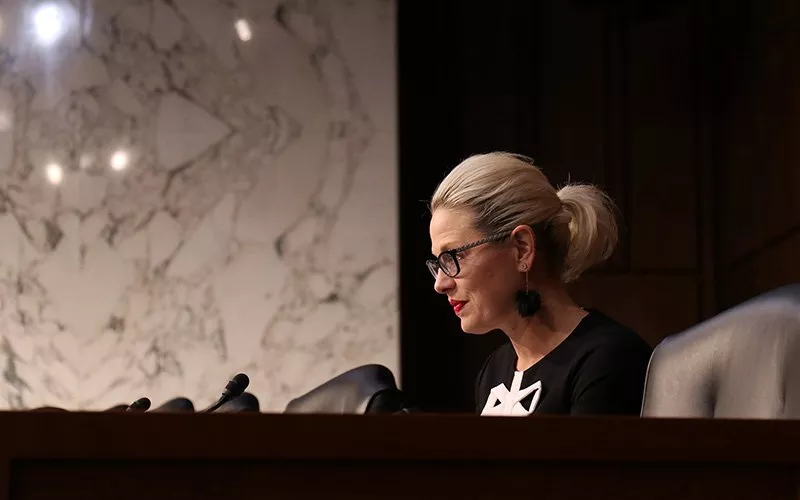
WASHINGTON – Arizona Sen. Kyrsten Sinema confronted the acting head of Homeland Security Wednesday over border wall construction she said has ignored the needs of local communities and bypassed environmental assessment reports.
The questions came during a Senate Homeland Security Committee confirmation hearing on the nomination of acting Secretary Chad Wolf – who has been serving in an acting capacity for close to a year.
“Construction began before mitigation plans were complete. I will note that my office received reports of dynamite blasting in Guadalupe Canyon yesterday related to wall construction,” said Sinema, a Democrat. “That will have a permanent impact on our land.”
But Wolf said his agency’s primary concern is national security, not environmental damage, to respond to the national emergency declared by the president.
“The president did issue a national emergency to build a new border wall system, so we’re appropriate. We are waiving regulations to make sure that that work does not slow down and is not delayed,” Wolf told Sinema.
The exchange came during a wide-ranging hearing that touched on everything from the actions of DHS officers during protests this summer in Portland, Oregon, to threats posed by states like Russia, China and Iran.
Republican lawmakers on the committee generally lauded the direction of the agency under Wolf. Sen. Ted Cruz, R-Texas, spent most of his time praising Wolf and defending his choices as acting secretary while Sen. Ron Johnson, R-Wisc. and the committee chairman, ceded his time to let Wolf address scandals affecting DHS.
But most Democrats on the committee grilled Wolf on his decision to send DHS officers to cities like Portland and his focus on left-wing anarchists over white supremacists. They also questioned the legitimacy of decisions made by a secretary who has served in an acting capacity for so long.
The border wall was just one of the immigration issues that was touched on. Lawmakers also asked about the care of migrants in Immigration and Customs Enforcement custody and reports that trafficking victims have been returned to their home countries where they could face further danger.
Complaints about the wall are hardly new. After Congress refused to meet his demands for border wall funding, President Donald Trump in February 2019 declared a national emergency at the border that he said allowed him to shift funding from other departments and let DHS waive environment and other regulations as necessary.
That has led to repeated run-ins with local communities.
In February of this year, the Tohono O’Odham Nation said that “dynamiting these sacred sites and burial grounds” where the wall is going up “is the same as bulldozing Arlington National Cemetery or any other cemetery. Our history as a people is being obliterated and our ancestors’ remains are being desecrated.”
“The National Park Service has acknowledged these areas are sacred to the Nation,” the statement said. “Yet in the rush to build the wall, U.S. Department of Homeland Security (DHS) has waived cultural preservation and environmental laws.”
Earlier this month, Border Patrol agents assisted the National Park Service with the arrest of two O’odham women for “interfering with agency functions” and “violating a closure” by trying to block construction equipment at Quitobaquito Springs, an oasis near the border. Environmental groups have charged that DHS’ use of groundwater to make cement for the wall has caused the spring’s water level to fall in recent months.
Sinema criticized the agency for rushing to construct the southern border wall before environmental assessment reports could be done and provided to Congress. She also accused the department of failing to communicate with local tribal leaders whose sacred sites are imperiled by the project.
“It seems like there’s a cart before the horse situation, and I do want to note that residents of southern Arizona have expressed intense concern about this,” she said.
But Wolf insisted that DHS, Customs and Border Protection and the Army Corps of Engineers were doing their part to minimize and mitigate damage to cultural resources along the southwest border, but the main goal is to build the wall.
Wolf said the department plans to deliver an environmental assessment of its actions on the wall to Congress in October, but did not specify when.
“We’ll continue to abide by our responsibilities to make sure that we’re good stewards of the environment … but it’s been very clear that that is a national security issue and we’re going to continue to build that new border wall system,” Wolf said.
Tags: border , immigration , homeland security , Image
Wednesday, September 23, 2020
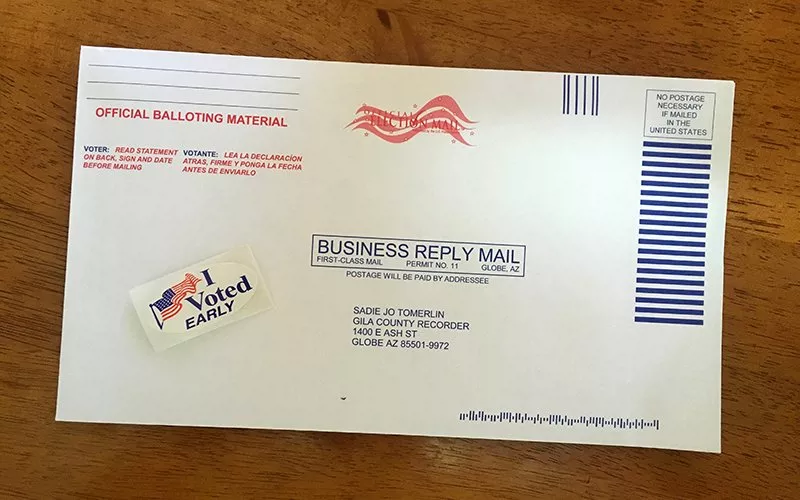
PHOENIX – Nationally and in Arizona, as Nov. 3 approaches, many Arizonans still have concerns about getting their mail-in ballots returned on time – and counted.
Voting by mail has become polarized, and some experts have warned that results may be delayed for weeks in presidential and local elections. Arizona is a national example: For six days in 2018, the Senate seat that Kyrsten Sinema eventually captured teetered between Sinema and her Republican opponent, Marthy McSally. (McSally later was appointed to a vacant Senate seat and is battling Democrat Mark Kelly this year.)
Arizona, for years considered solidly Republican, also is in play this year as a battleground state, which make every vote important.
PHOENIX – A years-old movement to reform police departments, which reentered the national debate last spring when a Minneapolis police officer dug his knee into George Floyd’s back until he couldn’t breathe, has taken root in Arizona.
“No justice, no peace, defund the police!”
The chant is a nationwide call to action, voiced by millions at protests, on social media and at city halls across the U.S. and in Arizona, where some police departments claim a quarter of a city’s annual budget.