

Friday, January 29, 2021

With 5,028 new cases reported today, the total number of Arizona’s confirmed novel coronavirus cases surpassed closed in on 750,000 as of Friday, Jan. 29, according to the Arizona Department of Health Services.

Pima County, which reported 698 new cases today, clearing the six-figure threshold, having seen 100,272 of the state’s 748,260 confirmed cases.
A total of 13,022 Arizonans have died after contracting COVID-19, including 1,736 deaths in Pima County, according to the Jan. 29 report.
The number of hospitalized COVID cases statewide has declined in recent weeks after peaking at 5,082 on Jan. 11 but remains above the peak levels of the summer’s first wave. ADHS reported that as of Jan. 28, 3,970 COVID patients were hospitalized in the state. The summer peak of 3,517 hospitalized COVID patients was set on July 13; that number hit a subsequent low of 468 on Sept. 27.
A total of 1,723 people visited emergency rooms on Jan. 28 with COVID symptoms, down from the record high of 2,341 set on Tuesday, Dec. 29, 2020. That number had peaked during the summer wave at 2,008 on July 7; it hit a subsequent low of 653 on Sept. 28.
A total of 1,002 COVID-19 patients were in intensive care unit beds on Jan. 28, down from a peak of 1,183 set on Jan. 11. The summer’s record number of patients in ICU beds was 970, set on July 13. The subsequent low was 114 on Sept. 22.
Despite last week's announcement that COVID-19 cases had decreased and that some elective surgeries would resume, Arizona’s largest hospital system is still caring for more patients than it did during the summer surge.
“Patient care in our hospitals has not yet returned to a state that I would define as usual and customary, and I would caution you against celebrating too early as we slowly work our way out of this difficult surge,” said Banner Health’s Chief Clinical Officer Dr. Marjorie Bessel said at a Wednesday press conference.
Banner is using thousands of out-of-state healthcare workers while upskilling others to help in its ICUs, Bessel said.
The hospital’s forecasting predicts it will take two to three more months for Arizona to fully recover from the winter surge in cases with many more weeks of high numbers of hospitalizations.
Bessel said Banner hospitals frequently monitor the University of Washington’s Institute for Health Metrics and Evaluation tool to grasp likely consequences of COVID-19 in the future.
Estimates predict Arizona will reach 18,500 deaths by May if it continues its current mitigation policies against the virus. If the state eases current mitigations, the death total could reach 22,200 by May, Bessel shared.
Thursday, January 28, 2021

PHOENIX – Amid moves by some states to declare racism a public health issue, experts are looking to medical schools to identify strategies to improve care for people of color and eliminate disparities related to a patient’s race or ethnicity.
Dr. David Acosta, chief diversity and inclusion officer with the Association of American Medical Colleges, said students’ training and exposure regarding racism in health will help effect needed change.
“It’s going to require certain attitudes, behavioral changes … constructing the knowledge base so that everybody – not just students of color – but everybody now becomes aware in medicine, nursing, pharmacy, whatever health profession,” Acosta said.
The deaths last year of George Floyd, Breonna Taylor, Dion Johnson and other Black people at the hands of police sparked a new racial reckoning, and governors in Michigan, Nevada, Wisconsin and other states issued executive orders declaring racism a public health crisis.
A slew of city councils and county governments passed similar resolutions, while other states established antiracism work groups or are reviewing policies and addressing institutional racism in public health, criminal justice and other areas.
In Arizona, no action has been taken by Gov. Doug Ducey or the Republican-controlled Legislature to make a formal declaration.
Monday, January 25, 2021
The University of Arizona is Pima County’s vaccine distribution point for educators, and according to the university's President Dr. Robert C. Robbins, it delivered 1,296 doses through Friday, Jan. 22.
On Friday, 150 individuals were vaccinated at the university’s drive-thru location, and 198 at its walk-up location, according to Robbins.
On Monday, Robbins said university officials project delivering 800 vaccines—400 at its drive-thru site and 400 at its walk-up location. They expect to deliver the same amount Tuesday.
Robbins said less than one-third of the vaccine the university receives will be allocated to its own staff.
However, the UA president noted there’s a huge difference between vaccine supply and the demand for it.
This week, Pima County is expecting 29,000 COVID-19 vaccine doses, a far cry from the state allocation it needs to vaccinate those eligible in its current phase 1B priority of vaccine rollout. The eligible group is estimated to include 150,000 educators, protective service workers and individuals over 75.
“Per population, we're getting about 28,000 doses a week. Based on the demand we have here, we could deliver between (50,000) to 75,000 visits a week,” Robbins said. “So everyone, please be patient with us. We're trying our best, the county is absolutely doing the best they can.”
Even with some receiving the coronavirus vaccine, he said “We can't vaccinate our way out” of the COVID-19 pandemic.
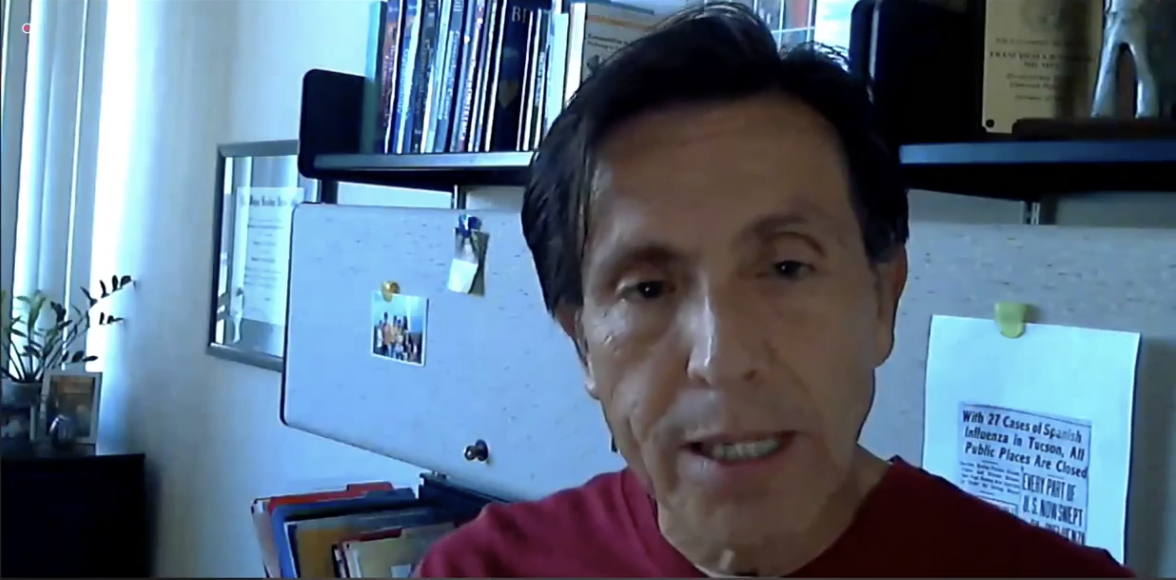
As Pima County continues to ramp up COVID-19 vaccinations at five different distribution sites, it needs a lot more vaccine to adequately immunize the population.
The county usually receives about 12,500 doses per week but has been expecting larger allocations from the state to keep up with demand.
At a press conference Friday, Pima County Chief Medical Officer Dr. Francisco Garcia said the county is expecting 29,000 COVID-19 vaccine doses this week. Garcia contends the county’s current infrastructure can “easily handle” 100,000 vaccines a week.
As of Sunday, the county received107,000 doses and was allocated 136,100 from the state.
Pima County administered 71,890 total doses as of Sunday, for a vaccination rate of 6,882 per 100,000 of the population.
A total of 58,629 individuals received their first dose of either the Pfizer or Moderna vaccine, while 13,051 had received the two doses needed to be considered fully immunized.
While the Pima County Health Department maintains it has the necessary infrastructure to administer more than 775,000 doses by the end of March, according to its accelerated immunization plan, they don’t have enough vaccines.
Maricopa County has administered 210,732 doses of vaccine as of Sunday and plans to have two 24-hour vaccination sites, State Farm Stadium in Glendale, which opened on Jan. 11, and Phoenix Municipal Stadium, set to open Feb. 1.
Other Arizona counties, including Pima, are struggling with the demand for vaccines outstripping the depleted supply, and the allocation process, which is being created without transparency from the state.
“We are grateful, but I have to tell you that this is far insufficient for what we need. This is not nearly enough vaccination for us to be able to meet the needs of this county,” Garica said. “We continue to advocate every single day to the state health department, to the governor's office, to our congressional delegation, that the sole rate-limiting step in the equation at this time is vaccine supply, and that it is imperative that Pima County get its fair share. From my perspective, that should be about 15% of the state allocation, and we are short of that.”
If the county keeps receiving a depleted vaccine supply, Garcia warns resources may need to be taken from other areas, such as COVID-19 testing.
Friday, January 22, 2021
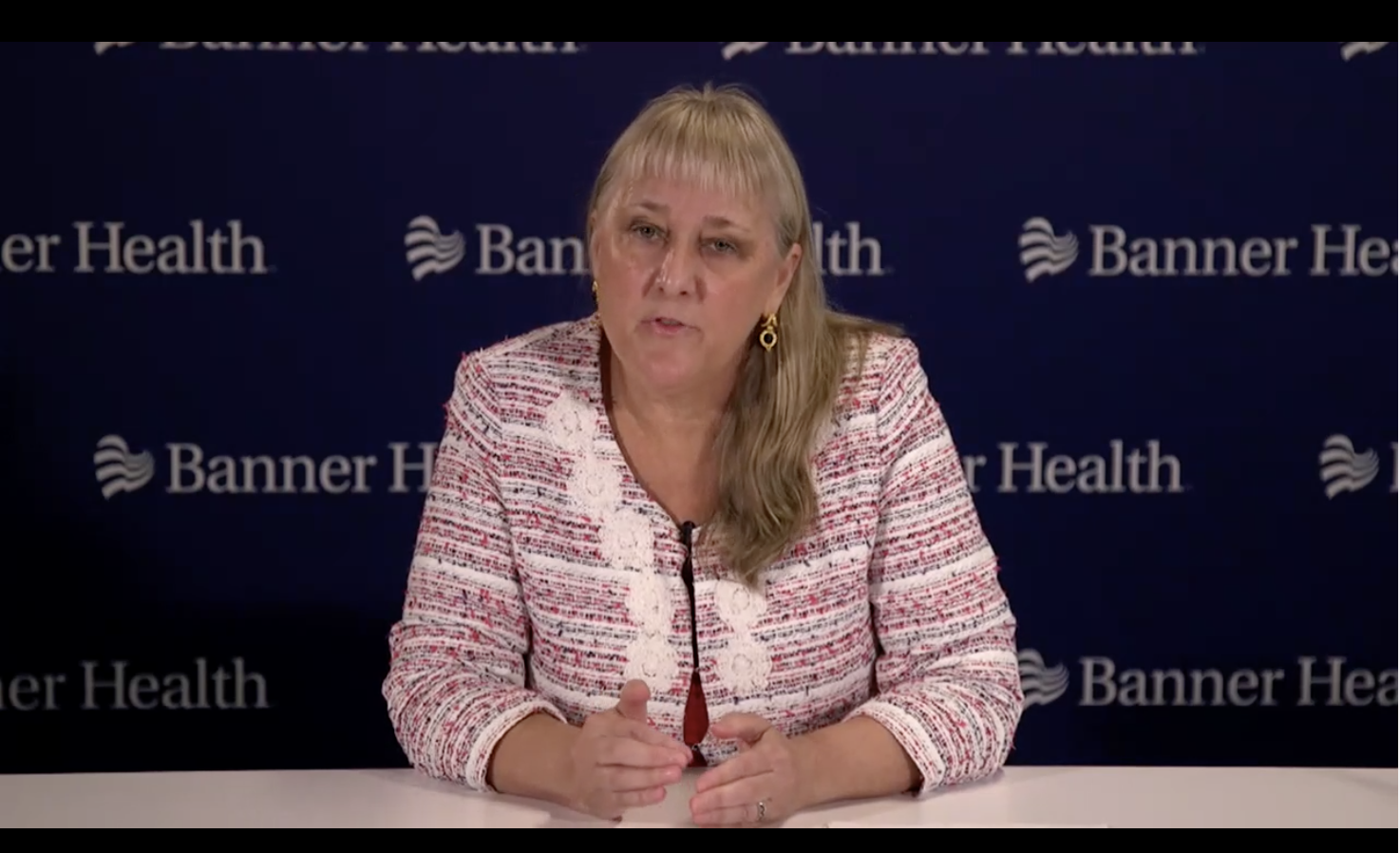
Banner’s top clinical leader began a press conference Friday with a message Arizonans haven’t heard in a long time.
“Positive COVID-19 cases are on the decline nationally and locally here in Arizona,” said Dr. Marjorie Bessel, the chief clinical officer of the state’s largest hospital system. “The positivity rate in Arizona, though still very high, has declined slightly from its peak the last week of December and COVID hospitalizations have been going down since Jan. 11.”
However, she said it's not time to let up on coronavirus mitigation efforts.
Arizona holds the country’s highest transmission rate at 96 cases per 100,000 population, according to CDC data. She also said COVID-19 patients account for 62% of the state’s hospitalizations.
“While we are pleased to see these numbers trending down, we are still experiencing uncontrolled spread of COVID-19 in Arizona,” she said. “The state continues to lead the U.S. with the highest rate of COVID-19 infection in the country.”
On Friday, Arizona passed the grim milestone of 12,000 COVID-19 deaths.
“Knowing that we have lost 12,000 Arizonans to COVID-19 weighs on our hearts and minds each and every day,” Bessel said. “My thoughts are with all those who have lost loved ones to COVID. We are going to battle this virus every day in our hospitals and we are committed to saving as many lives as we can.”
According to Bessel, bouncing back from the ongoing surge in cases will take much longer than it did during the summer surge, and she estimates the state won’t reach pre-surge hospitalization levels for another 10 or 11 weeks.
State hospitalizations are 700% higher than they were on Nov. 1, while the number of patients on ventilators has increased by 1,000%, Bessel said.
Banner hospitals will resume some elective surgeries
Due to the slight decrease in COVID-19 cases and hospitalizations, Bessel announced Banner will resume some elective surgeries on Monday.
While some surgeries will continue to be delayed based on capacity, outpatient surgeries and procedures that require no more than a one-night stay and no care in the ICU will resume.
Thursday, January 21, 2021
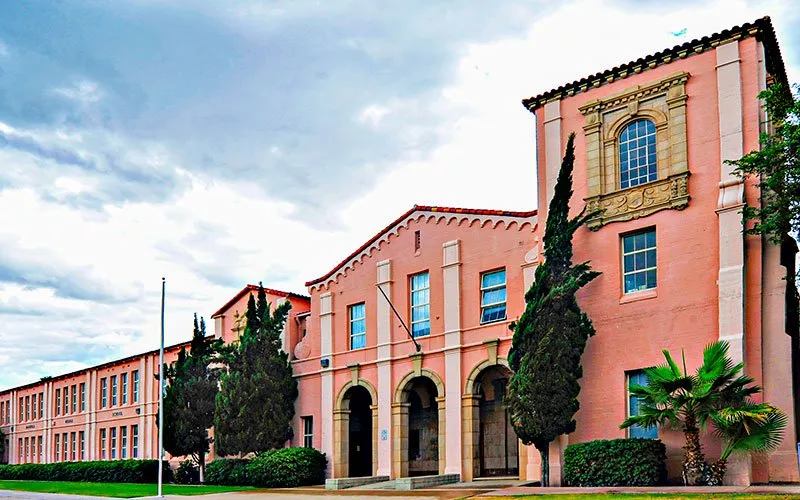
As the spread of COVID-19 in Pima County continues to reach dangerous levels, most public school districts in the Tucson area are pushing back previously set dates to resume in-person hybrid instruction.
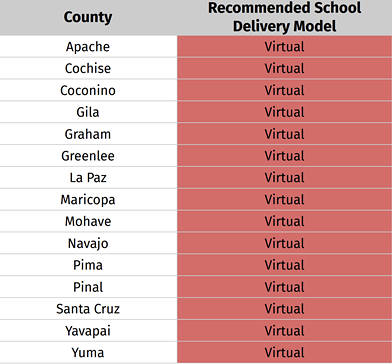
The Arizona Department of Health Services is recommending all counties commit to virtual learning for students with online classes and some onsite support services.
ADHS made its recommendation based on three key benchmarks: cases per 100,000 individuals, percent positivity and hospital visits for COVID-like illness. All benchmarks are currently in a state of substantial transmission throughout the state.
In Pima County, ADHS data shows 8,983 COVID-19 cases per 100,000 of the population and a 12.3% positivity rate of the virus as of Jan. 21. The most recent data available on the state health department’s school benchmarks website shows hospital visits for COVID-like illnesses at 14.8% as of Jan. 3.
While most districts remain in remote learning models, Catalina Foothills has remained open for in-person learning since Oct. 26. The Marana Unified School District anticipates returning to hybrid instruction on Monday, Jan. 25.
Amphitheater
Originally set to return to a hybrid model on Jan. 19, Amphitheater Superintendent Todd Jaeger announced in a letter to families on Jan. 4 that remote-only learning would continue until a Feb. 1.
After the county health department said it would not be able to provide guidance until it receives more data, Jaeger said he plans to announce an official return date decision Friday.
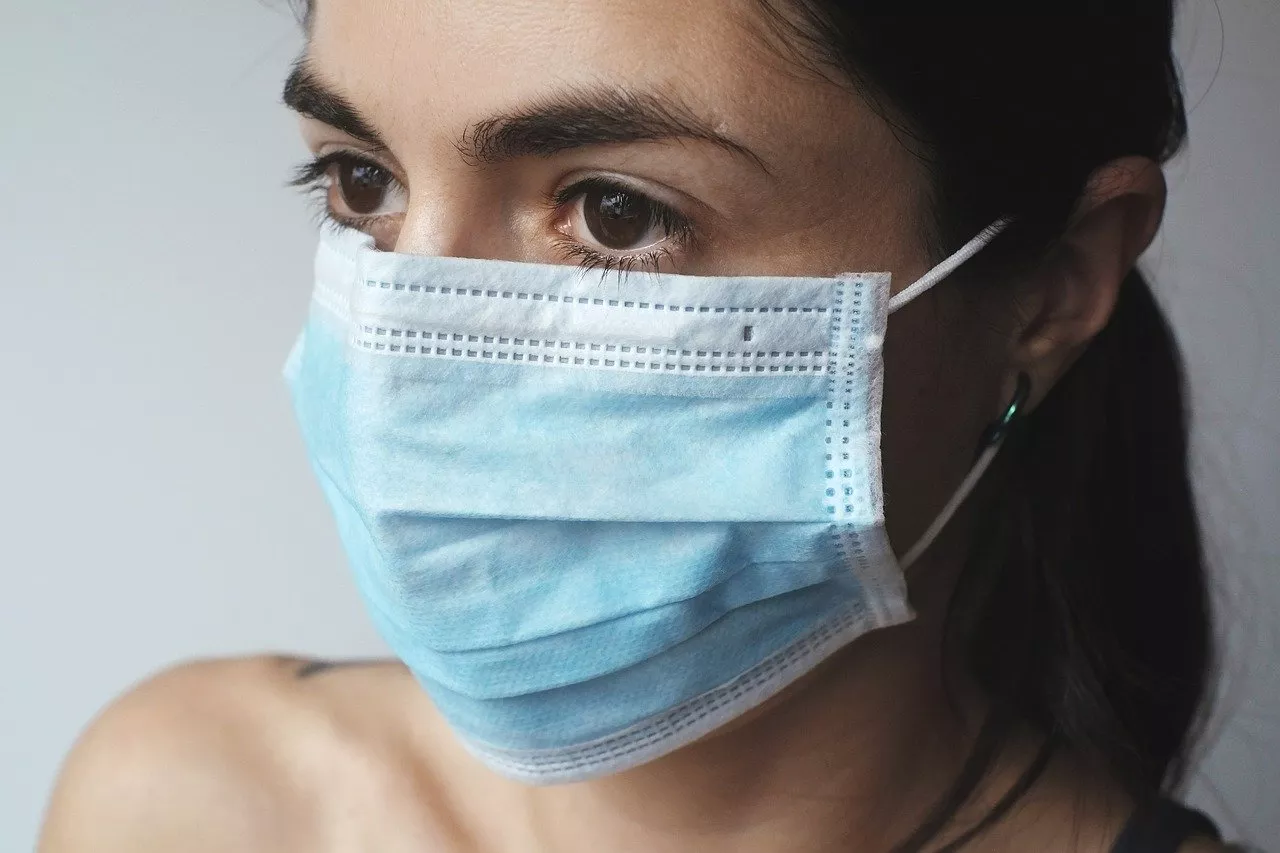
As Arizona health officials scramble to speed up rollout of the life-saving COVID-19 vaccine, the deadly virus is still spreading rapidly. Over 12,500 Arizonans have died, and we are seeing more than 9,000 new infections daily. The outbreak in Arizona is the worst in the nation, with one in every 147 residents being infected as of 1/21/2021. The clock is ticking and the time for action is now.
Even under the best circumstances, it will take a year or more for a vaccine to be fully effective. In the meantime, we can save lives with aggressive public health measures. No arena is more important than Arizona workplaces, a dangerous source of COVID hotspots which then spread to our neighborhoods and communities.
We need enforceable emergency workplace standards and worker safety committees to monitor and implement worksite COVID protection plans. Workplaces can play a significant role in turning the economy around to create a safe environment for everyone. Unfortunately, many workplaces remain unsafe, endangering frontline workers and the public they serve.
Our government offices have been impacted by this disease: A top county health official, unemployment staffers and county employees have contracted COVID-19 in their workplaces. Healthcare workers and their support staff are stretched thin and exhausted, grocery, retail and postal workers are exposed to risk of infection on a daily basis. All of us rely on these workers, who don’t have the option to stay at home, and we all need to be involved in demanding that employers and the government do more to keep them safe.
If we want to flatten the curve of new virus cases, employers must take every step possible to implement safety controls to reduce contact with the public and co-workers. Companies like Amazon, with a deplorable record of putting workers in unsafe environments, must involve workers in safety plans, instead of fighting worker efforts to have a voice in the workplace. Every job can be protected, if management develops a plan with input from workers, who know their own jobs and can come up with solutions to reduce exposure.
Innovative approaches to reducing contact between workers and the public include remote working whenever possible, barriers for cashiers, staggering service hours, and reducing the number of shoppers to allow for social distancing. In-person work requires detailed planning and implementation of COVID protection programs. These controls have been adopted in some workplaces, frequently only because workers took the initiative to protest unsafe conditions.
Gov. Ducey recently chose to protect himself from the risk of infection by delivering his state of the state address from inside his own office, instead of in front of the legislature. But instead of protecting frontline workers who can’t work in isolation, his backwards response has focused on protecting business at the expense of workers and community health. This will not preserve jobs and actually makes it more difficult to rebound to a healthy business climate.
Fourteen states and local communities around the country have enacted new protections to assist both workers and employers in implementing COVID protection programs. The Arizona Department of Occupational Safety and Health [ADOSH] has the legal authority to enforce compliance if there is a new standard. We can’t wait any longer to take positive steps to make workplaces safe for everyone. Workers have been the engine driving our efforts to control the virus and deserve to be protected. Protecting them helps protect our communities.
Mr. Valencia is chair of Tucson Jobs with Justice. Mr. Dooley, a certified industrial hygienist (CIH), is safety and health senior project coordinator for the National Council of Occupational Safety and Health (National COSH). Shannon Foley is with IATSE Local Union 415
Arizona COSH is a new worker safety advocacy organization to promote safe jobs for all workers in Arizona. Visit nationalcosh.org for more information or contact [email protected]
Tuesday, January 19, 2021
The University of Arizona—one of six designated points of COVID-19 vaccine distribution in Pima County—began administering vaccines to qualifying individuals Tuesday, according to UA President Dr. Robert Robbins.
“[Pima County] asked us to be a point of delivery to vaccinate not just our 15,000 family members that are on the faculty and staff at the UofA, but also all childcare providers, all K-12 educators and staff and all Pima Community College faculty and staff,” Robbins said. “For the whole county of Pima, we’re the education POD.”
This week, 1,000 Phase 1B.1 educators will receive vaccines at the campus, according to a press release from the university.
UA will work with the county health department this week to “continue to refine” its delivery process, Robbins said, and it expects to deliver 396 vaccines to K-12 education workers Tuesday through Thursday.
UA will administer 84 doses to university employees Wednesday and Thursday, Robbins said. On Friday, the university expects to be “up and running” under the county’s regular scheduling process for those who register through the county.
On Friday, 500 childcare workers and K-12 teachers will receive vaccines at UA, he said.
Pima County prioritizes who receives the vaccine, and eligible recipients must register through the county to make an appointment.
Qualified 1B educators can register online at: https://webcms.pima.gov/cms/One.aspx?portalId=169&pageId=690372#School.
Qualifying individuals can register Monday through Friday, 8 a.m. to 5 p.m., by calling: 520-222-0119.
The University of Arizona’s POD dates and times this week:
- Tuesday, 11 a.m.-3 p.m. (132 K-12 teachers)
- Wednesday, 11 a.m.-3 p.m. (132 K-12 teachers, 42 UA educators)
- Thursday, 11 a.m.-3 p.m. (132 K-12 teachers, 42 UA educators)
- Friday, 11 a.m.-4 p.m. (last scheduled appointment 2:45 p.m.) (500 Phase 1B.1 K-12 teachers and educators in Pima County)
By April 1, Robbins hopes the university will have vaccinated 60,000 childcare providers, K-12 educators, Pima County Community College employees and UA’s staff of 15,000.
“If we could get to 1,000 a day, we could get 60,000 individuals vaccinated over the next two months,” Robbins said.
UA requiring on-campus students get tested twice a week
About 3,800 UA students returned to in-person classes Wednesday during Stage 1 of the university's reentry plan.
Robbins said Stage 1 will continue through the week of Jan. 25, but it’s possible the phase of limited in-person classes could run throughout the entire semester.
“We’ve gotta see the numbers come down before we can move to Stage 2, which would be up to 50 students in a classroom.”
In attempts to control the spread of COVID-19, on-campus dorm students will take COVID-19 tests twice a week with at least 48 hours between tests.
Students will take the new PCR saline gargle test developed by Michael Worobey, the head of UA’s department of ecology and evolutionary biology.
Those receiving the test have to swish and gargle 5 milliliters of saltwater three times, and spit the solution into a tube to be tested. At a press conference in December, Worobey said the test detects present coronavirus material and amplifies it to a traceable amount.
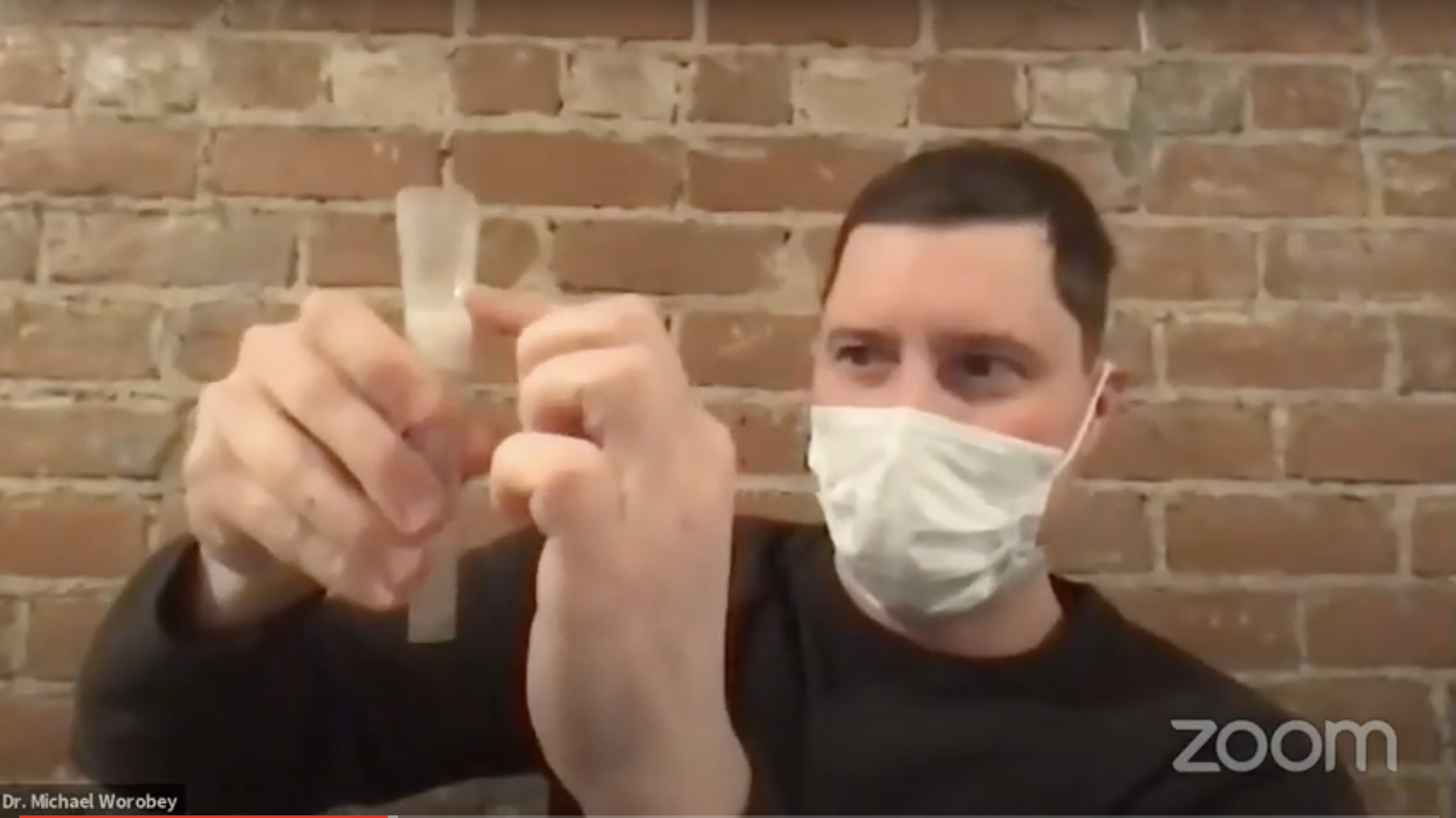
Worobey said he assessed the test's effectiveness by giving potentially infected persons both saline and nasal swab tests. He found the gargle swish test pulled coronavirus material out of about 30-35% more people than the nasal swab.
“I think this is going to become the new gold standard for how to test for this virus,” Worobey said.
Robbins said the swish gargle test will allow the university to conduct 3,000 COVID-19 tests a week. With the nasal swab, they could only conduct 1,000 tests a week.
COVID-19 on campus
From Jan. 9 through 18, UA administered 11,713 COVID-19 tests and found 194 positive cases for a positivity rating of 1.7%.
As of Jan. 15, 28 students were in isolation dorm beds with 568 beds still available, according to Robbins.
Although positive tests have dropped since last semester, Reentry Task Force Director Richard Carmona called the numbers “still unacceptably high.”
While some statewide COVID-19 statistics have appeared to improve recently, Carmona warned not to become complacent.
Carmona went over data showing the 14-day change of coronavirus cases, deaths and hospitalizations in Arizona. Cases declined 10%, deaths increased 119% and hospitalizations increased 8%.
“There’s a lot of data still coming in, and often, the data that we see on a daily basis isn’t reflective of what’s actually happening because it takes a while to get that data tabulated and put into the system,” Carmona said. “Although it looks like we’re doing a little bit better, we have more testing, we got some control, we’ve managed to get the university open relatively safely, our students are doing well—but we’re far from where we need to be. It’s still a long journey ahead of us.
With more than 6,400 new cases reported today, the number of Arizona’s confirmed novel coronavirus cases topped 685,000 of Tuesday, Jan 19, according to the Arizona Department of Health Services.

Pima County, which reported 975 new cases today, has seen 91,740 of the state’s 685,699 confirmed cases.
A total of 11,266 Arizonans have died after contracting COVID-19, including 1,422 deaths in Pima County, according to the Jan. 19 report.
The number of hospitalized COVID cases statewide has dropped slightly in recent days but still remains far above the peak levels of the summer’s first wave. ADHS reported that as of Jan. 18, 4,780 COVID patients were hospitalized in the state. The summer peak of 3,517 hospitalized COVID patients was set on July 13; that number hit a subsequent low of 468 on Sept. 27, or less than a tenth of the current count.
A total of 1,839 people visited emergency rooms on Jan. 18 with COVID symptoms, down from the record high of 2,341 set on Tuesday, Dec. 29, 2020. That number had previously peaked at 2,008 on July 7; it hit a subsequent low of 653 on Sept. 28.
A total of 1,105 COVID-19 patients were in intensive care unit beds on Jan. 18. The summer’s record number of patients in ICU beds was 970, set on July 13. The subsequent low was 114 on Sept. 22.
Pima County’s dire situation was laid out by Pima County Administrator Chuck Huckelberry on Friday, Jan. 15. As of the midpoint of the month, the county had seen nearly 18,000 positive cases, putting it on track to exceed December’s record-setting total number of 29,663.
With 329 deaths in the first 15 days of January, the county is also on pace to exceed the total number of deaths in December as well, Huckelberry told Pima County supervisors in a memo ahead of Tuesday’s board meeting, where the board will also discuss his future as county administrator.
“Clearly, there has been no substantial reduction in the COVID-19 infection rate,” Huckelberry wrote.
Huckelberry said last week saw some easing of pressure in county hospitals, with a 15 percent drop in COVID patients and a total of 633 COVID patients in local hospital beds.
While the number of Intensive Care Unit beds in use had dropped by 6 percent, only 20 ICU beds, or 5 percent of total capacity, remained available as of Friday. A total of 216 COVID patients were in ICU beds (accounting for 60 percent of ICU beds). Nearly two-thirds of ventilators in use—63 percent—were by COVID patients.
Arizona continues to have the highest coronavirus transmission rate in the nation with an average of 117 cases per 100,000 of the population, according to the CDC.
“Arizona’s outbreak remains appallingly bad. A bit of good fortune (or preferably policy action) is needed to gain additional time to vaccinate Arizona’s most vulnerable citizens,” according to the most recent report by Dr. Joe Gerald, a UA professor who creates weekly coronavirus epidemiology reports based on Arizona Department of Health Services data. “Daily cases and fatalities could double, or perhaps quadruple, before declining under the weight of natural and/or vaccine-induced immunity later this winter.”
During the week ending Jan. 10, 8,274 Pima County residents were diagnosed with COVID-19, creating a new record for weekly case counts in the county and representing an 11% increase from the week prior, according to Gerald's report.
According to Gerald, throughout Arizona, the week ending Jan. 10 saw 60,283 new COVID-19 cases, a 7% increase from the week prior.
While the week of Dec. 20 still remains the state’s deadliest with 759 COVID-19 deaths, Gerald estimates this record will be broken in coming weeks as coronavirus deaths are on pace to exceed 700 a week “for the foreseeable future.”
Gerald reported that coronavirus test positivity declined 2% the week ending Jan. 10 from the previous week throughout Arizona.
“This indicates that viral transmission is now growing slower than testing capacity is increasing. Nevertheless, testing capacity remains woefully inadequate to the scale of the problem,” he wrote.
Pima County rolling out vaccinations
Since Pima County’s COVID-19 vaccine registration site went live Thursday morning, nearly 80,000 qualifying residents have registered. However, Pima County doesn’t have enough vaccines to administer to all registrants, said Pima County Communications Director Mark Evans.
Although demand for vaccines is outstripping the supply, Evans said more appointments will be added as the county receives its weekly vaccine allotment from the state.
Those in the priority 1B group—which includes individuals over 75, educators and protective service workers—can register at any time, but receiving an appointment depends on vaccine ability.
“People are able to register every single day. But it’s important to note that everybody who has registered, it doesn't mean they’re going to get an appointment that day, it’s going to take some time,” Evans said. “It’s essentially creating a line to get in.”
Those who qualify in the priority 1B group can register for a vaccine at www.pima.gov/covid19vaccineregistration or by calling 520-222-0119.
The county sends prioritized batches of registrations to their relative vaccine sites, but TMC and Banner’s registration sites work differently. TMC uploads registrations to its MyChart system, which notifies the registrant when an appointment is available, Evans said.
Banner registrants will make an appointment directly on the website if one is available based on the registrant’s priority group.
“The only way with Banner is you just have to keep going back in and checking strategically to see if there are appointments,” Evans said. “We are making sure there are appointments available every day because the system’s modulated because it’s based on priority systems. So it’s not like it’s first come, first serve.”
The registrations are filtered through Pima County, which grants vaccine appointments based on priority. The Banner and Tucson Medical Center sites will prioritize those 85 and older first, according to Evans.
The county is allowing school districts to prioritize which staff members will receive the vaccine first, while law enforcement agencies and the courts also choose which workers among their agencies will be prioritized.
Get tested: Pima County has free COVID testing
Pima County offers a number of testing centers around town.
You’ll have a nasal swab test at the Kino Event Center (2805 E. Ajo Way) the Udall Center (7200 E. Tanque Verde Road) and downtown (88 E. Broadway).
The center at the northside Ellie Towne Flowing Wells Community Center, 1660 W. Ruthrauff Road, involves a saliva test designed by ASU.
In addition, the Pima County Health Department, Pima Community College and Arizona State University have partnered to create new drive-thru COVID-19 testing sites at three Pima Community College locations. At the drive-thru sites, COVID-19 testing will be offered through spit samples instead of nasal canal swabs. Each site will conduct testing from 9 a.m. to noon, and registration is required in advance. Only patients 5 years or older can be tested.
Schedule an appointment at these or other pop-up sites at pima.gov/covid19testing.
The University of Arizona’s antibody testing has been opened to all Arizonans as the state attempts to get a handle on how many people have been exposed to COVID-19 but were asymptomatic or otherwise did not get a test while they were ill. To sign up for testing, visit https://covid19antibodytesting.arizona.edu/home.
—with additional reporting from Austin Counts, Jeff Gardner, Nicole Ludden and Mike Truelsen
Monday, January 18, 2021
With 5,400 new cases reported today, the number of Arizona’s confirmed novel coronavirus cases topped 679,000 as of Monday, Jan 18, according to the Arizona Department of Health Services.

Pima County, which reported 681 new cases today, now has 90,765 of the state’s 679,282 confirmed cases.
A total of 11,265 Arizonans have died after contracting COVID-19, including 1,422 deaths in Pima County, according to the Jan. 18 report.
The number of hospitalized COVID cases statewide dropped slightly in recent days but still remains far above the peak levels of the summer’s first wave. ADHS reported that as of Jan. 17, 4,752 COVID patients were hospitalized in the state. The summer peak of 3,517 hospitalized COVID patients was set on July 13; that number hit a subsequent low of 468 on Sept. 27, or less than a tenth of the current count.
A total of 1,844 people visited emergency rooms on Jan. 17 with COVID symptoms, down from the record high of 2,341 set on Tuesday, Dec. 29. That number had previously peaked at 2,008 on July 7; it hit a subsequent low of 653 on Sept. 28.
A total of 1,097 COVID-19 patients were in intensive care unit beds on Jan. 17. The summer’s record number of patients in ICU beds was 970, set on July 13. The subsequent low was 114 on Sept. 22.

