

Monday, December 21, 2020
All signs are pointing to a dry start to 2021 across much of the Colorado River watershed, which provides water to about 40 million people in the Western U.S.
A lack of precipitation from April to October made this spring, summer and fall one of the region’s driest six-month periods on record. And with a dry start to winter, river forecasters feel more pessimistic about the chances for a drought recovery in the early part of 2021.
“We’re starting off water year 2021 with widespread much below-average soil moisture conditions and snow water equivalent conditions,” said Cody Moser, a hydrologist with the Utah-based Colorado Basin River Forecast Center.
Some weather stations in Colorado, Utah, Arizona and Nevada have recorded their driest years on record, Moser said. There doesn’t seem to be much relief in sight. Short-term and long-term weather forecasts all point to above-average temperatures and below-average precipitation for the foreseeable future.
Exceptional drought conditions have expanded across 65% of the Colorado River watershed. Low soil moisture heading into winter will also play a role in how snowpack accumulates this season, and how much water will flow into streams and reservoirs during spring runoff, adding pressure to large-scale water users like municipalities and farmers.
Most major rivers in the basin are projected to flow well below normal levels next year due to extremely low soil moisture conditions, though Moser said there’s significant uncertainty about water supply forecasts so early in the season.
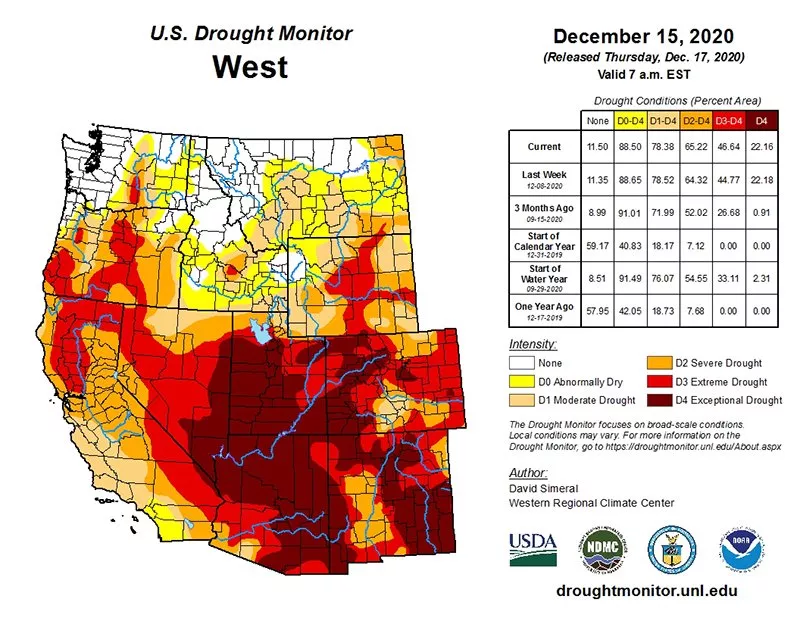
But given the dry conditions heading into winter, an average snowpack won’t be enough to provide significant relief, Moser said.
“It does seem like we’re going to need a really good snow year in order to make up some ground for the dry conditions entering the season,” Moser said.
Soil moisture is an important indicator because it can influence how much snow melts into streams, rivers and reservoirs.
A recent forecast from the Bureau of Reclamation, the federal agency that operates Western water infrastructure, showed the Colorado River’s largest reservoirs are likely to drop next year if demands stay the same.
Without a high snowpack this winter, the agency forecasts the Colorado River system’s biggest reservoirs will be reduced to a combined 44% of their total capacity by fall 2021.
This story is part of a project covering the Colorado River, produced by KUNC and supported through a Walton Family Foundation grant.

With more than 7,600 new cases reported today, the number of Arizona’s confirmed novel coronavirus cases jumped by nearly 19,000 over the weekend and now stands higher than 461,000 as of Monday, Dec. 21, according to the Arizona Department of Health Services.
Pima County, which reported 1,244 new cases today, has seen 60,360 of the state’s 461,345 confirmed cases.
A total of 7,972 Arizonans have died after contracting COVID-19, including 905 deaths in Pima County, according to the Dec. 21 report.
The number of hospitalized COVID cases statewide continues to soar as the virus has begun to spread more rapidly, putting stress on Arizona’s hospitals and surpassing July peaks. ADHS reported that as of Dec. 20, 3,925 COVID patients were hospitalized in the state, slightly lower than the new record of 4,014 set on Dec. 18. The previous peak of 3,517 hospitalized COVID patients was set on July 13; that number hit a subsequent low of 468 on Sept. 27.
A total of 1,795 people visited emergency rooms on Dec. 20 with COVID symptoms. That number, which hit a new record of 2,166 earlier this month, had previously peaked at 2,008 on July 7; it hit a subsequent low of 653 on Sept. 28.
A total of 904 COVID-19 patients were in intensive care unit beds on Dec. 20. The number of COVID patients in ICUs peaked at 970 on July 13 and hit a subsequent low of 114 on Sept. 22.
TMC cancels elective surgeries
Tucson Medical Center has canceled elective surgeries through Jan. 4.
A letter from TMC COO Mimi Coomler and CMO Dr. Amy Beiter states that TMC is too crowded with COVID patients to move forward with elective surgeries.
“We have reached the point in the pandemic where the number of COVID patients needing care is exceeding available resources on a daily basis,” they wrote.
Friday, December 18, 2020
WASHINGTON – A deadly epidemic has been on the rise this year in Arizona – but this one has drawn scant media attention.
With the world focused on COVID-19, local and national experts say a growing number of opioid overdoses and deaths is being overlooked.
“COVID-19 has taken up a lot of our space, but oftentimes it’s the way of the world,” said Maya Tatum, secretary of the Students for Sensible Drug Policy board of directors. “It takes over people’s minds and people forget.”
And, they fear, that increase may be driven in part by the upheaval the coronavirus has caused to lives and our livelihoods.
According to data collected by the Arizona Department of Health Services, verified opioid overdoses jumped from 375 in February to 479 in March, the height of pandemic-related restrictions on business and travel. At the time, it was the highest monthly number of confirmed overdoses since the state began monthly tracking in June 2017. Confirmed opioid overdoses have since risen to peak at 500 in August, before starting to move back down.
“When you restrict activities, when you isolate people, when people lose their employment, this has major effects on mental health,” said Dr. Elinore McCance-Katz, assistant secretary for mental health and substance use with the Substance Abuse and Mental Health Services Administration.
“For people who have substance problems, it can make them worse. For people who don’t have substance problems, it may initiate the use of substances,” she said.
It’s not just an Arizona problem: McCance-Katz and others said the same increase in overdoses has been seen nationally this year. And they may continue to increase as days go by, especially with some people being isolated in their homes, she said.

Thursday, December 17, 2020
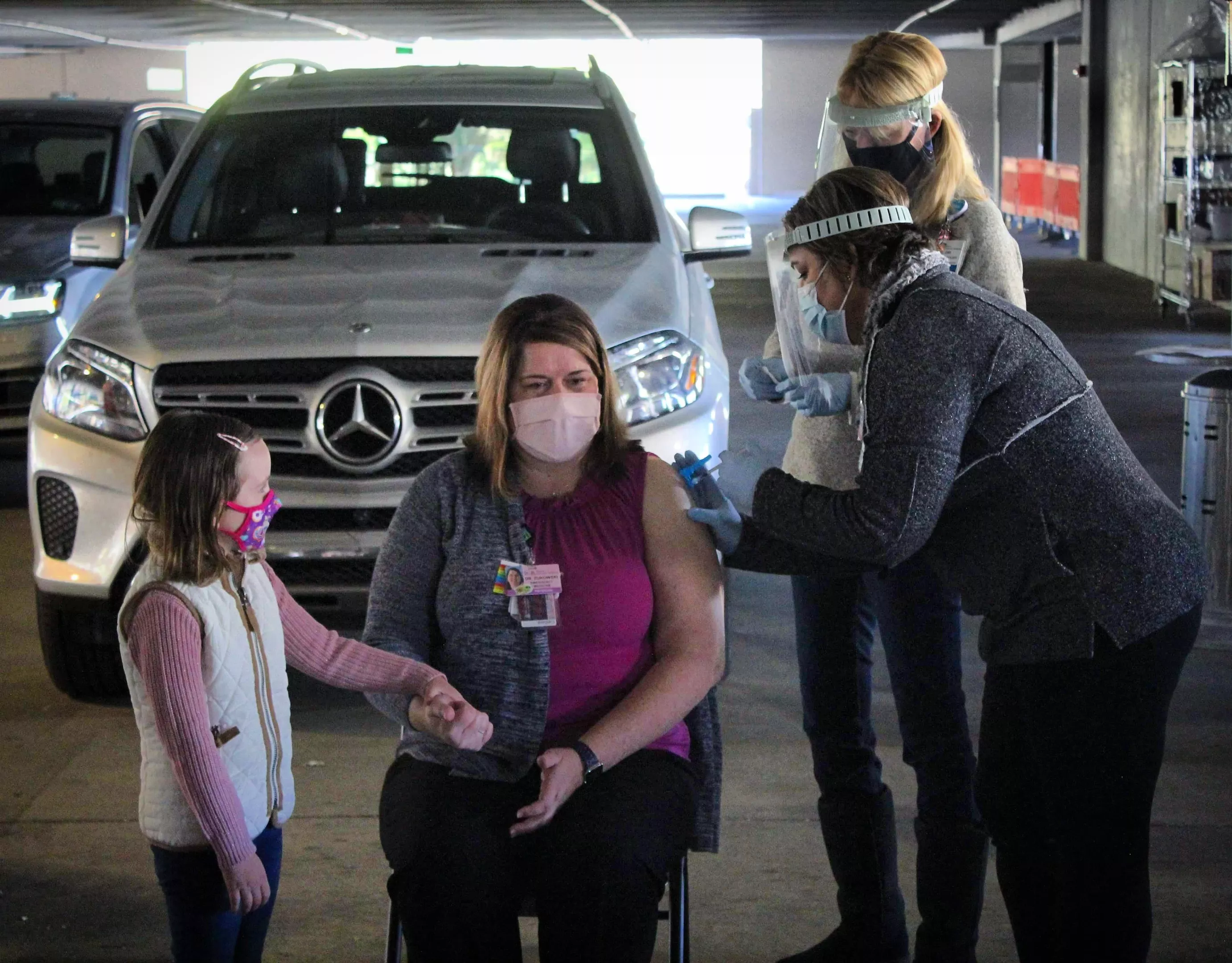
On Thursday, Dec. 17, Banner University Medical Center and Tucson Medical Center began the first round of COVID-19 vaccinations in Pima County. While a small number of test vaccinations were injected earlier this week, today marks the official beginning of the Pima County Health Department’s three-phase plan, beginning with frontline workers.
At Banner University’s northside campus, Iris Delfakis, a nurse at the University of Arizona’s Cancer Center, volunteered to receive the first injection.
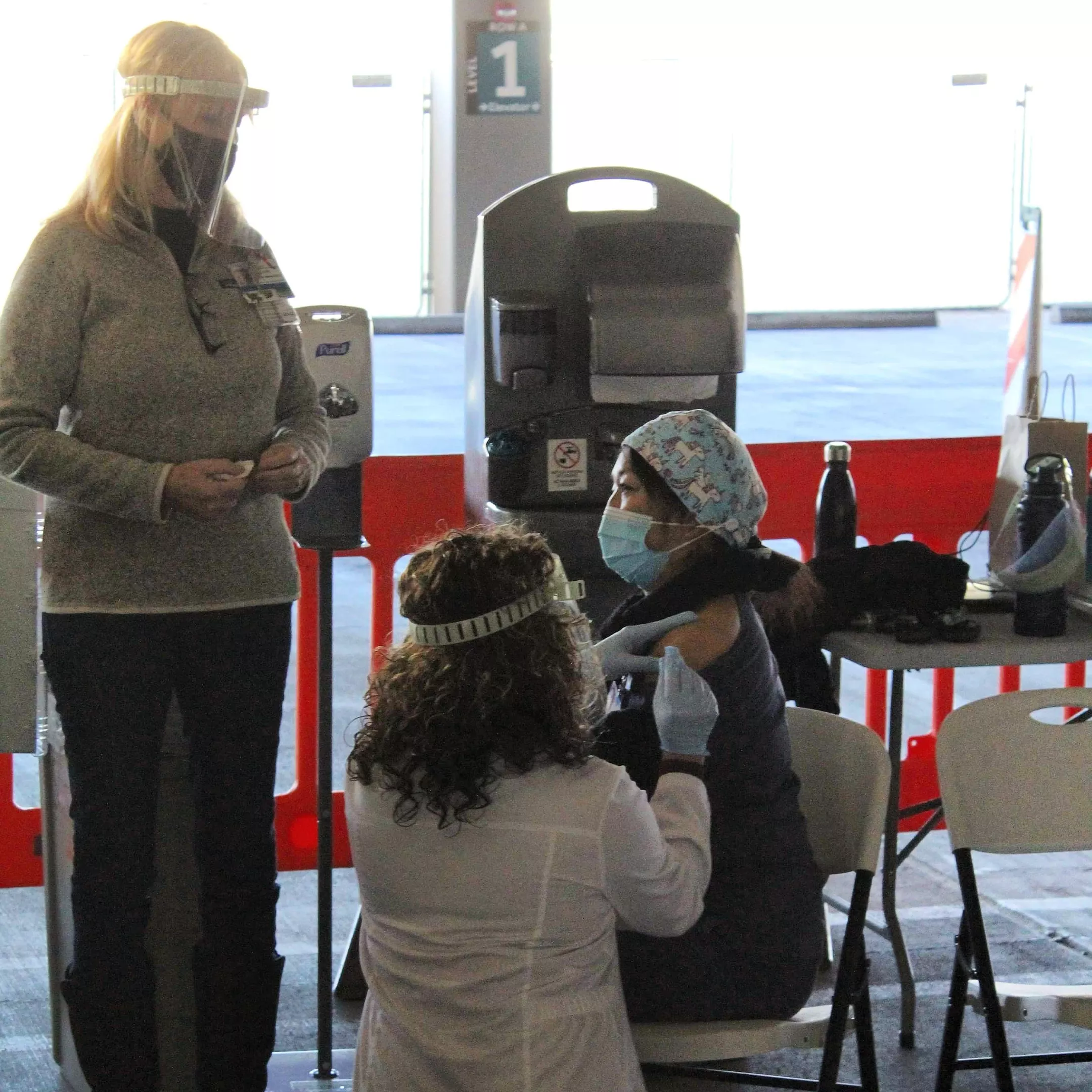
“I’m all for it,” Delfakis said. “I know there are some against the vaccine, but I think everyone should get it. We’ve never seen something like COVID in our lifetimes.”
According to Rebecca Ruiz-McGill, information specialist for Banner UMC, the medical center needs to “walk before we run,” with vaccine administrations. Because COVID-19 testing involves similar logistics, Banner expects its vaccine process to be in full order within a week or two. By the end of the month, they expect to be administering more than 100 vaccines per day.
Banner’s vaccine station was in its parking garage and saw several hospital staff in its first hour. Among the staff was Dr. Melissa Zukowski, who works in Banner's Department of Emergency Medicine and was prioritized for vaccination because she works in a COVID unit. Those who receive their vaccine will need to receive a second booster injection three weeks after their first.
MOAB, Utah – Climate change and increased demand for water across the Southwest are shrinking the Colorado River’s second-biggest reservoir, Lake Powell. Although water managers worry about scarcity issues, two local river guides are documenting the changes that come as the enormous reservoir hits historic lows.
For the past three years, Mike DeHoff and Pete Lefebvre have carefully photographed and mapped Cataract Canyon on their guided raft trips on the river. For more than four decades, the lower portion of the beloved canyon has been submerged, but now that the lake’s water levels are plummeting, things in Cataract are rapidly changing.
“There are rapids down there that are not on any published river map right now,” DeHoff said. “They’re coming back at a rate that publication can’t keep up with.”
The pair photographed these returning rapids year-to-year, illustrating in real-time what it looks like as Lake Powell’s water levels shift. Lefebvre said he was inspired by “Chasing Ice,” a 2012 film that documented shrinking glaciers from a sustained rise in global temperatures.
“I remember watching that movie and thinking, ‘I need to be doing this in Cataract,’” Lefebvre said. “If I have a picture of Dark Canyon and the mouth of Clearwater (Canyon) and these places where the rapids used to be, maybe I can start documenting that change.”
It wasn’t long before their hunt for new rapids sent them digging into the past. DeHoff has spent hours poring over old river maps, guidebooks, and historic photos in search of clues.
Friday, December 11, 2020
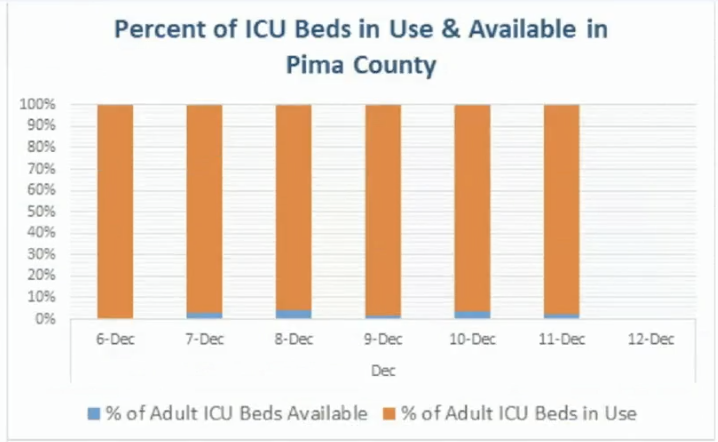
The Pima County Health Department discussed the critical nature of COVID-19 throughout the county at a press conference today after it issued a joint letter signed by 26 representatives from the health department, hospitals and fire districts warning residents of disastrous consequences if the spread of the virus continues at its current rate.
Hospitals across the county have less than 2% of their ICU beds available. Today, they had only seven open ICU beds, Pima County Health Director Dr. Theresa Cullen shared at the press conference.
Pima County Chief Medical Officer Dr. Francisco Garcia said the county’s experiencing “very significant” numbers of deaths similar to those seen in the July surge in cases. In terms of hospitalizations, numbers have far surpassed levels seen in the summer peak.
Judy Rich, the president and CEO of Tucson Medical Center, said on the outside, the hospital shows serene Christmas lights and often barren parking lots. The parked cars are diminishing as visitors aren’t allowed to visit their sick loved ones, and behind the glowing lights, the hospital’s staff is fighting an unprecedented number of cases while facing high levels of burnout.“The staff are tired, and they are giving everything that they have. It is imperative that we take this seriously. This is a serious disaster that is invisible to many,” Rich said. “But when it hits you, when it becomes personal, you'll understand it differently. I would just ask you to project to that and take the steps that you need to to stay safe and help our community get through this.”
Thursday, December 10, 2020
PHOENIX – Step inside Biosphere 2’s tropical rainforest, which thrives beneath an enormous glass dome, and visitors are met by a wall of warm humidity and lush greenery. The sprawling complex north of Tucson in Oracle provides climate-change researchers with unique opportunities to test theories in ways that would be impossible in the field.
This is where a team of ecologists recently found that tropical forests may be more resilient to rising temperatures than originally predicted. The key isn’t the heat but the humidity, according to the study, which was published in October in the journal Nature Plants.
Biosphere 2 – constructed by Space Biospheres Ventures in 1986 for Earth research and the development of “self-sustaining space-colonization technology” – now is a living, breathing laboratory for University of Arizona scientists.
Marielle Smith, a postdoctoral research associate at Michigan State University and the lead author of the study on tropical rainforest resilience, called the tropical rainforest biome a “bewildering wall of green.”
Smith, who has studied in natural rainforests as a tropical ecologist, said researching in the rainforest biome at the Biosphere 2 – so named because Earth is the original biosphere – facility feels comfortable.
“It’s humid, it’s hot, you’re taking measurements in there and you get a sweat up just like you would in a real tropical forest,” she said.
The enclosed biome in Biosphere 2 allows scientists to control the environment in ways not possible in natural rainforests. With the ability to change such factors as humidity and temperature, the researchers can better understand the impacts of climate change on tropical rainforests, which play a vital role in the planet’s health by absorbing carbon dioxide and releasing oxygen.
The Amazon rainforest plays a pivotal role in combating climate change by absorbing 2 billion tons of carbon dioxide each year, about 5% of annual emissions, according to climatologists. CO₂ is a main contributor to rising temperatures across the world.
Wednesday, December 9, 2020
Arizona is on track to receive 383,750 COVID-19 vaccines by the end of December, according to a news release from Gov. Doug Ducey’s office.
Over the weekend, the Arizona Department of Health Services ordered the first shipment, which is expected to arrive next week, according to the release.
The vaccines will go to Pima and Maricopa counties in the first week of distribution, with Pima receiving 11,000 doses and Maricopa receiving 47,000.
The state’s distribution plan for the vaccines prioritizes health care workers, residents of long-term care facilities, educators and vulnerable populations. The federal government ships COVID-19 vaccines based on states’ populations, and the release says “ADHS will promptly order vaccine doses” as they become available.
In the second week, vaccines will be distributed to all 15 counties and four tribes, according to the release.
The Centers for Disease Control and Prevention and the Pharmacy Partnership program will also receive doses the second week for vaccination at skilled nursing facilities. According to the release, all of Arizona’s skilled nursing facilities opted to participate in the CDC program that will vaccinate all residents and staff in the facilities.
“Throughout Arizona, health care professionals including doctors, nurses, emergency medical technicians, pharmacists and more are partnering to administer the vaccine.”

The Pima County Health Department distributed a mass alert Wednesday informing the public of its renewed public health advisory as COVID-19 cases reach alarming levels.
The message was sent to those who signed up for emergency alerts and revealed coronavirus transmission rates are “extremely high” and that local hospitals have reached or are nearing capacity, according to a news release from the health department.
In the message, the health department echoed the COVID-19 mitigation guidelines strengthened by the Board of Supervisors on Dec. 4. These include the continuation of the county’s mask mandate and tougher enforcement for those who don’t comply.
Other guidelines designed to slow the spread of the virus include:
Adhering to a curfew from 10 p.m. to 5 a.m. In Tucson, this curfew is mandatory.
Staying at home as much as possible.
Maintaining a 6-foot distance from those not in your immediate household.
Frequent hand washing and sanitization.
Limiting public and private gatherings of individuals from separate households.
The mass alert comes as Pima County reported 7,711 coronavirus cases in the first nine days of December. According to a news release from Rep. Ann Kirkpatrick, health experts predict at least 500 weekly COVID-19 deaths in the state by January.
“The news of rising cases and deaths is alarming,” Kirkpatrick said in the release. “We must continue to follow the guidance of health professionals in order to alleviate the stress on our hospitals, which are reaching capacity. Arizonans, please continue to socially distance, wear a mask around others, and wash your hands. We will only get through this if we commit to the cause, together.”

