

Friday, November 20, 2020
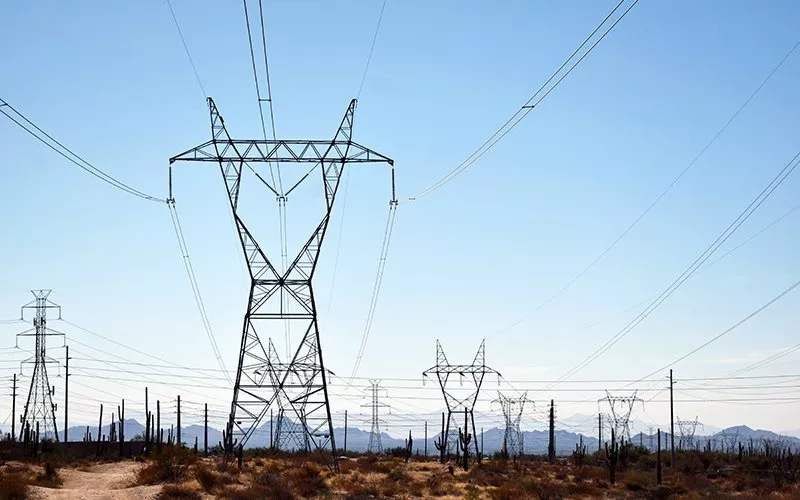
PHOENIX – States across the Southwest have adopted clean energy plans that regulate utility companies and work toward carbon-free goals. After lagging for several years, Arizona is starting to catch up.
The Arizona Corporation Commission passed a proposal requiring utilities to be 100% free of carbon emissions by 2050 and meet particular benchmarks along the way.
According to the commission, carbon-free requires the use of resources that do not generate carbon emissions “resulting from the combustion of fossil fuels, such as coal, petroleum, natural gas, oil, shale, and bitumen.” Nuclear and hydroelectric generators are considered carbon-free, as are wind and solar.
The 4-1 vote initiated the commission’s formal rulemaking process, which includes opportunities for customer comment and will provide the foundation for a final commission vote in 2021.
If approved, the proposal will update energy rules that have not been changed since 2006, according to Commissioner Lea Márquez Peterson, who said it was “vitally important” to update the rules.
“From an economic development perspective, Arizona didn’t look competitive,” Márquez Peterson said. “We really needed to, in my opinion, focus on clean energy and zero carbon emissions.”
Ellen Zuckerman, co-director of the Southwest Energy Efficiency Project’s utility program, said the decision is “consistent with the trend in the industry and the trend in the Southwest.”
Colorado plans to have 100% carbon-free electricity by 2050, New Mexico plans to be 100% zero-carbon energy by 2045 and Nevada plans to have 100% clean energy by 2050. Carbon-free means no carbon emissions, while clean energy encompasses all renewable energy, including fossil fuel with carbon-capture technology.
The proposed rules include several standards for public utilities across the state including requiring Arizona Public Service and Tucson Electric Power to be 100% carbon-free by 2050. They also would have to reach benchmarks, such as reducing carbon emissions by 50% by 2032 and 75% by 2040, along the way.
Utilities will also be required to meet an energy efficiency standard to cut energy waste, a distributed storage standard to deploy customer-owned or leased energy storage systems, and make improvements to integrated resource planning processes.
The policy would replace the 2006 Renewable Energy Standard and Tariff, which required regulated electric utilities to generate 15% of their energy from renewable resources by 2025. Currently, APS plans to generate 45% of its energy from renewable resources by 2030 and Tucson Electric is on track to generate 28% of its energy from renewable resources by next year.
Republicans Bob Burns, Boyd Dunn and Márquez Peterson, and Democrat Sandra Kennedy voted for the rules. Republican Justin Olson voted no.
Zuckerman – whose public-interest organization “promotes greater energy efficiency and clean transportation in Arizona, Colorado, Nevada, New Mexico, Utah and Wyoming” – said the bipartisanship of the Arizona vote is unique and important to the message it sends.
“It sends, I think, a very strong signal that these issues aren’t partisan,” Zuckerman said. “They really cross party lines, again, because it just makes economic sense.”
Márquez Peterson said giving utilities 30 years to hit these goals is important because it gives them sufficient time to work with developing technologies.
“We don’t know yet what new innovation or technology will be in the future, so we needed to allow them that flexibility to get there,” she said. “I think that’s more palatable or more affordable for our consumers across the state.”
Márquez Peterson said the 2020 election could potentially change the way the final vote goes in 2021.
“We have two new commissioners joining us, so that’ll change the dynamics of the commission,” she said. “Will they fully support the energy rules that we’ve negotiated thus far, or will we renegotiate certain pieces of it? That’s what we’re not sure yet.”
Three seats, held by Márquez Peterson, Burns and Dunn, were up for election in November. Márquez Peterson retained her position. Democrat Anna Tovar and Republican James “Jim” O’Connor were elected to fill the other two seats.
Diane Brown, executive director of the Arizona Public Interest Research Group, said Arizona utilities are making good progress.
“Arizona utilities have recently stepped up to the plate to establish their own commitments to a clean energy future,” Brown said. “The commission movement to adopt strong energy efficiency and clean energy standards will ensure they achieve and eventually surpass their commitments.”
The APS 2020 Integrated Resource Plan, which was filed with the commission in June, says the utility will provide 100% carbon-free energy by 2050, with 65% clean energy by 2030. APS also pledged to end its use of coal-fired generation by 2031.
Tucson Electric’s 2020 Integrated Resource Plan, which was filed in June, pledges to provide more than 70% of its power from renewable sources “with a portfolio that requires 70% less water and produces 80% less carbon dioxide” by 2035.
According to the Environmental Protection Agency, electricity generation, transmission and distribution make up 27% of greenhouse gas emissions, and transportation makes up 28%. In a November report, the nonpartisan National Conference of State Legislatures said many states consider clean energy generation to be the key to decarbonizing both the transportation and power sectors, which together produce 55% of total greenhouse gas emissions in the U.S.
Zuckerman said the switch to clean energy has economic benefits.
“Renewables are increasingly competitive and oftentimes outperforming on economic gas,” she said. “This is just what makes economic sense.”
The APS plan mentions that utilities need to focus on clean and renewable energy projects in impacted and disadvantaged communities. Impacted communities, Zuckerman said, are those that are “socially or economically impacted from the closure of traditional fossil resources.”
Zuckerman said the bipartisan-supported package “sends an incredibly strong signal that Arizona is committed to significant investment in clean energy resources moving forward.”
Thursday, November 19, 2020
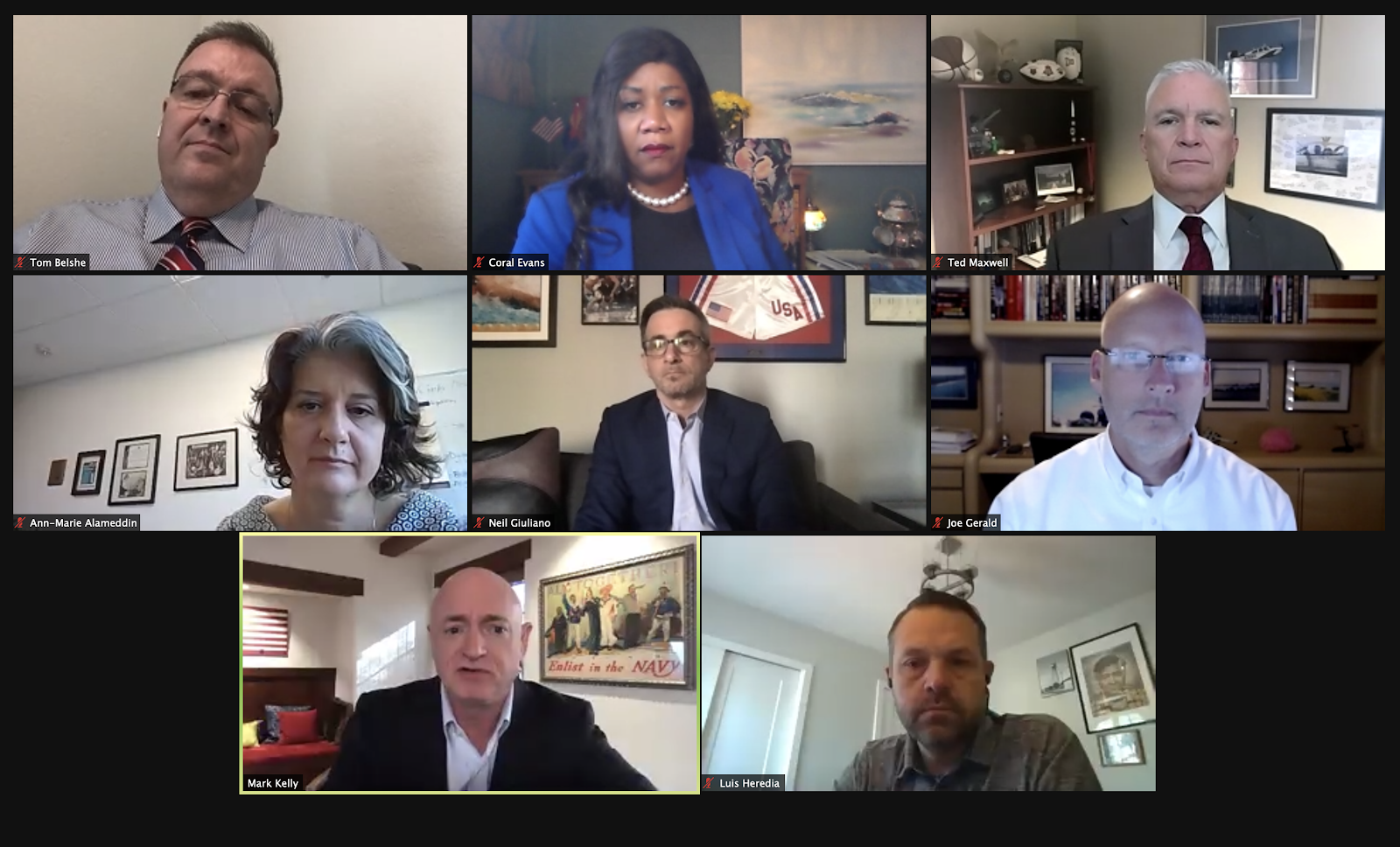
Arizona’s U.S. Senator-elect Mark Kelly held a COVID-19 briefing Thursday with public health officials to discuss the critical situation of the virus across the state.
Seven members of Kelly’s transition team joined the virtual briefing to share their specific expertise and experiences of the pandemic, covering topics such as public health, hospitals, local municipalities, the economy and schools as cases continue to surge throughout the state and nation.
Dr. Joe Gerald, an associate professor and program director for public health policy and management at the University of Arizona who has been creating weekly reports on the Arizona coronavirus metrics since March, said he had no good news to share.
“Conditions continue to deteriorate in Arizona and have been doing so for the past four to six weeks,” Gerald said. “As we look forward to our season between Thanksgiving and New Year's, it's going to be a very difficult time in Arizona because of the burden of coronavirus.”
He the state is exceeding 2,500 cases daily and COVID-19 test positivity is above 15%.
“We haven't seen numbers like these since the last outbreak in June, and that number is expected to rise over the coming weeks,” he said. “The deaths that occur between now and when a vaccine is available are potentially entirely avoidable. So I hope that we can double down on these efforts to gain control of this virus. Right now, though, it's not looking good.”
WASHINGTON – Arizona was in the bottom tier in three of six categories in a new American Lung Association report, which put the state dead-last for the number of patients who receive treatment after getting a diagnosis of lung cancer.
The 2020 “State of Lung Cancer” report released Tuesday also said Arizona ranked 46th among states for the number of patients who get surgery as a first course of treatment, and 44th for the number of people who get lung cancer screenings.
But the state was in the middle of the pack when it came to the early diagnosis of lung cancer and the five-year survival rate for people diagnosed with the disease.
And Arizona was among the best in the nation when it came to new lung cancer cases, with 47.1 new cases per 100,000 residents in the state compared to 57.8 per 100,000 nationally.
“The goal of the (report) is to empower the public to learn more about lung cancer in Arizona,” said JoAnna Strother, senior director of advocacy for the American Lung Association. “And to take action to improve lung cancer patient’s access to quality and affordable health care.”
One new aspect of the annual report is a breakdown of data by race and ethnicity. In almost every category, the report said minority groups were worse off than whites when it came to early diagnosis, treatment after diagnosis and surgical treatment. Asian Americans topped whites only in the area of surgical treatment, with the report saying they were 11% more likely to get surgical care.
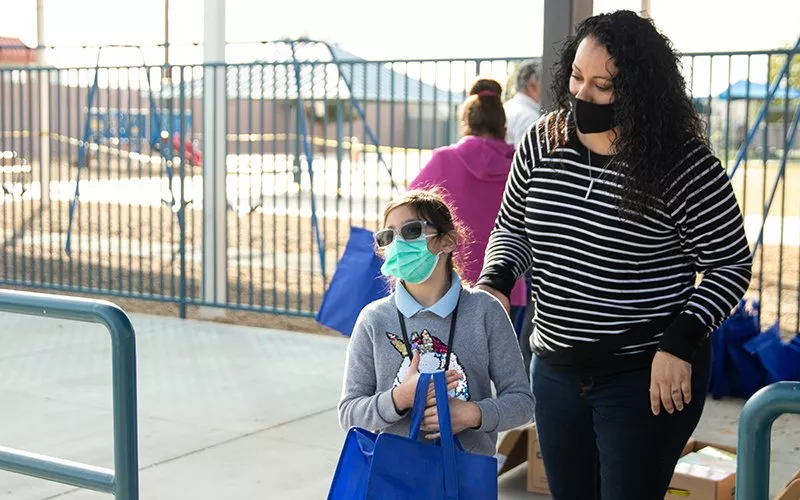
PHOENIX – The halls at Manzanita Elementary School are emptier than they were a year ago. But school social worker Anthony Guillen says he’s far busier, as students struggle to deal with the increased stress and psychological toll brought on by the COVID-19 pandemic.
In a typical year at the north-central Phoenix school, Guillen gets fewer than 100 referrals from teachers and parents concerned about their 600 children in grades K through 6. In just the first few months of this school year, he already has had 70.
“That’s a lot of referrals,” he said, “and a lot of them are for emotional needs.”
Many Manzanita students are Hispanic or Latino, and the school gets federal financial assistance as a Title 1 recipient, which means at least 40% of the students are from low-income families.
“They will be resilient,” Guillen said, “but right now it’s a hard time. … This is trauma.”
The pandemic has upended children’s lives and, for some, harmed their mental health. Researchers and social workers say Hispanic children may be especially vulnerable to emotional struggles, and the ramifications could be long-lasting.
The crisis has introduced a variety of stressors into the lives of children and teens: disrupted daily routines, food insecurity, isolation from peers because of school closures, increased responsibility to watch over siblings and fear of the virus itself, among other things.
Latino children may be at greater risk of psychological ramifications in large part because of what their parents are experiencing. A survey by the American Psychological Association found that people of color, particularly Hispanic adults, were more likely to report higher stress levels due to the pandemic. Nearly 2 in 5 Hispanic adults reported experiencing a great deal of stress.
Latino workers were also hit hard by the economic recession caused by the pandemic. The Pew Research Center found that job losses were most prevalent among Hispanic women, immigrants and young workers. At the same time, many Latinos are employed in jobs considered essential and have to go to work, often leaving children at home alone.
“Parents cry – they come to me and they just cry and cry – and I’m like, ‘I hear you. I’m sorry. I wish I could … make things better for you,’” Guillen said.
Even before the pandemic, Latino youth were more likely to suffer from mental health issues than other youth, including higher rates of depression and suicidal behavior, according to Salud America!, a health organization in San Antonio. These issues often are left unaddressed and untreated.
“Not only do we have a lot of kids facing adversity, families facing numerous issues, but COVID’s making that worse for everybody,” said Amanda Merck, a digital content curator at the organization.
About 56 million U.S. children are in kindergarten through 12th grade, and a recent Census Bureau report found that nearly 93% of households with school-age children reported the kids were engaged in some form of distance-learning.
For 1 in 6 children, mental health disorders begin in early childhood, making it essential that any such health needs are identified and treated early. More than 7% of kids age 3 to 17 are diagnosed with anxiety, and more than 3% are diagnosed with depression, according to data from the Centers for Disease Control and Prevention.
For kids experiencing mental health disorders, schools often are the first line of defense.
Most kids, but especially youth of color, get their mental health services from school, said Margarita Alegria, a health disparities researcher at Harvard University. With schools closed, she said, “access to a counselor or to someone that they could talk to” is harder to come by.
Alegria said research on children’s mental health following the 2008 financial crisis found that youth were very aware of their family’s economic vulnerabilities, such as a parent’s recent job loss. She said the same phenomenon is likely happening again during COVID-19.
“To assume that they’re not aware of this, under the conditions of the pandemic, would be naive,” she said.
Manzanita Elementary started the year fully virtual but moved to a hybrid model late last month. Guillen, who has been working on campus, said employees have done what they can to ensure students have access to the resources they need, whether that means food, laptops, Wi-Fi hotspots, technology support – or someone to talk to.
He and other school social workers have been teaching kids social-emotional learning online, helping them better understand their thoughts and feelings and how to get along with others.
But with staff in one place and most students in another, Guillen and other social workers said it can be challenging to provide kids the support they need.
“When I’m on campus, I’m definitely more mobile, all over the place, so I have access to a lot of students and students have access to me,” said Emma Sanchez, a social worker at Washington Elementary School in north-central Phoenix. When students were entirely online, she said that access decreased substantially. Since late October, Sanchez’s school has also adopted a hybrid model.
“A kid can be at home and be feeling sad, but unfortunately there’s no one around to say, ‘Oh sweetie, why are you sad?’ or ‘Why are you crying?’” she said.
Instead, Sanchez and Guillen said they try to prioritize children with the highest needs, including those referred to them by parents and teachers. They offer individual and group therapy. With younger kids, Guillen sometimes reads to them from books like “The Feelings Book,” a children’s book designed to help kids understand their emotions.
When schools went to online learning, some kids dropped off the radar entirely, Guillen and Sanchez said, because some families couldn’t adjust to the technology.
“I would say about 50% of students have logged on, 50% haven’t. So it’s been really hard,” Guillen said. “Online learning is not equitable.”
In south Phoenix’s Roosevelt School District, social workers who couldn’t contact families donned personal protective equipment to conduct home visits. Many of the phone numbers on file for families were incorrect or no longer worked, and emails often went unanswered, said Michelle Cabanillas, a social worker who recently left the district for the Arizona Department of Education.
“This pandemic starts to hit in different layers,” Cabanillas said. Lost jobs mean lost income, and some families weren’t able to pay for high-speed internet connections.
Social workers also rely on creating a safe and private environment when talking with children. But because kids may not have access to a quiet spot at home, Cabanillas said, “It is a struggle to be able to recreate that in a virtual environment.”
Officials with Arizona State University’s School of Social Work and the Latinx Therapists Action Network created a survey to gauge the mental health of Latinos 18 and older during the pandemic. They hope to learn more about how the pandemic is affecting all family members, said Imelda Ojeda, a social worker and academic associate at ASU.
So far, respondents have said that challenges are coming from all directions. Families are facing financial strain and stress about catching the coronavirus that causes COVID-19. Immigrants living in the U.S. without legal permission face the added fear of deportation and family separation.
“We are seeing the immediate effects of the pandemic and this crisis in our families,” Ojeda said. “But we feel that from the social services and mental health and child development side, this is going to have ripple effects for many years.”
Salud America!, in partnership with researchers at the West Virginia Center for Children’s Justice, oversees a program called Handle With Care, which before the pandemic connected police officers and teachers so they could better care for kids exposed to traumatic events.
During COVID-19, participating schools have had to adapt. Some created apps to track which kids have been contacted by teachers and counselors. Others make sure students get daily calls from a teacher or counselor.
Sanchez, at Washington Elementary School, said stress is so normal among students and families these days that even if a child isn’t doing well, he or she may not talk about it.
“Sometimes, kids, they don’t want to bother their teachers or they don’t want to bother their parents,” she said.
Sanchez recommends that parents take time to talk with their children about how they’re feeling, because teachers and school social workers only see the “tip of the iceberg” of what’s happening with families.
“That parent is the expert and they know their kids best,” she said. “So talk to them. Don’t be afraid to talk. Have that conversation.”
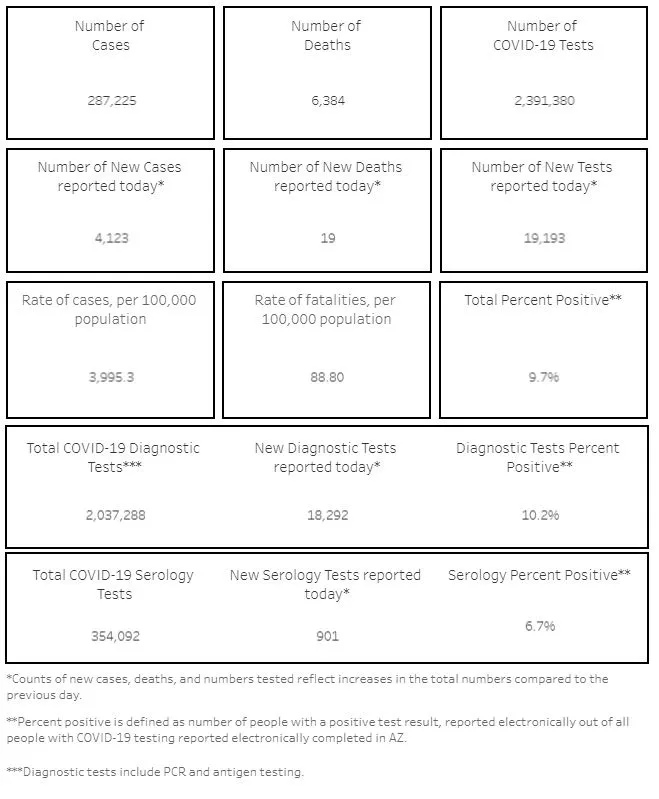
New cases jumped to 4,123, which brought the number of Arizona’s confirmed novel coronavirus cases to more than 287,000 as of Thursday, Nov. 19, according to the Arizona Department of Health Services.
Pima County, which reported 601 new cases today, has seen 34,423 of the state’s 287,225 confirmed cases.

With 19 new deaths reported today, a total of 6,384 Arizonans have died after contracting COVID-19, including 674 deaths in Pima County, according to the Nov. 19 report.
The number of hospitalized COVID cases statewide continues to climb as the virus has begun to spread more rapidly. ADHS reported that as of Nov. 18, 1,796 COVID patients were hospitalized in the state, the highest that number has been since Aug. 8. That number peaked with 3,517 hospitalized COVID patients on July 13; it hit a subsequent low of 468 on Sept. 27.
A total of 1,414 people visited emergency rooms on Nov. 18 with COVID symptoms, the highest that number has been since July 18. That number peaked at 2,008 on July 7; it hit a subsequent low of 653 on Sept. 28.
A total of 433 COVID-19 patients were in intensive care unit beds on Nov. 18, the highest that number has been since Aug. 14. The number of COVID patients in ICUs peaked at 970 on July 13 and hit a subsequent low of 114 on Sept. 22.
On a week-by-week basis in Pima County, the number of positive COVID tests peaked the week ending July 4 with 2,452 cases, according to an Nov. 12 report from the Pima County Health Department. (Numbers in this report are subject to revision.)
Pima County is seeing a steady rise in cases in recent weeks. For the week ending Oct. 17, 547 cases were reported; for the week ending Oct. 24, 914 cases were reported; for the week ending Oct. 31, 1,304 cases were reported; and for the week ending Nov. 7, 1,948 cases were reported.
Pima County Administrator Chuck Huckelberry noted that the county had seen 4,620 cases in the first 17 days in November.
“For the first 17 days in July, the worst month of COVID-19 case increases to date, there were 5,057 cases,” Huckleberry said in a Nov. 17 memo. “Therefore, we are on pace to exceed the total number of monthly COVID-19 infections in our previous worst month, July.”
COVID-related deaths in Pima County are down from a peak of 54 in the week ending July 4 but are on the rise. There were three deaths in the week ending Oct 10, one in week ending Oct. 17, five in the week ending Oct. 24 and nine in the week ending Oct. 31.
Hospitalization admission peaked the week ending July 18 with 221 COVID patients admitted to Pima County hospitals, but those numbers have been on the rise in recent weeks. In the week ending Oct. 17, 35 people were admitted; in the week ending Oct. 24, 41 people were admitted; in the week ending Oct. 31, 53 people were admitted; and in the week ending Nov. 7, 61 people were admitted.
Ducey, Christ: State coronavirus cases showing 'concerning increase'
In the first media conference from the governor’s office in two weeks, Gov. Doug Ducey and Arizona Department of Health Services Director Dr. Cara Christ provided a COVID-19 update today as the pervasiveness of the virus grows daily.
Christ said throughout the state there’s been a “concerning increase” in coronavirus cases, percent positivity and COVID-19 patients in ICU and inpatient hospital beds.
According to Christ, each of Arizona’s 15 counties has a COVID-19 case rate above 100 per 100,000 people, which also indicates substantial spread of the virus.
COVID-19-like illnesses are also increasing visits to emergency rooms and hospitals, Christ said.
The public health director implored mask wearing for all Arizonans “in every setting.”
Banner Health reinstates no visitor policy as COVID surges
As Arizona continues on track for its worst month of COVID spread, Banner Health reinstated its no-visitor policy at all Banner – University Medicine locations in Tucson, effective 6 p.m. today. According to Banner, this visitor ban to reduce COVID spread includes outpatient and ambulatory locations, such as clinics, urgent care locations, imaging centers, surgery centers and occupational health services locations.
There are four exceptions to the visitor restrictions:
- Pediatric patients (under the age of 18) may have one guardian or support individual with them.
- Laboring mothers may have one support person with them.
- Persons with disabilities who, due to the specifics of the disability, require assistance from someone in order to effectively participate in the healthcare process will be allowed to designate a support person to accompany them while in any Banner facility.
- End of life visitations will be accommodated.
Federal prison is a “hot spot” for COVID cases
However, the memo says there are specific "hot spots" contributing to the surge in cases, including a case outbreak at the federal prison at 8901 S. Wilmot Road. Nearly 500 infections were found in a facility with 1,600 detainees and 600 employees.
“The initial cases were identified quickly, and the institution implemented an aggressive program of inmate testing, case identification, and isolation and quarantine to mitigate the risk of spread,” Huckelberry said in the memo.
On-site medical services for inmates are “limited to outpatient acute care” from a team of four nurse practitioners or mid-level providers, 12 supporting nursing and paramedics and a medical director from inside the facility, according to the memo.
About 24 detainees had to leave the prison facility for hospital care, and the memo says “even fewer required inpatient care at local hospitals, principally TMC.”
Get tested: Pima County opening new sites alongside existing spots for free COVID testing
New drive-thru COVID-19 testing sites are opening at three Pima Community College locations, the county health department announced in a press release Friday.
The Pima County Health Department, Pima Community College and Arizona State University have partnered to create three new testing sites in an extension of the current ASU testing site at the Ellie Towne Flowing Wells Community Center.
At the drive-thru sites, COVID-19 testing will be offered through spit samples instead of nasal canal swabs.
Each site will conduct testing from 9 a.m. to noon, and registration is required in advance. Only patients 5 years or older can be tested.
“As cases rise, we are eager to increase available testing for the people of Pima County,” Pima County Public Health Director Theresa Cullen said in the press release. “If you know or suspect you have been exposed to COVID-19, we encourage you to get tested.”
Here are the three drive-thru locations that will be offering COVID-19 testing:
Pima Community College West Campus
- 2202 W. Anklam Road
- Mondays, except national holidays and Dec. 28
- Testing started: Monday, Nov. 16, 2020
Pima Community College Desert Vista Campus
- 5901 S. Calle Santa Cruz
- Wednesdays, except national holidays and Dec. 30
- Testing starts: Wednesday, Dec. 2, 2020
Pima Community College East Campus
- 8181 E. Irvington Road
- Fridays, except national holidays.
- Testing starts: Friday, Dec. 4, 2020
The new sites will join the county’s other four free testing centers around town.
You’ll have a nasal swab test at the Kino Event Center (2805 E. Ajo Way) the Udall Center (7200 E. Tanque Verde Road) and downtown (88 E. Broadway). The center at the northside Ellie Towne Flowing Wells Community Center, 1660 W. Ruthrauff Road, involves a saliva test designed by ASU.
Schedule an appointment at pima.gov/covid19testing.
The University of Arizona’s antibody testing has been opened to all Arizonans as the state attempts to get a handle on how many people have been exposed to COVID-19 but were asymptomatic or otherwise did not get a test while they were ill.
To sign up for testing, visit https://covid19antibodytesting.arizona.edu/home.
Wednesday, November 18, 2020

In the first media conference from the governor’s office in two weeks, Gov. Doug Ducey and Arizona Department of Health Services Director Dr. Cara Christ provided a COVID-19 update today as the pervasiveness of the virus grows daily.
Christ said throughout the state there’s been a “concerning increase” in coronavirus cases, percent positivity and COVID-19 patients in ICU and inpatient hospital beds.
To date, ADHS has reported 283,102 coronavirus cases. 6,365 Arizonans have died from the virus. Christ said during the week of Nov. 8, all but two counties had a coronavirus percent positivity above 10%, which indicates substantial spread of the virus.
This week, those numbers are expected to trend even higher.
According to Christ, each of Arizona’s 15 counties has a COVID-19 case rate above 100 per 100,000 people, which also indicates substantial spread of the virus.
COVID-19-like illnesses are also increasing visits to emergency rooms and hospitals, Christ said.
The public health director emplored mask wearing for all Arizonans “in every setting.”
Although he was not wearing a mask at the press conference today, Ducey reiterated the importance of mask-wearing, saying “Masks work, please wear them.”
However, he did not go as far as issuing a statewide mask mandate, reasoning “what I want to avoid is some of the division and politics that have happened around this issue.”
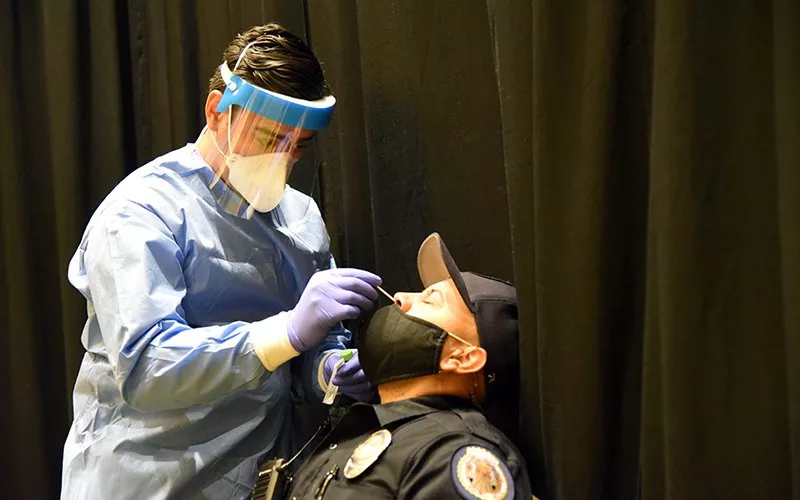
As coronavirus cases continue to rise county and statewide, experts are raising alarms about a COVID-19 surge worse than Arizona experienced this summer.
Pima County is on track to exceed the number of COVID-19 cases it had in July, according to a Nov. 17 memorandum from County Administrator Chuck Huckelberry.
The first 17 days of November saw 4,620 coronavirus cases, whereas the first 17 days of July, “the worst month of COVID-19 case increases to date,” had 5,057 cases, according to the memo.
The week of Nov. 8-14, 1,165 more coronavirus cases were reported than the week prior.
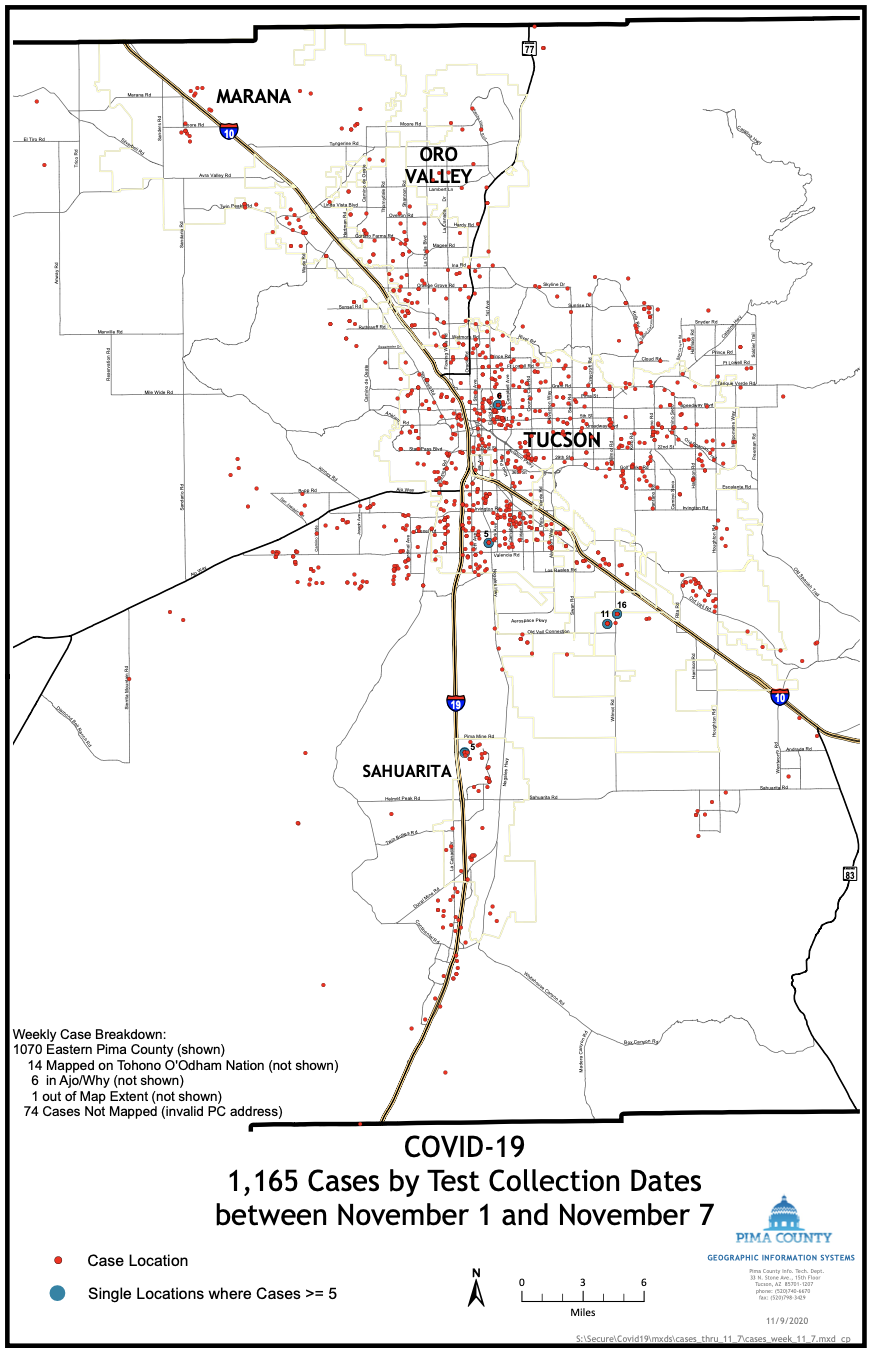
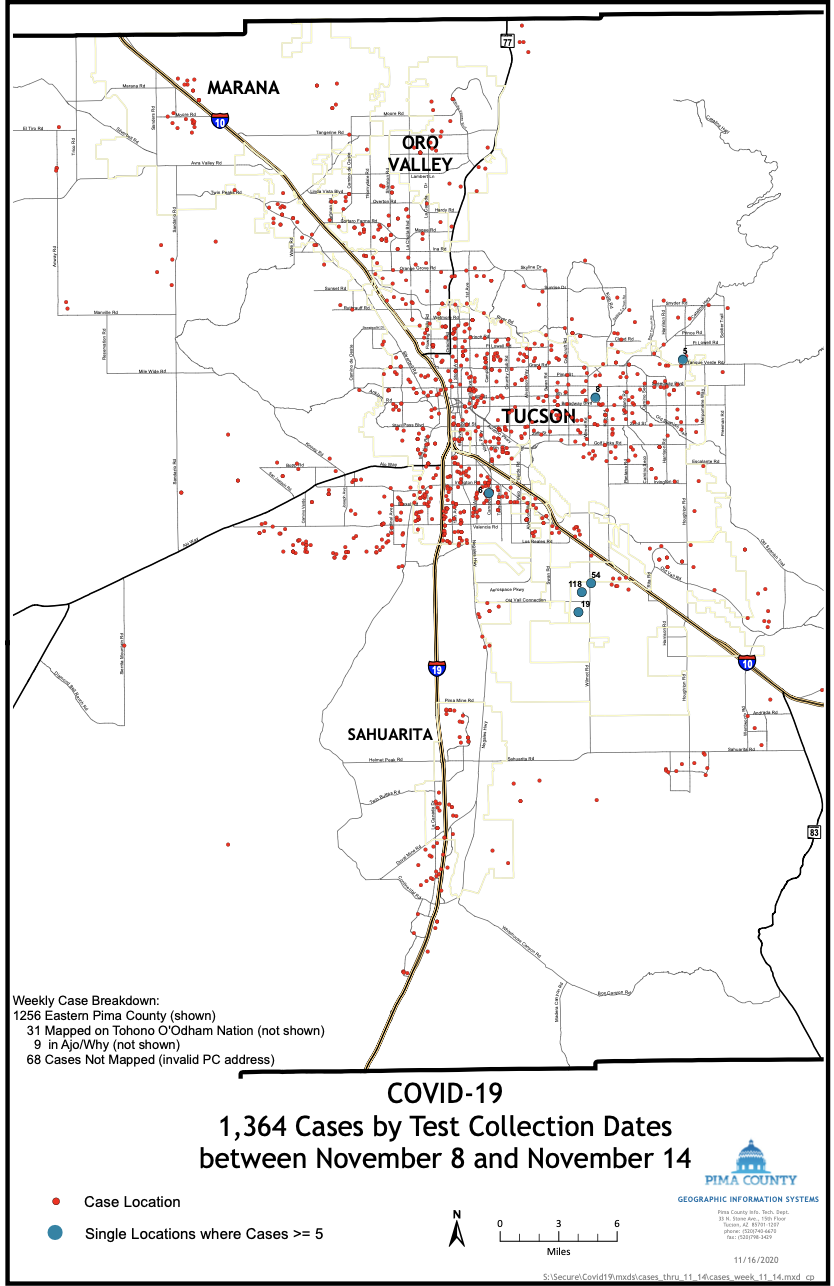
“The continued growth of COVID-19 cases in Pima County during the last 4 weeks has been geographically diffused reflecting a substantial degree of community spread in Pima County,” Huckelberry said in the memorandum.
Federal prison is a “hot spot” for COVID cases
However, the memo says there are specific "hot spots" contributing to the surge in cases, including a case outbreak at the federal prison at 8901 S. Wilmot Road. Nearly 500 infections were found in a facility with 1,600 detainees and 600 employees.
“The initial cases were identified quickly, and the institution implemented an aggressive program of inmate testing, case identification, and isolation and quarantine to mitigate the risk of spread,” Huckelberry said in the memo.
On-site medical services for inmates are “limited to outpatient acute care” from a team of four nurse practitioners or mid-level providers, 12 supporting nursing and paramedics and a medical director from inside the facility, according to the memo.
About 24 detainees had to leave the prison facility for hospital care, and the memo says “even fewer required inpatient care at local hospitals, principally TMC.”
“These numbers are modest however given the current staffing issues that are being experienced throughout Pima County and the state, we remain very concerned about the additional strain this may place on local hospital resources,” Huckelberry said in the memo. “TMC is working with the federal facility to improve the process by facilitating direct admission of patients where appropriate.”
According to the memo, 160 staff members have been tested for COVID-19, but it did not reveal how many tested positive. However, Huckelberry says in the memo, “there appears to be a large amount of unmet testing need in this population of essential workers.”
The county administrator said plans are in place to create an employee roster to keep track of COVID-19 infections for contact-tracing efforts and that all staff should be tested.
The memo says although comprehensive mitigation tactics are in place at the prison, “significant lapses in basic mask and PPE use have been noted among correctional staff participating in transport and hospital settings.”
“These anecdotal observations...lead us to believe that there is still significant staff education and reinforcement must continue at the facility for the protection of the workforce and the detainees,” Huckleberry said in the memo. “In general, our interactions with the leadership at the federal prison have been collaborative and productive.”
As coronavirus cases and hospitalizations continue to rise across Pima County, the county administrator emphasized the importance of social distancing, wearing masks and frequent sanitization as the holiday season approaches.
Huckleberry writes in the memo, “While there may be prevention fatigue from these practices, they are essential to minimize the spread of COVID-19 and need to be practiced for at least another 6 months while the public health agency is able to obtain and vaccinate a significant portion of the regional population. “
Tags: COVID-19 , coronavirus , Pima County , County Administrator , Chuck Huckelberry , County Administrator Chuck Huckelberry , federal prison , prison COVID-19 cases , Image
Tuesday, November 17, 2020
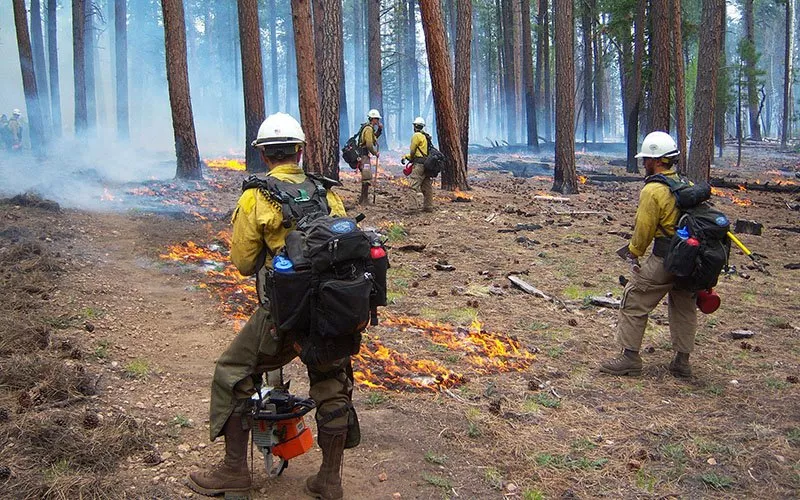
WASHINGTON – The acreage torched by wildfires in Arizona was up sharply this year, but fire officials said it was still not a particularly bad season in terms of lives lost and structures burned in the blazes.
The 2020 wildfire season had burned just under 955,000 acres as of Wednesday, according to the Arizona Department of Forestry and Fire Management, That’s almost double the 520,000 acres that burned in 3,627 fires over the previous two years combined.
The state recorded 2,357 fires statewide this year, of which 1,919 were caused by human activity.
“We don’t say there’s a fire season in Arizona anymore, because we are seeing fire activity in January, February, April and November,” said Tiffany Davila, public affairs officer for the Arizona Department of Forestry and Fire Management. “We are seeing fires year-round now.”
But unlike other Western states, Davila said Arizona has had only one confirmed fire-related death this year – when the pilot of a helicopter bringing supplies to the Polles fire was killed in the crash of his aircraft – and “multiple” structures burned. California, by comparison, recorded 31 deaths and 10,488 structures damaged or destroyed by wildfires that have burned almost 4.2 million acres so far this year.
“We’ve had examples this year in Arizona, large fires that were quite destructive, and also large fires that are burning entirely within the range of variation that you would expect prior to white settlement of the West,” said Joe Trudeau, a Southwest conservation advocate at the Center for Biological Diversity.
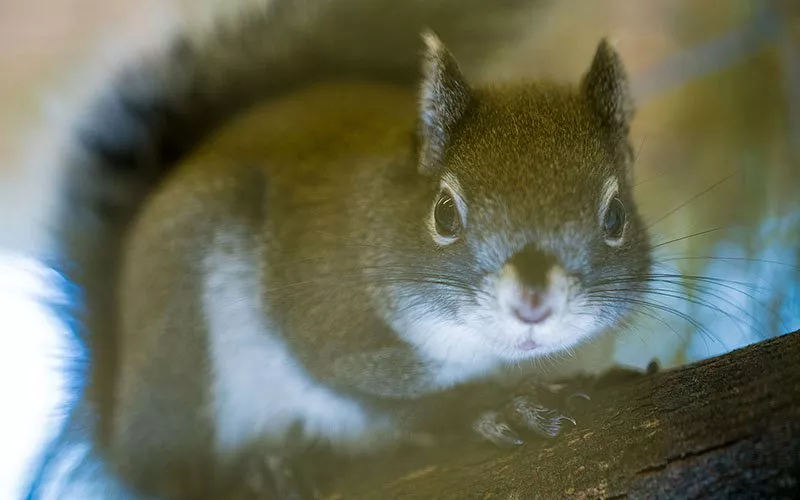
WASHINGTON – An endangered squirrel that was driven to the brink of extinction by wildfire just three years ago in southern Arizona has seen its numbers more than triple following federal, state and local preservation efforts.
The Mount Graham red squirrel population was cut from 252 to just 33 squirrels in the wild after the Frye fire destroyed much of their habitat in 2017. But a survey released last month by state and federal agencies estimated there are now at least 109 squirrels on the mountain.
Advocates welcomed the improvement, but said the squirrel, which was put on the endangered species list in 1987, is not out of the woods yet.
“It’s a good sign that it’s heading in an upwards direction rather than stagnating or … heaven forbid, going down,” said Marit Alanen, a biologist with the U.S. Fish and Wildlife Service.
Alanen points to a long list of factors threatening the squirrel’s mountain forest habitat, including fires, both natural and man-made, insect infestations and competition from the Abert squirrel, which was introduced in the 1940s. But wildfires have been the biggest threat, reducing the number of trees available to the squirrels and leaving them exposed to predators.
“We’ve been seeing these fires that have just gotten bigger and bigger over the years and have been of higher severity,” said Alanen. She said the Peak fire in 1996, the Nuttall Gibson fire in 2004 and the Frye fire “have impacted at least 95% of the squirrel’s habitat to some degree.”
That reduction in the forest has led to a “habitat bottleneck,” with squirrels competing for fewer suitable trees, said Robin Silver, cofounder of the Center for Biological Diversity. It’s one reason the center filed suit against the Fish and Wildlife Service in September, in an effort to force an expansion of the squirrels’ critical habitat.
Monday, November 16, 2020
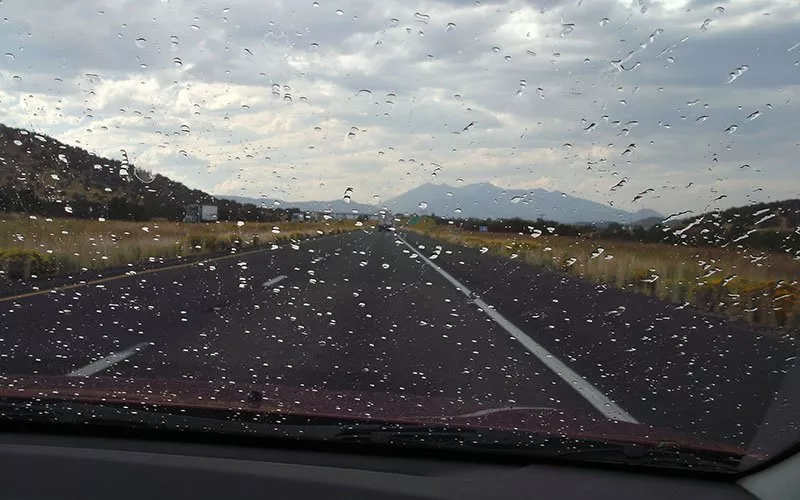
WASHINGTON – State and federal weather officials are predicting a warmer and drier than normal winter for Arizona, which would come on the heels of the driest monsoon ever recorded in the state.
The “nonsoon” summer followed by a La Niña winter could spell trouble for water resources and wildfire conditions in a state already gripped by drought, the officials said.
“Going into a dry winter after this dry summer is going to be making the drought worse, for sure,” said Nancy Selover, a state climatologist at Arizona State University.
Usually occurring once every two to seven years during the winter, the La Niña weather pattern stems from a cold phase of the Pacific Ocean that shifts the jet stream, leading to colder weather in the north and warm and dry weather in the Southwest.
David Miskus, a meteorologist at the Climate Prediction Center at the National Weather Service, said that if the La Niña weather system “does what it normally does – sub-normal precipitation and above-normal temperatures in the wintertime – that’s exactly what Arizona and the Southwest does not need this winter.” The long-term outlook is calling for just that.

