
Friday, November 13, 2020
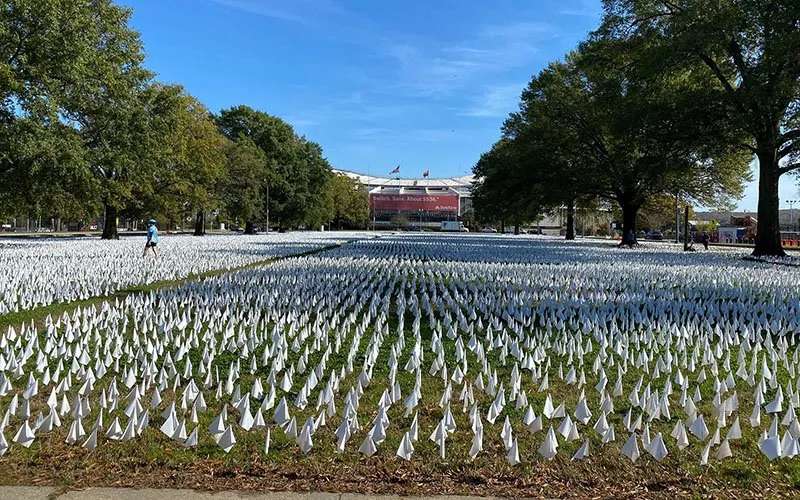
WASHINGTON – The hardest part of Suzanne Firstenberg’s day is when she changes the numbers on the board – each number representing an American who has died as a result of COVID-19.
She climbs on a concrete ledge, pulls off a large poster with one number on it and replaces it with a higher number – 241,949 as of Thursday – on a billboard in front of a field of nearly as many little, white flags, each representing a victim of the pandemic.
It’s all part of Firstenberg’s exhibit, “In America: How could this happen…”, an installation that sprawls over the parade grounds at the D.C. Armory. Firstenberg said she was inspired to create the exhibit “to help people understand the number, to make sense of it.”
“So that we would not just release it (the death toll) and say, it is what it is, but rather, we would be inspired to take care of each other,” she said recently.
It comes as the number of new cases is spiking across the country, with more than 100,000 new cases every day for the past nine days, according to Johns Hopkins University’s Coronavirus Resource Center.
The trend is reflected in Arizona, where cases have started to surge again after falling sharply from this summer, when the state was a national hotspot for the spread of the disease.
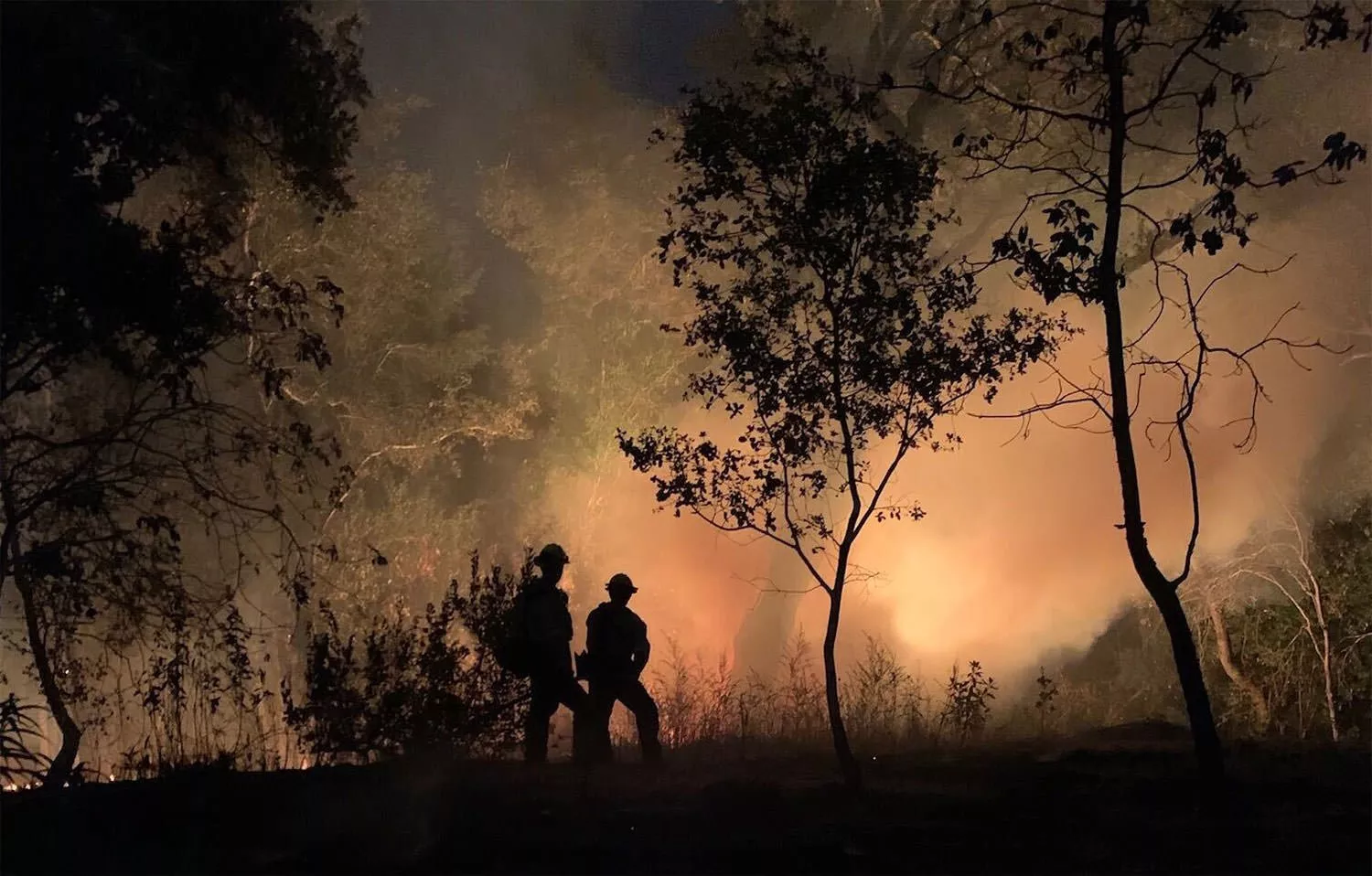
LOS ANGELES – California’s record wildfire season has left many cannabis growers concerned about Croptober – the primary harvest season for marijuana sold in California, where it’s legally consumed.
As fires continue burning into the record book, California growers – whose operations are federally illegal and therefore difficult to insure – are demanding protections for their billion-dollar industry.
Cannabis farms, as well as wineries, agricultural farms, have been hard hit by the wide range of California fires, and the toll faced by cannabis farms is among the worst.
Since January, California has had more than 9,177 wildfires burning more than 4.1 million acres, which is more than double the old record in 2018, according to Cal Fire.
High in the hills overlooking the Russian River Valley in Sonoma County, Kila Peterson and her daughter, Keala Peterson, are partners on Sweet Creek Farm, a small family-owned and licensed cannabis farm that also grows avocados and sweet bananas.
The cannabis venture started more than 10 years ago when Kila began growing it to produce CBD for her father, who had cancer. The mother-daughter approach is rooted in sustainability; their techniques include a solar-powered irrigation system fed by rainwater catchment and pollinator-friendly companion flowers, according to the farm’s website.
Thursday, November 12, 2020
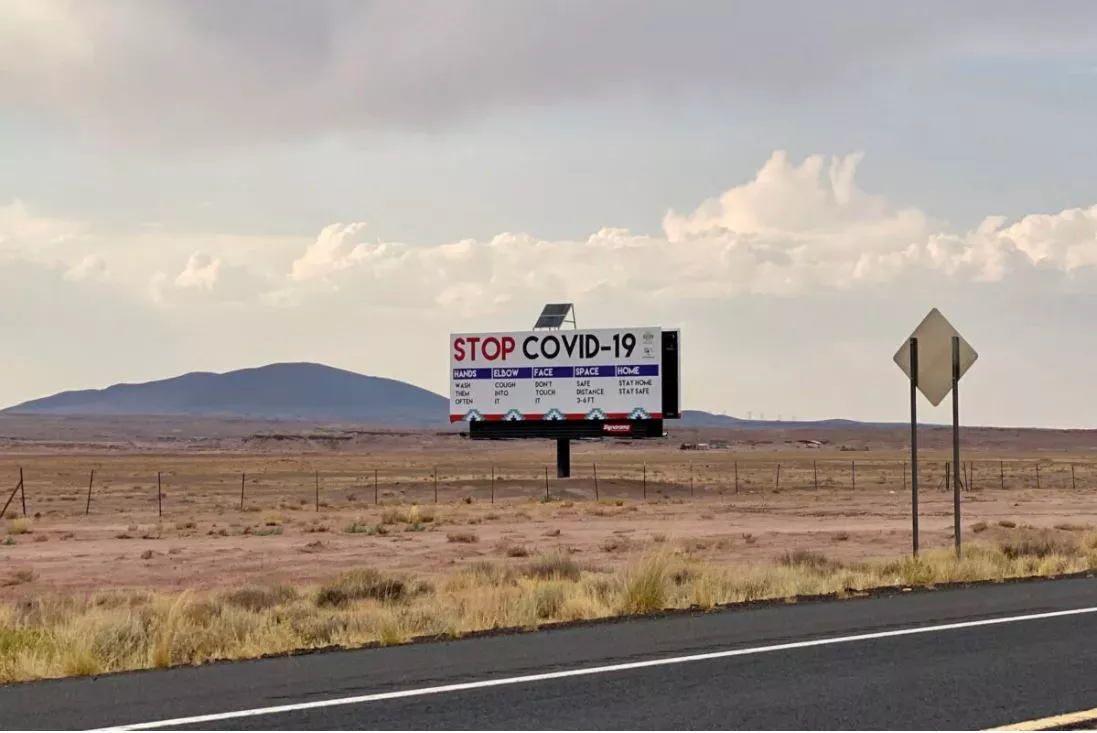
As the first coronavirus vaccine takes a major stride toward approval, state governments’ distribution plans show many are not ready to deliver the shots.
The challenge is especially steep in rural areas, many of which are contending with a surge of infections, meaning that access to the first batch of COVID-19 vaccines may be limited by geography.
Pfizer announced Monday that its vaccine demonstrated more than 90% effectiveness and no serious bad reactions in early trial results — an impressive outcome that will pave the way for the company to seek an emergency authorization once it collects more safety data for another week or two. But establishing that the vaccine is safe and effective is just the first step.
The Pfizer vaccine is unusually difficult to ship and store: It is administered in two doses given 28 days apart, has to be stored at temperatures of about minus 100 degrees Fahrenheit and will be delivered in dry ice-packed boxes holding 1,000 to 5,000 doses. These cartons can stay cold enough to keep the doses viable for up to 10 days, according to details provided by the company. The ice can be replenished up to three times. Once opened, the packages can keep the vaccine for five days but can’t be opened more than twice a day. The vaccine can also survive in a refrigerator for five days but can’t be refrozen if unused.
Health officials haven’t figured out how to get the ultracold doses to critical populations living far from cities, according to a ProPublica review of distribution plans obtained through open records laws in every state. Needing to use 1,000 doses within a few days may be fine for large hospital systems or mass vaccination centers. But it could rule out sending the vaccine to providers who don’t treat that many people, even doctors’ offices in cities. It’s especially challenging in smaller towns, rural areas and Native communities on reservations that are likely to struggle to administer that many doses quickly or to maintain them at ultracold temperatures.
Wednesday, November 11, 2020
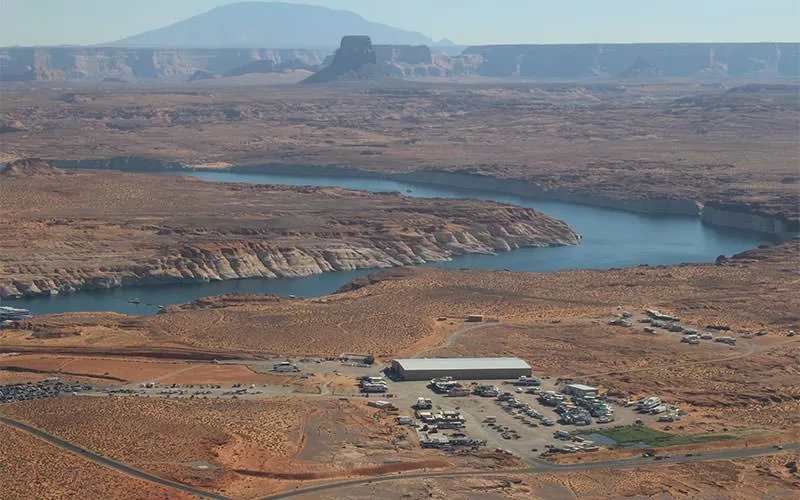
2020 has been a tough year for some of the Colorado River basin’s long-planned, most controversial water projects.
Proposals to divert water in New Mexico, Nevada and Utah have run up against significant legal, financial and political roadblocks this year. While environmental groups have cheered the setbacks, it’s still unclear whether these projects have truly hit dead ends or are simply waiting in the wings.
The watershed’s ongoing aridification, with record-breaking hot and dry conditions over the last 20 years, and lessened federal financial support for large-scale water projects is adding more pressure on projects that attempt to divert water to fast-growing communities or slow the purchase of agricultural water supplies.
In New Mexico, a “solid plan” fails to materialize
For years, environmental journalist Laura Paskus has been following the twists and turns of a proposed project in New Mexico’s southwest corner, called the Gila River Diversion.
Introduced in 2004, when Arizona settled tribal water rights with the Gila River Indian Community, the diversion was billed as a way to provide much-needed water supplies for four mostly rural New Mexican counties.
“The most recent plan was to build this diversion in the Cliff-Gila Valley,” Paskus said. “And to provide water to irrigators,” like farmers and ranchers.
What propelled the project forward was a federal subsidy to cover some of the costs associated with planning and building. Thorny questions over the project’s total cost, its eventual operation and the financial burden of those who would receive the water were present from the start, Paskus said, but the idea of leaving federal dollars unspent kept the effort alive for more than a decade.
“But there was never a really solid plan of how it would be built or how it would be paid for,” she said.
Failure to come up with a plan finally sank the proposal in June this year. The New Mexico Interstate Stream Commission, which had thrown its weight behind the project five years earlier, voted to stop spending money on environmental reviews related to the diversion. Roughly $17 million had already been spent on engineering plans and consultants over the years.
Tuesday, November 10, 2020

WASHINGTON – As the Supreme Court discusses the constitutionality of the Affordable Care Act – again – Tuesday, Tucson resident Alicia DeWitt is closely watching the case.
Without the ACA, DeWitt said she would not have been able to get health insurance to pay for surgery to remove a brain tumor, and would not be able to afford the medications that keep her alive today.
“I’m completely dependent on medication. I’ve been left with this permanent disability and this dependent for the rest of my life because I didn’t have access to care,” said DeWitt, a social worker, of the complications she lives with as a result of Cushing’s disease.
DeWitt is one of an estimated 223,000 Arizonans who could lose their health care coverage if the ACA is overturned, according to Protect Our Care, an advocacy group that fights to preserve the law.
That number includes and estimated 50,000 young adults in Arizona would no longer be able to stay on their parents’ insurance until age 26, and 75,000 children who would lose protection, the group said.
But the 18 states that challenged the law – including Arizona – say its “individual mandate,” which requires that people have health insurance, is an unconstitutional burden on private citizens.
Friday, October 30, 2020
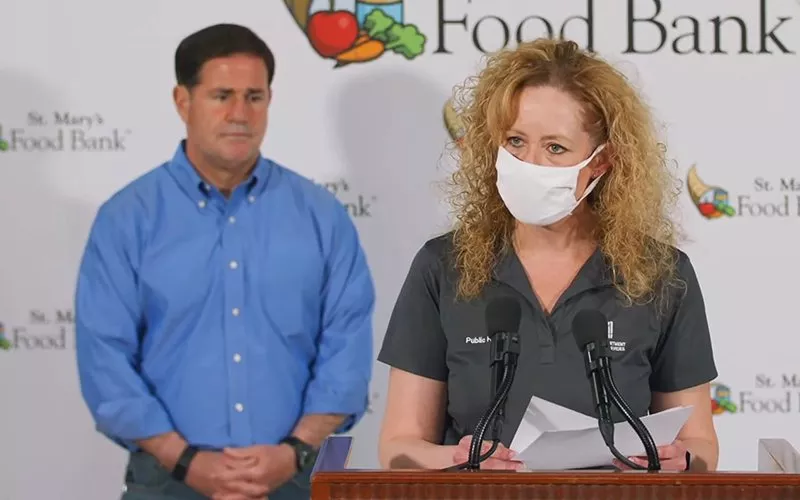
An Oct. 29 Cronkite News story mischaracterized the Arizona Department of Health Services policy on in-person versus virtual schooling during COVID-19. The policy sets recommended guidelines for local schools, which have the ultimate authority on how to proceed.
WASHINGTON – The Ducey administration defended its decision Thursday to make it harder for Arizona schools to revert to virtual education, from in-person or hybrid schooling, in the face of surging COVID-19 cases.
Gov. Doug Ducey said the decision to require that three different criteria are met – the old standard was just one of the three – before schools consider returning to online teaching was made with input from “the superintendent of public instruction and education leaders.”
But in a statement Thursday, a spokesperson for the Arizona Department of Education said that the department “was not part of the decision-making process” on the change.
The back and forth comes as new COVID-19 cases are surging in the state, with more than 5,700 new cases reported this week alone and 49 deaths attributed to the disease.
As of Thursday, the state had confirmed 242,480 cases of COVID-19 since the virus was first discovered in Arizona in January, and had recorded 5,918 deaths from the disease, according to Arizona Department of Health Services data.
Thursday, October 29, 2020
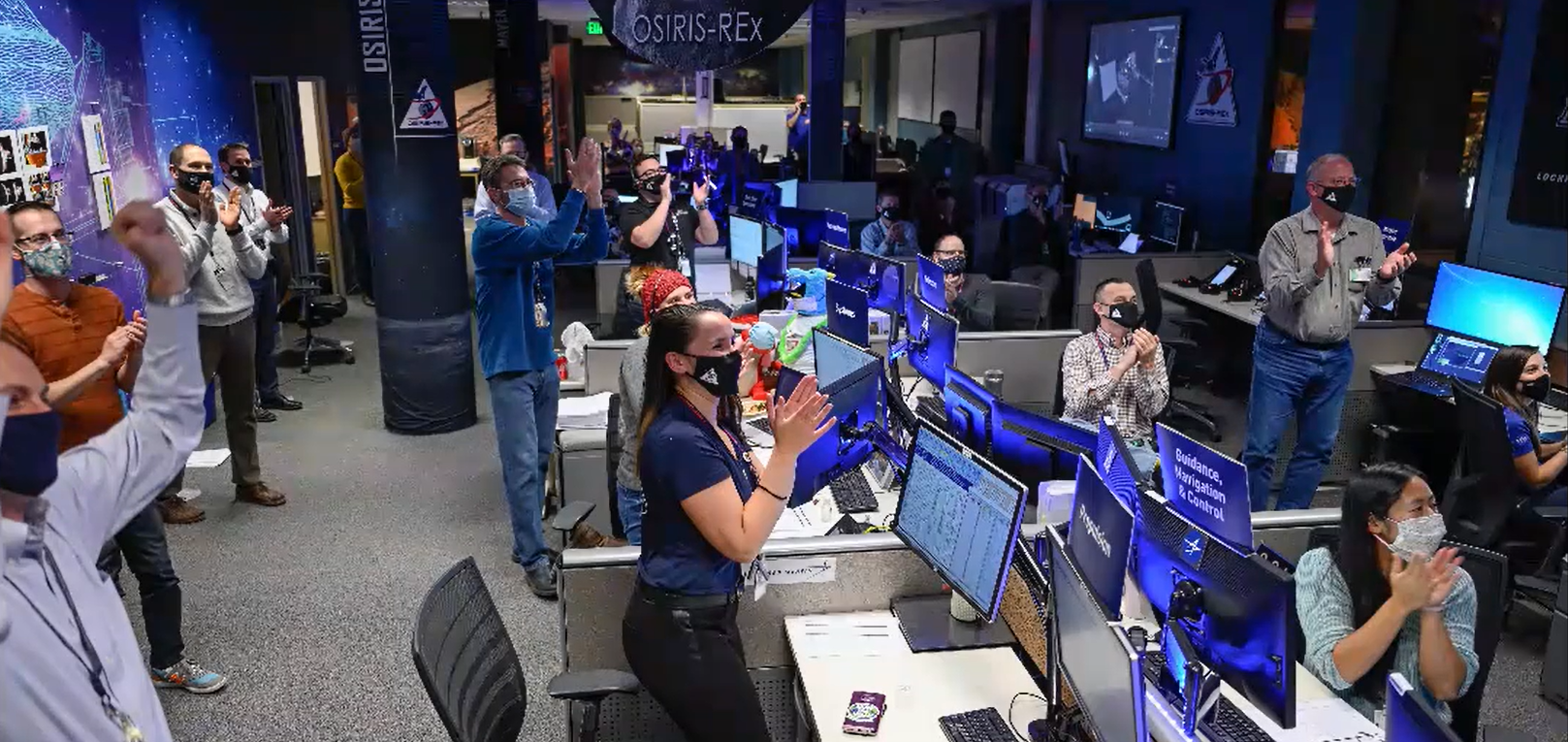
The University of Arizona-led space mission to retrieve a sample from an asteroid endured a tense day that turned out to be a blessing. On Tuesday Oct. 20, the OSIRIS-REx spacecraft touched down on the asteroid Bennu more than 200 million miles away to capture some of the rocks and dust on its surface. While the spacecraft successfully touched down and backed away, scientists soon realized the spacecraft’s sample collection compartment was overflowing with material., and some of the captured sample was slipping back into space.
“This turned out to be great news,” said OSIRIS-REx project manager Rich Burns. “But we knew we had to adapt our plans, because this definitely wasn’t something we planned for.”
Because there was an “abundant sample” and some was slipping out, the mission team quickly worked to stow away the collector head, a process that took two days, with preparations for the stowage event beginning Oct. 24. This loss of material required the team to redesign the timeline of their stowage process, which was originally slated for November.
According to the university, the process to stow the sample is unique compared to other spacecraft operations and required the team's continuous oversight and input over the two-day period. For the spacecraft to proceed with each step in the stowage sequence, the team had to assess images from the previous steps to confirm the operation was successful and the spacecraft was ready to continue. Because of the spacecraft’s distance there was roughly a 20-minute delay to receive messages and images. Ultimately, the team announced they were successful in stowing away the sample.
Agreements with NASA required the spacecraft to collect at least roughly 60 grams of material from the asteroid's surface — if that much was not collected, the team would have to try again. And although the collection compartment lost “tens of grams” worth of material, the OSIRIS-REx team estimates the spacecraft currently holds at least 400 grams worth of material. Because the images returned from the spacecraft only show a portion of the collection compartment, more than a kilogram of material may be captured, but we’ll have to wait until 2023 when the spacecraft returns to Earth to know for sure.
Data from the spacecraft also indicated that the sampling arm penetrated the asteroid’s rocky surface as deep as 48 centimeters. Dante Lauretta, OSIRIS-REx principal investigator and a professor of planetary sciences at UA, says it is likely some of the material captured is from that deep within the asteroid.
If successful, the OSIRIS-REx spacecraft will be the first American space mission to return a sample of an asteroid back to Earth. With the sample, scientists hope to better understand the formation of our solar system, and possibly even the origins of life on Earth.
Because the collected samples will be limited, Betsy Cantwell, UA’s senior vice president for research and innovation, says a major decision will be figuring out who gets to work with them. Cantwell expects a portion of the material will be investigated at UA, and some will even be stored for posterity to be examined when even more advanced scientific sensors are available in the future.
“Even though my heart breaks for the loss of sample, it turned out to be a pretty cool science experiment, and we’re learning a lot about how these particles behave in microgravity,” Lauretta said. “I'm very thankful that our team worked so hard to get this sample stowed as quickly as they did... Now, we can look forward to receiving the sample here on Earth and opening up that capsule."
Friday, October 23, 2020
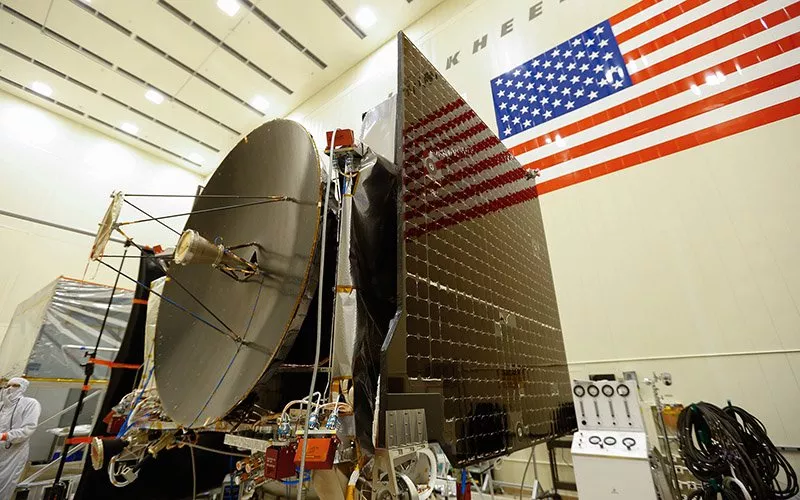
WASHINGTON – After more than a decade of work, $800 million and 200 million miles of space travel, it all came down to six seconds.
That’s how long OSIRIS-REx spent on the surface of near-Earth asteroid Bennu, collecting a small sample of soil before lifting off again for a return trip to Earth. But those six seconds were enough to get University of Arizona researcher Dante Lauretta’s head spinning.
“I must have watched it about 100 times last night before I finally got a little bit of shuteye,” Lauretta said of the video showing the spacecraft’s Touch-And-Go Sample Acquisition Mechanism pushing up a plume of debris from the asteroid’s surface. “And then I dreamed of a wonderworld of Bennu regolith particles floating all around me.”
Lauretta was not the only one hailing the apparent success of NASA’s Origins, Spectral Interpretation, Resource Identification, Security, Regolith Explorer – OSIRIS-REx – as it successfully touched down Tuesday night on Bennu, a maneuver one NASA official said “made humanity proud.”
Tags: osiris-rex , Image
Wednesday, October 21, 2020
On Tuesday, Oct. 20, the OSIRIS-REx spacecraft touched down on the asteroid Bennu for 4.7 seconds, a maneuver that was more than a decade in the making. Scientists at the University of Arizona nervously watched the data from the autonomous process — because the asteroid is more than 200 million miles away, messages from the spacecraft take some 20 minutes to reach Earth, meaning the entire maneuver had to be programmed ahead of time. Preliminary data shows the “touch-and-go” process was a success, putting OSIRIS-REx one step closer to being the first American space mission to bring a sample of an asteroid back to Earth.
“It’s amazing just how fast it happened,” said Sara Knutson, science operations team lead engineer for the mission. “It was like a marathon that turned into a sprint.”
See the video from yesterday’s TAG event — NASA’s first asteroid sample collection attempt! Tune in TODAY at 5 pm EDT here: https://t.co/Sja14xcQ3o pic.twitter.com/iqP6I3Kzw0
— NASA's OSIRIS-REx (@OSIRISREx) October 21, 2020
However, researchers won’t know for another few weeks whether the amount of dust and rocks collected from Bennu’s surface is sufficient. The spacecraft will measure this by a series of maneuvers to determine the sample’s weight — should there be less than 2 oz. (roughly 60 grams) of captured space material, the spacecraft will attempt a second “touch-and-go” process no later than January 2021.
The OSIRIS-REx spacecraft left Earth in September 2016 with the goal of capturing carbon-rich material from Bennu’s surface, which may help scientists better understand the formation of our early solar system, and even the origins of life on our planet.
The sample process took more than four hours, with the spacecraft slowly descending 2,500 feet from orbit toward the asteroid. While the spacecraft came in contact with the asteroid, it didn’t land. Instead, it extended a robotic arm and fired a jet of pressurized nitrogen to kick up dust from the asteroid’s surface. Some of the agitated material was captured in OSIRIS-REx’s collector head, and the spacecraft then used thrusters to move away from the asteroid. Scientists believe the spacecraft touched the surface only three feet from where they originally planned.
“We spent all these years planning for today, and it happened so quick I almost missed it,” said Carl Hergenrother, staff scientist for OSIRIS-REx, who described the mission as a kind of relay race, with multiple teams working on different parts at different times.
According to Betsy Cantwell, UA’s senior vice president for research and innovation, this type of mission has the potential to affect science for decades to come.
“These kinds of events change the way we view the world around us,” Cantwell said. “I expect an immediate scientific explosion of interest [when the samples return].”
Because the collected samples will be finite, Cantwell says a major decision will be figuring out who gets to work with them. Cantwell expects a portion of the material will be investigated at UA, and some will even be stored for posterity to be examined when even more advanced scientific sensors are available in the future. Researchers expect to find “a large number of biological precursors” in the sample.
OSIRIS-REx is expected to return to Earth in 2023.
Tuesday, October 20, 2020
The sample collection timeline is:
- 2:50 p.m.: Checkpoint maneuver, in which OSIRIS-REx adjusts its position and speed to begin descending steeply toward the asteroid's surface.
- 3:01 p.m.: Matchpoint maneuver, in which the spacecraft slows its descent and targets a path to match the asteroid's rotation.
- 3:12 p.m.: Touch-And-Go maneuver, in which the spacecraft descends to the surface, touches down for about 10 seconds and fires one of its three pressurized nitrogen bottles. The gas agitates and lifts Bennu's surface material, which is then caught in the spacecraft's collector head. The spacecraft will then fire its thrusters to navigate safely away from the asteroid.
- 3:30 p.m.: Live broadcast ends.