
Tuesday, October 20, 2020

Tags: fauci , coronavirus , covid , trump , Image
Monday, October 19, 2020
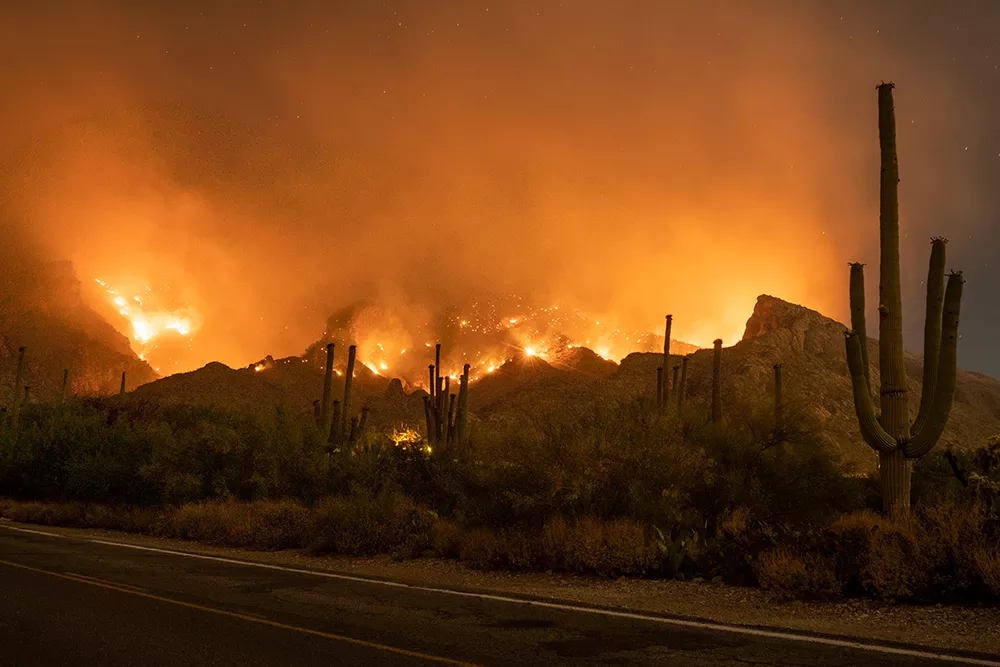
For many communities in the West, the water that flows out of kitchen faucets and bathroom showerheads starts high up in the mountains, as snowpack tucked under canopies of spruce and pine trees.
This summer’s record-breaking wildfires have reduced some of those headwater forests to burnt trees and heaps of ash. In high alpine ecosystems, climate change has tipped the scales toward drier forests, lessened snowpack, hotter summers and extended fire seasons.
Wildfires don’t just cause problems while they’re burning. For municipal drinking water systems, fires are felt for years after they’re snuffed out.
Few places in the West know that as well as Fort Collins, Colorado. Until eight years ago, one of the city’s of main water sources, the Poudre River, was nearly pristine. All year round, it tumbled out of the Rocky Mountains and into the city’s treatment plant for use by 135,000 people.
“We had been privileged and in some ways probably took for granted that these watersheds were providing us consistently clean, clear water, all the time,” said Jill Oropeza, the city’s water quality manager.
Tags: wildfire , climate change , water , Image
Wednesday, October 14, 2020
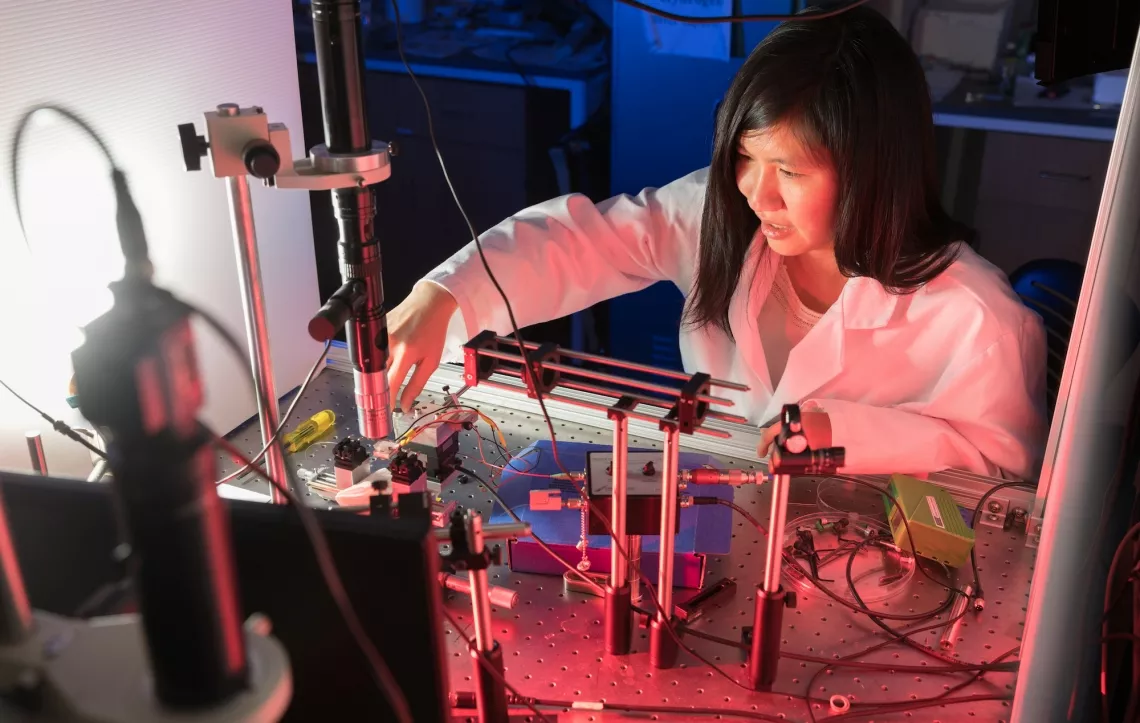
A researcher at the University of Arizona has received a $1.82 million grant from the National Institute of General Medical Sciences to advance the capabilities of a device that can detect single molecules, such as biomarkers for cancer, Alzheimer's disease and COVID-19.
Biomedical engineering professor Judith Su operates the Little Sensor Lab at UA, the core of which is a technology called the "frequency locked optical whispering evanescent resonator," or FLOWER. This device detects whispering gallery waves, a phenomenon where sound or light waves travel around a concave surface.
On a microscopic level, FLOWER examines light traveling around a small ring. Each time the light makes a loop, a small amount may interact with a close-by solution such as blood or water. If a molecule of the solution interacts with the lightwave, it slightly changes the light's refraction. As the light continues to loop around the ring, it interacts with the molecules more, increasing the chance of detection.
According to Su, normal sensors interact with a molecule once, but in this case, it interacts with the molecule hundreds of thousands of times, resulting in the detector’s sensitivity boost. Thanks to this versatile testing method, FLOWER can be used to detect a variety of molecules. And because COVID-19 can travel via airborne molecules, FLOWER may hold the key to a non-invasive breath test for COVID-19 instead of a swab or a blood test.
"Everything our lab does is centered around ultrasensitive optical sensing, for a wide variety of applications, like environmental health monitoring, food and water quality monitoring, and detecting toxic industrial chemicals," Su said. "Anything worth sensing, we sense."
Tuesday, October 13, 2020
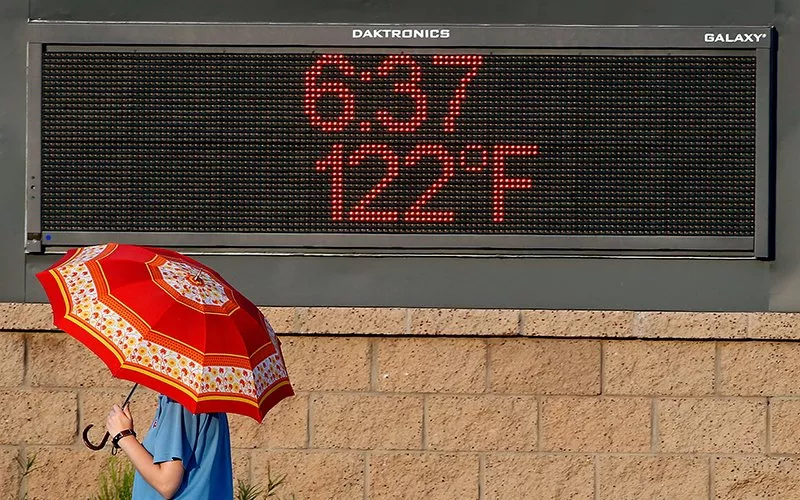
PHOENIX – Arizona will experience more days of extreme heat in the coming decade, according to an Arizona State University study that comes on the heels of the state’s hottest summer on record. But researchers are looking for ways to mitigate a hotter, drier climate.
The study, “The motley drivers of heat and cold exposure in 21st century U.S. cities,” is one of the first looks at human exposure to extreme temperatures, and it involves three factors that haven’t previously been considered together: data on population growth, greenhouse gas emissions and temperature changes caused by human development.
Researchers at the School of Geographical Sciences & Urban Planning at ASU ran decadal-length climate simulations “to quantify potential changes in population-weighted heat and cold exposure” in metropolitan regions. When compared with conditions in 2000, Phoenix and other fast-growing Sunbelt cities will see the “largest relative changes in population heat exposure,” according to the paper, which was published in August in the Proceedings of the National Academy of Sciences.
Tags: climate change , Image
Friday, October 9, 2020
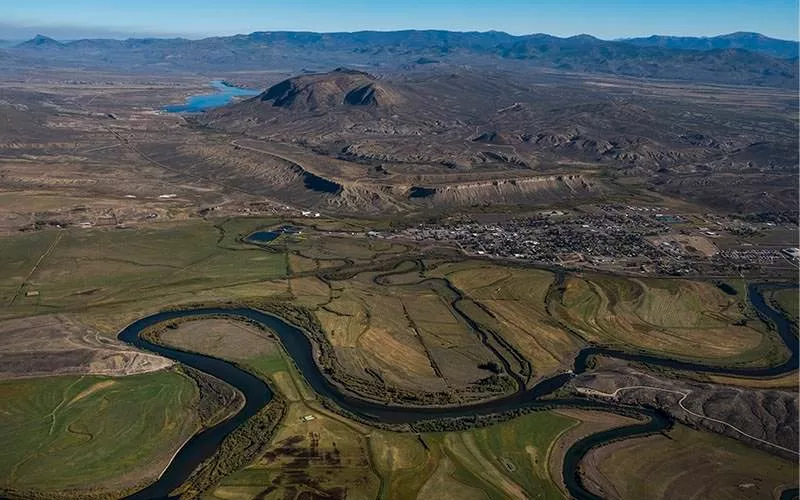
The Colorado River’s largest reservoirs are expected to keep struggling over the next five years due to climate change, according to the federal agency that oversees them.
The Bureau of Reclamation’s new modeling projections, which include this year’s record-breaking heat and dryness in some parts of the southwestern watershed, show an increasing likelihood of an official shortage declaration before 2026.
If dry conditions like the Colorado River Basin has seen since 2000 persist, the agency’s model shows an almost 80% chance of seeing an official shortage declaration by 2025. The chance of seeing the reservoir drop to a critically low level is about 20% in that same time period.
The basin is about to enter its 21st year of sustained dry conditions. The watershed is also rapidly warming, leading to increased evaporation from streams and reservoirs, and depleted groundwater.
The river’s water supply problems are exacerbated by the fact that cities, farmers and industries across the watershed have been overly reliant on the river’s water for decades. The supply and demand imbalance on the river has left its two biggest reservoirs – Lakes Powell and Mead – extremely low. Lake Powell is currently at 48% of its capacity. Lake Mead is at 40%.
Bureau of Reclamation Commissioner Brenda Burman said even with Drought Contingency Plans in place, there’s a significant chance the reservoirs will drop even further by 2026. Those plans, signed in 2019, spell out a series of water cutbacks to users in Nevada, Arizona, California and Mexico.
“There is uncertainty and risk on the horizon. But the policy decisions we’re making have been made to address that risk,” Burman said.
Flows into Lake Powell this summer were about half of what they are in an average year. This year’s dismal runoff has only increased pressure on the Colorado River, Burman said.
“We knew we had risk in the next five and six years, and the drought contingency plans are meant to address that,” Burman said.
More than 62% of the Colorado River watershed is experiencing extreme drought at this time.
This story is part of a project covering water in the western U.S. and the Colorado River basin, produced by KUNC and supported through a Walton Family Foundation grant. KUNC is solely responsible for its editorial content.
Tags: colorado river , water , climate change , Image
Thursday, October 8, 2020

As of Monday, Oct. 8, tech company Waymo is publicly offering a self-driving car service in the Phoenix area. Waymo—formerly the Google self-driving car project—is opening up their fully driverless car service on their app, which allows Waymo One users to take friends and family along on their rides.
Waymo has already been facilitating driverless rides throughout 2020 to a select group under an NDA, but are now public with their plans to expand. At this time, only those who are already Waymo One users can hail rides, but in the coming weeks, they plan to add more people into the service through their app (available on Google Play and the App Store).
“It’s really remarkable to have the world’s first fully driverless ride hailing service, Waymo One, in Mesa and the East Valley,” said Mesa mayor John Giles. “As Mesa grows and evolves, this innovative technology is in alignment with our City’s future, and I’m excited that our residents will be among the first to take advantage of this one-of-a-kind service.”
After Waymo finishes adding in-vehicle barriers between the front row and the rear passenger cabin later this year, they'll also be re-introducing rides with a trained vehicle operator, which will add capacity and serve a larger geographical area.
For more information, visit waymo.com
Wednesday, October 7, 2020
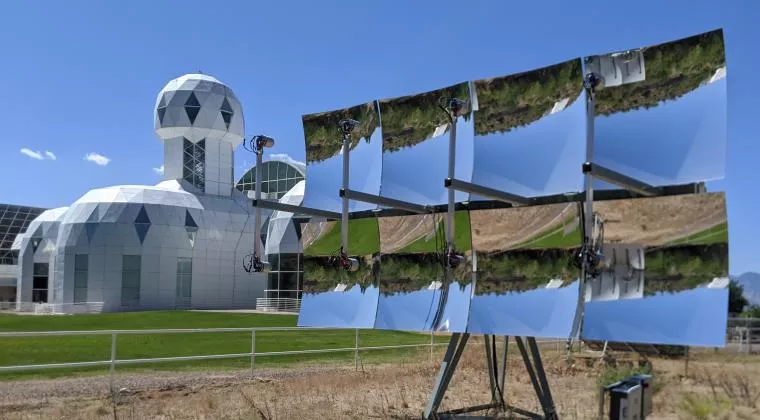
A new solar technology developed by a University of Arizona researcher has been licensed to the startup company Gen3 Solar, with the goal of manufacturing the technology for commercial and industrial use.
Whereas traditional photovoltaic systems use flat solar panels, this new technology, developed by optical sciences professor Roger Angel, uses mirrors to focus sunlight onto a multi-junction solar cell. While other solar technologies have also implemented mirrors, such as solar towers, Angel's "mirror modules" use curved mirrors to focus sunlight, and remove heat from the photovoltaic cells by flowing liquid coolant, providing additional thermal power output.
Gen3 is now "perfecting the design and making sure that the technology works in a variety of environments and weather conditions."
According to Gen3 founder David Vili, there are researchers who are using solar generators to split water into hydrogen, so one potential use of the technology is not just making electricity directly, but also making hydrogen for potential fuel.
The company is currently building 15 units for a phase one program. After, they plan to build a larger factory with an estimated 160 units. The third phase, in the next three to five years, is to work with governmental and private clients on a large-scale to implement solar projects throughout the country.
Tuesday, October 6, 2020

PHOENIX – Colorectal cancer has received a great deal of attention since actor Chadwick Boseman lost his four-year battle to the disease in August. It’s the second-leading cause of cancer death among Native Americans, prompting calls for increased screenings to improve detection and treatment of colorectal disease.
Donald Haverkamp, an epidemiologist with the U.S. Centers for Disease Control and Prevention, said many factors play a role in the number of cases among Native Americans, including lack of access to health care or insurance, increased natural bacteria on some reservations and diet and lifestyle.
“Cultural beliefs can come into play as well,” he said. “There are tribes, for example, that don’t even want to mention the word cancer, for fear of bringing on that disease, bringing it onto yourself by mentioning it.”
Tuesday, September 1, 2020

PHOENIX – The small office building, nestled just off the road near a medical office and appliance store, looks more like a house where a quiet family might live. The only signs of activity are the cars in the small parking lot out front.
Most passersby likely have no idea what goes on behind the dark purple door; an intercom doorbell ensures that only those who belong are allowed in. There are no signs outside, only inside, such as “You Matter” and “Happy Thoughts.”
Bulletin boards are brightened by slips of neon-colored paper with phone numbers to Planned Parenthood and shelters for homeless youth. There are nearly 10 work spaces, each with a computer, a landline and a chair.
On a Friday night early last spring, Madison Marks, 20, sits in one of the chairs waiting for the phone to ring. The part-time Starbucks barista, who’s dressed in black and rocks blonde streaks through her short brown hair, picks up when a 15-year-old calls to share the troubles that led her to seek help from a stranger.
Marks stops her at one point and asks the requisite question: “On a scale of one to 10, one being you’re OK and 10 being you’d kill yourself right now, how are you feeling?”
For decades, researchers have looked to human genetics for linkages to mental illness, such as depression, bipolar disorder, and schizophrenia. Patterns of inheritance are murky, but it is clear that “stuff runs in families,” says Dr. Douglas Gray, a psychiatrist and researcher at the University of Utah School of Medicine.
His 2018 study – published in the journal of Molecular Psychiatry – went a step further. It examined four specific gene variants that appear to raise the risk of suicide.
Four percent “of genes in the genome have current evidence associated with suicide risk,” according to the study, which identified the variants as APH1B, AGBL2, SP110 and SUCLA2. Their presence is “noticeably associated with suicide risk.”
“We need to tell people who’ve had a suicide that their family’s at risk,” said Gray, who studies suicide to better understand risk factors and develop prevention programs. This genetic component may account for as much as “45 to 50% of the risk,” he said.
Genetic screenings or simply reviewing family histories could be one method of increasing both awareness and prevention, Gray said.
The study was rooted in the work of another researcher at the University of Utah in 1980: Paul H. Wender. His team of American and Danish researchers in Denmark compared adopted children and their adoptive parents to biological parents and their children.
“They looked at a group of children who were adopted at birth and then grew up and completed suicide,” Gray said. “It turned out that almost all of the risk of suicide was from the biological relatives and not the relatives that raised the child. So your suicide risk doesn’t come from the parents that adopt you, it comes from the parents you never met.”