

Thursday, August 27, 2020
The University of Arizona's Center for Innovation announced today that biotechnology company Nanomoneo has selected Tucson for its new research operation. Nanomoneo is a newly formed biotechnology instrument company associated with the fields of nanoparticles, sensors and organic molecules to allow consumers to “see things that are not normally visible with the naked eye."
Nanomoneo will be housed within the Center for Innovation and plans to hire 14 people during the next five years, including research scientists, engineers and research support. Its total economic impact on the Tucson area for that time is estimated to be $17 million.
Wednesday, August 19, 2020

The University of Arizona has announced it is employing a new app where students, faculty, and staff who have been diagnosed with COVID-19 can anonymously notify others who may have been exposed. The COVID Watch app is available on Google and Apple devices, and is "able to calculate a person's level of exposure risk by assessing duration of exposure to an infected person, distance from an infected person and the point in the infection arc at which a user was exposed."
The COVID Watch app is being developed by UA in partnership with the nonprofit organization of the same name, co-founded by a UA alum Tina White.
However, this means the app can only track possible infections through the population if users have their phones on them.
Joyce Schroeder, head of UA Department of Molecular and Cellular Biology, is leading the app's development for the campus.
Tuesday, August 18, 2020
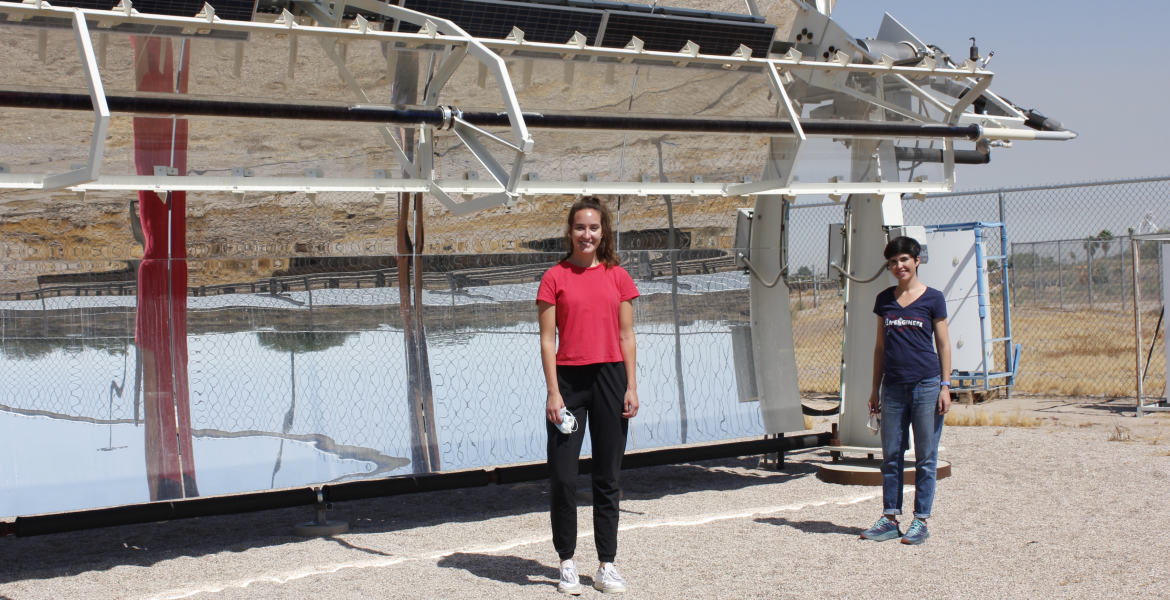
A team of University of Arizona scientists is developing a solar-powered desalination system that uses less energy and could provide more water for arid regions like Arizona. Funded by a $500,000 grant from the Department of Energy, the system recovers water from the “concentrated waste streams” formed from other types of desalination like reverse osmosis. When reverse osmosis occurs, 20 to 50 percent of the water that enters the system remains as a concentrated waste stream. This new solar-powered desalination system also uses photovoltaics and membrane distillation to capture water as efficiently as possible.
"The benefit of using both CSP (concentrated solar power) and PV (photovoltaics) is that we can double the energy efficiency compared to existing thermal desalination systems that just use PV or CSP," said Kerri Hickenbottom, assistant professor of chemical and environmental engineering and principal investigator for the project. "This off-grid system will use renewable energy resources to transform the way we manage high-salinity concentrate typically considered as waste streams."
The team is conducting their research at the UA Optical Sciences Center’s solar testbed. The system employs membrane distillation, which creates a temperature gradient to separate contaminants. The photovoltaics, which is the technology used in solar panels, convert the sun's light directly into electricity using semiconductor material. This means the system can serve off-grid areas, such as Native American reservations.
"You lose efficiency when you go from one form of energy to another, so using the solar energy to generate electricity and to heat the water directly is how we plan to be about twice as efficient as existing systems," Hickenbottom said.
The researchers have submitted their technology for the American-Made Challenges Solar Desalination Prize, sponsored by the U.S. Department of Energy. The four-phase competition, which offers more than $9 million in prizes, is designed to advance the development of solar-driven thermal desalination technologies. As part of the challenge, the team created a 90-second video about the project.
Wednesday, August 12, 2020
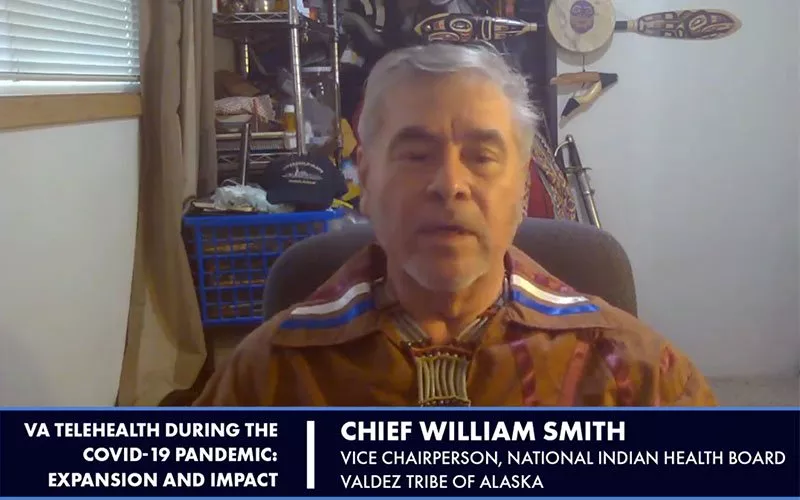
PHOENIX – Before COVID-19, Joshuaa Allison-Burbank spent his days traversing the Navajo Nation, stopping at homes, libraries and schools to provide speech therapy and reading support for children with developmental disabilities.
Now he sits at a computer in Waterflow, New Mexico, grappling with how to keep helping kids whose families may have no internet or laptops or iPhones – or, if they do, are coping with far more than a telehealth appointment that may or may not go off as planned.
Tuesday, August 11, 2020
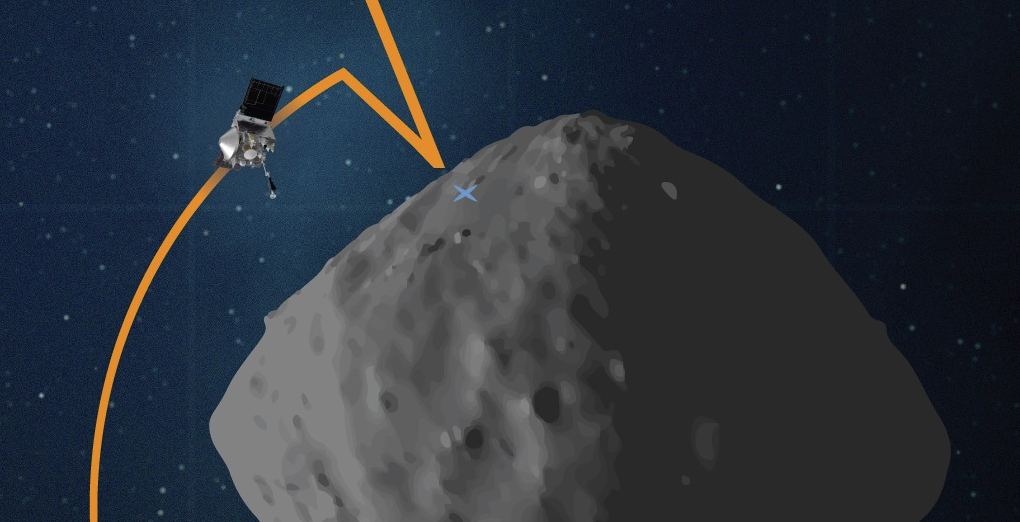
On Tuesday, Aug. 11 at 11:30 a.m. Arizona time, NASA's OSIRIS-REx spacecraft will begin its final sample retrieval rehearsal on the asteroid Bennu, currently some 170 million miles from Earth. This four-hour rehearsal is in preparation for the spacecraft's attempt at collecting dust and rocks from the surface of the asteroid in October. If successful, OSIRIS-REx will be the first American spacecraft to bring samples of an asteroid back to Earth.
This final rehearsal involves the spacecraft testing its sampling acquisition system, collecting data from the asteroid's surface, and using its thrusters as it orbits the rock.
OSIRIS-REx will not land on Bennu's surface to capture its sample. Instead, it will use the Touch-And-Go Sample Acquisition Mechanism to shoot a jet of nitrogen, dislodging particles from the asteroid. The spacecraft is expected to be able to capture upwards of 60 grams worth of carbonaceous dust and rock ejected from Bennu's surface.
Tuesday, August 4, 2020
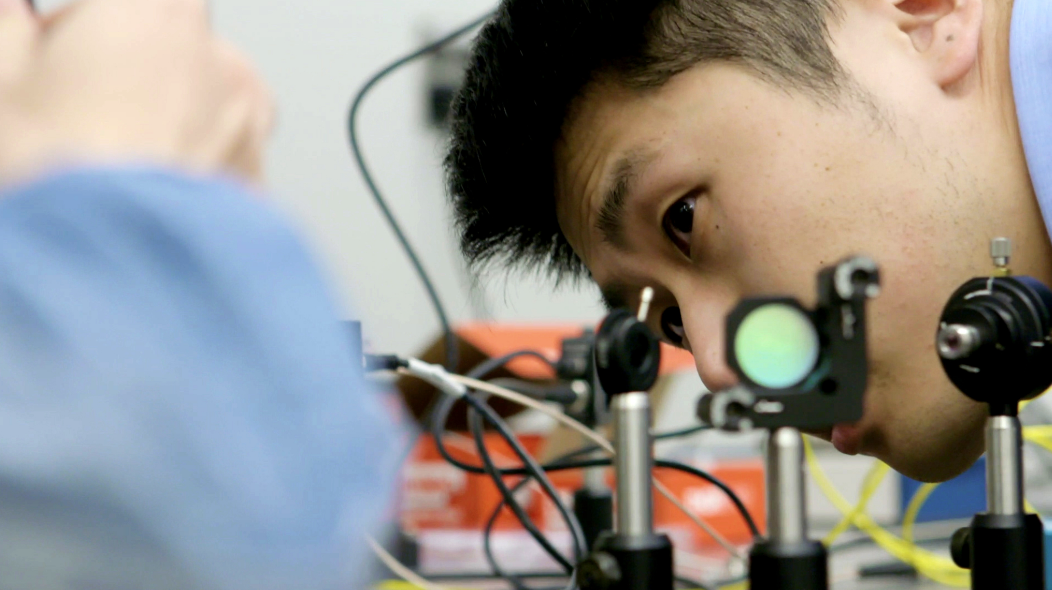
The National Science Foundation recently awarded the University of Arizona a $26 million grant to establish and lead the Center for Quantum Networks. CQN will be an engineering research center of the National Science Foundation and aims to lay the foundations of the quantum internet by “creating a fabric to connect quantum computers, data centers and gadgets” with qubits (or quantum bits).
Whereas typical computer bits operate on a binary system – being either a 0 or a 1 – qubits are able to enter a superposition of both values at the same time, similar to a coin spinning rather than landing on heads or tails. This ability makes quantum computers far more powerful, and is expected to “revolutionize how humankind computes, communicates and senses the world.”
Friday, July 24, 2020
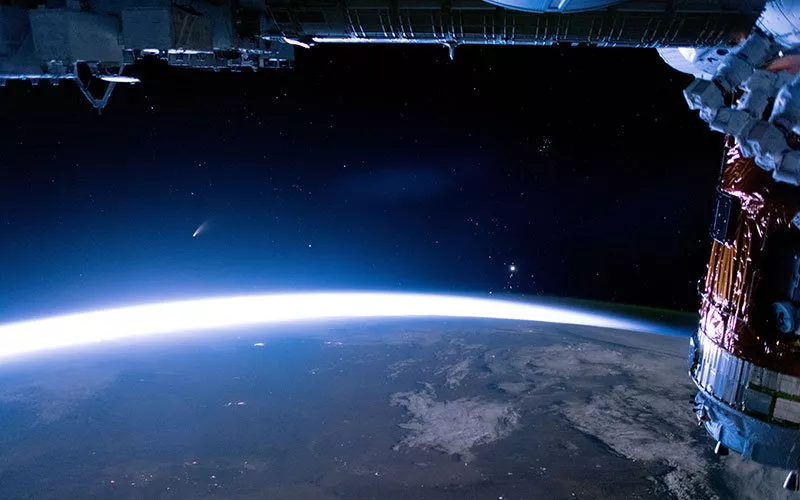
Comet NEOWISE was discovered March 27 by Amy Mainzer, principal investigator on NASA’s Near-Earth Object Wide-field Infrared Survey Explorer mission, and her team at the University of Arizona.
“We’re specifically interested in what we call ‘near-Earth objects,’” Mainzer said. “These are the asteroids and comets that come within about 1.3 times the distance from the Earth to the sun.”
The 3-mile wide ball of ice, dust and rock survived a close approach to the sun and is headed toward the outer edge of our solar system before starting another very long trip around the sun. Unlike a shooting star, viewers have a chance to view the comet for longer than a split second.
“This comet, even though it’s traveling at enormous speeds, you’d think, given this incredible speed, that it’d be gone in an instant,” Mainzer said. “But space is so big, that even at that incredible speed, it still takes an appreciable number of days to traverse the sky.”
Tuesday, June 2, 2020

The OSIRIS-REx spacecraft launched from the Earth in September 2016 and is planned to return in 2023. The spacecraft, part of a NASA program, will collect rocks and dust from the surface of Bennu in order to better understand "the initial stages of planet formation and the source of organic compounds available for the origin of life." Since arriving at Bennu in December 2018, OSIRIS-Rex has mapped the asteroid's rocky and carbon-rich surface.
In studying Bennu, scientists have discovered that the asteroid is composed of fragments of larger bodies that shattered upon colliding with other objects. The small fragments then reaccumulated to form an aggregate body, which explains Bennu's extremely rough surface and a partially hollow interior.
Tuesday, May 26, 2020
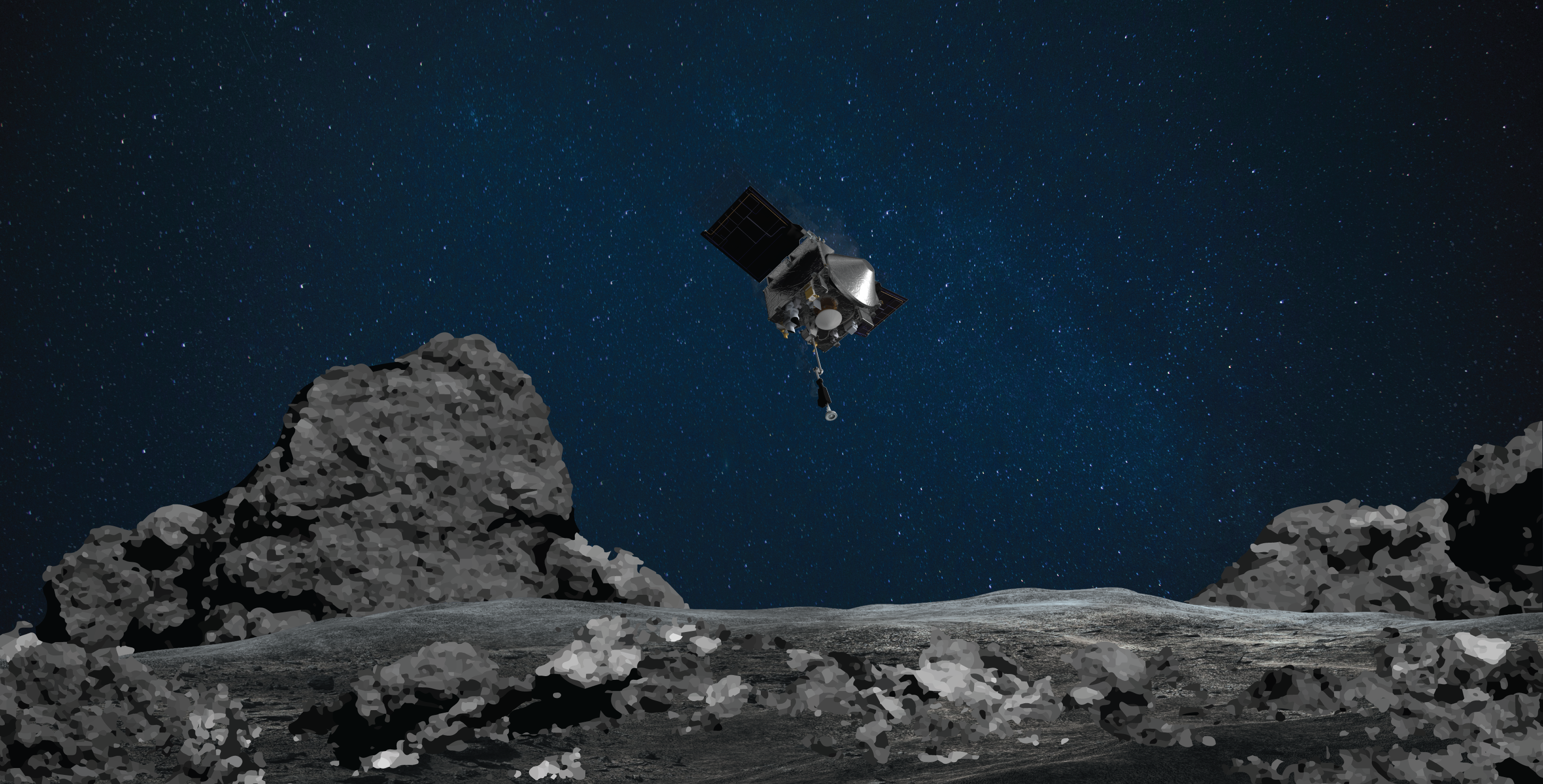
OSIRIS-REx launched from the Earth in September 2016, and is planned to return with its cargo in 2023. The spacecraft, part of a NASA program, will collect rocks and dust from the surface of the asteroid Bennu in order to better understand "the initial stages of planet formation and the source of organic compounds available for the origin of life."
The announcement of a sample retrieval date comes after a successful sample-collection rehearsal last month, where OSIRIS-REx also captured pictures of the asteroid's rocky surface. A second rehearsal date is slated for Aug. 11.
Thursday, May 21, 2020
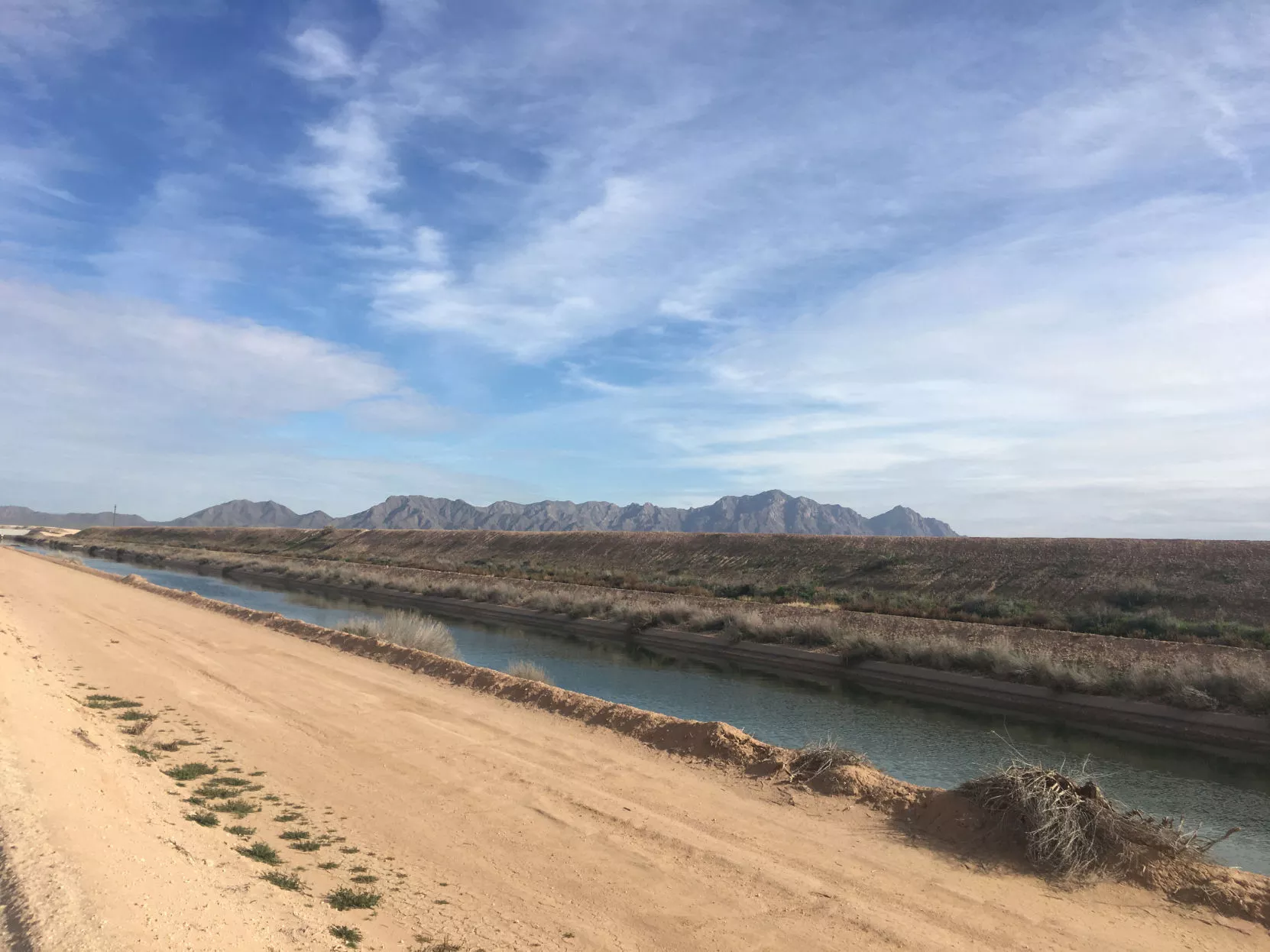
The Water Main, a project from American Public Media, wanted to know how Americans think, feel and worry about their water. Among its findings is that knowledge of water issues isn’t the biggest predictor of whether someone takes the effort to act. Personal connections to particular rivers, lakes and oceans led to more concrete conservation measures.
“The big surprise is that knowledge, how much we know, and action aren’t as tightly correlated as we might think they are,” said Amy Skoczlas Cole, managing editor of the Water Main. “It wasn’t actually the people who knew the most about water who were doing the most, it was the people who felt the most connected to water who were taking the most action.”
Half of the 1,005 people surveyed reported feeling a strong personal connection to a river, lake, ocean or other body of water.
More people older than 65 felt this way than those younger than 45, the survey found.

