

Monday, May 6, 2019
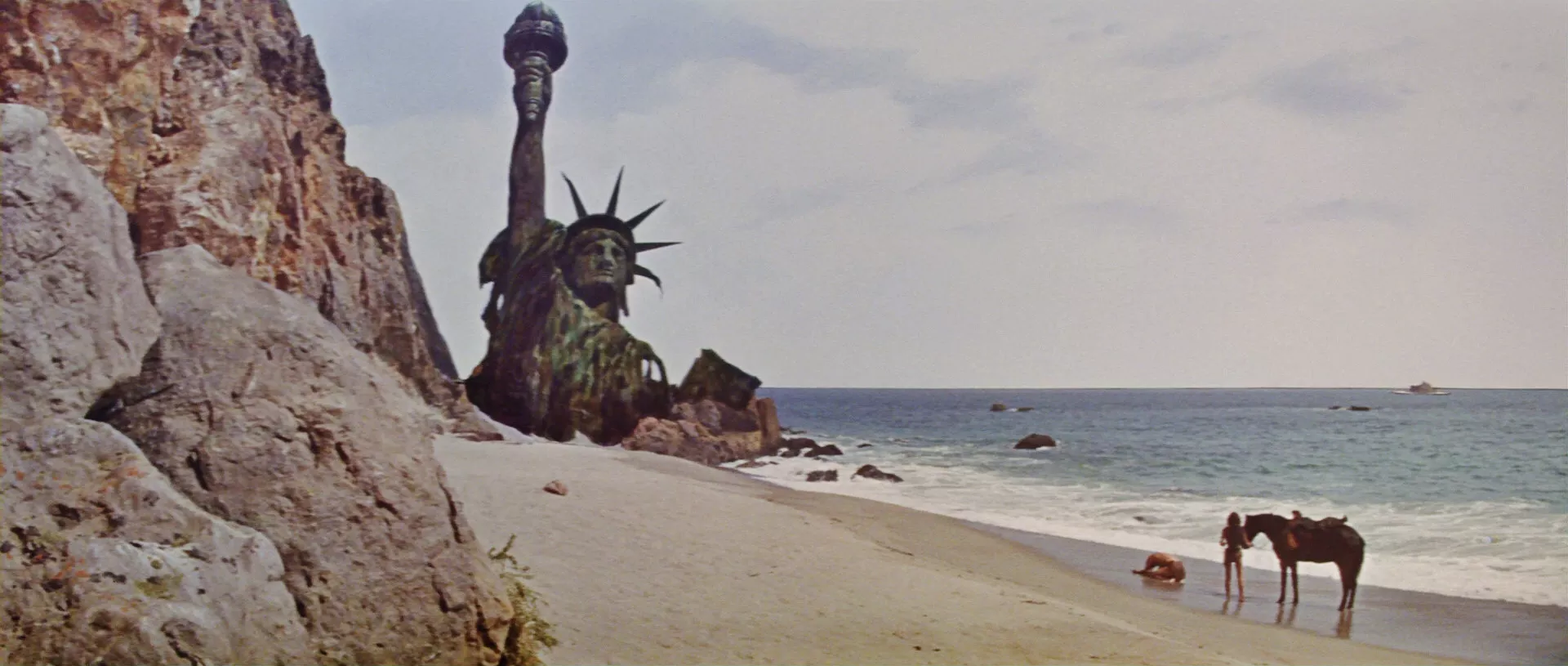
New York magazine sums up the UN's new report on biodiversity:
Human beings are more prosperous and numerous than we’ve ever been, while the Earth’s other species are dying off faster than at any time in human history.
These two conditions are related. But if the second one persists long enough, we will be following our fellow organisms into the dustbin of geological history.
This is the primary takeaway from a new United Nations report on our planet’s rapidly diminishing biodiversity. Humanity is reshaping the natural world at such scale and rapidity, an estimated 1 million plant and animal species are now at risk of extinction, according to the U.N. assessment. Climate change is a major driver of all this death, but burning fossil fuels is far from our species’ only method of mass ecocide. We are also harvesting fish populations faster than they can reproduce themselves, annually dumping upward of 300 million tons of heavy metals and toxic sludge into the oceans, introducing devastating diseases and invasive species into vulnerable environments as we send people and goods hurtling across the globe, and simply taking up too much space — about 75 percent of the Earth’s land, and 85 percent of its wetlands, have been severely altered or destroyed by human development.
[NY Mag]
Tags: news , UN Report , climate change , biodiversity , global warming , humans , pollution , Earth , environment , Image
Wednesday, April 10, 2019
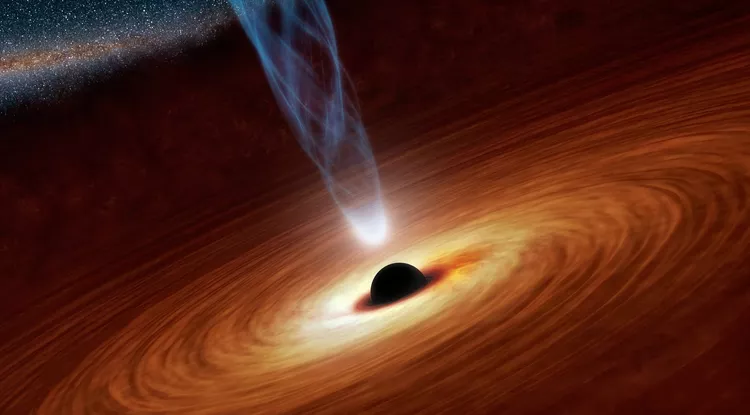
A pale orange glow stands as proof of the efforts of a global network of scientists. Today, researchers with the Event Horizon Telescope array revealed the first direct image of a black hole.
“We have seen what we thought was unseeable,” said Event Horizon Telescope director Sheperd Doeleman, speaking from the National Press Club in Washington D.C.
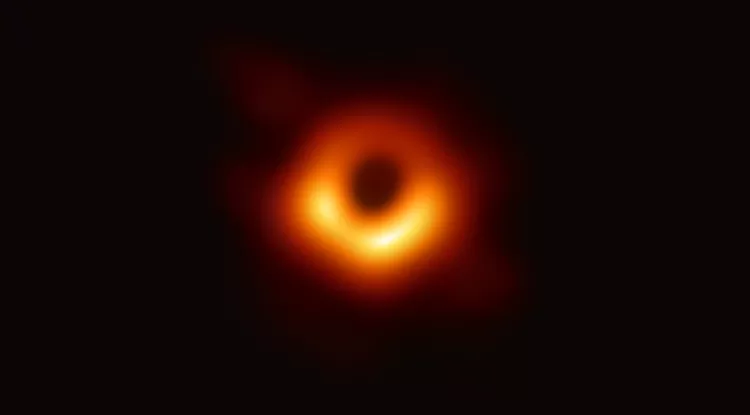
While humanity’s understanding of physics has long hinted at their existence, before the EHT captured this data, black holes were only able to be visualized via simulation. But this recently released image of a supermassive black hole at the center of the massive Messier 87 galaxy is the first direct visual evidence of a black hole.
The Event Horizon Telescope is an international collaboration formed in 2006, comprising eight radio telescopes across the world, including the Kitt Peak National Observatory southwest of Tucson. By combining the power of eight radio telescopes in multiple countries, researchers essentially created a planet-sized telescope with enough power to penetrate deep space.
"The observations were a coordinated dance in which we simultaneously pointed our telescopes in a carefully planned sequence," said Daniel Marrone, associate professor of astronomy at the University of Arizona. “To make sure these observations were truly simultaneous, so that we could see the same wavefront of light as it landed on each telescope, we used extremely precise atomic clocks at each of the telescopes."
Researchers at the University of Arizona helped coordinate two of the radio telescopes in the EHT. Due to the extreme difficulty of capturing such data, any additional obstacle must be removed if possible. This includes using telescopes located in very dry environments, such as the Sonoran Desert, to avoid water vapor in the atmosphere which could obstruct visuals.
Scientists also built the EHT project to test Einstein's Theory of General Relativity. Einstein's theory implies the existence of black holes, and states spacetime undergoes curvature from gravity. According to Doeleman, these latest discoveries are consistent with Einstein’s predictions.
“As with all great discoveries, this is just the beginning,” Doeleman said.
Tags: science , black hole , first photo , UA , scientists , Event Horizon Telescope , EHT , space , photograph , picture , Einstein , Kitt Peak , observatory , telescope , Image
Monday, March 11, 2019
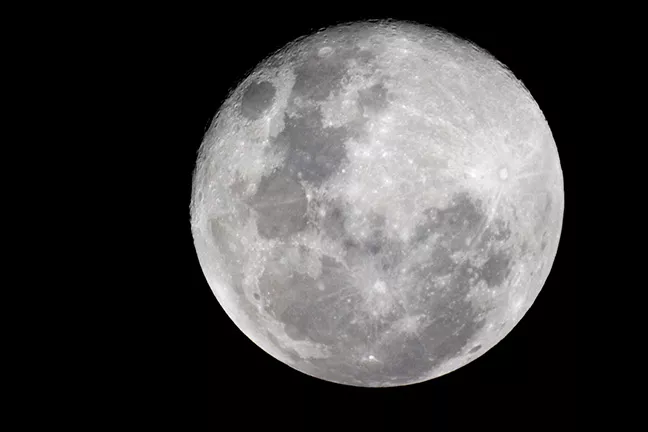
Jessica Barnes is starting at the UA next semester as an assistant professor at the Lunar and Planetary Laboratory. She and her research team have been chosen by NASA to receive funding to study the lunar samples.

Barnes and her team will be studying rock from Apollo 17, the last mission where humans visited the moon on Dec. 11, 1972. Since the samples were brought to Earth, they have been stored frozen and undisturbed.
"The question we want to answer is, are we measuring the true moon signature? Or are there terrestrial influences that have affected the samples during their storage?'" Barnes said in a release. "The beauty of a frozen sample is that it's been kept curated in a different way from the samples stored at room temperature. We could not do this research without opening the frozen samples."
The research team will encase the samples in resin and slice them microscopically thin to analyze their chemical makeup.
Barnes and her team hope that their research will inform the handling and storage of samples collected by the UA-led OSIRIS-REx mission currently en route to retrieving samples from asteroid Bennu.
Barnes' full team includes Tom Zega, also at the Lunar and Planetary Laboratory, Jeremy Boyce and Scott Messenger at NASA's Johnson Space Center, Jed Mosenfelder of the University of Minnesota, Carolyn Crow of the University of Colorado Boulder and Maryjo Brounce of the University of California Riverside.
Tags: moon samples , NASA , UA , lunar science , Lunar and Planetary Laboratory , science , space , moon , Apollo , Image
Thursday, February 28, 2019
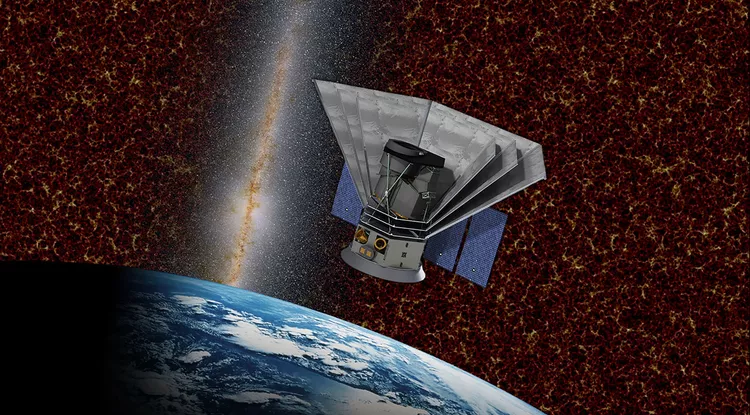
Astronomers at NASA have embarked on a new space mission to study the evolution of our universe and the commonality of ingredients for life on other planets. Two astronomers from the University of Arizona will participate in the mission.
The mission, called the Spectro-Photometer for the History of the Universe, Epoch of Reionization and Ices Explorer, or SPHEREx mission was recently given the go ahead by NASA's Explorer program and will launch in 2023.
Elisabeth Krause and Tim Eifler, who both joined the UA as junior faculty members last fall, will be working on the mission over the coming years.
Krause is an assistant professor of astronomy and physics at the UA and is a mission co-investigator on the SPEREx mission. Eifler is an assistant professor of astronomy at the UA and is a SPHEREx collaborator.
Every six months, SPHEREx will survey the entire sky to create a map in 96 different color bands, far more than any other sky map.
"This amazing mission will be a treasure trove of unique data for astronomers," said Thomas Zurbuchen, associate administrator for NASA's Science Mission Directorate, in a press release. "It will deliver an unprecedented galactic map containing 'fingerprints' from the first moments in the universe's history. And we'll have new clues to one of the greatest mysteries in science: What made the universe expand so quickly less than a nanosecond after the big bang?"
Until the mission is launched, the SPEREx team will be designing, building and testing the space telescope.
Tags: UA , NASA , space , exploration , education , investigation , SPHEREx , mission , sky map , UA professors , Tucson , University of Arizona , Image
Friday, January 18, 2019
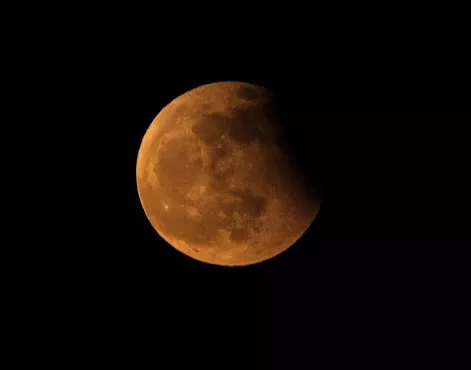
A lunar eclipse will begin on Sunday, Jan. 20, at 8:30 p.m. when the Earth’s shadow starts to cross over the Moon, leading to a full lunar eclipse around 9:40 p.m. when the shadow moves to cover the entire Moon.
“When people see things happening in the skies with their own eyes or through telescopes, it inspires their curiosity about planetary science,” said Shipherd Reed, Associate Director of Communications at the Flandrau Science Center & Planetarium.
Flandrau has partnered with the UA Lunar & Planetary Lab, and Tucson Amateur Astronomers Association for this event. Volunteers from TAAA will provide telescopes for the public to enjoy and participate in the lunar eclipse.
Attendees also have the chance to capture some pictures of the eclipse. TAAA will provide smartphone photography adaptors right on their telescopes, so people can capture pictures of this lunar event.
“It’s a great opportunity to tap into what the UA has to offer the Tucson community,” Reed said.
The event will beheld outside on the UA mall. UA Chamber Winds will accompany the eclipse and the telescope gazing with wind, brass, and percussion instruments. The Chamber Winds, comprised of students from the Fred Fox School of Music, will play music themed by the stars and moon, according to Martin Gaines, a UA doctoral conducting student. Gaines will lead the Chamber Winds group for this event.
The Chamber Winds will play three songs while the lunar eclipse is happening, including Mozart Serenade in C Minor and an André Chaplet piece. The songs are paired just right for the event, according to Gaines.
“We’re doing a piece by Mozart that was written in 1782 and this is a wind serenade that was meant to be played at essentially an outdoors social event,” Gaines said. “I think it’s going to be fun to hear that in kind of the way that it was originally conceived to be performed.”
Steve Kortenkamp, a UA planetary scientist, will present about the Moon prior to the Chamber Winds performance at 7 p.m. His presentation will include talks about the Moon, what we already know and what we want to discover from the NASA research spacecraft that is orbiting the Moon.
The concert, the telescope viewings, and Flandrau exhibits will be free and open to the public. The Moon presentation by Kortenkamp and “Pink Floyd Dark Side of the Moon” Laser light show are $5 each. The event will start at the same time of the eclipse, at 8:30 p.m. on Sunday, January 20, 2019 on the UA mall just outside of the Flandrau Science Center & Planetarium.
Tags: moon , eclipse , UA , Flandrau , science , Sunday , Jan 20 , space , Image
Thursday, January 17, 2019
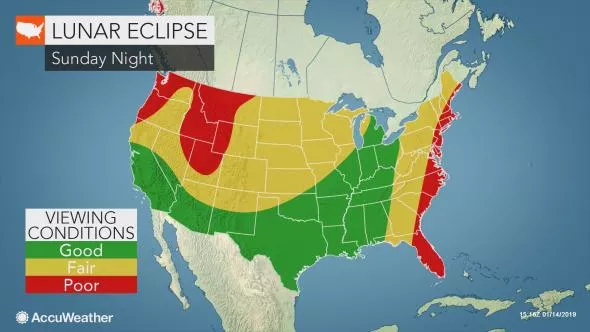
If you need reason to stay up on a school night, the dramatic name of this lunar event should be enough to keep you up. This Sunday's lunar event called a Super Blood Wolf Moon is an event not to miss.
Need another reason? Sunday night, Jan. 20, will be the last total lunar eclipse of the decade. The moon will appear red in the night sky as the moon passes directly through the Earth's shadow. The red color gives this lunar event it's nickname of blood moon.
The moon will also be "super" this Sunday, as it appears larger because it is within the closest part of its orbit around Earth.
Where does the wolf come in? Full moons in January have historically been nicknamed wolf moons.
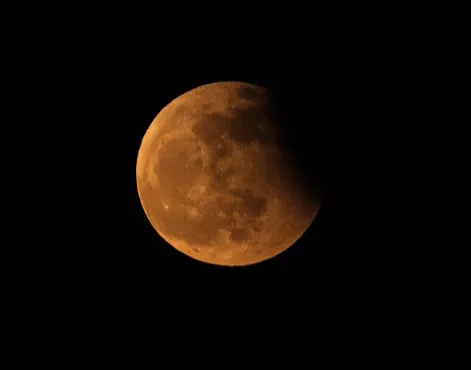
“In Native American and early Colonial times, the full moon for January was called the Full Wolf Moon. It appeared when wolves howled in hunger outside the villages,” the Old Farmer’s Almanac reported.
We are pretty lucky here in Tucson that the conditions will be just right for us to have a great view of the moon throughout the night.
The first phase, or the penumbral phase of the eclipse will start at 8:30 p.m. The shadow will then start to move across the moon, covering more and more of it until 9:40 p.m. when the entire moon will be covered for the total lunar eclipse.
Tags: super moon , blood moon , wolf moon , lunar eclipse , space , science , Sunday , Image
Tuesday, January 1, 2019
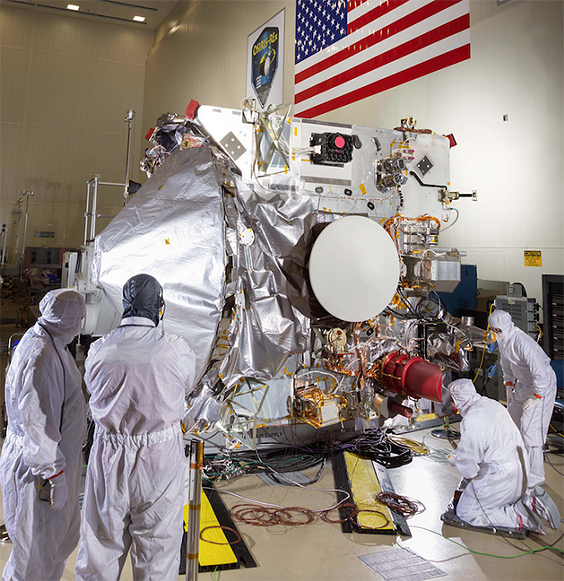
“The team continued our long string of successes by executing the orbit-insertion maneuver perfectly,” said Dante Lauretta, OSIRIS-REx principal investigator and UA professor. “With the navigation campaign coming to an end, we are looking forward to the scientific mapping and sample site selection phase of the mission.”
For the next year, OSIRIS-REx will map and photograph the surface of Bennu, searching for an ideal site to collect samples. Scientists chose Bennu, roughly the size of Pusch Ridge on the Catalinas, as the mission goal due to its carbon-rich surface and near-Earth orbit. From the collected samples of dust and rocks, researchers hope to examine the origins of life on Earth.
However, OSIRIS-REx will not be landing on Bennu to collect the cosmic samples. Instead, the spacecraft will perform a very close flyby, blast the asteroid with gas to knock loose some rocks and dust, and gather the propelled materials. Sample collection is scheduled for early July 2020. Afterward, the spacecraft will fly back toward Earth before jettisoning the "Sample Return Capsule" in September 2023.
Tags: Bennu , Osiris-Rex , Space , exploration , UA , science , Image
Monday, December 10, 2018

"These hydrated minerals have evidence of liquid water in Bennu's past," said Amy Simon, Deputy Instrument Scientist for the OSIRIS-REx mission. "It's one of the things we were hoping to find... we're super excited."
Tags: Bennu , OSIRIS-REx , asteroid , NASA , space , water , hydrated minerals , Image
Monday, December 3, 2018
OSIRIS-REx, the NASA space probe built and managed by the UA Lunar and Planetary Lab with various partners, has arrived at Asteroid Bennu, some 80 million miles away, and is ready to begin the next stage of its mission.

Eos Planetarium Theatre Show: Black Holes. On Monday, Dec. 3 UA Flandrau Science Center and Planetarium is hosting its documentary on Black Holes. Take a dive into modern science and discover more of what scientists have learned in the recent years. With a fresh, new and updated theater you will be sure to be comfortable while your eyes are on the screen listening to the sweet voice of Academy Award nominated actor Liam Neeson! 4 p.m. 1601 E. University Blvd. Details Here.
Einstein's Legacy: The New Era of Multimessenger Astronomy. Enjoy the last round of the 2018 Steward Public Lectures and learn about the legacy Einstein left behind. Steward Observatory has been hosting public lectures since 1922 so if you're into traditions; this definitely is one. Free. 933 N. Cherry Ave. 7:30 p.m. Details Here.
Events compiled by Brianna Lewis, Emily Dieckman, B.S. Eliot and Jeff Gardner.
Tags: Things to do , Tucson Events , space , astronomy , film , presentations , fun , family , friends , fun things to do in Tucson , Monday , Image

